Calculate a Maintenance Cost Estimate: Parts-and-Labor Cost Calculator for Car Owners (Routine Service vs Repairs)
A maintenance cost estimate is easiest to get right when you treat it like a simple calculator: labor hours × labor rate per hour + parts + Cost of fluids + fees + tax, then express the result as a realistic range instead of a single “perfect” number.
Next, once you can estimate a single service accurately, you can scale that method into Maintenance cost by mileage intervals—so your planning matches what actually happens at 30k, 60k, 90k, and beyond.
Then, because routine service and repairs behave differently, you’ll want a budget that separates predictable maintenance from the surprise spikes that come from wear-and-tear repairs and diagnostics.
Introduce a new idea: when you combine an estimate formula with smart quote comparisons and cost-reduction choices, you can control your car service cost without cutting corners on safety or reliability.
What is a “maintenance cost estimate,” and what does it include?
A maintenance cost estimate is a cost range for keeping a car reliable and safe, built from parts, labor, and related charges (fluids, fees, and taxes) based on your vehicle’s needs, mileage, and local pricing.
To better understand what you’re paying for, it helps to break the total into its components before you compare shops or build a budget.

What counts as routine maintenance vs a repair in a cost estimate?
Routine maintenance is scheduled service you do to prevent failures, while a repair is work triggered by a symptom, wear, or a failure—and the distinction matters because it changes predictability, labor time, and how quotes are structured.
Routine maintenance usually includes:
- Oil and filter changes, engine air filter, cabin air filter
- Tire rotations and balancing
- Fluid services (coolant, brake fluid, transmission service where recommended)
- Spark plugs at specific mileage intervals
- Inspections and adjustments called for by the manufacturer
Repairs commonly include:
- Replacing worn components (brakes, wheel bearings, suspension bushings, alternator)
- Fixing leaks (oil pan gasket, coolant hoses, radiator)
- Electrical/starting issues (battery cables, starter)
- Fixing a specific complaint (“Car Symp” like grinding when braking, vibration, or a check engine light)
More specifically, routine maintenance is what you can plan on a calendar; repairs are what you plan for in a reserve fund.
Does a maintenance estimate include labor rate per hour, shop supplies, and taxes?
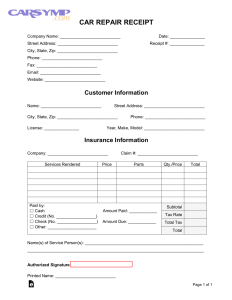
Yes—an accurate maintenance cost estimate should include labor rate per hour, labor time, and common add-ons like shop supplies, disposal fees, and taxes, because these are real charges that often explain why two quotes with the same parts list still differ.
However, shops don’t always label charges the same way. Here are Hidden fees to watch for that can appear under different names:
- Shop supplies / sundries
- Environmental or disposal fees (oil, coolant, filters)
- Diagnostic fee (especially for repairs)
- Programing/calibration fees (newer vehicles with sensors/ADAS)
- “Miscellaneous” line items that aren’t explained
In short, if your estimate doesn’t mention these categories, it may still be incomplete—so your “cheap” quote can become expensive at checkout.
How do you calculate a maintenance cost estimate using a parts-and-labor method?
Use a parts-and-labor calculator method with 5 factors—labor hours, labor rate, parts, cost of fluids/consumables, and fees/tax—to produce a realistic cost range that you can compare across shops and mileage intervals.
Next, once you plug in the right inputs, your estimate becomes repeatable and easy to update as your vehicle ages.

What is the basic formula to estimate maintenance cost from parts and labor?
The basic formula is:
Maintenance Cost Estimate (Range) = (Labor hours × labor rate per hour) + Parts + Cost of fluids/consumables + Fees + Tax
To illustrate how this works in real life, build it as a range:
- Low estimate: best-case labor time + mid-tier parts + minimal fees
- Typical estimate: book time (or quoted time) + parts you’d actually choose + normal fees
- High estimate: added time for rust/complexity + higher quality parts + diagnostic/programming where relevant
A practical way to do this is to list your service items (for example: oil change + tire rotation) and assign each item: 1) labor time, 2) parts, 3) fluids/consumables, 4) fees/tax assumptions.
This is the core of How to estimate routine maintenance costs without guessing.
How do you estimate labor hours (flat-rate book time vs actual time)?
Labor hours come from either flat-rate book time or actual time billed, and understanding the difference is the fastest way to interpret quotes.
Flat-rate vs hourly billing explained:
- Flat-rate (book time): the shop charges the published labor time for that job, regardless of whether it took them longer or faster.
- Hourly (actual time): the shop charges the time the technician actually spends on the work.
Meanwhile, repairs often include diagnostic time, which can be separate from the repair labor. Diagnostics can involve testing, scan tools, and confirming the failure before parts are replaced—so it may appear as its own line item.
If you want better accuracy, ask the shop one simple question: “Are these labor hours flat-rate or actual time, and does the quote include diagnostics?”
How do you estimate parts cost (OEM vs aftermarket vs economy)?
There are three practical parts tiers for estimating, based on quality and fit:
- OEM (Original Equipment Manufacturer): highest predictability and fit; often priced higher.
- Aftermarket (quality brands): can match OEM performance at a lower price when you choose reputable brands.
- Economy/low-cost: cheapest up front, but may increase total cost if it fails early or causes redo labor.
More specifically, a smart estimate accounts for the hidden “redo risk.” A cheap part that fails early doesn’t just cost parts again—it costs labor again.
A good rule for your calculator:
- Use OEM for safety-critical systems (some brake components, certain sensors, modules) or when fitment issues create expensive comebacks.
- Use reputable aftermarket where the industry has strong equivalents (filters, many wear items) and the labor cost isn’t enormous.
What “Hidden fees to watch for” should you add to your calculator?
There are 4 common fee buckets to add into your calculator so the number you plan is close to the number you pay:
- Shop supplies/sundries (rags, cleaners, small consumables)
- Disposal/environmental fees (oil, coolant, filters)
- Diagnostics (especially for symptoms-based repairs)
- Programming/calibration (modern cars may need resets, calibrations, or module programming)
Below is a simple table showing what these fees usually relate to, so you can spot them when you’re How to compare written estimates from two shops.
| Fee type | What it usually covers | When it appears most |
|---|---|---|
| Shop supplies | consumables used during service | routine + repair |
| Disposal/environment | handling used fluids/filters | oil, coolant, brake fluid services |
| Diagnostic fee | testing to confirm the cause | check engine light, noise, electrical |
| Programming/calibration | resets/calibration after parts install | sensors, batteries, ADAS-related work |
Here’s one helpful walkthrough video on reading and comparing auto repair estimates:
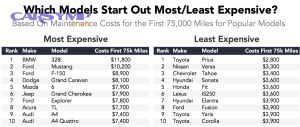
Evidence: According to AAA’s 2025 “Your Driving Costs” analysis, maintenance is framed as a measurable per-mile category within a multi-year ownership-cost methodology, which helps translate service spending into a structured estimate. (Source: newsroom.aaa.com)
Which maintenance items drive the biggest costs for car owners (and when)?
There are 3 main cost drivers for maintenance: wear items (tires and brakes), major interval services (like plugs/fluids), and age-related replacements (battery, belts, suspension), and they show up predictably by mileage and time.
Then, once you map these costs to intervals, you can forecast your Maintenance cost by mileage intervals with less stress and fewer surprises.

Which services typically happen at common mileage milestones (30k/60k/90k/120k)?
Mileage milestones aren’t universal, but most vehicles follow a familiar rhythm. Here’s a planning-friendly view of common intervals (always confirm with your manual and service history):
- Around 30,000 miles: filters, brake inspection, tire services; sometimes brake fluid; “catch-up” maintenance on used cars.
- Around 60,000 miles: spark plugs on many models, transmission service on some, coolant depending on interval, more frequent brake work.
- Around 90,000 miles: larger wear-item cycle; tires often due again; suspension wear becomes more likely; serpentine belt on some cars.
- Around 120,000 miles: major “age + mileage” zone—cooling system parts, suspension components, more frequent repairs.
More importantly, Using service records to predict costs is what turns these milestones from generic advice into an accurate personal forecast:
- If plugs were done at 70k, your next plug budget moves out.
- If transmission service is overdue, your near-term budget increases.
- If tires are new, your tires over a year cost drops—temporarily.
Which wear items most often turn a small service into a big bill?
Wear items are the silent budget breakers because they stack: one visit becomes multiple fixes.
Common high-impact wear items include:
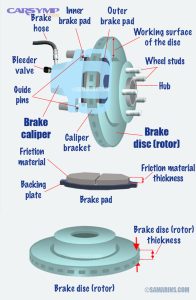
- Brakes: pads and rotors, calipers in older/rust regions; brake fluid service may be recommended.
- Tires: the biggest predictable “chunk” cost; alignments may follow tire replacement.
- Battery: more time-based than mileage-based; modern vehicles can require registration/programming.
- Suspension/steering parts: struts, control arms, tie rods, bushings—often discovered during tire/brake service.
Specifically, brakes and tires often combine: worn tires can cause vibration; worn suspension accelerates tire wear; poor alignment shortens tire life—so the total cost climbs faster than expected.
Evidence: According to AAA’s 2025 ownership-cost framework, a set of replacement tires is included within maintenance assumptions over a multi-year mileage horizon, reinforcing tires as a major maintenance cost driver. (Source: newsroom.aaa.com)
How much should you budget annually for routine maintenance vs repairs?
There are 2 budget buckets you should plan for: routine maintenance (predictable) and repairs (variable), and separating them makes your maintenance cost estimate actionable—especially when you’re Building a maintenance budget for used cars.
Next, once you translate services into annual totals, you can set a monthly reserve that matches your real risk.

How do you turn service intervals into a yearly budget and cost-per-mile number?
Use this simple process:
- List scheduled services you expect this year (from manual + service records).
- Assign each service a range using your parts-and-labor method.
- Annualize the intervals: If a service happens every 30k miles and you drive 15k/year, budget half of it per year.
- Add a repair reserve (a buffer) based on vehicle age and history.
- Convert to cost-per-mile: annual total ÷ annual miles.
This is the cleanest way to manage car service cost because it links spending to driving reality, not hope.
Also plan explicitly for the Cost of fluids (oil, coolant, brake fluid, transmission fluid). Fluids don’t look expensive individually, but they add up when multiple services converge in the same year.
Is it better to budget a fixed monthly amount or pay-as-needed?
A fixed monthly budget is usually better because it builds resilience, reduces decision stress, and prevents “maintenance skipping” that leads to costly repairs—especially for used cars with uncertain history.
However, “pay-as-needed” can work if:
- you have strong service records,
- your car is newer and under warranty,
- and you maintain a separate emergency fund that can absorb a surprise repair.
More importantly, if your goal is stability, the monthly approach wins because routine service is predictable but repairs are not.
Evidence: According to AAA’s 2025 cost-of-ownership analysis, maintenance is treated as a structured category over time and miles, supporting budgeting approaches that translate costs into per-mile or per-month planning. (Source: newsroom.aaa.com)
How do routine service costs compare to repair costs (and why do repairs spike)?
Routine service wins in predictability, repairs are best managed with a reserve fund, and diagnostics are the main reason repair costs spike—because unknown causes require testing, and hidden damage is sometimes discovered mid-job.
However, understanding why repairs spike lets you plan smarter and avoid the spiral of delayed maintenance.

Why are repair estimates less predictable than routine maintenance estimates?
Repair estimates are less predictable because they often depend on:
- Diagnosis outcomes: multiple possible causes can produce the same symptom.
- Teardown discoveries: parts may be seized, broken, or previously repaired incorrectly.
- Secondary damage: a failing component can damage others (overheating can damage hoses, seals, sensors).
- Parts availability: substitutes or delays can change price and labor time.
To illustrate, a routine oil change is a known procedure; a “noise while turning” might be a tire issue, a wheel bearing, a CV axle, or a brake backing plate—each with a different labor path.
This is where the phrase “Car Symp” becomes meaningful: symptoms describe what you feel, not what is broken, and that gap creates variability.
When do higher costs become “worth it” (safety, reliability, resale)?
Higher costs are worth it when they protect safety, reliability, and long-term value, especially in areas where failure is expensive or dangerous.
“Worth it” situations include:
- Safety-critical systems: brakes, steering, tires
- Cooling system integrity (prevents overheating damage)
- Fixes that prevent repeat labor (quality parts where labor is high)
- Maintenance that supports resale value (service records, on-time interval work)
More importantly, compare cost-to-keep vs cost-to-replace: if one large repair buys several more reliable years, it can be the rational choice—especially if you drive less and want to avoid a new car payment.
Evidence: According to the U.S. Bureau of Transportation Statistics’ discussion of ownership cost concepts, maintenance and repair costs are best evaluated over time and usage rather than as isolated events, which supports planning with a structured estimate. (Source: bts.gov)
How can you compare repair quotes and improve estimate accuracy before approving work?
There are 5 steps to compare repair quotes accurately: match the same scope, confirm labor model, align parts tier, audit fees, and verify warranty—so you can approve work confidently and reduce surprise add-ons.
Then, once you compare apples-to-apples, you’ll see whether a difference is real value or just different assumptions.

What should you check line-by-line in a repair estimate to avoid surprises?
Use a line-by-line checklist:
- Labor hours: are they flat-rate book time or actual time?
- Labor rate per hour: confirm the exact rate and whether diagnostics are included.
- Parts details: OEM vs aftermarket; part numbers or brand level where possible.
- Fees: shop supplies, disposal, diagnostic, programming/calibration.
- Tax handling: is tax applied to parts only, or parts + certain fees (varies by region)?
- Scope clarity: does it include related work (like an alignment after suspension parts)?
- Warranty: parts and labor warranty duration and terms.
This is the heart of How to compare written estimates: you’re not just comparing totals—you’re comparing assumptions.
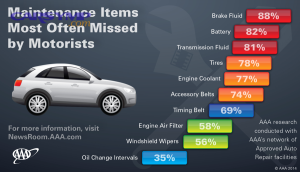
Also watch for What maintenance items are often skipped in quotes:
- cabin air filter
- brake fluid service (when interval calls for it)
- coolant service (especially in older vehicles)
- alignment after tire/suspension work
Skipping can reduce today’s quote but raise next month’s bill.
How do dealer vs independent estimates typically differ (and when each makes sense)?
Dealer estimates often win on OEM procedures, factory tools, and software/programming capability; independent shops often win on price flexibility and parts sourcing—so the best choice depends on the job.
Dealer vs independent maintenance pricing tends to differ because:
- Dealers more often use OEM parts and factory procedures
- Dealers handle brand-specific programming and calibration routinely
- Independents may offer more parts tiers and labor flexibility
- Independents may be more cost-effective for common wear-item jobs
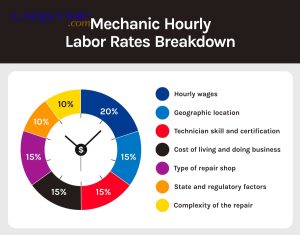
More importantly, consider Regional labor rate impact on maintenance costs: the same job can cost meaningfully more in high-cost metro areas because labor rate per hour is higher, even if parts are identical.
Evidence: According to Edmunds’ True Cost to Own® framework, maintenance and repairs are evaluated within a multi-year ownership model, reinforcing the value of comparing written estimates in the context of longer-term cost planning. (Source: edmunds.com)
How can you lower your maintenance cost estimate without risking reliability?
You can lower your maintenance cost estimate without risking reliability by choosing the right parts tier for the job, adjusting intervals for your driving conditions, and preventing repeat labor—because the safest savings come from smart substitutions and prevention, not skipped essentials.
Next, once you target the highest-leverage items, you can apply Tips to reduce maintenance costs safely without gambling on cheap fixes.

Which maintenance items are safe to “downgrade” to aftermarket, and which should stay OEM?
Aftermarket can be a safe choice when the part is standardized and reputable brands exist; OEM is safer when fitment, calibration, or labor redo risk is high.
Often safe with quality aftermarket (when you choose reputable brands):
- Filters (oil/air/cabin)
- Many brake pads/rotors (quality matters—avoid unknown brands)
- Batteries (ensure correct spec; note registration requirements)
- Some suspension wear parts (quality brand, correct geometry)
Often better as OEM (or OEM-equivalent with proven track record):
- Sensors tied to engine management and emissions
- Modules, electronics, and parts requiring programming
- Complex assemblies where fitment errors cost hours of labor
More specifically, the labor cost is the deciding factor: if labor is expensive, choose the part that reduces the chance of paying that labor twice.
How do severe-service driving conditions change your estimate and service intervals?
Severe-service driving conditions increase maintenance frequency, which raises your estimate—even if nothing “breaks”—because fluids and wear items degrade faster.
Common severe-service patterns include:
- many short trips (engine doesn’t fully warm up)
- heavy stop-and-go commuting
- towing or carrying heavy loads
- very hot, very cold, or dusty environments
This changes your Maintenance cost by mileage intervals because intervals shorten: oil changes, brake wear, and tire wear often accelerate under these conditions.
Do maintenance plans or prepaid packages reduce total cost—or just smooth payments?
It depends: prepaid plans often smooth payments, and they can reduce total cost only when the included services match your actual driving and you would have paid retail prices anyway.
A plan is more likely to reduce total cost when:
- you drive high mileage
- the plan includes high-value services you will definitely use
- pricing is locked in and local labor rates are rising
- you prefer predictable budgeting
A plan is more likely to only smooth payments (or cost more) when:
- you drive less than average
- services expire unused
- the plan excludes the items you actually need (tires, brakes, many repairs)
More importantly, compare the plan total to your own calculator-based estimate—not to a vague hope.
What rare costs should you plan for (diagnostic fees, programming, downtime/rental)?
Rare costs are the ones that don’t show up in every estimate but can dominate certain years:
- Diagnostic fees (especially intermittent electrical issues)
- Programming/calibration after part replacement
- Towing
- Rental/ride-share costs during downtime
- Rust-related labor increases (seized fasteners)
- Repeat labor when low-quality parts fail early
Planning for these doesn’t make your estimate pessimistic—it makes it honest, which is the real goal of a maintenance cost estimate.
Evidence: According to AAA’s publicly described ownership-cost methodology, maintenance can be translated into per-mile figures across a multi-year horizon, reinforcing the value of prevention and planning over reactive spending. (Source: exchange.aaa.com)