


transmission repair cost varies dramatically depending on one factor above all others: the specific warning sign your vehicle is showing right now. A transmission fluid leak caught early might cost as little as $50 to fix, while a grinding transmission ignored for months can escalate into a $5,000 rebuild. The symptom is the price tag — and knowing how to read your car’s warning signs before walking into a shop is the single most powerful tool you have against overpaying.
Beyond the dollar figure, most drivers also want to understand what the symptom actually means mechanically. A burning smell is not the same problem as a slipping gear, and the difference between those two diagnoses can be thousands of dollars. This article maps each major transmission warning sign to its most likely cause, the diagnostic process a technician follows, and the realistic repair cost range you should expect at a reputable shop.
Once you understand the symptom-to-cost relationship, the next logical question becomes: repair, rebuild, or replace? That decision is not always obvious, and making the wrong call can cost you far more than the original problem. A transmission that only needs a new solenoid should never be rebuilt from scratch, and a transmission with burnt clutch packs and metal shavings in the fluid should almost never receive a simple fluid flush as the final fix.
Understanding the full cost picture also means knowing which variables inflate or deflate any quote you receive — transmission type, vehicle make, shop location, and the critical difference between catching a problem in its early warning stage versus its final failure stage. Below, every major transmission warning sign is broken down with honest cost data, so you can walk into any repair shop fully informed.
What Is Transmission Repair and Why Does the Symptom Determine the Cost?
Transmission repair is a broad category of automotive service — ranging from a $50 fluid top-up to a $7,000 full replacement — where the presenting symptom determines not just what is wrong, but how much the correction will cost. The transmission is the mechanical bridge between your engine and your wheels, and when any part of that system misfires, the cost of correction depends almost entirely on which part failed and how long it was left unaddressed.
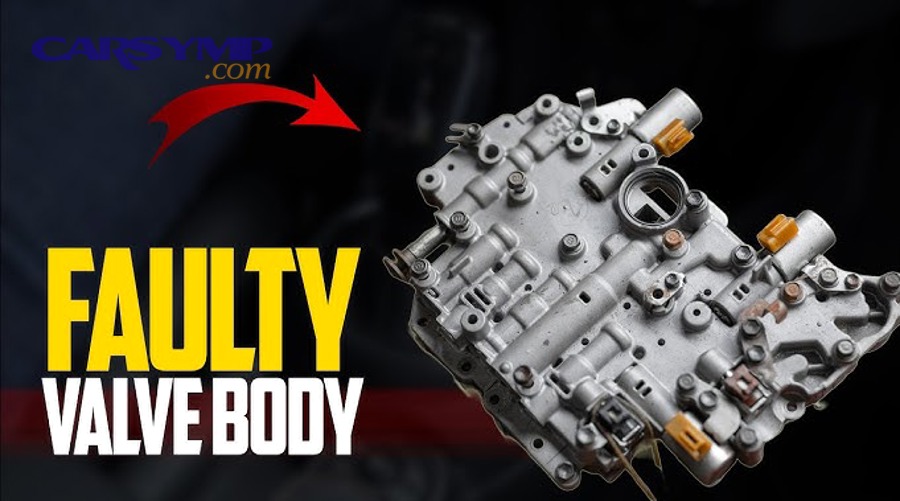
To better understand why the symptom drives the price, it helps to picture the full spectrum of transmission repair as a cost ladder. At the bottom rung: simple fluid services and minor external fixes. At the top: complete transmission replacement. Most drivers land somewhere in the middle, and the warning sign they bring to the shop is what determines which rung they start on.
What Does a Transmission Actually Do in Your Vehicle?
A transmission is the component that transfers power from your engine to the drive wheels and manages gear ratios so your engine operates efficiently at all speeds — both low-speed torque and high-speed cruising. Without it, your vehicle cannot move. Inside a modern automatic transmission, hundreds of precision components — clutch packs, solenoids, a valve body, a torque converter, and a complex electronic control system — must all work together within tolerances measured in thousandths of an inch. This mechanical complexity is exactly why transmission labor costs are so high: a technician must remove, disassemble, inspect, reassemble, and reinstall a component that is physically difficult to access, deeply integrated into the drivetrain, and unforgiving of errors during reassembly.
Why Does the Same Symptom Cost Different Amounts to Fix?
Even identical symptoms can produce dramatically different repair bills depending on the following variables:
- Transmission type: An automatic, manual, CVT, or dual-clutch transmission each have different internal architectures, parts costs, and labor requirements.
- Vehicle make and model: European luxury vehicles and trucks with high-torque applications carry significantly higher parts costs than compact sedans.
- Shop type: A dealership typically charges higher labor rates than an independent transmission specialist, though a specialist often has more relevant diagnostic experience.
- Geographic location: Labor rates in urban markets are consistently higher than rural or suburban areas.
- Stage of failure: A symptom caught in its early phase is almost always cheaper to repair than the same problem addressed after weeks or months of continued driving.
How Much Does Transmission Repair Cost for a Fluid Leak?
There are two main cost tiers for a transmission fluid leak: external leaks, which typically cost $50 to $500 to repair, and internal leaks, which can require transmission removal and push costs well above $500. Fluid leaks are the most common transmission symptom drivers encounter, and in many cases, they are also the least expensive to fix — but only when addressed promptly.
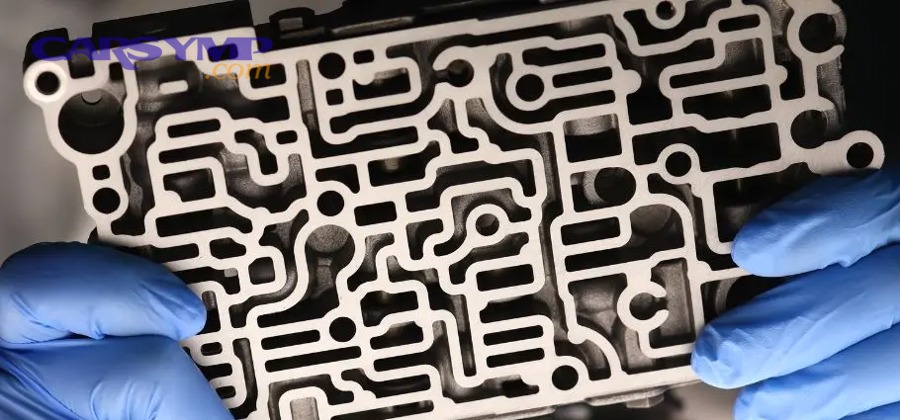
Specifically, the source of the leak determines everything about the price. The following table summarizes the most common leak sources and their associated repair cost ranges at a professional shop.
| Leak Source | Likely Cause | Shop Repair Cost | DIY Cost |
|---|---|---|---|
| Pan gasket | Worn or cracked gasket | $150–$350 | $25–$60 |
| Transmission fluid line | Cracked or loose line | $100–$300 | $20–$50 |
| Front seal | Seal failure (requires removal) | $300–$500+ | $50–$100 |
| Internal leak | Worn internal seals | $500–$1,500+ | Not recommended |
| Overflow tube | Overfilled fluid level | $50–$150 | $0–$25 |
Is It Safe to Drive With a Transmission Fluid Leak?
No — driving with a known transmission fluid leak is not safe for your vehicle, because even a slow drip can accelerate into a rapid fluid loss that triggers overheating, slipping gears, and catastrophic internal damage within a short driving window. The fluid in your transmission is not consumed or burned the way engine oil is. If the level is low, there is a leak, and that leak will not stop on its own.
More importantly, the financial risk of continued driving multiplies quickly. A pan gasket leak that costs $200 to repair today can, if ignored, cause the fluid level to drop enough to starve the clutch packs and valve body of lubrication — turning a $200 repair into a $2,500 rebuild. The short-term convenience of delaying the fix is almost never worth the long-term transmission repair cost consequence.
How Much Does a Transmission Fluid Flush or Filter Change Cost?
A transmission fluid flush or filter change is one of the most cost-effective services in the entire spectrum of transmission maintenance, typically ranging from $120 to $320 at a professional shop depending on the service type. A fluid and filter change — which drains the pan, replaces the filter, and refills with fresh fluid — runs $120 to $225 at a shop, or $45 to $55 as a DIY job. A full fluid flush, which removes all existing fluid using a machine and replaces it entirely, costs $140 to $320 at a shop and $65 to $90 DIY.
One critical note: if the fluid that comes out is dark brown, black, or carries a burnt smell, simple replacement may not fully resolve the problem. Oxidized fluid is a signal that some internal damage may have already occurred, and the fluid service may reveal the need for additional repairs rather than serve as a standalone fix.
How Much Does It Cost to Fix a Slipping or Delayed-Shifting Transmission?
Fixing a slipping or delayed-shifting transmission costs anywhere from $150 to $2,500 or more depending on the root cause, with simple solenoid replacements sitting at the lower end and worn friction clutch repairs requiring a partial or full rebuild at the higher end. Slipping gears and delayed engagement are among the most anxiety-inducing symptoms a driver can experience, and they represent the widest diagnostic range of any single warning sign category.

However, the most important thing to understand about slipping transmissions is that the symptom alone does not confirm the cause. A transmission that hesitates before engaging reverse could have low fluid, a dirty filter, a failed solenoid, or severely worn clutch packs — four problems with four very different price tags. This is why a proper diagnostic scan ($75–$150) before any repair authorization is always money well spent.
How Much Does a Transmission Solenoid Replacement Cost?
Replacing a transmission solenoid costs between $150 and $400 per solenoid at a shop, including parts and labor, making it one of the most cost-effective repairs available for a transmission that is slipping, shifting erratically, or throwing shift-related diagnostic codes. Solenoids are electrically controlled valves that direct hydraulic fluid through the transmission’s valve body to execute gear changes. When one fails, the transmission loses the ability to shift that particular gear correctly — producing slipping, hard shifts, or a transmission that gets stuck in one gear.
The good news is that solenoids can typically be replaced without removing or disassembling the entire transmission. A skilled technician can pull the valve body, swap the failed solenoid, reinstall, and road test the vehicle in a fraction of the time — and cost — of a full rebuild. Catching a solenoid failure early, before the poor hydraulic pressure it causes begins burning clutch packs, is the difference between a $300 repair and a $3,000 one.
How Much Does It Cost to Fix Hard Shifts or Gear Slipping Caused by Worn Clutches?
Repairing worn clutch packs inside an automatic transmission requires a partial or full rebuild and typically costs $1,500 to $3,500 or more at a shop, while a standalone manual transmission clutch replacement — a mechanically simpler job — ranges from $1,000 to $1,500. These are fundamentally different repairs despite sharing the word “clutch,” and the distinction matters for budgeting.
In an automatic transmission, clutch packs are internal multi-disc assemblies that are compressed and released hydraulically to engage each gear. When these wear out — often due to overheating, low fluid, or age — the transmission slips under load because the clutches can no longer hold the gear firmly. Replacing them requires the transmission to be fully removed from the vehicle, opened, inspected, and reassembled with new friction material. In a manual transmission, the clutch is a single disc between the engine and gearbox, and its replacement, while still a significant labor job, is considerably more straightforward.
What Do Drivers Pay When Their Transmission Makes Grinding, Shaking, or Humming Noises?
Drivers experiencing transmission grinding, shaking, or humming noises can expect to pay between $200 and $4,000 or more, depending on whether the source is a minor bearing failure, a torque converter problem, or deep internal gear damage. Noise symptoms are among the most diagnostically complex because multiple drivetrain components can produce similar sounds — making proper identification critical before any repair is authorized.
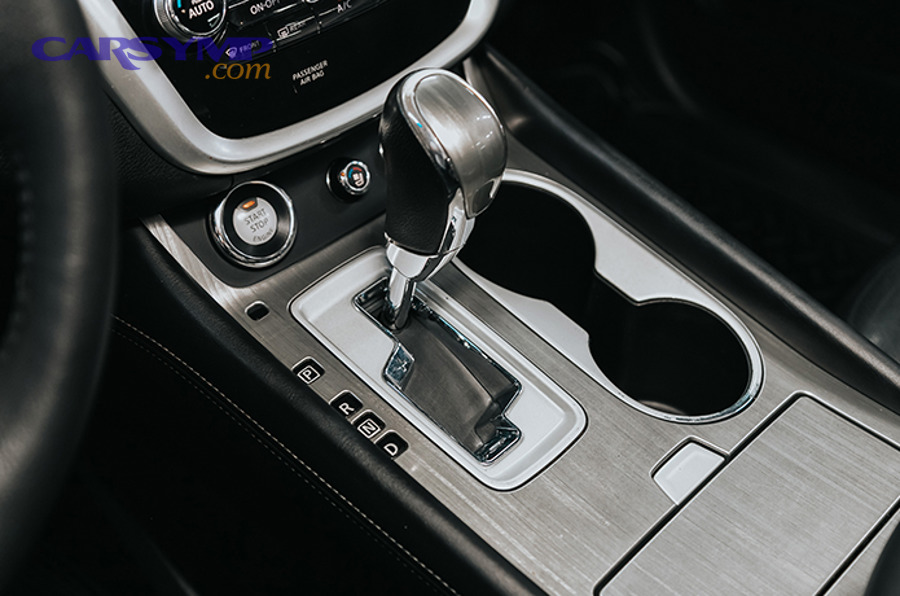
Specifically, a grinding noise during gear shifts typically points to worn gear synchronizers or critically low fluid levels in a manual transmission, while shaking or vibration during acceleration more often implicates the torque converter or worn engine and transmission mounts. A humming sound that changes with vehicle speed — but not engine RPM — frequently originates from wheel bearings or CV joints rather than the transmission itself, making it one of the most common sources of costly misdiagnosis.
How Much Does Torque Converter Repair or Replacement Cost?
Replacing a torque converter costs between $1,000 and $2,500 at a professional shop combining parts and labor, with the converter itself running $600 to $1,000 as a standalone part. The torque converter is the fluid coupling that connects the engine to the automatic transmission, and when it begins to fail, the symptoms — shuddering at low speeds, slipping under load, overheating — closely mimic worn clutch pack failure, making accurate diagnosis essential.
A torque converter clutch solenoid failure is a less expensive scenario within this category: replacing just the solenoid that controls converter lockup can resolve shudder symptoms for $150 to $400 without touching the converter itself. Technicians should always scan for codes and perform a stall speed test before recommending full converter replacement to confirm the diagnosis and avoid unnecessary expense.
How Much Does It Cost to Fix a Transmission That Won’t Engage in Park or Reverse?
Fixing a transmission that rolls in park or refuses to engage reverse typically costs $500 to $1,000 for parking pawl replacement or $75 to $115 for a U-joint replacement, though a complete failure to engage any forward gear signals internal damage that may require a full rebuild or replacement in the $1,500 to $5,000+ range. A parking pawl is the small mechanical tooth that locks the output shaft when the shifter is placed in Park. When it wears out or breaks, the vehicle will roll freely despite being in Park — a serious safety issue that demands immediate repair.
Reverse gear failure in an automatic transmission is particularly concerning because the reverse clutch pack is one of the first to show wear and is often an early indicator that the transmission’s internal friction material is deteriorating throughout. A transmission that still drives forward but has lost reverse is frequently a candidate for rebuild rather than minor repair.
How Much Does It Cost When the Check Engine Light Is Transmission-Related?
When a check engine light is triggered by a transmission fault, the diagnostic cost runs $75 to $125 for a shop scan, while the actual repair cost ranges from $100 for a simple sensor replacement to $3,500+ if the fault code points to internal mechanical failure. The check engine light is an indirect but important transmission warning sign — it does not tell you the transmission is failing, but it signals that the vehicle’s onboard diagnostic system has detected a parameter outside acceptable limits in a transmission-related circuit or sensor.
In addition, many drivers dismiss a check engine light when the vehicle still seems to drive normally, which is a costly mistake when the underlying fault is transmission-related. A P0700 series code — the family of codes associated with the Transmission Control Module — can appear long before drivability symptoms become obvious, giving the driver a critical early-repair window where costs are still manageable.
How Much Does a Transmission Speed Sensor or Range Sensor Replacement Cost?
Replacing a transmission speed sensor costs $100 to $300 at a shop, while a range sensor or throttle position sensor replacement runs $150 to $350, making these among the least expensive fixes available for symptoms that can mimic severe transmission failure. Speed sensors monitor how fast the input and output shafts are rotating, and when they fail, the transmission control module loses the data it needs to execute proper gear shifts — resulting in erratic shifting, delayed engagement, or a transmission stuck in one gear.
These sensors are accessible without removing the transmission in most vehicle applications, which keeps labor time — and therefore cost — low. Because their failure symptoms overlap with far more expensive problems, diagnosing a speed sensor fault early through a proper scan represents one of the clearest cases where a $100 diagnostic investment prevents a $2,000+ misrepair.
How Much Does a Burning Smell From the Transmission Cost to Repair?
A burning smell from the transmission signals overheating or fluid breakdown, with repair costs starting at $140 to $320 for a fluid flush and climbing to $1,500 to $4,500 or more if internal clutch damage has already occurred. Fresh transmission fluid carries a slightly sweet or tart odor. When that smell turns acrid and burnt, the fluid has thermally broken down and can no longer protect the transmission’s internal friction surfaces — and every mile driven in that condition accelerates component wear.

The urgency here cannot be overstated. A burning smell is not a “monitor and wait” symptom. It is a signal that the transmission is operating at temperatures high enough to cause corrosive activity on clutch material and metal surfaces. Drivers who pull over, check fluid condition, and take immediate action often resolve the issue with a flush and leak repair. Drivers who continue operating the vehicle until drivability symptoms appear often require a full rebuild. The transmission repair cost difference between those two decisions can easily exceed $3,000.
What Is the Difference in Cost Between Transmission Repair, Rebuild, and Replacement?
Repair wins for isolated component failures ($50–$2,500), rebuild is best for widespread internal wear where the transmission core is still viable ($1,500–$4,500), and full replacement is optimal when the transmission is beyond internal restoration or a quality remanufactured unit offers better long-term value ($1,800–$7,000+). This three-way decision is the most consequential financial choice a driver faces after receiving a transmission diagnosis, and the right answer depends on both the symptom severity and the vehicle’s overall condition and value.
To better understand How to evaluate a transmission quote, it helps to know exactly what each service includes — because shops do not always define these terms consistently, and a misunderstanding about what was quoted can lead to unexpected charges.
How Much Does a Transmission Rebuild Cost vs. a Replacement?
The following table provides a direct cost comparison across all three service tiers, including both shop cost and what each service delivers in terms of scope and warranty coverage.
| Service Type | What It Includes | Typical Shop Cost | Typical Warranty |
|---|---|---|---|
| Minor Repair | Single component fix (solenoid, sensor, seal) | $50–$2,500 | 12 months / 12,000 miles |
| Local Rebuild | Full disassembly, inspection, replace worn parts | $1,500–$4,500 | 12–36 months / 12,000–36,000 miles |
| Remanufactured Unit | Factory rebuild with new components, tested | $2,750–$4,500+ | 36 months / 36,000 miles+ |
| Full Replacement (new/reman) | Complete unit swap | $1,800–$7,000+ | Varies by unit and shop |
Warranty options for transmission work vary significantly between service tiers, and this is an area where drivers should ask direct questions before authorizing any repair. A local rebuild from a trusted independent shop often carries a 12-to-36-month warranty, while a remanufactured unit installed by a national chain may offer a longer or more transferable warranty. Always confirm whether the warranty covers both parts and labor — many cover parts only, leaving you responsible for reinstallation costs if the unit fails again.
Is It Cheaper to Repair or Replace a Transmission Based on the Symptom?
Repair is cheaper than replacement when the failure is isolated to a single component; rebuild becomes the better value when multiple internal components are worn; and replacement is most economical when rebuild costs approach or exceed the vehicle’s market value. According to a general industry benchmark cited by Kelley Blue Book, if the total repair cost exceeds roughly 50% of the vehicle’s current market value, replacement of the vehicle — rather than the transmission — often makes stronger financial sense.
The following symptom-to-action map summarizes the recommended path and associated cost tier for each major warning sign category:
| Symptom | Severity | Recommended Action | Estimated Cost |
|---|---|---|---|
| Fluid leak (external) | Minor | Seal/gasket repair | $50–$500 |
| Burnt fluid smell | Minor–Moderate | Fluid flush + inspect | $140–$500 |
| Slipping (solenoid cause) | Moderate | Solenoid replacement | $150–$400 |
| Check engine light (sensor) | Moderate | Sensor replacement | $100–$350 |
| Hard shifts / slipping clutch | Moderate–Severe | Partial rebuild | $1,500–$3,000 |
| Grinding, shaking, no reverse | Severe | Full rebuild or replace | $1,500–$5,000+ |
| No movement, total failure | Critical | Replacement | $2,750–$7,000+ |
What Other Factors Determine How Much You’ll Pay for Transmission Repair Beyond the Symptom?
Beyond the presenting symptom, four key variables consistently inflate or reduce any transmission repair cost estimate: transmission type, detection timing, diagnostic accuracy, and the vehicle’s residual value relative to the repair investment. Drivers who understand these variables are far better positioned to evaluate competing quotes and make financially sound repair decisions.
Moreover, these factors interact with each other in ways that can compound costs. A CVT transmission in a luxury vehicle, diagnosed late, at a dealership in a high-cost urban market, will produce a quote that looks almost unrecognizable compared to a manual transmission in an economy car repaired early at an independent specialist. Same symptom, vastly different bill.
How Does Transmission Type (Automatic, Manual, CVT, DCT) Affect Repair Cost?
There are four primary transmission types — automatic, manual, CVT (continuously variable transmission), and DCT (dual-clutch transmission) — and each occupies a distinct cost tier based on internal complexity, parts availability, and the number of shops qualified to service them. Automatic transmissions are the most widely repaired and generally fall in the mid-range for both parts and labor. Manual transmissions are simpler in design and typically cost less to repair, particularly for clutch-related work. CVTs use a belt-and-pulley system instead of fixed gear ratios, and their specialized components combined with limited shop expertise push repair costs to $3,000–$8,000 or more. DCTs — found in many performance and modern European vehicles — are the most complex and expensive to rebuild, with costs ranging from $4,000 to $10,000+ when full internal service is required.
How Much More Does It Cost to Repair a Transmission If You Ignore Early Warning Signs?
Yes — ignoring early transmission warning signs will cost significantly more, because minor component failures allowed to run become system-wide failures that require full rebuilds or replacement rather than targeted repairs. The cost escalation follows a predictable pattern: a slipping solenoid left unaddressed starves adjacent clutch packs of proper hydraulic pressure, burning the friction material; burnt clutch material produces metal particles that circulate through the fluid and contaminate the valve body; a contaminated valve body causes cascading shift failures that eventually destroy the torque converter. What began as a $300 solenoid job is now a $4,000 rebuild.
Transmission specialists consistently recommend an annual transmission inspection and a fluid service every 20,000 miles as the baseline maintenance schedule to interrupt this failure chain before it starts. According to Advanced Transmission Center, repair costs can double when early symptoms are disregarded — making preventive maintenance one of the highest-return investments in vehicle ownership.
Can a Misdiagnosed Transmission Symptom Cost You More Than the Real Problem?
Yes — a misdiagnosed transmission symptom can cost more than the actual problem, because authorizing a rebuild or replacement for a vehicle whose symptoms originate outside the transmission means paying thousands of dollars without resolving the underlying issue. Symptoms like low-speed vibration, humming at highway speed, hesitation on acceleration, and intermittent gear-change delays are all produced by non-transmission components in a meaningful percentage of cases. Wheel bearings, CV axles, engine mounts, transfer case components, and even spark plug misfires can all produce symptoms that are indistinguishable from transmission problems during a casual test drive.
This is why a proper diagnostic scan — typically $75 to $125 — should always precede any authorization for transmission repair. Reputable shops will perform a road test, pull all relevant OBD codes, check fluid condition, and inspect the drivetrain as a system before quoting a transmission-specific repair. Online transmission pricing is inherently misleading without this diagnostic step, because the symptom alone does not confirm the component.
Does Transmission Repair Cost Affect Your Vehicle’s Resale Value?
Yes — a documented, professionally repaired transmission with an active warranty meaningfully increases resale value compared to a vehicle with known or unaddressed transmission symptoms, and in many cases the financial return on a quality rebuild exceeds the cost of the repair itself when the vehicle is sold. Private buyers and dealers both discount vehicles with transmission issues heavily — often by $2,000 to $5,000 or more depending on the severity of the disclosed problem. A seller who invests $2,000 in a documented rebuild and carries a transferable warranty can frequently recapture that investment fully in the sale price, while a seller who discloses a known transmission problem may absorb a discount double that amount.
In short, the transmission repair cost decision is never purely about fixing the vehicle for continued personal use — it is also a financial calculation about the total lifecycle value of the asset. Drivers who treat transmission maintenance as an investment rather than an expense consistently make better long-term decisions about when to repair, when to rebuild, and when to walk away.