


If an engine won’t fire, you can usually sort the cause fast by treating fuel, spark, and compression as three linked “parts” of the same start event—and testing the easiest, safest part first.
The quickest wins come from ruling out “no spark” or “no fuel delivery” with simple checks that don’t require deep disassembly, so you stop guessing and start isolating.
Next, you use compression as the confirmatory test: it’s slower, but it tells you whether the engine can physically make the pressure needed to light the mixture and run consistently.
To begin, use a short, repeatable workflow and a couple of safety habits so your results stay reliable from one test to the next.
What’s the fastest way to separate fuel, spark, and compression in 10 minutes?
The fastest approach is a three-pass decision tree: verify cranking speed and power, confirm spark presence, then confirm fuel pressure/delivery, and only then move to compression if the first two pass. Next, you’ll use the same order every time so “good” and “bad” results remain comparable.
After that, the key is to treat each test as a gate: if a gate fails, you don’t advance—you deepen that branch until you find the single root fault.

Here’s the practical logic behind the order:
- Power and cranking is the foundation: weak voltage can mimic bad spark, weak fuel pump output, and low compression readings.
- Spark is fast to check and often binary (present/absent). It also tells you whether key inputs like crank/cam signals and ignition control are likely alive.
- Fuel pressure/delivery is next because modern engines can still “sound normal” while being fuel-starved or over-fueled.
- Compression is last because it takes more setup, but it decisively answers “can this engine physically fire?”
To keep the workflow tight, aim for “quick tests” that do not require removing major components:
- Confirm the engine cranks strongly and evenly (no slow crank, no sudden speed changes).
- Check for spark output at the ignition source (coil/plug) using a safe tester or controlled plug check.
- Check fuel pressure at the rail (or pump command + pressure build) and look for injector pulse indicators if needed.
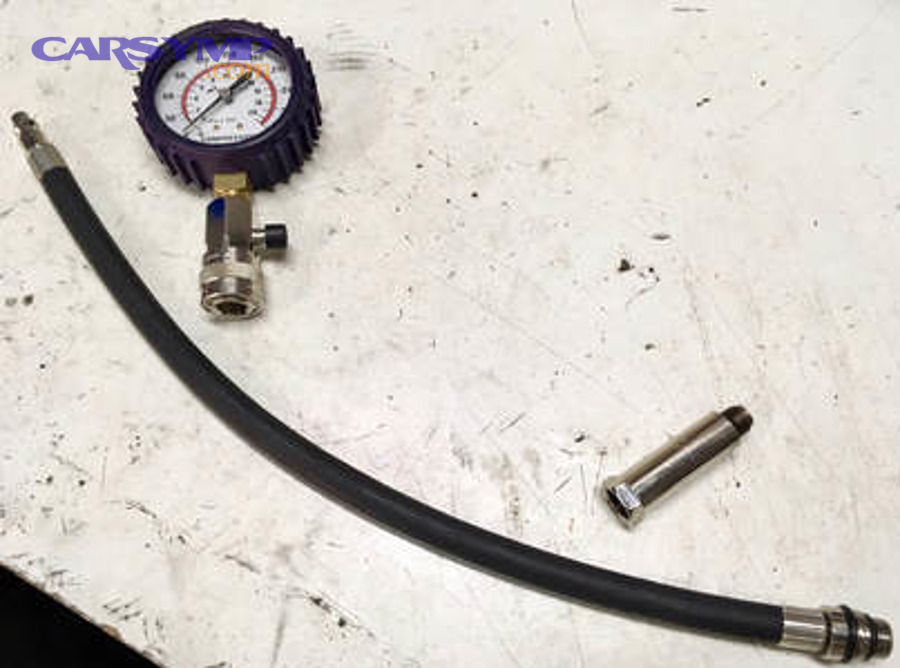
- Run a compression test (or a relative compression proxy) if spark and fuel both look plausible.
According to the CDC’s National Institute for Occupational Safety and Health (NIOSH) Pocket Guide, gasoline has a very low flash point and is classified as a flammable liquid—so any fuel testing should be done with ventilation, eye protection, and ignition sources controlled.
How do you run a quick spark test without damaging coils or electronics?
Yes—you can do a quick spark check safely if you use a proper spark tester (or controlled plug-to-ground method), keep cranking time short, and avoid unplugging random connectors with the key on. Next, you’ll use your spark result to decide whether to chase ignition control, sensors, or fuel delivery.
After that, the goal is not “a spark somewhere,” but “a consistent spark event while cranking,” because intermittent or weak ignition can look like fuel issues.
Fast spark test options (choose one):
- Inline spark tester: Connect between coil and plug (or coil wire and plug wire on older systems). Crank and observe consistent flashes.
- Coil-on-plug “spare plug” test: Insert a known-good plug into the coil, clamp the plug’s metal shell to a solid engine ground, crank briefly, and watch for spark.
- Oscilloscope method (advanced): Confirms coil primary events and dwell stability, best when misfire/no-start is intermittent.
Interpretation that prevents false conclusions:
- No spark on all cylinders usually points upstream (power feed, ground, crank/cam signal, immobilizer, PCM control).
- Spark on some cylinders only suggests coil(s), wiring, or localized plug/boot faults.
- Weak/orange spark can be low cranking voltage, bad coil output, excessive plug gap, or poor grounding in your test setup.
Micro-checks that save time:
- Confirm coil power feed with a test light or meter while cranking (don’t assume “key on” equals “cranking power”).
- Check the plug condition as a clue: wet plugs often indicate fueling is happening; bone-dry plugs often suggest no injection (or no fuel pressure).
According to an Identifix step-by-step crank/no-start guide (August 2024 update on their blog content), inspecting plugs for wet/contaminated conditions and then testing ignition coils is a recommended early branch when spark/ignition problems are suspected.
How can you confirm fuel delivery quickly without guessing?
You can confirm fuel delivery quickly by measuring fuel pressure against spec and, if pressure is borderline, verifying volume/flow over a timed interval—because pressure alone can lie. Next, you’ll use “pressure + flow” to decide whether the issue is pump, filter/regulator, wiring, or injectors.
After that, treat fuel as two separate questions: “does fuel reach the rail at the right pressure?” and “do injectors deliver the right amount into cylinders?”
Quick fuel checks, from easiest to deeper:
- Listen for pump prime (many cars prime for ~2 seconds key-on). No sound is a clue, not a verdict.
- Pressure test at the rail (or service port): key-on prime, then cranking pressure. Compare to spec.
- Pressure hold test: pressure that drops instantly can suggest a leaking injector, check valve, or regulator issue.
- Volume/flow test if pressure is low or unstable: confirm the pump can deliver adequate fuel volume under demand.
Before you run any fuel test, set your safety baseline: eye protection, gloves, ventilation, and no spark sources—because fuel under pressure can atomize and ignite.
According to Delphi Auto Parts’ fuel pressure/flow testing guide, fuel system testing should prioritize safety and then measure pressure against manufacturer specifications, and if pressure is sufficient, follow with a fuel volume test to confirm delivery to injectors.
Common patterns and what they mean:
- Zero/near-zero pressure: pump not running, no power/ground to pump, failed pump, or major leak.
- Low pressure: restricted filter, weak pump, voltage drop to pump, failing regulator (system-dependent).
- Good pressure but no start: shift focus to injector pulse, spark under compression, or mechanical timing/compression.
To keep results organized, this table helps you map “spark vs fuel vs compression” outcomes into the next best step:
This table shows what each pass/fail combination usually implies and what it helps you do next—so you don’t jump to parts-swapping.
| Spark result | Fuel pressure result | Compression result | Most likely direction | Next quick step |
|---|---|---|---|---|
| No spark (all) | Unknown/any | Not needed yet | Ignition control / crank-cam input / immobilizer / power feed | Check coil power, fuses, grounds, scan for CKP/CMP codes |
| Good spark | Low/zero | Not needed yet | Pump/voltage drop/filter/regulator | Verify pump command, measure pump voltage while cranking, volume test |
| Good spark | In-spec | Low across cylinders | Mechanical (rings/valves/timing) or test method error | Repeat compression WOT, consider wet test, verify cam timing |
| Good spark | In-spec | One cylinder very low | Localized mechanical fault | Wet test and/or leak-down to isolate rings vs valves |
| Intermittent spark | In-spec | Normal | Ignition coil/driver/grounding issue | Swap coils (where applicable), scope primary signal, inspect grounds |
When should you jump to compression testing, and what results actually matter?
You should jump to compression testing when you have reasonable evidence of spark and fuel delivery, yet the engine still won’t catch—because compression is the “can it physically fire?” gate. Next, you’ll use correct test technique (especially throttle position) to avoid false low readings.
After that, focus on variance between cylinders as much as absolute numbers, because an engine can have “okay” average compression yet one dead cylinder that prevents starting smoothly.
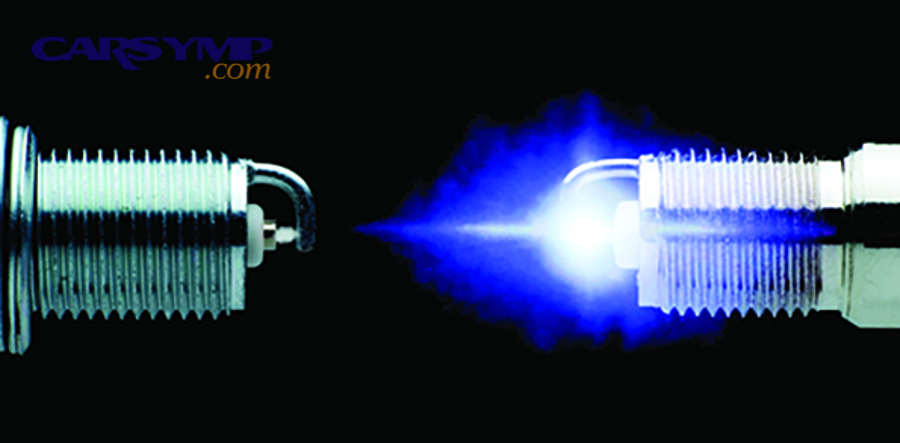
Compression test setup that prevents bad data:
- Charge the battery (or connect a charger) so cranking speed stays stable.
- Disable fuel and ignition as appropriate so the engine doesn’t start mid-test or wash cylinders further.
- Remove all plugs to reduce starter load and keep cranking speed consistent.
- Use the same number of revolutions for each cylinder (or crank until the needle stops rising—consistently).
According to NASA Speed News Magazine’s compression test walkthrough (May 2024), the throttle should be held wide open during cranking because testing at idle throttle can yield low, inaccurate readings; it also emphasizes consistent cranking revolutions and comparing cylinder variance.
How to read results like a diagnostician:
- Even but low across all cylinders: could be timing jumped, worn engine, or test error (throttle not open, slow cranking).
- One or two cylinders very low: valve sealing issue, head gasket leak between cylinders, or localized ring damage.
- Wet test improves compression: points toward ring sealing; no improvement can hint valves/seat sealing or timing.
Quick “mechanical timing suspicion” flags:
- Cranking sounds unusually fast and smooth (sometimes described as “free-spinning”).
- Compression readings are uniformly low with good battery and WOT.
- You have correlation-type codes (or symptoms) suggesting timing relationship drift.
What quick clues tell you it’s not fuel or spark, but a control/sensor timing problem?
Yes—control and timing problems often reveal themselves when spark and fuel appear “present” but not synchronized, causing no combustion despite activity. Next, you’ll use scan data, DTC patterns, and cranking behavior to decide whether to chase crank/cam signals, immobilizer, or PCM power/grounds.
After that, treat sensor/timing faults as “coordination failures”: the engine can have fuel and spark, but at the wrong time.
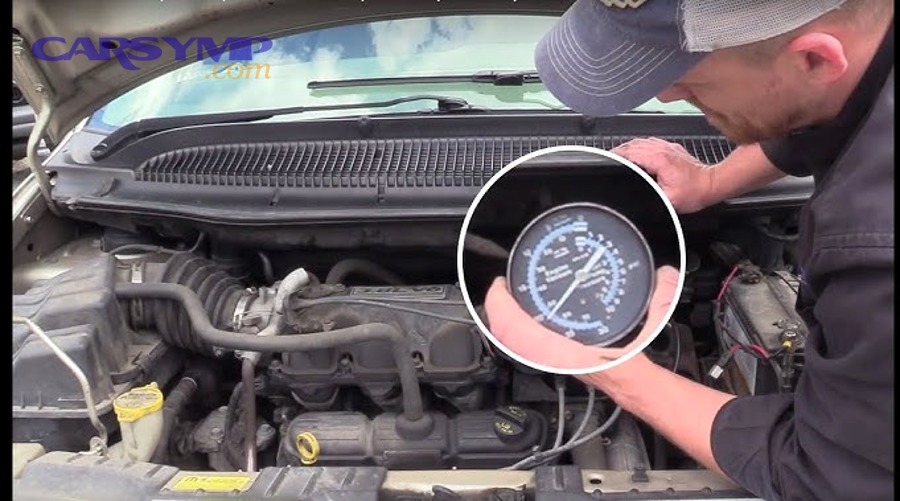
Fast control/timing checks that don’t require tearing down:
- Scan for codes and freeze-frame: even a generic scanner can show you whether the PCM is seeing crank speed (RPM) while cranking.
- Watch live data: engine RPM, throttle %, coolant temp plausibility, and immobilizer status (if available).
- Look for “paired codes”: certain crank/cam-related codes tend to show up together when the PCM loses synchronization.
In practical no-start triage, codes that implicate crankshaft or camshaft position signals are high-leverage because they can prevent proper injection and ignition timing even when components are physically intact.
According to Kelley Blue Book’s OBD-II reference for P0340, this code indicates a malfunction in the camshaft position sensor circuit and can contribute to hard starts or a no-start because disrupted cam signals can throw off timing used for ignition and fuel injection control.
According to CarParts.com’s explainer for P0335, the PCM sets this code when it can’t detect a signal from the crankshaft position sensor, and that crank signal is a foundational input without which the engine may not start.
Use cranking sound as a “macro signal”: if the engine cranks unevenly (surging speed), it can indicate uneven compression; if it cranks steadily but never coughs, you lean toward synchronization/fueling faults.
Important: the phrase Scan codes that help no-start diagnosis should be understood as “codes that narrow the branch quickly,” not as a guarantee of the exact failed part—because wiring, connectors, and power/ground faults can create the same DTC behavior.
How do you avoid common quick-test traps that create false results?
No—most “mystery no-start” cases are not mysterious; they’re false results from poor test conditions like weak battery, flooded cylinders, or unsafe fuel handling. Next, you’ll standardize your setup so each test answers one question cleanly.
After that, you’ll stop mixing signals—like testing compression with a half-dead battery or judging fuel by smell alone.
Trap 1: Slow cranking that looks like “no spark” or “low compression”
- Low battery voltage reduces coil output and injector performance, and it can also lower compression gauge readings.
- Fix: charge battery, clean terminals, verify voltage drop on main cables, then retest.
Trap 2: Wet plugs and cylinder washdown that hides real compression
- Repeated cranking with fuel present can wash oil from cylinder walls, reducing ring seal and lowering compression temporarily.
- Fix: clear excess fuel, dry/replace plugs, then retest compression correctly.
According to an ALLDATA quick-start no-start guide (May 2024), repeated cranking with fuel present can create a “cylinder wash down” condition, and it recommends pulling plugs and cranking to clear residual fuel, then adding a bit of oil to help ring sealing before retesting and proceeding to compression testing.
Trap 3: Assuming “has fuel” because you smell gas
- Smell can come from a single leaking injector or a brief prime; it doesn’t confirm rail pressure or injector pulse at the right time.
- Fix: measure pressure and, when needed, confirm delivery volume under pump operation.
Trap 4: Unsafe fuel handling during pressure tests
- Fuel spray can atomize; spark sources include relays, tools, static discharge, and smoking/open flame.
- Fix: follow a safety-first sequence and relieve pressure appropriately before disconnecting lines.
According to Delphi’s fuel test guide, releasing fuel under pressure can cause fire and injury and testing should be done with safety glasses/gloves in a well-ventilated area, avoiding spark sources.
Trap 5: Misreading a “good spark” that can’t fire under compression
- Some weak ignition systems can spark in open air but fail when cylinder pressure rises.
- Fix: if spark looks borderline, reduce plug gap temporarily for testing or use a tester that loads the system; then verify ignition power/grounds and coil output.
Note: Many drivers describe this scenario as car cranks but won’t start, but that single symptom can be produced by radically different root causes—so your job is to make each quick test eliminate whole categories, not chase the last part you replaced.
Contextual Border: You’ve now covered the main macro workflow (power → spark → fuel → compression). Next, we’ll shift to micro shortcuts and edge cases that help when the basics look “okay” but the engine still refuses to light.
Advanced shortcuts and edge cases for stubborn no-starts
How do you spot and clear a flooded engine without wasting hours?
Yes—flooding is real and common after repeated cranking, and the fastest fix is to stop adding fuel, clear wet plugs, and let cylinders regain seal before you retest. Next, you’ll use a controlled “clear” strategy to avoid more washdown.
Typical Flooded engine symptoms and fix looks like this: strong cranking, occasional cough, fuel smell, and wet plugs. Practical recovery steps:
- Pause cranking and inspect plugs; dry or replace if soaked.
- If your vehicle supports it, use clear-flood mode (often wide-open throttle during cranking on many fuel-injected systems) to reduce injector pulse.
- Let the engine sit briefly to evaporate excess fuel, then retry with a consistent method.
According to ALLDATA’s no-start guide, repeated cranking with fuel can wash down cylinders; it recommends pulling plugs, cranking to clear residual fuel, and adding a small amount of oil to help ring sealing before retrying and continuing diagnosis.
Which scan-code patterns narrow the cause fastest in a no-start?
You can narrow the cause fastest by prioritizing codes tied to engine position/sync, fuel pump control, and correlation—because these can disable injection timing or ignition events even when components test “good.” Next, you’ll treat codes as branch selectors and confirm with one targeted test per code family.
Use this mindset: one code family → one confirming test.
- Crank signal family (example: P0335): confirm RPM while cranking, inspect CKP wiring/connector, verify sensor output and reluctor integrity.
- Cam signal family (example: P0340): confirm CMP circuit integrity, verify synchronization behavior, inspect wiring and timing components if correlation is suspect.
- Multiple related codes together: treat as “power/ground or harness” until proven otherwise.
Important micro-detail: The phrase Scan codes that help no-start diagnosis is most useful when you pair it with a cranking observation—like whether the scan tool shows RPM while you crank—because RPM presence often implies a crank signal is at least being recognized.
How can you use cranking sound and “relative compression” as a quick proxy?
Yes—relative compression can be inferred quickly by comparing cranking rhythm and starter load, and you can sharpen it by measuring battery voltage drop while cranking each cylinder’s contribution indirectly. Next, you’ll use this as a triage tool before committing to a full compression gauge session.
Relative compression logic (quick and imperfect, but fast):
- Even rhythm often suggests compression is at least reasonably balanced across cylinders.
- Rhythmic “fast spots” can suggest a low-compression cylinder (less load on starter during that stroke).
- Very fast, smooth cranking can signal widespread compression loss (or severely retarded valve timing).
When you need certainty, convert the proxy into a real measurement: perform a compression test with wide-open throttle and consistent cranking revolutions.
What does “good spark” really mean when compression is present?
“Good spark” means the ignition system can consistently fire a plug under the higher pressure of a compressed cylinder—not just in open air—so borderline ignition can still fail a no-start. Next, you’ll confirm coil power, ground integrity, and plug gap/condition so your spark result reflects real-world firing demand.
When spark exists but the engine still won’t catch, use these micro checks:
- Inspect plug condition: carbon tracking, heavy fouling, cracks, and soaked electrodes can short spark to ground.
- Confirm consistent spark on multiple cylinders, not just one “lucky” cylinder.
- If you suspect weak spark, test with a known-good plug and a controlled ground, and keep cranking bursts short.
According to Identifix’s crank/no-start guidance, removing and inspecting spark plugs (including noting contamination and wetness) and testing ignition coils are early steps when spark/ignition problems may be the cause.
FAQ
Can I skip compression testing if I have spark and fuel pressure?
No—spark and pressure alone don’t prove the engine can physically trap and compress the mixture; compression confirms valve/ring sealing and helps you detect timing issues. Next, if spark and fuel both look plausible, compression becomes the quickest “hard truth” test to prevent endless electrical guessing.
Is starting fluid a reliable way to decide “fuel vs spark”?
Yes, but only as a controlled clue: if the engine briefly fires on a small, safe amount, it suggests spark and compression are at least present and shifts suspicion toward fuel delivery or injector control. Next, you still confirm with real pressure and injector pulse testing because starting fluid can mask weak ignition or marginal compression.
Why does it sometimes start after I stop cranking for a while?
Often because the engine was flooded or the battery recovered slightly; letting it sit can evaporate excess fuel and restore some cylinder sealing, or bring voltage back enough for coils/injectors to work. Next, treat that as a diagnostic hint—then verify plug wetness, battery health, and your fuel delivery control.
What’s the single biggest mistake in quick no-start testing?
Mixing tests without a fixed order—changing two variables at once—creates false patterns. Next, keep your workflow stable (power → spark → fuel → compression), and write down each result so you don’t “reinterpret” the same symptom differently each time.