


If you’re stuck on a no-start, scan codes that help no-start diagnosis can turn a frustrating guess-fest into a short list of likely faults and the next best test. The goal is not to “fix by code,” but to use codes as direction: what system lost power, which signal disappeared, and what the engine computer believes went wrong.
Beyond basic code reading, you’ll learn how to capture the most useful evidence when the engine won’t fire—like freeze-frame, pending codes, monitor status, and a few live data items that matter during cranking. After that, you’ll know how to connect a code to a real-world check: a fuse, relay, sensor signal, fuel pressure, or wiring ground.
You’ll also see how to interpret “code clusters” (for example, low-voltage plus communication faults) so you don’t chase the wrong part first. The same approach helps whether your scan tool is a cheap Bluetooth dongle or a professional bidirectional scanner.
To lead into the main workflow, here’s the big idea: codes are most powerful when you combine them with a cranking snapshot—battery voltage, RPM signal, and whether the ECU sees engine sync—because those three cues separate causes that look similar from the driver’s seat.
Which scan codes that help no-start diagnosis should you prioritize first?
Prioritize power/voltage, communication, and engine speed/sync codes first, because they can prevent fuel and spark decisions from being valid. Next, move to fuel delivery and ignition-related codes that match what the ECU can still “see” during cranking.
To start cleanly, think in groups: codes that stop the ECU from working, codes that stop it from knowing engine position, and codes that stop it from delivering fuel or spark.
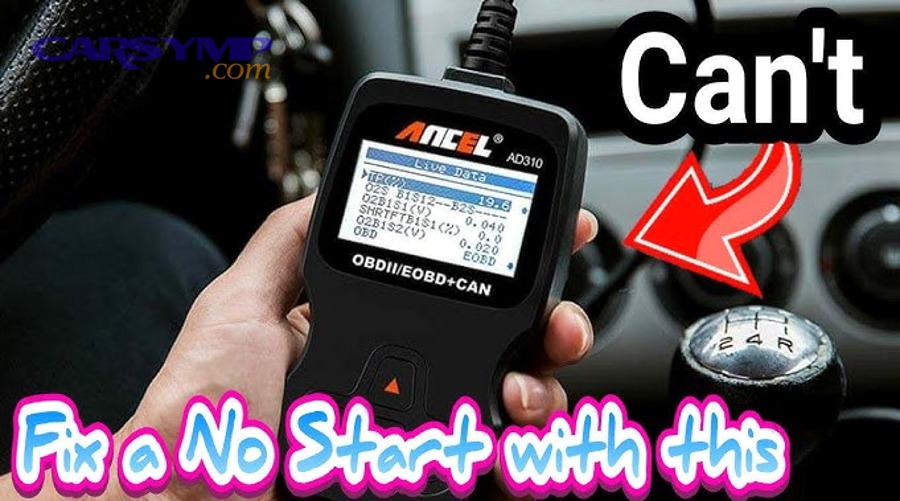
Group 1: Power, voltage, and ECU wake-up codes
These codes often appear after a weak battery, poor connections, a failing alternator, or a main relay issue. If you see multiple “low voltage” or “ECU power” codes, treat them as a root cause candidate, not background noise.
- Low voltage / system voltage: often P0562 (system voltage low) and similar signals that cranking voltage collapsed.
- ECU/PCM power relay: often P0685 or manufacturer-specific “main relay” faults that can shut down injector/spark control.
- Keep-alive memory issues: sometimes show up after repeated dead-battery events; treat as a clue, not a diagnosis.
Group 2: Communication and network codes (U-codes)
When modules can’t talk, a no-start can happen even if the engine is mechanically fine. A single U-code may be minor; a storm of U-codes usually points to voltage drop, poor grounds, water intrusion, or CAN wiring problems.
- U0100 (lost communication with ECM/PCM): can be a real network fault or simply a module browning out during crank.
- U0121 (lost comm with ABS) and similar: often secondary if the battery voltage is unstable.
Group 3: Engine speed/sync codes (crank/cam)
If the ECU does not see a valid crank signal, it may disable injectors and spark completely. Codes like P0335/P0340 or correlation faults are high-value because they connect to a single question: does the ECU know the engine is turning?
Group 4: Fuel delivery and air metering codes
Fuel pump control, pressure, injector circuit, and airflow plausibility codes help you decide whether to verify pressure first or to verify injector pulse first.
Group 5: Ignition and misfire-related codes
Misfire codes are not guaranteed in a hard no-start, but when they do appear (especially after a brief start-and-stall), they can point toward coils, plugs, or timing issues.
How do you scan correctly when the engine won’t start?
Scan correctly by reading stored, pending, and history codes, then capturing freeze-frame and a short live-data crank snapshot before clearing anything. That preserves the evidence you need for the next test.
Next, use a repeatable sequence so you don’t miss the one screen your scanner hides behind menus.
Step 1: Confirm the scan tool can “see” the car
If the tool won’t connect, check whether the OBD port has power and ground and whether the vehicle network is awake. A dead scan tool connection can be its own clue—especially if the port fuse is shared with another circuit like a 12V outlet.
Step 2: Read all modules, not just the engine
A no-start can be triggered by non-engine modules (for example, body control or theft deterrent). Full-system scan matters because the engine module may only show “symptoms,” while another module holds the “cause.”
Step 3: Save freeze-frame and note code order
Freeze-frame shows the moment a code set—engine speed, voltage, load, temperature. Code order matters too: a voltage code that set first can make later sensor codes misleading.
Step 4: Record a 5–10 second cranking live-data snapshot
Capture battery voltage, RPM, crank/cam sync (if available), throttle position, MAP, and commanded fuel status. These items separate “no signal” from “no fuel” quickly.
Step 5: Clear codes only after you’ve documented everything
Clearing too early can erase your best trail. Once documented, clear and re-crank to see which codes return immediately—those are often the most actionable.
Which electrical and power-distribution codes point to a “no-start” root cause?
Electrical and power-distribution codes point to a root cause when they explain why multiple systems failed at once—especially during cranking, when voltage drop is highest. Start with battery health, cable integrity, grounds, and the main relay/fuse paths.
After that, verify the power feed that actually matters: ECU power, injector power, ignition power, and fuel pump power.
Voltage-drop patterns that create “phantom” codes
A battery can show 12.6V at rest yet fall below critical thresholds while cranking. When that happens, the ECU may reset, modules may drop off the network, and you can get a scattered set of unrelated-looking faults.
- What to look for: multiple modules reporting undervoltage, communication loss, and sensor reference faults at the same time.
- What to do first: measure cranking voltage at the battery and at the ECU power feed if you can access it safely.
Main relay, ECU power, and injector power clues
If your scan shows an ECU power relay code or a pattern of “actuator circuit open” codes, don’t jump to replacing sensors. Confirm fuses, relay operation, and whether injectors/coils have proper power supply with key on and during crank.
Battery terminals and ground integrity checks
Loose clamps, hidden corrosion under insulation, or a weak ground strap can mimic many failures. A quick check is a voltage drop test across the positive cable and the main ground path while cranking.
- Good practice: do not rely on visual inspection alone; corrosion can hide between cable and terminal.
- Fast clue: headlights dim severely during crank and the scan tool disconnects intermittently.
Which crank and cam signal codes narrow the no-start fastest?
Crank and cam signal codes narrow the no-start fastest because the ECU needs engine speed and position to time fuel injection and spark. If RPM stays at 0 while cranking, treat crank signal or its wiring/power/ground as the primary path.
Next, use correlation and sync clues to decide whether the issue is a sensor, wiring, tone wheel, or mechanical timing.

High-value codes and what they usually mean
- P0335 / P0336: crankshaft position sensor circuit faults or signal plausibility issues; can be sensor, wiring, connector, or tone wheel damage.
- P0340 / P0341: camshaft position sensor circuit faults; may still allow starting on some engines but can also cause a hard no-start depending on design.
- P0016 / correlation: crank/cam timing correlation; can indicate timing chain/belt slip, stretched chain, or incorrect installation after repair.
- P0725 (engine speed input circuit): sometimes appears as a “proxy” for crank signal on certain platforms.
Use live data: does the ECU see RPM during cranking?
Many scan tools show RPM even during a no-start. If RPM is present and stable, the crank sensor is likely working at least enough to generate a speed signal—so your next checks shift toward fuel, spark, or immobilizer logic.
Conversely, if RPM is missing or flickers wildly, focus on sensor power/ground, signal integrity, and harness routing near ignition coils or alternator wiring that can introduce noise.
When a crank code is real vs when it’s a “victim”
Repeated extended cranking can sometimes set crank/cam codes because voltage got low or because the ECU saw an implausible pattern during a reset. This is where your earlier documentation helps: if undervoltage set first, you may need to fix the electrical issue before trusting sensor codes.
In real-world complaints, a driver may describe Bad crank sensor symptoms as sudden stall, intermittent restart after cooling, or a tachometer that drops to zero—use that narrative to decide whether to chase the sensor or chase power supply first.
Which fuel-system and injector-related codes help you decide “pressure vs pulse”?
Fuel-system codes help you decide “pressure vs pulse” by pointing to pump control, pressure plausibility, or injector circuit issues. If the ECU commands the pump but rail pressure is low, verify pressure first; if pressure is fine but injectors never pulse, verify control and security logic.
After that, connect the code to the simplest proof test you can do safely.
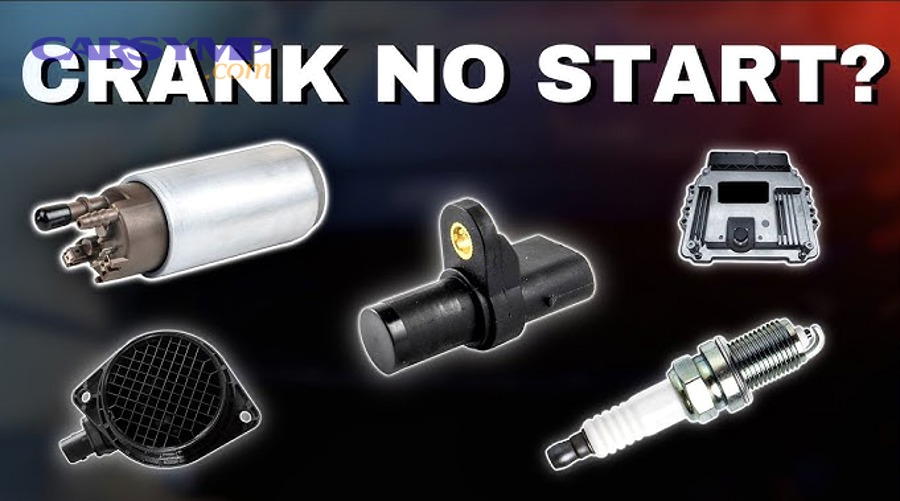
Fuel pump control and relay circuit codes
- P0230: fuel pump primary circuit; often wiring, relay, fuse, or control module fault.
- P0231 / P0232: fuel pump secondary circuit low/high; can indicate power feed, ground, or pump driver issues.
- P0627: fuel pump control circuit open; can show up on vehicles with electronic fuel pump control modules.
If these appear, check the pump fuse, relay output, and voltage at the pump (or pump module) during crank. A code alone does not confirm the pump is bad; it confirms the ECU detected an electrical abnormality somewhere in that circuit.
Fuel pressure and mixture plausibility codes
- P0087: fuel rail/system pressure too low; can be pump, filter restriction, leak, regulator issue, or low voltage to the pump.
- P0191: fuel rail pressure sensor range/performance; can be sensor, wiring, or real pressure fluctuation.
For direct-injection systems, low pressure on the low-pressure side can prevent the high-pressure pump from building rail pressure, so confirm low-pressure delivery before blaming the high-pressure pump.
Injector circuit codes and what to check first
Injector circuit codes (often P0201–P0208 or manufacturer-specific) suggest a wiring issue, connector problem, or driver fault. If multiple injector codes appear at once, suspect shared power feed, shared ground, or ECU driver shutdown rather than multiple injectors failing simultaneously.
How codes pair with quick mechanical checks
Even when codes point to fuel, use basic plausibility checks to avoid tunnel vision. For example, the phrase Fuel vs spark vs compression quick tests matters because a perfect fuel fix won’t help if the engine has no compression from a slipped timing belt.
Which ignition and misfire-related codes matter in a no-start context?
Ignition and misfire codes matter in a no-start context mainly when the engine almost starts, starts then stalls, or runs briefly with severe misfire. Misfire codes can guide you to a cylinder group, but they are less reliable in a hard no-start where the ECU may not get enough running time to detect misfire.
Next, treat these codes as a reason to verify spark and timing integrity rather than instantly replacing coils.
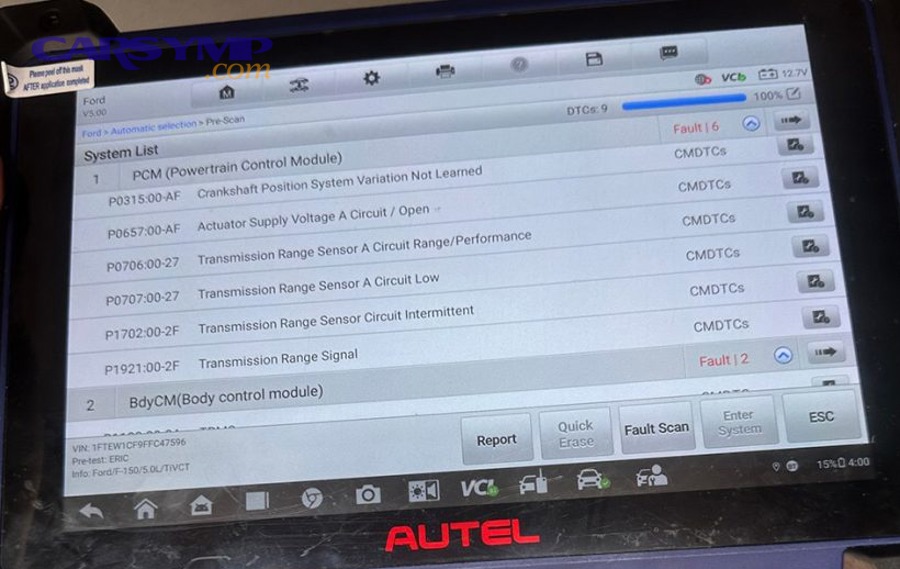
Common ignition/misfire code families
- P0300: random/multiple misfire; can be fuel, ignition, air, or mechanical timing.
- P0301–P0308: cylinder-specific misfire; helps narrow to a cylinder, injector, coil, plug, or compression issue.
- P0351–P0362 (varies): ignition coil primary/secondary circuit faults; can be wiring, coil driver, or shared power feed.
When a “spark code” is actually a power code in disguise
If multiple coil circuit codes appear together, suspect a blown ignition fuse, bad relay, or harness power feed. It is uncommon for several coils to fail electrically at the same time without a shared cause.
Practical proof tests that match ignition codes
Use a spark tester if you have one, or at least verify coil power and ground with a multimeter. If spark exists but the engine still won’t run, shift to fuel pulse and compression checks instead of swapping parts randomly.
How do you combine codes with live data to choose the next best test?
Combine codes with live data by answering three questions during cranking: Is voltage stable? Is RPM present? Is fueling or spark being commanded? Those answers choose the next best test with the highest payoff.
After that, use code context to avoid testing the wrong system first.
Cranking snapshot: the “big three” signals
- Battery voltage during crank: if it collapses, fix power supply before trusting sensors or network codes.
- RPM signal: if RPM is 0, chase crank signal; if RPM is normal, move to fuel/spark/air/security logic.
- Engine sync / cam-crank status (if shown): if sync is “no,” consider cam sensor, timing correlation, or mechanical timing issues.
Air and plausibility sensors that support or contradict a code
MAP, MAF, and throttle position can help validate whether the engine is drawing air and whether the ECU believes the readings are plausible. A stuck-open throttle or a disconnected intake duct can create “won’t start” behavior that looks like fuel trouble.
Bidirectional tests and why they matter
If your scanner supports it, you can command the fuel pump, actuate relays, or perform output tests. This can confirm whether the ECU can drive a circuit and whether the circuit responds—useful when you have pump or relay codes.
What if there are no codes, or the scanner can’t connect?
Yes, you can have a no-start with no codes, because not every failure violates a monitored circuit, and some failures happen outside the ECU’s visibility. If the scanner can’t connect, treat it as a power/port/network clue and check the OBD port fuse, battery voltage, and grounds.
Next, use simple checks to restore basic communication before assuming the ECU is dead.
No-code scenarios that are still common
- Low fuel pressure without pressure sensor feedback: some systems won’t set a code if pressure is low but not monitored precisely.
- Mechanical timing slip: may set correlation codes on some vehicles, but not always—especially if the ECU resets during crank.
- Compression loss: not directly monitored; the ECU may “see” cranking but cannot infer compression reliably.
When the port doesn’t power the scan tool
Many OBD ports share power with an interior fuse. If your scan tool won’t turn on or connect, check the port power pin and the fuse that supplies it—often the same circuit as the cigarette lighter or accessory outlet.
Security logic can block start even when the engine ECU looks normal
Some no-starts occur because the vehicle refuses to enable injector pulse or spark due to theft deterrent logic. In that scenario, you may see few engine codes, but body or security modules may log clues. Drivers often describe Immobilizer and security light no-start causes as a flashing key icon, a brief start-then-stall, or a crank with no firing.
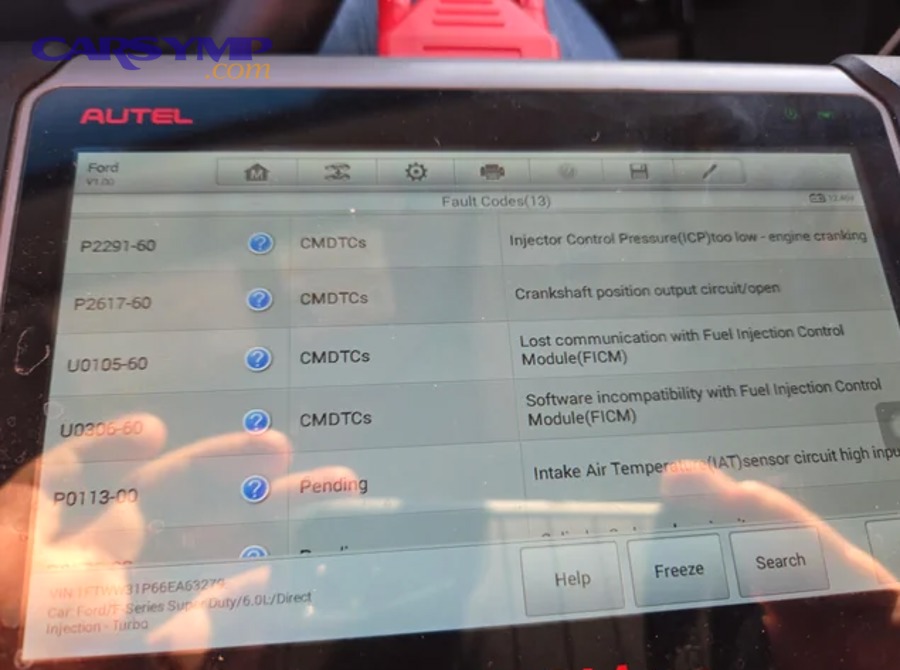
Which code clusters are most useful for quick decision-making?
The most useful code clusters are those that point to a shared cause: undervoltage plus U-codes, crank signal plus injector disable, or pump control plus low pressure. A cluster reduces uncertainty because it connects multiple “symptoms” to one “cause.”
After that, validate the cluster with one high-confidence measurement instead of swapping parts.
These two sentences introduce the next table clearly: This table contains common code families that show up in no-start complaints and the first check that tends to confirm or eliminate each path. It helps you choose the fastest “proof test” before buying parts.
| Code family | Examples | What it often indicates in a no-start | Best first checks |
|---|---|---|---|
| Voltage / power | P0562, P0685 | ECU/module browning out; main relay or power feed issues | Cranking voltage, cable/ground voltage drop, ECU/IGN fuses, main relay output |
| Communication | U0100, U0121 | Network dropouts often caused by low voltage, poor grounds, CAN wiring faults | Battery health, ground straps, scan tool connection stability, inspect CAN wiring if persistent |
| Crank/Cam signal | P0335, P0340, P0016 | ECU cannot time fuel/spark; possible sensor, wiring, or timing slip | RPM during crank, sensor power/ground, connector inspection, correlation and timing verification |
| Fuel pump control | P0230, P0231, P0627 | Pump relay/module circuit fault; pump not commanded or not powered | Relay/fuse checks, pump voltage during crank, bidirectional pump command (if available) |
| Fuel pressure | P0087, P0191 | Low/unstable pressure or sensor plausibility issue | Pressure test, filter restriction check, low-side delivery verification (DI engines) |
| Ignition / misfire | P0300, P035x | Severe misfire, coil driver or power feed issues (more common in start-then-stall) | Spark test, coil power feed, shared ignition fuse/relay, plug condition |
In a typical complaint where the car cranks but won’t start, this table helps you avoid bouncing between systems. If you see crank signal codes and RPM is 0, test that path; if RPM is present but you have pump circuit codes, test pump power and pressure first.
Contextual Border: The sections above cover the main workflow for turning scan data into the next best test. Next, we shift into micro-context—rare patterns, misleading code behavior, and edge cases that can trap even experienced DIYers.
Rare scan-code patterns that mislead no-start troubleshooting
Rare patterns mislead diagnosis when codes reflect secondary effects—like a reset, a network dropout, or a security intervention—rather than the original fault. Recognizing these patterns helps you avoid replacing “victim parts.”
To keep your process reliable, treat these as exceptions that you confirm with one targeted measurement.
Pattern 1: A “blizzard” of U-codes after one weak-crank event
If dozens of modules show communication loss at the same timestamp, suspect undervoltage and ground integrity first. Fix power stability, then rescan; many U-codes disappear when the vehicle stops browning out.
Pattern 2: Misfire codes without meaningful run time
Sometimes the ECU logs misfire after brief sputtering, but the real cause is insufficient fuel pressure or incorrect sensor sync. Treat misfire codes as a symptom unless you can reproduce misfire with the engine running.
Pattern 3: Sensor codes triggered by shared reference voltage faults
A short on the 5V reference line can create multiple sensor codes (MAP, TPS, crank/cam on some designs) at once. Instead of replacing multiple sensors, isolate the 5V reference short by unplugging sensors one at a time and watching the reference recover.
Pattern 4: Security-related start blocks that look like fuel failure
Some immobilizer strategies disable injector pulse or fuel pump operation while leaving the engine ECU otherwise “healthy.” If security indicators and body-module codes align, prioritize key recognition, antenna ring, module communication, and wiring before chasing fuel components.
FAQ
Should you fix a no-start by replacing the part named in the code?
No—codes identify a circuit or plausibility issue, not a guaranteed bad component. Use the code to choose a proof test (power, ground, signal, pressure) before replacing parts.
Why do codes change after you clear them and crank again?
Because some codes are historical, some are pending, and some only set after specific conditions. The codes that return immediately after a controlled crank attempt are usually the most diagnostic.
What’s the single most useful live-data item during cranking?
RPM during cranking is often the fastest separator: if RPM is 0, the ECU may not be receiving a valid crank signal; if RPM is present, shift toward fuel/spark/air/security logic.
Can a weak battery cause crank-sensor and fuel-pump codes?
Yes. Low cranking voltage can cause the ECU to reset, distort sensor signals, and drop relays or modules offline. Stabilize the electrical system first, then reassess which codes persist.