


Starter speed and battery voltage during cranking reveal whether your problem is mainly power supply (battery, cables, grounds) or power demand (starter, engine drag). The key is reading them together, not separately.
Beyond a simple “battery good/bad,” cranking voltage and cranking speed create patterns that point to corrosion, loose grounds, high-resistance cables, a failing starter motor, or an engine that is mechanically hard to turn.
To avoid guesswork, you’ll use a few quick observations (sound, headlight dimming, dash resets) and one basic tool (a multimeter) to capture what the electrical system is doing under load.
Giới thiệu ý mới: below is a step-by-step framework to convert those observations into a confident next move—charge, clean, test voltage drop, or replace the right part.
What does starter speed tell you about battery voltage under load?
Starter speed is a yes/no clue: if it’s slower than normal, either the starter isn’t getting enough voltage/current, or the engine requires more torque than usual. To connect the dots, you must pair the sound/speed with measured cranking voltage.
To begin, treat the starter like an “electric tug-of-war” between available battery power and total resistance in the circuit. If the starter spins fast and evenly, the circuit is likely delivering sufficient power; if it drags or pulses, something is limiting current flow or increasing mechanical load.

How to “hear” speed changes without tools
Normal speed sounds smooth and consistent, typically with quick engine rotation. Slow crank sounds labored, like the engine is turning through thick syrup. Intermittent speed (fast then slow) often hints at a marginal connection heating up or a starter with worn contacts.
Next, notice the cabin clues: if the dash lights reset, the radio cuts out, or the clock resets during cranking, the system is experiencing a deep voltage dip—often more severe than a typical weak-battery situation.
What headlight behavior adds to the story
Lights dim hard can mean high current draw (starter dragging) or battery unable to supply current. Lights barely dim can mean the starter is not drawing current (open circuit, bad solenoid contact, relay/neutral safety issue), even though the key is in START.
To make this reliable, you’ll measure voltage while the starter is trying to crank—because “resting voltage” can look fine even when the battery collapses under load.
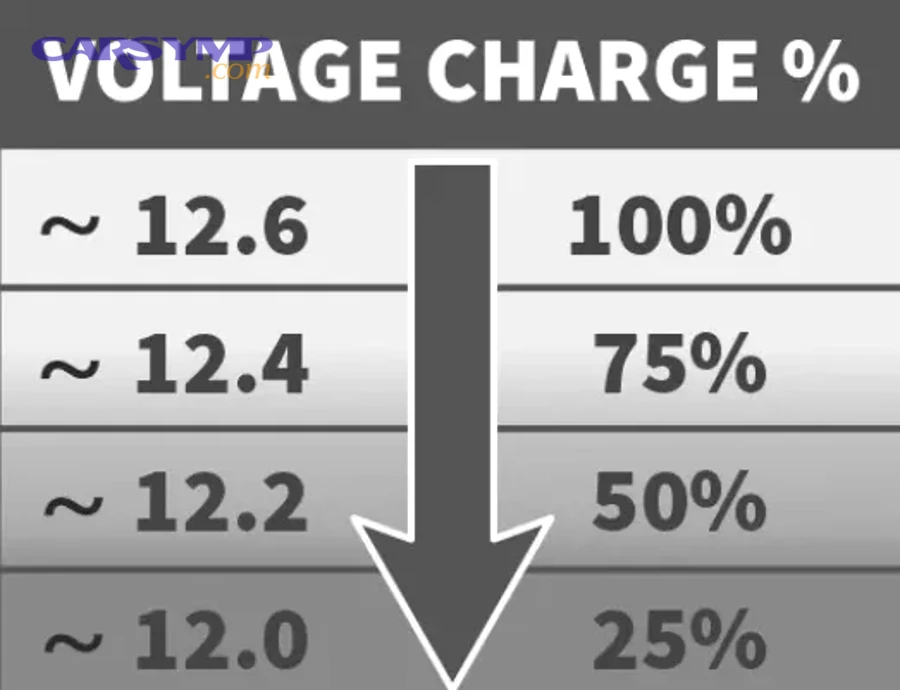
What battery voltage numbers matter during cranking?
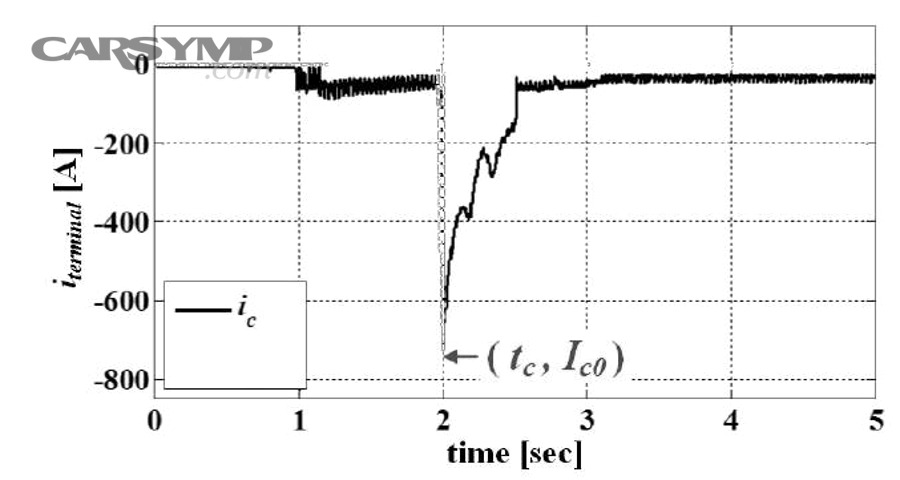
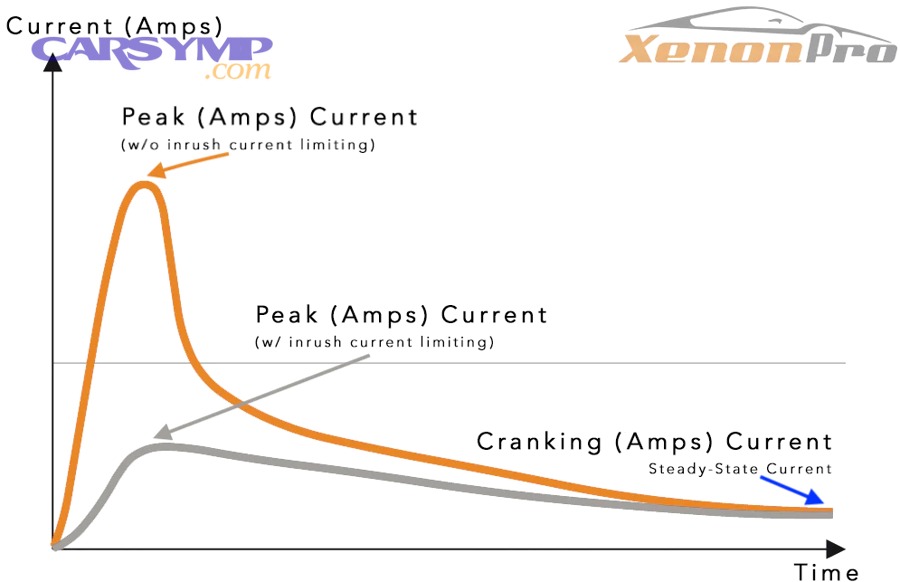
Cranking voltage is the load test you can do in real time: it shows how well the battery holds up while the starter demands high current. After that, compare the number to starter speed and voltage drop to pinpoint the weak link.
After that, anchor your diagnosis to three moments: resting voltage (engine off), voltage at the instant of crank (peak load), and recovery voltage (right after you release the key).

Practical thresholds you can use
Resting voltage that looks “okay” doesn’t guarantee a good battery; surface charge can mislead. The more useful reading is cranking voltage, because it exposes internal resistance and weak cells under real load.
Next, focus on consistency: if cranking voltage is stable but low, think capacity or temperature; if it crashes abruptly (and electronics reboot), think connection failure, internal battery fault, or extreme load.
A quick table to map voltage + behavior to likely causes
This table contains common cranking voltage patterns and what they usually help you conclude. Use it to decide whether to charge/test the battery, clean cables, or test the starter circuit.
| Cranking observation | Voltage behavior | Most likely direction | Best next test |
|---|---|---|---|
| Slow, steady crank | Moderately low and steady | Weak battery, cold-soaked battery, or high resistance | Charge battery + voltage drop test |
| Click/no crank | Stays near resting voltage | Open circuit, solenoid not engaging, relay/switch issue | Check control circuit + starter solenoid feed |
| Rapid clicking | Dips then rebounds repeatedly | Battery/cable connection instability | Terminal cleaning + wiggle test + drop test |
| Dash resets, lights go out | Severe drop (momentary collapse) | Bad battery cell, loose main connection, or heavy starter draw | Battery load test + check grounds + starter draw |
| Cranks fast but won’t fire | Cranking voltage looks healthy | Likely not a cranking-power problem | Move on to fuel/spark/compression checks |
To connect this to action, remember: voltage alone is not a verdict; it’s a clue that becomes powerful when paired with where the voltage is lost (battery, cable, ground, or starter).
How do you distinguish a weak battery from a bad starter using speed and voltage?
Weak battery usually shows low cranking voltage with reduced starter speed, while a dragging starter can pull voltage down even if the battery is strong. Therefore, you confirm by comparing battery-post voltage to starter-terminal voltage.
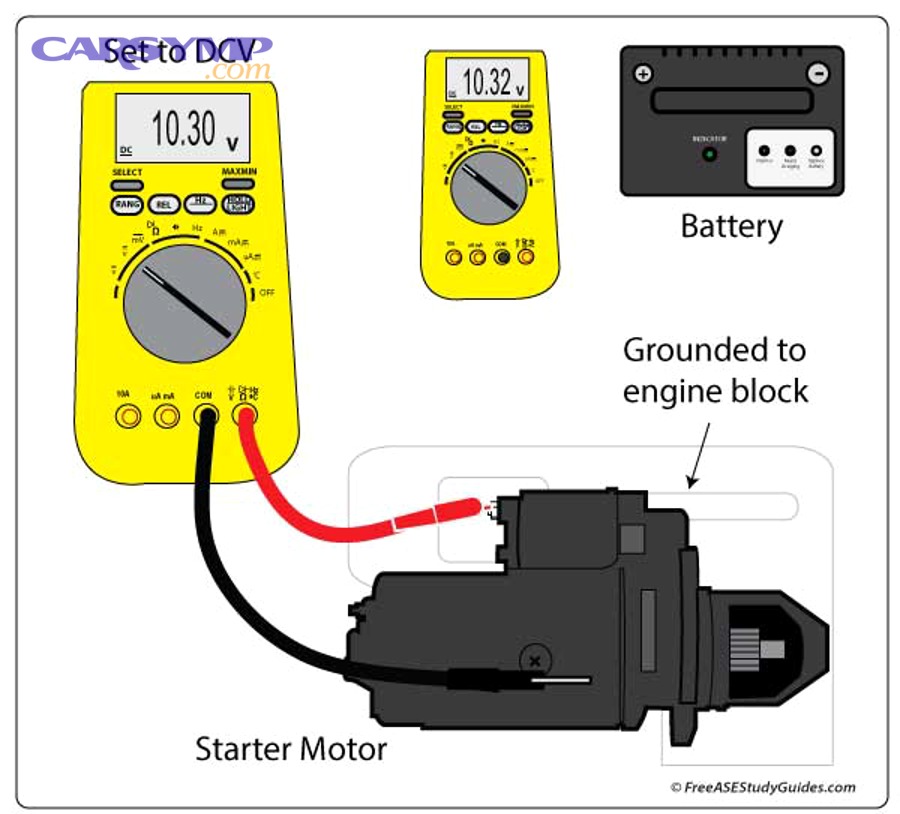
Next, think in two “locations”: voltage at the battery posts (true battery output) versus voltage at the starter (what the starter actually receives). A battery can be fine at the posts, yet the starter receives much less because of cable/ground losses.
Pattern A: Battery is weak
Clue set: cranking voltage at the battery posts drops notably, and the starter turns slow. Interior lights may dim evenly (not flicker). After releasing the key, voltage recovers slowly.
Then validate: if you jump-start with a known-good source and crank speed improves dramatically, the battery (or its charge state) is likely the limiting factor.
Pattern B: Starter is dragging (high current draw)
Clue set: battery may test “okay” at rest, but during crank the voltage collapses hard, and the starter sounds heavy or stalls. Cables may feel warm after repeated attempts.
Next, isolate: if voltage at the battery posts remains relatively higher than voltage at the starter terminal while cranking, you likely have circuit loss; if both collapse together and the engine still cranks slowly, the starter or engine drag becomes more suspicious.
Pattern C: Resistance in cables/grounds masquerading as a bad part
Clue set: slow crank with inconsistent behavior—sometimes it starts, sometimes it struggles. You might see a lot of corrosion at terminals, a loose ground strap, or a recently disturbed battery connection.
After that, you prove it with voltage-drop testing, because resistance that looks “minor” visually can steal enough voltage under load to cut starter torque dramatically.
How does cable and ground voltage drop change cranking speed?
Voltage drop is the “invisible thief” that slows cranking: even a small resistance in a cable, terminal, or ground strap can consume precious voltage when hundreds of amps try to flow. Next, you measure drop on both the positive and ground sides.
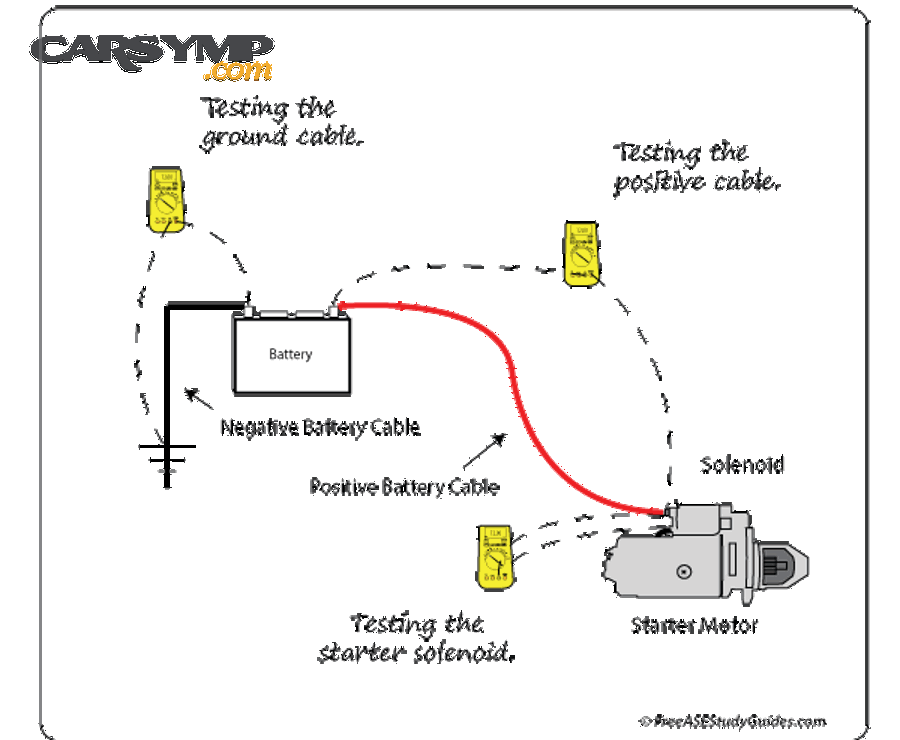
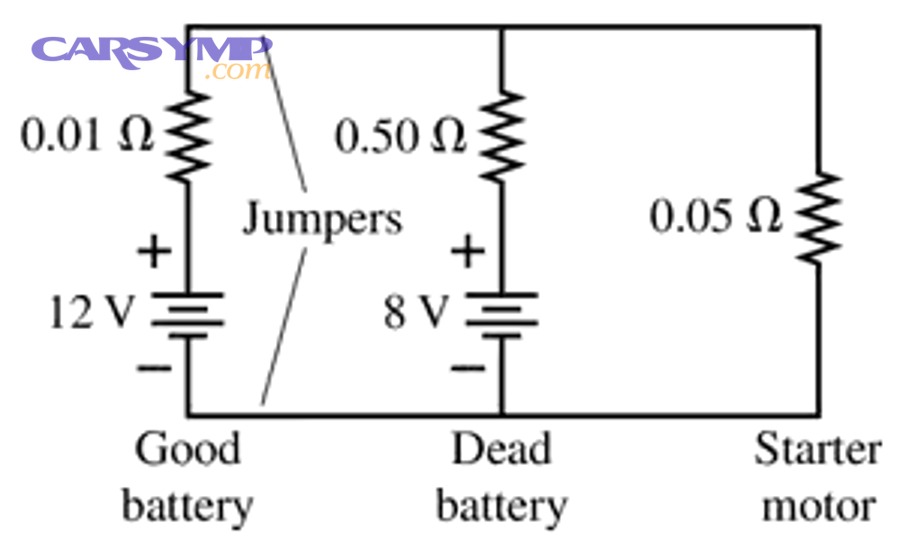
To begin, remember that the starter circuit is a loop: battery positive → positive cable → starter → engine block → ground strap → battery negative. A problem anywhere in that loop reduces voltage at the starter and slows cranking.
Why “looks tight” is not the same as “conducts well”
Corrosion can hide between the terminal and the post. A clamp can be tight but still insulated by oxidation, grease, or a thin layer of sulfate. Likewise, a ground strap can look intact yet have broken strands under the insulation.
Next, treat every joint as a potential resistor: battery post-to-terminal, terminal-to-cable, cable-to-starter lug, block-to-ground strap, and ground strap-to-battery negative.
Positive-side drop test (simple method)
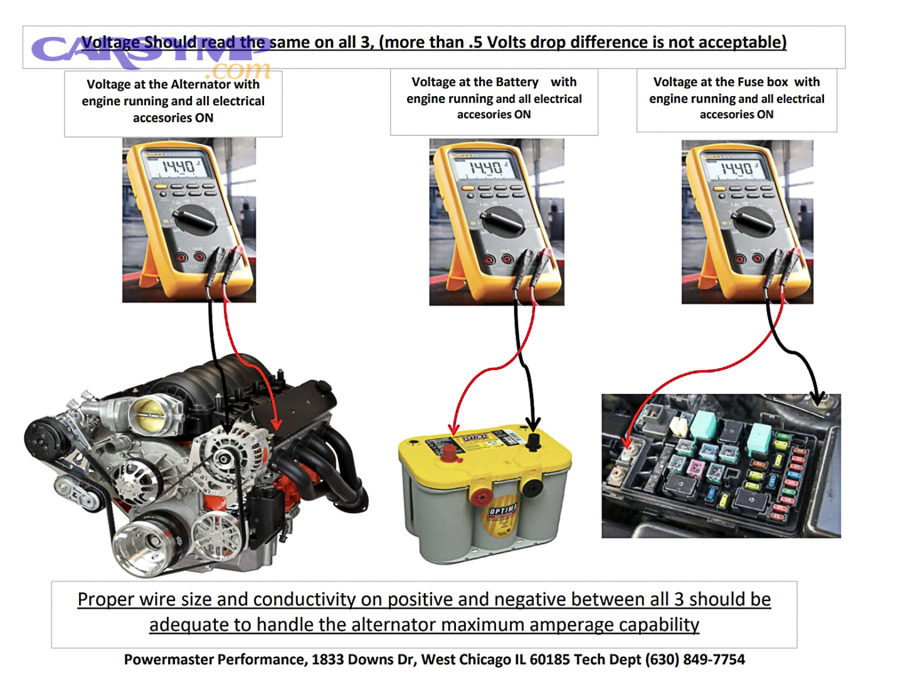
Method: place the multimeter’s red lead on the battery positive post (not the clamp) and the black lead on the starter’s main positive terminal. Crank the engine. The reading you see is the voltage lost on the positive side.
Then interpret: the higher the number, the more voltage is being wasted before it reaches the starter. A big loss here often comes from corroded terminals, damaged cables, or a loose connection at the starter lug.
Ground-side drop test (the one most people skip)
Method: place the red lead on the starter housing or clean engine metal, and the black lead on the battery negative post. Crank the engine. The reading is the voltage lost on the ground path.
Next, if you see meaningful loss here, inspect the engine-to-chassis ground strap, battery negative cable, and the contact surfaces where they bolt down. Cleaning and re-torquing often restores cranking torque immediately.
What does temperature do to starter speed and battery voltage clues?
Cold weather reduces battery output and increases engine drag, so slow crank in the cold can be “normal-ish” up to a point. Next, you correct for temperature by comparing behavior to recent starts and by testing after warming or charging.
To begin, understand that temperature shifts both sides of the tug-of-war: the battery’s chemical reaction slows (less available current), while oil thickens and the engine requires more torque to turn.
How cold changes what “good” looks like
A battery that starts fine at 60°F can struggle near freezing, especially if it’s older or not fully charged. So a borderline system will reveal itself on cold mornings with slower starter speed and deeper voltage sag.
Next, use a baseline: if the cranking speed is noticeably slower than last winter under similar temperatures, it’s a sign the battery capacity or connection quality has degraded over time.
Heat-related clues (yes, heat matters too)
High under-hood temperatures can affect starter solenoids and worn internal contacts, sometimes causing intermittent no-crank after a hot soak. In that case, your voltage readings may look normal at the battery, yet the starter won’t engage consistently.
Then, confirm by testing when the fault occurs: intermittent electrical issues are easiest to catch right at the moment they fail, not after the car cools down.
How can you test starter speed and battery voltage quickly with a multimeter?
A quick, reliable test uses three readings: battery-post voltage during crank, positive-side voltage drop, and ground-side voltage drop. After that, you know whether the battery is collapsing, or the circuit is wasting voltage.
Below is a fast workflow that fits most driveways. It uses direct measurements at the posts and at the starter path so you’re not fooled by clamps, corrosion, or misleading “resting voltage.”
Step 1: Battery-post cranking voltage
Do this: put the red lead on the battery positive post and the black lead on the battery negative post. Have a helper crank the engine. Watch the lowest number you see.
Next, correlate: if the number dives dramatically and starter speed is slow, suspect battery health/charge or extreme current draw.
Step 2: Positive-side voltage drop
Do this: red lead on battery positive post, black lead on starter main positive terminal. Crank. Record the reading.
Then, interpret: higher drop means the starter is being starved. Clean terminals, inspect cable crimps, and check for heat damage near the exhaust or sharp edges.
Step 3: Ground-side voltage drop
Do this: red lead on clean metal of the starter case/engine block, black lead on battery negative post. Crank. Record the reading.
Next, fix what you find: ground losses are commonly solved by removing the ground bolts, cleaning to bare metal, applying appropriate corrosion protection, and tightening to spec.
Step 4: Confirm the improvement (the “closure” step)
Do this: after cleaning/tightening or charging, repeat the same readings. A real fix improves cranking speed and reduces voltage drop in the path you corrected.
Tóm lại, repeatable measurements are what separate “it seems better” from “it is better,” and they prevent replacing parts that weren’t faulty.
What quick visual clues pair best with voltage readings?
Visual and cabin cues help you choose the right test first: dimming lights, relay clicking, cable warmth, and dash resets each point toward a different failure mode. Next, you match the clue to the measurement that confirms it.
To begin, use your senses to pick the most likely branch before you grab tools. This keeps diagnosis fast and avoids missing obvious issues like a loose terminal or a frayed ground strap.
Clue: Single click vs rapid clicking
Single click can mean the solenoid engages but the starter can’t spin (low power, bad internal contacts, or mechanical load). Rapid clicking often indicates voltage dropping and rebounding as the solenoid repeatedly tries to engage.
Next, confirm: check battery-post cranking voltage and then check terminal tightness and corrosion.
Clue: Cables or terminals getting warm
Warmth indicates resistance under load: electrical energy is being wasted as heat instead of turning the starter. This frequently points to corroded terminals, damaged cable strands, or a poor ground connection.
Then, validate with a voltage-drop test on the side that’s warm; the hottest point often aligns with the highest voltage loss.
Clue: Strong crank with no dash dimming
If the engine cranks strongly and the electrical system stays stable, your starting circuit is likely doing its job. In that case, chasing the battery or starter is usually the wrong path.
Next, shift focus to what prevents combustion rather than rotation, using a structured diagnostic flow instead of random part swaps.
How do charging system clues fit into cranking voltage patterns?
The charging system affects starting indirectly: a weak alternator or charging control problem can leave a good battery undercharged, which then shows up as low cranking voltage and slow starter speed. Next, you verify charging after the engine runs.
To begin, separate “can’t crank” from “can’t stay charged.” If the car starts with a jump but dies later or struggles again after a short drive, the battery may not be getting replenished properly.
Simple charging check after a successful start
Do this: with the engine running, measure voltage at the battery posts. You’re not diagnosing the starter here; you’re verifying the battery is being supported and recharged.
Next, load the system: turn on headlights and blower and watch whether voltage remains stable. If it drops significantly, investigate alternator output, belt condition, and main charging connections.
Why “new battery” doesn’t guarantee a fix
A new battery can mask a charging problem temporarily. If the alternator is weak, the new battery will discharge over days or weeks, and the same slow-crank pattern returns.
Then, use a timeline: if symptoms reappear soon after replacement, prioritize charging-system verification and parasitic draw checks rather than blaming the starter immediately.
What are the most common starter speed patterns and what do they usually mean?
There are four common patterns: normal crank, slow crank, no crank with clicking, and intermittent crank. Next, you tie each pattern to the voltage behavior and to the most likely physical location of the fault.
Below is a practical grouping that prevents confusion. Each group is defined by what you observe first, then refined by what your multimeter shows during the crank attempt.
Group 1: Normal crank speed
If cranking speed is normal and consistent, the starting circuit is probably not your primary issue. The key move is not to “over-test” the battery and starter—move forward to the next system that explains the symptom.
Next, preserve time: you can still confirm with a quick battery-post cranking voltage check, but don’t let a normal reading distract you from the real cause.
Group 2: Slow crank speed
Slow crank often comes from low available current (battery/charge), high resistance (cables/grounds), or high load (starter drag/engine drag). The fastest separator is voltage-drop testing plus listening for consistency.
Then, use one correction at a time—charge the battery or clean terminals—so you can see which change improves the symptom.
Group 3: Click/no crank
A click without cranking suggests the solenoid is trying to engage but the motor isn’t spinning, or the control circuit is engaging without enough power at the main terminal. Measure whether the battery voltage actually drops when the click happens.
Next, if voltage barely changes, suspect an open circuit or solenoid contact failure; if it collapses, suspect battery weakness or a major connection problem.
Group 4: Intermittent crank or “starts on the second try”
Intermittent behavior frequently points to marginal connections, worn solenoid contacts, or a ground strap that makes/breaks with vibration. Intermittent issues reward a careful inspection and a wiggle test while monitoring voltage drop.
Tổng kết lại, intermittent symptoms are best solved by verifying each connection under load rather than replacing multiple parts blindly.
FAQ: Practical questions that prevent wrong parts replacement
These FAQs answer the most common “what if” moments people hit during driveway diagnosis. Next, use them to double-check your logic before you buy a battery, starter, or cables.
To begin, remember the principle: test at the posts, then test the path. It’s the simplest way to avoid misleading readings.
Is resting voltage enough to call the battery “good”?
No. Resting voltage can be inflated by surface charge and does not reflect how the battery behaves under starter load. The cranking voltage at the posts is the more meaningful clue.
Next, if you only have time for one measurement, make it battery-post voltage during cranking.
Why does it start with a jump but not on its own?
Jumping adds available current and stabilizes voltage under load. That can overcome weak battery capacity, poor state of charge, or even moderate resistance in cables. It does not prove the starter is good; it proves the system needed extra support.
Then, follow up with voltage-drop tests to see whether the jump is masking a cable/ground problem.
Can a bad ground cause slow crank even with a new battery?
Yes. The ground path is half the circuit, and resistance there can starve the starter just as effectively as a bad positive cable. Clean metal-to-metal contact matters more than the ground strap “looking okay.”
Next, always include the ground-side voltage drop test in your routine.
What if the starter spins, but it sounds uneven or pulsing?
Pulsing can come from a marginal connection, a failing solenoid contact, or mechanical load variations. Measure voltage drop while the symptom happens; electrical problems often show higher drop that changes with heat and time.
Finally, if pulsing coincides with repeated clicking, prioritize terminal condition and the integrity of the main cables.
Contextual Border: The main content above focused on core electrical interpretation. The section below expands into edge cases, workflow integration, and decision-making when the situation is inconvenient or intermittent.
Advanced Clues and Edge Cases in Cranking Diagnostics
Edge cases require a broader lens: sometimes cranking power is fine, but the engine still doesn’t run, or the problem appears only under specific conditions. Next, you’ll connect starter-speed and voltage clues to smarter “what now” choices.
To begin, use the same foundation—measure at the posts, measure the path—but apply it to real-world constraints like intermittent faults, hot-soak behavior, and time-limited troubleshooting.
Intermittent failures: how to capture the clue before it disappears
Intermittent no-crank problems often vanish once the car cools or once a vibration “fixes” a marginal connection. Keep your multimeter accessible, pre-set it to DC volts, and be ready to measure drop the moment it refuses to crank.
Next, if you can reproduce it, lightly wiggle the battery cables and ground strap while watching the voltage drop reading; a sudden change is strong evidence of a connection fault.
When cranking power is healthy but the engine still won’t run
If your starter speed is strong and cranking voltage stays healthy, your issue likely sits outside the starting circuit. A common scenario is car cranks but won’t start, where the engine rotates normally but combustion never begins.
Next, avoid replacing the starter “just in case.” Instead, shift into a structured fuel/ignition/mechanical check and use a Cranks but won’t start diagnostic checklist so you don’t miss simple causes like a blown fuel pump fuse or an immobilizer problem.
How excess fuel can mislead your interpretation
A flooded engine can crank slower than normal because the cylinders may be saturated and the engine can struggle to clear. If the starter circuit readings look borderline, this can confuse the diagnosis.
Next, if you suspect this scenario, look for context and smell, then apply a Flooded engine symptoms and fix approach (clear-flood mode when applicable, allow drying time, and avoid repeated long cranks that overheat cables and the starter).
Decision point: when to get help instead of forcing more crank attempts
Repeated cranking can overheat a marginal cable, damage a weak battery further, or stress a failing starter. If you’ve confirmed major voltage drop, severe voltage collapse, or inconsistent engagement that you cannot safely access, it’s reasonable to switch tactics.
Next, choose When to call a mobile mechanic as a practical step if you’re stranded, dealing with hidden wiring/ground locations, or need current-draw testing and advanced scan data to avoid replacing the wrong part.