


A fuel pump that’s starting to weaken usually gives you warning signs—especially during hard starts, acceleration, and hot-weather driving—and you can spot them early if you know what “normal” fuel delivery feels like versus “bad” clues. The fastest way to protect your engine (and avoid a sudden no-start) is to recognize the symptom pattern, not just one symptom.
Next, the most reliable diagnosis comes from connecting your real-world symptoms to a few simple checks: when the problem happens (cold vs hot), what the pump sounds like, and whether the issue appears under load. That symptom-to-check mapping reduces guesswork and keeps you from replacing the wrong part.
Then, you’ll also want to separate early warning signs from urgent “stop driving” signs, because the same vehicle can move from “intermittent hesitation” to “stalling in traffic” faster than you’d expect once fuel delivery becomes inconsistent.
Introduce a new idea: once you can identify the top symptoms and sort good vs bad clues, you can decide what to do next—and also understand the rare, vehicle-specific issues that can mimic a failing pump.
What does a fuel pump do, and why do bad fuel pump signs show up the way they do?
A fuel pump is an electric (or mechanical, in older designs) device that moves fuel from the tank to the engine at the pressure and flow rate the system requires, and bad fuel pump signs appear when pressure or volume can’t keep up with demand—especially during starts and acceleration. To better understand the symptom chain, it helps to link “what you feel” to “what the pump must deliver,” because fuel delivery problems often show up only when the engine asks for more fuel.
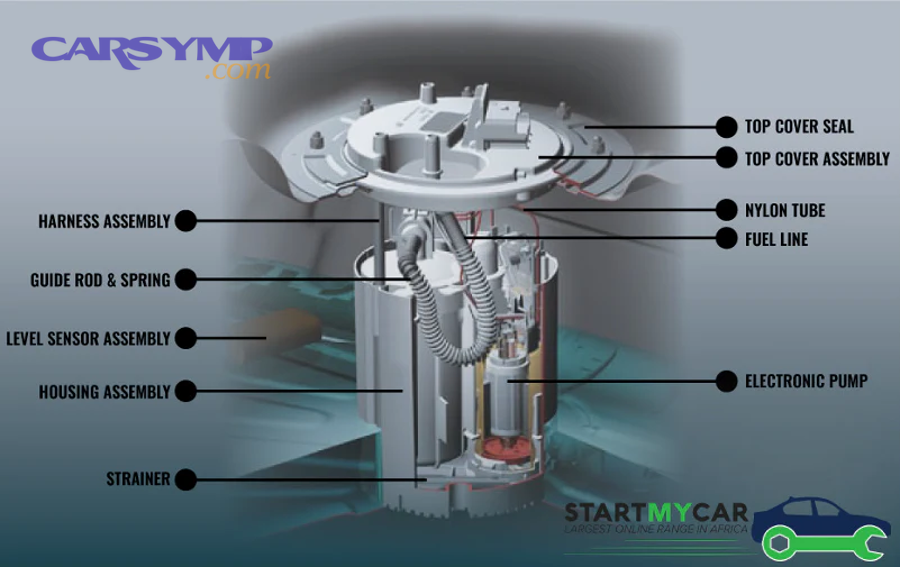
Fuel delivery is both pressure and volume, not just “fuel”
Most drivers think a pump either “works” or “doesn’t,” but fuel systems are more like a heart-and-artery setup: the engine needs fuel at a specific pressure range, and it also needs enough volume to maintain that pressure when demand rises.
- Pressure helps the injectors deliver a predictable amount of fuel.
- Volume (flow) keeps the pressure stable when you accelerate, climb hills, or drive at highway speed.
- Consistency matters as much as the number—because a pump that surges or drops intermittently can cause confusing, on-and-off behavior.
When the pump is healthy, it can maintain stable delivery even as the engine load changes. When it’s weakening, pressure may look “close enough” at idle but collapse under load. That’s why many people don’t notice a problem until they merge onto a highway or drive uphill.
Why symptoms worsen under load (and why idle can be misleading)
At idle, the engine is sipping fuel. A marginal pump can often keep up, so the car may idle “okay” but stumble the moment you demand torque. Under load:
- Injectors need more fuel per second.
- The system must maintain pressure while flow increases.
- Any restriction (pump wear, clogged sock/strainer, wiring voltage drop) becomes more obvious.
That’s the logic behind a key diagnostic clue: a fuel delivery problem usually gets worse when you accelerate.
The “good vs bad clues” idea starts here
A single symptom—like rough running—can come from ignition, air, or fuel issues. But the pattern (hard start + hesitation under load + whining from tank area + intermittent stall) points more strongly toward fuel delivery. This “pattern thinking” will guide the checklist in the next section.
What are the 10 most common bad fuel pump signs drivers notice first?
There are 10 main bad fuel pump signs drivers notice first—hard starting, sputtering, stalling, loss of power under load, hesitation, surging, whining noise, rough idle, reduced fuel economy, and occasional crank-no-start—based on how fuel pressure and flow behave during different driving demands. Specifically, this section turns fuel pump symptoms into a practical checklist so you can recognize them in real driving, not just in a repair manual.
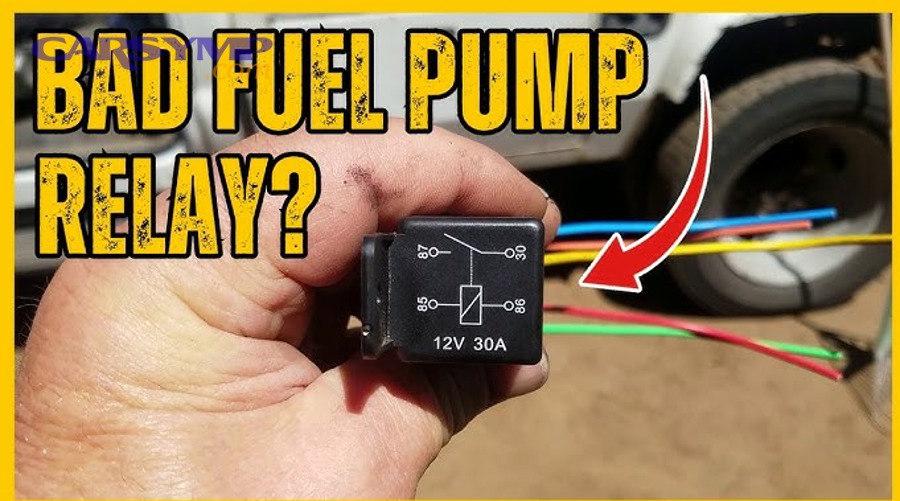
Is hard starting or crank-no-start a fuel pump symptom?
Yes—hard starting can be a bad fuel pump sign, especially when (1) the engine cranks longer than normal, (2) it starts only after multiple key cycles, and (3) it’s worse after the car sits or after a hot soak, because weak pressure doesn’t build quickly enough. Next, connect the start behavior to a simple observation: when you turn the key to ON, many cars run the pump briefly to “prime” the system.
Here’s what hard-start patterns can tell you:
- Long crank, then starts: pressure builds slowly (weak pump, restriction, or leak-down).
- Starts after cycling key ON/OFF: multiple primes build pressure.
- Crank-no-start intermittently: pump is cutting out, overheating, or losing electrical supply.
- Worse when hot: heat can increase vapor formation and raise pump workload, exposing a pump that’s already marginal.
Because “hard start” can also come from sensors or ignition, you’ll confirm with the “good vs bad clues” checks later. But as a symptom, hard start belongs near the top of the list—especially when paired with power loss under acceleration.
Why does a failing fuel pump cause sputtering, hesitation, or bucking under acceleration?
A failing fuel pump causes sputtering, hesitation, or bucking because fuel flow can’t keep pressure stable under load, so the engine momentarily runs lean and combustion becomes uneven, which you feel as surges or “cutting out.” However, the key detail is when it happens: fuel delivery issues typically flare during acceleration, climbing, towing, or high-speed cruising.
Common “under-load” cues include:
- Hesitation when pressing the gas: engine responds late or in pulses.
- Bucking at steady throttle: pressure drops and recovers repeatedly.
- Sputtering at highway speed: pump can’t sustain volume for continuous demand.
- Feels like a misfire but changes with throttle: you may feel jolts that improve if you back off.
This is why drivers often describe the car as “fine around town, bad on the highway.” That difference points to volume/pressure stability rather than a simple idle-only problem.
Which signs suggest the pump is failing soon vs failing later?
There are two main stages of bad fuel pump signs—early warnings and urgent failure signs—based on severity, frequency, and whether the engine can still maintain fuel delivery under load. More importantly, sorting symptoms by stage helps you decide how cautious you need to be with your next drive.
Early warning signs (often intermittent):
- Slight hesitation during acceleration
- Mild surging at steady speed
- Occasional hard start, especially after sitting
- Faint whining/humming that wasn’t there before
- Gradual decline in power or responsiveness
Mid-stage signs (becoming consistent):
- Noticeable loss of power on hills/highway
- Frequent sputtering under load
- Rough running that appears more often
- Engine feels “starved” at higher RPM
Urgent signs (high risk of sudden no-start or stall):
- Repeated stalling at stops or while driving
- Crank-no-start episodes
- Severe power loss that makes merging unsafe
- Symptoms worsen sharply in heat or low-fuel conditions (more on that later)
A fuel pump failing can jump stages quickly once internal wear or overheating reaches a tipping point, so frequency matters as much as intensity.
What does a bad fuel pump sound like compared to normal fuel system noise?
A bad fuel pump often sounds like a persistent high-pitched whine or loud hum from the tank area, while a normal pump typically makes a brief, softer prime noise for a second or two at key-on and then becomes hard to hear. Meanwhile, sound is only one clue—so treat it as supporting evidence, not a standalone diagnosis.
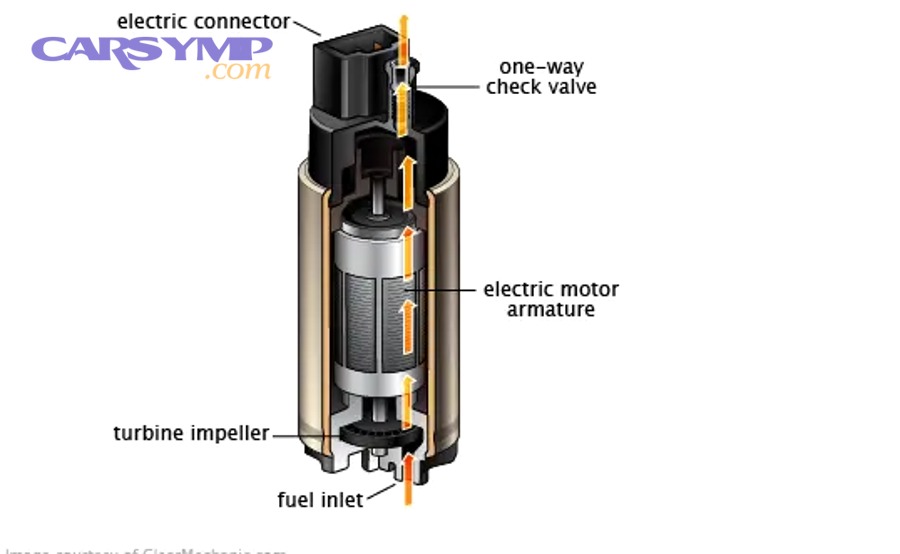
Use these sound comparisons:
- Normal: short prime at key-on; quiet during steady driving.
- Possibly bad: louder-than-usual humming that persists while driving.
- Often worse: noise increases as the tank gets low (pump runs hotter and may cavitate).
- Not a fuel pump: rattling or metallic tapping from engine bay (often mechanical/ignition-related).
If the noise change arrives along with hesitation under load, it becomes a stronger “bad clue.”
The rest of the top 10 symptoms (quick checklist)
To complete the “10 signs” list, here are the remaining common fuel pump symptoms you can spot without tools:
- Stalling at idle or when coming to a stop (fuel delivery drops below what idle requires).
- Loss of power under load (hills, passing, highway merges).
- Surging at steady speed (pressure fluctuates).
- Rough idle that improves with throttle changes (fuel stability issue).
- Reduced fuel economy (engine control compensates for inconsistent fuel delivery).
- Intermittent “won’t start” that resolves after cooling or key cycling.
You’ll notice how these signs connect back to the same chain: unstable pressure/flow becomes obvious during transitions—start, accelerate, climb, and stop.
How can you tell it’s the fuel pump and not something else?
Fuel pump trouble is most likely when the symptom pattern is load-sensitive and repeatable—meaning it worsens under acceleration, heat, or low fuel—and when quick checks (prime sound, basic electrical checks, pressure behavior) align, because many other faults can mimic the same rough-running feel. In addition, the “Good vs Bad Clues” method prevents the most common mistake: confusing fuel starvation with ignition misfires.
Could these symptoms be caused by a clogged fuel filter, bad injectors, or a failing fuel pressure regulator instead?
Yes—those components can mimic bad fuel pump signs, but fuel delivery diagnosis becomes clearer when you compare (1) when the symptom happens, (2) whether it’s gradual or sudden, and (3) whether fuel pressure behavior is stable or drifting. Next, use the “system behavior” differences to narrow it down before you spend money.
Clogged fuel filter / restricted pickup (where applicable):
- Often gradual power loss over time
- Worse under load, similar to a weak pump
- May improve briefly after sitting (restriction shifts)
- Some modern vehicles use in-tank strainers instead of serviceable filters
Dirty or failing injectors:
- Can cause rough idle and hesitation
- Often tied to specific cylinders (misfire codes may appear)
- May not change dramatically with tank level
- Can be inconsistent across RPM ranges
Fuel pressure regulator issues (or control strategy issues):
- Can cause rich/lean swings, surging, or hard start
- May show strong pressure deviations
- Sometimes affects idle more noticeably than a weak pump does
Because these are all “fuel-side” issues, they can feel similar. That’s why the next comparison—fuel vs ignition/air—matters too.
How do fuel pump signs compare to bad spark plugs, ignition coils, or a dirty MAF sensor?
Fuel pump issues win the “under-load fuel starvation” pattern, ignition problems win the “cylinder-specific misfire” pattern, and air-sensor problems often show broader drivability changes across multiple conditions—so the best diagnosis comes from matching the symptom pattern to the most likely system. However, you don’t need to guess; you can compare clues directly.
Here’s a quick reference table showing what the symptoms usually mean. This table compares common symptoms and the most likely system behind them, so you can prioritize checks.
| Symptom pattern (what you notice) | More consistent with fuel pump / fuel delivery | More consistent with ignition (plugs/coils) | More consistent with air/sensor (MAF, vacuum leak) |
|---|---|---|---|
| Worse under acceleration/hills, improves when you back off | Very common | Possible, but often triggers misfire codes | Possible, but often affects idle/trim too |
| Random stalling that feels like “fuel cut” | Common when delivery drops | Less common unless severe | Possible, especially with big leaks |
| Hard start + better after key cycling | Common (pressure builds slowly) | Less typical | Possible, but less “key cycle fixes it” |
| Single-cylinder misfire feel, rough idle all the time | Sometimes | Very common | Sometimes |
| Symptoms change with fuel level / hot weather | Common clue | Not typical | Not typical |
This is the logic behind the phrase you’ll see in many shop notes: Hard start and stalling fuel delivery diagnosis depends on when the fault appears, not just what the fault feels like.
What quick checks can confirm fuel pump trouble without specialized tools?
You can narrow down fuel pump trouble with four quick checks—listen for prime, check basic electrical supply (fuse/relay), watch for heat/low-fuel patterns, and observe load sensitivity—so you can decide whether a fuel pressure test is the next step. To begin, treat these checks as “clue collectors,” not definitive proof, because the goal is to confirm the symptom chain you already observed.
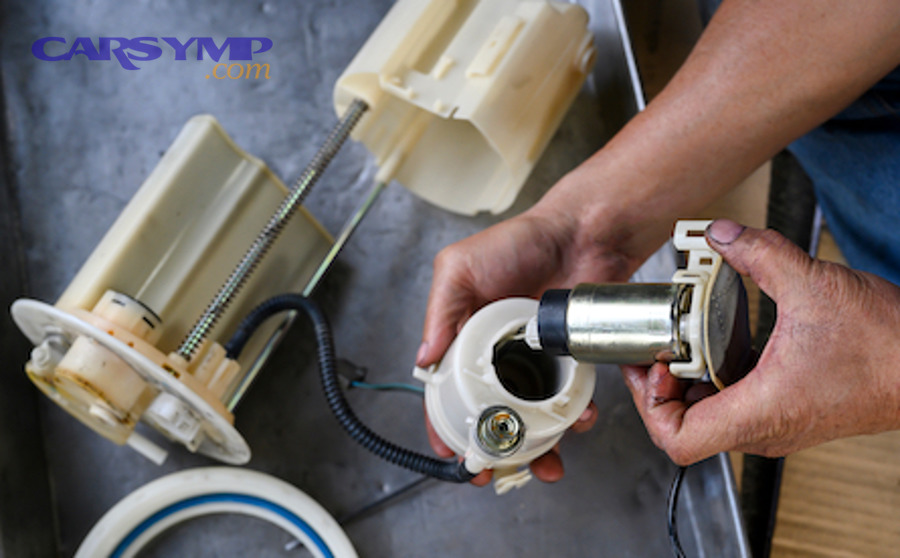
1) Listen for the prime (key ON):
- Quiet area, windows down, seat near the rear
- Turn key to ON (not start) and listen for a short hum
- No sound can indicate pump not running—but also can be wiring/relay
2) Check fuel pump fuse/relay basics:
- Inspect fuse for obvious failure
- Swap relay with a known-good matching relay (if your fuse box layout allows)
- If symptoms change immediately, electrical supply becomes the suspect
3) Track the “heat and fuel level” pattern:
- Does it happen more with low fuel?
- Does it happen more in hot weather or after a long drive?
- Does it improve after cooling?
These patterns are strong “bad clues” for a pump nearing its limit. A major U.S. safety notice around low-pressure pump issues has described stall risks and noted that symptoms can be more likely in hot weather or low-fuel conditions. reuters.com
4) Note load sensitivity:
- If it hesitates mainly when you accelerate hard or climb, fuel delivery is a prime suspect.
If these checks point toward the pump, the next step is often a fuel pressure test—but even before that, you can decide whether driving is safe.
When should you stop driving because the signs are urgent?
Yes—you should stop driving if bad fuel pump signs become unsafe, because (1) repeated stalling can remove power steering/brake assist, (2) severe power loss can make merging dangerous, and (3) intermittent no-start can leave you stranded in unsafe locations. Moreover, urgency isn’t about discomfort—it’s about predictability and control.
“Stop driving” cues include:
- Stalls in traffic or at intersections
- Severe hesitation during merging/passing
- Power drops so much you can’t maintain speed
- Crank-no-start that’s becoming frequent
- You smell fuel strongly (this may point to a leak—treat as urgent regardless of pump condition)
If you’re asking yourself “Can you drive with weak fuel pump”, the practical answer is: you can sometimes limp short distances, but the risk rises quickly once stalling or major power loss begins.
According to a study by Beijing University of Technology from the Faculty of Materials and Manufacturing, in 2023, a fuel pump fault-monitoring approach using pressure and vibration signals improved diagnostic accuracy by 4.35% to 19.35% versus several comparison algorithms, supporting the idea that multi-signal confirmation is more reliable than guessing from one symptom alone. pmc.ncbi.nlm.nih.gov
What should drivers do next after spotting bad fuel pump signs?
Drivers should take three next steps after spotting bad fuel pump signs: (1) document when symptoms happen and how severe they are, (2) perform safe basic checks to rule out simple electrical issues, and (3) schedule a proper fuel delivery diagnosis (often pressure/volume testing) before replacing parts. Then, with a plan, you turn scattered symptoms into a clear repair decision—especially if the vehicle is showing repeatable fuel pump symptoms under load.
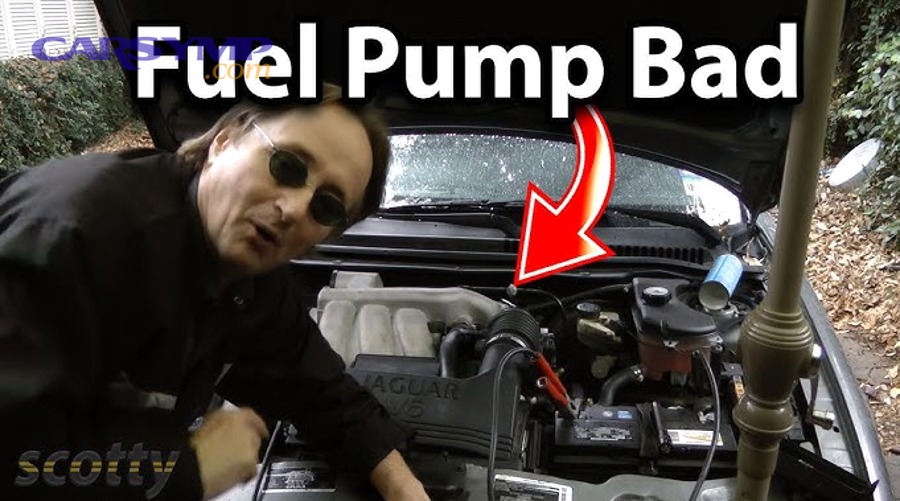
Should you replace the fuel pump immediately, or can you wait?
It depends—but you should replace or repair soon if the fuel pump failing pattern is progressing, because (1) stalling risk increases with worsening delivery, (2) intermittent no-start can become permanent without warning, and (3) repeated lean operation under load can cause drivability and potential engine stress. In addition, waiting makes sense only when symptoms are mild, rare, and not safety-related.
A practical decision framework:
You can sometimes wait (with caution) if:
- Symptoms are mild and infrequent
- No stalling has occurred
- The car still accelerates safely
- The pattern is stable (not worsening week to week)
You should act quickly if:
- Stalling has occurred even once in traffic
- Power loss affects merging/hills
- Hard starts are becoming common
- Hot/low-fuel conditions trigger the issue reliably
If you’re in the “act quickly” category, don’t jump straight to parts. A proper fuel delivery diagnosis can confirm whether it’s the pump itself, the electrical supply, or a restriction.
What information should you bring to a mechanic to speed up diagnosis?
You should bring a short symptom log that captures when, where, and how the issue occurs—because those details guide the test plan and prevent unnecessary parts replacement. Next, think like a diagnostician: you’re not just reporting “it runs bad,” you’re describing the conditions that expose the fault.
Include these details:
- Cold start vs hot start: Does it crank longer after the engine is warm?
- Fuel level: Does it happen below 1/4 tank more often?
- Load sensitivity: Does it worsen on hills or highway?
- Time pattern: Is it intermittent, or every drive?
- Noise: Any new whining/humming from the rear?
- Warning lights: Check engine light? Any recent codes?
- Recent work: Fuel filter service, tank work, battery/alternator issues
This information helps a shop choose the right test: pressure, volume, voltage drop at the pump under load, and control-module command checks (for returnless systems).
What does fuel pump replacement typically include in the fuel delivery system?
Fuel pump replacement typically includes the pump (often as part of a module), new seals/gaskets, and inspection or replacement of the strainer/sock, because these parts work together to maintain stable pickup and pressure inside the tank. Moreover, what’s “included” depends on the vehicle design, so the goal is to replace what actually affects fuel delivery reliability.
Common items in a typical repair path:
- Pump or pump module: Many modern cars use an in-tank module assembly.
- Strainer/sock: Helps prevent debris ingestion; restrictions here can mimic pump weakness.
- Tank seal / locking ring gasket: Prevents vapor leaks and fuel smell.
- Electrical connector inspection: Heat damage or corrosion can cause intermittent pump power.
- Optional related items: On some setups, a serviceable fuel filter exists outside the tank; on others, filtration is integrated.
If your symptoms suggest “fuel starvation under load,” ask the shop whether they’re testing both pressure and delivery volume, not just checking for pump noise.
What rare or vehicle-specific fuel pump problems can mimic “bad fuel pump signs”?
Rare or vehicle-specific fuel pump problems include control-module faults, heat-soak/intermittent failure, cavitation from low fuel level, and contamination-related restriction—each of which can produce the same bad fuel pump signs even when the pump itself is not the only issue. Besides, understanding these edge cases is how you avoid replacing a pump when the real problem is electrical control or pickup conditions.
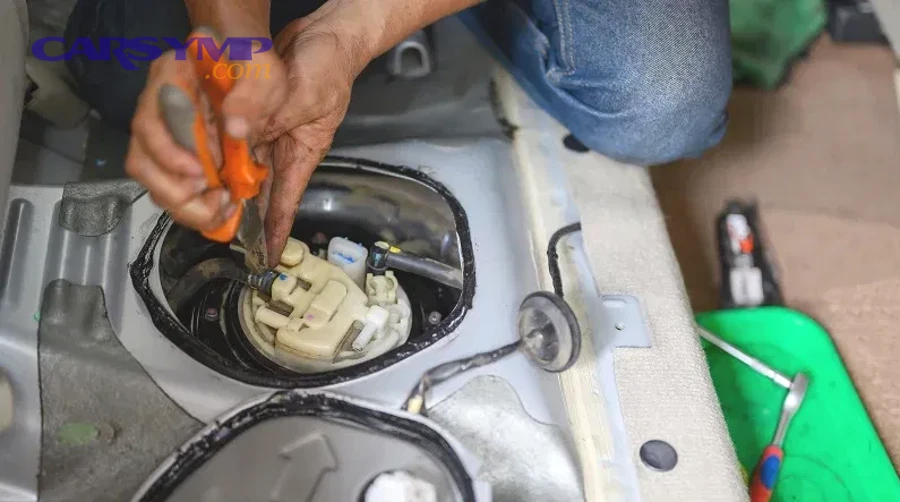
How do in-tank vs inline fuel pumps change the symptom pattern?
In-tank pumps more often show heat- and fuel-level-sensitive symptoms (because they rely on fuel for cooling), while inline pumps can show clearer pressure drop patterns tied to upstream restriction, so the symptom pattern shifts based on where the pump lives and how it’s cooled. However, the driver’s experience still follows the same chain: unstable delivery shows up during starts and acceleration.
In-tank pump patterns:
- More sensitive to low fuel level (less cooling, greater aeration risk)
- Whining often heard near rear seat/tank area
- Heat-soak issues can appear after long drives
Inline pump patterns (more common in older designs):
- May be louder and easier to locate
- Can be more affected by upstream restrictions
- May show different priming behavior
Knowing your pump type helps interpret the “noise + heat + fuel level” clues with more accuracy.
Can a failing fuel pump control module cause the same symptoms as a bad pump?
Yes—a failing fuel pump control module can mimic a bad pump, because (1) it can reduce pump speed/voltage under load, (2) it can cut out intermittently as it heats up, and (3) it can command unstable pressure in returnless systems, producing the same hesitation and stalling symptoms. More specifically, returnless systems often regulate pressure electronically by changing pump speed rather than bleeding fuel back to the tank.
If the control side is the issue, you may see:
- Intermittent behavior that matches temperature/electrical load changes
- Symptoms that appear despite a newer pump
- Evidence of electrical irregularity (burnt connector, voltage drop)
This is why a strong diagnostic approach includes checking commanded vs actual behavior where possible, not just replacing hardware.
Why do some fuel pumps fail only when hot or after a long drive?
Some fuel pumps fail only when hot because internal clearances, electrical resistance, and fuel vapor formation can change with temperature, so a marginal pump loses efficiency after heat soak and then works again after cooling—creating an intermittent “it fixed itself” pattern. Meanwhile, this intermittent behavior is exactly what makes drivers doubt their own symptoms.
Hot-failure patterns often look like this:
- Car drives normally at first
- After 20–60 minutes, hesitation/stalling begins
- After shutting off and waiting, it restarts and drives again briefly
- Pattern repeats more often over time
When you see this heat-linked cycle, treat it as a serious “bad clue,” because intermittent faults often become permanent.
Can low fuel level, cavitation, or contamination create “bad fuel pump signs” even with a good pump?
Yes—low fuel level, cavitation, or contamination can create fuel pump symptoms even when the pump isn’t fully dead, because (1) aerated fuel reduces consistent pickup, (2) debris can restrict the strainer or jets, and (3) the pump may overheat when cooling fuel volume is low. In short, the pump may be “good” mechanically but operating in conditions that make delivery unstable.
Real-world triggers include:
- Driving frequently below 1/4 tank
- Dirty fuel or tank sediment after long storage
- Recent refueling that stirred debris
- Hot-weather driving combined with low fuel
A safety-focused example of low-pressure pump concerns has highlighted symptoms such as poor performance, misfiring/rough running, reduced power, and check engine illumination, with issues more likely in hot weather or low-fuel scenarios—conditions that align with cavitation/overheating stress on fuel delivery. reuters.com
According to a study by Beijing University of Technology from the Faculty of Materials and Manufacturing, in 2023, combining pressure and vibration signals improved diagnostic accuracy by 4.35% to 19.35% compared with several single-model approaches, reinforcing why “fuel-level/heat patterns + signal confirmation” is stronger than relying on one symptom alone. pmc.ncbi.nlm.nih.gov