


If you want a realistic key fob replacement cost estimate, plan for a total that includes the fob (or smart key), programming, and service fees—because the final number is almost never “just the plastic remote.” Typical totals commonly land in the hundreds depending on vehicle and key type, with many mainstream replacements falling around $150–$500+ per KBB’s consumer guidance. (kbb.com)
Next, the biggest price swing usually comes from where you replace it: a dealership can be the most straightforward for OEM keys and restricted systems, while an automotive locksmith often competes on convenience and programming cost—especially if you need mobile service.
Then, the key type matters more than most drivers expect. A simple remote fob and a smart/proximity key are not priced the same, and programming requirements change the estimate dramatically. AutoZone’s breakdown highlights how transponder and smart keys add tech and programming needs that drive totals upward.
Introduce a new idea: below, you’ll see exactly what gets included in a real estimate, how to compare dealer vs locksmith quotes fairly, and how to avoid paying twice—especially when your car won’t start or the car is not detecting key fob.
What is included in a key fob replacement cost estimate (parts, programming, and service fees)?
A key fob replacement cost estimate is a total-price forecast that combines the replacement device, programming/synchronization, and service-related fees (labor, diagnostics, and sometimes travel), which together determine what you actually pay at checkout.
To better understand why two quotes can differ by hundreds of dollars, you need to separate each cost layer and confirm what’s included versus what’s “extra.”
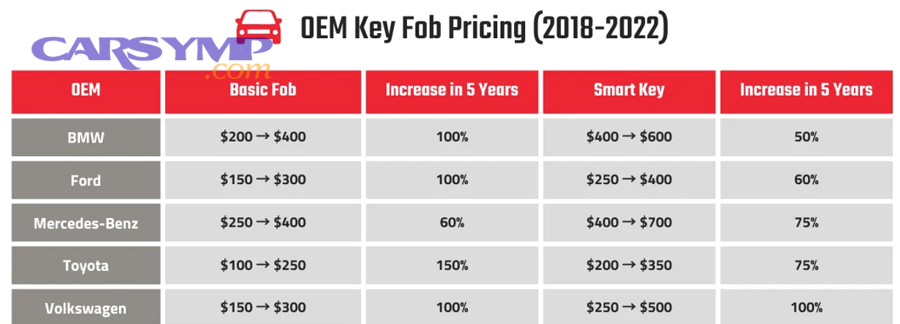
Does key fob replacement always require programming?
No—key fob replacement does not always require programming because (1) some vehicles use simple remotes that can self-learn, (2) some situations only need a battery replacement or re-sync, and (3) certain aftermarket remotes arrive pre-configured for limited functions.
However, the confusion usually starts when a driver says “key fob not working,” because that phrase covers multiple failures: a dead coin battery, a broken circuit board, a de-synced remote, or an immobilizer-linked key problem. In practice, smart/proximity keys and transponder-based systems typically require programming because the car’s security module must recognize the key’s chip.
Specifically, think of programming as two possible “handshakes”:
- Remote functions handshake: lock/unlock, trunk, panic, remote start (varies by model).
- Immobilizer handshake: the security system that authorizes starting the engine (common with transponder keys and smart keys).
When the immobilizer handshake is involved, the estimate almost always increases because specialized equipment and security authorization are required. That’s why a “cheap fob online” can still become expensive if it must be programmed by a shop with the right access.
What fees inflate the final bill beyond the fob itself?
Key fob replacement totals often rise because several “service fees” stack on top of the part, including diagnostics, programming labor, emergency service, and VIN-based ordering steps.
More specifically, here are the common add-ons you should expect to see itemized on a transparent quote:
- Programming fee: labor + tool time to pair the fob/smart key to the vehicle’s system.
- Diagnostic fee: charged when the symptom isn’t clearly “lost key,” such as Car not detecting key fob or intermittent operation.
- Cutting fee (if the key has a blade): flip keys or integrated keys may require cutting.
- Mobile/travel fee: common with locksmiths who come to your location.
- After-hours/emergency fee: if you need service immediately, outside business hours.
- OEM sourcing/VIN ordering fee: dealers may order the exact key by VIN for compatibility and security.
To make the estimate concrete, the table below shows what each component typically represents and what to verify before agreeing to a quote.
| Cost component | What it covers | What to verify before you pay |
|---|---|---|
| Replacement fob / smart key | The physical device (OEM or aftermarket) | Part number/FCC ID compatibility, return policy |
| Programming | Pairing to car (remote + immobilizer if needed) | Is programming included? Is immobilizer programming included? |
| Diagnostics | Testing why the key isn’t recognized | Is it waived if you proceed with replacement? |
| Cutting (if needed) | Physical blade cut | Included for flip keys? Key code required? |
| Travel/emergency | Convenience + urgency surcharge | Travel radius, after-hours rates |
Edmunds notes that advanced key fob replacement at a dealership can exceed $600, which illustrates how these layers—especially advanced keys plus dealer pricing—can compound fast. (edmunds.com)
How much does it cost to replace a key fob for a smart key vs a remote fob?
There are three main pricing tiers for key replacement—basic keys, transponder keys, and smart/proximity keys—and smart keys usually cost the most because they combine advanced hardware with stricter programming requirements.
Next, to estimate correctly, you should classify your key type first, then apply a realistic “parts + programming + service” range rather than guessing from the fob alone.
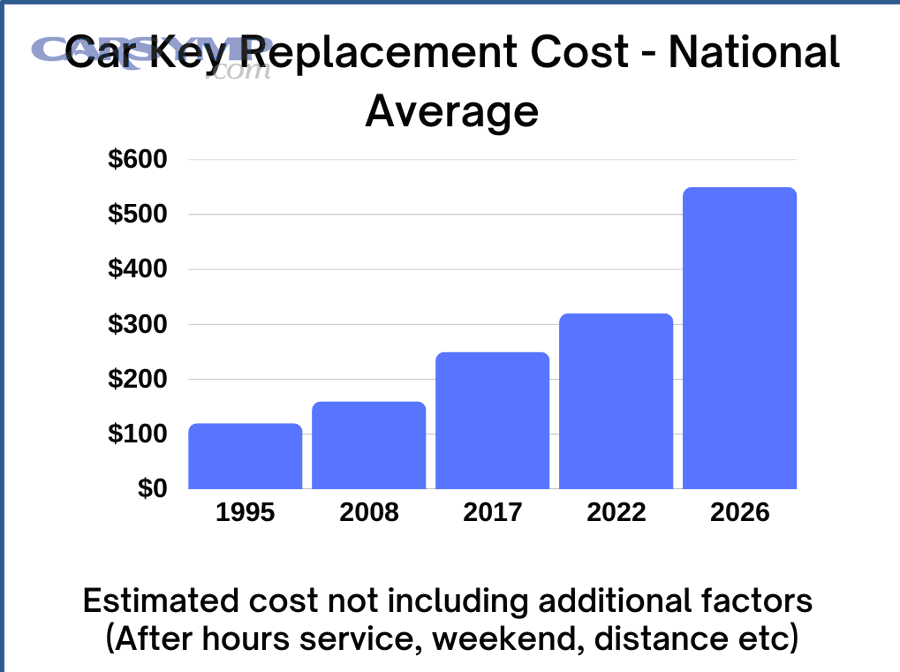
What is the typical cost range for a remote key fob replacement?
A remote key fob replacement typically falls into a lower-to-mid total range because the device is simpler and, in some cases, may be easier to program than an immobilizer-linked key.
Specifically, remote fob totals usually depend on whether your “fob” is truly just a remote or part of an integrated key system:
- Remote-only fob (no immobilizer chip): often cheaper overall, especially with aftermarket options.
- Integrated remote + chip (common on many modern keys): often behaves like a transponder/smart key scenario, raising totals.
Practical cost behaviors you’ll see:
- If you already have a working key, shops can sometimes add a spare with fewer steps.
- If your remote functions fail but the car still starts, you may only need re-sync or repair—not full replacement.
What is the typical cost range for a smart/proximity key replacement?
A smart/proximity key replacement typically costs more because the key contains proximity electronics and is usually tied tightly to the vehicle’s anti-theft system.
For example, AutoZone’s consumer-facing ranges put smart keys commonly in the $200–$500+ range (before considering service channel differences), and those numbers often climb with programming complexity.
In real-world estimating, smart key totals rise fastest when:
- The car uses push-to-start and proximity sensing.
- The vehicle requires dealer-level authorization or a restricted programming process.
- You have no spare key available (more time, more security steps, sometimes towing).
Which situations make key fob replacement significantly more expensive?
There are five common “price jump” situations for key fob replacement: (1) all keys lost, (2) luxury or high-security systems, (3) restricted programming, (4) urgent mobile/emergency service, and (5) underlying faults that mimic a key issue.
However, the most overlooked situation is the last one—because a failing antenna, low vehicle battery, or interference can present as car not detecting key fob even when the fob itself is fine.
Here are the biggest cost multipliers and why they matter:
- All keys lost: the vehicle may require more involved security steps; sometimes the car must be accessed, then programmed from scratch.
- Restricted systems / dealer-only steps: fewer providers can do the work, reducing competition.
- Luxury or newer models: higher part cost and tighter security controls.
- Emergency service: convenience costs money; after-hours pricing can add substantial fees.
- Misdiagnosed failures: if the true problem is the car-side receiver, you can pay for a fob and still have a dead system—then pay again for diagnostics.
Is a locksmith cheaper than a dealer for key fob replacement?
A locksmith usually wins on convenience and competitive programming/service pricing, a dealer is often best for OEM certainty and restricted systems, and an online route can be cheapest for parts-only—but only if compatibility and programming are handled correctly.
Meanwhile, the fairest comparison is not “dealer vs locksmith” as brands, but what is included: OEM part, programming type, warranty, travel fee, and turnaround time.
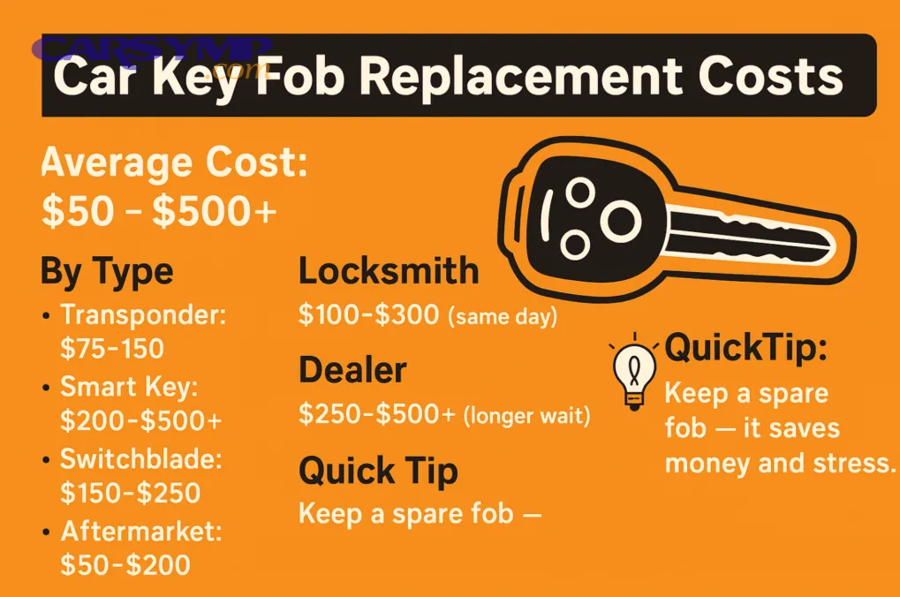
What do dealers typically include that locksmiths may not (and vice versa)?
Dealers often include OEM sourcing and VIN-accurate ordering, while locksmiths often include faster on-site service and broader aftermarket flexibility—each can be “better” depending on what your car requires.
Specifically, this is what tends to differ:
Dealer strengths
- OEM part certainty: correct key version is more likely when ordered by VIN (where applicable).
- Brand tools/access: some systems are easier or only feasible via dealer channels.
- Documentation flow: proof-of-ownership steps are standardized.
Locksmith strengths
- Mobile service: you don’t have to tow the car when it won’t start.
- Competitive pricing: programming and labor can be lower in many regions.
- Aftermarket options: they may offer multiple price points (aftermarket/refurbished).
The key is to treat “cheaper” as “lower total cost for the same outcome,” including a working immobilizer start authorization when needed.
When should you choose the dealer instead of a locksmith?
Yes—you should choose the dealer in many cases, especially when (1) your vehicle requires restricted programming, (2) you want OEM-only parts with a clear warranty trail, and (3) the issue involves car-side security modules rather than the fob.
In addition, consider the dealer first when:
- The car is under factory warranty and key services may be covered or documented.
- You’ve had repeated failures where the key works sometimes but the vehicle won’t detect it consistently.
- You suspect the vehicle’s receiver/antenna or immobilizer module is failing.
When is a locksmith the better value?
Yes—a locksmith is often the better value because (1) mobile service reduces towing hassle, (2) programming labor can be more competitive, and (3) you may get multiple part-price options (aftermarket vs OEM) in one quote.
Especially if your car won’t start and you’re stranded, mobile service can save both time and secondary costs. The best practice is to ask for an itemized quote that clearly states:
- Part type (OEM/aftermarket/refurbished)
- Programming included (remote + immobilizer or remote-only)
- Travel fee and after-hours policy
- Warranty coverage and what voids it
How can you estimate your exact key fob replacement cost before you buy?
You can estimate your exact key fob replacement cost by using a 5-step estimator that identifies your key type, confirms compatibility, collects vehicle details, requests itemized quotes, and validates what “programming” means for your car—so you avoid paying for the wrong part or the wrong service.
Below, this estimator turns a vague “how much will it be?” into a reliable number you can compare across providers.
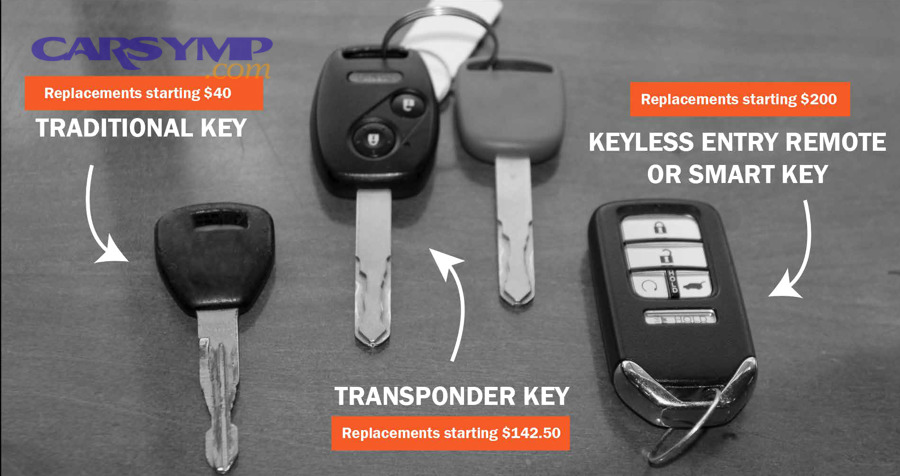
What information do you need to get an accurate quote?
There are seven essential pieces of information you need for a reliable estimate: year, make, model, trim, VIN (sometimes), key type, current key status, and your service location.
Then, gather them in one place before you call anyone—because missing details create the “quote trap,” where a low number becomes a higher invoice.
Use this checklist:
- Vehicle: year, make, model, trim
- Start type: push-to-start vs key turn (if you know)
- Key type: remote-only, integrated key, transponder, or smart/proximity
- Key status: do you have a working spare? yes/no
- Symptom: lost key vs key fob not working vs intermittent detection
- VIN: helpful for dealers and exact matching (varies by brand)
- Location: zip code (pricing and travel fees)
If the symptom is car not detecting key fob, add one more detail: does it happen only in certain places (parking garages, near towers)? That can hint at interference rather than a dead fob.
What questions should you ask a dealer or locksmith to avoid surprise charges?
There are six questions that prevent most surprise charges: what’s included, what’s optional, what programming is required, what the warranty covers, what happens if the first attempt fails, and what proof you must provide.
More specifically, ask these exact questions:
- “Is the price parts + programming + all fees, or is programming separate?”
- “Does programming include immobilizer authorization, or only lock/unlock?”
- “Is there a diagnostic fee, and is it waived if I proceed?”
- “Is there a mobile/travel fee or after-hours fee?”
- “What warranty do you provide on the fob and the programming?”
- “What documents do you require for proof of ownership?”
These questions also reduce the risk of paying for a replacement when the real issue is vehicle-side—like a weak car battery, a failing receiver module, or environmental interference.
Can you reduce cost by buying a fob online and paying only for programming?
Yes—you can reduce cost by buying a compatible fob online and paying only for programming because (1) the part price can be lower, (2) you can shop across OEM/refurbished/aftermarket options, and (3) you can separate parts cost from labor cost for a cleaner comparison.
However, the savings only hold if compatibility and “programmability” are real, not assumed. This is where Reprogramming a key fob basics matters: the car must accept the fob’s identity, and some used or incorrect fobs cannot be paired reliably.
To do this safely:
- Match the part number/FCC ID and frequency requirements where applicable.
- Confirm the fob is new or explicitly reprogrammable (some used fobs are locked).
- Confirm the provider will program a customer-supplied fob and whether they charge extra if it fails.
- Keep your receipt and ensure the return policy is clear.
KBB notes that replacement can be expensive and that modern fobs often require dealership-level replacement processes, which is why “parts-only savings” can be limited by programming realities. (kbb.com)
What is the best option if you lost all keys or your car won’t start?
There are three best options when you lost all keys or your car won’t start: (A) a mobile automotive locksmith for speed and convenience, (B) a dealership for restricted/OEM-focused systems, and (C) towing to a provider when on-site programming isn’t feasible—your best choice depends on your key type and how locked-down the vehicle system is.
Next, you’ll choose the option that gets the car running with the fewest extra fees, not just the lowest headline price.

Is replacing a key fob more expensive when you have no spare?
Yes—replacing a key fob is usually more expensive when you have no spare because (1) the provider must complete full security enrollment rather than adding a duplicate, (2) you may need additional steps to access the vehicle and system menus, and (3) towing or mobile service may be required when the car cannot be started.
In addition, “no spare” situations often trigger the highest-cost pathway at a dealership, especially for advanced keys. Edmunds emphasizes how advanced key fob replacement at the dealership can exceed $600, which becomes more likely in worst-case scenarios like all keys lost. (edmunds.com)
What should you do first to get back on the road fast without overspending?
You should follow a 4-step recovery sequence to get moving fast without turning a stressful day into an expensive mistake.
To begin, do this in order:
- Verify it’s not a simple failure: If it’s key fob not working, try the spare fob (if you have one) and replace the coin battery. If the car not detecting key fob persists, use the vehicle’s backup start method (many cars have a designated spot to hold the fob) and check the owner’s manual.
- Get two itemized quotes: Call one dealer and one locksmith; ask the six anti-surprise questions from earlier.
- Decide on mobile vs tow: If the car won’t start and you’re not at home, mobile service can reduce secondary costs and time.
- Prepare documents: Have ID, registration/title, and location details ready to avoid delays and repeat visits.
This sequence prevents the most common “double pay” scenario: buying a new fob, paying to program it, and then discovering the root issue is a car-side receiver, weak vehicle battery, or interference.
How can you lower key fob replacement costs without risking compatibility or security?
You can lower key fob replacement costs by combining smart shopping (right part, right provider) with risk controls (compatibility checks, warranty, and security hygiene), so you reduce the bill without creating a “works today, fails tomorrow” problem.
Especially when your estimate is already high, cost reduction should be a controlled process—because the cheapest route can become the most expensive if it triggers rework.
OEM vs aftermarket vs refurbished: which option is safest for your car and budget?
OEM wins in compatibility certainty, aftermarket is best for budget flexibility, and refurbished often offers the best middle-ground value—but the safest choice depends on your vehicle’s programming restrictions and how you use the car.
More specifically:
- OEM (dealer-supplied): typically highest cost, strongest compatibility confidence, clearer warranty pathway.
- Aftermarket: often cheapest part cost, but quality varies; requires strict compatibility matching.
- Refurbished: can be cost-effective when sourced from reputable channels and confirmed compatible.
If your vehicle is sensitive to pairing failures, paying more for OEM can prevent repeat visits. If your vehicle is more flexible, an aftermarket or refurbished fob plus professional programming can be a smart compromise.
Can a used key fob be reprogrammed, or is it blocked?
It depends—some used key fobs can be reprogrammed, but many are effectively blocked because (1) they may be locked to a previous vehicle, (2) the vehicle’s system may reject previously enrolled identifiers, and (3) the fob could be damaged internally even if it looks fine.
To keep risk low, treat used fobs like “high variance” parts:
- Only buy if the seller provides exact identifiers (part number/FCC ID) and accepts returns.
- Confirm your programmer will attempt pairing and clearly states what you pay if it fails.
- Prefer refurbished units from reputable suppliers over random used listings.
Does insurance, warranty, or roadside assistance cover key fob replacement?
Yes—coverage is sometimes available, especially because (1) some extended warranties or protection plans include key replacement, (2) some roadside programs reimburse lockout/assistance services, and (3) certain insurance add-ons cover lost keys as a benefit.
However, coverage varies widely, so the practical move is to check:
- Your policy add-ons (key replacement, lockout reimbursement)
- Your roadside assistance terms
- Any dealer protection plan you purchased at sale
Even partial reimbursement can shift your best choice from “cheapest quote” to “fastest reliable fix,” because your out-of-pocket cost changes.
What habits prevent repeat replacement costs (lost fobs, dead batteries, water damage)?
There are four habits that prevent repeat key fob costs: (1) maintain a spare strategy, (2) replace fob batteries proactively, (3) avoid damage and signal issues, and (4) reduce security and interference risks.
In short, use these habits:
- Spare strategy: keep a spare programmed key in a safe place at home.
- Battery hygiene: replace the coin battery at the first sign of weak range or intermittent detection.
- Protection: use a protective case and keep fobs away from water/impact.
- Interference awareness: if the car not detecting key fob happens in specific areas, treat it like an environment problem—move locations, reduce RF clutter, and test again before paying for a replacement.
Evidence (security context): According to a study by University of Birmingham from the School of Computer Science, in 2016, researchers reported weaknesses in keyless entry systems affecting many vehicles, which underscores why owners should treat key fob systems as both convenience devices and security-critical components. (birmingham.ac.uk)