


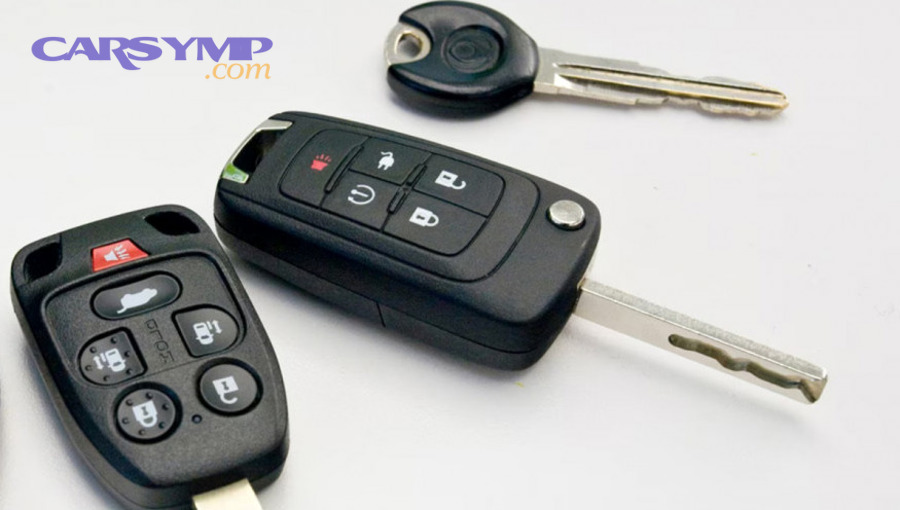
If your key fob suddenly stops responding after rain, a wash cycle, or a splash, water intrusion and corrosion are a top diagnosis—because moisture can raise contact resistance, short fine components, and leave conductive residue that keeps failing even after the fob “dries.”
You’ll also learn what to do immediately after the fob gets wet so you can limit damage before corrosion spreads across battery contacts or the circuit board.
Next, you’ll get a practical decision path to choose cleaning/repair or replacement based on what you see and how reliable you need the fob to be.
Introduce a new idea: the fastest way to get the right answer is to treat this like a checklist diagnosis—confirm corrosion signs first, then rule out look-alike problems like interference, desync, or a simple dead battery.
STEP 1 — Title & outline analysis (embedded, per instructions):
– Main keyword focus: water damage and corrosion in key fob diagnosis (battery contacts + PCB)
– Predicate (main action): Diagnose
– Relations lexical used: Synonym (corrosion ↔ rust) + Meronymy (battery contacts as a part of the key fob)
– Search-intent types in outline: Boolean + Definition + Grouping + Comparison + How-to
– Primary intent: diagnose moisture/corrosion as the cause; secondary intents: immediate actions, repair vs replace, and separating water damage from other causes.
Is water damage or corrosion actually the cause of my key fob failure?
Yes—water damage or corrosion is often the cause of key fob failure when (1) the problem started after moisture exposure, (2) performance is intermittent or range drops first, and (3) you can see residue or discoloration on contacts or the circuit board.
To reconnect the issue from this heading, the quickest win is to link your symptoms to what moisture does inside a sealed-but-not-perfect fob.
A key fob is basically a tiny radio transmitter (and often a separate immobilizer chip). It runs on a coin cell battery and relies on clean, low-resistance metal contacts and tiny solder joints. When water gets inside, it rarely arrives as “pure water.” It often carries salts, soap residue, pocket lint, or minerals. Those contaminants form a thin film that can conduct electricity in the wrong places—or speed oxidation on metal surfaces.
Here’s the practical pattern drivers notice most: the fob works at very close range first, then becomes inconsistent, then dies. That sequence matches “contact resistance increasing” and “micro-shorts” more than it matches a clean, instant hardware break.
Do symptoms like intermittent range, sticky buttons, or “no key detected” strongly suggest moisture damage?
Yes—those symptoms strongly suggest moisture damage because moisture (1) increases contact resistance at battery terminals, (2) creates intermittent shorts across close-spaced electronics, and (3) degrades button switch behavior by contaminating the membrane or microswitches.
Next, let’s connect each symptom to a specific mechanism so you diagnose instead of guess.
- Intermittent range drop (works at 1–3 feet, fails at 10–30 feet): corrosion adds resistance so the battery can’t deliver clean bursts of power for transmission; weak power reduces RF output.
- Buttons feel sticky or require extra force: moisture plus residue can gum up the rubber membrane or create oxidation on switch pads.
- “Car not detecting key fob” (especially on push-button start): water can affect the proximity or transponder function, but it can also simply prevent the fob from waking up reliably because the battery connection is unstable.
If you’re dealing with a key fob not working situation after a wet event, treat “intermittent” as a diagnostic clue, not a random annoyance—it’s often the earliest sign of corrosion forming where you can’t see it.
Can a key fob still work after getting wet and then fail days later from corrosion buildup?
Yes—a key fob can work after getting wet and then fail days later because (1) corrosion continues as residue dries and concentrates, (2) humidity cycles reactivate conductive films, and (3) battery drain accelerates oxidation at the most sensitive contact points.
Then, the key is understanding that “dry” doesn’t mean “clean,” and clean is what electronics need.
Even if the fob seems dry on the outside, trapped moisture under chips or inside the battery cavity can linger. As it evaporates, it leaves salts behind. Those salts can become conductive again any time humidity rises—so the fob may work in the afternoon and fail in the morning, or work indoors and fail in a humid garage.
Evidence: According to a study by Shenyang Jianzhu University from the School of Information and Control Engineering, in 2019, testing metal contact interfaces under 85°C/85% relative humidity showed temperature-humidity exposure can drive contact resistance changes that contribute to electrical failure. (mdpi.com)
What is “corrosion (rust)” inside a key fob, and why does it stop the signal?
Corrosion (often called “rust” informally) inside a key fob is metal oxidation and residue formation on contacts, solder, or copper traces that increases resistance or creates unintended conductive bridges, disrupting the battery connection and the fob’s ability to transmit or be detected.
Specifically, once you know what corrosion does electrically, the diagnosis becomes much more straightforward.
Key fobs use mixed metals: nickel-plated springs, copper traces, solder joints, sometimes gold-plated contact surfaces. Moisture plus oxygen triggers oxidation. Add salts (from sweat, seawater, detergent, or road grime), and you get faster corrosion and “electrochemical migration”—tiny conductive paths that shouldn’t exist.
Why that matters for a key fob signal:
- The transmitter needs brief power spikes to send RF bursts.
- Corroded contacts deliver “just enough” power to blink an LED, but not enough to transmit reliably.
- Conductive residue can cause permanent short circuits on tiny IC pins (they’re extremely close together).
What’s the difference between battery leakage corrosion and water-intrusion corrosion?
Battery leakage wins for “localized crust at the battery bay,” water intrusion is best explained by “widespread residue and board staining,” and mixed contamination is most likely when the fob was wet for hours or went through laundry.
However, you can separate them quickly by location, texture, and timing.
- Battery leakage corrosion
- Usually concentrated right where the coin cell touches metal.
- Often appears as white/gray crust or powdery residue around the terminal area.
- Typically coincides with an old battery, a cheap cell, or long storage.
- Water-intrusion corrosion
- Can appear as green/blue deposits on copper areas (verdigris) and dull, blotchy staining across the PCB.
- More likely to show up after washing, rain exposure, sweat saturation, or being dropped in liquid.
- Often produces intermittent behavior first, then failure.
If you see both—crust at the battery and green staining elsewhere—assume the fob has both a power delivery problem and a circuit contamination problem.
Which key fob parts corrode first—battery contacts, buttons, or the circuit board?
There are 3 main “first-to-fail” areas in a key fob: (1) battery contacts, (2) button/switch interfaces, and (3) the circuit board (PCB), based on where moisture pools and how little resistance it takes to cause failure.
In addition, the order often tells you whether a simple cleaning is enough.
- Battery contacts (most common first failure): they’re bare metal, they flex, and they collect condensation. A tiny film of oxidation can cut power bursts.
- Button contacts/switch pads: residue can insulate or short the pads, or mechanically interfere with the membrane.
- PCB traces and IC pins (most serious): once corrosion creeps under components, you can get hidden bridges and eaten-away traces.
Evidence: A published corrosion reliability paper notes that humidity and contaminants can form high-conductivity films that accelerate corrosion and shorten PCB service life, and it cites statistics that ~40–60% of global electronic equipment failures are related to corrosion. (pmc.ncbi.nlm.nih.gov)
How do I perform a safe battery-contact and moisture diagnosis checklist at home?
Use a safe checklist in 6 steps—remove power, inspect contacts, confirm battery health, look for corrosion/residue, clean only where appropriate, and retest with controlled A/B checks—so you can confirm moisture damage without creating new shorts.
To better understand the issue, you’ll treat this like a diagnostic loop: inspect → clean → retest → decide.
Before you start, two safety rules matter:
- Never power a wet board. If moisture is trapped, battery voltage can bridge places it shouldn’t.
- Work over a tray so you don’t lose springs, screws, or the small transponder capsule (some fobs have one).
Tools that help (not mandatory): plastic pry tool, cotton swabs, 90–99% isopropyl alcohol, soft toothbrush, flashlight, and optionally a multimeter.
What is the step-by-step battery-contact checklist to confirm corrosion?
There are 7 main checks in a Key fob not working causes checklist: battery age/voltage, correct orientation, terminal tension, visible residue, pitting/discoloration, contamination film, and retest under slight pressure.
Next, follow them in order, because early steps often solve the issue without deeper disassembly.
- Confirm the battery is fresh and correct.
- Match the code (CR2032, CR2025, etc.).
- If you have a multimeter, a “new” coin cell should typically read near its nominal voltage (often ~3V), but voltage alone doesn’t guarantee good under-load performance.
- Check battery orientation.
- A surprisingly common failure is reinstalling the coin cell upside down.
- Inspect terminal tension (spring pressure).
- The battery should feel snug, not loose.
- If pressing the battery down makes the fob briefly work, you likely have contact resistance from oxidation or weakened springs.
- Look for residue on metal contacts.
- White powder, gray crust, or green/blue staining are all red flags.
- Even a thin, dull “fog” can be enough to weaken output.
- Check for pitting or flaking.
- Pits mean metal has been eaten away; cleaning may not restore reliable contact.
- Clean the contacts (minimal, controlled).
- Start with a cotton swab dampened with isopropyl alcohol.
- If crust is stubborn, use a soft toothbrush gently.
- Avoid scraping aggressively unless you accept that you may remove plating.
- Retest immediately and retest again later.
- Immediate success is good; success that disappears tomorrow suggests deeper contamination.
This is where many people stop too early: the fob works for an hour and then fails again because residue remains inside the shell.
How can I check the circuit board for water residue without making the damage worse?
You can check the circuit board safely by looking for 3 visual signatures—mineral residue, green/blue copper oxidation, and “bridging” grime between pins—then cleaning only with high-purity isopropyl alcohol after the battery is removed.
Specifically, the goal is inspection first, cleaning second.
- Green/blue spots: copper oxidation (verdigris).
- White haze or crystals: dried minerals or detergent.
- Dark sticky film: soda/coffee residue can stay conductive.
- Corrosion between IC legs: the most failure-prone area because pins are close.
If you must clean:
- Remove the battery first.
- Use 90–99% isopropyl alcohol sparingly to displace moisture and lift salts.
- Use a soft brush; do not soak a sealed transponder capsule if your fob has one.
If you see corrosion under chips or lifted traces, treat that as a “replacement likely” sign, not a DIY challenge.
What should I test after reassembly to confirm the diagnosis (range, buttons, spare key, car response)?
Test 4 things after reassembly: (1) consistent button response, (2) range stability, (3) spare key comparison, and (4) vehicle recognition behavior—because moisture damage often shows up as inconsistency, not total failure.
Then, do your testing in a controlled way so you don’t confuse corrosion with environment.
- Button response: press each button 10 times; count failures.
- Range stability: test at 3 distances (close, mid, far) in the same spot.
- Spare key A/B test: if a spare works normally, your car is fine and the fob is the variable.
- Vehicle recognition: does the car respond to lock/unlock but not start, or neither? That split is diagnostically useful.
You can also test “environment sensitivity”: does it fail in a garage but work outdoors? That points to interference—unless the fob is already weak due to contact corrosion.
How can I tell water damage apart from other common key fob problems?
Water damage wins when you have moisture history plus visible residue and intermittent behavior; a dead battery wins when replacement fixes it fully; interference wins when the same fob fails only in certain locations; and programming/desync wins when the fob powers on but the car won’t accept commands.
More importantly, separating these prevents unnecessary replacement.
To make this actionable, the table below summarizes common look-alike causes and the fastest “rule-out” test.
| Symptom pattern | Most likely cause | Fastest rule-out test |
|---|---|---|
| Works only when pressed hard / works briefly when you squeeze the fob | Corroded/loose battery contacts | Clean contacts + test battery fit (tension) |
| New battery didn’t help; residue visible | Water intrusion/corrosion | Inspect PCB and terminals for green/white deposits |
| Fails in one parking structure but works elsewhere | RF interference / signal blocking | Test in a different location immediately |
| LED lights but car doesn’t respond at all | Desync/programming issue OR weak transmission | Spare key comparison + distance test |
| Lock/unlock works but push-start says “no key detected” | Proximity/transponder issue or weak fob power | Try touching fob to start button area (varies by car) |
Is it just a dead battery, or corrosion on the contacts?
Corrosion wins when (1) a new battery doesn’t fully restore reliability, (2) pressing/squeezing changes behavior, and (3) you see discoloration or crust on the terminals; a dead battery wins when a fresh cell fixes everything immediately and consistently.
However, the trap is assuming “new battery = solved” without checking contact quality.
A coin cell can be perfect, yet the fob still fails if terminal springs lost tension, oxidation adds resistance, or residue insulates the contact pad.
If the fob works for a moment after battery swap and then goes flaky again, treat that as “contact path unstable,” not “battery defective.”
Could signal blocking/interference mimic water damage symptoms?
Yes—signal blocking/interference can mimic water damage because (1) it reduces effective range, (2) it creates “works here, fails there” inconsistency, and (3) it can prevent passive entry from detecting the fob even when the fob is fine.
Meanwhile, the key difference is repeatability by location.
- Move 100–200 feet away (or to a different lot) and retest.
- Remove the fob from a metal case, foil-lined bag, or tightly packed pocket with a phone.
- Try the spare fob in the same spot.
If both fobs fail in the same place, the environment is the variable. If only one fails everywhere, the fob is the variable.
When does “car not detecting key fob” point to a transponder/immobilizer issue instead of corrosion?
Corrosion is more likely when symptoms are intermittent and worsen after moisture exposure, while a transponder/immobilizer issue is more likely when lock/unlock functions behave differently from starting and the problem persists consistently even with a strong battery connection.
In addition, push-button start systems often have backup detection methods that can clarify the cause.
- If lock/unlock fails AND start fails: suspect power delivery/contact corrosion or total fob electronics failure.
- If lock/unlock works BUT start says “no key detected”: could be a proximity antenna issue in the fob, transponder issue, or vehicle-side detection issue. Moisture can still be the culprit if it weakened the fob’s output or damaged the proximity circuitry.
If your car supports it, use your owner’s manual “backup start” method (many cars allow starting by holding the fob against the start button or a marked receiver spot). That can separate “weak signal” from “not programmed.”
Should I clean/repair the fob or replace it—and when do I stop troubleshooting?
Cleaning/repair wins when corrosion is light and limited to contacts or accessible residue; replacement wins when corrosion is widespread, traces are damaged, or reliability is critical—because recurring failures can strand you.
To reconnect the issue from this heading, your real goal isn’t “make it work once,” it’s “make it reliably work when you need it.”
When is cleaning likely to work vs when is replacement the safer option?
Cleaning is likely to work when (1) corrosion is only on battery contacts, (2) the PCB shows no under-chip damage, and (3) the fob becomes stable after retesting; replacement is safer when (1) corrosion sits under ICs, (2) there’s pitting/lifted pads, or (3) failures return after a day or two.
Then, use this practical decision checklist:
Cleaning/repair is a good bet if:
- The fob got wet briefly (seconds/minutes) and you opened it quickly.
- You see light residue that wipes off cleanly.
- After cleaning, range returns and stays consistent over multiple tests.
Replacement is the safer bet if:
- The fob went through laundry or was submerged for a long time.
- You see green/blue corrosion across multiple areas.
- The fob drains batteries quickly (a sign of internal leakage paths).
- You have only one working key and can’t tolerate downtime.
If you’re writing a “Key fob not working causes checklist” for your own troubleshooting, put “reliability after 48 hours” as the final pass/fail test—because corrosion problems love to “return.”
Is professional locksmith/electronics repair worth it for water-damaged fobs?
Yes—professional repair is worth it when (1) the fob is expensive or hard to source, (2) the shell/contacts are salvageable but need precise work, and (3) the fob requires programming; no—it’s usually not worth it when the board is deeply corroded or the cost approaches replacement.
Especially, pros add value when the job crosses from cleaning into “restore functionality and identity.”
A locksmith or specialist can replace shells and battery terminals, clean and inspect more thoroughly, and reprogram or re-pair keys where needed.
But no one can reliably reverse copper that has been eaten away under chips. If a technician tells you corrosion is under components or vias, replacement is usually the honest solution.
How can I prevent key fob water damage (and the opposite problem: signal blocking) in the future?
Preventing key fob water damage comes down to (1) keeping liquid out, (2) keeping condensation from lingering, and (3) avoiding accessories that “solve water” but accidentally block RF—because signal blocking is the opposite problem that can look like failure.
Below, you’ll turn diagnosis lessons into prevention habits that reduce future lockout risk.
(One optional video to visualize disassembly style—designs vary by fob.)
What storage habits and protective accessories reduce water exposure without blocking the signal?
Accessories that reduce water exposure without blocking signal are (1) silicone sleeves, (2) splash-resistant pouches with RF-safe materials, and (3) smart storage habits—while metal cases and RFID-blocking pouches can prevent the fob from transmitting at all.
However, you need the right material for the right risk.
- Silicone sleeve: reduces seam gaps and protects from sweat and brief splashes.
- Water-resistant pouch (non-metallic): good for boating, hiking, and heavy rain.
- Separate pocket from wet items: don’t store the fob with a damp towel, sweaty gym clothes, or leaking bottle.
Avoid:
- Metal cases / foil-lined wallets: these can block RF and mimic “dead fob.”
- RFID-blocking pouches unless you are intentionally preventing passive entry.
If your fob seems “dead” only when it’s inside a certain pouch, you may have created a signal-blocking problem, not a corrosion problem.
Which key fob designs are more vulnerable (proximity fobs, worn gaskets, rechargeable fobs)?
There are 3 main vulnerable design categories: proximity fobs (more antennas and sensitivity), worn-gasket shells (easier water paths), and rechargeable/sealed fobs (harder to dry/clean), based on how they’re built and how easily moisture is trapped.
In addition, your usage pattern can make a “durable design” vulnerable over time.
- Proximity / passive-entry fobs: more circuitry means more places where contamination can cause edge-case failures.
- Older or cracked shells: the seam, key-ring hole, and button membranes become entry points.
- Sealed/rechargeable units: they’re convenient, but if water gets in, drying is slower and repair is less DIY-friendly.
If you’ve ever pried the shell aggressively, check whether the seam still closes tightly—tiny gaps matter.
What rare signs suggest deep internal contamination even after drying (verdigris patterns, intermittent shorts)?
Deep contamination is likely when (1) you see green/blue verdigris patterns near fine IC pins, (2) the fob works after drying but fails with humidity or temperature swings, and (3) batteries drain unusually fast—because residue can create microscopic conductive paths.
More specifically, “works sometimes” is not a comfort—it’s often a warning.
- Green-blue staining that returns after you wipe it.
- A faint “sticky” film on the board even after cleaning.
- Repeat battery failures within days or weeks (leakage paths).
These signs usually mean contamination is under components or in layers you can’t access without specialized cleaning and inspection.
When should drivers cut losses to avoid a lockout or no-start situation?
Yes—drivers should cut losses and replace the fob when (1) the fob is your only working key, (2) failures remain intermittent after cleaning and retesting, and (3) you rely on push-button start daily, because reliability risk can quickly become a lockout or no-start event.
In short, “it worked once” is not the standard; “it works every time” is.
If you’re already experiencing key fob not working symptoms on and off, plan for the worst-case scenario and learn your vehicle’s backup method.
To reduce downtime risk, keep these on your personal prep list:
- A fresh spare battery (correct code) at home.
- A spare key/fob (if available).
- Knowledge of Emergency start procedures with dead fob from your owner’s manual (many vehicles support a close-proximity start method when the fob battery is weak).
Evidence: According to a study by Shenyang Jianzhu University from the School of Information and Control Engineering, in 2019, hot/humid testing at 85°C/85% RH demonstrated that temperature-humidity exposure can degrade metal contact performance through rising contact resistance—exactly the kind of failure mode that turns “intermittent” into “won’t start.” (mdpi.com)