


Most drivers can expect an ECT (engine coolant temperature) sensor replacement cost estimate to land in a predictable range once you separate parts from labor and confirm what the quote includes (diagnostics, coolant, seals, and taxes). In practice, the “right” estimate is the one that matches your vehicle’s access difficulty and your local labor rate—not a single universal number.
Next, the fastest way to avoid overpaying is to understand why the price swings: the same sensor can be easy to reach on one engine and buried under intake parts on another, which changes labor time more than the sensor’s price ever will.
Then, you can make the estimate more accurate by providing the shop (or mobile mechanic) the right details—VIN/engine, symptoms, and any stored codes—so they quote the correct sensor and include any coolant handling that applies.
Introduce a new idea: once you know your cost range and the line items, the rest of the article helps you ask the right questions, choose DIY vs. pro, and avoid misdiagnosis that turns a simple sensor job into a bigger bill.
What does it typically cost to replace an ECT (coolant temp) sensor on a car?
The typical cost to replace an ECT (coolant temp) sensor is a total price made up of parts plus labor, and most estimates fall into a low-to-high range depending on sensor location, labor rate, and whether diagnostics or coolant work is included.
More specifically, “typical cost” only becomes useful when you see the price in buckets (budget/average/high) and understand what moves you from one bucket to another.
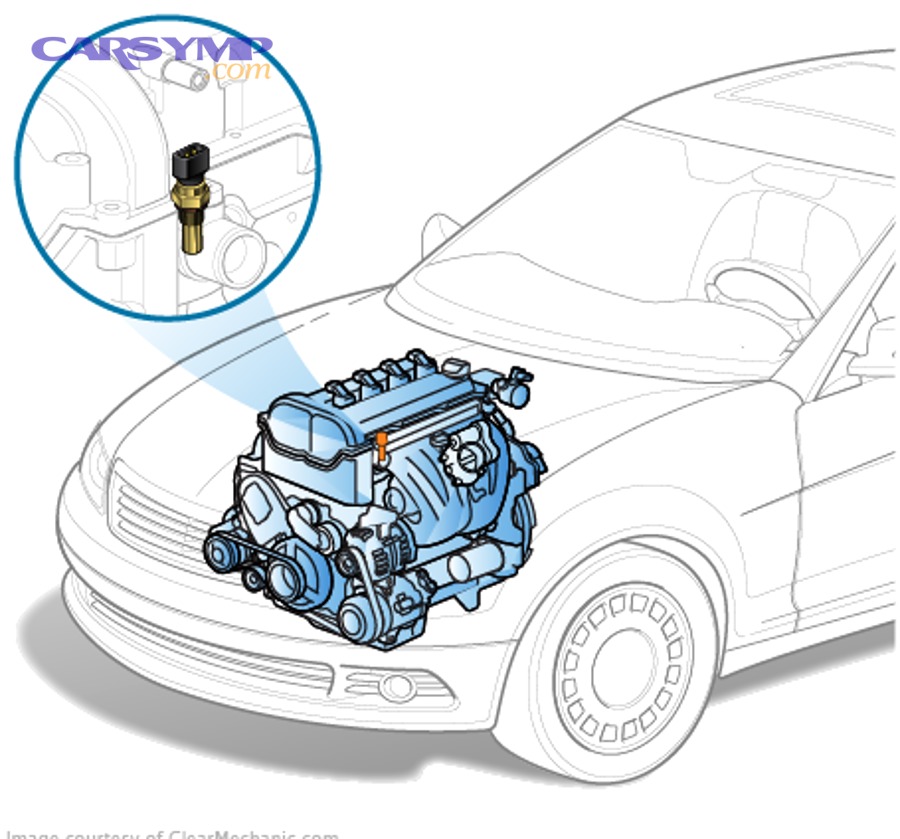
Before you compare quotes, it helps to see what an itemized estimate often looks like. The table below summarizes common price components and why each one changes.
| Line item | What it covers | Why it varies |
|---|---|---|
| Sensor (part) | The ECT sensor itself (OEM or aftermarket) | Brand choice, vehicle fitment, supply chain |
| Seal / O-ring (if used) | Prevents coolant seepage at the sensor seat | Some sensors include it; others don’t |
| Labor | Removal + installation time | Access difficulty, engine layout, corrosion |
| Diagnostics (sometimes separate) | Scan tool checks + basic circuit sanity checks | Policy varies by shop; sometimes credited to repair |
| Coolant top-off / bleed (if needed) | Replacing lost coolant and removing air | Depends on sensor location and coolant loss |
On RepairPal’s estimator page, the average cost displayed for an “Engine coolant temperature sensor replacement” is shown as $447–$532, with separate parts and labor ranges listed. (repairpal.com)
Is the ECT sensor replacement usually under $200? (Yes/No)
Yes—ECT sensor replacement is often under $200 when (1) the sensor is easy to reach, (2) the job does not require draining/bleeding much coolant, and (3) you use a reasonably priced part instead of a dealer-only option.
However, the “under $200” outcome is most common on vehicles where the sensor sits on an accessible coolant outlet or housing, and where the connector releases cleanly without brittle plastic or corrosion.
- Reason 1: Access is simple. If the sensor is reachable from the top of the engine bay, labor can be closer to a short flat-rate time.
- Reason 2: Coolant handling is minimal. Losing only a small amount of coolant reduces extra steps and materials.
- Reason 3: Parts pricing stays modest. Many aftermarket ECT sensors are inexpensive compared with dealer pricing.
To illustrate how low a vehicle-specific estimate can be when access is easy and the part is inexpensive, YourMechanic shows examples where total estimates can be near the low hundreds for certain models (with parts and labor split). (yourmechanic.com)
What cost range should car owners expect for parts-only vs parts+labor?
Parts-only costs are typically the sensor (and sometimes a seal), while parts+labor adds the access time, so parts-only can look cheap while the installed price reflects the real difficulty.
Meanwhile, the cleanest way to compare “parts-only” versus “installed” is to treat labor as its own product: you’re paying for time, access, and risk management (not snapping plastic connectors, not cross-threading, and not trapping air in the cooling system).
- Parts-only (DIY purchase): You pay for the sensor, and possibly an O-ring or thread sealant if your design uses it.
- Parts+labor (shop quote): You pay for removal/installation time plus shop supplies, and sometimes diagnostic verification.
RepairPal’s estimate format demonstrates this split clearly by listing separate labor and parts ranges alongside the total. (repairpal.com)
Which situations push the estimate to the high end?
There are 4 main situations that push an ECT sensor estimate to the high end: difficult access, corrosion damage, added coolant bleeding, and wiring/connector repairs, based on the criterion of “extra time and extra parts beyond the sensor.”
Especially, high-end quotes often happen when the sensor is not the only problem—or when you must remove multiple components to reach it.
- Difficult access (buried sensor): Intake ducting, battery tray, or throttle body components may need removal.
- Corroded or seized sensor threads: Additional time is needed to prevent housing damage.
- Coolant loss that requires proper bleed procedure: More labor and materials.
- Broken connector/pigtail issues: Adds electrical repair work.
According to a study by Technische Universität Chemnitz from the Department of Automotive Software Engineering, in 2020, the ECT sensor signal is used by the control module to regulate fuel injection timing and radiator fan control—so verification and correct installation matter when symptoms are severe. (researchgate.net)
What’s included in an ECT sensor replacement cost estimate (and what isn’t)?
An ECT sensor replacement estimate includes the sensor and the labor to install it, but it may not include diagnostics, coolant service, taxes, or related repairs unless the quote states those items explicitly.
In addition, the easiest way to prevent “estimate shock” is to force clarity: ask for an itemized breakdown before you approve the work.
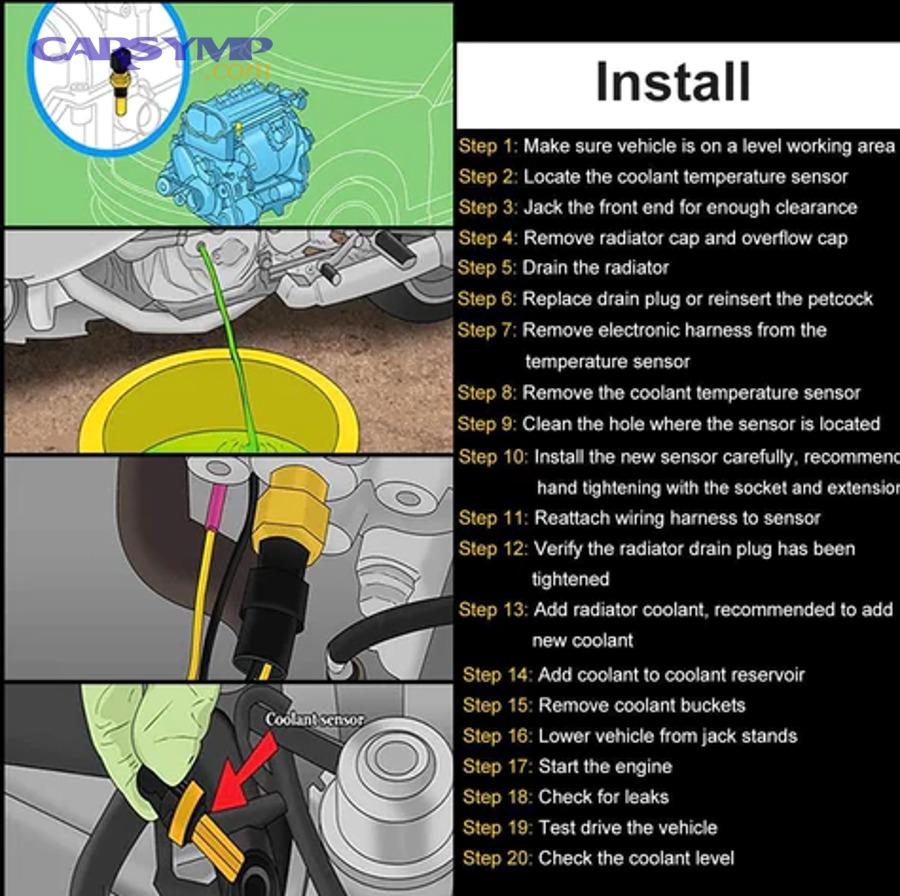
What does “parts & labor breakdown” mean for this repair?
A parts & labor breakdown means the quote separates “what you buy” from “what the technician does,” so you can see whether your cost is driven by the sensor price or by access time.
Specifically, a good breakdown will show (a) the sensor part number/brand category (OEM vs aftermarket), (b) labor hours or flat-rate time, and (c) any materials such as coolant, seals, or shop supplies.
What you want to see on the estimate:
- Part description: “ECT sensor” or “coolant temperature sensor” (same central entity, different naming).
- Labor line: Hours/time and rate or flat-rate labor charge.
- Materials: Coolant, seal/O-ring, shop supplies.
- Diagnostic policy: Fee listed or explicitly waived/credited.
This is also where you can naturally connect to coolant temperature sensor replacement as a service category: the clearer the breakdown, the easier it is to compare quotes apples-to-apples.
Do you have to pay a diagnostic fee before replacing the sensor? (Yes/No)
No—you do not always have to pay a separate diagnostic fee because (1) some shops include basic scanning in the estimate, (2) some credit the diagnostic fee toward the repair, and (3) a clear symptom/circuit clue can make verification quick.
However, you should expect at least basic verification when symptoms are ambiguous, because a code can point to the circuit, not just the sensor element.
A practical middle ground:
- Ask if the shop will credit diagnostics if you proceed.
- Ask what their “basic check” includes (scan + live data sanity + connector inspection).
- Approve deeper diagnosis only if the first checks are inconclusive.
For context on what these codes often mean, guides describing the P0115 family explain that the PCM can log the code when it sees erratic or irrational voltage behavior in the ECT circuit, which may be caused by wiring or connector issues—not only the sensor. (carparts.com)
What extra services might be legitimately recommended during replacement?
There are 4 common extra services that may be legitimately recommended during ECT sensor replacement: coolant top-off/bleed, seal replacement, connector repair, and verification scan, based on the criterion of “steps required to return the system to a leak-free, data-correct state.”
Moreover, “legitimate” depends on what the technician finds during removal, not on a generic upsell script.
- Coolant top-off and air purge: Needed if coolant is lost or if the sensor is on a housing that drains quickly.
- Seal/O-ring replacement: Prevents seepage when the old seal is flattened or damaged.
- Connector/pigtail repair: Needed when the locking tab breaks or corrosion is present.
- Verification scan + road test: Confirms the ECT reading behaves normally.
According to a study by the University of Craiova from the Faculty of Mechanics, in automotive thermistor applications the resistance–temperature relationship is strongly nonlinear, so correct sensor behavior should be verified across warm-up rather than judged from a single moment. (researchgate.net)
What factors change the replacement cost the most?
There are 5 main factors that change ECT sensor replacement cost the most: sensor access, labor rate, part choice, corrosion risk, and coolant handling, based on the criterion of “what increases time or adds materials.”
More importantly, these factors explain why two drivers can get wildly different quotes for the same named repair.
Which vehicle and engine details most affect labor time?
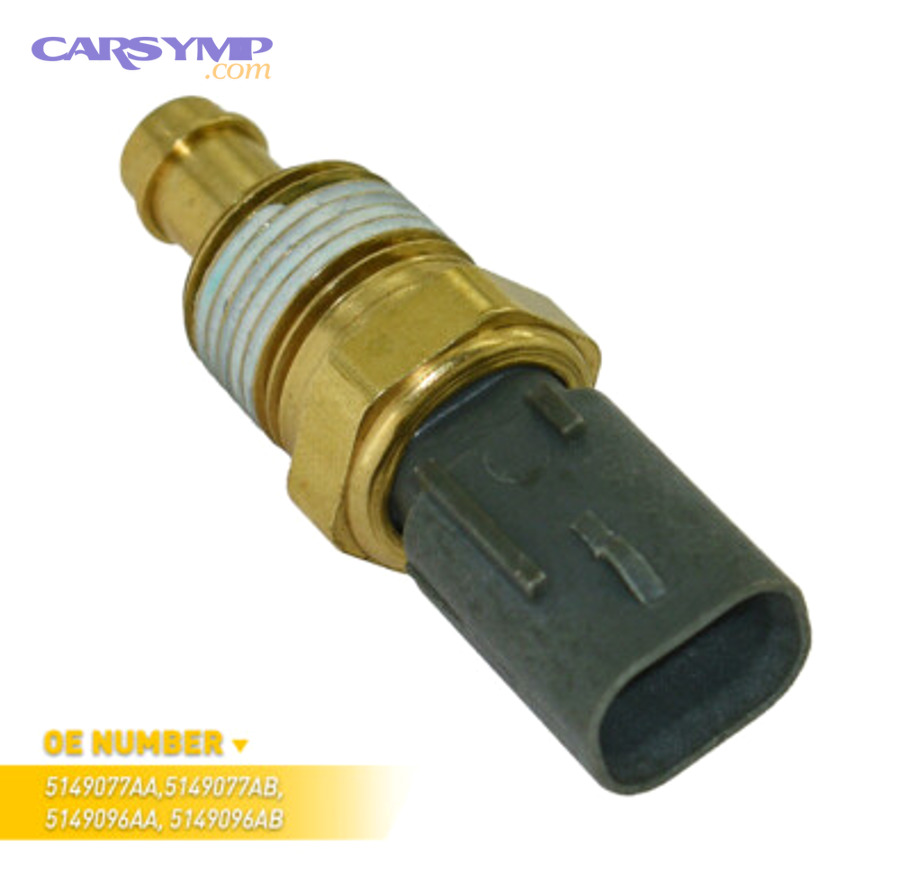
There are 4 vehicle/engine details that most affect labor time: sensor location, engine layout, component stacking, and cooling system design, based on the criterion of “what must be removed to reach the sensor safely.”
To better understand labor time, think in layers: the sensor itself is small; the cost comes from what’s sitting on top of it.
- Sensor location: Thermostat housing vs cylinder head vs radiator outlet changes access.
- Engine layout: Transverse engines can compress space; longitudinal layouts can be easier (but not always).
- Component stacking: Intake manifolds, air boxes, and wiring looms can block direct access.
- Cooling system design: Some systems drain quickly; others allow a clean swap with minimal loss.
If you want a more accurate estimate, give the shop your engine designation (e.g., 2.0L turbo vs 3.5L V6) because labor time can change even within the same model name.
How do OEM vs aftermarket sensors compare on price and value?
OEM sensors win on fit assurance, aftermarket sensors win on upfront price, and dealer-installed OEM is often optimal for warranty peace of mind, because each option dominates a different decision criterion.
However, “value” should be defined as “total cost of ownership,” not “cheapest receipt.”
- OEM (dealer or OEM-branded):
- Pros: Fitment confidence, sometimes longer parts warranty
- Cons: Higher part cost
- Aftermarket (reputable brand):
- Pros: Lower cost, wide availability
- Cons: Quality varies by brand and application
- Dealer-installed OEM:
- Pros: Single point of responsibility (parts + labor)
- Cons: Often the highest quote
A smart approach is to ask: “Will you warranty the repair if I choose this part option?” That question converts the “part debate” into a measurable risk decision.
How does shop type (dealer vs independent vs mobile mechanic) change the quote?
Dealers win on brand-specific tooling and warranty structure, independents are best for cost-to-quality balance, and mobile mechanics are optimal for convenience, because each shop type is built around a different service model.
On the other hand, the “best” quote is the one that clearly states what is included and what happens if diagnosis changes midstream.
- Dealer: Higher labor rates; strong brand procedures; often OEM parts only.
- Independent shop: Flexible parts sourcing; often competitive labor rates; wide experience.
- Mobile mechanic: Convenience and time savings; pricing varies with travel and access constraints.
YourMechanic’s service pages illustrate how pricing can vary across vehicles and service contexts using parts/labor splits and examples. (yourmechanic.com)
According to a study by Technische Universität Chemnitz from the Department of Automotive Software Engineering, in 2020, the ECT sensor input affects cooling fan control and fuel/ignition decisions—so verifying correct readings matters as much as the install itself when comparing “cheap” vs “done right.” (researchgate.net)
How can you estimate your own ECT sensor replacement cost more accurately before booking?
You can estimate your ECT sensor replacement cost more accurately by collecting the right vehicle details, requesting an itemized quote, and confirming coolant/diagnostic policies, which typically produces a quote that matches reality instead of a generic range.
Next, treat this like buying any service: your job is to reduce uncertainty so the shop does not add “risk padding” to the estimate.
What information should you provide to get an accurate estimate?
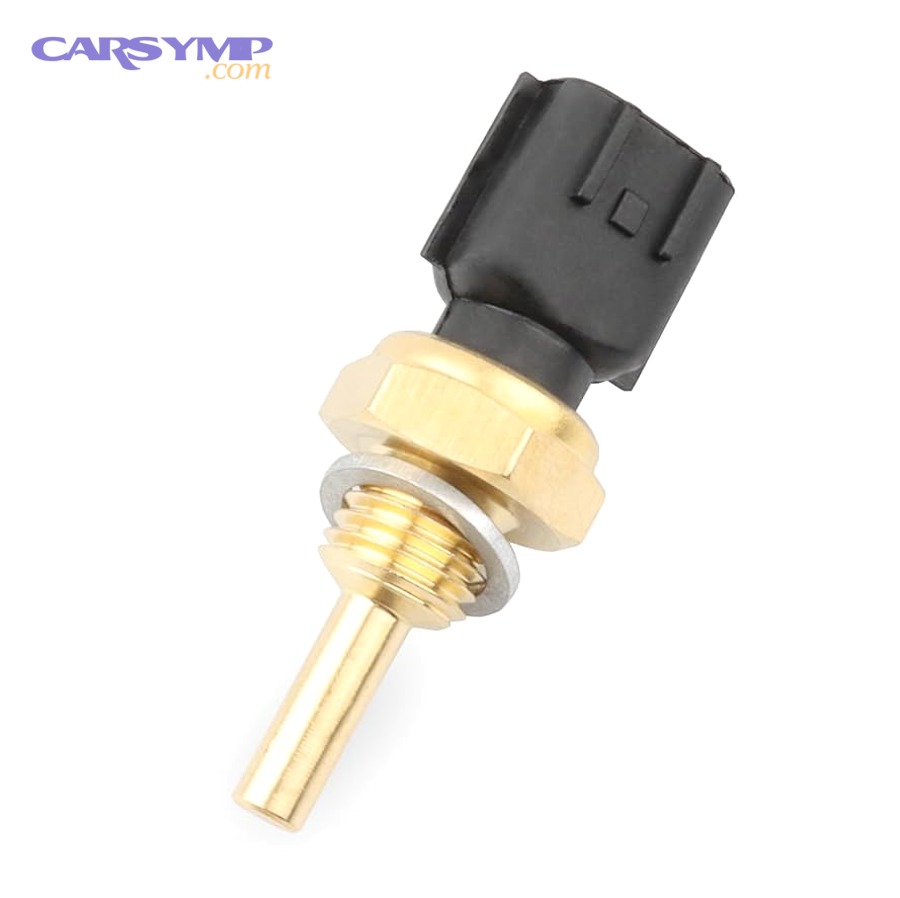
There are 7 key pieces of information you should provide for an accurate estimate: VIN, year/make/model, engine size, symptom description, stored codes, recent cooling-system work, and coolant type, based on the criterion of “what prevents wrong-part or wrong-labor assumptions.”
Specifically:
- VIN: Helps confirm the exact sensor and connector type.
- Engine size/trim: Determines access difficulty and sensor location.
- Symptoms: Hard starts, rich running, overheating gauge behavior, fan running constantly.
- Stored codes: Helpful for P0115–P0119 code diagnosis basics (these codes often relate to ECT circuit behavior).
- Recent work: A disturbed connector after maintenance is a real pattern.
- Coolant type: Prevents mixing incompatible coolant.
If you have a scan tool, record:
- Coolant temperature at cold start (should be near ambient)
- Warm-up behavior (smooth rise, no irrational jumps)
Which questions should you ask a shop to avoid surprise charges?
There are 8 questions you should ask to avoid surprise charges: line-item breakdown, labor time, parts choice, diagnostic credit policy, coolant handling, additional parts approval, warranty, and post-repair verification, based on the criterion of “what controls scope creep.”
Ask these in plain language:
- “Is the quote parts + labor itemized?”
- “How much labor time are you quoting, and why?”
- “Is the part OEM or aftermarket, and what warranty applies?”
- “Do you charge diagnostics separately—and is it credited if I proceed?”
- “Will you need to Refill and bleed after sensor replacement, or just top off?”
- “If you find a broken connector, will you call before adding cost?”
- “What’s the warranty on labor and parts?”
- “How will you confirm the fix—live data, road test, code check?”
These questions reduce uncertainty and stop “mystery add-ons” before they happen.
Can you drive with a suspected bad ECT sensor while waiting for repair? (Yes/No)
No—driving with a suspected bad ECT sensor is not reliably safe because (1) the engine may run too rich or too lean, (2) the cooling fan strategy may behave incorrectly, and (3) you may miss a true overheating event if the reading is wrong.
In addition, “it still drives” is not the same as “it’s not damaging anything.”
Use this decision rule:
- Stop driving immediately if you see overheating, steam, or coolant loss.
- Limit driving if the fan runs constantly, the temperature reading jumps, or the car runs poorly.
- Tow or fix soon if you have recurring P0115–P0119 codes or the car starts hard when cold.
According to a study by Technische Universität Chemnitz from the Department of Automotive Software Engineering, in 2020, the control module uses ECT sensor input to adjust fuel injection and radiator fan operation, so incorrect readings can affect both drivability and thermal control decisions. (researchgate.net)
DIY vs mechanic: which choice costs less and when is DIY not worth it?
DIY wins on upfront cost, a mechanic is best for risk reduction, and a professional is optimal when access is difficult or coolant bleeding is sensitive—because each option is strongest under a different criterion (cost, confidence, or complexity).
However, the real comparison is not “DIY vs shop” but “DIY done correctly vs DIY that creates a leak or air pocket.”
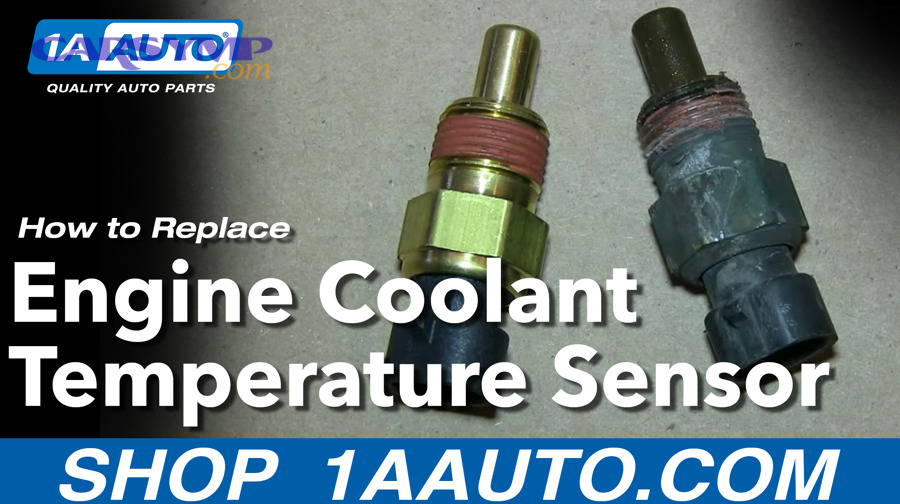
Is DIY ECT sensor replacement a good idea for most car owners? (Yes/No)
Yes—DIY ECT sensor replacement can be a good idea for many car owners when (1) the sensor is easy to access, (2) you can manage coolant safely, and (3) you can verify the repair with live data or a scan tool.
Then, DIY becomes less attractive when access requires major disassembly or when your vehicle is known for brittle connectors.
A good DIY candidate looks like this:
- Sensor is reachable with basic hand tools
- Minimal coolant loss expected
- Clear instructions available for your engine
- You have a plan for safe coolant disposal
What are the most common DIY mistakes that increase the final cost?
There are 6 common DIY mistakes that increase total cost: cross-threading, breaking the connector, installing the wrong sensor, failing to bleed air, ignoring wiring faults, and skipping verification, based on the criterion of “mistakes that force rework or cause new problems.”
More specifically:
- Cross-threading or over-tightening: Can crack a housing or strip threads.
- Breaking the locking tab: Forces pigtail replacement or intermittent contact issues.
- Wrong part selection: Similar-looking sensors are not interchangeable across trims/years.
- Air pockets after coolant loss: Can cause overheating symptoms and false readings.
- Wiring problems mislabeled as “bad sensor”: The sensor swap doesn’t fix the code.
- No verification: You think it’s fixed until the CEL returns.
This is where “Clearing codes and verifying repair” becomes essential: clearing a code is not proof of a fix; stable live data across warm-up is.
How does labor time change if the sensor is hard to reach?
Labor time increases because access work expands the job scope, and a “hard-to-reach sensor” can require removing multiple components, protecting fragile connectors, and performing a more careful coolant bleed procedure.
Meanwhile, a buried sensor creates two costs at once:
- More time to remove and reinstall surrounding parts
- More risk that something brittle breaks during disassembly
If a shop says the labor is higher, ask what makes it higher:
- Intake removal?
- Underbody access?
- Tight space that requires special tools?
- Known corrosion risk?
According to a study by the University of Craiova from the Faculty of Mechanics, thermistor-based automotive sensors have nonlinear characteristics, so verifying behavior through the full warm-up range helps confirm that installation and signal integrity are correct after complex access work. (researchgate.net)
What problems look like a bad ECT sensor but can change the final cost estimate?
Several problems can mimic a bad ECT sensor and change the estimate, including wiring faults, connector corrosion, and confusion between a sensor and a switch—so the “true cost” depends on confirming the real failure point.
Besides, this is the section that prevents the most wasted money: replacing the sensor is cheap compared with paying twice.
How can wiring and connector issues vs sensor failure change the quote?
Wiring and connector issues often increase the quote because (1) electrical repairs add labor time, (2) pigtails/connectors may need parts replacement, and (3) diagnosis must confirm signal integrity before parts swapping.
However, the good news is that wiring fixes can be straightforward when the fault is visible (broken tab, green corrosion, rubbed-through insulation).
What changes the estimate:
- Pigtail replacement: Parts + solder/heat-shrink labor
- Harness repair: Tracing and repairing an open/short
- Pin tension issues: Cleaning and restoring reliable contact
Code descriptions for P0115-type issues often emphasize that the PCM is reacting to erratic or abnormal circuit signals, which can result from connector damage or open/short conditions, not just a failed sensor element. (carparts.com)
What’s the difference between an ECT sensor and a coolant temperature switch?
An ECT sensor is a variable-reading thermistor device, while a coolant temperature switch is typically an on/off threshold switch, and confusing them can lead to wrong parts, wrong labor assumptions, and repeated repairs.
To better understand the naming:
- Sensor (ECT): Sends a continuous temperature-related signal the PCM interprets.
- Switch (sender/switch): May trigger a fan, gauge, or warning light at a preset point (vehicle-dependent).
YourMechanic’s service pages often use the combined phrasing “coolant temperature switch (sensor),” which is exactly why estimates can get confusing unless the part is confirmed by VIN. (yourmechanic.com)
When do you actually need to refill and bleed coolant after sensor replacement?
Yes—you need to refill and bleed coolant after sensor replacement when (1) the sensor location causes meaningful coolant loss, (2) the cooling system is opened enough to introduce air, and (3) your vehicle is sensitive to trapped air pockets that affect heater output and temperature stability.
More importantly, bleeding is not a “nice-to-have” if the coolant level drops and air enters the system—it is what prevents false overheating symptoms after a correct repair.
Signs bleeding is needed:
- Heater blows cold at idle
- Temperature gauge fluctuates
- Gurgling sounds in the dash
- Coolant level drops again after first heat cycle
If your job requires it, follow the vehicle’s bleed procedure and use a proper funnel or vacuum fill approach—this is the practical heart of “Refill and bleed after sensor replacement.”
What post-repair checks confirm the fix and prevent a second visit?
There are 5 post-repair checks that confirm the fix: stable live data, cold-start plausibility, smooth warm-up curve, leak inspection, and code/status verification, based on the criterion of “proof the system is correct under real conditions.”
A strong verification routine looks like this:
- Live data check: Coolant temp near ambient at cold start.
- Warm-up curve: Smooth rise without irrational jumps.
- Fan behavior: Fan engages at normal operating strategy for your vehicle.
- Leak check: Inspect around sensor seat/housing after heat cycles.
- Codes and readiness: Perform “Clearing codes and verifying repair,” then confirm codes do not return and monitors progress normally.
According to a study by Technische Universität Chemnitz from the Department of Automotive Software Engineering, in 2020, NTC thermistors used in ECT sensors change resistance inversely with temperature and the module interprets this continuously—making a smooth warm-up signal a practical confirmation test after repair. (researchgate.net)