


Title & Outline Analysis (Step 1)
– Main keyword (focus): effects on fuel economy and starting (reframed to ECT/coolant temperature sensor impacts, which is the practical “entity” behind the intent)
– Predicate (main action): Boost / Fix / Explain (actionable diagnosis + improvement)
– Relations Lexical used: Synonym (ECT sensor = coolant temperature sensor) + Meronymy (ECT signal as a part of ECU fueling/starting logic)
– Search-intent types in outline: Boolean + Definition + Grouping + How-to + Comparison (diagnose → differentiate → decide next steps)
If your fuel economy suddenly dropped and your engine feels harder to start—especially when cold—an engine coolant temperature (ECT) sensor can be the hidden trigger because it tells the ECU how “warm” the engine is and how much fuel it should add.
Next, you’ll see why short-trip MPG often gets hit the hardest when the sensor falsely reports “cold,” and how that same error can create long cranking, rough idle, or a gassy smell after start-up.
Then, we’ll break down the symptoms that most strongly point to an ECT issue, plus the quickest confirmation tests you can do with live data—so you can avoid replacing parts that aren’t actually bad.
Introduce a new idea: once you know how an ECT sensor fails (cold-biased, hot-biased, or intermittent), the entire diagnosis becomes a simple pattern-matching process instead of guesswork.
Does a bad ECT sensor really cause poor gas mileage and hard starting?
Yes—an ECT sensor can cause poor fuel economy and hard starting for at least three reasons: it can command extra “warm-up” fuel when the engine is already warm, it can mis-set ignition/idle targets during start-up, and it can delay closed-loop corrections that normally clean up the mixture.
Then, the key is understanding which direction the sensor is wrong—because “too cold” and “too hot” failures don’t drive the same symptoms.
When the ECU thinks the engine is colder than it really is, it typically enriches the mixture like it’s still warming up, which wastes fuel and can make starts messy. When the ECU thinks the engine is hotter than it really is, it may under-fuel or skip warm-up strategies, which can also create rough cold starts. Real-world driving amplifies these errors because start-up and warm-up happen repeatedly—especially on commuting and errand trips.
Is poor fuel economy worse on short trips when the sensor reads “cold” all the time?
Yes—short-trip fuel economy is usually worse when the sensor reads “cold” continuously for three reasons: warm-up enrichment lasts longer, closed-loop correction arrives later, and the engine spends more time below efficient operating temperature.
Specifically, short trips repeatedly restart the “warm-up” phase, so a cold-biased ECT reading can keep the ECU pouring in extra fuel far more often than you realize.
A normal engine transitions from cold-start enrichment toward a stable, warmed-up mixture as coolant temperature rises. If the sensor keeps reporting a low coolant temperature, the ECU may hold richer fueling and higher idle targets longer than necessary. The result is a compounding penalty: you burn extra fuel at idle, extra fuel during the first mile, and extra fuel any time you slow down and re-accelerate before the ECU “trusts” it’s warm.
According to a study by Tampere University (Aerosol Physics Laboratory) published in 2023, fuel consumption after a cold start was about 10–20% higher than after a warm start in their tested real-world routes. (trepo.tuni.fi)
Can an ECT sensor cause long cranking or rough cold starts even with a good battery?
Yes—an ECT sensor can cause long cranking or rough cold starts for at least three reasons: incorrect enrichment, incorrect idle airflow/targeting, and incorrect timing strategy during start stabilization.
More importantly, the “battery seems fine” clue often points away from electrical supply and toward fuel/air strategy—which is exactly what the ECT sensor influences.
During a cold start, the engine needs a predictable fuel and airflow plan to fire quickly and settle into a stable idle. If the ECU receives a coolant temperature that doesn’t match reality, it may deliver too much fuel (flood-like behavior, fuel smell, stumble) or too little fuel (lean misfire feel, longer cranking, stalling right after start). In modern engines, the ECU also uses coolant temperature to determine idle speed targets, purge behavior, and sometimes fan strategy—so an ECT signal error can look like a “random” start quality issue even when ignition and battery health check out.
What is an ECT sensor and how does it affect fueling and starting logic?
An ECT sensor is a coolant-immersed temperature sensor (typically an NTC thermistor) that reports engine coolant temperature to the ECU so it can manage cold-start enrichment, idle strategy, fan control, and fueling corrections as the engine warms.
Next, once you see which ECU decisions use ECT, you’ll understand why one bad temperature value can snowball into both MPG loss and start complaints. (samarins.com)
The ECT sensor isn’t just for the dashboard gauge. The ECU treats coolant temperature as a “high authority” input during warm-up. That’s why diagnosing fuel economy and starting issues often begins with verifying the ECT reading makes sense.
What does the ECU change when ECT is cold vs warm?
When ECT is cold, the ECU increases fueling and stabilizes idle; when ECT is warm, it reduces enrichment, tightens fuel control, and expects the engine to run efficiently with smaller corrections.
To better understand this, think of ECT as the ECU’s “warm-up timeline”—it decides how aggressively the engine needs help to run smoothly.
Common ECU behaviors influenced by ECT include:
- Fueling enrichment: more fuel when cold, less when warm (to keep combustion stable and reduce stumble).
- Idle speed/airflow strategy: higher or differently controlled idle targets when cold.
- Transition to closed-loop control: the ECU relies more on oxygen sensor feedback once the engine and sensors are at operating conditions.
- Radiator fan control: many vehicles use ECT for fan on/off decisions. (samarins.com)
How can a “too hot” vs “too cold” ECT reading create opposite symptoms?
A “too cold” ECT reading usually drives rich running and low MPG, while a “too hot” ECT reading can cause lean cold-start behavior and stumble; intermittent readings often cause erratic starts and inconsistent MPG.
However, the fastest way to avoid confusion is to map each failure direction to what you can observe within the first 2–5 minutes after startup.
Here’s the practical comparison:
- Cold-biased (reads colder than reality): rich smell, sooty tailpipe, MPG drop, rough/loaded idle, possible fouled plugs over time.
- Hot-biased (reads hotter than reality): harder cold starts, immediate stumble, lean misfire feel, sometimes stalling right after start.
- Intermittent/open circuit: sudden jumps in scan data, fan weirdness, sporadic starting problems that “go away” temporarily.
A classic scan-tool clue: if the circuit opens, many vehicles default to an extreme cold value (often -40°), which immediately distorts fueling strategy. (samarins.com)
Which symptoms most strongly indicate an ECT sensor issue?
There are 3 main symptom groups that most strongly indicate an ECT sensor issue: fuel economy changes, starting/idle behavior changes, and scan-tool/gauge evidence—grouped by whether the ECU is acting “too cold,” “too hot,” or intermittent.
Next, you’ll use these groups to separate true Bad coolant temp sensor symptoms from look-alikes like thermostats, vacuum leaks, or airflow sensor problems.
Before the list, here’s a quick context table: it summarizes what you’re likely to observe and what it usually means.
| Symptom cluster (what you notice) | Most likely ECT direction | Why it happens |
|---|---|---|
| MPG drops + fuel smell + “heavy” idle | Cold-biased | ECU keeps adding warm-up fuel too long |
| Long crank + stumbles right after cold start | Hot-biased | ECU under-enriches when engine is actually cold |
| Random spikes/drops in temp reading | Intermittent/wiring | ECU strategy changes moment-to-moment |
What fuel economy signs point to an ECT sensor problem?
There are 4 common fuel-economy signs that point to an ECT sensor problem: sudden MPG drop without driving changes, MPG especially worse in city/short trips, richer exhaust smell, and unusually high fuel trims correcting a persistent ECT-driven bias.
Specifically, the “short trips got way worse” pattern is one of the strongest real-world tells.
Look for:
- MPG drop that doesn’t match tire pressure, load, or seasonal fuel changes.
- City MPG collapsing more than highway MPG (because warm-up repeats).
- Fuel smell on cold start or blackened exhaust tip over time (cold-biased running).
- Fuel trim behavior that keeps fighting a baseline error (more on this in the live-data section).
According to a study by Virginia Polytechnic Institute and State University (Mechanical Engineering) in 2002, cold-start conditions can measurably increase energy use—one reported example was about a 5% increase in fuel use under cold-start impacts in a vehicle context. (vtechworks.lib.vt.edu)
What starting and idle symptoms show up first?
There are 4 starting/idle symptoms that often show up first: long crank time, rough idle immediately after start, stalling on first stop, and inconsistent idle speed that “settles” only after several minutes.
Then, the important detail is timing—when the symptom happens is often more diagnostic than how severe it feels.
Patterns that strongly align with ECT errors:
- Rough for 30–120 seconds after start, then fine (warm-up strategy mismatch).
- Starts, then dies when shifting into gear (mixture/idle target not matching reality).
- Needs throttle input to keep running when cold (often hot-biased or under-enriched behavior).
What scan tool or dashboard clues support the diagnosis?
There are 3 scan/dashboard clue types that support ECT diagnosis: implausible temperature values (especially at cold start), temperature jumps/dropouts, and inconsistency between ECT and intake air temperature (IAT) after an overnight soak.
Next, you’ll confirm the issue with one of the most reliable quick checks: the cold-soak comparison.
If you have a scan tool capable of live data, focus on:
- KOEO (key on, engine off) plausibility: after sitting overnight, ECT should be close to ambient and close to IAT. (samarins.com)
- Dropout behavior: intermittent opens can make the reading snap to extreme values (often -40°) and back. (samarins.com)
- Gauge vs scan mismatch: gauge systems are sometimes damped, so live data is typically more truthful for diagnosis.
How do you confirm an ECT sensor is the cause (before replacing parts)?
Confirming an ECT sensor as the cause is a 4-step workflow—cold-soak comparison, live-data trend check, connector/wiring inspection, and sensor circuit testing—designed to prove the ECU is making decisions from incorrect temperature input.
Below, each step builds on the last, so you can stop early once the evidence is strong.
How do you compare ECT to ambient/IAT during a cold start (“cold-soak” test)?
ECT wins the diagnosis when it matches ambient/IAT within a few degrees after an overnight soak; if ECT is far off while IAT matches ambient, the ECT circuit is the likely liar.
To begin, do this test before the engine warms even slightly—because once the thermostat and metal heat soak starts changing temperatures, the clearest signal is gone.
Cold-soak test checklist:
- Park overnight (or at least several hours) without running the engine.
- Key on, engine off (KOEO).
- Read ECT and IAT on live data.
- Compare both to ambient temperature (phone weather is fine as a rough check).
If IAT is reasonable but ECT is wildly different (e.g., ECT says 140°F on a 45°F morning), the ECU will behave as if the engine is already warm—often causing poor cold-start behavior.
What live-data patterns and fuel trims suggest ECT is lying?
Live-data patterns suggest ECT is lying when the temperature rises unrealistically fast, drops out suddenly, or never reaches normal operating range—especially when fuel trims or commanded enrichment behave “as if cold” long after the engine is warm.
More specifically, you’re looking for logic conflicts—data that can’t all be true at once.
Common “this can’t be right” patterns:
- ECT jumps 20–40°F instantly (usually wiring/connector intermittency).
- ECT stalls at a low value while the radiator hose and heater output are clearly hot (could be sensor, air pocket, or placement).
- ECT reads -40° at the moment a code sets or during a glitch (often indicates an open circuit condition). (samarins.com)
If your scan tool shows the ECT “teleporting” rather than warming smoothly, treat the sensor circuit as suspect even before you touch the sensor itself.
How do you check the connector and wiring for intermittent faults?
There are 3 high-value checks for intermittent ECT faults: inspect for corrosion/loose pins, perform a gentle wiggle test while watching live data, and check harness routing for rub-through near brackets or hot components.
Then, you’re not guessing—you’re trying to reproduce the fault while observing the sensor signal.
Do this safely with the engine idling (if it can idle):
- Visually inspect the connector for green/white corrosion, moisture, damaged seals, or spread pins.
- Lightly wiggle the harness and connector while monitoring ECT on the scan tool. A sudden temperature change indicates an intermittent connection. (samarins.com)
- Look for harness rubbing where it touches metal edges or engine components.
How do you bench-test resistance/voltage safely?
A safe bench-style check verifies the sensor behaves like an NTC thermistor: resistance should be higher cold and lower hot, and the signal voltage typically drops as the engine warms (with a 5V reference present).
Next, the goal isn’t to chase a perfect number—it’s to confirm the sensor changes smoothly and logically with temperature.
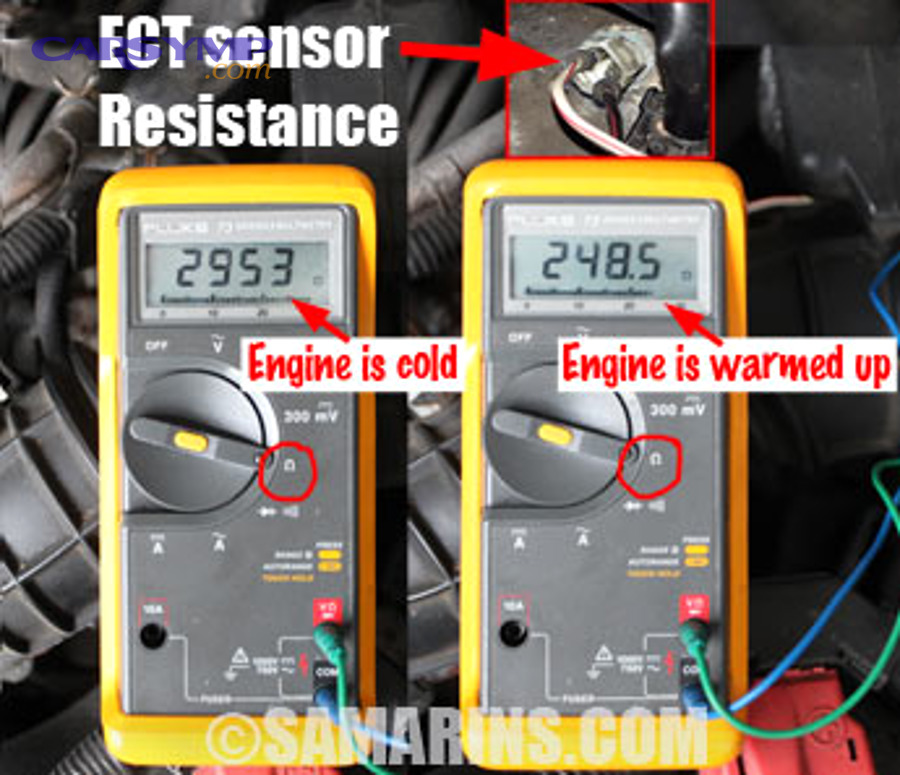
Practical testing tips:
- Resistance test (sensor unplugged): measure resistance cold, then again warm; it should drop significantly as temperature rises. (samarins.com)
- Voltage test (back-probing plugged-in sensor): verify reference voltage and ground are present, and watch the signal change smoothly as the engine warms. (samarins.com)
- Avoid working around a hot pressurized cooling system; never remove a sensor from a hot engine.
If you confirm the ECT signal is wrong and the wiring checks out, you’re finally in a position to justify coolant temperature sensor replacement rather than “parts roulette.” If you’re planning the job, note that ECT sensor replacement labor time is often short on many vehicles, but access varies by engine layout—so you should still check your specific platform’s service steps before starting.
What else causes the same symptoms, and how is it different from a bad ECT sensor?
A bad thermostat often wins as the “MPG killer,” vacuum/MAF issues often win for fuel-trim-driven lean/rich behavior, and a bad IAT can mimic ECT errors—but ECT is most likely when cold-soak temperature logic fails while other sensors remain plausible.
However, the fastest differentiator is whether the ECU’s temperature story makes sense from cold start to fully warm.
Bad thermostat vs bad ECT sensor: which one kills MPG more on highway vs city?
A bad thermostat (stuck open) tends to hurt highway MPG and warm-up time more consistently, while a cold-biased ECT sensor tends to hurt city/short-trip MPG more dramatically; both can overlap, so the deciding factor is actual coolant warm-up behavior.
Next, watch how quickly the engine reaches and holds normal operating temperature during steady driving.
How they differ:
- Thermostat stuck open: engine may struggle to reach normal temp, heater output can be weak, and ECT rises slowly even with correct sensor behavior.
- ECT cold-biased: reported temperature stays low even when real temperature is normal, causing the ECU to over-fuel while the engine is actually warm.
MAF/vacuum leaks vs ECT: what does the fuel trim pattern look like?
ECT-driven errors often create a consistent bias (too rich or too lean at specific warm-up phases), while MAF/vacuum leaks typically show fuel trim patterns that correlate with airflow/load (idle vs cruise) rather than coolant temperature logic.
More specifically, you’re looking for logic conflicts—data that can’t all be true at once.
A simple way to think about it:
- Air measurement errors change with throttle/load changes.
- Temperature strategy errors change with warm-up progression and time since start.
IAT sensor vs ECT sensor: how do you tell which temperature input is wrong?
ECT is wrong when it disagrees with ambient after cold soak while IAT matches ambient; IAT is wrong when it’s the outlier and ECT matches ambient and warms smoothly with engine heat.
Then, once you run the cold-soak test, you usually know which temperature input is lying within one minute.
Use these sanity checks:
- After overnight park: ECT ≈ IAT ≈ ambient is the normal pattern. (samarins.com)
- If one sensor is off by 20–60°F but the other matches ambient, the outlier is suspect.
- If both are off in different ways, consider heat soak, parking conditions, or wiring/ground issues affecting multiple sensors.
What happens if you keep driving with a faulty ECT sensor?
Driving with a faulty ECT sensor is a risk-and-cost problem: it can waste fuel, worsen drivability, increase emissions, and in some cases contribute to long-term damage because the ECU repeatedly makes the wrong fueling decisions.
In addition, the longer the engine runs with a persistent mixture error, the more likely secondary issues appear—like plug fouling or catalyst stress.
The real consequence depends on failure mode:
- Cold-biased (rich): higher fuel use, carbon buildup, potential oil dilution over time, and more load on the catalytic converter.
- Hot-biased (lean at cold start): misfires, stalling, poor cold drivability; repeated lean misfires can also stress emissions components.
- Intermittent: unpredictable behavior that can be hardest to drive around and hardest to diagnose.
Can a rich condition from a “cold-biased” ECT damage the catalytic converter?
Yes—a rich condition from a cold-biased ECT can damage the catalytic converter for at least three reasons: excess fuel can overheat the catalyst, repeated misfires can send unburned fuel into the exhaust, and long-term rich running can contaminate catalyst surfaces.
Especially when the issue persists for weeks, the converter becomes a “victim component,” not the original cause.

While not every rich-running episode destroys a converter, prolonged rich operation increases risk. If you smell fuel often, see black soot buildup, or notice a worsening lack of power, treat it as a reason to stop delaying diagnosis.
How do you validate the fix and prevent the problem from coming back?
There are 4 ways to validate the fix and prevent recurrence: confirm cold-soak plausibility, confirm smooth warm-up trend, verify improved start behavior/MPG over a few drive cycles, and reduce the root causes of sensor/wiring failure (heat, corrosion, routing).
To better understand whether you truly fixed the problem, you need a checklist that measures what changed—rather than trusting a “feels better” impression.
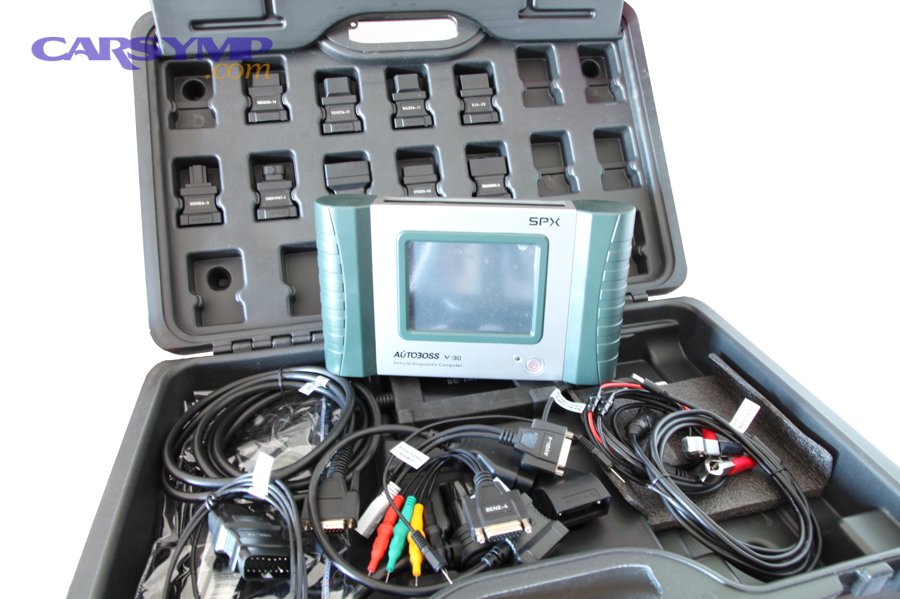
What’s the fastest post-repair checklist to confirm improvement in MPG and cold starts?
There are 5 fast checks to confirm improvement: ECT≈IAT at cold soak, no ECT dropouts, normal warm-up curve, quicker stable idle after start, and MPG returning toward baseline across similar routes.
Then, you’re validating both sensor truth (data) and driver experience (symptoms).
Post-repair checklist:
- Overnight cold-soak: ECT and IAT close to ambient.
- Warm-up: ECT rises smoothly, no sudden spikes or dives.
- Start quality: reduced cranking time, smoother first minute idle.
- No “gassy” smell or rich stumble.
- Track MPG over at least 2–3 comparable trips (same route, similar temps if possible).
If you replaced the sensor, also ensure the cooling system is properly refilled and bled (air pockets can distort readings and create false problems). If you’re documenting the job for your own maintenance log (or a reader audience like Car Symp), include the exact symptoms, pre-fix scan readings, and post-fix readings—those before/after numbers are what make the story authoritative.
When should you clear codes or reset adaptives, and when should you not?
Clearing codes makes sense after a confirmed repair to verify the fault doesn’t return, but you should not clear codes before capturing freeze-frame data or baseline live-data patterns—because that data is often the quickest proof of what happened.
Meanwhile, “reset adaptives” is optional; many cars relearn quickly on their own, but you should follow OEM guidance if available.
Practical approach:
- Before repair: read codes + freeze frame; don’t erase yet.
- After repair: clear codes, then drive through a few warm-up cycles.
- If trims were severely skewed, a reset can speed relearn—but it’s not always necessary.
How do P0115–P0119 codes change your diagnosis workflow?
P0115–P0119 codes are ECU-detected ECT circuit or performance faults that shift your workflow toward circuit integrity and plausibility testing—because they often point to wiring/connector issues, signal range errors, or sensor behavior that doesn’t match expected warm-up patterns.
Next, treat these codes as a directive: prove whether the fault is sensor element, wiring, or an engine condition that makes temperature behavior unusual.
In practice:
- Circuit codes push you to check reference voltage, ground, and harness integrity.
- Performance/rationality codes push you to compare ECT to IAT/ambient and evaluate warm-up curve consistency.
What rare scenarios make ECT data look wrong even when the sensor is OK?
There are 4 rarer scenarios that can make ECT data look wrong even when the sensor is OK: low coolant or air pockets near the sensor tip, poor ground/shared ground issues, aftermarket wiring/remote start modifications, and cooling system flow anomalies that keep coolant from contacting the sensor properly.
In short, when the sensor is telling the truth about what it’s touching, the problem might be that it’s not touching the coolant the way it should.
Rare-but-real examples:
- Air pocket at the sensor location after cooling system work.
- Corrosion or shared ground issues affecting multiple sensors.
- Improper bleeding after coolant service.
- Flow problems that isolate coolant around the sensor.
According to a study by Tampere University (Aerosol Physics Laboratory) in 2023, temperature behavior after cold start can remain suboptimal for significant portions of real-world driving, which is why plausibility and warm-up trend checks matter so much when validating sensor truth. (trepo.tuni.fi)