



Wiring and connector issues can look exactly like a bad coolant temperature sensor because both problems distort the same signal the ECU relies on; the fastest way to separate them is to verify the sensor’s temperature response and prove the circuit’s power/ground/signal integrity under load.
Next, you’ll learn what the ECU means by a “sensor circuit” fault (open, short-to-ground, short-to-voltage, or unstable signal) and why codes like P0115–P0119 often point to wiring/connector resistance, poor terminal tension, or intermittent opens—not just a failed sensor.
Then, you’ll get symptom-based clues (cold-start fueling, fan behavior, gauge oddities, scan tool readings) that help you decide whether to focus on the sensor element or the harness/connector path first—especially when the problem appears only while driving.
Introduce a new idea: once you understand the “signal path,” you can follow a repeatable test sequence (visual + scan data + multimeter + wiggle/heat tests) that prevents unnecessary coolant temperature sensor replacement and catches hidden wiring faults early.
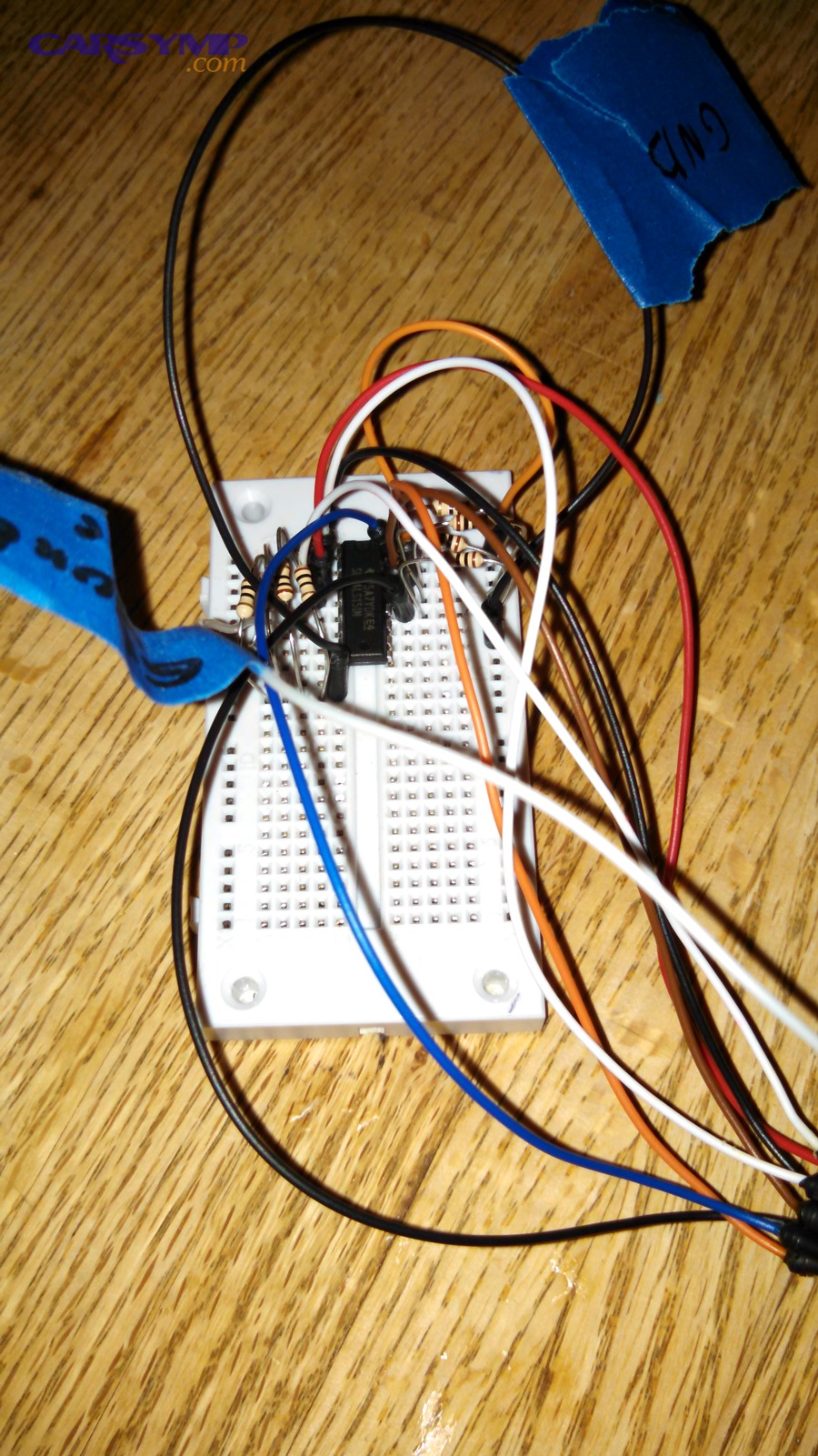
Is the coolant temperature sensor actually bad, or is the wiring/connector causing the problem?
Most of the time, the wiring/connector is the culprit when the ECT reading is jumpy, intermittent, or only wrong under vibration; the sensor is more likely bad when the reading is consistently biased and tracks temperature poorly across warm-up.
To better understand the difference, start by separating signal behavior (what the ECU sees) from physical reality (actual coolant temperature).
What quick checks can separate sensor failure from wiring/connector faults in 5 minutes?
A fast separation test works because an ECT circuit usually fails in predictable patterns.
- Scan tool plausibility (KOEO): With Key On Engine Off, ECT should be close to IAT (intake air temp) after the car sits overnight.
- If ECT is wildly different (e.g., -40°F / 300°F equivalents), suspect open/short wiring first.
- Tap + wiggle test: Lightly tap the connector and wiggle the harness near the sensor while watching live ECT.
- If ECT spikes/dropouts occur, that’s classic terminal tension/corrosion/intermittent open behavior.
- Unplug behavior: Disconnect the sensor and see what the ECU reports (many systems default to an extreme value).
- If unplugging produces a clean, stable default but plugging in causes chaos, suspect connector pin fit or contamination.
- Compare to reality: Aim an IR thermometer at the thermostat housing (or use a contact thermometer) and compare to scan ECT once warmed.
- If scan ECT is consistently off by a large margin without jumping, suspect the sensor element.
Why “intermittent” usually means wiring/connector, not the sensor element
Intermittent faults often come from micro-movements and tiny resistance changes at contact interfaces, which can create sudden signal shifts that look like sensor failure. Vibration-driven fretting corrosion is a known mechanism that increases contact resistance once a small motion threshold is exceeded.

What does “sensor circuit” mean, and how can it fail without the sensor being defective?
A sensor circuit is the complete electrical path (ECU reference voltage → wiring → connector terminals → sensor element → ground return), and it can fail from opens, shorts, high resistance, or intermittent contact even when the sensor itself is perfectly good.
Next, map the fault to the circuit type so you test the right thing first.
How does an ECT sensor circuit work in simple terms?
Most coolant temperature sensors are NTC thermistors: resistance is high when cold and low when hot. The ECU reads voltage across the sensor using a reference and an internal pull-up/pull-down resistor, converting that voltage to temperature.
That means any of these can mimic a “bad sensor”:
- High resistance in the connector → ECU interprets “colder than reality”
- Short-to-ground (signal pulled low) → ECU interprets “hotter than reality”
- Intermittent open → rapid flips to extreme cold/default values
- Short-to-voltage/reference → flatlined or extreme readings
What are the common circuit failure modes (and what they look like on a scan tool)?
There are 4 common patterns, and they’re especially relevant to P0115–P0119 code diagnosis basics:
- Open circuit: ECT snaps to an extreme default (often very cold).
- Short to ground: ECT reads extremely hot or implausible.
- Short to voltage/reference: ECT locks at an extreme cold or flat value.
- Intermittent/high resistance: ECT is plausible sometimes, then suddenly jumps/spikes—often tied to bumps, engine torque movement, or heat.
Why wiring faults are expensive when you chase the wrong thing
When a fault is intermittent, technicians can waste hours replacing good parts because the failure won’t reproduce on command. Research on aging wiring systems notes that intermittent wiring faults are particularly time-consuming to locate, driving large maintenance burdens.

Which symptoms point to wiring/connector issues, and which point to a failing sensor?
Wiring/connector issues usually cause erratic, event-triggered readings, while a failing sensor usually causes stable-but-wrong readings that track temperature in the wrong direction or at the wrong rate.

Then, use symptom grouping to prioritize your tests instead of guessing.
What are the most reliable symptoms of wiring/connector problems?
Look for symptoms that change with movement, vibration, or heat soak:
- Temperature gauge suddenly drops or spikes while driving over bumps
- Cooling fans come on/off unexpectedly without matching engine temperature changes
- Hard-to-reproduce stalling/rough idle that appears after hitting potholes or during engine rocking
- Live ECT value “teleports” (e.g., 190°F → 20°F → 190°F in seconds)
- Codes that return immediately after clearing when you touch the harness
These strongly suggest connector pin tension, corrosion, water ingress, insulation damage, or harness chafing.
What symptoms are more consistent with a failing coolant temperature sensor?
A failing sensor element tends to be consistent and “smoothly wrong”:
- Cold-start is always too rich/too lean in a repeatable way
- ECT warms up too slowly or too quickly compared to reality, but doesn’t jump
- Fuel economy changes gradually and stays changed
- No effect from wiggling the connector and no jumps in live data
When these patterns align, coolant temperature sensor replacement becomes reasonable—after confirming the circuit checks out.
How to use “Sensor location and access by engine layout” as a diagnostic clue
Sensor location affects connector failure risk:
- Sensors near the thermostat housing often see heat cycling → brittle insulation, terminal relaxation.
- Sensors on cylinder heads may be exposed to oil/coolant contamination from seepage.
- Sensors under intake manifolds can trap moisture and are commonly disturbed during other repairs.
Knowing the sensor’s location helps you predict whether the failure is more likely environmental (connector) or component (sensor).
What step-by-step tests can confirm wiring/connector issues vs sensor failure?
A reliable diagnosis uses 5 steps—visual inspection, scan-data plausibility, reference/ground integrity, signal integrity under load, and sensor response testing—so you can prove the harness/connector is good before you blame the sensor.
To begin, follow the sequence in order because each step narrows the fault type.

Step 1: What should you look for during a visual inspection?
Start with what fails most often: the connector interface.
- Check for coolant/oil intrusion into the connector cavity (wicks into wires).
- Look for green/white deposits (corrosion) and darkened pins (overheating).
- Inspect the wire “strain relief” zone: broken strands often hide under intact insulation.
- Check harness routing near brackets, belts, and sharp edges: chafing can cause intermittent shorts.
- Verify the lock tab and terminal retention: a partially backed-out terminal can pass a “static” check and fail under vibration.
Tip: If the symptom happens after rain or car washes, prioritize water ingress and terminal corrosion.
Step 2: How do you use scan data to confirm plausibility before touching a meter?
Use these comparisons:
- Cold soak test: ECT ≈ IAT after sitting overnight.
- Warm-up curve: ECT should rise steadily from ambient to operating temp.
- Fan logic check: Fan activation should correlate with ECT changes (some cars also use A/C pressure logic).
If the ECT value is implausible at KOEO, go straight to wiring checks because the sensor hasn’t even had time to “misread” a changing temperature.
Step 3: How do you test reference voltage and ground without guessing pinouts?
Even without a wiring diagram, you can often identify the circuit logically:
- Many 2-wire ECT sensors use signal + sensor ground (ECU-managed).
- Some systems provide a 5V reference and measure the return.
Practical method:
- Back-probe the connector (avoid piercing insulation if possible).
- With KOEO, measure for a stable reference (often ~5V) on one pin relative to battery negative.
- Measure ground quality on the other pin using a voltage drop method (see below).
If reference is missing or unstable, the sensor is not the first suspect—the circuit is.
Step 4: Why is voltage drop testing better than continuity for connector problems?
Continuity tests can pass even when a connection is barely making contact. Voltage drop testing checks the circuit under load, which is where weak terminals reveal themselves.
- Ground side voltage drop: measure voltage between sensor ground and battery negative while the circuit is active.
- Power/reference side drop: measure between ECU reference source and sensor connector pin.
A “good” harness may show near-zero drop; a “bad” connector can show measurable drop that changes when you wiggle the harness.
Step 5: How do you test the sensor element itself without being fooled by the harness?
To isolate the sensor:
- Unplug it and measure sensor resistance directly across the sensor pins.
- Compare resistance trend between cold and hot states (it should decrease smoothly as it warms).
- If possible, remove the sensor and do a controlled test (warm water bath) to check for smooth response.
If the sensor behaves smoothly but the scan reading is erratic when installed, the harness/connector is the problem.
How do you interpret test results to pinpoint the root cause?
Stable reference + solid ground + stable signal path means the sensor is likely failing; unstable reference/ground or signal changes during wiggle/heat tests means wiring/connector issues are winning the “vs” comparison.

More specifically, interpretation is about matching the pattern to the failure mode.
What does it mean if ECT reads -40°F (or an extreme cold value)?
That pattern commonly aligns with an open circuit: unplugged sensor, broken wire, backed-out terminal, or corroded connection causing no current flow.
Confirm by checking terminal tension (does the pin grip firmly?), doing a wiggle test while monitoring the value, and verifying continuity from connector to ECU if accessible.
What does it mean if ECT reads extremely hot immediately?
That often aligns with a short to ground (signal pulled low) or an internal short in the sensor.
Differentiate by unplugging the sensor (if it stays “hot,” wiring short is likely), inspecting for chafing near metal brackets, and checking for moisture bridging terminals.
What does it mean if readings are plausible but jumpy only while driving?
That’s the signature of intermittent contact resistance—the classic connector/harness problem.
A vibration-induced fretting corrosion study at Auburn University found a measurable motion threshold at which connector degradation behavior changes; for an automotive-type connector in their tests, the “threshold relative displacement at the terminal” is reported around 0.25 mm at 60 Hz conditions in their modeling summary, supporting how small motion can trigger contact instability over time.
What does it mean if scan ECT is consistently off by a fixed amount?
This is where the sensor starts to look guilty: if the signal is stable and the offset persists across conditions, the thermistor curve may be drifting. Confirm by direct resistance testing at multiple temperatures (cold/operating).
What are the most common DIY mistakes that lead to misdiagnosis?
Yes—DIY misdiagnosis is common in ECT problems because people replace the sensor first, skip load-based testing, and ignore connector terminal fit, which can leave the real wiring fault untouched.

Moreover, these mistakes create a loop where the code returns and confidence drops.
Mistake 1: Replacing the sensor before checking the connector terminals
A new sensor can’t fix spread terminals (loose grip), corrosion film on pins, water intrusion, or broken conductor inside insulation. If the connector is compromised, you’ll see the same fault patterns return—sometimes worse—because the connector gets disturbed during the swap.
Mistake 2: Doing only a continuity test (and calling the wiring “good”)
Continuity proves almost nothing about contact quality under vibration, resistance under load, or temperature-related expansion/contraction issues. Voltage drop testing is the antidote because it reveals unwanted resistance where it matters.
Mistake 3: Ignoring harness routing and engine movement
Harnesses fail where they rub or flex: near engine mounts (torque rock), near radiator fans/shrouds, or where a harness is zip-tied too tightly and work-hardens the conductor. If your ECT spikes during acceleration/braking, that’s a routing/flex clue.
Mistake 4: Misreading symptoms and skipping “Bad coolant temp sensor symptoms” context
Many symptoms (rough idle, fan behavior, poor fuel economy) are shared by multiple faults. The key is whether symptoms are repeatable and smooth (sensor bias) or event-triggered and erratic (wiring/connector).
When should you replace the sensor, repair the connector, or chase deeper wiring faults?
You should replace the sensor when it fails isolated resistance/response checks, repair the connector when wiggle/terminal tests change the reading, and chase deeper wiring faults when reference/ground integrity breaks upstream—so the fix matches the proven failure point.
In addition, this is the best place to decide whether you’re looking at a quick repair or a longer harness hunt.
When is coolant temperature sensor replacement the right move?
Replace the sensor when the sensor’s resistance curve is erratic or out-of-spec, readings are consistently biased even with verified wiring integrity, and the connector and pins are clean/tight and wiggle tests do nothing.
When should you repair or replace the connector/pigtail?
Repair the connector/pigtail when live ECT changes during harness movement, pins are discolored, loose, or contaminated, the locking mechanism is broken and allows micro-movement, or moisture intrusion is visible.
When should you suspect an upstream wiring problem or ECU-side issue?
Go upstream when the reference voltage is missing/unstable, the ground drop is excessive, or multiple sensors share the same reference/ground and show related issues. Wiring fault location is notoriously time-consuming, and research on aging wiring highlights how intermittent faults can dominate troubleshooting time and cost, especially when faults won’t reproduce on demand.