


Restricted vent airflow is usually a volume problem—your fan is on, but the air coming out of the vents feels weak—and the fastest, most accurate first step is to check the cabin (pollen) filter, because a clogged filter commonly creates a real airflow restriction.
Next, you’ll learn the symptom pattern that points to a dirty cabin filter versus other HVAC problems, so you don’t waste time replacing parts that aren’t causing the restriction.
Then, you’ll get a step-by-step cabin filter check that confirms the diagnosis with simple “before/after” airflow tests, plus clear criteria for whether cleaning makes sense or replacement is the correct fix.
Introduce a new idea: once you can confirm or rule out the cabin filter, you’ll be able to triage other airflow restrictions (doors, blower, debris, drains) and know exactly when it’s time to stop DIY and get professional help.
Is a clogged cabin (pollen) filter the most common cause of restricted vent airflow?
Yes— a clogged cabin (pollen) filter is one of the most common causes of restricted vent airflow because it increases pressure drop, chokes the blower’s intake path, and forces air through a smaller effective surface area as debris loads the media.
More importantly, that “fan on high but weak output” feeling often starts at the filter because it is literally designed to catch the dust and leaves that would otherwise enter the HVAC box.
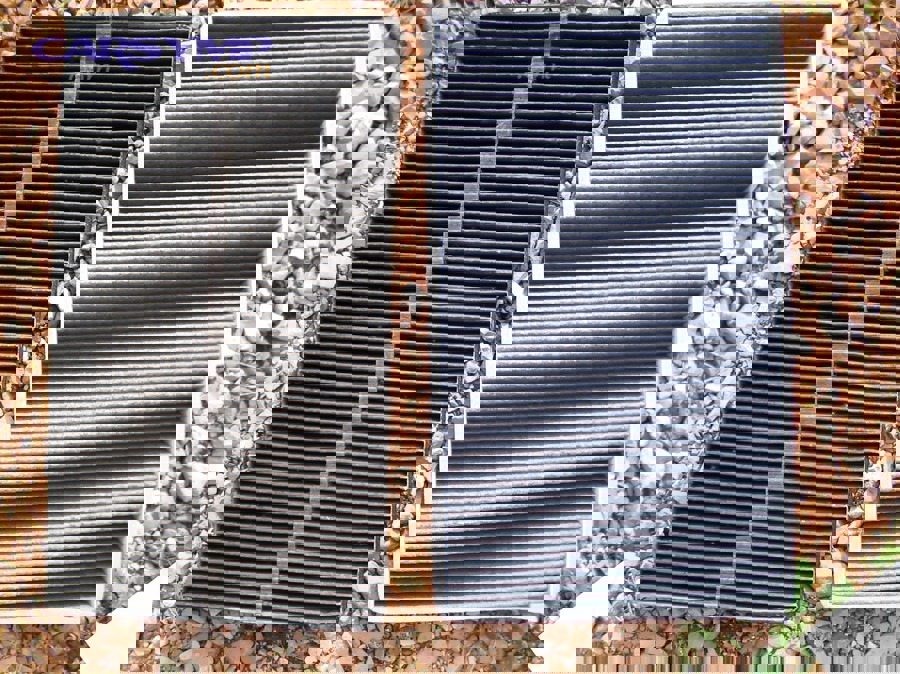
To better understand why the cabin filter is the first check, think of your HVAC system like breathing through fabric: when the fabric is clean, the same effort moves plenty of air; when it’s packed with dust, the same effort moves much less air. That simple mechanical truth is why a cabin filter inspection is the most efficient diagnostic starting point.
Does airflow drop more in fresh-air mode than recirculation when the filter is clogged?
A clogged cabin (pollen) filter often reduces airflow more noticeably in fresh-air mode, especially in vehicles where fresh air passes through the filter first and recirculation pulls more air from inside the cabin path.
However, the exact pattern depends on the vehicle’s HVAC design and where the recirculation door sits relative to the filter.
Specifically, you can use this mode test as a fast clue:
- If airflow is weak in fresh-air mode and improves in recirculation, the restriction may be closer to the outside intake path or the filter housing area.
- If airflow is weak in both modes, the cabin filter can still be the cause (because many systems filter both fresh and recirculated air), but you also need to consider downstream restrictions like blocked vents or a failing blower.
In short, the mode test is not a final verdict—it is a directional clue that keeps your diagnosis aligned with airflow pathways.
Can a cabin filter cause weak airflow without making the A/C or heat “stop working”?
Yes— a cabin (pollen) filter can cause weak airflow without stopping heating or A/C because temperature control can still function while the volume of air moving across the heater core or evaporator becomes too low to feel strong at the vents.
Then, this turns into a comfort and visibility issue: your cabin may eventually warm or cool, but it takes longer and defrosting can feel ineffective.
For example, you might notice:
- The air is warm enough (heat works) or cold enough (A/C works), but it’s barely moving.
- The blower sounds like it is working harder, yet output stays weak.
- Defrost clears the windshield slowly because you’re moving less dry air across the glass.
This is also where many people confuse an airflow restriction with a “heater performance fix.” A heater can produce heat, but if airflow is restricted, you won’t feel it. And if the issue is actually temperature-related (not airflow-related), the fix may involve cooling system factors like Coolant mix ratio and heater performance—but that’s a different diagnosis, which you’ll separate clearly in the next section.
Evidence: According to a study by C. Wang and colleagues, published in 2024, vehicle cabin air filters showed pressure drops ranging roughly from 33.2 to 250 Pa under test conditions, reinforcing that filter resistance can be substantial and varies with design and loading. (sciencedirect.com)
What does “restricted vent airflow” mean in a car HVAC system?
Restricted vent airflow means the HVAC blower is running but the volume of air reaching the cabin vents is abnormally low due to resistance, blockage, or door/fan issues somewhere in the airflow path.
Next, you’ll separate airflow problems from temperature problems, because the fastest fix depends on which one you actually have.
To illustrate the idea, the HVAC system has a simple chain: air intake → cabin filter → blower fan → evaporator/heater core → blend/mode doors → vents. A restriction at any point reduces output at the vents. Your job is to identify where the “choke point” lives.
How can you tell the difference between weak airflow and the wrong air temperature?
Weak airflow is a volume problem, while wrong air temperature is a heat-transfer or control problem—and you can separate them by checking fan output consistency versus temperature change across settings.
However, many drivers blend the two because both can make the cabin uncomfortable.
Use these quick comparisons:
- Fan speed test (airflow clue):
- Set the blower to low, then medium, then high.
- If the sound changes a lot but airflow barely changes, you likely have a restriction or blower issue.
- Temperature sweep test (temperature clue):
- Keep fan speed steady.
- Move temperature from cold to hot while watching how quickly vent temperature changes.
- If airflow is strong but temperature doesn’t change properly, you’re in blend-door or heating/cooling territory—not a filter restriction.
- Defrost behavior test (mixed clue):
- Defrost needs air volume plus dry air.
- Slow clearing can occur with restricted airflow (filter, blockage) or with moisture issues (wet filter, drain problems).
This difference matters financially, too. If you misdiagnose temperature problems as airflow problems, you can waste money on parts that don’t help—especially when people chase the Cost to improve heater performance while the real issue is simply restricted airflow from a clogged cabin filter.
What symptoms most strongly indicate a clogged cabin filter?
There are 5 main symptom groups that indicate a clogged cabin (pollen) filter: airflow loss, blower noise change, odor, visibility/defrost issues, and dust/debris clues, based on how a loaded filter changes resistance and airflow quality.
Then, you’ll match these symptoms to what you see during inspection so the diagnosis is not guesswork.
1) Airflow loss (most direct):
- Weak air from vents even on high fan
- Air feels “lazy” or uneven from different vents
- Cabin takes longer to warm/cool because you’re moving less air
2) Blower noise changes:
- Whistling, rushing, or strained fan sound
- Fan sounds louder than usual at the same setting (because it’s working against resistance)
3) Odor clues:
- Musty smell when fan starts (especially after rain/humidity)
- Dusty smell that returns quickly even after cleaning the cabin
4) Visibility/defrost issues:
- Windshield fogging clears slowly
- Defrost feels weak even when set correctly
5) Visual debris hints:
- Leaves/pine needles at the cowl intake area
- Visible dust around vents or persistent haze inside the car
If you have airflow loss plus at least one of the other symptom groups, the cabin filter becomes the highest-probability, lowest-effort check.
Evidence: According to published maintenance guidance, cabin filter replacement is commonly recommended around 15,000–30,000 miles depending on vehicle and conditions, which reflects how frequently filters can load with debris enough to impact airflow.
How do you check the cabin (pollen) filter step-by-step to confirm it’s the restriction?
To check the cabin (pollen) filter accurately, use a simple 6-step method: locate the filter, remove it safely, inspect loading and moisture, perform a controlled airflow comparison test, confirm installation orientation, and decide replace vs clean based on condition.
Then, you’ll know if the filter is truly the restriction or if you should move down the airflow chain to other causes.
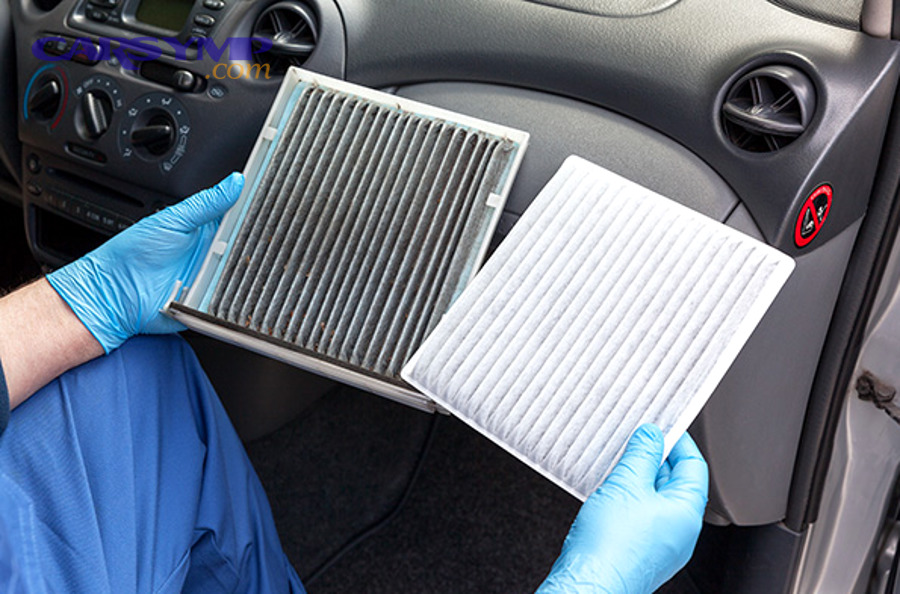
Here is the practical checklist that avoids broken trim tabs and avoids “false negatives” from rushed inspections:
- Set a baseline: engine on (or ignition in accessory mode), fan on medium, recirculation off (fresh air).
- Find the cabin filter access: glove box, under-dash, or cowl area.
- Remove the old filter without tearing it: keep debris from falling into the housing.
- Inspect the filter (look, smell, feel): dust loading, leaves, moisture, collapsed media.
- Airflow comparison test: run the fan briefly with the filter removed (where safe) to compare airflow and noise.
- Reinstall correctly or replace: match arrow direction, seal edges, close housing fully.
Where is the cabin air filter located in most vehicles?
There are 3 main cabin (pollen) filter locations in most vehicles: behind the glove box, under the dashboard near the passenger footwell, or under the windshield cowl, based on how the manufacturer routes intake air into the HVAC housing.
Next, you’ll use these location patterns to find the access point fast without disassembling the wrong panels.
1) Behind the glove box (most common):
- You open the glove box, release the stops, and access a small rectangular door.
- This design favors quick service.
2) Under-dash/passenger footwell:
- You remove a lower trim panel and access a filter slot.
- This is common when packaging behind the glove box is tight.
3) Under the windshield cowl (near the wipers):
- You remove a cover at the base of the windshield.
- This is common in some European models and a few others.
If you’re unsure, the owner’s manual usually lists it under “Maintenance” or “Cabin Air Filter,” and that single lookup saves time and broken clips.
What is the fastest “before/after” test to prove the filter is choking airflow?
The fastest proof test is a controlled fan-speed comparison: run the blower at a fixed setting, note airflow/noise, remove the cabin filter, and run the same setting again—if airflow increases noticeably, the filter was the restriction.
However, you should treat this as a short diagnostic test, not a long-term operating setup.
Use this method safely:
- Keep the test short (under a minute) so you don’t pull loose debris into the blower.
- Do not run the system with the housing open if leaves or foam fragments could be sucked deeper into the HVAC box.
- If the filter is wet or moldy, avoid shaking it inside the cabin—bag it first.
If airflow improves dramatically with the filter removed, you’ve confirmed the restriction without special tools.
Evidence: Technical literature on cabin air filters emphasizes performance requirements and filtration behavior, including the role of filter loading and resistance in real-world use. (sae.org)
Should you clean the cabin filter or replace it?
Replacement wins for disposable paper-style cabin filters, cleaning can work for washable/reusable designs, and an upgrade (like activated carbon) is optimal when odor control is the priority—because filter media and loading determine whether cleaning restores airflow safely.
Meanwhile, “cleaning” a disposable filter often creates a temporary improvement but leaves embedded particles and damaged fibers that restrict airflow again quickly.
To better understand the decision, it helps to think in three buckets: disposable particulate, activated carbon, and high-efficiency/HEPA-like filters.
Is it safe to drive temporarily without a cabin filter to restore airflow?
Yes—driving briefly without a cabin filter can be safe as a short diagnostic step because it confirms restriction quickly, restores airflow temporarily, and helps you verify whether the blower and doors are working.
However, it is not a good long-term habit because it lets dust, leaves, and debris enter the HVAC box and potentially foul the evaporator and blower.
Use a “safe temporary” rule:
- Okay for a short test drive: to confirm airflow difference after removing the clogged filter.
- Not recommended for weeks/months: because debris can accumulate on the evaporator and inside ducts, leading to odors and long-term restriction.
- Not recommended in smoky/dusty environments: because you’ll breathe more particulate and contaminate the HVAC internals faster.
If you need a quick fix before a replacement arrives, keep trips short and avoid dusty roads.
Which cabin filter type improves odors without causing extra restriction?
A standard particulate filter wins for maximum airflow, an activated carbon (charcoal) cabin filter is best for odor and fumes, and a high-efficiency filter is optimal for allergies/smoke—but the higher the filtration, the more important correct fitment and timely replacement become.
Especially if your main complaint is restricted airflow, you should prioritize a filter that balances filtration with airflow resistance for your conditions.
Here’s the practical comparison that matches real driver goals:
Standard particulate (best airflow):
- Best for: general dust/pollen, maximum vent output
- Tradeoff: less odor/fume reduction
Activated carbon/charcoal (best odor control):
- Best for: exhaust smell, musty odors, urban driving
- Tradeoff: can add slight resistance compared to basic filters, so don’t let it over-load
High-efficiency / HEPA-like (best fine particle reduction):
- Best for: allergies, wildfire smoke episodes, sensitive passengers
- Tradeoff: if the filter is the wrong size, double-stacked, or overdue, airflow can drop faster
If you’re optimizing for both airflow and odor, an activated carbon filter replaced on schedule is usually the most comfortable compromise.
Evidence: A 2024 study evaluating vehicle cabin air filters reported wide variation in both filtration efficiency and pressure drop across many filter models, supporting the idea that filter choice can affect both air quality and airflow resistance. (sciencedirect.com)
If the cabin filter is clean, what else causes restricted airflow from vents?
There are 6 main non-filter causes of restricted vent airflow: blocked intake/cowl debris, blower fan obstruction or failure, stuck recirculation/mode doors, clogged evaporator/heater core fins with debris, collapsed duct or vent blockage, and electrical control issues reducing blower speed, based on where airflow can be physically blocked or mechanically limited.
Next, you’ll triage them in the order that most often solves the problem with the least disassembly.
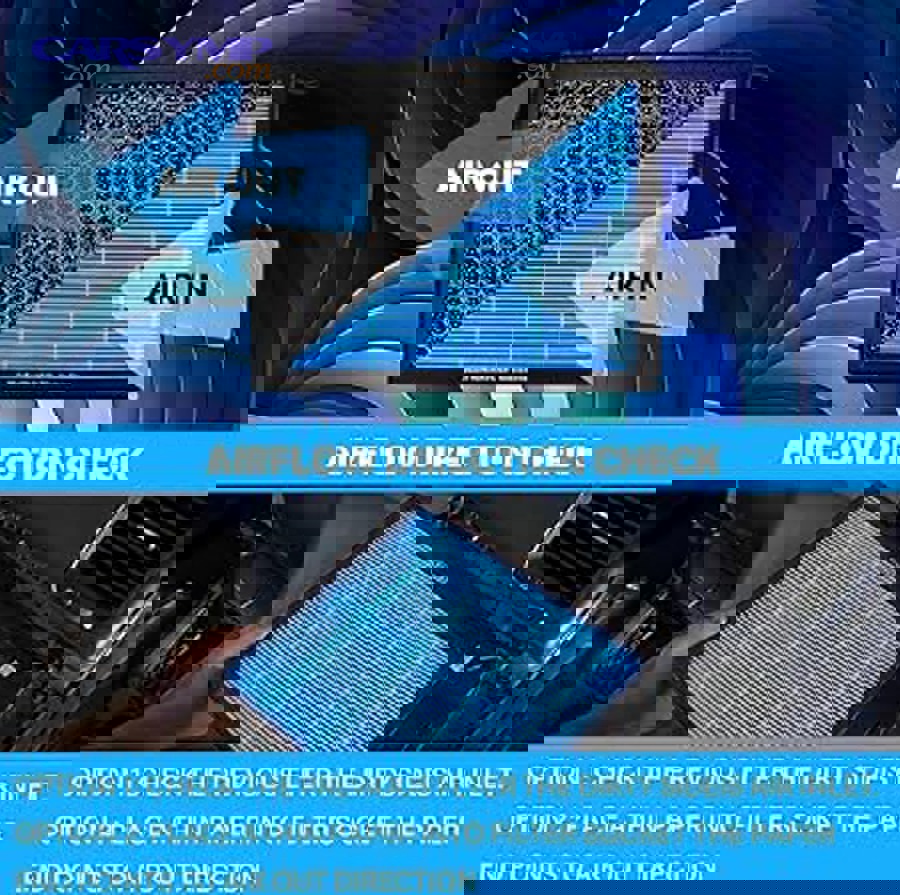
What are the top non-filter airflow restrictions you can check at home?
The most productive DIY checks focus on obvious blockages and door operation because you can confirm them with simple observations and sound changes.
1) Cowl intake debris (outside air entry):
- Check the area at the base of the windshield for leaves and pine needles.
- Remove visible debris to improve fresh-air flow.
2) Vent outlet blockage (inside cabin):
- Make sure vents are fully open and not blocked by phone mounts, air fresheners, or inserts.
3) Mode door movement (defrost/face/floor):
- Switch modes and listen for door movement.
- If the sound doesn’t change and airflow never reroutes, a door may be stuck.
4) Recirculation door function:
- Toggle recirculation and listen for the actuator.
- If it never moves, the system may be stuck in a restricted intake position.
5) Blower fan obstruction:
- A scraping or ticking sound can indicate leaves or foam fragments hitting the blower wheel.
- That obstruction reduces airflow dramatically even when the motor runs.
These checks keep your diagnosis aligned with the airflow chain: intake → blower → doors → vents.
How do you compare “filter restriction” vs “blower motor problem” symptoms?
Filter restriction usually shows steady weak airflow with a working fan sound, while a blower motor problem often shows inconsistent airflow, unusual electrical behavior, or missing fan speeds—because the motor, resistor/module, or control circuit limits actual fan output.
However, both can overlap, so you want strong differentiators.
Use these comparisons:
Filter restriction pattern:
- Fan speed changes sound normal across settings
- Airflow is weak but consistent
- Removing the filter improves airflow immediately (proof test)
Blower problem pattern:
- One or more fan speeds don’t work (common with resistor issues)
- Fan cuts in/out, squeals, or changes speed randomly
- Airflow does not improve when the filter is removed
If the filter is clean and the blower behavior is abnormal, you’ve moved from a simple restriction to an electrical or mechanical fan issue.
When should you stop DIY checks and see a mechanic for airflow restrictions?
Yes—you should stop DIY checks and see a mechanic when restricted airflow includes safety or damage risks, when the HVAC housing needs deeper disassembly, or when symptoms suggest electrical overheating or coolant-related heating problems rather than a simple airflow restriction.
Besides saving time, this protects you from turning a small issue into a bigger repair.
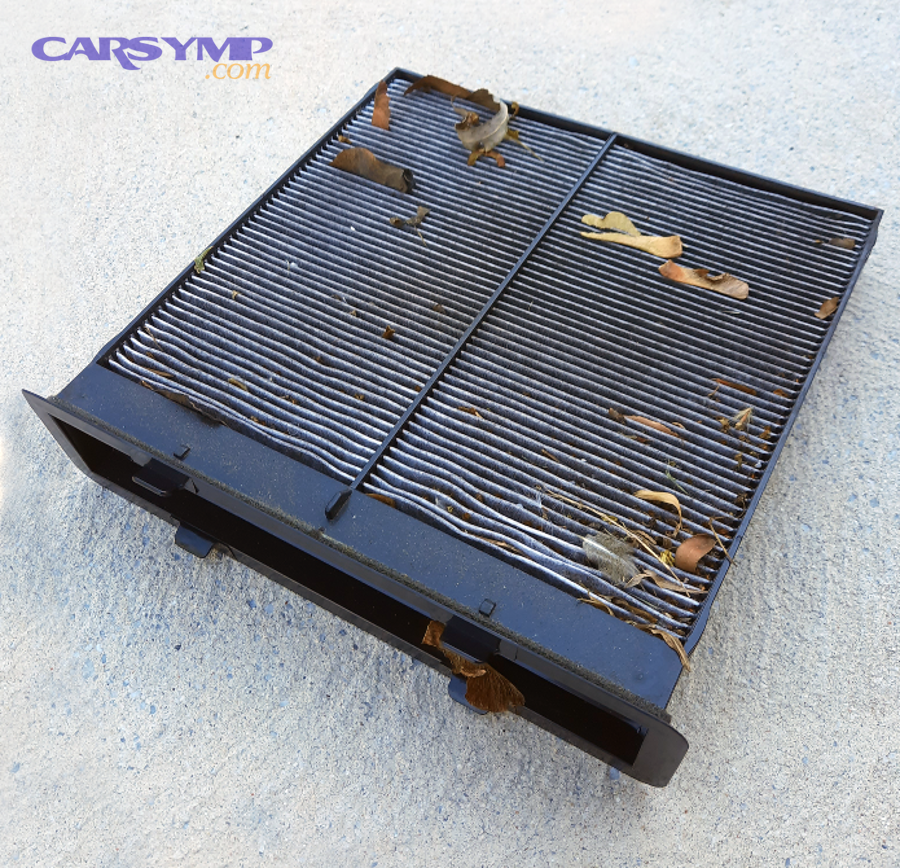
Here are three clear “stop and escalate” reasons:
- Safety/visibility risk: defrost is too weak to keep the windshield clear.
- Electrical risk: burning smell, melting plastic odor, or signs of overheating near the blower circuit.
- System complexity: suspected door failures or HVAC box issues that require dash-level access.
Are burning smells, water on carpets, or persistent fogging signs of a bigger HVAC issue?
Yes—burning smells, water on carpets, or persistent fogging often indicate a bigger HVAC problem because burning can signal electrical overheating, water can signal drain or heater core leaks, and persistent fogging can signal moisture that overwhelms the HVAC’s ability to dry the cabin.
More importantly, these are the symptoms that can move your problem beyond “restricted airflow.”
Burning smell:
- Could be a blower motor resistor/module overheating, wiring resistance, or motor strain.
- This requires diagnosis because continued use can damage connectors.
Water on carpets:
- Can indicate a clogged evaporator drain or a leaking heater core.
- A wet cabin filter can also happen when moisture management is failing.
Persistent fogging:
- Can be caused by wet HVAC components, a saturated filter, or coolant vapor (in the case of heater core leaks).
- This is where people mistakenly chase a heater performance fix when the real issue is moisture or airflow.
And if you’re dealing with weak heat output (temperature problem) rather than weak airflow, you may also need to consider cooling system variables—like Coolant mix ratio and heater performance—because incorrect coolant concentration can affect heat transfer and freezing/boiling protection. That said, coolant concerns do not replace the cabin filter check when the symptom is clearly restricted airflow.
Evidence: Filter replacement guidance emphasizes that a clogged cabin filter can contribute to poor airflow and comfort, and real-world filter loading is significant enough that replacement intervals are commonly given in mileage ranges (often 15,000–30,000 miles, varying by conditions).
How can you optimize cabin air quality and HVAC efficiency after fixing restricted airflow?
After you restore airflow, you can improve long-term comfort by matching filter type to your environment, preventing repeat clogging, and addressing moisture sources—because “flow” and “filtration” work best together when the system stays dry and sealed.
In addition, this is the point where you can make smart upgrades without accidentally reintroducing restriction.
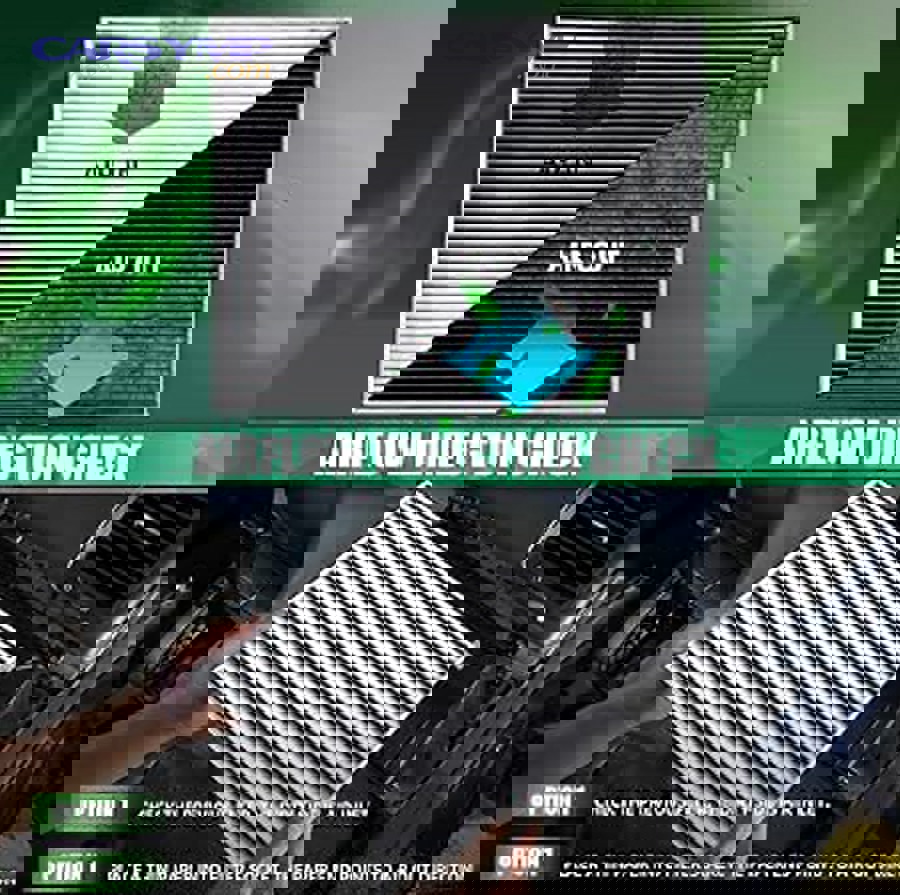
Which cabin filter upgrades (carbon vs HEPA/high-efficiency) make sense for your driving environment?
Activated carbon filters are best for odors and fumes, while high-efficiency filters are best for fine particles like smoke—so the right upgrade depends on whether your environment is dominated by smells, dust, or ultrafine particles.
However, any upgrade must still fit perfectly and be replaced on time, or you’ll slide back into restricted airflow.
Match the upgrade to conditions:
- Urban traffic/exhaust exposure: activated carbon is usually the best daily upgrade because it targets odors and VOC-like smells.
- Allergies and heavy pollen: a quality particulate filter replaced often can outperform a “too restrictive” upgrade that’s overdue.
- Wildfire smoke season: high-efficiency filters can reduce fine particles, but plan on more frequent checks.
This is also where cost decisions become practical: a modest upgrade plus regular replacements often delivers better comfort than one expensive filter left too long. That’s the real lever behind the “Cost to improve heater performance” conversation—often, comfort improvements come from airflow and filtration maintenance, not major parts replacement.
Evidence: The 2024 study of 22 vehicle cabin air filters reported substantial variation in filtration efficiency and pressure drop, reinforcing that “upgrade” filters differ meaningfully and can affect airflow if not managed properly. (sciencedirect.com)
What rare issues cause a “new filter” to still restrict airflow (wrong fit, double-stacked, poor seal)?
A “new filter” can still restrict airflow due to 4 rare-but-real issues: wrong fitment, double-stacking, collapsed media from shipping damage, or bypass/seal problems that distort the filter in the housing, based on installation mechanics and housing geometry.
Then, you can fix the real cause quickly without blaming the HVAC system.
Use this verification checklist:
- Correct part number and dimensions: a slightly thicker filter can choke flow.
- Single filter only: remove any leftover old filter pieces or a second filter.
- Airflow arrow orientation: wrong direction can reduce effective flow and increase noise.
- Housing door fully latched: a crooked door can compress the filter and reduce area.
If airflow got worse right after replacement, suspect fitment and installation before suspecting deeper mechanical problems.
Can a wet cabin filter point to an evaporator drain problem and recurring odors?
Yes—a wet cabin filter can point to moisture management problems (like a clogged evaporator drain or persistent condensation) because trapped water encourages musty odors and can accelerate debris clumping that restricts airflow again.
Especially in humid climates, moisture turns normal dust into a mat that blocks airflow fast.
Key signs that moisture is part of the problem:
- Musty smell returns quickly after replacement
- Filter feels damp or shows dark spotting
- Fogging is frequent, even with A/C use
- Water is present in the passenger footwell
If the filter gets wet repeatedly, replacing filters alone won’t break the cycle—you need to identify why water is present.
How often should you check the cabin filter to prevent airflow restriction from returning?
You should check the cabin (pollen) filter at least every service interval and replace it roughly every 15,000–30,000 miles (or sooner in dusty/smoky/pet-heavy conditions) because real-world debris loading is highly environment-dependent.
Thus, a simple inspection routine prevents airflow restriction from reappearing unexpectedly.
Use practical triggers instead of only mileage:
- You notice the first “step down” in airflow at your usual fan setting
- Odors return quickly after startup
- Defrost starts to feel weak
- You’ve driven through heavy smoke, construction dust, or long pollen seasons
Evidence: Common maintenance guidance advises cabin air filter replacement intervals that generally fall between 15,000 and 30,000 miles, with the owner’s manual as the final authority for a specific vehicle.
Evidence (summary)
- According to a study by C. Wang and colleagues, published in 2024, vehicle cabin air filters showed pressure drops roughly from 33.2 to 250 Pa under test conditions, indicating that filter resistance varies widely and can be significant for airflow. (sciencedirect.com)
- According to published maintenance guidance, cabin filter replacement is commonly recommended around 15,000–30,000 miles, depending on vehicle and conditions, which reflects how debris loading can reach airflow-impacting levels.