


A heater core back-flush procedure is the most direct DIY way to restore cabin heat when the heater core is restricted, because it reverses coolant flow through the core to push sediment out instead of packing it tighter.
If you’re not sure the heater core is the problem, you can still diagnose quickly by combining vent behavior with hose temperatures and coolant level checks, so you don’t waste time flushing a system that actually needs a thermostat, coolant top-off, or HVAC door repair.
Safety matters as much as technique: controlling pressure, preventing air pockets, and using the right coolant refill approach protects the heater core and avoids creating new “no heat” problems after you finish.
Introduce a new idea: once you understand the basic heater core flush procedure, you can also validate results with better tests, handle special cooling systems (bleeders, electric pumps), and prevent repeat weak-heat complaints with smarter coolant and HVAC upkeep.
What is a heater core back-flush procedure, and how does it restore cabin heat?
A heater core back-flush procedure is a controlled heater-core cleaning method that reverses flow through the heater core to clear internal restriction so coolant can circulate freely and transfer heat into the cabin air again.
To better understand why this works, you need to connect three simple ideas: the heater core is a small radiator, heat depends on coolant flow through its tubes, and “back-flushing” attacks the clog from the exit side where debris often accumulates.
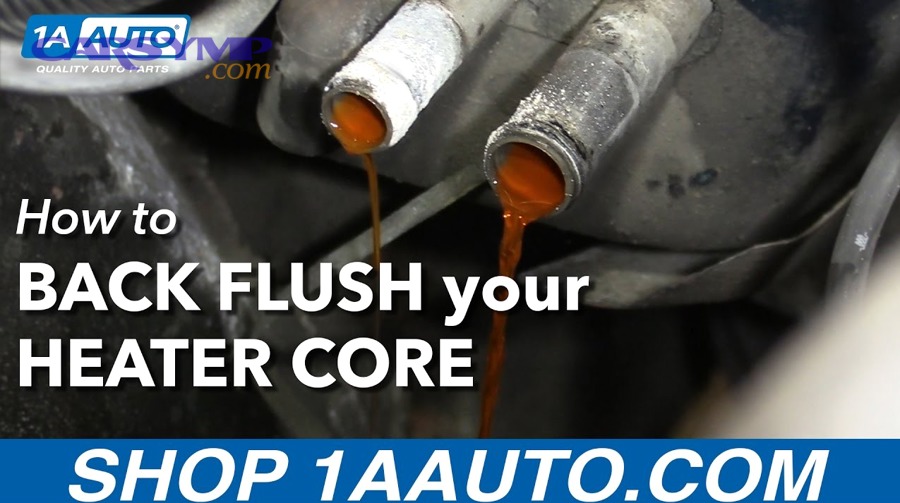
In most vehicles, hot coolant leaves the engine, flows through two heater hoses at the firewall, and passes through the heater core. The blower motor pushes cabin air across the heater core fins. When coolant flow is healthy, the fins heat up evenly and the vents produce strong warm air—especially noticeable at idle and in cold weather.
When the core is partially clogged (old coolant deposits, corrosion flakes, stop-leak residue, silicate gel, or mixed-coolant fallout), coolant can’t move through enough of the tiny passages. That reduces heat transfer in two ways:
- Less hot coolant reaches the core per minute, so the core can’t replenish its heat fast enough.
- Temperature becomes uneven, so you may get lukewarm air, intermittent heat, or heat only at higher RPM.
A heater flush focused on the core addresses that restriction without immediately tearing apart the dashboard for a heater core replacement.
What does “back-flush” mean compared with a normal heater core flush?
Back-flush is the reverse-direction form of a heater core flush, and it often works better because it dislodges debris in the opposite direction of the clog’s “packed” orientation.
More specifically, a normal (forward) flush pushes water the same direction coolant normally travels, while a back-flush pushes water from the outlet side back toward the inlet side. If debris accumulated at a bend, a narrow tube entrance, or a partially blocked outlet manifold, reversing flow can break it loose instead of compressing it tighter.
Here’s the practical difference you’ll feel when you do it correctly:
- In a forward flush, you might see only a weak dribble and think the core is “done.”
- In a back-flush, you often see a sudden surge of dirty coolant, rusty particles, or cloudy sediment once the blockage breaks free.
A smart procedure usually alternates directions (back-flush first, then forward flush) so you don’t leave loosened debris trapped in the core.
What are the most common heater core clogged symptoms that indicate flushing may work?
There are 7 common heater core clogged symptoms that point to a restriction (and make a heater performance fix via flushing likely): weak heat at idle, one heater hose hot and the other noticeably cooler, heat improves with RPM, inconsistent vent temperature, poor windshield defrost, gurgling from the dash, and a history of coolant neglect or contamination.
Specifically, look for these patterns before you start:
- Weak heat at idle, better heat while driving: increased water pump flow temporarily overcomes restriction.
- Inlet hose very hot, outlet hose warm/cool: heat is being “stopped” inside the core.
- Defrost is weak even though blower speed is strong: airflow is fine; heat source is weak.
- Temperature swings: heat comes and goes with engine speed or thermostat cycles.
- No sweet smell and no damp carpet: suggests restriction rather than an active heater core leak (a leak is a different repair path).
- Coolant looked rusty/sludgy in the reservoir: debris source likely exists somewhere in the cooling system.
- Stop-leak history: many stop-leak products can contribute to heater core clogging over time.
If your symptoms match this cluster, a heater flush procedure is a reasonable next step—especially before you consider replacement.
Should you flush the heater core—yes or no?
Yes—flush the heater core if you have clogged-heater symptoms, because a controlled flush can restore coolant flow, recover vent heat quickly, and confirm whether the heater core is the real restriction before you spend on major parts or labor.
However, you’ll get the best result when you decide with a quick checklist first, because many “no heat” complaints are caused by low coolant, trapped air, or HVAC blend-door issues rather than an actual clogged core.
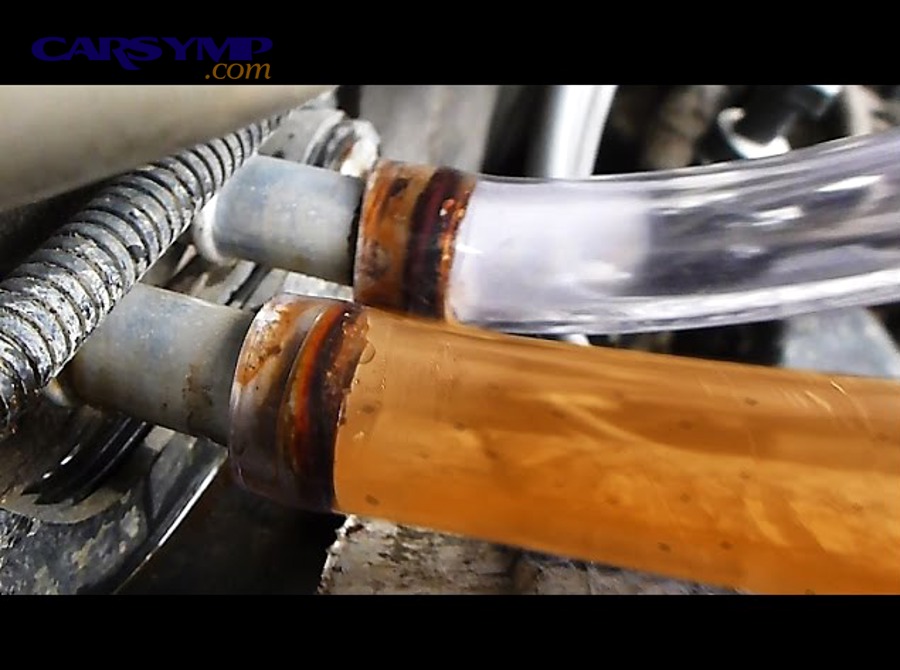
Three strong reasons to flush (when symptoms match):
- It targets the most common flow-limiting failure mode (sediment and deposits in small passages).
- It is diagnostic as well as corrective: if flow improves and both hoses equalize in temperature, you’ve proven the root cause.
- It’s usually low-cost and fast compared with heater core replacement, which can involve dashboard removal on many vehicles.
Is low coolant or air in the cooling system causing no heat ?
Yes—low coolant or trapped air can cause no heat, because the heater core sits high in the system and becomes an air pocket “trap,” leaving the core dry or partially filled.
Next, use these quick checks before you flush anything:
- Check coolant level when the engine is cold. If it’s below the minimum mark, don’t flush yet—find the leak or at least top up properly first.
- Warm the engine to operating temperature and feel both heater hoses near the firewall (careful—hot). If both hoses stay cool while the engine is hot, coolant may not be reaching the core due to air, a closed heater control valve, or a circulation issue.
- Look for signs of air: gurgling behind the dash, temperature fluctuations, or coolant level changes after driving.
If coolant is low, a flush can temporarily “mask” the issue while the system continues losing coolant—so correct the level and leak path first.
Is a blend door actuator or HVAC control issue more likely than a clogged heater core?
A clogged heater core is more likely when hose temperatures show a large inlet-to-outlet difference, while a blend door actuator issue is more likely when hose temperatures are hot but the vents stay cold.
However, the best approach is to compare “coolant-side” evidence with “air-side” evidence:
- Heater core restriction signs (coolant-side): inlet hot, outlet cooler; heat improves with RPM; weak defrost.
- Blend door signs (air-side): both hoses hot but vents cold; temperature changes don’t respond correctly to the knob; clicking actuator noises; heat stuck on one side in dual-zone systems.
If you suspect an air-side problem, you may need Blend door recalibration steps (varies by vehicle). Many systems recalibrate by cycling ignition and HVAC controls, disconnecting the battery briefly, pulling the HVAC fuse, or using a scan tool routine—your owner’s manual or service info for your exact model is the safest reference. The key point is this: a heater core flush won’t fix an HVAC door that isn’t routing air across the core.
What tools and supplies do you need to flush a heater core at home?
You need a heater core flush setup with basic hand tools, controlled water flow, safe catch-and-disposal items, and the correct coolant refill supplies, because the job is half “flushing” and half “putting the cooling system back into a stable, air-free state.”
Then, gather the right pieces up front so you don’t rush the refill and create a new no-heat condition from trapped air.
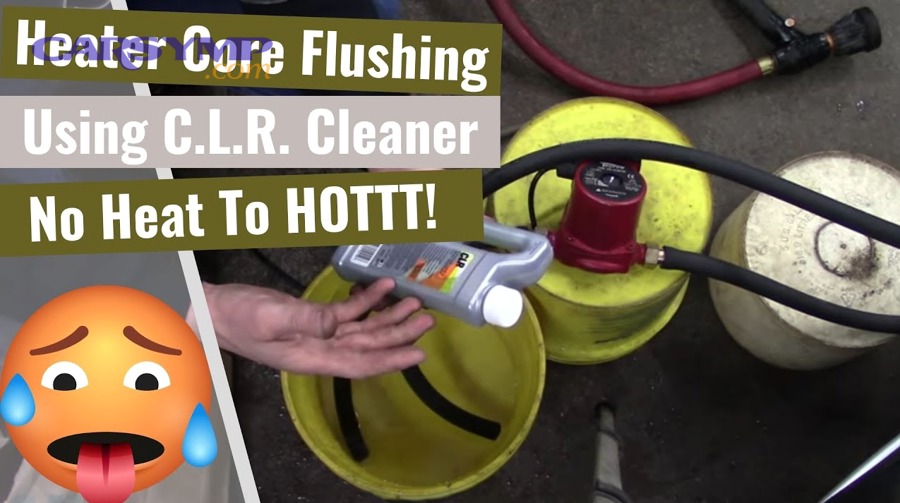
Core tool and supply list (DIY friendly):
- Safety glasses and gloves
- Catch pan or bucket (for coolant and dirty flush water)
- Pliers or hose clamp tool (spring clamps are common)
- Hose pinch-off pliers (optional but helpful to reduce coolant loss)
- Garden hose with a flow-control nozzle (gentle control matters)
- Short 5/8″ or 3/4″ heater hose segments + barb fittings (for adapting the garden hose to heater hoses)
- Rags, absorbent pads, and a funnel
- Correct coolant type for your vehicle (premixed or concentrate + distilled water)
- Bleeding tool/funnel kit if your vehicle is known to trap air
- Distilled water (if you’re mixing concentrate)
Avoid:
- Pressure washers or shop air blasts through the heater core (too risky for thin internal tubes)
- Random chemical mixes without understanding compatibility (can worsen deposits or attack metals)
Which heater hose adapters and clamps make the job easier on different vehicles?
There are 4 common adapter approaches for connecting a garden hose to heater lines: direct hose slip-fit, barb adapters, quick-connect adapters, and temporary splice hoses—based on your heater hose size and fitting style.
More specifically:
- Direct slip-fit: If the heater hose end fits snugly over a nozzle or tapered adapter, you can clamp it gently and control flow carefully.
- Barb adapters: A 5/8″ or 3/4″ barb with a clamp is the most universal DIY option.
- Quick-connect adapters: Many newer vehicles use quick-connect heater fittings; a matching adapter prevents damaged connectors.
- Temporary splice hose: A short sacrificial heater hose segment lets you connect without stressing the original hose.
Use worm gear clamps carefully—tight enough to seal, not so tight that you cut the hose.
What safety precautions prevent heater core damage during flushing?
Heater core flush safety is mainly about pressure control, temperature control, and contamination control, because heater cores are thin, older cores can be fragile, and debris can migrate into other cooling components.
For example, follow these rules:
- Start with a cold engine. Hot coolant can scald and pressurized systems can spray.
- Use low, steady water pressure. Open the hose slowly; let flow build gradually.
- Pulse, don’t blast. Short, controlled pulses dislodge debris without hammering tubes.
- Never run the engine dry. If you drain coolant, plan your refill and bleeding steps immediately.
- Dispose of coolant responsibly. Coolant is toxic; keep it away from pets and drains.
These precautions are the difference between a successful heater flush and a cracked heater core or air-locked system.
How do you perform the step-by-step heater core back-flush procedure?
The best method is a 6-step heater core back-flush procedure—prep, isolate, back-flush, forward flush, reconnect, and refill/bleed—because that sequence clears restriction while preventing air pockets and restoring stable heater output.
Below is the exact workflow that keeps the “hook chain” intact: symptoms → flush decision → safe setup → correct flow direction → correct refill.
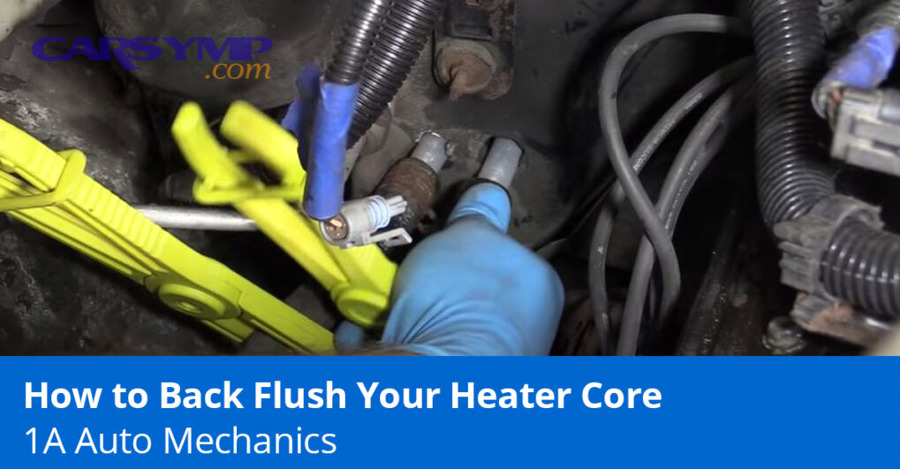
How do you locate the heater core inlet and outlet hoses and disconnect them safely?
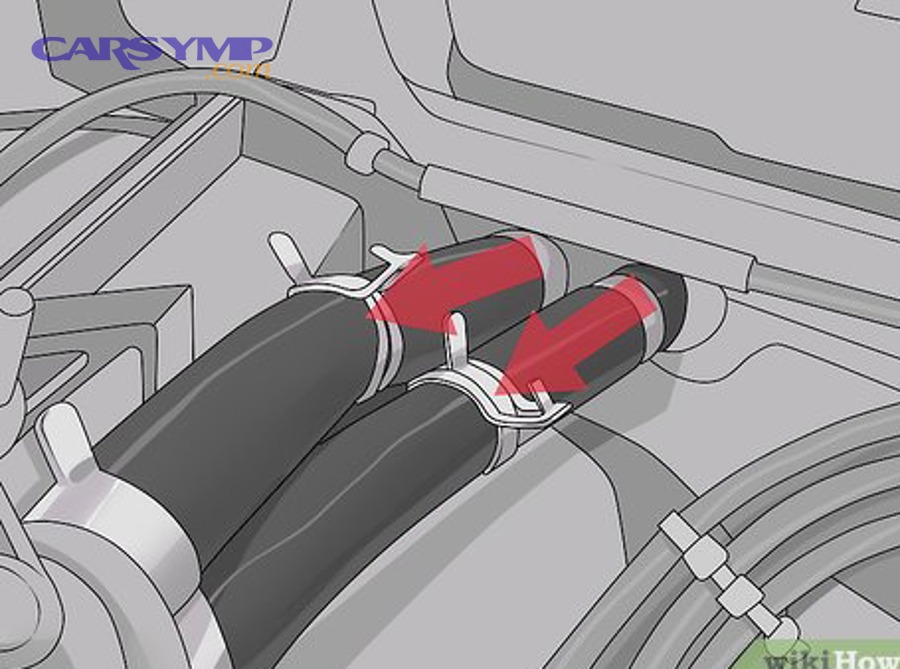
You locate and disconnect heater hoses by identifying the two lines entering the firewall, confirming clamp type, and separating hoses with minimal twisting force so you don’t crack fittings or tear aged rubber.
Next, do this step-by-step:
- Let the engine cool fully. Verify the radiator cap area is cool to the touch.
- Find the two heater hoses at the firewall. They are typically side-by-side and smaller than the radiator hoses.
- Place a catch pan under the connection point. Expect coolant loss.
- Release clamps (spring clamp pliers or regular pliers).
- Break the seal gently. Twist the hose slightly to free it, then pull straight off.
- Mark or photograph which hose is which (inlet/outlet) so you can alternate flush direction intentionally.
If your vehicle uses quick-connect fittings, avoid forcing them—use the correct release tool to prevent cracking the connector.
How do you back-flush the heater core with controlled pressure until the flow runs clear?
You back-flush by pushing clean water through the heater core in the reverse direction using low pressure, alternating short pulses until the discharge changes from dirty/cloudy to clear and free-flowing.
Then, run the flush like this:
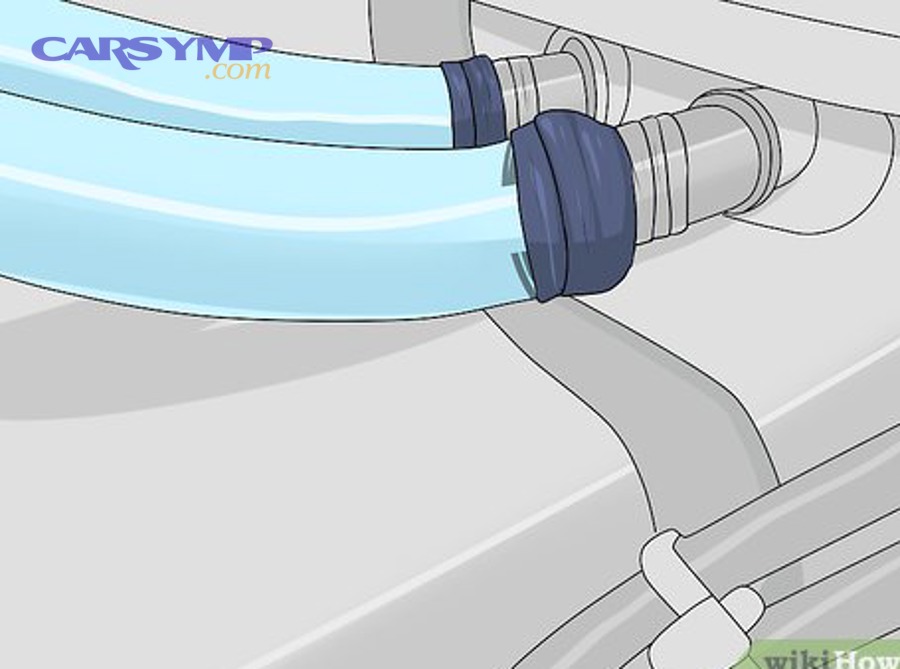
- Connect the garden hose to the heater core outlet side (so water flows backward through the core).
- Open water slowly to a low steady stream.
- Pulse the flow: 2–3 seconds on, 2–3 seconds off.
- Watch the discharge into a bucket: look for rust-colored water, flakes, grit, or cloudy slurry.
- Stop if you see leaks at the firewall, inside the cabin, or around fittings—leaking means flushing may be stressing a weak core.
- Continue until flow stabilizes and water clears.
A practical rule: if flow remains weak after several pulse cycles, the core may be heavily restricted or internally damaged. In that case, forcing pressure can turn a clog problem into a leak problem.
How do you reconnect everything, refill coolant, and bleed the cooling system after flushing?
You reconnect and bleed by restoring hose connections, refilling with the correct coolant mix, warming the engine with the heater on, and releasing trapped air until coolant level stabilizes and heat output stays consistent.
Next, follow this controlled refill sequence:
- Reconnect both heater hoses and secure clamps in the original positions.
- Refill coolant using the correct type and mixture.
- Set HVAC to full heat and medium fan so coolant flows through the heater circuit (some vehicles require this step).
- Start the engine and let it reach operating temperature while monitoring the coolant level.
- Bleed air using bleeder screws if equipped, or by carefully topping off as the thermostat opens.
- Check for leaks at hose connections and around the water pump, thermostat housing, and radiator.
- Drive and recheck after a full heat cycle; top off only when cold again.
This is where many DIYers accidentally create repeat “no heat” complaints: they flush successfully, but they don’t bleed properly, and the heater core traps air.
How do you verify the flush worked using hose temperature and cabin vent performance?
Yes—you can verify success if the heater blows consistently hot at idle and both heater hoses feel similarly hot after warm-up, because balanced hose temperatures usually mean restored flow through the core.
Then validate with a simple “three-check” routine:
- Cabin check: strong warm air at idle with the temperature set high.
- Hose check: inlet hot, outlet nearly as hot (a small difference is normal).
- Stability check: heat remains steady during stop-and-go, not just while driving.
If heat is still weak, don’t immediately blame the flush—move to the diagnostic comparisons in the next sections.
Evidence: According to a study by Kırıkkale University from the Faculty of Engineering and Architecture (Mechanical Engineering) in 2021, increasing ethylene glycol mixture ratio in a water-based coolant reduced radiator heat-transfer performance, reinforcing why correct coolant setup and system condition matter for real-world heat exchange results.
What mistakes can ruin a heater core flush and what should you do instead?
The biggest flush failures come from over-pressurizing the core, skipping bleeding, using incompatible chemicals, and ignoring upstream contamination, because those mistakes either damage the core or recreate restriction/air pockets immediately.
In addition, treating the flush as a one-step “blast and done” job is how DIYers end up with new leaks, coolant loss, or continued no-heat symptoms.
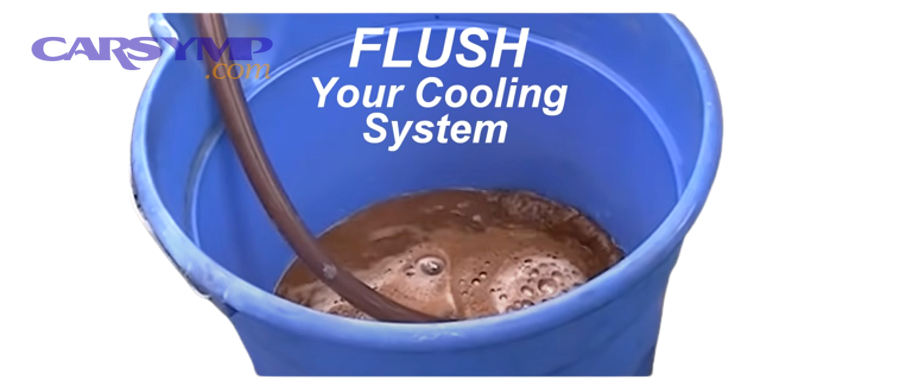
Here are the mistakes that most often ruin the outcome—and what to do instead.
- Mistake: Using high pressure.
Do instead: Use low flow and controlled pulses. Heater cores are not designed for pressure spikes from a nozzle at full blast. - Mistake: Flushing without a plan to refill/bleed.
Do instead: Treat refill and bleeding as part of the procedure, not an afterthought. - Mistake: Mixing coolants randomly.
Do instead: Follow the correct coolant spec for your vehicle. Wrong mixtures can form sludge and contribute to future clogging. - Mistake: Flushing while the system is low on coolant due to a leak.
Do instead: Fix leaks or at least identify them first. A heater performance fix won’t last if the cooling system can’t hold coolant. - Mistake: Ignoring HVAC airflow issues.
Do instead: Confirm the blend door moves and seals correctly; use the appropriate Blend door recalibration steps if the system is stuck.
Is using chemical cleaners a good idea or a risky shortcut?
Chemical cleaners can help in some cases, but plain-water back-flushing is the safer first choice, while chemical flushing is riskier because it can loosen heavy deposits, attack sensitive metals, or dislodge debris that later blocks other passages.
However, there are times a mild chemical approach is considered:
- Repeated water flushing still produces very little flow improvement.
- The system shows signs of mineral scaling (hard-water deposits) rather than just rust.
- You can thoroughly rinse and then refill with the correct coolant.
If you use a chemical approach, your biggest job is the rinse. Any chemical residue left behind can change coolant chemistry and accelerate corrosion or deposit formation.
Should you flush the heater core or replace it if the clog returns?
Flushing wins for cost and speed, but replacement is best when you have repeated re-clogging, leaks, severe corrosion, or evidence that the heater core tubes are internally deteriorating.
On the other hand, repeated clogs usually mean the source of contamination remains:
- Rusting components
- Degraded coolant
- Mixed coolant types
- Prior stop-leak usage
- Old hoses shedding internal liner material
So the best decision rule is:
- Flush when symptoms are new-to-moderate and the system otherwise seems healthy.
- Replace when heat loss returns quickly after flushing, you find leaks, or the vehicle’s service history suggests long-term corrosion.
This is also where Preventing future weak heater complaints becomes a real strategy rather than a slogan: you need to stop the debris source, not just clear the symptom.
How much time and cost should DIY car owners expect for a heater core flush?
A DIY heater core flush typically takes 60–150 minutes and costs mostly coolant and small supplies, because the flush itself is fast, but careful setup, hose handling, and bleeding time are what protect the final result.
Next, set realistic expectations so you don’t rush the most important parts.
What are the “fast way” scenarios vs the longer, more thorough flush scenarios?
The fast way works when access is easy and bleeding is simple, while a more thorough flush is needed when access is tight, contamination is heavy, or the vehicle is prone to trapping air.
Fast way scenario (about 60–90 minutes):
- Heater hoses are easy to access.
- Clamps are simple.
- No special bleeding procedure is required.
- You see quick debris discharge and restored flow.
- You refill and the system self-bleeds with minimal topping off.
Longer scenario (about 90–150+ minutes):
- Heater hose access is cramped or quick-connect fittings are stubborn.
- You need adapters to avoid leaks at the connection.
- The vehicle has bleeder screws or a known air-trap design.
- You must run multiple back/forward cycles to clear persistent sludge.
- You need additional top-off cycles after a full heat soak.
Cost drivers:
- Coolant type (OEM-spec fluids can cost more)
- Whether you need concentrate + distilled water
- Replacement clamps or hoses if yours are aged
- Spill containment and disposal (some locations charge disposal fees)
A common hidden cost is “redo time” if you don’t bleed properly. That’s why Coolant mix ratio and heater performance is not just theory—if you refill with the wrong ratio or leave air in the system, heat output can stay weak even when the core is clean.
Evidence: According to a study by Kırıkkale University from the Faculty of Engineering and Architecture (Mechanical Engineering) in 2021, higher ethylene glycol ratios showed a negative effect on heat transfer performance in controlled testing, supporting the real-world idea that coolant selection and mixture discipline affect thermal performance.
What advanced checks and special cases improve heater-core flush results when basic steps don’t work?
Advanced checks help when you completed the heater flush correctly but still have weak heat, because they reveal whether you have residual restriction, an air pocket, a flow-control component problem, or an HVAC air-mixing fault that mimics a heater core issue.
Below are the micro-level steps that improve troubleshooting accuracy and help you lock in Preventing future weak heater complaints as a repeatable routine.
Can you confirm heater core restriction using an infrared temperature delta test (inlet vs outlet)?
Yes—you can confirm restriction by measuring an inlet-to-outlet temperature delta across the heater hoses, because a clogged core often shows a larger-than-normal drop as coolant struggles to pass and shed heat evenly.
Then perform the test like this:
- Warm the engine fully to operating temperature.
- Set HVAC to maximum heat and medium fan.
- Use an infrared thermometer on the inlet hose and outlet hose near the firewall.
- Compare readings.
Interpretation guidance:
- Small delta (hoses close in temperature): flow is likely decent; look elsewhere (blend door, control valve).
- Large delta (inlet much hotter than outlet): restriction or control valve limitation is likely.
Be careful with shiny surfaces—IR thermometers read surface emissivity. If hoses are glossy, use a piece of matte tape and measure that spot for more consistent readings.
Which vehicles need special bleeding methods (bleeder screws, vacuum fill, electric water pumps)?
There are 3 common “special bleeding” cases: vehicles with bleeder screws, vehicles that require vacuum filling, and vehicles with electric water pumps or complex coolant circuits—based on how easily air pockets form and how coolant circulates at idle.
More specifically:
- Bleeder screw systems: You must open the bleeder at the right time to purge air (often during warm-up as the thermostat opens).
- Vacuum-fill-preferred systems: A vacuum tool pulls air out and draws coolant in, reducing air pockets that cause intermittent heat.
- Electric pump/complex circuits: Some vehicles circulate coolant differently at idle; scan-tool routines may be needed to run pumps and bleed properly.
If your vehicle repeatedly loses cabin heat after a successful flush, the problem may be a persistent air pocket rather than remaining debris.
When is a heater control valve, thermostat, or water pump the real cause instead of the heater core?
A heater core is usually the cause when hose temperatures split, but a thermostat, pump, or heater control valve is more likely when coolant never reaches proper conditions or flow in the first place.
Use this comparison:
- Thermostat stuck open: engine runs cool, heat is weak overall, especially on highways; temperature gauge may stay low.
- Water pump issue: overheating, inconsistent temperature behavior, poor circulation; multiple cooling complaints at once.
- Heater control valve problem: one hose hot but the other stays cool because the valve isn’t opening; may be vacuum-controlled or electronically controlled.
If you already restored heater core flow but the engine never reaches stable operating temperature, don’t keep flushing—address the thermostat or circulation.
Is a temporary heater core bypass useful for diagnosis, and what are the risks?
Yes—a temporary bypass can help diagnose leaks or isolate a heater core issue, but it is risky because it removes cabin heat and defrost capability, can mask problems, and should only be used as a short-term diagnostic measure.
In addition, bypassing can mislead you:
- You may stop coolant loss (if the core leaks) and assume the system is “fixed,” while you’ve only removed the failing component.
- You lose effective windshield defrost, which is a safety hazard in cold or wet conditions.
- You may alter coolant flow patterns that hide other restrictions temporarily.
Use bypassing only as a controlled test, then return the system to a proper, sealed, correctly filled configuration.
Evidence (if any): According to a study by Kırıkkale University from the Faculty of Engineering and Architecture (Mechanical Engineering) in 2021, experiments using 0%, 25%, 50%, 75%, and 100% ethylene glycol volumetric ratios observed that as ethylene glycol mixture ratio increased, heat transfer decreased, highlighting why coolant composition and refill discipline can influence real-world heat exchange outcomes and heater performance.