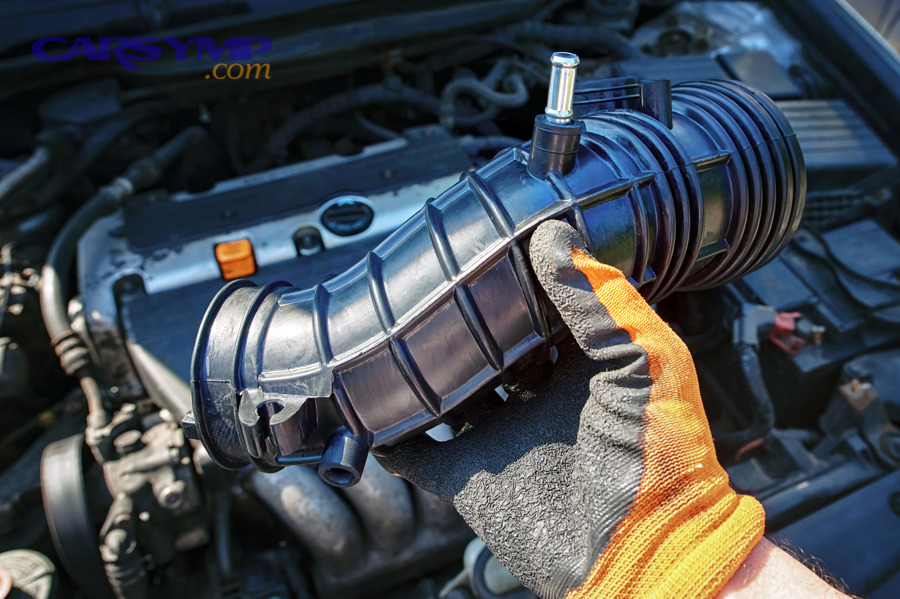
If your engine idles rough, surges, or feels like it’s about to stall, a vacuum hose leak is one of the most common “small problems” that creates a big drivability headache—especially at idle. The fastest path to a stable idle is to confirm the leak pattern, locate the leaking hose or connection, repair it correctly, and verify the fix with a simple re-test.
Next, you’ll learn how vacuum hose leaks create rough (unstable) idle in the first place, what symptoms reliably point to unmetered air, and how fuel trims and idle behavior can help you stop guessing and start diagnosing.
Then, you’ll get a practical, step-by-step approach to finding leaks at home using methods that actually work—visual inspection, safe testing options, and when a smoke test becomes the most efficient choice for hard-to-find leaks.
Introduce a new idea: once you can diagnose and fix the leak, you’ll also want to know when DIY stops being smart (or safe), what a repair might cost, and how to prevent repeat failures that bring rough idle right back.
Is a vacuum hose leak a common cause of rough (unstable) idle?
Yes—vacuum hose leaks are a common cause of rough (unstable) idle because they let unmetered air into the engine, they create a bigger air–fuel error at idle than at higher RPM, and they often develop gradually as rubber ages and cracks.
To connect that to your rough idle problem, the key is understanding why idle is so sensitive to tiny air leaks—then using that sensitivity to your advantage during diagnosis.
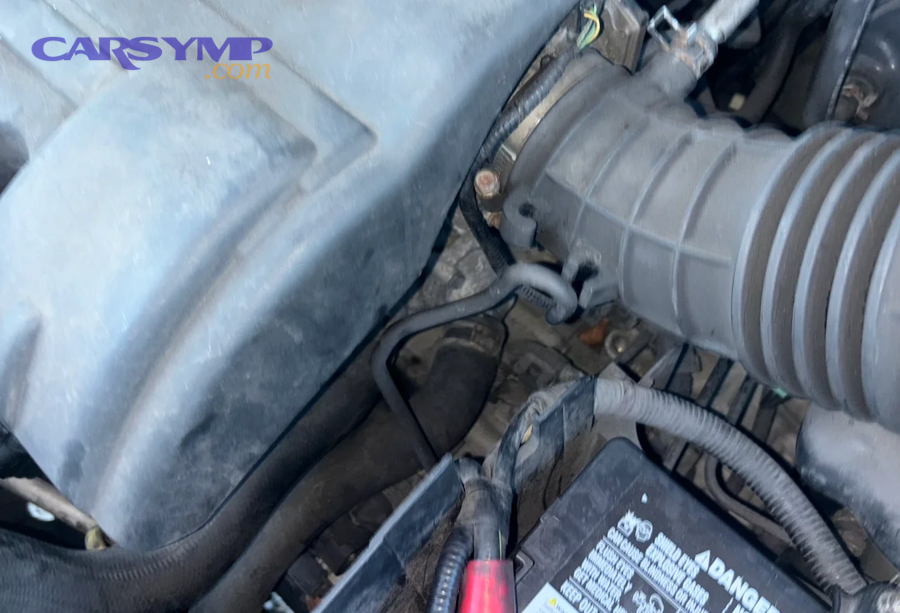
Does rough idle that improves when you rev the engine point to a vacuum leak?
Yes—rough idle that improves when you rev the engine often points to a vacuum leak because (1) idle airflow is small so a leak is a large percentage of total airflow, (2) the ECU has more stable sensor signals and airflow at higher RPM, and (3) throttle opening reduces manifold vacuum sensitivity, masking the leak’s impact.
More specifically, this is why many vacuum leaks feel worst when you’re sitting at a stoplight and “magically better” once you’re driving.
Here’s what that pattern usually looks like in real life:
- At idle: RPM hunts (up/down), the engine shakes, and it may stumble or stall when loads change (A/C on, steering at full lock, shifting into Drive).
- Off idle (light throttle): It smooths out or becomes “less annoying,” even though the leak is still there.
- Under load: You may notice hesitation, a flat spot, or mild pinging if the mixture stays lean long enough.
Important exception: not all vacuum leaks improve with RPM. Large leaks, leaks that affect a specific cylinder path, or leaks that disrupt idle control plumbing can remain rough across the range. That’s why you should combine behavior with a leak search instead of using behavior alone as your proof.
Can a vacuum hose leak trigger a check engine light without obvious drivability issues?
Yes—a vacuum hose leak can trigger a check engine light even if you don’t feel much drivability change because (1) oxygen sensors can detect a lean mixture before your body feels it, (2) fuel trims may hit correction limits while the engine still “runs okay,” and (3) the leak can affect emissions systems (EVAP/EGR/PCV) enough to set codes.
In addition, modern ECUs are excellent at compensating—until they aren’t.
Common code situations linked to vacuum leaks include:
- Lean codes (often bank-specific or both banks) that appear after warm-up.
- Random/multiple misfire codes that show up at idle because one or more cylinders go leaner than others.
- EVAP or airflow-related codes if the leak is in purge plumbing or a hose connection that impacts air metering.
If the check engine light is on but the car “mostly drives fine,” don’t ignore it. A lean condition can raise combustion temperatures and create long-term stress—plus it can fail emissions readiness tests later.
What is a vacuum hose leak and how does it create a rough idle?
A vacuum hose leak is an intake-side air leak (a type of vacuum leak) that allows extra air into the engine after normal metering, which leans the air–fuel mixture and destabilizes idle control—especially when manifold vacuum is high at idle.
To better understand your rough idle, it helps to translate “vacuum leak” into what the ECU actually “sees” and how it responds.
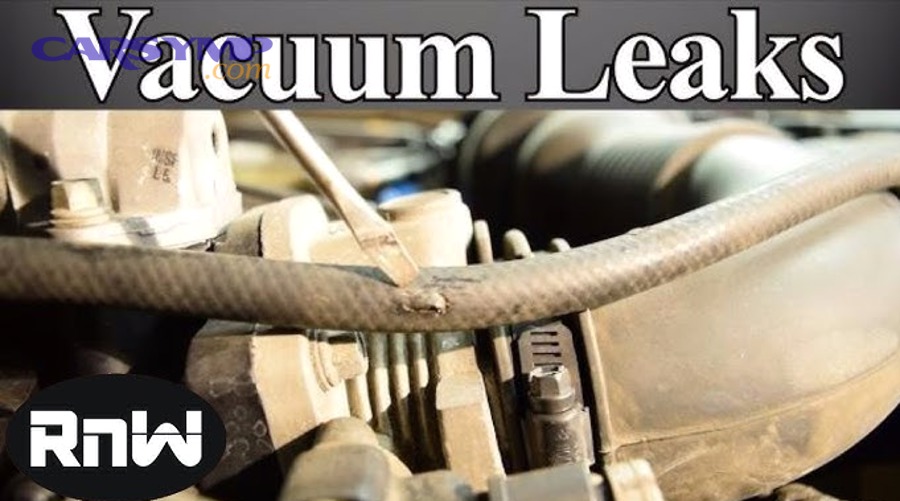
What does “unmetered air” mean in MAF vs MAP systems?
Unmetered air means air that enters the engine without being properly accounted for by the primary airflow calculation, and it disrupts fueling in both MAF and MAP systems—just in different ways.
Specifically, once you know how the ECU counts air, you can predict why a leak creates rough idle and which diagnostics work best.
In MAF-based systems (common):
- The Mass Airflow Sensor measures incoming air before the throttle body/intake tract.
- If air slips in after the MAF (through a cracked hose, PCV line, brake booster hose, intake boot tear), the MAF reports less air than the engine actually gets.
- The ECU initially commands too little fuel, the mixture goes lean, and oxygen sensors force fuel trims upward to compensate.
In MAP-based systems (speed-density):
- The ECU estimates air mass using manifold pressure (MAP), intake air temperature, RPM, and volumetric efficiency tables.
- A leak changes manifold pressure behavior and can create unstable idle because the calculated load signal fluctuates, especially when idle control (IAC/throttle) keeps trying to “catch” the RPM.
In practical terms: MAF systems often show a strong “fuel trim at idle” signature when there’s unmetered air. A classic diagnostic note from MOTOR Magazine’s driveability guidance highlights that low MAF readings at idle paired with high fuel trims are a reason to investigate unmetered air leaks.
Why are vacuum leaks usually worse at idle than at highway speed?
Vacuum leaks are usually worse at idle because idle airflow is minimal, manifold vacuum is high, and the ECU is trying to maintain an exact RPM target with tiny airflow adjustments—so even a small leak overwhelms the control strategy.
Moreover, the engine spends more time in steady idle conditions where the ECU’s correction limits and idle control oscillations become obvious.
Think of it like this:
- At idle, an engine might only need a small amount of air to run. A leak that adds “a little extra air” can become a big percentage of total airflow.
- At higher RPM, total airflow is much larger, so the same leak becomes a smaller percentage and the symptoms can fade.
This is why rough idle is one of the most recognizable vacuum leak symptoms—and why finding the leak often starts with idle testing.
What symptoms and clues help you confirm a vacuum hose leak (not a different rough-idle cause)?
There are 5 main symptom groups that point toward a vacuum hose leak: idle instability, lean correction (fuel trims/lean codes), audible air noise, load-sensitive stalling, and system-specific clues (like brake booster behavior).
However, a rough idle can come from many places, so you’ll confirm the vacuum leak by matching the symptom pattern and ruling out the most common look-alikes.
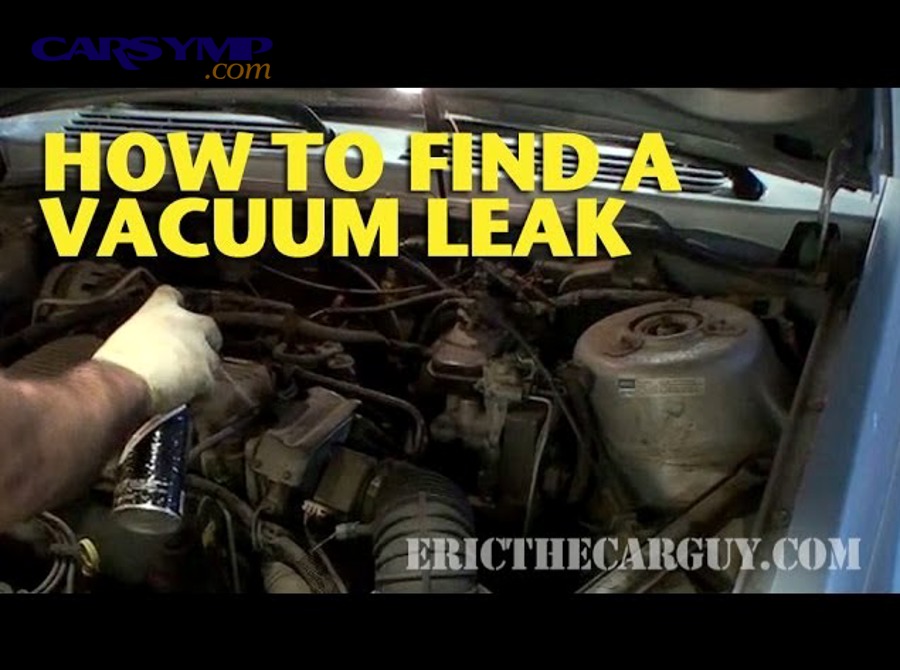
What are the most reliable signs of a vacuum hose leak?
The most reliable signs are: rough/unstable idle, positive fuel trims at idle, lean codes, hissing near the intake, and idle changes when you disturb hoses—especially when the engine is warm.
To illustrate how these signs connect, each clue tells you the engine is receiving more air than the ECU expects.
Use this checklist as a fast confirmation tool:
- Rough idle that’s worse warm (after closed-loop operation starts).
- Hissing sound near the intake manifold, throttle body, or firewall.
- Idle flare or stumble when A/C engages or when shifting into Drive.
- Lean codes that return after clearing once the car warms up again.
- Fuel trims (if you have a scan tool): STFT and/or LTFT commonly trending positive at idle.
If you want one “high-confidence” diagnostic behavior: raise RPM to ~1,500–2,000 and watch fuel trims. Vacuum leaks often look worse at idle and improve as RPM rises.
Which rough-idle symptoms suggest a different problem than a vacuum leak?
Ignition misfires, fuel delivery issues, EGR faults, and airflow control problems often mimic vacuum leaks, but they typically show different patterns in load response, misfire feel, and trim behavior.
Meanwhile, knowing these differences prevents you from doing unnecessary repairs when the root cause isn’t a hose.
Here’s a practical comparison:
- Vacuum hose leak: rough idle, often improves off-idle, hissing possible, positive fuel trims at idle.
- Ignition issue (coil/plug): rough idle can worsen under load, may feel like a sharp “skip,” and misfire counters climb on specific cylinders.
- Fuel pressure/injector issue: may stumble under load, lean trims can happen, but symptoms often worsen when you accelerate.
- EGR stuck open: rough idle and stalling, but often with a distinct “too much exhaust at idle” behavior; sometimes improves when EGR is disabled/blocked (diagnostic only).
- Dirty throttle body / idle control issue: hunting idle, but not necessarily lean codes; often improves after cleaning and relearn.
If you’re unsure, don’t pick just one theory. The next sections guide you to a structured leak search that either finds the vacuum hose leak—or confidently pushes you toward another cause.
Where should you look first for vacuum hose leaks on most cars?
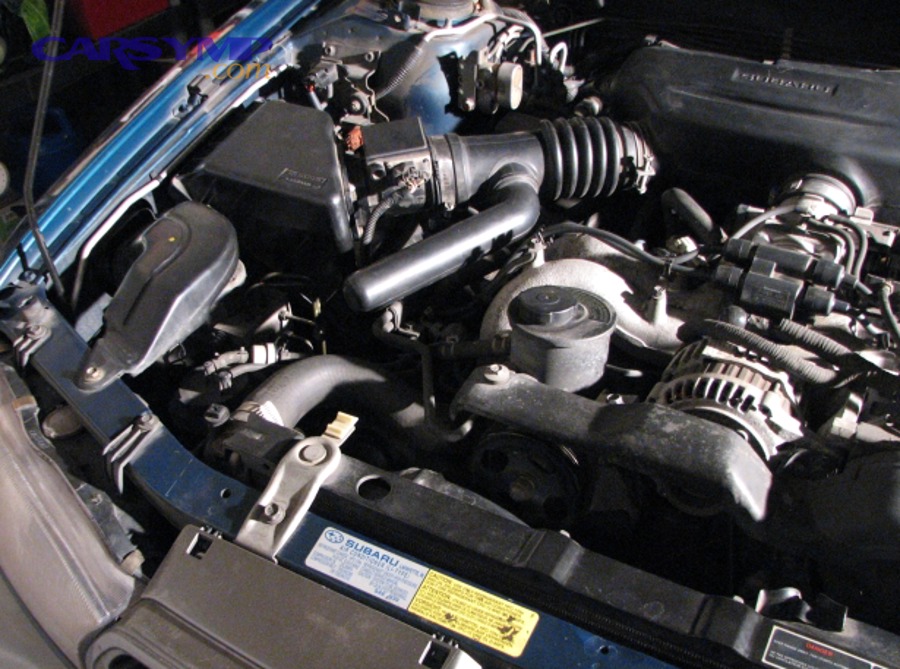
You should look first at the highest-failure vacuum connections: PCV hoses and elbows, brake booster hose and check valve, EVAP purge line connections, intake ducting near clamps, and any small diameter rubber lines near heat sources.
Next, this targeted search order saves time because vacuum leaks cluster around aging rubber, sharp bends, and plastic fittings that become brittle.
Which hoses and components fail most often (PCV, brake booster, EVAP purge, intake gaskets)?
There are 6 common failure points: PCV plumbing, brake booster hose/check valve, EVAP purge lines, vacuum tees/elbows, intake boot/duct tears, and intake manifold gasket edges.
Especially on higher-mileage vehicles, the weak link is often a small elbow or molded hose that cracks where you can’t see it.
Start with these “most common” checks:
- PCV hose and elbows: Oil vapor and heat age rubber fast; elbows split on the underside.
- Brake booster vacuum hose: A leak here can cause rough idle and braking symptoms; the check valve can fail too.
- EVAP purge line: Plastic lines can crack; quick-connect fittings can leak.
- Small vacuum lines/tees: Any brittle plastic tee can leak at the barb.
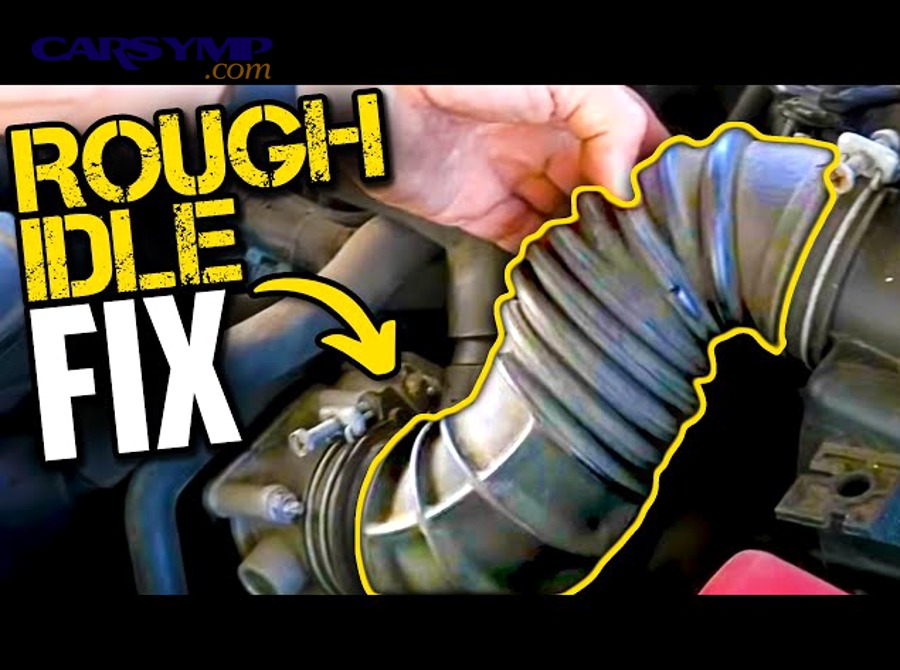
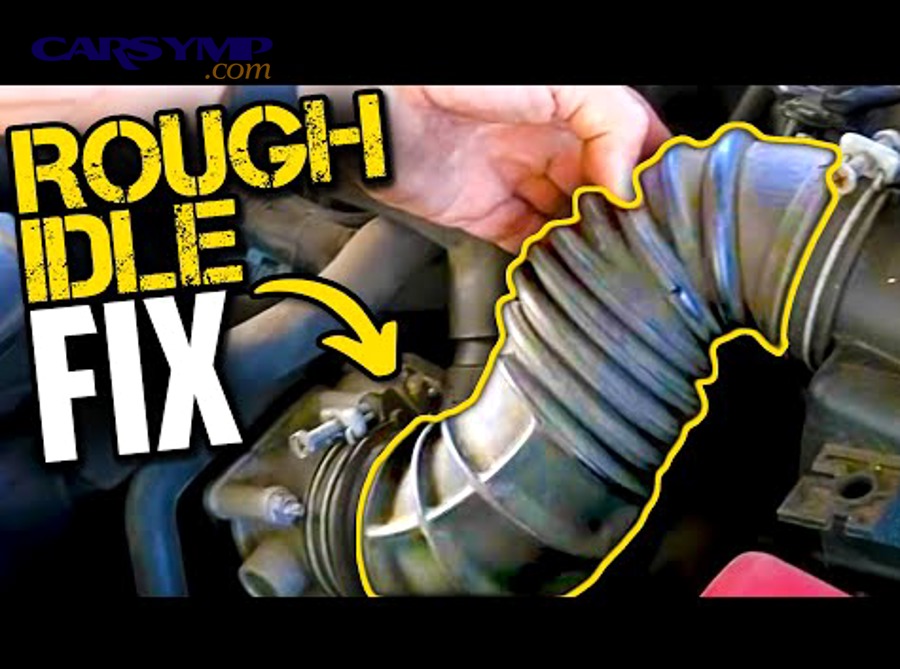
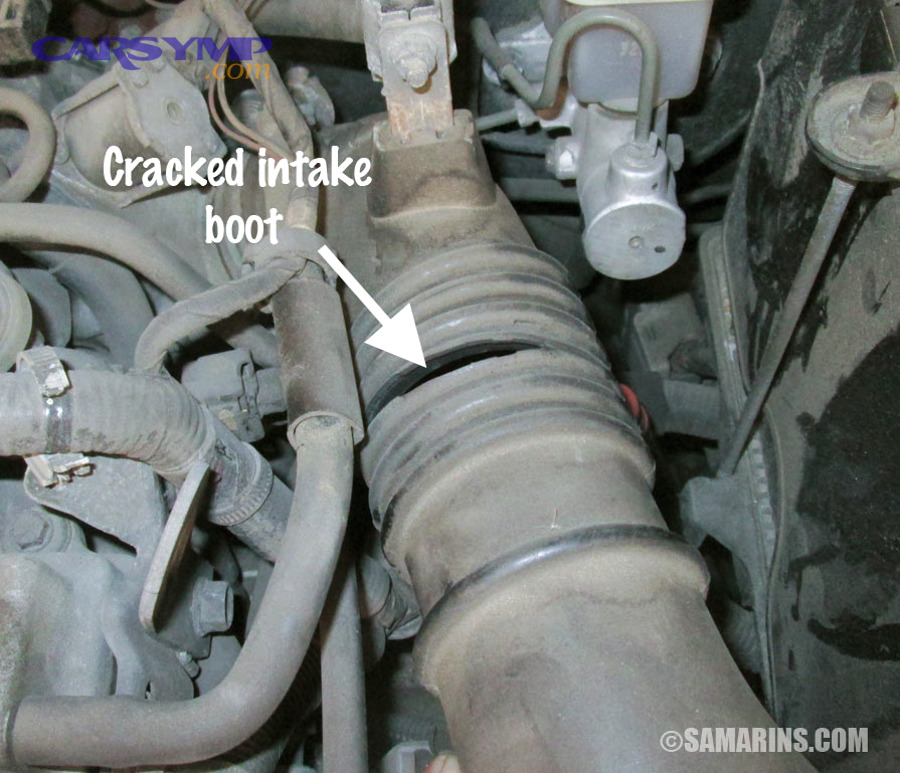
- Intake ducting (between airbox/MAF/throttle): Tears after the MAF create classic unmetered air.
- Intake manifold gasket: Less common than hoses, but important if trims are high and hoses look good.
If you suspect an intake gasket, you’ll still do the hose checks first because they’re faster, cheaper, and more common.
How do you spot cracks and loose connections fast without tools?
You can spot many vacuum hose leaks fast without tools by (1) inspecting bends and elbows for surface cracking, (2) gently flexing hoses to reveal splits, and (3) checking every connection for a loose fit or oil-soaked rubber that slips off.
Besides that, the “feel test” often works better than the “look test” because leaks hide on the underside.
Use this quick routine:
- Follow hoses with your hand from the intake manifold outward.
- Flex elbows gently—cracks open up under light bend.
- Wiggle connections at plastic fittings; a loose barb fit is a leak waiting to happen.
- Look for oil residue on the outside of hoses; oil can soften rubber and cause swelling, leading to poor sealing.
- Check clamps on intake ducting; a loose clamp can mimic a hose leak.
If you find a hose that feels crunchy, stiff, or cracked, it’s not a “maybe.” It’s a replacement candidate.
How can you find a vacuum hose leak at home: which test is best?
A smoke test is the most accurate overall, but the best at-home test depends on your tools: start with inspection and fuel trim clues, use safe spray testing where appropriate, and move to smoke testing when the leak is small or hidden.
Then, the smartest approach is to choose the method that gives you a clear “yes/no” answer without creating new risks.
Is a smoke test the most accurate way to find vacuum leaks?
Yes—a smoke test is usually the most accurate way to find vacuum leaks because (1) smoke visually reveals leak points, (2) it works even on tiny leaks that don’t change idle much, and (3) it reduces guesswork when hoses disappear under covers or behind the engine.
More importantly, accuracy matters when you’ve checked the obvious hoses and the rough idle still won’t go away.
A practical smoke test workflow (DIY-friendly conceptually):
- Introduce smoke into the intake path (commonly upstream of the throttle body or via a vacuum port with proper adapters).
- Keep pressure low to avoid forcing smoke where it wouldn’t normally go.
- Watch for smoke at hose ends, elbows, gasket seams, and fittings.
If you don’t own a smoke machine, some DIYers rent tools or use shop services for a quick diagnostic. The value is speed: it can turn a 2-hour guessing session into a 10-minute confirmation.
Which DIY spray method is safer: carb cleaner, brake cleaner, or soapy water?
Soapy water is generally safer than flammable sprays, brake cleaner is typically less fuel-like than carb cleaner but still risky, and any flammable spray around a hot engine carries fire danger—so prioritize safety and ventilation if you use spray testing.
However, because intake vacuum can draw vapors quickly, even “small” risks deserve caution.
A safer hierarchy (in general terms):
- Best safety: soapy water on suspected external joints (limited usefulness on intake vacuum leaks because it doesn’t always get sucked in).
- Moderate risk: non-flammable diagnostic approaches (listening tools, fuel trims, smoke test).
- Higher risk: carb/brake cleaner spray around the intake (effective but fire hazard).
If you do use spray testing, follow these best practices:
- Work outdoors or with strong ventilation.
- Keep a fire extinguisher nearby.
- Use short bursts, not continuous spray.
- Avoid spraying near ignition sources, alternator, and hot exhaust components.
The goal is a controlled test, not a cloud of flammable vapor.
How do fuel trims (STFT/LTFT) help pinpoint a vacuum leak at idle?
Fuel trims help pinpoint a vacuum leak because a vacuum hose leak usually forces the ECU to add fuel (positive trims) more at idle than at higher RPM, creating a repeatable pattern you can test in minutes.
Specifically, once you can read trims, you can confirm “unmetered air” even before you see the cracked hose.
Use this simple diagnostic pattern:
- Warm the engine to normal operating temperature.
- Observe STFT and LTFT at idle (note the numbers).
- Raise RPM to ~1,500–2,000 and hold steady.
- Compare trims.
A common vacuum leak signature looks like:
- Idle: trims significantly positive (the ECU adding fuel to counter extra air).
- 1,500–2,000 RPM: trims move closer to normal.
This aligns with a widely taught diagnostic principle in professional driveability training: idle is where unmetered air has the largest proportional impact.
How do you fix a vacuum hose leak correctly (not just temporarily)?
You fix a vacuum hose leak correctly by replacing the damaged hose or fitting, restoring a tight seal at every connection, and verifying the repair with a re-test—because a “patched” leak often returns when heat and vibration come back.
Next, the difference between a lasting fix and a repeat rough idle usually comes down to materials, routing, and connection quality.
Should you replace only the leaking hose or all related vacuum lines?
Replacing only the leaking hose is acceptable if the rest are clearly healthy, but replacing all related vacuum lines is often smarter on older vehicles because (1) hoses age at the same rate, (2) disturbing one brittle hose can crack another, and (3) multiple small leaks can stack into one rough-idle symptom.
Moreover, this decision is really a risk trade-off: time now versus time later.
A good rule of thumb:
- Replace only the failed hose if the vehicle is newer, rubber is flexible, and no other lines show cracking.
- Replace related hoses as a set if you see brittleness, oil saturation, multiple cracked elbows, or the car has high mileage.
This is where the phrase hose replacement becomes more than a repair step—it’s a prevention strategy. One new hose won’t stabilize idle for long if the rest of the vacuum plumbing is at end-of-life.
What hose type and size should you use to prevent repeat leaks?
There are 4 main “fit factors” for vacuum hose replacement: correct inside diameter (ID), correct material for heat/oil exposure, proper reinforcement if needed, and proper routing to avoid kinks and abrasion.
To better understand why leaks come back, consider that the wrong hose can seal today and fail next month.
Use these selection principles:
- Match the ID exactly: Too large won’t seal; too small will stress fittings and split.
- Choose the right material: Some hoses handle oil vapor better; some handle heat better.
- Use molded hoses when required: Some factory vacuum hoses are shaped for clearance; forcing a straight hose can kink.
- Protect from heat and rubbing: Route away from exhaust and sharp edges; use sleeves or clips if applicable.
And because connection quality matters as much as hose quality, apply Hose clamp types and best practices thoughtfully:
- Spring clamps: maintain tension with heat cycling; common OEM choice.
- Worm-drive clamps: adjustable but can over-tighten and cut soft hose if misused.
- Oetiker/ear clamps: strong, consistent compression; often used on specific applications.
Best practice: tighten just enough to seal without deforming fittings or slicing the hose.
A quick clarification that prevents costly confusion: vacuum hose work is not the same as coolant hose work. If you found a leak in a coolant line, that’s a different repair path—often involving pressure testing and coolant handling.
How can you verify the repair and restore a stable idle?
You verify the repair by re-checking idle quality, confirming trims move toward normal, and ensuring no hoses were left disconnected—then you restore stable idle by allowing the ECU to relearn if necessary and retesting under the same conditions that originally triggered rough idle.
In addition, verification should be systematic, not “it feels better, so we’re done.”
Use this verification checklist:
- Listen: the hissing should be gone.
- Inspect: every vacuum connection you touched should be fully seated.
- Re-test: repeat the same diagnostic method (smoke test, trim pattern, or controlled spray test).
- Load test: turn A/C on, shift into Drive, turn steering (if safe) to see if idle stays stable.
- Scan: check fuel trims again at idle and ~1,500–2,000 RPM.
If your repair involved any major intake airflow components, some vehicles benefit from an idle relearn or throttle adaptation routine (vehicle-specific). If idle remains unstable but trims improved, you may be dealing with an additional issue—like throttle body deposits or an unrelated misfire.
Also, avoid mixing up repair checklists: a Heater hose replacement overview usually includes coolant drain/refill steps, and Bleeding cooling system after hose replacement is essential for coolant hose jobs—but vacuum hose repairs do not require coolant bleeding. Mentioning this here prevents a common DIY mistake: treating a vacuum hose fix like a cooling system service.
When should you stop DIY and take rough idle to a mechanic?
You should stop DIY and take rough idle to a mechanic if the leak is not obvious after basic checks, if the engine is stalling unpredictably, or if scan data suggests a deeper issue (intake gasket, internal vacuum leak, fuel/ignition faults) that needs advanced tools like professional smoke testing or cylinder diagnostics.
More importantly, the goal is not to “win DIY,” but to avoid wasting time and risking damage.
Is it safe to drive with a vacuum hose leak causing rough idle?
No—it is not reliably safe to drive with a vacuum hose leak causing rough idle because (1) the engine can stall at low speed or in traffic, (2) a brake booster vacuum leak can reduce power assist and increase stopping effort, and (3) prolonged lean operation can raise temperatures and stress components.
However, risk varies, so you’ll make a decision based on symptoms, not hope.
Use this safety filter:
- Do not drive if the engine stalls when shifting, idles extremely low, or braking feels abnormal/hard.
- Limit driving if the engine runs lean with severe hesitation, surging, or flashing misfire indicators.
- Consider a short, careful drive only if idle is mildly rough and braking is normal—just to reach a repair location.
Evidence matters when discussing lean operation and emissions stress. According to a study by West Virginia University from the Center for Alternative Fuels, Engines and Emissions, in 2014, extended lean exhaust conditions during in-use testing were associated with a 97% increase in NOx emissions in one route comparison, illustrating how lean conditions can significantly impact emissions behavior.
If DIY checks don’t locate the leak quickly, professional diagnosis can prevent you from replacing parts blindly.
How much does it cost to repair a vacuum leak, and how can you prevent it from coming back?
Replacing a simple vacuum hose is usually one of the lowest-cost rough-idle fixes, but costs rise quickly when the leak is a hidden intake gasket or a complex molded line—so prevention comes from replacing aged rubber proactively and maintaining correct routing and connections.
Next, think of prevention as “reducing future unmetered air opportunities,” especially where heat and oil vapor attack hoses.
Is replacing a vacuum hose usually cheaper than fixing an intake manifold gasket leak?
Yes—replacing a vacuum hose is usually cheaper than fixing an intake manifold gasket leak because (1) hose access is often easier, (2) labor time is lower, and (3) gasket repairs often require disassembly of intake components and more cleanup and torque procedure precision.
On the other hand, you shouldn’t avoid a gasket repair if evidence points there—because the rough idle will persist until the sealing surface is restored.
A practical cost logic (without guessing your exact vehicle):
- Vacuum hose fix: often parts-light and time-light.
- Intake gasket fix: commonly labor-heavy due to access, component removal, and careful reassembly.
If you’re trying to keep costs down, the best strategy is to diagnose accurately so you only repair what’s truly leaking.
Which maintenance checks prevent vacuum hose leaks from causing rough idle again?
There are 4 main prevention checks: routine hose inspection, oil contamination control, heat management/routing integrity, and replacing brittle plastic fittings before they crack.
Especially on older engines, prevention is about catching “almost leaks” before they become rough idle.
Use this prevention routine:
- Quarterly visual scan: look for surface cracking, collapsed hoses, shiny oil-wet rubber, and loose clamps.
- Check elbows and tees: these fail more than straight hose segments.
- Keep hoses clipped and supported: movement causes rubbing and splits.
- Service PCV components: abnormal crankcase flow stresses hoses and seals.
- Replace by condition, not hope: if it’s brittle, it’s done.
If you recently performed hose replacement on one line, inspect neighboring lines—because your hands moving around the engine can disturb other aging connections.
Can a vacuum leak “come back” after repair because of ECU adaptation or idle relearn issues?
Yes—a vacuum leak can seem to “come back” after repair because (1) the ECU may need time to relearn idle airflow targets, (2) fuel trims may take driving time to normalize depending on strategy, and (3) an additional small leak may remain and becomes noticeable once the big leak is fixed.
Moreover, drivers often notice the leftover issue more clearly after the major symptom improves.
What to do after repair:
- Recheck trims after a short drive cycle.
- Reinspect every connection you touched.
- If idle remains unstable but trims look normal, consider throttle body deposits or ignition issues.
If your vehicle has a known throttle adaptation procedure, following it can speed stabilization—but don’t assume it’s required for every car.
What are the most common “false alarms” mistaken for vacuum leaks?
There are 4 common false alarms: exhaust leaks that hiss/tick, accessory noises that mimic air leaks, throttle body/idle control deposits that cause hunting, and EGR faults that create rough idle without a hose leak.
In short, the best way to avoid a false alarm is to pair symptoms with a confirming test (fuel trims, smoke test, or a clearly identified cracked hose).
Quick distinguishing clues:
- Exhaust leak: often louder cold; tick near manifold; doesn’t usually create high positive fuel trims at idle.
- Accessory noise: changes with belt load; not tied to idle corrections.
- Dirty throttle body: hunting idle with fewer lean-code patterns; improves after cleaning and relearn.
- EGR stuck open: rough idle with “diluted combustion” feel; often improves if EGR flow is stopped (diagnostic only).
When you combine these checks with the diagnostic steps above, you get a reliable outcome: either you find the vacuum hose leak and fix the rough idle, or you confidently move to the next most likely cause without wasting money.
Evidence (if any)
According to a study by West Virginia University from the Center for Alternative Fuels, Engines and Emissions, in 2014, in-use testing reported a 97% increase in NOx emissions associated with extended lean exhaust conditions in one route comparison—showing how lean operating conditions can significantly affect emissions behavior.