


Wiper arm spring tension issues stem from worn or fatigued springs inside the arm assembly, causing insufficient blade pressure against the windshield and resulting in streaking, skipping, or missed spots during operation. This comprehensive guide walks you through diagnosing weak spring tension, understanding the root causes of spring degradation, and implementing effective repair methods—from simple adjustments to complete assembly replacement—so you can restore optimal wiper performance without unnecessary trips to the mechanic.
Understanding what weakens wiper arm springs is the first step toward effective repair. Metal fatigue from thousands of flexing cycles, combined with environmental stressors like extreme temperatures, UV radiation, and road salt exposure, gradually diminishes spring elasticity and reduces the downward force needed for complete windshield contact. These factors work together to create the common symptoms drivers experience: poor visibility in rain, blades lifting off the glass at highway speeds, and uneven wiping patterns that no amount of blade replacement seems to fix.
Accurate diagnosis separates wiper arm spring problems from simple blade wear, saving you time and money on the wrong repairs. Testing methods range from basic manual resistance checks to precise measurements using digital scales, with ideal pressure specifications hovering around one ounce per inch of blade length. Learning to distinguish between loose mounting hardware, worn blades, and genuine spring tension loss ensures you address the actual problem rather than masking symptoms with temporary solutions.
Once you’ve confirmed weak spring tension, you face a critical decision: adjust, repair, or replace. Some vehicles allow tension adjustment through careful bending techniques or mounting nut tightening, while others require aftermarket spring boosters or complete wiper arm replacement. Below, we’ll explore each diagnostic method, repair technique, and replacement procedure in detail, empowering you to make informed decisions about your wiper system maintenance and restore clear visibility in all weather conditions.
What Causes Wiper Arm Spring Tension to Weaken?
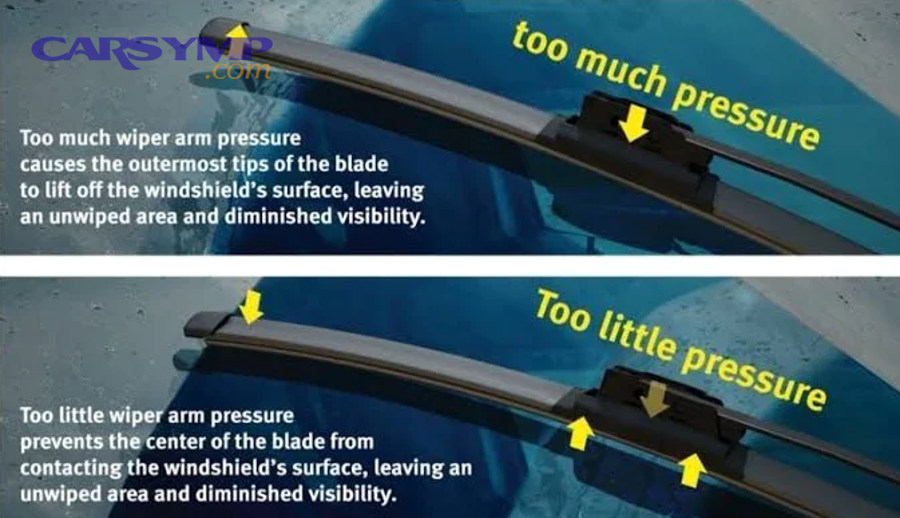
Wiper arm spring tension weakens primarily due to metal fatigue from repeated flexing cycles, environmental exposure to temperature extremes and UV radiation, and corrosion from road salt and moisture that degrades spring elasticity over time. These factors combine to reduce the spring’s ability to maintain the 1.5 to 2.5 pounds per linear inch of pressure required for effective windshield wiping.
To understand why your wiper arms lose their grip, you need to examine the mechanical and environmental forces constantly working against the spring mechanism. Every time your wipers complete a sweep across the windshield, the internal torsion or coil spring flexes to accommodate the glass curvature and maintain consistent blade contact. This repeated motion creates microscopic stress points in the metal that accumulate over thousands of cycles, eventually leading to permanent deformation known as spring sag.
The spring mechanism itself consists of either a torsion spring near the pivot point or a coil spring within the arm assembly that generates the downward force pressing the blade against the glass. When these springs are new, they provide precise, measured tension calibrated to your vehicle’s windshield curvature and wiper blade specifications. However, materials science teaches us that all metals subjected to repeated stress cycles eventually experience fatigue—the molecular bonds begin to weaken, and the spring loses its ability to return to its original shape after compression.
Environmental factors accelerate this natural degradation process significantly. The metal composition of wiper arm springs, typically high-carbon steel or spring steel alloys, responds differently to temperature variations throughout the year. Manufacturing quality also plays a crucial role, as cheaper aftermarket wiper arms often use lower-grade steel with reduced tensile strength, leading to faster deterioration compared to original equipment manufacturer (OEM) parts.
How Does Temperature Affect Wiper Arm Spring Performance?
Temperature extremes create opposing stresses that systematically weaken wiper arm springs through different mechanisms depending on the season and climate conditions. Cold weather makes spring steel more brittle and prone to micro-fracturing, while heat accelerates oxidation and reduces the metal’s elastic modulus, causing permanent spring relaxation that cannot be reversed.
During winter months, when temperatures drop below freezing, the metal crystalline structure of your wiper arm springs becomes increasingly rigid. This brittleness means the spring loses some of its flexibility—instead of smoothly compressing and rebounding as designed, it experiences sharp stress concentrations at bend points. If you’ve ever lifted frozen wiper arms off an icy windshield, you’ve likely heard a crackling sound as ice breaks free, but internally, the spring may also be developing hairline cracks that propagate over multiple freeze-thaw cycles.
Road salt compounds this problem by creating an electrochemical reaction when it contacts the metal spring surface. The salt draws moisture from the air, creating a corrosive brine that penetrates protective coatings and attacks the steel at a molecular level. This corrosion pitting weakens the spring cross-section, reducing its load-bearing capacity. You’ll often notice white or orange-brown deposits around the pivot points and spring housing on vehicles regularly exposed to winter road treatments.
Summer heat presents the opposite challenge. When ambient temperatures exceed 90°F (32°C), and direct sunlight pushes surface temperatures even higher, the spring steel begins to anneal—a metallurgical process where heat causes the metal’s grain structure to reorganize into a softer, less resilient configuration. This heat-induced oxidation creates a surface layer of rust that acts like microscopic notches, concentrating stress and accelerating fatigue failure. UV radiation from sunlight further degrades any rubber or plastic components surrounding the spring assembly, allowing moisture intrusion that speeds corrosion.
Geographic location determines which temperature-related failure mode dominates. Northern climates with harsh winters see more brittle fracture failures, while southern regions with intense sun exposure experience more spring relaxation and oxidation-related weakening. Coastal areas combine salt air with temperature swings, creating the most aggressive deterioration environment for wiper arm springs.
What Is the Normal Lifespan of Wiper Arm Springs?
Wiper arm springs typically maintain effective tension for 3 to 7 years under normal operating conditions, completing approximately 500,000 to 1,000,000 wipe cycles before experiencing significant degradation that requires replacement or adjustment. However, aggressive climates, frequent use, and lower-quality materials can reduce this lifespan to just 2 to 3 years, while garage-kept vehicles in mild climates may see springs last 8 to 10 years.
The cycle count provides a more accurate predictor of spring life than calendar time alone. If you use your wipers heavily during daily commutes in rainy climates like the Pacific Northwest or during frequent snow events, you’ll accumulate cycles much faster than someone in an arid region who activates wipers only occasionally. Each complete sweep across the windshield and back counts as one cycle, and modern wiper systems typically complete 30 to 60 cycles per minute on standard speed settings.
Manufacturing quality creates substantial variation in spring longevity. OEM wiper arms from manufacturers like Bosch, Valeo, or TRICO often incorporate higher-grade spring steel with superior heat treatment processes that resist fatigue. These premium springs may include protective coatings like zinc plating or powder coating that prevent corrosion. Budget aftermarket arms frequently use thinner-gauge wire with minimal corrosion protection, leading to premature failure even with limited use.
Signs of premature spring wear appear long before complete failure. You might notice the arms don’t spring back as crisply when you lift them off the windshield, or they begin to rest at a slightly different angle when parked. Performance degradation shows up as inconsistent pressure across the blade length—the center section may wipe well while the ends leave streaks, or vice versa. When to replace wiper inserts vs full blades becomes an important consideration here, as many drivers replace blades repeatedly without realizing the spring tension loss is the underlying issue, not blade wear.
Climate-specific degradation patterns help predict when your springs need attention. Arizona residents might see springs last 4 to 5 years before UV damage and heat annealing cause noticeable relaxation. Minnesota drivers might experience 5 to 6 years before salt corrosion and cold brittleness create problems. Florida’s combination of heat, humidity, and salt air might reduce effective lifespan to just 3 to 4 years despite moderate temperature ranges.
How Do You Diagnose Weak Wiper Arm Spring Tension?
You diagnose weak wiper arm spring tension by performing a lift-and-release test to assess spring rebound firmness, conducting visual inspections for rust or pivot stiffness, measuring pressure with a digital scale (ideal range: 1 ounce per inch of blade length), and observing performance symptoms like streaking, blade lifting at highway speeds, or uneven wiping patterns. These diagnostic methods work together to confirm whether insufficient spring tension—rather than worn blades or dirty glass—causes your visibility problems.
To better understand the diagnostic process, start with the simplest tests and progress toward more technical measurements only if initial results are inconclusive. The lift-and-release test requires no tools and takes just seconds: raise each wiper arm to its service position (perpendicular to the windshield) and release it gently. A healthy spring snaps the arm back down with noticeable force and seats the blade firmly against the glass with a solid “thunk” sound. Weak springs produce a slow, hesitant return or bounce slightly before settling, indicating reduced tension.
Visual inspection reveals telltale signs of spring mechanism problems before performance suffers noticeably. Examine the pivot point where the arm attaches to the vehicle—look for rust streaks, white corrosion deposits, or crusty buildup that indicates moisture has penetrated the assembly. Check whether the arm moves smoothly through its full range of motion or if it feels sticky at certain positions. Stiffness combined with weak return force suggests both corrosion and spring fatigue are present.
Comparative testing between driver and passenger sides often reveals tension discrepancies that point to spring problems rather than blade issues. If one side wipes perfectly while the other streaks despite identical new blades, spring tension differences are likely responsible. This asymmetry occurs because driver’s side wipers typically work harder, covering more windshield area and experiencing more cycles during each activation, leading to faster spring degradation on that side.
What Are the Symptoms of Insufficient Wiper Blade Pressure?
Insufficient wiper blade pressure manifests as horizontal streaking where the blade skips across sections of glass, vertical lines of missed water where blade edges don’t maintain contact, blade chatter or bouncing during operation, and complete blade lift-off at speeds above 55 mph when aerodynamic forces overcome weak spring tension. These symptoms persist even after installing fresh wiper blades and thoroughly cleaning the windshield, confirming the problem lies in the arm assembly rather than the blade itself.
Streaking patterns provide diagnostic clues about where pressure loss occurs along the blade length. If you see parallel streaks in the middle third of the wipe pattern but clean glass near the edges, the spring’s center loading has weakened while edge pressure remains adequate. Conversely, streaks concentrated at the blade tips while the center wipes clean suggest the spring can’t maintain even pressure distribution across the blade’s full arc of travel. This uneven pressure commonly results from spring fatigue that creates a slightly bent or twisted arm geometry.
Blade chatter—that annoying stuttering sound and vibration during wiper operation—occurs when inconsistent pressure allows the blade to momentarily lose contact with the glass, then slam back down as the wiper motor continues pulling. This chattering accelerates blade edge wear and can damage the rubber insert’s wiping edge through repeated impact. Many drivers mistakenly attribute chatter solely to cheap blades or improper blade installation, but weak spring tension frequently causes this symptom even with premium blades correctly mounted.
Highway speed blade lift-off represents the most dangerous symptom because it eliminates visibility precisely when you need it most during high-speed driving in rain. Aerodynamic lift forces increase exponentially with speed—at 65 mph, airflow over the windshield creates sufficient upward pressure that weak springs can no longer hold the blade against the glass. You’ll notice clear sections of unwept windshield in the blade’s path during highway driving, even though low-speed operation appears normal. This speed-dependent failure clearly indicates spring tension has dropped below the threshold needed to counter aerodynamic forces.
Seasonal variation in symptoms also reveals spring tension problems. If wiper performance degrades noticeably in summer heat or during winter cold snaps, temperature-related spring changes are occurring. Springs weakened by fatigue show greater performance swings across temperature ranges compared to healthy springs that maintain consistent pressure regardless of weather conditions.
How Do You Test Wiper Arm Tension at Home?
You test wiper arm tension at home by using a digital gram scale positioned under the wiper blade mounting hook to measure downward force, aiming for readings between 350 and 700 grams (approximately 12-25 ounces) for most passenger vehicles, though specific targets vary by blade length and vehicle type. This precise measurement eliminates guesswork and provides objective data to compare against manufacturer specifications or between driver and passenger sides.
Specifically, the testing procedure requires removing the wiper blade from the arm to access the mounting hook or adapter where the blade normally attaches. Place your digital scale on a flat, stable surface—a workbench or the hood works well—then position the wiper arm so its hook rests on the scale’s platform. Slowly allow the arm to settle onto the scale, observing the weight reading as the spring reaches full compression. Record this value for each arm.
Interpreting the measurements requires knowing the ideal pressure specification, which follows the formula of approximately 1 ounce per inch of blade length. A 20-inch blade should generate roughly 20 ounces (567 grams) of pressure, while a 24-inch blade needs about 24 ounces (680 grams). Measurements falling below 75% of this calculated target indicate weak spring tension that will compromise wiping performance, especially at higher speeds. For example, if your 22-inch blade measures only 15 ounces instead of the expected 22 ounces, the spring has lost about 32% of its designed tension.
Comparing driver versus passenger side readings proves particularly valuable since factory specifications maintain matched tension across both arms for balanced wiping performance. A difference exceeding 150-200 grams between sides suggests uneven spring degradation. One common pattern shows driver’s side tension measuring 1030 grams while passenger side reads only 750 grams—a 280-gram difference indicating the passenger spring has weakened significantly more than the driver side.
Alternative testing methods work when you lack a digital scale. The manual resistance test involves pulling the arm away from the windshield and noting how much effort is required and how forcefully it returns. While subjective, experienced DIYers develop a feel for proper tension through comparison testing across multiple vehicles. Another approach uses a simple spring scale or fish scale: attach the hook to the wiper arm’s mounting point, pull until the arm lifts off the glass, and note the force required. This pulling force should equal the pressure force the spring generates.
Environmental factors affect measurement accuracy, so test at moderate temperatures (60-75°F) for most consistent results. Cold weather temporarily stiffens springs, giving artificially high readings, while extreme heat can relax them, showing lower numbers than actual operating conditions. Testing both before and after operating the wipers for several minutes helps account for temperature-related variations.
Can You Adjust Wiper Arm Spring Tension Without Replacement?
Yes, you can adjust wiper arm spring tension without full replacement using methods like tightening the mounting nut to correct loose installation, carefully bending the arm to increase spring preload, or installing aftermarket clip-on spring boosters, though these adjustments work best for mild tension loss and may provide only temporary improvement for severely degraded springs. Permanent solutions for significantly weakened springs typically require replacing the internal spring component or the complete wiper arm assembly.
However, understanding the limitations of each adjustment method prevents wasted effort on arms too far gone to save. Tightening the mounting nut addresses looseness between the arm and its splined shaft—a common issue often mistaken for spring weakness. This adjustment takes seconds and costs nothing, making it the mandatory first step before attempting more invasive repairs. If tightening restores proper pressure, you’ve avoided unnecessary spring modifications or replacements.
Bending adjustments and spring boosters represent the middle ground between simple mounting nut tightening and complete assembly replacement. These methods increase effective spring tension by changing the arm’s geometry or adding supplemental spring force, extending the life of moderately weakened springs. Success depends on the spring’s remaining structural integrity—if the metal has developed fractures or severe corrosion, no amount of adjustment will restore reliable function.
The decision tree for adjustment versus replacement follows this logic: If symptoms appeared gradually and pressure measures 60-85% of specification, adjustment methods often succeed. If symptoms appeared suddenly, pressure reads below 50% of specification, or visible spring damage exists, replacement becomes necessary. Cost considerations also matter—if quality replacement arms cost $15-25 each while spring boosters run $8-15 per pair, replacement might deliver better long-term value despite higher initial cost.
What Is the Bending Method for Increasing Wiper Arm Tension?
The bending method for increasing wiper arm tension involves carefully applying controlled force to the arm section near the mounting base, creating a slight upward bend that increases the spring’s preload when installed, thereby boosting downward pressure on the blade by approximately 100-300 grams. This technique requires removing the arm from the vehicle, supporting it properly to avoid kinking, and making small incremental bends rather than aggressive deformation that could permanently damage the arm or cause stress fractures.
To illustrate the proper bending process, start by removing the wiper arm from its splined shaft after loosening the mounting nut. Identify the bendable section—typically a straight portion 2 to 4 inches from the mounting base that doesn’t contain pivot joints or spring mechanisms. This zone offers sufficient leverage without damaging critical components. Avoid bending near the blade mounting end, as this changes the blade angle rather than increasing spring preload.
The actual bending requires controlled force application using appropriate tools. Place the arm on a solid surface like a workbench with the mounting base anchored and the blade end extending over the edge. Apply gradual upward pressure to the bendable section using a padded vise grip or adjustable wrench positioned perpendicular to the arm. Bend in small increments—just 5 to 10 degrees at a time—then reinstall and test before making additional adjustments. This iterative approach prevents over-bending that could crack the metal or create excessive pressure that damages the wiper motor.
Safety precautions include wearing safety glasses to protect against metal fragments if the arm fractures and working slowly to maintain control. Never heat the metal with a torch to make bending easier, as this anneals the spring steel and destroys its temper, actually weakening the arm rather than strengthening it. Cold bending preserves the metal’s heat-treated properties while achieving the desired geometry change.
Angle limitations prevent bending from working on all wiper arm designs. Arms with very short straight sections between the mounting base and first pivot joint offer insufficient leverage for effective bending—attempting to bend these creates acute angles that concentrate stress and promote cracking. Articulated arms with multiple pivot points resist simple bending adjustments because the complex geometry redistributes forces unpredictably.
Effectiveness varies by initial spring condition and arm design. Bending typically adds 20-40% additional pressure to arms showing mild tension loss (70-85% of specification). Arms with severe degradation (below 60% of specification) rarely benefit enough from bending alone to restore adequate performance. The adjustment also tends to be temporary—bent arms gradually relax back toward their original shape over 6 to 18 months of use, requiring periodic re-bending or eventual replacement.
How Do You Tighten the Mounting Nut to Fix Loose Wiper Arms?
You tighten the mounting nut by removing the protective plastic cap at the arm’s base, using a properly sized socket wrench (typically 13mm or 15mm) to snug the nut until the arm no longer has play on the splined shaft, then testing wiper operation to confirm the looseness is eliminated. This adjustment addresses installation looseness rather than true spring weakness, but symptoms often appear identical—poor blade contact, inconsistent pressure, and unsatisfactory wiping—making it essential to rule out mounting looseness before diagnosing spring problems.
More specifically, the tightening procedure requires first parking the wipers in their rest position and turning off the vehicle. Lift the wiper arm slightly to access the base where it mounts to the pivot shaft. You’ll see a small plastic or rubber cap covering the mounting nut—pry this cap off gently with a flathead screwdriver or fingernail. The nut underneath typically accepts a 13mm, 14mm, or 15mm socket, though some vehicles use 12mm or 17mm, so having a socket set available helps.
Before applying torque, check whether the arm has visible play by grasping it near the base and attempting to rock it side-to-side or pull it away from the shaft. Significant movement indicates looseness that tightening will correct. Position your socket wrench on the nut and tighten clockwise in small increments—quarter-turn at a time—checking for play after each adjustment. The goal is snug-tight, not overtightened. Excessive torque can strip the threads, crack the plastic base cap housing, or damage the splined shaft.
Torque specifications vary by vehicle manufacturer, typically ranging from 12 to 25 Newton-meters (9 to 18 foot-pounds). If you’re using a torque wrench, consult your vehicle’s service manual for the exact specification. Hand-tightening to “firm resistance plus one-quarter turn” usually achieves appropriate torque without specialized tools. The nut should feel solidly seated with no perceptible looseness, but you shouldn’t need extreme effort to achieve this.
Testing after tightening involves operating the wipers at various speeds and observing whether the symptoms have resolved. If blade contact improves significantly and pressure feels more consistent, loose mounting was indeed the culprit. If performance remains unchanged despite eliminating mounting play, then true spring tension loss or another issue requires further diagnosis. Some vehicles experience recurring mounting nut looseness due to vibration or inadequate initial installation torque—applying a small amount of thread-locking compound (blue Loctite) during reinstallation prevents future loosening without making removal impossible for future service.
When this fix resolves the issue completely, you’ve saved significant money and time by avoiding unnecessary spring adjustments or arm replacement. According to diagnostic data from automotive service centers, approximately 15-20% of reported “weak wiper tension” complaints actually stem from mounting looseness rather than spring degradation, making this simple check a high-value first troubleshooting step.
How Do You Replace Wiper Arm Springs or Spring Assemblies?
You replace wiper arm springs or spring assemblies by removing the wiper blade, loosening the mounting nut, pulling the arm off the splined shaft using gentle rocking motion or a removal tool, disassembling the arm (if replacing internal springs), installing the new spring or complete arm, and testing operation to verify proper pressure and alignment. This process requires basic hand tools—socket wrench, flathead screwdriver, and possibly a wiper arm puller—and takes 15 to 45 minutes per arm depending on design complexity and whether you’re replacing just springs or complete assemblies.
Next, understanding when spring replacement versus full arm replacement makes sense depends on parts availability and cost-effectiveness. Many modern wiper arms integrate the spring into a sealed assembly where the internal components aren’t serviceable separately. These designs require replacing the entire arm—typically costing $15 to $40 per arm for quality aftermarket or OEM units. Older designs with accessible torsion springs may allow spring-only replacement if you can source matching springs, though this option has become increasingly rare as manufacturers favor disposable arm assemblies.
The tool requirements for wiper arm removal vary by how stubbornly the arm grips its splined shaft. Most arms come off with patient manipulation—rocking the arm gently while applying steady outward pressure gradually works the splines free. Stubborn arms benefit from penetrating oil applied around the base several hours before removal to dissolve corrosion binding the arm to the shaft. Wiper arm puller tools provide mechanical advantage for severely stuck arms, using a forked design that grips under the arm while a center screw pushes against the shaft, forcing the components apart without damage.
Step-by-step workflow for complete arm replacement ensures proper installation and optimal performance. First, measure the existing arm’s position relative to the windshield base or another fixed reference point—you’ll want to install the new arm at the same angle to maintain proper wipe pattern coverage. Remove the wiper blade from the old arm to avoid damaging it during removal. Loosen and remove the mounting nut completely, setting it aside if reusing. Rock the arm gently while pulling outward until the splines release and the arm slides free.
Before installing the new arm, inspect the splined shaft for rust, debris, or damage that could prevent proper seating. Clean the splines with a wire brush if corrosion is present. Apply a thin coat of anti-seize compound to the splines to prevent future binding and facilitate removal during the next service. Align the new arm’s splines with the shaft grooves, referencing your earlier position measurement to achieve correct placement. Press the arm firmly onto the shaft—you should feel it seat fully with the arm base flush against its mounting surface.
Thread the mounting nut onto the shaft by hand to avoid cross-threading, then tighten to specification using your socket wrench. Reinstall the protective cap over the nut. Attach your wiper blade to the new arm’s hook or adapter, ensuring it clicks or locks securely. Lower the arm to rest the blade against the windshield, then activate the wipers to verify proper operation—check for complete coverage across the wipe zone, listen for unusual noises, and confirm the blade maintains firm, even contact throughout its sweep.
What Are the Steps to Remove a Wiper Arm Assembly?
The steps to remove a wiper arm assembly include lifting the protective cap to expose the mounting nut, removing the nut with an appropriately sized socket wrench, pulling the arm away from the windshield to disengage the lock tab if present, and applying steady outward pressure with a rocking motion to separate the arm’s splined socket from the shaft. This systematic approach prevents damage to the arm, shaft, or windshield while accommodating the various retention mechanisms manufacturers use.
Removing the protective cap requires identifying its type—some caps simply pry off with a flathead screwdriver inserted under the edge, while others twist counterclockwise to unthread. Apply gentle prying pressure to avoid cracking plastic caps, working your way around the perimeter until the cap pops free. Rubber caps typically pull straight off with finger pressure, though age-hardened rubber may need gentle twisting while pulling.
The mounting nut removal step demands caution to prevent rounded corners that make the nut impossible to remove with standard tools. Select a socket that fits snugly over the nut—loose-fitting sockets round corners under high torque. Six-point sockets grip better than twelve-point on tight nuts. Turn counterclockwise (lefty-loosey) while stabilizing the wiper arm to prevent it from rotating with the nut. Corroded nuts may require penetrating oil applied 30 minutes prior to loosening.
Lock tab disengagement applies to many modern wiper arms that feature a small retention tab near the base preventing accidental arm pull-off during operation. To disengage, lift the wiper blade end straight out away from the glass—this extension position relieves spring pressure on the lock tab. Locate the tab, usually a small plastic or metal protrusion, and press or pull it away from the base using a fingernail or small screwdriver. The arm now unlocks from the splined hub and becomes removable.
Applying pulling pressure with the rocking technique prevents damage to splines that might occur from straight pulling force alone. Grasp the arm firmly near the base—not at the blade end where excessive leverage could bend the arm—and pull outward with moderate force while simultaneously rocking the arm gently side to side. This rocking action works the splines gradually loose by creating small gaps that break corrosion bonds. Continue rocking and pulling until the arm suddenly releases and slides free. If the arm remains stuck after 30-60 seconds of effort, cease pulling and use a proper wiper arm removal tool to avoid damaging components.
Alternative removal methods for severely corroded or stuck arms include using a wiper arm removal tool (puller), which provides controlled mechanical advantage. Position the tool’s forked ends under the arm base, center the screw against the shaft end, and tighten the screw gradually. The tool design distributes force evenly while pulling the arm straight off without bending or breaking it. Never use hammers, excessive prying, or heating with torches, as these methods damage the delicate splined shaft and surrounding components.
Should You Replace Just the Spring or the Entire Wiper Arm?
You should replace the entire wiper arm assembly rather than just the spring because most modern wiper arms integrate the spring into a sealed, non-serviceable unit where springs aren’t sold separately, and even when standalone springs are available, labor costs and reliability concerns make complete arm replacement more cost-effective, typically ranging $15-40 per arm versus $8-15 for springs plus additional labor. Complete replacement guarantees all components—spring, pivots, bushings, and mounting—function optimally together, eliminating partial-repair failures that necessitate redoing the work.
For example, attempting to source replacement springs for specific wiper arm models proves challenging because aftermarket suppliers rarely stock individual springs due to low demand and the vast variety of arm designs across vehicle makes and models. Even OEM dealers typically don’t offer springs separately from complete arm assemblies. The few specialty suppliers who carry loose springs require precise identification of arm manufacturer, model number, and spring specifications—information often not readily available on the arm itself or in standard parts catalogs.
Installation complexity for spring-only replacement further tips the cost-benefit analysis toward complete arm replacement. Disassembling a wiper arm to access internal springs involves removing retention clips, pressing out pivot pins, and separating arm sections—procedures requiring specialized tools and mechanical aptitude. Reassembly demands precise alignment and proper clip seating to ensure the arm functions reliably. If you value your time at even minimum wage rates, the 30-60 minutes required for spring-only replacement exceeds the cost difference between a new spring and a complete arm assembly.
Quality considerations favor complete replacement as well. New wiper arm assemblies include fresh springs with proper heat treatment and full elastic capacity, new pivot bushings that eliminate play and ensure smooth articulation, and corrosion-resistant coatings that extend service life. When you replace just the spring in an arm with years of use, worn bushings, corroded pivots, and degraded protective coatings limit the improvement you’ll experience—the new spring’s performance is compromised by the arm’s other deteriorated components.
Replacement arm quality varies significantly across price points, influencing whether cheap arms or premium units deliver better value. Budget aftermarket arms ($10-15 each) often use thinner-gauge steel and lower-quality springs that may last only 2-3 years. Mid-range options ($18-28) from reputable suppliers like ANCO, TRICO, or Bosch typically match or exceed OEM durability at reasonable cost. Premium OEM arms ($35-50+) guarantee exact fit and maximum longevity but rarely justify their price premium for most vehicle owners.
Cost-benefit analysis for a typical passenger vehicle reveals that replacing both wiper arms with mid-range quality units costs approximately $40-50 total, delivering 5-7 years of reliable service. Attempting spring-only replacement might save $10-15 initially but carries risks of improper installation, mismatched spring specifications, and compromised performance due to worn arm components—risks that could necessitate complete arm replacement anyway if the repair fails.
According to automotive repair industry data, mechanics estimate that 85-90% of wiper arm spring-related service calls result in complete arm replacement rather than spring replacement, reflecting the practical reality that integrated arm assemblies dominate modern vehicles and make component-level spring replacement economically unviable for most applications.
What Aftermarket Solutions Boost Wiper Arm Spring Tension?
Aftermarket solutions that boost wiper arm spring tension include clip-on spring boosters like SureWipe springs that add approximately 200 grams of additional pressure, YETI X WIPE add-on tension sets using auxiliary springs that attach to existing arm assemblies, and wiper arm tensioners from suppliers like NAPA that provide supplemental force without requiring arm modification. These products cost $8-20 per pair and install in minutes without tools, offering cost-effective alternatives to complete arm replacement for moderately weakened springs.
Let’s explore how these booster solutions work and when they provide viable alternatives to more expensive repairs. Spring boosters function by adding a secondary spring element that supplements the original arm’s internal spring, combining forces to achieve total pressure closer to factory specifications. The booster typically attaches near the arm’s pivot point where it can exert maximum leverage, using clips, bands, or hooks that secure it to the existing arm structure without requiring disassembly or permanent modification.
Installation simplicity represents the primary advantage of aftermarket boosters—most designs require no tools and take just 2-5 minutes per arm to install. The basic procedure involves cleaning the arm surface where the booster attaches, positioning the booster according to manufacturer instructions (usually near the pivot area), and securing it with the provided clips or fasteners. Some designs use elastic bands with hooks that loop around specific arm features, while others employ rigid clips that snap into place.
Effectiveness limitations mean boosters work best for specific scenarios rather than serving as universal solutions. They excel at addressing mild to moderate spring degradation where the original spring retains 60-85% of its designed capacity but needs supplemental force to reach optimal pressure. Boosters prove less effective for severely weakened springs (below 50% capacity) where the base spring’s structural integrity has deteriorated too far—adding supplemental force to a nearly failed spring may briefly improve performance but typically doesn’t deliver lasting results. Vehicle design also affects booster compatibility, as some wiper arm geometries don’t provide suitable attachment points for aftermarket spring devices.
How Do Wiper Arm Spring Boosters Work?
Wiper arm spring boosters work by providing an additional spring element that generates independent downward force on the wiper blade, combining with the original arm’s weakened internal spring to achieve total pressure approaching factory specifications of 1 ounce per inch of blade length. The booster attaches to the arm using clips, hooks, or bands positioned to maximize mechanical advantage, typically near the pivot point where a small additional spring force translates into significant pressure increase at the blade contact point.
Specifically, the mechanical advantage principle explains why booster placement matters so much. Wiper arms function as Class 1 levers with the pivot shaft serving as the fulcrum, the internal spring providing input force near the fulcrum, and the blade applying output force at the lever’s end. By positioning the booster spring close to the pivot point (fulcrum), manufacturers maximize the pressure multiplication effect—a relatively small spring force (100-200 grams) at the pivot translates to significantly higher force (200-400 grams) at the blade, depending on the arm’s length and geometry.
SureWipe springs represent one popular booster design using a coiled spring element with attachment hooks that loop over specific features on the wiper arm. The spring maintains constant tension that pulls the arm downward toward the windshield, supplementing whatever pressure the original spring still provides. Installation involves identifying the correct attachment points—typically a mounting stud near the pivot and a feature mid-arm—then stretching the spring slightly to hook both ends securely. The spring’s preload (initial tension) provides immediate pressure increase.
YETI X WIPE add-on sets use a slightly different approach with dual spring elements or rubber tension bands that create auxiliary pressure. These kits often include multiple booster sizes or tension ratings, allowing you to match the supplement to your specific pressure deficit. For example, if testing reveals your spring measures 15 ounces when 22 ounces is ideal, selecting a booster rated for 7-8 ounces of additional force brings total pressure into the optimal range.
C-clip compression technique applies to certain GM trucks and SUVs where the tension mechanism uses a C-shaped metal clip rather than a traditional coil or torsion spring. This repair involves removing the clip, placing it in a vise, and squeezing it to reduce its diameter slightly, which increases the tension it exerts when reinstalled. While technically this modifies the existing spring rather than adding a booster, it achieves similar results—increased pressure from the existing arm assembly without complete replacement.
Compatibility with different vehicle models varies widely because wiper arm designs differ substantially across manufacturers and model years. Boosters designed for Ford F-150 trucks may not fit Honda Civics due to different arm shapes, mounting configurations, and available attachment points. Before purchasing boosters, verify compatibility with your specific vehicle make, model, and year, or choose universal-fit designs with adjustable mounting that accommodate various arm styles.
Are Aftermarket Spring Boosters Worth the Investment?
Aftermarket spring boosters are worth the investment when addressing mild spring degradation (70-85% of specification) on arms otherwise in good condition, costing just $8-15 per pair while delivering 60-80% of the performance improvement that $40-50 complete arm replacement would provide, making them cost-effective for extending service life 12-24 months. However, boosters prove less worthwhile for severely degraded springs (below 60% capacity) or corroded arms where complete replacement delivers better long-term value and reliability.
To illustrate, consider a scenario where your wiper arms test at 16 ounces pressure when 22 ounces is ideal—a 27% deficit. A quality spring booster adding 5-6 ounces brings total pressure to 21-22 ounces, essentially restoring factory performance for $10-15. Compare this to $40 for new arms, and the booster delivers 90% of the benefit at 30% of the cost. If those boosters function effectively for 18-24 months before the original springs weaken further, you’ve delayed a more expensive repair while maintaining safe visibility.
Cost comparison becomes less favorable when springs have deteriorated significantly. Arms measuring only 10-12 ounces against a 22-ounce specification suffer 45-55% deficits that boosters struggle to overcome. Even an aggressive booster adding 8 ounces only achieves 18-20 ounces total—still below optimal. Since the underlying spring continues degrading, you might gain just 6-12 months of marginal improvement before needing replacement anyway. In this scenario, spending $12 on boosters plus $40 on arms later totals $52 versus $40 for immediate replacement—the delay strategy costs more without delivering proportional benefits.
Performance improvement expectations should account for booster limitations. Boosters excel at restoring pressure for straight-ahead wiping but may not fully correct directional pressure distribution issues. If your original spring has developed uneven tension across the blade length—strong at the base but weak at the tips—boosters typically add uniform pressure that partially masks but doesn’t eliminate the imbalance. New arms with properly engineered springs restore factory-designed pressure distribution curves.
Longevity of booster solutions depends on installation quality and environmental exposure. Well-installed boosters on protected arm surfaces can maintain their supplemental force for 2-3 years, essentially matching their cost-effectiveness window. Poorly secured boosters may slip, corrode, or fatigue within 6-12 months, requiring adjustment or replacement. Boosters exposed to harsh winter conditions with road salt and temperature extremes typically last only 12-18 months before corrosion degrades their components.
User experiences with popular booster brands generally report positive results for the appropriate use cases. SureWipe customers frequently note noticeable improvement in blade pressure and wiping performance on moderately weakened springs, with many reviews indicating 1-2 years of effective service. YETI X WIPE users similarly report success on compatible vehicle models. However, some reviewers express frustration when applying boosters to severely degraded arms or incompatible designs where the attachments don’t secure properly—confirming that boosters work well within their design limitations but can’t overcome fundamental spring failure.
According to consumer automotive forums and product reviews, approximately 70-75% of users who correctly match booster products to their vehicle and spring condition report satisfactory results lasting 12-24 months, while 25-30% experience shorter effective periods or inadequate improvement, typically due to mismatched applications or springs too far degraded for supplemental force to correct.
How Can You Prevent Wiper Arm Spring Tension Problems?
You can prevent wiper arm spring tension problems by cleaning pivot points quarterly to remove salt and debris, applying silicone lubricant to moving components annually, parking with arms raised during freezing conditions to avoid ice adhesion stress, storing vehicles in covered areas to minimize UV exposure, and inspecting tension every 6 months to catch early degradation before performance suffers. These preventive measures extend spring life by 40-60% beyond normal service intervals by reducing environmental stress factors that accelerate fatigue.
Moreover, proactive maintenance costs virtually nothing but delivers substantial benefits in extended component life and consistent wiper performance. The time investment totals just 10-15 minutes quarterly for basic cleaning and inspection, with annual lubrication adding another 10 minutes—minimal effort compared to the inconvenience and expense of premature arm replacement. Understanding which maintenance tasks provide the greatest protective benefit helps prioritize your efforts for maximum effectiveness.
Environmental protection strategies address the primary degradation mechanisms—UV radiation, temperature extremes, corrosion, and contamination. Parking in a garage or under a carport significantly reduces UV exposure that breaks down spring steel’s protective coatings and accelerates oxidation. If covered parking isn’t available, using a windshield cover during extended parking periods blocks direct sunlight. Temperature protection proves more challenging, but avoiding unnecessary exposure to temperature extremes—not running wipers extensively in sub-zero weather unless necessary, allowing the engine and defrost to warm the windshield before activating wipers—reduces thermal stress on spring materials.

Operational practices also influence spring longevity. Running wipers on a dry windshield creates excessive friction that overworks the spring and motor—always use washer fluid or wait for sufficient rain before activating wipers. replace wiper blades themselves matters too, as worn blades with damaged rubber create uneven pressure distribution that stresses springs irregularly. Replacing blades every 6-12 months ensures consistent friction and proper pressure distribution across the spring’s operational range.
What Maintenance Practices Extend Wiper Arm Spring Life?
Maintenance practices that extend wiper arm spring life include quarterly cleaning of pivot points with soap and water to remove salt and grime, annual application of silicone-based lubricant to pivot mechanisms and spring contact areas, lifting arms away from windshields during overnight parking in winter to prevent ice bonding, seasonal inspection of spring tension using manual tests, and prompt blade replacement when rubber deteriorates to maintain even pressure distribution. These practices collectively address the environmental, mechanical, and operational factors that cause premature spring degradation.
Regular cleaning prevents corrosion, the primary killer of wiper arm springs in regions using road salt. Quarterly cleaning involves lifting each arm, spraying the pivot area with a degreaser or all-purpose cleaner, agitating with a small brush to dislodge accumulated salt crystals and debris, rinsing with clean water, and drying thoroughly. Pay particular attention to crevices around the pivot shaft and spring housing where salt accumulates and retains moisture. This simple practice removes corrosive materials before they can attack the spring steel’s surface.
Lubrication with appropriate products protects against moisture intrusion and reduces friction at pivot points that could otherwise cause binding and uneven spring wear. Silicone spray lubricants work best because they don’t attract dirt and maintain effectiveness across wide temperature ranges. Spray a small amount into the pivot mechanism, operate the arm through several cycles to distribute the lubricant, and wipe away excess. Avoid petroleum-based lubricants that can damage rubber components or attract dust and grime.
Lifting arms away from windshields during winter parking prevents a specific failure mode where frozen precipitation bonds the blade to the glass. When you activate wipers on a frozen windshield, the motor generates extreme force trying to break the ice bond, while the spring resists with maximum tension. This stress combination can permanently deform springs or damage pivot mechanisms. Lifting arms to their service position (perpendicular to windshield) eliminates contact and prevents ice bonding—just remember to lower them before driving.
UV protection through covered parking or windshield covers slows oxidation and coating degradation. Springs lose approximately 10-15% of their corrosion resistance per year when regularly exposed to direct sunlight compared to protected storage. Over a typical 5-year service life, this protection differential translates to noticeably extended spring life—arms that might last 4 years with constant sun exposure could last 6-7 years with mostly covered storage.
Seasonal inspection schedules align maintenance with periods when problems typically emerge. Inspect in early fall before winter weather begins and again in early spring after winter ends—these timing checkpoints catch degradation before it becomes severe. Inspections include manual tension tests, visual examination for corrosion or damage, operational checks for smooth movement and consistent pressure, and comparative testing between driver and passenger sides to identify asymmetric wear.
Rear wiper blade replacement guide principles also apply to rear wiper arms, which often receive less attention despite operating under similar stresses. Rear wipers frequently suffer from even faster degradation because their mounting positions expose them to greater road spray contamination and they’re often forgotten during front wiper service. Including rear arms in your maintenance routine prevents the frustration of discovering a failed rear wiper during the first significant storm after months of disuse.
Does Blade Type Affect Spring Tension Requirements?
Yes, blade type affects spring tension requirements because traditional framed blades with metal superstructures typically require 15-25% more spring pressure than beam-style blades to maintain equivalent windshield contact, while hybrid designs fall between these extremes with moderate pressure requirements that balance the benefits of both technologies. Mismatching blade weight and flexibility characteristics to your arm’s available spring tension can cause poor wiping performance even when both components are new.
Specifically, traditional framed wiper blades use a metal framework with multiple pressure points that distribute the spring’s force across the blade length. This design requires higher base pressure to overcome the frame’s stiffness and ensure the rubber edge conforms to windshield curvature, especially on highly curved modern windshields. A 20-inch framed blade might need 22-24 ounces of arm pressure for optimal performance.
Beam-style blades (also called bracketless or flat blades) integrate a pre-curved spring steel flexor within the rubber assembly that automatically distributes pressure across the blade length. This built-in tension spring reduces the arm spring’s load—the same vehicle using a 20-inch beam blade might achieve optimal performance with just 18-20 ounces of arm pressure. Premium beam blades like Bosch Icon incorporate such efficient internal spring design that they can deliver acceptable performance even on arms with moderately weakened springs.
Hybrid blades combine elements of both technologies, using a simplified external frame with beam-style internal construction. Their pressure requirements fall between traditional and beam-style blades—typically needing 5-10% more pressure than pure beam designs but 10-15% less than traditional framed blades. This middle ground makes hybrids versatile for arms with varying tension levels.
Matching blade weight to spring capacity prevents overloading weakened springs. Heavier blades—particularly extended-length specialty blades or reinforced winter blades with thick rubber and protective boots—demand more spring force to maintain contact. If your arms test at 75% of original capacity, installing heavy winter blades may push pressure requirements beyond what the weakened springs can deliver, resulting in blade lifting or inconsistent contact. Switching to lighter beam-style blades might restore acceptable performance with the same weakened springs, potentially delaying arm replacement.
Pressure profile differences between blade types explain why some drivers experience improved wiping after switching blade styles without changing arms. A vehicle owner frustrated with poor wiper performance using traditional framed blades might switch to Bosch Icons and experience dramatically better results—not because the new blades are necessarily superior in all aspects, but because their pressure requirements better match the arm’s available tension. This accidental optimization illustrates why understanding blade-to-arm pressure matching helps troubleshoot wiper problems effectively.
According to testing data from wiper blade manufacturers, beam-style blades typically reduce required arm pressure by 15-20% compared to traditional framed designs of equivalent length, while maintaining equal or better wiping performance across a range of windshield curvatures and weather conditions.
How Does Windshield Treatment Impact Wiper Performance?
Windshield treatment with hydrophobic coatings like Rain-X reduces friction between blade and glass by 30-50%, allowing wipers with moderately weakened spring tension (70-85% of specification) to maintain acceptable contact and wiping performance that would otherwise require full-strength springs. These treatments work by creating a molecular-level water-repellent surface that causes water to bead and sheet off rather than spreading, simultaneously reducing the physical effort required for wiper blades to clear water and making minor pressure deficiencies less noticeable.
For example, untreated glass presents high surface energy that creates strong adhesion between water molecules and the glass surface—your wiper blade must overcome this adhesion force plus its own friction against the wet glass. When spring tension weakens, the blade may skip across sections where water adhesion and friction forces exceed the available pressure. Hydrophobic treatments dramatically reduce both forces: water beads up with minimal glass contact, and the slick coating surface generates less friction resistance.
Application proper technique maximizes treatment effectiveness and longevity. Thoroughly clean the windshield with isopropyl alcohol or glass cleaner to remove all oils, waxes, and contaminants that would prevent treatment bonding. Apply the hydrophobic product according to manufacturer instructions—typically involving spreading the liquid across the glass, allowing it to haze, then buffing to a clear finish. Quality treatments like Aquapel or Gtechniq G1 last 6-12 months under normal use, while Rain-X requires reapplication every 4-8 weeks for optimal performance.
Friction reduction benefits extend beyond compensating for weak springs—treated windshields also reduce wear on wiper blades themselves, extending blade life by 20-40% compared to untreated glass. Lower friction means less rubber abrasion during each wipe cycle, preserving the blade edge’s sharpness and flexibility longer. This complementary benefit reduces overall wiper system maintenance costs when treatments are maintained regularly.
When coatings mask tension issues, drivers may experience acceptable wiping performance despite spring degradation that would otherwise necessitate arm replacement. This masking effect proves helpful for extending service intervals during budget constraints, but drivers should remain aware that the underlying spring degradation continues progressing. Eventually, even treated glass won’t compensate for springs that drop below 60% capacity. Using treatments strategically to delay replacement while planning for eventual arm service represents sound maintenance economics.
Limitations include reduced effectiveness in heavy precipitation where water volume overwhelms the coating’s repellent properties, requiring full wiper blade pressure for adequate clearing. Treatments also don’t improve blade contact on dry glass or in below-freezing conditions where ice formation defeats hydrophobic properties. Some premium windshield glass includes factory-applied hydrophobic coatings that aftermarket products may interfere with—verify compatibility before applying treatments to late-model vehicles with advanced glass technologies.
What Is the Difference Between Wiper Blade Issues and Wiper Arm Issues?
Wiper blade issues cause streaking that changes pattern with blade replacement, chatter that varies with blade angle adjustment, and visible rubber deterioration, while wiper arm issues produce streaking that persists despite new blades, blade lifting at highway speeds regardless of blade type, and manual testing that reveals weak spring rebound or loose mounting. This distinction determines whether you solve problems with $15-30 blade replacement or require $40-80 arm replacement, preventing wasted money on the wrong components.
More specifically, diagnostic criteria for blade problems include visible cracks, tears, or hardening in the rubber wiping edge, uneven wear across the blade length, or accumulation of contaminants that cleaning doesn’t remove. Performance symptoms include directional streaking (streaks in one direction but clean return wipes), smearing from rubber that’s lost its edge sharpness, or chattering that improves when you adjust blade installation angle. Replace wiper blades when these symptoms appear—typically every 6-12 months in normal use.
Arm problem diagnostic criteria focus on mechanical and spring function issues: weak rebound during lift-and-release testing, measurement showing pressure below 75% of specification, visible corrosion or damage to pivot mechanisms, or looseness in the mounting that tightening doesn’t fully eliminate. Performance symptoms include consistent streaking that remains unchanged after blade replacement, pressure-related problems that worsen with speed or improve when you manually press the arm, and asymmetric wiping patterns indicating uneven spring pressure distribution.
Combined assessment approach delivers most accurate diagnosis because blade and arm problems often coexist. A methodical diagnostic sequence prevents misdiagnosis: First, thoroughly clean the windshield with glass cleaner to eliminate contamination as a variable. Second, inspect the existing blades for visible damage and replace if worn. Third, test wiper operation with new blades on clean glass—if performance is perfect, the original blades were the sole problem. Fourth, if problems persist with new blades on clean glass, proceed to arm spring testing and mounting inspection to identify mechanical issues.
Common confusion scenarios lead drivers to replace components unnecessarily. One frequent pattern: experiencing poor wiping, replacing blades without cleaning the windshield thoroughly, then concluding the new blades are defective when the real problem was glass contamination all along. Another: replacing blades on arms with weak springs, experiencing brief improvement as the new rubber compensates slightly for low pressure, then blaming “cheap blades” when performance degrades again within weeks as the blade conforms to the pressure deficit.
Cost implications of correct diagnosis are substantial. Replacing blades unnecessarily when arms are the problem wastes $15-30 per attempt, and multiple blade replacements seeking a solution can easily exceed the $40 cost of fixing the actual arm problem. Conversely, replacing arms when thorough windshield cleaning and quality blade installation would have solved the issue wastes $40-80 unnecessarily. Taking 15 minutes for proper diagnosis before purchasing parts saves money and frustration.
According to automotive service data, approximately 40% of drivers who report “wiper problems” initially misdiagnose the root cause, attempting blade replacement when arm service is needed, or vice versa. Systematic diagnostic procedures using the criteria outlined above reduce misdiagnosis rates to below 10%, ensuring you address the actual problem efficiently and cost-effectively on the first attempt.