


STEP 1 — ANALYZE THE TITLE AND OUTLINE
1.1. Title analysis
- Main keyword (keyword focus): DIY pitfalls and gasket replacement tips (contextually: DIY head gasket replacement pitfalls + tips)
- Predicate (main verb/action): Avoid (and secondarily: follow / install / check)
- Relations Lexical used: Antonym (avoid pitfalls vs “do it right”), plus Meronymy (head gasket job as parts: head bolts, torque sequence, sealing surfaces, coolant/oil, etc.)
1.2. Search intent type reflected by the outline
The outline is primarily How-to, supported by Boolean (should you reuse bolts), Grouping (gasket types), Definition/Checklist-style (post-install checks), and Comparison (MLS vs composite; TTY vs reusable studs).
1.3. Specific intents mapped from the outline
- Primary intent (from the Title): Avoid common DIY head gasket replacement pitfalls and do the job correctly the first time.
- Secondary intent 1: Identify the most common mistakes and why they cause repeat failure.
- Secondary intent 2: Follow the correct workflow from teardown → surface prep → install → torque → restart.
- Secondary intent 3: Choose the right parts/procedures (bolts, gasket type) and verify success with post-install checks.
1.4. Map headings to answering formulas
- H2 #1 (Common mistakes): Grouping (list mistakes by category)
- H2 #2 (Correct workflow): How-to (step-by-step method + expected outcome)
- H2 #3 (Reuse bolts?): Boolean (Yes/No + 3 reasons)
- H2 #4 (Which gasket type): Grouping (types based on criterion + selection logic)
- H2 #5 (Post-install checks): How-to / Checklist (sequence of checks + outcomes)
- H2 #6 (Tools/edge cases/cost factors): Grouping + Comparison (micro semantics expansion)
You’re most likely searching because you want to replace a head gasket yourself—but you don’t want to repeat the job due to one hidden mistake. The safest path is to avoid the predictable failure points: surface prep errors, wrong torque/angle steps, skipped flatness checks, and contaminated reassembly that ruins the seal.
Next, the key to “doing it right” isn’t one magic trick—it’s a repeatable workflow: confirm the diagnosis, disassemble cleanly, inspect and measure, prep surfaces correctly, install the right gasket and fasteners, torque in the right pattern, then validate the repair with controlled heat cycles and checks.
Then, decisions about head bolts and gasket type are not optional details—they change clamp load stability and sealing behavior. A mismatched gasket or re-used torque-to-yield bolts can undo an otherwise perfect install by letting the joint relax or distort over time.
Introduce a new idea: once you treat the job like a sealing system (surfaces + clamp load + heat + fluids), the “DIY pitfalls” become easy to spot—and easy to prevent.
What are the most common DIY head gasket replacement mistakes that cause repeat failure?
Answer : There are 7 main categories of DIY head gasket replacement pitfalls—diagnosis errors, teardown contamination, surface prep mistakes, flatness/warp neglect, wrong gasket selection, fastener/torque errors, and post-install validation skips—and most repeat failures come from combining two or more of them.
Specifically, if you want a head gasket to seal long-term, you must control three things: surface condition, clamp load, and cleanliness. Miss any one, and the gasket becomes the “fuse” that fails again.

1) Misdiagnosing the problem (replacing the gasket when it’s not the gasket)
A head gasket job is huge—so the biggest DIY loss is doing it because of a symptom that had another cause.
Common diagnosis traps:
- Overheating from a stuck thermostat, weak radiator cap, air pocket, clogged radiator, or failing water pump—then the gasket gets blamed later.
- Coolant loss from external leaks (hose, heater core, radiator, reservoir seam).
- White smoke from condensation in cold weather or a rich condition that looks “steamy.”
Tip: Before teardown, use at least one confirmation test: combustion gas test in coolant, cooling system pressure test, or cylinder leak-down (bubbles in coolant). A single symptom is rarely enough.
2) Letting debris fall into cylinders, oil drains, or coolant passages during teardown
A tiny piece of old gasket, carbon, or RTV in the wrong place can create:
- Hot spots that warp the head again
- Coolant flow restriction
- Poor sealing at a fire ring or oil gallery
Pitfall pattern: scraping aggressively, then blowing debris everywhere with shop air.
Fix: plug openings with lint-free towels, vacuum as you scrape, and clean passages deliberately.
3) Surface prep mistakes (the #1 DIY repeat-failure driver)
The head gasket is designed to conform within limits—not to “average out” gouges and residue.
Common surface prep mistakes:
- Using aggressive discs that remove metal or change surface finish
- Leaving old gasket film around oil/coolant ports
- Installing on wet solvent, coolant, or oil (it can interfere with coatings)
Best practice: plastic/soft metal scraper, solvent wipe, lint-free cloth, and flat technique. If you can catch a fingernail in a gouge near a sealing area, treat it as a problem.
4) Skipping flatness and crack checks (assuming the head is “fine”)
Overheat events can warp aluminum heads quickly, and some cracks aren’t obvious.
What DIYers often skip:
- Straightedge + feeler gauge checks across length/width/diagonals
- Visual crack checks around valve seats, between cylinders, and coolant ports

Rule of thumb: if it overheated hard, act like warp is likely until proven otherwise.
5) Choosing the wrong gasket type or thickness “because it fits”
Wrong gasket choice can cause:
- Poor sealing with your surface finish (especially MLS)
- Compression ratio change (thicker gasket)
- Quench/combustion changes that raise knock risk on some engines
You’ll pick gasket type in detail later, but the core pitfall is treating gaskets as identical.
6) Fastener and torque procedure errors (clamp load is not “tight enough”)
This includes:
- Re-using torque-to-yield bolts that should be replaced
- Not cleaning bolt holes (hydraulic lock can crack the block or distort torque)
- Wrong sequence, wrong stages, skipping angle steps
- Dry torque when spec assumes lubricated threads (or the opposite)
Research consistently shows friction variation strongly affects preload consistency in threaded joints. In a University of Sheffield mechanical engineering PhD thesis (2018), measured thread friction coefficients changed from roughly 0.24–0.26 (before penetration) to 0.17–0.18 (after lubrication), illustrating how lubrication state can materially change clamp behavior. ([etheses.whiterose.ac.uk](https://etheses.whiterose.ac.uk/id/eprint/28597/1/Thesis.pdf))
7) Skipping post-install checks and controlled heat cycles
DIYers often:
- Fire it up, see no leaks, and call it done
- Ignore early coolant burping procedures
- Skip oil change after contamination risk
That’s how you miss the slow leaks that become overheating again.
Evidence (why clamp load matters): The same University of Sheffield thesis summarizes that only a small portion of tightening torque becomes useful tension; it notes roughly ~10% of input torque may go into tension force while the rest is consumed by friction. ([etheses.whiterose.ac.uk](https://etheses.whiterose.ac.uk/id/eprint/28597/1/Thesis.pdf))
What is the correct DIY head gasket replacement workflow from diagnosis to first restart?
Answer : The correct DIY workflow is a 10-stage method—confirm failure, prep workspace, disassemble cleanly, inspect/measure, machine or correct issues, prep surfaces, install gasket and head, torque correctly, reassemble fluids/timing, then validate with controlled warm-up—so you get a stable seal and avoid repeat failure.
To better understand why this workflow works, notice that every stage either protects surface condition, clamp load, or cooling stability—the three pillars of a head gasket seal.

Stage 1: Confirm the diagnosis (don’t skip)
- Cooling system pressure test (cold)
- Combustion gas test in coolant (if available)
- Leak-down test (listen for bubbles in coolant)
Goal: avoid doing a head gasket job for a cooling system problem.
Stage 2: Document everything before you touch it
- Label connectors and hoses
- Take photos of routing
- Note vacuum lines, grounds, brackets
DIY pitfall prevented: reassembly mistakes that cause overheating, misfires, or lean conditions.
Stage 3: Drain fluids and control contamination
- Drain coolant and oil
- Keep debris out of open ports
- Bag/label bolts by location if lengths vary
Stage 4: Disassemble in a stress-safe order
- Follow service manual order for head bolt loosening
- Support timing components properly
- Don’t pry between head and block in sealing areas
Stage 5: Inspect the head and block like a machinist (even if you’re not one)
- Straightedge + feeler gauge on head (and block deck if accessible)
- Check for corrosion pitting around coolant passages
- Look for imprint irregularities on old gasket (tells you where sealing failed)
If you find warp beyond spec: plan for machine shop resurfacing. A gasket cannot “fix” a warped head long term.
Stage 6: Surface prep (controlled, not aggressive)
- Remove old gasket material without gouging
- Finish with solvent wipe
- Ensure oil/coolant passages are clean
- Clean bolt holes (chase threads if needed; remove standing fluid)
Pro tip: if you used any solvent, allow full evaporation. Install dry and clean unless the service procedure specifies otherwise.
Stage 7: Install the correct gasket in the correct orientation
- Dry fit to confirm alignment
- Verify “TOP / FRONT” markings where applicable
- Confirm dowel pins are present and seated
Stage 8: Install head and fasteners with the correct torque + angle method
- Lightly oil threads only if specified
- Use the exact torque stages and angle turns
- Follow the torque sequence pattern precisely
- Use a torque angle gauge if required
Why angle matters: torque alone is heavily affected by friction; torque-angle methods reduce some variability by controlling additional bolt stretch after snugging. (link.springer.com)
Stage 9: Reassembly with cooling system success as the priority
- Correct thermostat orientation
- Replace questionable hoses/clamps
- Bleed air per vehicle procedure
- Use correct coolant mix
Stage 10: First restart + validation (don’t rush)
- Disable ignition/fuel briefly to build oil pressure (where appropriate)
- First idle: watch temp rise, radiator fan behavior, leaks
- After first heat cycle: recheck coolant level, scan for codes, inspect oil condition
Evidence (why fluid contamination matters): According to a study published in Corrosion Science (1997), engine oil bulk resistance dropped abruptly as ethylene glycol contamination increased from 50 to 150 ppm, showing that small coolant ingress can significantly alter oil properties. (sciencedirect.com)
Should you reuse head bolts or install new ones for a DIY head gasket job?
Answer : No, you should not reuse head bolts in most modern engines if they are torque-to-yield (TTY), because (1) reused TTY bolts can lose consistent clamp load, (2) uneven bolt stretch increases sealing risk, and (3) the cost of new bolts is tiny compared to repeating the job.
However, if your engine uses non-TTY reusable bolts or studs and the service manual explicitly allows reuse within measurements, reuse may be acceptable—but that is the exception, not the default.

Reason 1: Clamp load consistency matters more than “tightness.”
A head gasket seal is created by a predictable clamp load distribution. If reused bolts don’t stretch uniformly, clamp load becomes uneven—even if the torque wrench clicks the same.
Reason 2: Friction and lubrication state changes your real preload.
If thread friction changes, the same torque produces a different preload. The University of Sheffield thesis measured friction coefficients changing materially with lubrication state, reinforcing why “same torque” can mean “different clamp.” (etheses.whiterose.ac.uk)
Reason 3: A reused bolt can fail silently.
A head bolt doesn’t need to snap to cause problems. A slight loss of clamp can slowly push combustion gases into coolant or allow coolant into oil under heat cycling.
Practical DIY rule: how to decide fast
Use this simple decision tree:
- Service manual says replace → replace.
- Manual says TTY / angle stages → assume replace unless explicitly stated otherwise.
- Manual says reuse allowed → inspect and measure per spec, and replace any suspect bolts.
Evidence (torque accuracy variability exists): A 2025 experimental study on torque-limiting devices reported measurable deviations from target torque across device types and brands, highlighting that tool behavior can affect the torque actually applied. (pmc.ncbi.nlm.nih.gov)
Which head gasket type should you choose for DIY: MLS, composite, or OEM?
Answer : There are 3 main head gasket types—MLS, composite/fiber, and OEM-specific designs—and the best choice depends on surface finish/flatness, engine design, and your build goals (stock reliability vs performance).
Meanwhile, “best gasket” is not universal: MLS can be excellent, but only when the surfaces and clamp load conditions match what MLS requires.
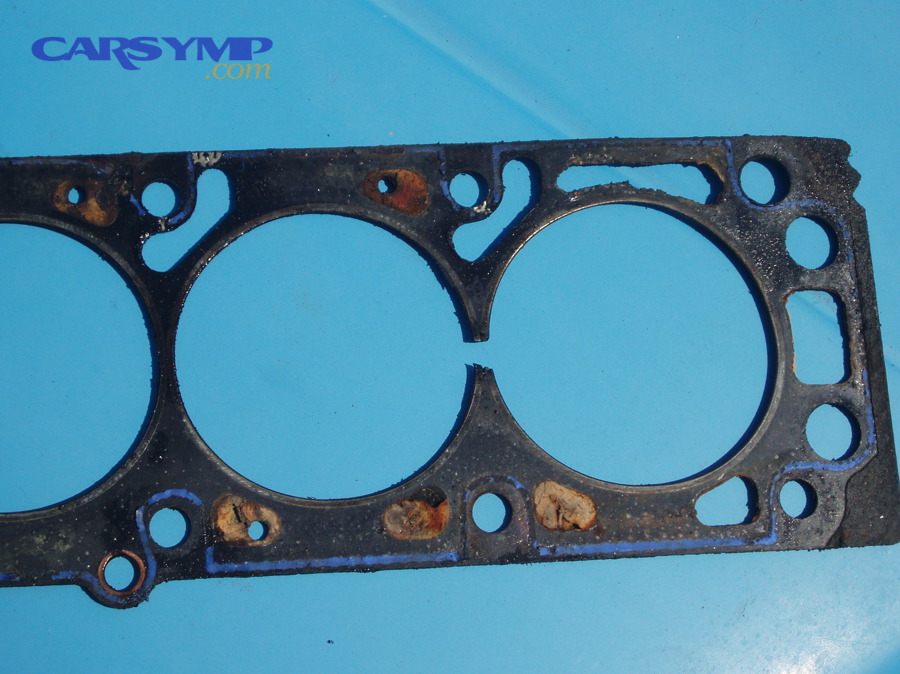
MLS (Multi-Layer Steel): best when surfaces are flat and finish is correct
Choose MLS if:
- You have confirmed flatness
- The head has been resurfaced correctly (if needed)
- Your engine was designed for MLS (many modern engines are)
DIY pitfall: installing MLS on a rough, imperfect surface and assuming sealant will “save it.”
Composite/Fiber: more forgiving for older designs and imperfect finishes (within limits)
Choose composite if:
- The engine originally used composite
- You need a bit more conformability for minor surface imperfections
- You’re restoring or keeping stock
DIY pitfall: using composite on an application that expects MLS behavior and clamp.
OEM vs “equivalent aftermarket”
OEM is safest when you’re unsure about surface condition, gasket thickness, or updated part revisions. Aftermarket can be fine, but your margin is smaller if anything else is imperfect.
A simple selection table (what this table shows)
The table below summarizes which gasket type aligns with common DIY realities—surface condition, tooling, and performance intent.
| Situation (DIY reality) | Best-fit gasket type | Why it fits |
|---|---|---|
| Stock daily driver, surfaces verified flat | OEM / MLS (if designed for it) | Matches factory sealing design |
| Older engine originally composite | Composite / OEM | More conformable to minor finish variation |
| Performance build with controlled machining | MLS (performance-grade) | Handles high cylinder pressure with correct prep |
Evidence (friction & clamp logic): The University of Sheffield thesis quantified friction coefficient shifts with lubrication state, supporting why gasket choice must be paired with correct fastener procedure. (etheses.whiterose.ac.uk)
What post-installation checks prevent coolant leaks, oil contamination, and overheating after a DIY gasket job?
Answer : Post-install validation is a 7-check process—cooling pressure integrity, air purge, oil condition, temperature control, misfire monitoring, re-torque policy (if applicable), and early fluid service—so you catch small issues before they become another overheat and repeat failure.
Moreover, the first 60–200 miles after a head gasket install is when small errors reveal themselves: trapped air, slow seepage, clamp relaxation, or contamination you didn’t fully flush.
Check 1: Cooling system pressure test (cold)
- Pump to cap rating (or spec)
- Watch for pressure drop
- Inspect external leaks (hose joints, thermostat housing, water pump weep hole)
Check 2: Purge air the correct way for your engine
- Use bleed screws if present
- Heater on (as recommended)
- Park on incline if procedure suggests
- Recheck coolant after first heat cycle
Check 3: Monitor oil condition early
- Look for milkiness (emulsion) but remember short-trip condensation can confuse this
- Consider early oil change if there was known coolant contamination
- Watch oil level (coolant in oil can raise level)
Why this matters: glycol contamination can degrade oil behavior; coolant-in-oil testing guidance explains several detection methods and why early identification matters. (spectrosci.com)
Check 4: Control temperature on the first drives
- No hard loads until you confirm stable temps
- Confirm fans cycle normally
- Verify thermostat opens (hose temp change, radiator heat)
Check 5: Scan for misfires and fuel trims
A sealing issue can show as:
- Misfire on startup
- Cooling pressure buildup quickly after cold start
- Unexplained coolant loss
Check 6: Follow the correct policy on re-torque
Most modern TTY bolt procedures do not include re-torque. Some older engines do. Follow the service procedure—don’t guess.
Check 7: Do a “second look” inspection after 2–3 heat cycles
- Look for dried coolant trails
- Sniff for exhaust gases at reservoir (if suspicious)
- Recheck levels
Evidence (contamination sensitivity): According to the same Corrosion Science study (1997), oil resistance changed sharply as glycol contamination rose from 50–150 ppm, reinforcing why small leaks are worth catching early. (sciencedirect.com)
What extra tools, edge-case checks, and cost factors matter most for DIY success?
Answer : There are 4 high-impact “extras” that separate successful DIY head gasket installs from redo jobs: measurement tools (flatness + torque angle), edge-case engine checks (cooling system + head cracks), time/labor realism, and symptom differentiation so you don’t chase the wrong fault.
Besides the core workflow, these “micro” factors are where DIYers either protect their effort—or lose it.

1) Tools that actually change outcomes (not just convenience)
- Quality straightedge + feeler gauge: confirms whether resurfacing is needed
- Torque wrench in the correct range: avoids under/over-torque
- Torque angle gauge: required for many modern procedures
- Thread chaser / tap set: cleans bolt holes safely
- Cooling system pressure tester: helps validate before and after
Cost reality: These tools often cost less than repeating the job once.
2) Edge-case checks that prevent “mystery overheating” after the repair
If your first gasket failed due to overheating, you must find why it overheated—or the new gasket becomes the next victim.
High-value checks:
- Radiator flow restriction
- Water pump condition
- Fan control and relays
- Thermostat quality and correct orientation
- Collapsing hoses under suction
3) Labor time realism and “EGR confusion” (symptom differentiation)
DIY head gasket work is often 10–25+ hours depending on engine layout, rust, and timing system complexity. Your real risk isn’t just time—it’s rushing.
Also, not every rough idle or stalling event after reassembly is a sealing issue. For example, vacuum leaks, connector mistakes, or emissions faults can mimic post-repair drivability problems. That’s where EGR valve repair topics sometimes get mixed into head gasket troubleshooting: a misrouted vacuum line or an emissions component problem can cause rough running that feels “engine-internal.”
If the engine runs poorly after the gasket job, separate mechanical sealing from control/airflow faults:
- Compression/leak-down indicates sealing
- Fuel trims and vacuum readings indicate airflow issues
If you suspect an EGR-related drivability issue, use a simple differential diagnosis: EGR valve stuck open vs closed symptoms can produce very different behavior (stuck open often causes rough idle/stalling; stuck closed often triggers emissions codes and NOx issues more than immediate stalling). In addition, How to test EGR valve operation (vacuum actuation check, scan-tool command test where available, and verifying passage flow) can prevent you from mislabeling a simple airflow fault as a “bad head gasket.” And if you do end up replacing it, planning around EGR valve replacement labor time helps you avoid stacking multiple big jobs blindly.
4) A smarter “redo prevention” checklist (printable mindset)
Before first startup, confirm:
- Correct torque sequence completed (all stages)
- Timing marks verified twice
- Cooling system filled and bled correctly
- No leftover rags/plugs in ports (yes, it happens)
- Oil and coolant are correct and at proper levels
Evidence (why tightening consistency matters): The University of Sheffield thesis shows friction coefficient changes with lubrication state and reports measurable ranges, reinforcing why clamp consistency is a real variable you must manage—not assume. (etheses.whiterose.ac.uk)