


Exhaust smoke can be connected to the EGR system, and you can usually confirm it by matching smoke color + when it appears + drivability symptoms + scan data to a specific failure mode (stuck-open valve, clogged passages, or a leaking cooler). Then, you fix the root cause instead of guessing.
Next, black smoke and white smoke don’t mean the same thing—black usually points to too much fuel or not enough air, while white smoke/steam often points to coolant or water vapor. The EGR system can influence both, but it does so in very specific, predictable ways.
Then, you’ll get a simple, safe diagnostic path you can follow at home: observe → scan → inspect → test → confirm, including what to check first, what numbers matter, and how to avoid the most common DIY mistakes.
Introduce a new idea: the goal isn’t only to stop the smoke today—it’s to choose the correct long-term fix (including EGR valve repair) and prevent repeat clogging, wasted parts, and comebacks.
Is exhaust smoke actually connected to the EGR system? (Yes/No)
Yes—exhaust smoke can be connected to the EGR system because (1) incorrect EGR flow changes combustion stability, (2) carbon buildup can distort air/fuel mixing, and (3) an EGR cooler leak can introduce coolant into the intake/exhaust stream. Next, once you understand why EGR affects combustion, you can predict which smoke patterns it can realistically cause—and which ones usually come from somewhere else.

Can a stuck-open EGR valve cause smoke and rough idle? (Yes/No)
Yes—a stuck-open EGR valve can cause smoke and rough idle because (1) it dilutes fresh air at idle when the engine needs stable combustion, (2) it increases misfire/partial burn risk, and (3) it can trigger fuel-trim corrections that worsen soot under certain loads. Specifically, a stuck-open EGR valve behaves like a controlled vacuum leak plus an internal “exhaust dilution” problem.
When the engine is idling, it wants a clean, predictable air charge. If the EGR valve hangs open, exhaust gas enters when it shouldn’t. That exhaust gas displaces oxygen, slows flame speed, and can make the engine feel like it’s “hunting” or stumbling. On many vehicles, the first symptom is rough idle, then stalling when coming to a stop, especially after highway driving (because the valve may stick after being hot).
Smoke in this scenario is often not the thick “fuel dump” black smoke you’d see from a major injector problem. It’s more likely:
- a darker-than-normal puff during tip-in (light throttle),
- a sputtery idle with occasional haze,
- and a check engine light plus misfire counts.
A practical rule: if you can make the symptom appear at idle and it improves when the EGR is commanded closed (or temporarily blocked for a test—done properly), you’re in EGR territory.
Can a stuck-closed or clogged EGR system cause black smoke? (Yes/No)
Yes—a stuck-closed or clogged EGR system can contribute to black smoke because (1) it can increase combustion temperatures and change injection/timing strategies (diesel especially), (2) it can raise pumping losses and alter air-path behavior, and (3) clogged passages can create uneven cylinder distribution that leads to incomplete burn in some conditions. However, black smoke is more commonly a fueling/airflow issue—so you should treat EGR as a strong suspect only when the pattern fits.
On gasoline engines, a stuck-closed EGR often shows up as:
- pinging/knock on light acceleration,
- surging at cruise,
- and sometimes an emissions-related code (insufficient flow).
On diesel engines, EGR flow plays a bigger role in NOx/soot tradeoffs. If the EGR path is restricted and the engine control strategy compensates in a way that worsens mixture or boost behavior, you can see visible soot (black smoke)—especially under load.
The key is context:
- If black smoke appears mainly under heavy acceleration, think air restriction, boost leak, turbo control, injector overfueling first.
- If black smoke appears with EGR-related drivability symptoms (rough idle after highway, EGR flow codes, sticking valve history), then EGR climbs the list.
Can an EGR cooler failure cause white smoke or steam? (Yes/No)
Yes—an EGR cooler failure can cause white smoke/steam because (1) coolant can leak internally into the EGR flow path, (2) the coolant turns into steam in the combustion/exhaust stream, and (3) the engine may lose coolant without an external leak. More importantly, white steam tied to coolant loss is one of the most “pattern-based” EGR diagnoses you can make.
If the EGR cooler leaks internally, the “smoke” is often:
- white steam that persists after warm-up (not just cold condensation),
- may smell slightly sweet, and
- often correlates with unexplained coolant loss.
A cooling specialist guide notes white steam/smoke and lowered coolant level as key signs of EGR cooler issues. (natrad.com.au) Another heavy-duty focused source describes white smoke as steam created when coolant reaches the exhaust stream. (ambacinternational.com)
Evidence: According to a study by Kunming University of Science and Technology from the Yunnan Key Laboratory of Internal Combustion Engine, in 2024, increasing EGR valve opening decreased NOx emissions while increasing brake-specific fuel consumption, confirming that EGR flow materially changes combustion and engine operating conditions. (pmc.ncbi.nlm.nih.gov)
What does EGR mean, and what does the EGR system do in the engine?
EGR (Exhaust Gas Recirculation) is an emissions-control system that routes a measured portion of exhaust gas back into the intake to lower peak combustion temperature and reduce NOx, using a valve and control strategy calibrated by the ECU. To better understand why smoke can appear when EGR is wrong, you need the “flow path” and the “timing” basics.

At a macro level, EGR is a temperature-management tool:
- Exhaust gas has less oxygen than fresh air.
- Mixing it into the intake charge dilutes oxygen and absorbs heat.
- Lower peak temperature reduces NOx formation, which rises sharply with combustion temperature.
At a micro level, EGR is also a drivability balancing act:
- Too much EGR at the wrong time can cause misfire, stumble, stalling.
- Too little EGR when commanded can trigger codes and, in some engines, spark knock or poor cruising behavior.
How does the EGR valve route exhaust back into the intake?
The EGR valve routes exhaust gas from the exhaust side to the intake side by opening a controlled passage between the exhaust manifold (or an EGR feed pipe) and the intake manifold, allowing metered exhaust flow based on ECU commands. Specifically, the valve is the “gate,” and the passages are the “plumbing” that often clog.
There are two broad designs:
- Vacuum-operated EGR (older designs): vacuum + solenoid controls diaphragm movement.
- Electronic EGR (common modern design): a stepper motor/actuator controls valve position and reports feedback.
Meronymy matters here: people replace the valve but forget the system includes passages, and clogged passages can mimic a “bad valve.”
Why does EGR operate mostly at cruising and not at idle/WOT?
EGR operates mostly at steady cruise because the engine can tolerate dilution there while still maintaining stable combustion; at idle the mixture is sensitive, and at wide-open throttle the engine needs maximum oxygen and clean airflow for power. Meanwhile, the exact “on/off map” varies by engine, which is why scan data (commanded vs actual) is so valuable.
Typical logic:
- Idle: EGR mostly off (stability priority).
- Light/steady cruise: EGR on (NOx reduction priority).
- Heavy load/WOT: EGR reduced/off (power and combustion stability priority).
- Cold start: limited until conditions are right (varies).
If you get EGR flow at the wrong time (stuck open), the engine feels it immediately. If you don’t get EGR flow when expected (restricted flow), the ECU detects it and often sets an insufficient-flow code.
Evidence: According to a study by Kunming University of Science and Technology from the Yunnan Key Laboratory of Internal Combustion Engine, in 2024, increasing EGR opening reduced NOx but increased fuel consumption, supporting the idea that EGR is actively managed by the ECU as a tradeoff between emissions and efficiency. (pmc.ncbi.nlm.nih.gov)
Which exhaust smoke colors are most likely to involve EGR, and which usually point elsewhere?
There are 3 main smoke “types” car owners notice—black, white, and blue—based on what’s entering the exhaust stream: excess fuel/soot (black), water/coolant vapor (white), or oil burning (blue). Next, you’ll use that grouping to place EGR in the right spot: sometimes central, sometimes only a contributor.
This table lists what smoke colors usually indicate and where EGR fits:
| Smoke color | What it usually means | Where EGR fits best | Best “next check” |
|---|---|---|---|
| Black/gray | rich mixture, poor air supply, soot | contributor (diesel), sometimes indirect (gasoline) | air filter, boost leaks, MAF/MAP, injectors |
| White (steam) | condensation, coolant leak, water vapor | strong suspect if EGR cooler equipped | coolant level trend, pressure test, sweet smell |
| Blue | oil burning | rarely EGR as root cause | PCV, turbo seals, rings/valve seals |
What are the most common causes of black smoke, and where does EGR rank among them?
There are 5 common “buckets” of black smoke causes—fueling, airflow restriction, boost control, sensor errors, and EGR-related dilution/flow faults—ranked by how often they match the pattern under load. Specifically, EGR becomes a top suspect when black smoke comes with EGR codes, rough idle after cruise, or known sticking/clogging.
Common black-smoke drivers:
- Overfueling (injector leak, high fuel pressure, tuning issues)
- Not enough air (clogged air filter, intake restriction)
- Boost leak / turbo control issues (low boost = rich soot)
- Sensor misreporting air (MAF/MAP issues causing wrong fueling)
- EGR system problems (especially diesel): incorrect EGR flow can alter combustion and soot behavior
A practical way to rank EGR:
- If smoke is black only when you floor it, start with boost/air/fueling.
- If smoke is black plus you have rough idle/stalling symptoms, EGR jumps up.
What are the most common causes of white smoke/steam, and how do you spot an EGR cooler leak?
There are 4 common causes of white smoke/steam—normal condensation, coolant intrusion, unburned fuel vapor (rare pattern), or additive/regeneration haze—based on whether the smoke persists warm and whether coolant level changes. More specifically, an EGR cooler leak is likely when white steam appears with coolant loss and no external drip.
How to spot the difference quickly:
- Condensation: appears at cold start, fades as exhaust warms, no coolant loss.
- Coolant intrusion (including EGR cooler): persists warm, may worsen under load, coolant level drops.
- Fuel vapor: often smells like fuel, may accompany misfire and hard starts (pattern varies).
- Regen/additive haze (diesel): temporary, often tied to specific events.
A guide notes “white steam or smoke at the exhaust” and “lowered coolant level with no visible leaks” as key EGR cooler indicators. (natrad.com.au)
What smoke patterns can look like “EGR smoke” but aren’t?
There are 3 common false positives—cold condensation, DPF regeneration haze (diesel), and oil-burning that looks gray/white in certain light—based on timing, smell, and persistence. However, you can rule most of them out with a simple timeline and a coolant/oil level trend.
Quick rules that prevent misdiagnosis:
- If it disappears warm and you have no fluid loss: likely condensation.
- If it appears during a regen event and clears: likely regen haze.
- If oil level drops and smoke is bluish at idle/overrun: likely oil burning.
Evidence: According to a study by Kunming University of Science and Technology from the Yunnan Key Laboratory of Internal Combustion Engine, in 2024, changing EGR valve opening measurably changed combustion outcomes (NOx down, fuel use up), reinforcing that EGR changes the conditions that can influence visible smoke under certain operating states. (pmc.ncbi.nlm.nih.gov)
How can you diagnose EGR-related smoke at home before replacing parts?
You can diagnose EGR-related smoke at home using a 5-step workflow—observe, scan, inspect, test, and confirm—so you identify the failure mode (stuck valve, clogged passages, cooler leak) before spending money on parts. Then, you’ll avoid the #1 mistake that drives unnecessary replacements: confusing “EGR presence” with “EGR root cause.”
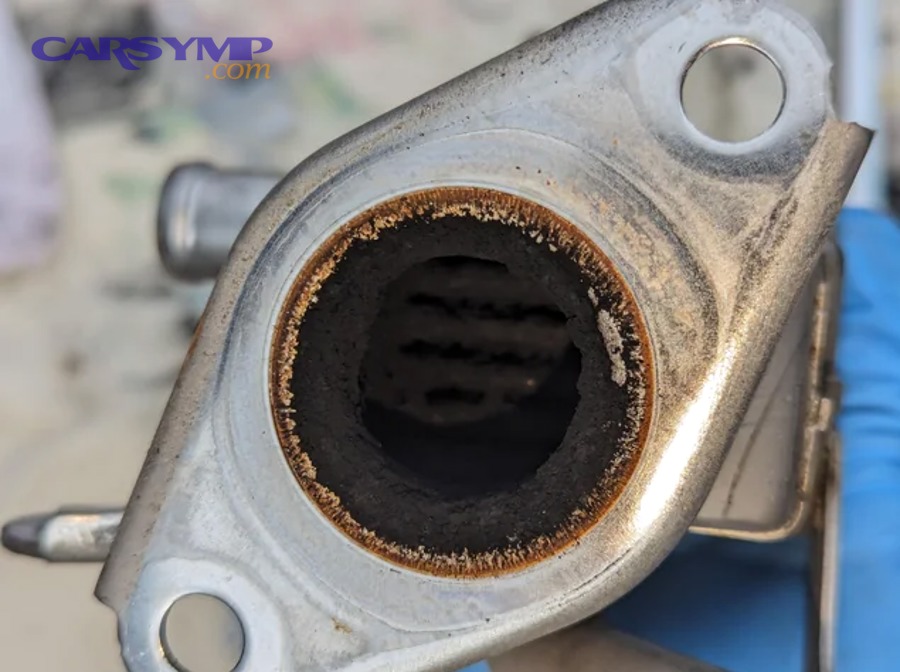
What quick observations confirm the pattern: when does the smoke appear and what does it smell like?
The quickest confirmation comes from three observations: when the smoke happens, what it smells like, and what the engine feels like at the same moment. For example, EGR faults often show strong “timing” behavior—worse at idle after cruise, or worse at steady light load.
Use this mini checklist:
- When: cold start only vs warm idle vs acceleration vs steady cruise
- Smell: sweet (coolant), acrid/sooty (rich), oily (burning oil), sharp fuel smell (unburned fuel)
- Feel: rough idle, stalling at stops, hesitation at light throttle, knock/ping under light load
If the smoke happens with rough idle and stalling, that’s a strong EGR-stuck-open pattern.
Which OBD-II codes and live-data clues suggest an EGR problem?
There are 3 common diagnostic signal groups for EGR problems—EGR flow/position codes, fuel-trim/misfire side effects, and “commanded vs actual” mismatches—based on what the ECU expects the EGR system to do. More importantly, codes tell you what the ECU saw, not automatically what part to replace.
Common clues:
- EGR insufficient flow (often from clogging or a valve that can’t open)
- EGR excessive flow (often from a valve stuck open)
- Position/response faults (electronic EGR not tracking command)
An explanation of insufficient EGR flow describes it as the system not creating enough recirculation and needing diagnosis rather than ignoring it. (autozone.com) Another description of P0401 notes it is logged when the module detects insufficient EGR flow. (edmunds.com)
Live-data approach (simple version):
- Look for EGR command % and EGR position % (if supported).
- Compare against idle vs cruise behavior.
- Watch short-term fuel trim changes when EGR is commanded on/off (gasoline).
- On diesel, watch boost behavior and any related air-path signals your scanner supports.
How do you check an EGR valve and passages for carbon clogging safely?
You check for carbon clogging by inspecting the valve seat, pintle movement (if accessible), and the EGR passages for thick soot that restricts flow—while protecting sensors and replacing disturbed gaskets to prevent vacuum/exhaust leaks. Next, this is where DIY pitfalls and gasket replacement tips matter, because a small sealing mistake can create new symptoms.

Safe inspection priorities:
- Work on a cold engine (burn risk + warped parts risk).
- Photograph hose routing and connector positions before removal.
- Inspect for:
- thick carbon at the valve port,
- restricted or fully blocked passageways,
- brittle vacuum lines (if equipped),
- loose fasteners or soot tracks indicating leaks.
DIY pitfalls to avoid:
- Don’t gouge sealing surfaces. Scratches cause leaks.
- Don’t soak electronic actuators in harsh chemicals.
- Don’t reuse a crushed gasket if it’s visibly deformed—small leaks can mimic “bad EGR.”
This is also where you decide whether you’re heading toward EGR valve repair (fixing function and restoring sealing) or replacement.
How do you distinguish EGR issues from fueling/air/turbo problems in 10 minutes?
EGR wins as the likely culprit when symptoms peak at idle/light cruise, fueling wins when trims scream “rich,” and turbo/airflow wins when smoke and power loss spike under load with low boost—so the fastest separation is timing + scan context. However, you’ll get the best answer by comparing two conditions: idle after cruise vs loaded acceleration.
Use this quick comparison grid:
- EGR-stuck-open: rough idle, stalling at stops, may improve with EGR commanded closed, often worse after warm cruise.
- Overfueling/injector: black smoke strongly under load, fuel smell, sometimes hard starts.
- Boost leak/turbo control: hiss/whistle, low boost, black smoke under load, sluggish acceleration.
- Air restriction: black smoke + low power, dirty air filter, intake restriction evidence.
If you run a short road test and the smoke only appears on heavy throttle, EGR is usually not your first bet.
Evidence: According to a study by Kunming University of Science and Technology from the Yunnan Key Laboratory of Internal Combustion Engine, in 2024, increased EGR opening reduced NOx but increased fuel consumption, demonstrating why comparing operating states (commanded EGR on/off) can materially change engine behavior and help diagnosis. (pmc.ncbi.nlm.nih.gov)
What fixes work for EGR-related smoke, and when is cleaning vs replacement the right call?
Cleaning wins for carbon-sticking, replacement wins for failed electronics or damaged housings, and a cooler repair/replacement is optimal when there’s coolant loss and persistent white steam—so the “best fix” depends on the specific failure mode, not the symptom alone. Moreover, this is where most wasted money happens—because people skip the decision logic and jump straight to parts.
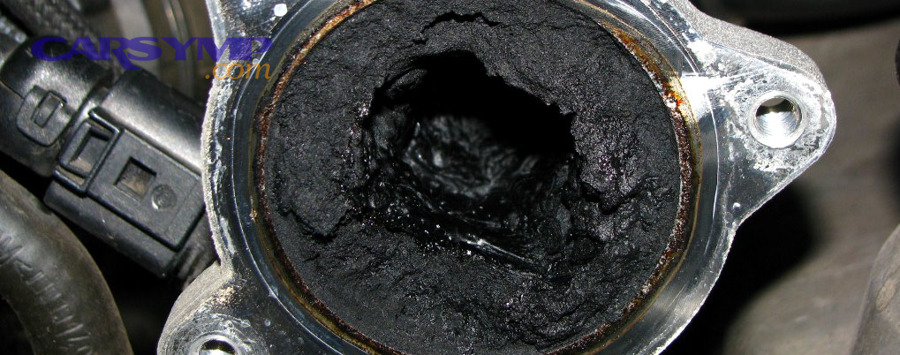
This section also naturally includes the question many owners search for: Cleaning an EGR valve vs replacing it—because both can stop smoke, but only one is correct long-term for your specific fault.
Is cleaning the EGR valve/passages enough, or do you need replacement?
Cleaning wins when the valve is mechanically sound but carbon-stuck, while replacement wins when the actuator/position feedback fails or the valve body is damaged—so you choose based on movement, command response, and repeatability after cleaning. Specifically, you’re testing “does it move correctly and seal correctly” after service.
Cleaning is usually enough when:
- the pintle/seat is carboned up,
- the valve was sticking intermittently,
- passages are partially restricted,
- and electronic control still responds normally.
Replacement is usually better when:
- the valve doesn’t respond to commands,
- position feedback is erratic,
- the housing is cracked or warped,
- or the problem returns quickly after thorough cleaning.
Pro tip: if you clean the valve but ignore clogged passages, you can still get “insufficient flow” behavior. That’s why many successful repairs include both valve cleaning and passage restoration.
If the EGR cooler is leaking, what are the safe repair options?
There are 3 safe repair options for a leaking EGR cooler—confirm the leak with cooling-system testing, replace the cooler with proper seals, and restore coolant quality/bleeding—based on preventing hydrolock, overheating, and repeat failure. More importantly, don’t treat persistent coolant loss as “just a little smoke.”
Signs that push you toward cooler repair:
- coolant dropping with no external leak,
- white steam that persists warm,
- possible overheating episodes.
A cooling specialist resource lists white steam/smoke and lowered coolant level among key EGR cooler symptoms and recommends prompt checking. (natrad.com.au)
What should you do after an EGR repair to confirm the smoke is gone?
After EGR repair, you should confirm success by reproducing the original conditions, clearing codes and completing readiness checks, and rechecking coolant and drivability over a few drive cycles—so you verify the fix rather than assuming it. Then, you lock in confidence before the issue becomes intermittent again.
Post-repair confirmation checklist:
- Clear codes (or note them first), then run a controlled road test.
- Recreate the original trigger:
- idle after highway exit,
- steady cruise,
- or a specific hill/load event.
- Monitor:
- smoke presence/absence,
- idle stability,
- coolant level trend (if cooler suspected),
- and any return of EGR-related codes.
If you’re writing content for a car-owner audience, this is the moment to mention an EGR valve repair cost estimate range carefully: costs vary by engine layout and whether you’re cleaning vs replacing a valve vs replacing a cooler. Even when the part is affordable, labor can climb if access is tight.
How can car owners prevent EGR clogging from coming back?
Car owners can reduce repeat EGR clogging by controlling soot and oil vapor sources, using correct maintenance intervals, and addressing intake/PCV issues early—because most EGR buildup is a repeat process, not a one-time event. In short, prevention is about reducing what the EGR system has to digest.
High-impact prevention habits:
- Fix oil consumption and PCV issues (oil vapor + soot = heavy deposits).
- Use quality oil and stick to change intervals.
- Ensure the air filter and intake tract stay sealed (unfiltered air accelerates deposit formation).
- If the vehicle is diesel, keep aftertreatment healthy (poor regen strategy can increase soot events).
- Avoid “parts-cannon” fixes that ignore root causes.
If you publish this on Car Symp, this prevention section is where readers stay longer—because it answers the real follow-up: “How do I stop this from happening again?”
Evidence: According to a study by Kunming University of Science and Technology from the Yunnan Key Laboratory of Internal Combustion Engine, in 2024, increasing EGR opening reduced NOx but increased fuel consumption, highlighting that EGR strategy is a controlled tradeoff—and that keeping the system flowing correctly matters for stable long-term operation. (pmc.ncbi.nlm.nih.gov)
What else can mimic “EGR-related smoke,” and how is it different?
EGR wins as the cause when smoke aligns with EGR timing and EGR-specific signals, injector/fuel problems are best when black smoke tracks load and fueling data, and head-gasket/coolant problems are optimal when coolant loss and pressure symptoms dominate—so the fastest path is symptom timing + fluid trend + scan context. Besides, this “lookalike” section prevents the most common bad outcome: fixing EGR and still having smoke because the real cause lived elsewhere.
EGR vs injector or fuel pressure problems: which signs separate them fastest?
EGR wins when idle/cruise behavior is unstable, injector/fuel pressure wins when black smoke and fuel smell intensify under load, and sensor-driven fueling errors win when trims are extreme—so the fastest separator is load-response plus fuel-trim direction. To illustrate, two vehicles can both show black smoke, but only one is truly “EGR-caused.”
Fast separators:
- Injector/fuel pressure: black smoke mostly under acceleration, fuel smell, sometimes hard start.
- EGR stuck open: rough idle/stalling pattern, cruise surge, may improve when EGR closes.
- EGR clogged (insufficient flow): knock/surge at light load, EGR flow code pattern.
EGR vs turbo/boost leak: why do both cause power loss and smoke?
EGR wins when dilution/timing causes instability at light load, turbo/boost leak wins when low boost under load causes soot and sluggish acceleration, and intake restriction wins when airflow is limited across the range—so the best separator is boost behavior under demand. However, both can stack: a boost issue can increase soot that accelerates EGR clogging.
Quick checks:
- Boost leak often has audible hiss and oil residue at joints.
- EGR issues often have a distinct “idle after cruise” story.
- If you have scan access, compare requested vs actual boost (vehicle-dependent).
EGR cooler leak vs head gasket leak: how do you tell them apart?
EGR cooler leak wins when white steam pairs with coolant loss but lacks classic combustion-gas cooling-system symptoms, head gasket wins when overheating, pressurized hoses, and combustion-gas indicators show up—so the separator is cooling-system behavior over time. More importantly, don’t assume all white steam is head gasket failure.
Patterns that lean head gasket:
- overheating episodes,
- bubbling in coolant reservoir,
- persistent pressure in hoses when cold (after sitting),
- cross-contamination (oil/coolant) in some failures.
Patterns that lean EGR cooler:
- white steam with coolant loss,
- often no external leak,
- and an EGR-cooler-equipped engine architecture.
A cooling guide highlights white steam/smoke and lowered coolant level as notable EGR cooler symptoms. (natrad.com.au)
Diesel-only nuance: is it EGR smoke or DPF regeneration haze?
Yes—DPF regeneration haze can look like “EGR smoke,” and you separate them because (1) regen haze is temporary and event-linked, (2) it often resolves on its own after the cycle, and (3) it typically doesn’t cause ongoing rough idle or persistent coolant loss. In addition, regen haze is usually a “timed episode,” while EGR faults are “repeatable under the same conditions.”
Practical separators:
- Regen haze: short-lived, may happen after extended driving, clears after completion.
- EGR fault: repeats reliably (idle after cruise, steady light load, or specific throttle transitions).
- Cooler leak: white steam persists and coolant drops.
Evidence: According to a study by Kunming University of Science and Technology from the Yunnan Key Laboratory of Internal Combustion Engine, in 2024, EGR valve opening changes produced measurable emissions and efficiency shifts, supporting why controlled comparisons (event-based haze vs repeatable control-fault behavior) are effective for diagnosing diesel smoke complaints. (pmc.ncbi.nlm.nih.gov)