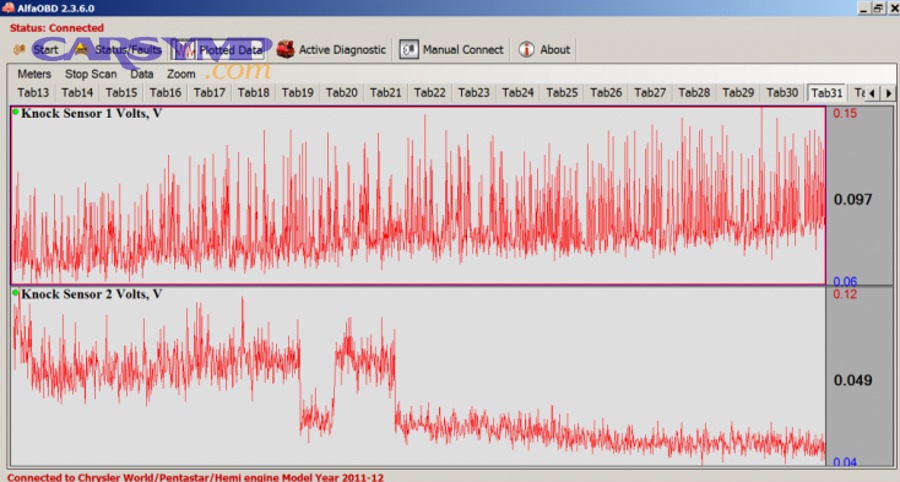
If you want to diagnose knock sensor issues using scan data, focus on one thing first: does the ECU consistently pull ignition timing (knock retard) under repeatable load conditions—and does that behavior make sense when you look at RPM, load, fuel trims, and misfire data?
Next, you’ll need to know which PIDs actually matter for knock diagnosis, because generic OBD-II scanners often don’t show “knock sensor voltage,” and different tools rename the same concepts (KR, spark retard, ignition advance) in confusing ways.
Then, you have to separate real knock vs false knock (noise-induced timing pull) so you don’t replace parts that are working and miss the real cause—like lean fueling, overheating, carbon buildup, or mechanical noise.
Introduce a new idea: the fastest way to get confident is to follow a repeatable logging routine, learn what “normal” looks like on your engine, and only then decide whether you’re dealing with true detonation, a circuit/mounting issue, or something else entirely.
What does scan data actually tell you about knock sensor operation and knock control?
Scan data tells you whether the ECU is detecting knock-related vibration and responding by reducing spark advance (often shown as knock retard), which is the engine computer’s primary way to protect the engine from damaging detonation. More importantly, live data becomes useful only when you add context—load, RPM, temperatures, and fueling—so you can judge whether timing changes are logical or suspicious.
What is “knock retard,” and why is it the most important PID for diagnosing knock?
Knock retard (KR) is the number of ignition degrees the ECU removes to stop knock, and it’s the most important PID because it directly shows the ECU’s protective reaction rather than guessing from sound alone. Specifically, KR is not a “knock sensor reading” by itself—it’s the ECU’s decision after filtering vibration signals and comparing them to knock thresholds.
To interpret KR correctly, treat it like a response signal:
- Small, brief blips (for example, a quick 0–2° event) can occur during a transient (tip-in, gear change, rough road) and may not indicate harmful knock.
- Sustained KR under steady load (for example, repeated 4–8°+ events during a similar acceleration pull) is much more meaningful.
- KR with no matching load context is basically noise—always verify load, RPM, and throttle position when KR appears.
A practical mindset: KR answers “Is the ECU pulling timing right now?” while the rest of your PIDs answer “Does it make sense that it’s pulling timing?”
What is “spark advance,” and how do you interpret it alongside knock retard?
Spark advance is the ignition timing the engine is running at (before and after corrections), and you interpret it with KR by looking at whether timing drops coincide with knock control events or other protective strategies. However, spark advance can change for many reasons besides knock—like intake air temperature, coolant temperature, torque management, throttle closure, or traction control—so you need to correlate.
Here’s the simplest interpretation rule:
- If spark advance drops and KR rises at the same moment under load, you likely have knock control intervention.
- If spark advance drops without KR, look for other control reasons (high IAT/ECT, torque management, limp strategy).
- If KR spikes but spark advance barely moves, your tool may be showing filtered/averaged values or you may be logging too many PIDs at once (slow sample rate).
Which live data PIDs should you monitor to diagnose knock sensor issues correctly?
There are two main PID groups you should monitor—core PIDs that almost any OBD-II scanner can access, and enhanced knock-control PIDs that often require an OEM-level or manufacturer-aware tool. More importantly, you choose PIDs based on one criterion: they must explain why the ECU would pull timing right now.
Which “core” PIDs are required for a reliable knock diagnosis with a generic OBD-II scanner?
Generic OBD-II tools usually can’t show raw knock sensor output, so your core set must recreate the conditions that cause (or mimic) knock.
Below is a quick reference table of core PIDs and what you’re looking for; it helps you read scan data like a story rather than a bunch of numbers.
| Core PID (generic OBD) | Why it matters for knock diagnosis | What “normal” tends to look like | What raises suspicion |
|---|---|---|---|
| RPM | Knock is load- and speed-dependent | Smooth rise with throttle | KR appears at random RPM with no load pattern |
| Engine load / calculated load | Knock usually appears under higher cylinder pressure | Load increases predictably with throttle | KR spikes at low load or on bumps |
| Throttle position | Helps identify tip-in transients | Stable during steady pulls | KR only at rapid tip-in / tip-out |
| MAP/MAF (if available) | Indicates airflow and cylinder filling | Tracks load changes | Unstable airflow readings (possible sensor issues) |
| ECT (coolant temp) | Hotter engines knock easier | Stable after warm-up | Overheating correlates with KR |
| IAT (intake air temp) | Hot air reduces knock margin | Reasonable for ambient/heat soak | High IAT correlates with KR under load |
| STFT/LTFT | Lean conditions can cause knock-like behavior | Trims near normal range | Large positive trims under load (lean) |
| Misfire counters (if available) | Misfires can feel like knock and trigger noise | Near zero when healthy | Misfire spikes during “knock” complaint |
A key tip for DIY logging: log fewer PIDs at a higher rate. A slow log that misses transient KR events can push you into the wrong conclusion.
Which “enhanced” PIDs make diagnosis faster on OEM-level tools or tuning/logging software?
Enhanced data can reduce guesswork because it moves you closer to how the ECU’s knock strategy actually works, not just its external symptoms.
If your tool supports it, look for:
- Knock retard (bank/cylinder specific): shows whether one side is reacting more than the other.
- Knock learn / octane adjust / learned spark: shows whether the ECU is adapting over time.
- Spark source / spark modifier: indicates why timing is being removed (knock vs temperature vs torque management).
- Commanded equivalence ratio / commanded AFR (where available): helps detect lean command under load.
- Fuel system status / open loop vs closed loop: knock often shows differently depending on fueling mode.
These PIDs can also speed up engine knocking diagnosis because they let you isolate patterns (one bank, one cylinder, one operating region) instead of “it knocks sometimes.”
Is there a standard OBD-II PID for knock, or do you need manufacturer-specific data?
No, there is generally not a universally standardized generic OBD-II PID that directly reports knock sensor output, so you often need manufacturer-specific/enhanced data (or custom PIDs) to see deeper knock information. However, even without a direct knock PID, you can still diagnose effectively by combining KR, spark advance, load, trims, and misfire context—because the ECU’s response shows up in the data even when the raw signal doesn’t.
How do you run a scan-data test for knock sensor issues step by step?
A scan-data knock test is a repeatable logging method with 6 steps—setup, warm-up, baseline idle/cruise, controlled load pulls, event marking, and retest—that produces logs you can interpret confidently instead of guessing. To begin, you want a safe, consistent routine so your conclusions come from patterns, not one-off spikes.
How do you set up your scanner and logging session so the data is trustworthy?
You set up trustworthy logging by reducing variables and increasing sample quality.
Use this checklist:
- Warm the engine fully (stable coolant temp). Cold engines behave differently.
- Pick a short PID list (KR, spark advance, load, RPM, throttle, IAT, ECT, trims, misfires).
- Use graph view if possible so you can see timing and KR relationships.
- Log notes: “hill pull,” “2nd gear roll,” “AC on,” “bad road,” etc.
- Repeat the same test route so you can compare apples to apples.
If your scanner supports it, set a higher refresh rate or “fast sampling” mode. Live data is most valuable when it captures quick changes, not when it averages them away.
What driving conditions should you use to reproduce knock and make the data meaningful?
You should reproduce knock under moderate, safe load where cylinder pressures rise but you’re not forcing risky, high-stress operation.
A safe approach many DIYers use:
- A steady roll-on acceleration from low-to-mid RPM in a higher gear (gentle uphill if available).
- Avoid full-throttle “hero pulls” on public roads—your goal is repeatability, not peak power.
- Keep variables consistent: same fuel, similar ambient temps if possible, same route.
Then, look for this pattern: load rises → KR rises → spark advance drops → KR falls when load stabilizes or is reduced. If you cannot reproduce the pattern across multiple pulls, the issue may be transient noise (false knock) or logging limitations.
Can you do a safe “tap test” and does it prove the knock sensor is good?
Yes, you can do a cautious tap test to see if the ECU reacts, but no, it does not prove the entire knock sensor system is “good” because false positives, filtering logic, and operating conditions can mislead you. However, the tap test can still be useful as a quick sanity check if you use it carefully.
Practical guidance:
- Use a light tap on a safe area (never strike sensors, wiring, fuel lines, or brittle components).
- Watch whether KR changes briefly and whether timing reacts.
- Don’t over-trust the result—some ECUs ignore “knock” if it doesn’t align with combustion timing windows.
What does “normal” knock-related scan data look like on a healthy engine?
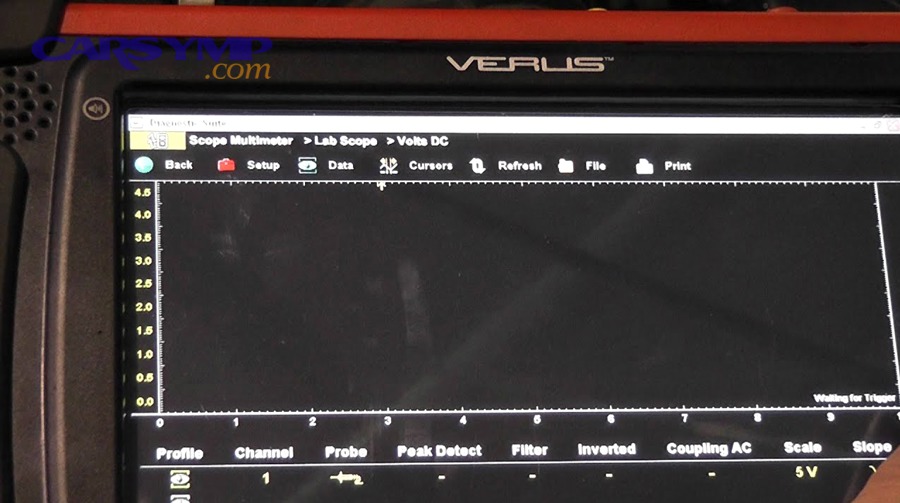
Normal knock-related scan data looks like stable spark advance with little-to-no sustained knock retard during steady conditions, plus predictable changes in timing driven by load and temperature. Then, you judge “normal” by comparing repeatable pulls rather than chasing one spike.
Is knock retard always bad, or can small spikes be normal?
No, knock retard is not always “bad,” because small, brief KR spikes can occur normally from transient conditions, sensor noise, or momentary combustion variability—especially during tip-in or rough road events. However, repeated or sustained KR during consistent moderate load is more concerning because it suggests the ECU is regularly encountering knock-like signals under real combustion pressure.
A practical DIY threshold is pattern-based, not a single number:
- Not a big deal: brief blips that don’t repeat on the same pull.
- Needs investigation: KR that repeats at the same RPM/load region.
- Stop and protect the engine: heavy KR with drivability symptoms, overheating, misfires, or audible pinging.
What scan patterns suggest the knock control system is working correctly?
A working system shows cause-and-effect that makes mechanical sense.
Look for these “healthy” patterns:
- KR rises briefly under a load event and then returns toward zero as the ECU stabilizes combustion.
- Spark advance reduces in response to KR and then gradually returns as the event passes.
- Fuel trims remain reasonable, and misfire counters do not spike during normal driving.
- Changes are repeatable and proportional: heavier load tends to create stronger knock-control responses than light cruise.
On the other hand, if you see KR jumping around without load context, your “knock” might actually be logging artifacts, electrical noise, or mechanical vibration unrelated to combustion.
How do you tell real knock from false knock using scan data?
Real knock vs false knock becomes clear when you compare repeatability, load correlation, and supporting PIDs, because real knock tracks combustion stress while false knock tracks noise events. More specifically, this is the core decision point that prevents expensive, wrong repairs.
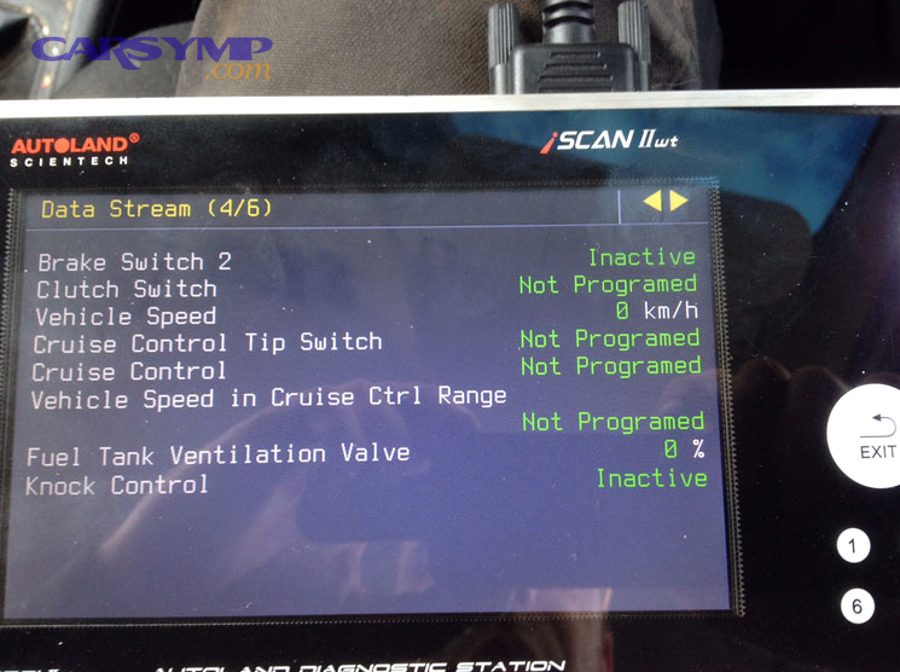
Real knock vs false knock: what are the scan-data signatures of each?
Real knock typically appears as:
- KR increases during moderate-to-high load and often within a specific RPM band.
- Spark advance reduction correlates tightly with KR.
- The event repeats on similar pulls, especially with similar fuel/temperature.
False knock (phantom knock) often appears as:
- KR spikes during bumps, gear changes, driveline lash, or noisy mechanical events.
- KR appears at low load or at random RPM points with no consistent pattern.
- Spark advance changes may not align cleanly, or the changes appear “jerky” with other noise-inducing events.
If you suspect false knock, try a controlled test on a smooth road at steady load and compare it to a rough road segment. If KR follows the roughness more than the load, that’s a clue you’re dealing with vibration noise.
Knock sensor issue vs fuel quality problem: how can scan data separate them?
A fuel-quality knock problem usually improves when you remove the stressor (fuel/combustion conditions), while a knock sensor issue often persists as erratic or implausible reactions.
Use a practical comparison:
- Fuel-quality related knock: KR tends to reduce after higher-octane fuel, cooler IAT, or reduced load; it is more “combustion logical.”
- Sensor/noise-related knock: KR doesn’t respond predictably to fuel changes and may appear unrelated to load or temps.
If you have safe access to different fuel (and your vehicle supports it), an octane change can be a useful diagnostic variable—but don’t treat it as the only proof.
Knock vs misfire: how do misfire counters and fuel trims change your conclusion?
Misfires can feel like knock and can also generate vibration that confuses knock detection, so you must treat misfire counters and trims as your “reality check.”
Here’s how they shift your conclusion:
- If misfire counters rise during the event, investigate ignition (plugs/coils), fueling, or compression before blaming knock sensors.
- If fuel trims go strongly positive (lean), the engine may be running lean enough to increase knock tendency—meaning the knock response is real, but the root cause is fueling/air leaks.
- If trims and misfires are stable, and KR still repeats at the same load/RPM, knock becomes a more likely root condition.
This is where you naturally connect to Preventing knock with maintenance: fresh plugs, clean induction, correct cooling performance, and solid fueling reduce the conditions that force the ECU into constant timing pull.
Does scan data point to the sensor, the wiring, or something else?
Scan data can point to the right culprit by showing plausibility: a real knock problem behaves logically with load and temperatures, while wiring/connector problems behave erratically and often create impossible patterns. Meanwhile, your best results come from treating diagnosis as a decision tree rather than a guess.
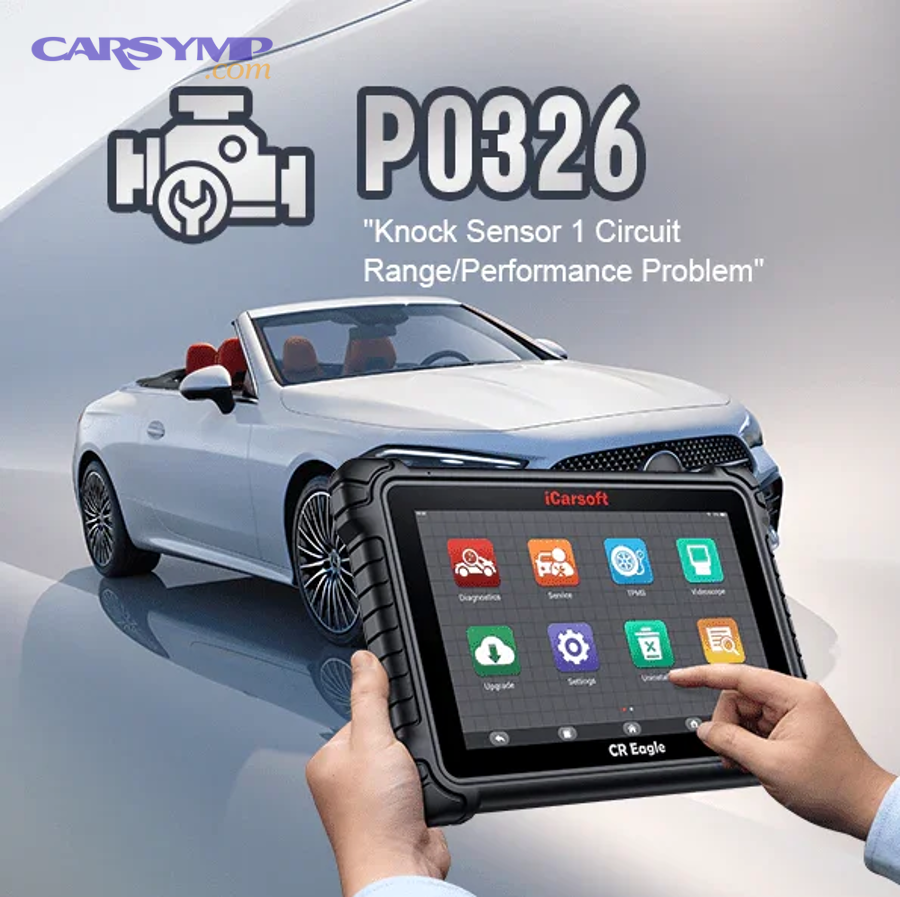
If you have a knock sensor circuit code, does that mean the sensor itself is bad?
No, a knock sensor circuit code does not automatically mean the sensor is bad, because wiring damage, connector corrosion, poor mounting torque, harness routing, and even water intrusion can trigger the same code path. However, the presence of a circuit code does raise the odds that you have an electrical or signal plausibility issue rather than simple fuel-quality knock.
A practical DIY workflow:
- Confirm the exact DTC and freeze-frame context (RPM/load/ECT).
- Inspect connector condition and harness routing (abrasion, oil saturation, broken clips).
- Use scan data to see whether KR behavior is plausible under load, or random and unrelated.
How do you use bank-to-bank or cylinder-to-cylinder comparisons to pinpoint the problem?
Bank-to-bank comparison is powerful because true combustion knock often affects both sides similarly under similar conditions, while faults or noise sources often localize.
If your tool supports bank or cylinder granularity:
- If one bank shows consistently higher KR in the same conditions, suspect localized causes: fuel injector imbalance, hot spots, carbon deposits, cooling differences, or a sensor/mount issue on that bank.
- If one cylinder shows abnormal activity (advanced tools), suspect localized combustion conditions.
- If both banks behave similarly, zoom out: fuel quality, temperatures, lean conditions, or general engine stress become more likely.
According to a study by KTH Royal Institute of Technology from the School of Industrial Engineering and Management, in 2023, experimental testing on inline engines reported that misfire events could be effectively detected in all cylinders using two knock sensors, and that the most effective sensor locations differed depending on the specific event being detected.
What scan-data patterns suggest a wiring/connector issue rather than true knock?
Wiring/connector issues tend to create inconsistent, non-physical behavior.
Common scan-data clues include:
- KR spikes at idle with stable RPM and low load, especially if they appear and disappear randomly.
- KR events that correlate with electrical load changes (fans, AC clutch) more than engine load.
- Impossible combinations, like big KR without any meaningful load or temperature stress.
- Intermittent problems that appear after rain, washing, or heat soak.
If you see these patterns, prioritize inspection and wiring integrity before parts replacement.
What should you do after you interpret the scan data—repair, retest, or escalate?
You should take one of three actions—repair the likely cause, retest with the same logging routine, or escalate to an OEM-level diagnosis—based on whether your logs show true knock, false knock, or a circuit fault pattern. In short, your scan log should guide the next step, not your intuition.
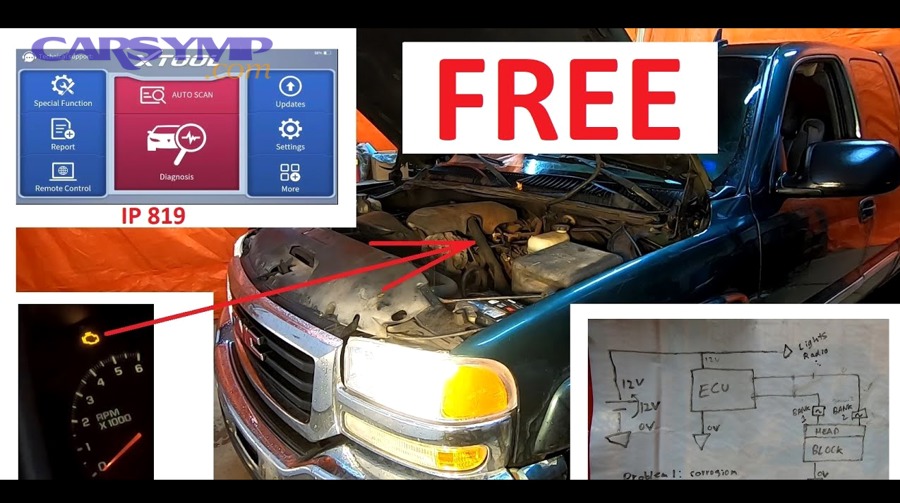
Which fixes should you try first if scan data suggests knock but no circuit fault?
Start with fixes that reduce knock tendency without guessing at sensors:
- Fuel and combustion basics: ensure correct fuel grade, avoid stale fuel, verify no contaminated fuel.
- Ignition maintenance: worn plugs raise misfire/combustion variability; correct plug type and gap matter.
- Cooling performance: overheating and high IAT reduce knock margin; clean radiator, verify fan operation.
- Air/fuel integrity: vacuum leaks and unmetered air create lean conditions; check intake plumbing.
- Carbon buildup management: heavy deposits can raise compression and hot spots.
This is where Preventing knock with maintenance becomes practical: consistent service reduces the conditions that force the ECU into timing pull and makes your scan data easier to interpret.
Also, don’t ignore lubrication-related noise that can masquerade as knock: Low oil level and oil pressure knock causes include inadequate bearing lubrication and increased mechanical noise, which can sound like knock and create vibration that confuses diagnosis—especially if an oil warning light or pressure reading is abnormal.
Which fixes apply when scan data suggests a sensor circuit or mounting/torque problem?
If your patterns look like a signal integrity issue, prioritize:
- Connector cleaning and reseating (look for oil intrusion, corrosion, broken locks).
- Harness inspection for rubbing, pinched sections, or melted sheathing near hot components.
- Verify proper mounting condition where accessible: clean mating surface, correct torque procedure, correct sensor type.
- Replace the sensor only when you have evidence that the circuit and mounting are correct but the behavior remains implausible.
A common DIY mistake is replacing the knock sensor first because it’s named in the code—then discovering the real culprit was wiring damage or a loose connector.
When should you stop DIY and get an OEM-level scan or technician diagnosis?
Yes, you should escalate when the data suggests high risk or when your tool can’t access the PIDs needed to decide correctly, for three main reasons: engine safety, diagnostic completeness, and cost control. More importantly, escalation is a smart step when:
- You have sustained KR with drivability issues, overheating, or repeated misfires.
- You can’t reproduce the event safely or consistently.
- Your tool lacks enhanced PIDs and you can’t separate knock control from torque management.
- You suspect internal mechanical issues (bearing noise, compression problems) where continued driving risks engine damage.
Which knock-related PIDs and logging features vary by vehicle and scan tool—and how do you work around limitations?
There are four main categories of variation—PID availability, PID naming, logging speed, and knock strategy transparency—and you can work around them by simplifying logs, using enhanced data when available, and validating patterns across repeatable tests. Besides, understanding tool limits prevents you from “over-reading” one number.
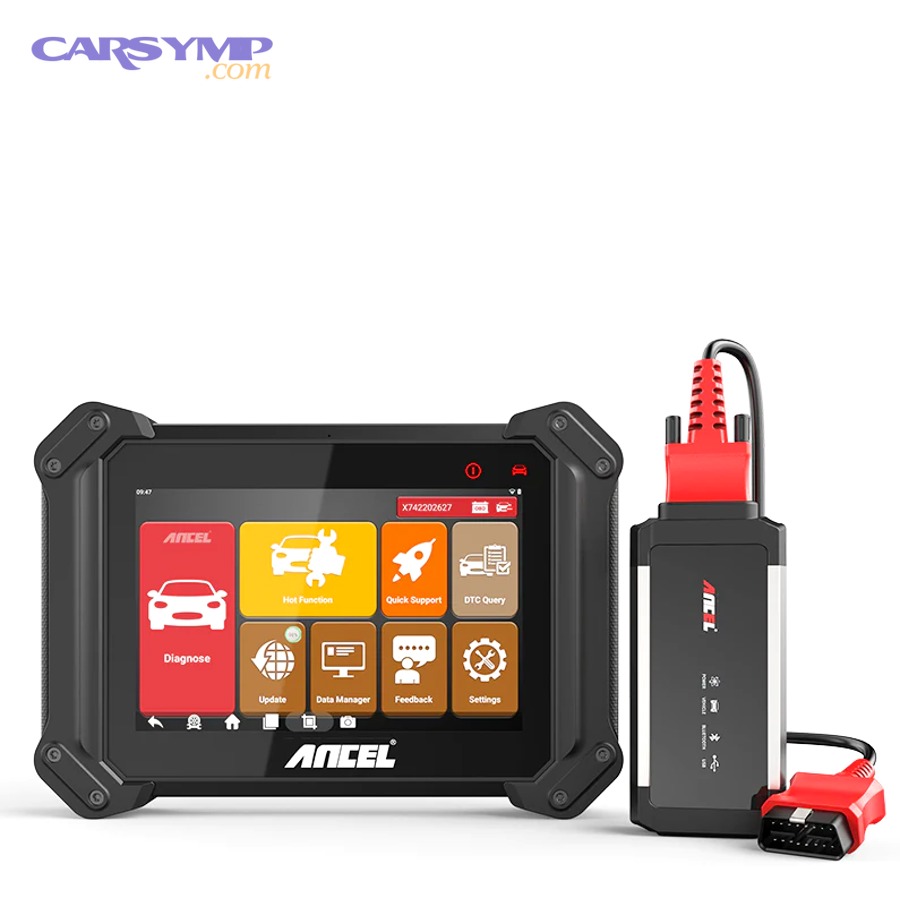
Generic OBD-II vs OEM enhanced data: what can you see, and what is often hidden?
Generic OBD-II usually shows the ECU’s outputs and context (spark advance, load, trims), but OEM enhanced data may show the ECU’s internal knock logic (per-cylinder knock, knock learn, spark modifiers).
Typical differences:
- Generic OBD-II: Great for “what happened” and “under what conditions,” weaker for “which cylinder/bank” and “what internal threshold triggered it.”
- OEM enhanced: Better for pinpointing a cylinder/bank trend and understanding why spark was modified.
If you’re stuck on generic OBD, your workaround is to increase repetition: run the same pull several times and look for consistent relationships among KR, spark advance, load, and temperatures.
Do you need custom PIDs (Mode $22), and how do you confirm you’re logging the right parameter?
No, you don’t always need custom PIDs, but yes, you may need them if your vehicle hides knock-related parameters behind manufacturer-specific data blocks and your diagnostic question requires that detail. To better understand whether you’re logging the right thing, use “behavior validation”:
- KR should generally increase under higher load and reduce when load drops.
- If a “knock” PID changes wildly at idle with no load changes, it may be mislabeled or scaled oddly.
- Compare the PID behavior to a known event (gentle load change) to see if it responds logically.
When a parameter is suspect, reduce your PID list and retest; sometimes “bad data” is just a slow refresh rate masquerading as randomness.
What are the rare causes of “phantom knock,” and how do they show up in logs?
There are four common phantom knock categories—external vibration, internal mechanical noise, drivetrain events, and installation/sensor location effects—and they often show up as KR that doesn’t correlate with combustion stress.
Examples:
- Loose heat shields, brackets, or exhaust contact points: KR spikes on bumps or certain RPM harmonics.
- Engine mount or drivetrain lash: KR spikes during shifts, throttle tip-in, or decel-to-accel transitions.
- Mechanical noise (lifters, piston slap, bearing noise): persistent “knock-like” sound that doesn’t match load behavior.
- Sensor placement sensitivity: the sensor “hears” the wrong vibration source more strongly than combustion events.
This is why consistent test conditions matter: phantom knock follows noise triggers more than load triggers.
Knock sensor replacement vs no-fix: what evidence should your scan log show before you buy parts?
Knock sensor replacement is justified when your log shows repeatable, implausible knock-control behavior plus supporting signs of signal integrity issues, while “no-fix” (addressing fueling/temperature/maintenance) is justified when the log shows logical knock response under stress.
A simple decision guide:
- Replace/repair signal path when: KR is random, unrelated to load, appears with electrical events, or you have circuit codes with wiring evidence.
- Fix root combustion conditions when: KR repeats under load and improves with reduced stress (cooler temps, better fuel, corrected lean trims).
- Do nothing yet when: KR is brief, rare, non-repeatable, and you have no symptoms or codes.
If you keep the same route and PID set, your post-fix retest becomes the proof: the best “repair” is the one that changes the scan pattern in the expected direction.
Evidence (if any)
According to a study by KTH Royal Institute of Technology from the School of Industrial Engineering and Management, in 2023, experimental testing on inline engines reported that misfire events could be effectively detected in all cylinders using two knock sensors, and that the most effective sensor locations differed depending on the specific event being detected.