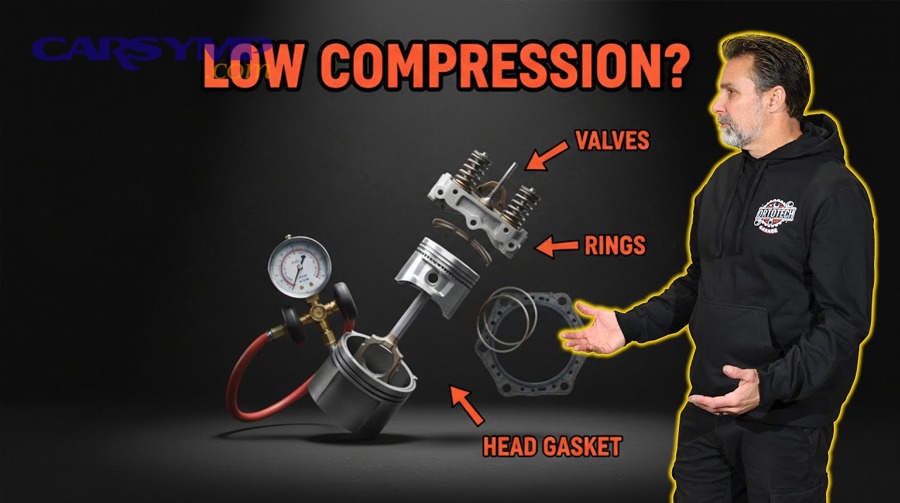
If your engine is misfiring, down on power, or burning oil, compression and leak-down tests are the fastest way to confirm whether the problem is loss of sealing inside a cylinder—and to decide what to do next based on evidence, not guesses.
To better understand which test fits your situation, this guide explains what each test measures, how the results are created (PSI/bar vs % leakage), and why the two tests are complements rather than substitutes—one screens quickly, the other pinpoints the leak path.
More importantly, you’ll learn how to interpret the patterns that actually matter: cylinder-to-cylinder differences, “one low” vs “two adjacent low,” and what it means when air is heard at the intake, tailpipe, crankcase, or coolant.
Introduce a new idea: once you can interpret those patterns, you can connect them to practical next steps—ranging from “re-test correctly” to planning a targeted repair, including what head-gasket symptoms look like before you commit to head gasket repair.
What are compression and leak-down tests, and what do they measure?
Compression and leak-down tests are engine sealing diagnostics that assess whether each cylinder can either build pressure (compression test) or hold pressure (leak-down test) long enough to make power, run smoothly, and avoid oil/coolant contamination.
To better understand why both tests exist, it helps to think in “pressure time” terms: a cylinder must create pressure quickly during cranking and also retain pressure with valves closed. That’s why the tests tend to answer different questions.
What does a compression test tell you about cylinder pressure and engine health?
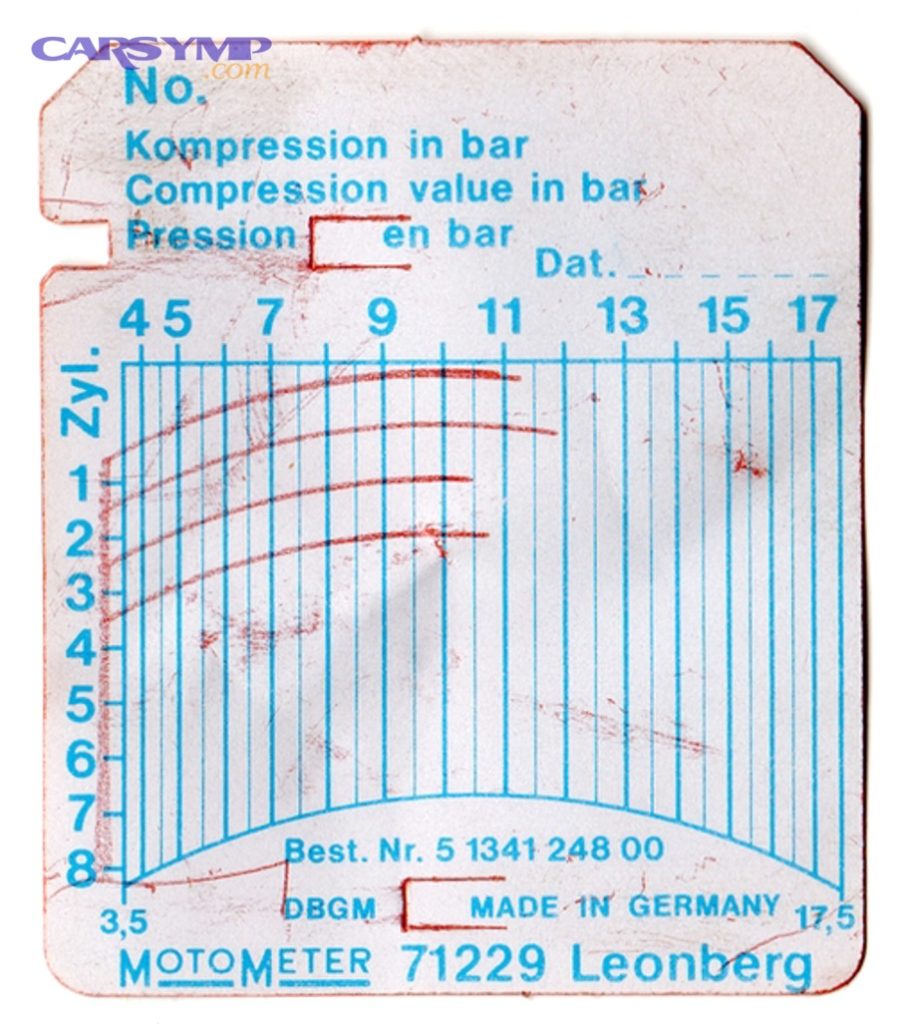
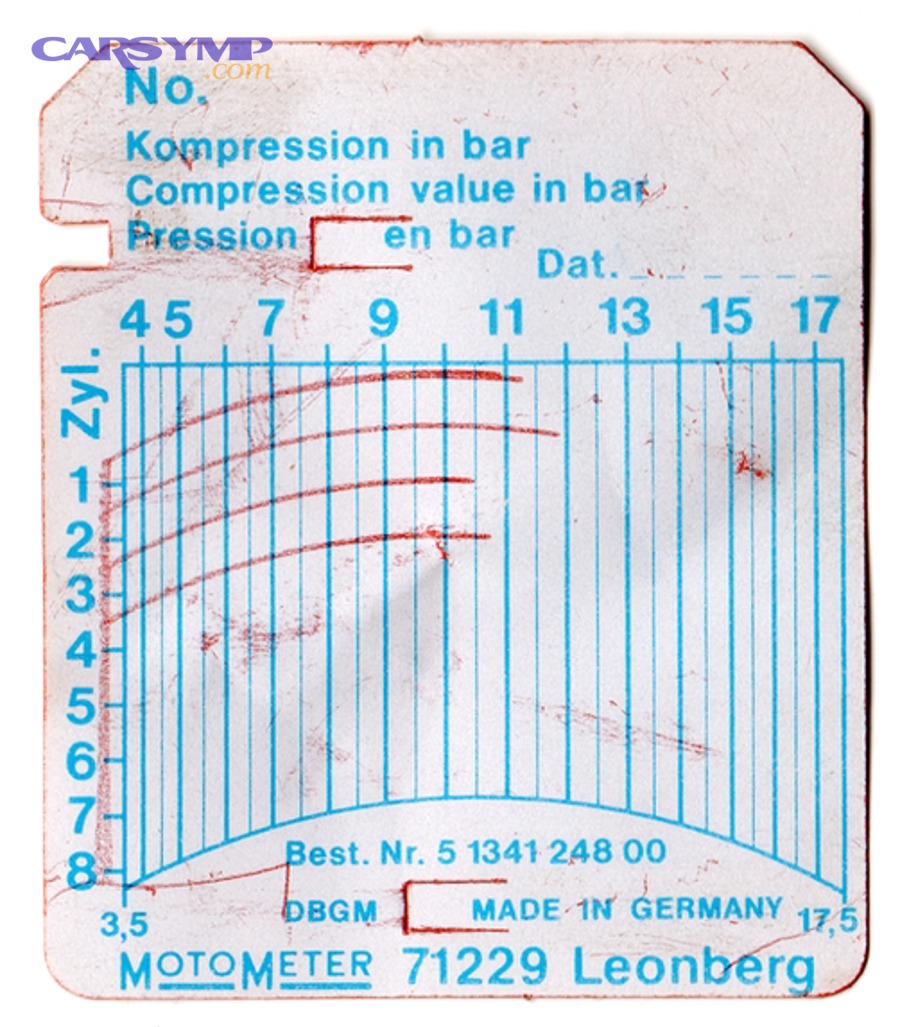
A compression test tells you whether each cylinder can generate cranking pressure—typically shown as PSI or bar—well enough to support combustion and balanced power across cylinders.
Specifically, the test captures a “dynamic snapshot” of cylinder pressure during starter cranking. That makes it extremely useful for:
- Finding a dead cylinder behind a misfire
- Checking for uneven cylinder contribution (rough idle, vibration)
- Establishing a baseline before deeper diagnostics
More specifically, a compression test is a comparative tool. A single number matters less than:
- How much cylinders vary from each other
- Whether readings are consistently repeatable
- Whether the engine was tested under the same conditions (same cranking speed, throttle position, battery state)
What does a leak-down (cylinder differential) test tell you about sealing and leakage paths?
A leak-down test (often called a cylinder differential test) tells you how well a cylinder seals when pressurized with regulated shop air at top dead center (TDC), expressed as a percentage of leakage, and it helps you locate where that air escapes.
However, the bigger advantage is diagnostic clarity: leak-down testing gives you time to listen and observe while pressure is held. A common “listen map” is:
- Hiss at the intake/throttle body → likely intake valve sealing issue
- Hiss at the tailpipe → likely exhaust valve sealing issue
- Hiss at the oil cap/dipstick/PCV → likely rings/cylinder wall leakage
- Bubbles in coolant/radiator neck → possible head gasket breach or crack
Are compression and leak-down tests interchangeable for diagnosing engine problems?
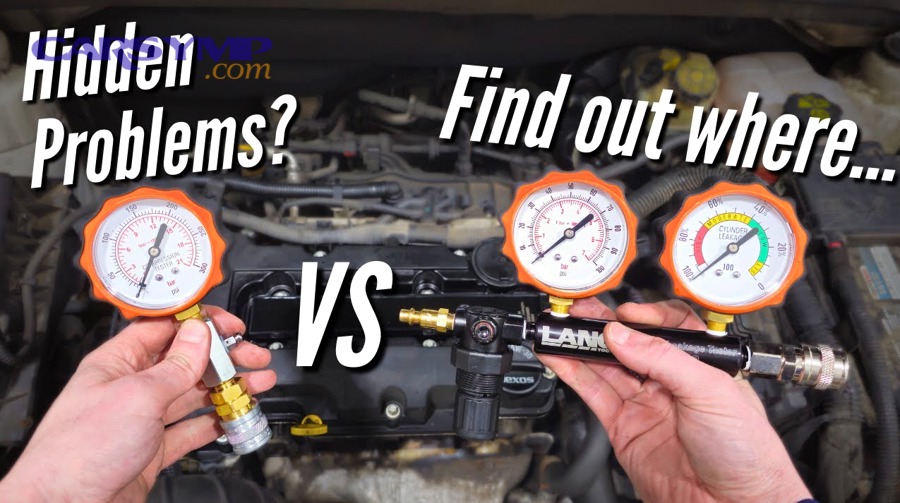
No—compression and leak-down tests are not interchangeable, because they measure different pressure behaviors, deliver different outputs, and fail in different ways; using both improves accuracy, speeds diagnosis, and reduces the risk of replacing parts that aren’t actually the cause.
To better understand the “why,” think of three practical reasons:
- Compression test = screening speed. It quickly reveals which cylinders are suspicious.
- Leak-down test = root-cause direction. It points toward rings vs valves vs head gasket by showing leak path.
- Each test has blind spots. Compression can look “okay” with some valve timing issues or cranking variables, while leak-down can be skewed if the engine isn’t exactly at TDC or if the tool isn’t set consistently.
When is a compression test ‘enough’ to make a diagnosis?
Yes—sometimes a compression test is enough to make a working diagnosis when the pattern is clear and matches the symptoms.
For example, compression alone can be “enough” when:
- One cylinder is dramatically low and you already have a single-cylinder misfire (strong correlation)
- All cylinders are uniformly low and the engine has obvious wear symptoms (hard starting, low power, high blow-by)
- You’re doing a quick triage before deciding whether a deeper test is worth the time
More specifically, compression becomes decisive when the pattern is extreme and repeatable. If cylinder #3 reads low every time under identical test conditions, you’ve confirmed a real mechanical weakness—then the next question becomes which sealing surface is failing.
When is a leak-down test necessary to confirm the root cause?
Yes—a leak-down test is necessary when you need to separate causes that look similar on a compression gauge.
A leak-down test becomes the smarter move when:
- Compression is low but not “dramatic,” and you need to decide whether the engine is still serviceable
- Two adjacent cylinders are low (possible head gasket pathway between cylinders)
- You suspect valve leakage (popping through intake, exhaust misfire, burnt valve risk)
- You are planning internal work and want to confirm whether the issue is top-end vs bottom-end
More importantly, leak-down testing is where you can justify or avoid major work. If you hear strong leakage at the coolant neck, you’re no longer guessing—you can plan a targeted head gasket repair path instead of replacing ignition parts repeatedly. (alldata.com)
What is the difference between a compression test and a leak-down test?
Compression wins in speed and screening, leak-down is best for pinpointing leakage location, and using both is optimal for confident repair decisions—because one measures pressure creation and the other measures pressure retention.
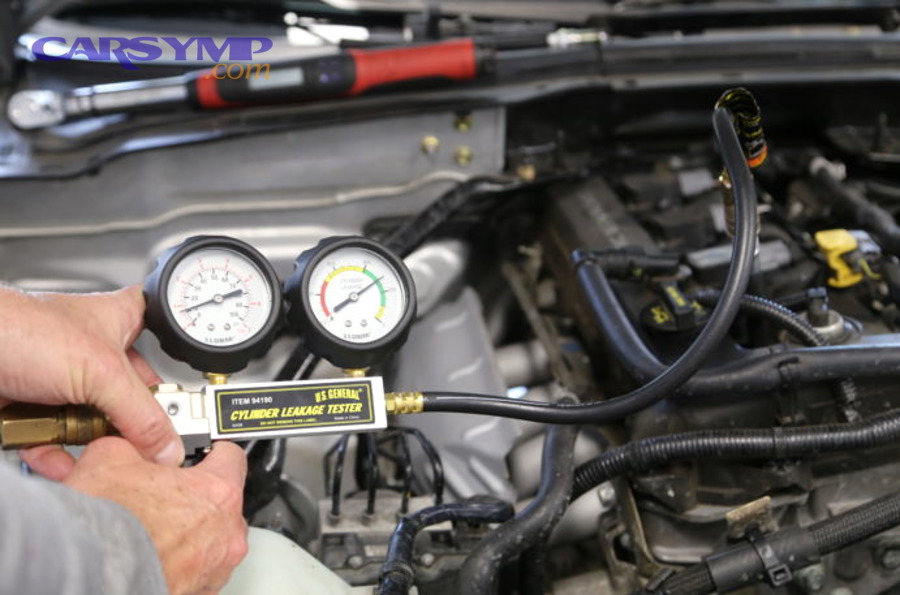
To illustrate that difference clearly, the table below summarizes what you’re actually measuring and what you can reasonably conclude.
Table context: This comparison table shows how compression vs leak-down differ in setup, outputs, strengths, and typical diagnostic use.
| Criterion | Compression Test | Leak-Down Test (Cylinder Differential Test) |
|---|---|---|
| What it measures | Ability to create pressure while cranking | Ability to hold pressure; leakage rate |
| Output | PSI / bar per cylinder | % leakage + audible leak path |
| Engine state | Starter cranking (dynamic) | Cylinder at TDC (static) |
| Best for | Quick screening, cylinder balance | Root cause direction (rings/valves/gasket) |
| Common failure modes | Weak battery, closed throttle, inconsistent cranking | Not at true TDC, tool/regulator inconsistency |
How do the test procedures differ (cranking vs regulated air at TDC)?
Compression testing relies on starter cranking to pump air and build gauge pressure, while leak-down testing uses regulated shop air introduced through the spark plug hole with the piston positioned at top dead center on the compression stroke.
Specifically:
- Compression requires consistent cranking speed and (typically) an open intake path so cylinders can fill properly.
- Leak-down requires accurate mechanical positioning (TDC) so both valves are closed and the cylinder is “sealed” except for leakage.
More importantly, the procedure differences explain why results can disagree: a cylinder can show “decent” compression while still leaking noticeably under sustained pressure, especially if leakage is small-but-real and masked by cranking dynamics.
How do the results differ (PSI readings vs % leakage + where the air goes)?
Compression results tell you how much pressure each cylinder can build quickly. Leak-down results tell you how much pressure escapes and often where it escapes.
For example:
- Compression: Cylinder 2 = 135 psi, Cylinder 3 = 95 psi → cylinder 3 is weak.
- Leak-down: Cylinder 3 = 28% leakage with air heard at the tailpipe → exhaust valve likely not sealing.
That “where the air goes” detail is the difference between “the cylinder is weak” and “the exhaust valve is the leak path,” which is exactly what you need to avoid unnecessary parts replacement.
Which test is better for rings vs valves vs head gasket diagnosis?
Compression is better for finding the weak cylinder(s), while leak-down is better for identifying which component is leaking—rings, intake valve, exhaust valve, or head gasket.
A practical diagnosis map looks like this:
- Rings / cylinder wall leakage: air at dipstick/PCV/oil fill; often paired with oil consumption and blow-by
- Intake valve leakage: air at throttle body/intake; may pair with popping through intake
- Exhaust valve leakage: air at tailpipe; may pair with exhaust popping, misfire under load
- Head gasket leakage: bubbles in coolant, adjacent cylinder involvement, unexplained coolant loss
When you’re dealing with suspected head gasket repair needs, that coolant bubble clue is especially valuable because it turns a “maybe” into a measurable indicator before you plan labor or teardown.
How do you do a compression test correctly?
A correct compression test uses consistent cranking conditions across all cylinders in a simple sequence—prep the engine, install the gauge, crank for a consistent interval, and record each cylinder—so the results are comparable and actionable.
To better understand why “consistency” matters so much, remember the compression test is a competition between cylinders under identical constraints. If the battery weakens halfway through the job or you change throttle position, you change the “rules” and can create false patterns.
What tools and prep do you need before a compression test?
There are 6 core items you need for a compression test: a compression gauge, spark plug tools, a method to disable fuel/ignition, a battery charger (or strong battery), a way to label results, and a service reference for specs.
A practical prep checklist:
- Compression gauge with correct adapter thread
- Spark plug socket + extension + torque wrench for reassembly
- Fuse puller or scan tool method to disable fuel/ignition (prevents fuel wash and unintended starting)
- Battery charger or jump pack (protects cranking speed consistency)
- Notepad or spreadsheet to record results cylinder-by-cylinder
- Service data for the engine’s spec and allowable variance
More importantly, keep the testing approach consistent: if you test warm, test warm for all cylinders; if you crank 5 revolutions, crank 5 revolutions for all cylinders.
What steps produce reliable compression readings you can compare?
Reliable compression readings come from a repeatable sequence: disable fuel, remove plugs, install gauge, crank the same duration, record, and repeat—without changing intake conditions or cranking speed.
A clean, repeatable step sequence:
- Warm engine if possible (unless you’re intentionally doing a cold baseline).
- Disable fuel and ignition to prevent starting and protect the catalytic converter.
- Remove all spark plugs (reduces starter load, improves consistency).
- Thread the gauge into cylinder #1.
- Open the throttle (or ensure unrestricted intake airflow) and crank a consistent number of seconds/revolutions.
- Record the peak reading, then repeat for each cylinder.
- Compare cylinder-to-cylinder variance first, then compare to spec.
If you see one cylinder dramatically low, you can immediately plan the next step: confirm with a leak-down test on that cylinder to identify where pressure is escaping.
What mistakes cause misleading compression numbers?
Compression numbers become misleading when testing conditions change—especially cranking speed, airflow into the cylinder, and inconsistent crank duration.
Common mistakes that create false lows (or false variance):
- Weak battery / slow cranking late in the test
- Throttle closed (restricted airflow during cranking)
- Leaving some spark plugs installed (inconsistent starter load)
- Cranking different durations per cylinder
- Not disabling fuel (risk of fuel wash and inconsistent sealing)
A useful rule: if the pattern doesn’t match the symptom (e.g., the engine runs fairly smoothly but readings look chaotic), re-test under controlled conditions before assuming internal damage.
How do you do a leak-down (cylinder differential) test correctly?
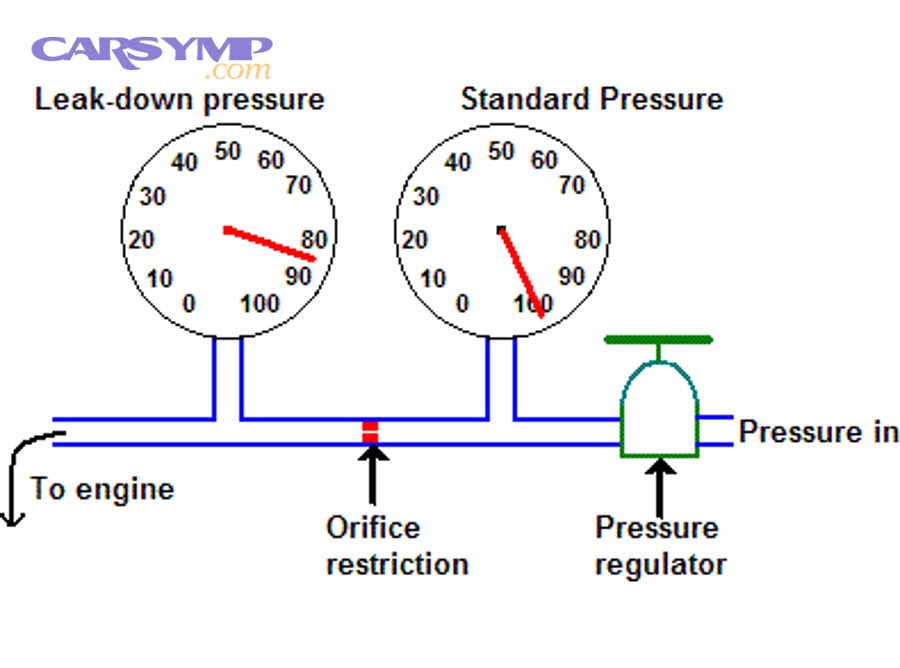
A correct leak-down test uses a regulated air source and a dual-gauge tester to pressurize a cylinder at TDC on the compression stroke, then records % leakage and identifies the leak path by listening at the intake, exhaust, crankcase, and coolant.
To better understand why TDC is non-negotiable, note that even slight crank rotation can open a valve or move the piston off the “locked” point, allowing air to push the engine over and distort results.
What tools and setup are required for a leak-down test?
There are 5 essentials for a leak-down test: a leak-down tester (preferably dual gauge), an air compressor with regulation, the correct spark plug hole adapter, a breaker bar to position the engine, and a method to prevent rotation.
A practical tool list:
- Dual-gauge leak-down tester (supply and leakage gauges)
- Air compressor capable of stable pressure (often 60–100 psi supply; follow your tester method)
- Spark plug hole adapter hose
- Breaker bar/socket for crank pulley bolt
- Wheel chocks / parking brake / gear selection to reduce crank movement
More importantly, keep the “test standard” consistent. Many testers depend on a specific setup pressure and zeroing routine. If you change the routine, you change the percentage result.
How do you find true TDC on the compression stroke for an accurate leak-down test?
True TDC on the compression stroke occurs when the piston is at the top of travel and both valves are closed, so the cylinder is sealed except for leakage past rings, valves, or gasket.
A reliable approach:
- Remove the spark plug.
- Rotate the engine by hand while feeling for compression (air pushing out the plug hole indicates compression stroke).
- Align timing marks near TDC, then fine-tune so the piston is at peak travel.
- Ensure you are not at overlap TDC (where valves may be slightly open on some engines).
If the engine tries to rotate when you apply air, you’re usually not perfectly at TDC; reposition and re-check before trusting the number.
Where should you listen/look to identify the leak source?
You should listen at four “leak outlets” because air takes the easiest path: intake, exhaust, crankcase, and cooling system.
A simple listening checklist:
- Intake/throttle body: hiss = intake valve leak
- Tailpipe/exhaust: hiss = exhaust valve leak
- Oil fill/PCV/dipstick: hiss = ring/cylinder wall leak
- Radiator neck/coolant: bubbles = possible head gasket leak or crack
This is also where the leak-down test becomes a decision tool. If you hear strong coolant bubbling, you can move from diagnosis to planning: confirm with cooling system checks and then evaluate head gasket repair steps, expected labor time, and whether the engine’s overall condition justifies the job. (alldata.com)
How do you interpret compression and leak-down results?
You interpret compression and leak-down results by focusing on patterns and consistency—cylinder-to-cylinder variation, repeatability, and leak location—then mapping those findings to likely sealing failures (rings, valves, or head gasket) before choosing a repair path.
To better understand interpretation, treat each test like a different lens:
- Compression tells you “Which cylinders are weak?”
- Leak-down tells you “Where is the weakness leaking?”
What compression test patterns suggest worn rings, valve problems, or head gasket issues?
Compression patterns become meaningful when they’re repeatable and match symptoms.
Common patterns and what they suggest:
- One cylinder low: localized problem (valve, ring damage, localized head gasket breach)
- Two adjacent cylinders low: higher suspicion of head gasket failure between cylinders or a localized head issue
- All cylinders low but similar: overall wear, incorrect test method (throttle closed), or timing/cam issue
- Low compression + oil consumption + blow-by: ring/cylinder wear becomes more likely
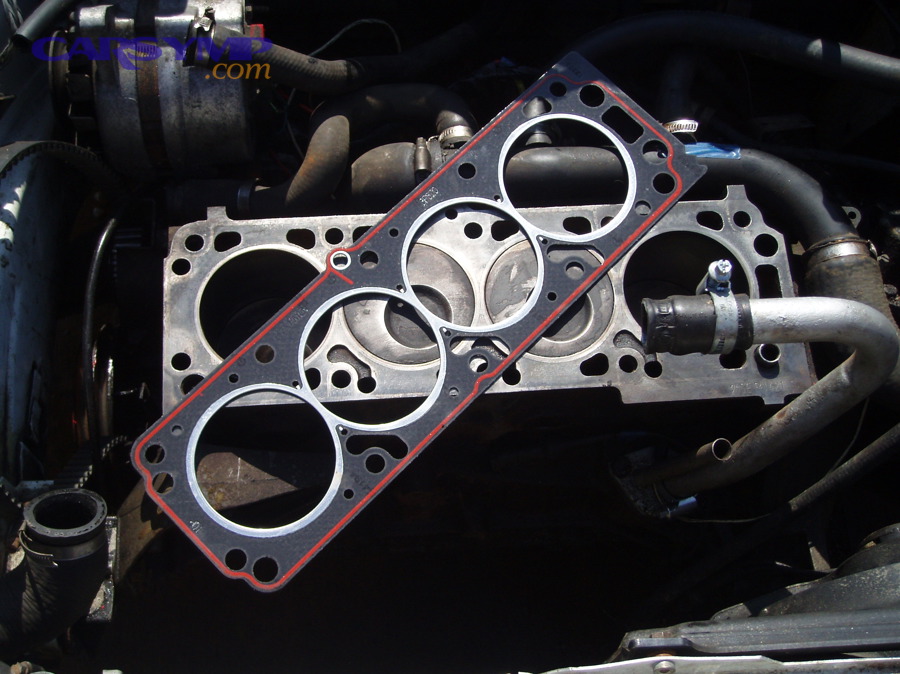
If head gasket suspicion is on the table, pair compression patterns with external signs: coolant loss, overheating history, milky oil, or combustion gases in coolant. Those signals turn the numbers into a full diagnosis narrative that supports head gasket repair planning.
What leak-down % ranges are typically acceptable, borderline, or problematic—and why?
Leak-down ranges vary by engine design and tester setup, but consistent guidance is: low single digits is excellent, teens are often serviceable, and high numbers (especially uneven across cylinders) demand attention—especially if leakage points to valves or coolant.
A practical interpretation framework (always compare to your baseline and engine spec):
- 5–10%: typically very good sealing
- 15–20%: often serviceable, but investigate where the leakage is occurring
- ~30% or higher: major sealing problem likely; overhaul or targeted repair may be required (alldata.com)
A key nuance: a uniform 15–18% across all cylinders can sometimes be less concerning than one cylinder at 28% while the rest are at 8–12%. Consistency matters because it reveals whether the issue is localized or systemic.
How do you combine both tests to reach a confident diagnosis?
You combine both tests by using compression to select suspect cylinders and leak-down to identify the leak path, then confirming with symptom evidence and a visual check (spark plugs, borescope, coolant behavior).
A practical “combine” workflow:
- Run compression on all cylinders → identify low or uneven cylinders.
- Run leak-down on the low cylinders (or all, if you’re assessing engine health).
- Use leak path clues to identify likely component:
- crankcase = rings
- intake = intake valve
- exhaust = exhaust valve
- coolant = gasket/crack
- Decide next steps: re-test, adjust method, or plan repair.
Evidence sentence: According to a study by Technological University of the Shannon (TUS) from an Automotive Engineering workshop project, in 2024, a Toyota 4G-FE engine with a stated spec range of 9.8–12.8 bar recorded measured cylinders from 11.2 to 13.0 bar during compression testing, showing how real-world readings are interpreted relative to spec and variance patterns. (tus.ie)
Which test should you do first, and when should you do both?
Compression should be done first for most car owners because it’s faster and identifies weak cylinders quickly, while doing both tests is best when you need a confident diagnosis before spending money on internal repairs.
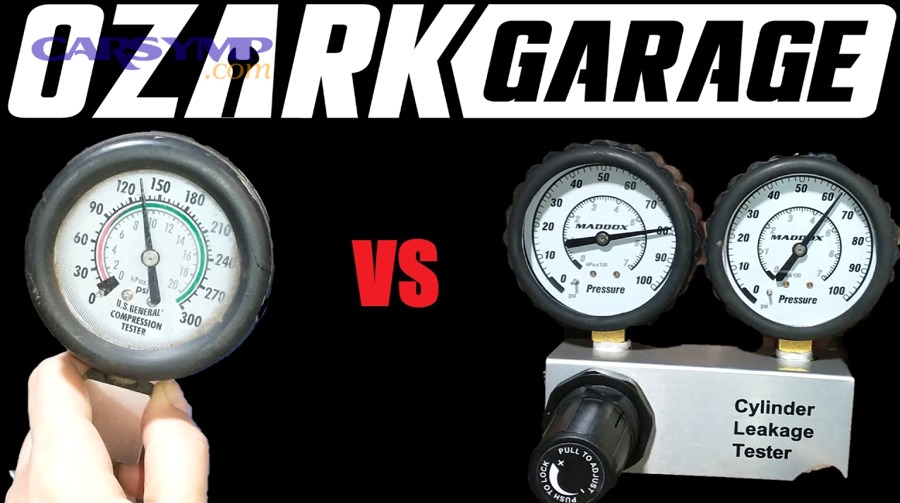
To better understand the decision, use the table below as a simple intent-based guide.
Table context: This decision table maps common symptoms and goals to the most efficient testing order.
| Your goal or symptom | Best first test | Best follow-up | Why |
|---|---|---|---|
| Misfire on one cylinder | Compression | Leak-down on that cylinder | Find the weak cylinder, then locate the leak path |
| Rough idle + unknown history | Compression | Leak-down if uneven | Screen fast, then confirm root cause |
| Pre-purchase engine health | Leak-down (if time) or Compression | Ideally both | Leak-down reveals sealing quality; compression reveals balance |
| Suspected head gasket symptoms | Compression | Leak-down + coolant observations | Adjacent lows + coolant bubbling are strong directional clues |
If your engine has a misfire, low power, or rough idle, which test is the best starting point?
Compression is the best starting point for misfire, low power, or rough idle because it quickly identifies whether you have one weak cylinder or a broader imbalance—and that immediately narrows the diagnosis.
Specifically:
- If one cylinder is low, you can stop guessing about coils, injectors, or sensors and move toward sealing diagnostics.
- If multiple cylinders are uneven, you can suspect broader mechanical issues or testing variables.
Then, do leak-down on the weakest cylinder(s) to turn “low compression” into a specific cause—rings vs valves vs head gasket.
If you’re buying a used car or assessing engine health, which test gives the best confidence?
Leak-down usually gives the best confidence for engine health because it measures sealing under sustained pressure and can reveal where wear is occurring, while compression provides a quick balance check that can catch obvious weak cylinders.
A practical buyer approach:
- If you only have time for one test: compression is faster and still valuable.
- If you want the most confidence: do both (compression for balance + leak-down for sealing quality).
More importantly, don’t overreact to small leak-down numbers unless they are uneven or paired with symptoms. Consistency across cylinders is a strong “healthy engine” signal. (alldata.com)
After abnormal results, what are the next diagnostic steps before repairs?
After abnormal results, your next steps should confirm the test method, narrow the fault location, and estimate repair scope—so you don’t jump into the wrong fix.
A practical next-step checklist:
- Repeat the test with consistent cranking speed / true TDC (rule out technique errors).
- Inspect spark plugs for coolant wash, oil fouling, or one cylinder running different.
- Use a borescope to check cylinder walls and piston crown condition.
- If head gasket is suspected:
- Look for combustion gas signs in coolant behavior
- Check for coolant loss and contamination patterns
- Plan the Head gasket repair labor time and steps (disassembly, surface checks, fastener procedure, re-torque method if applicable)
When head gasket repair is likely, make the decision financially informed: a Head gasket repair cost estimate depends heavily on engine layout (inline vs V), accessibility, and whether machining or additional parts (bolts, thermostat, hoses) are needed once the head is off.
What advanced factors can skew compression and leak-down test results ?
Advanced factors can skew results because compression and leak-down testing are sensitive to test setup variables (cranking speed, throttle position, tool calibration, and exact piston position), and controlling those variables is the difference between a correct diagnosis and an expensive wrong turn.
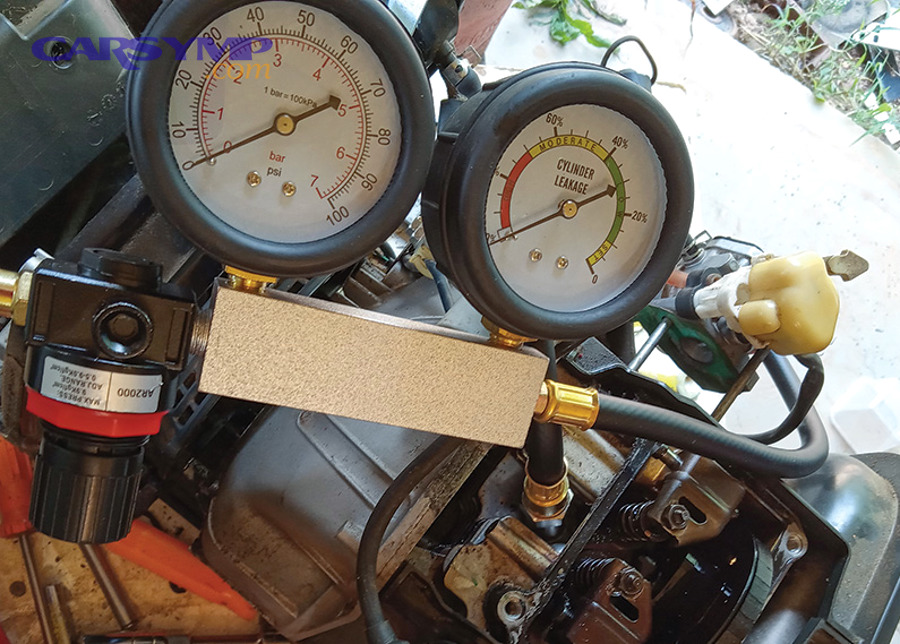
To better understand “false readings,” treat them as avoidable measurement errors: if you standardize the method, your numbers become meaningful; if you don’t, your numbers become noise.
How does a wet compression test (oil-in-cylinder) help separate ring wear from valve leakage?
A wet compression test helps separate ring wear from valve leakage because adding a small amount of oil temporarily improves ring sealing; if compression rises noticeably, ring/cylinder wall leakage becomes more likely, while little-to-no change points more toward valves or head gasket pathways.
A careful, practical approach:
- Add a small measured amount of oil to the low cylinder (avoid overfilling).
- Repeat compression test under identical conditions.
- Compare the delta:
- Big increase: rings/cylinder wall likely
- Minimal change: valves or gasket more likely
More importantly, treat wet testing as a clue, not a verdict—confirm with leak-down to locate the leak path.
How do regulator setup, gauge calibration, and tester differences affect leak-down % readings?
Regulator setup and gauge calibration affect leak-down % because different testers use different internal orifice sizes and “zeroing” methods, so the same cylinder can show different leakage percentages if the tool or procedure changes.
A best-practice standardization:
- Use the same tester for all cylinders.
- Follow the tester’s exact “set input pressure and zero” procedure.
- Keep supply pressure stable and repeatable.
- Compare cylinders against each other (pattern) more than chasing an absolute number.
This is why some references emphasize that the relative consistency across cylinders can matter more than whether the gauge is “perfect,” as long as your method is consistent. (alldata.com)
Can cranking speed, battery voltage, and throttle position cause false compression readings?
Yes—cranking speed, battery voltage, and throttle position can cause false compression readings because slower cranking reduces the cylinder’s ability to build pressure per unit time and restricted airflow limits cylinder fill, both of which can create artificial low numbers.
A simple prevention checklist:
- Keep the battery on a charger or use a jump pack.
- Remove all plugs before testing.
- Maintain consistent crank duration across cylinders.
- Ensure the intake path is not restricted during the test.
If your numbers look suspiciously low across all cylinders and the engine doesn’t act like it’s worn out, re-test after stabilizing these variables before assuming internal damage.
Do altitude and engine type (turbo/high-compression) change what ‘normal’ looks like?
Yes—altitude and engine type change “normal” because compression gauge readings are influenced by ambient pressure and by engine design (compression ratio, cam timing, valve events), so you should rely on manufacturer specs and cylinder-to-cylinder variance rather than a single universal PSI number.
A practical way to stay accurate:
- Use the engine’s spec range when available.
- Focus on variance and repeatability.
- Use leak-down to confirm sealing quality when compression “normal” is unclear.
This is especially important before committing to major work: a suspected head gasket repair should be supported by converging evidence (patterns + leak path + symptoms), not one isolated number.
Evidence (if any)
According to a study by Technological University of the Shannon (TUS) from an Automotive Engineering workshop project, in 2024, compression testing on a Toyota 4G-FE referenced a 9.8–12.8 bar specification range and documented measured cylinders from 11.2 to 13.0 bar, illustrating real-world interpretation based on spec and cylinder-to-cylinder variance. (tus.ie)