A bad PCV valve typically shows up as a pattern of symptoms—rough idle, oil leaks, increased oil consumption, smoke, or a check engine light—because the crankcase can’t regulate pressure and vapors the way it should. The fastest way to match your situation to the most likely cause is to use a symptom checklist tied to what’s happening at idle, under load, and around the oil cap.
Next, you can confirm suspicion with a few quick checks that take minutes: inspect the PCV hose path, listen for whistling or hissing, observe idle behavior, and (if you have a scan tool) glance at fuel trims for signs of a vacuum leak.
Besides that, the “why” matters: PCV failure behaves differently depending on whether the valve is stuck open (often a vacuum leak) or stuck closed (often crankcase pressure buildup). That difference explains why one car develops a rough idle while another starts pushing oil past seals.
Introduce a new idea: once you can identify the symptoms and confirm the failure mode, you can decide what to do next—rule out common look-alikes, plan a fix, and verify the repair worked without guessing.
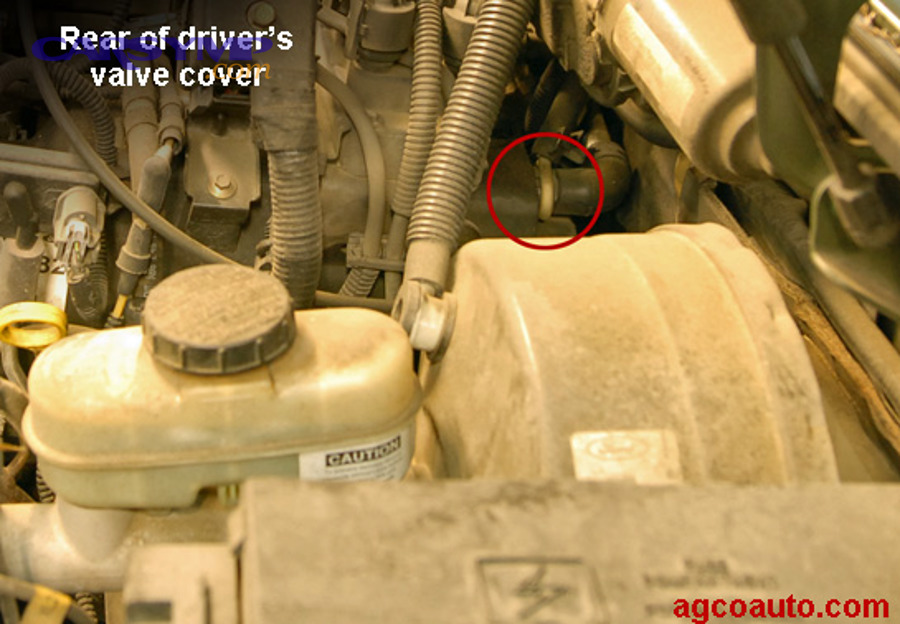
What is a PCV valve and what does it do in your engine?
A PCV valve is a metering one-way valve in the crankcase ventilation system that routes blow-by vapors from the crankcase back into the intake to be burned, helping control crankcase pressure and reduce emissions. (mdpi.com)
To better understand why symptoms appear, it helps to connect what the PCV system is supposed to do with what you feel when it stops doing it.
The PCV system’s job in one sentence
When combustion gases “leak” past piston rings (blow-by), those gases enter the crankcase; the PCV system uses engine vacuum (or pressure management on some setups) to pull those vapors out so the crankcase doesn’t pressurize and the oil doesn’t get contaminated. (mdpi.com)
What happens when that job is done correctly
- Crankcase pressure stays stable: seals and gaskets aren’t forced to hold back excessive pressure.
- Oil stays cleaner longer: fewer fuel and moisture vapors linger in the crankcase.
- Emissions are reduced: blow-by vapors aren’t vented directly to the atmosphere.
A useful perspective is historical: before modern crankcase controls, blow-by venting contributed a large share of hydrocarbon emissions—one reason PCV became an early emissions-control technology. (mdpi.com)
Why the PCV valve exists (not just hoses)
The valve isn’t there only to “let air through.” It meters flow based on conditions so the engine doesn’t get a massive unmetered air leak at idle and so the crankcase can still breathe when load changes. In practice, that means a PCV problem can look like both an emissions issue and a drivability issue—because it affects airflow, fueling, and crankcase pressure at the same time.
What are the most common signs (symptoms) of a bad PCV valve?
There are 4 main symptom groups of a bad PCV valve—drivability, oil-related, exhaust/smell, and OBD/dash clues—because PCV problems typically show up as either a vacuum leak pattern or a crankcase pressure pattern. (sciencedirect.com)
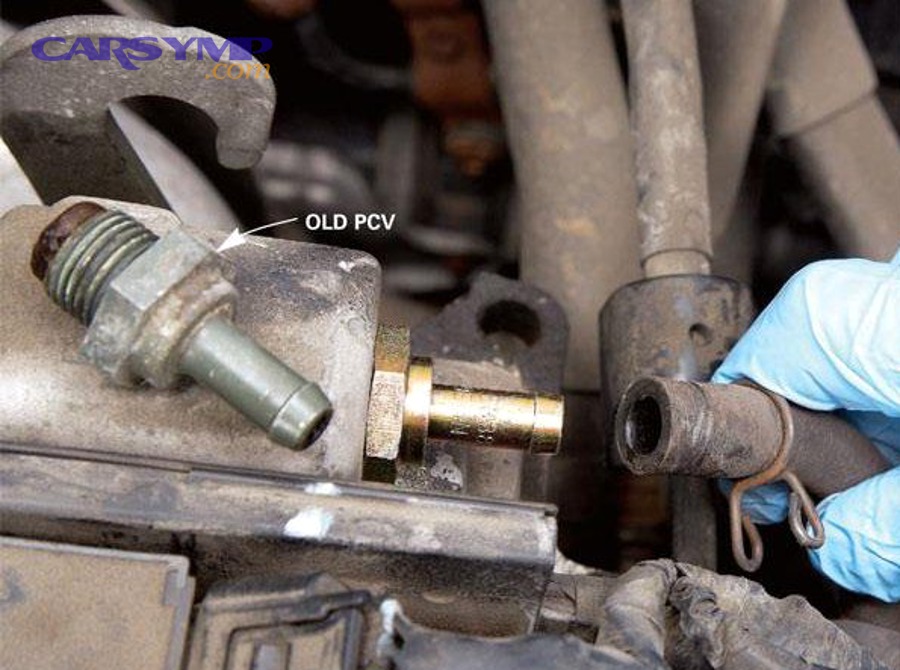
Specifically, you’ll get the fastest diagnosis by matching which group is loudest on your vehicle instead of chasing a single symptom in isolation.
Which drivability symptoms point to a bad PCV valve (rough idle, misfire, stalling)?
A PCV valve can create drivability symptoms when it behaves like an unmetered air leak—especially at idle—so the engine struggles to maintain a stable air-fuel mixture.
What it feels like in the driver’s seat:
- Rough idle that’s worse at stoplights and sometimes improves with throttle.
- Occasional stalling on decel or when shifting into gear.
- Light hesitation right off idle, especially with accessories on (A/C load).
Why that happens:
- If the PCV valve is stuck too far open, it can let extra airflow into the intake tract that the engine computer didn’t “count,” producing Rough idle from PCV vacuum leak behavior: idle becomes lean, misfires increase, and the engine may hunt or surge.
How to recognize the pattern:
- Idle problems are stronger than highway problems. A vacuum leak has proportionally more impact at idle because airflow is lower and the leak becomes a bigger percentage of total airflow.
Which oil-related symptoms suggest PCV problems (oil leaks, oil consumption, sludge)?
A PCV system that can’t vent correctly can raise crankcase pressure or move oil vapor in the wrong direction, leading to leaks and consumption.
Common oil-related signs:
- Fresh oil seepage around valve cover, oil pan, front/rear main seals, or dipstick tube.
- Oil in the intake hose or throttle body area (especially if oil vapor is being pulled heavily).
- Higher oil consumption without obvious external leaks.
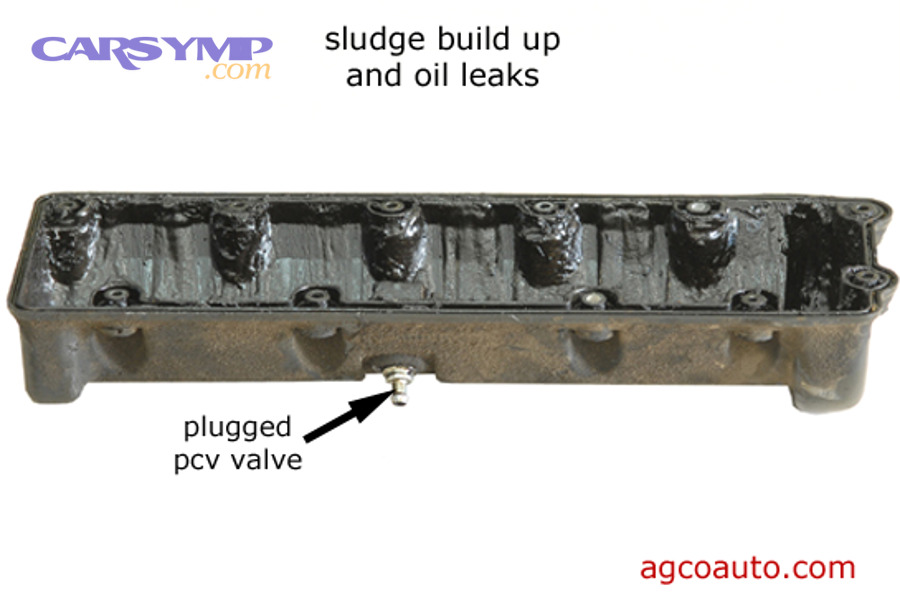
- Sludge or heavy varnish in severe cases where vapors aren’t evacuated efficiently.
Why these happen:
- Stuck closed / restricted flow often leads to pressure buildup. Pressure looks for the weakest exit, which can be a gasket or seal.
- Stuck open / excessive flow can increase oil vapor ingestion into the intake, which can increase oil usage and deposits over time.
What exhaust and smell symptoms can a bad PCV valve cause (smoke, burning oil odor)?
A PCV problem can contribute to smoke when oil vapor is pulled into the intake (then burned) or when pressure pushes oil into places it shouldn’t be.
What to look for:
- Blue-ish smoke after idling, then accelerating (oil burned after pooling).
- Burning oil smell near the engine bay if oil is leaking onto hot components.
- Smoke that changes with throttle (often more telling than constant smoke).
A practical note: smoke alone doesn’t “prove” PCV issues, but combined with oil in the intake tract or new leaks, it becomes a strong supporting signal.
Which dashboard/OBD clues are common (check engine light, lean codes, fuel trims)?
PCV issues often trigger engine management clues because they change airflow and mixture.
Typical clues:
- Check engine light (CEL) with mixture-related codes on some vehicles.
- Lean-at-idle behavior: the engine compensates by adding fuel; this shows up as elevated fuel trims.
- Misfire codes if idle instability becomes severe.
If you have a basic scan tool, fuel trim behavior can be one of the quickest confirmations when paired with symptoms—because a vacuum leak pattern often appears as “worse at idle, better with RPM.”
Can a bad PCV valve cause rough idle, oil leaks, or smoke?
Yes—a bad PCV valve can cause rough idle, oil leaks, and smoke because it can (1) introduce unmetered air like a vacuum leak, (2) trap blow-by and raise crankcase pressure, and (3) pull excessive oil vapor into the intake to be burned. (mdpi.com)
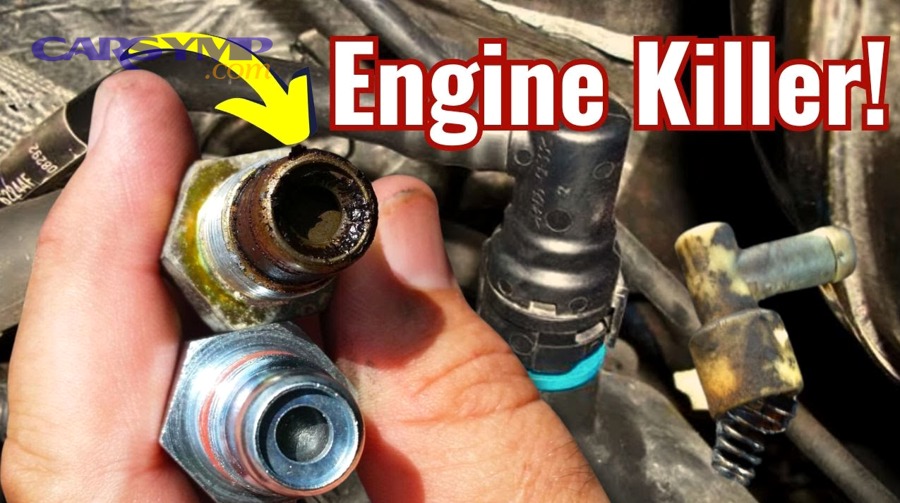
However, the key is to identify which mechanism is dominant on your engine, because that determines the fastest test and the most likely fix.
Reason 1: Unmetered air (vacuum leak pattern) → rough idle
- A valve stuck too open can create unstable idle, lean misfires, and hesitation.
- This is the classic “idle is worst” pattern.
Reason 2: Crankcase pressure (restricted pattern) → oil leaks
- A valve stuck closed or clogged hose can pressurize the crankcase.
- Pressure pushes oil past seals and gaskets that were never meant to “hold pressure.”
Reason 3: Oil vapor ingestion → smoke and consumption
- If the system pulls too much oil vapor, that oil burns in the cylinders.
- You may see blue smoke or notice rising oil usage.
Evidence matters most when it explains why these outcomes are plausible. For example, crankcase and blow-by emissions are a recognized emissions source category, and PCV systems are designed to route blow-by gases back into the intake for combustion rather than venting them. (mdpi.com)
How can you quickly test a PCV valve at home without special tools?
You can quickly test a PCV valve at home with 3 steps—inspect the hoses and valve area, observe idle behavior and sound, and (optionally) check fuel trims—so you can confirm PCV failure without guessing or replacing parts blindly.
Then, start with the simplest checks first, because they often reveal hose cracks or obvious vacuum leaks that mimic “bad valve” symptoms.
What visual inspections should you do first (hoses, valve cover, oil cap, gunk)?
Visual checks catch the most common “cheap failures”:
- PCV hose cracks/splits: bend the hose slightly and look for surface cracking, soft spots, or oil saturation.
- Loose connections: a hose that’s not fully seated can leak air.
- Broken plastic elbows or tees: very common on higher-mileage engines.
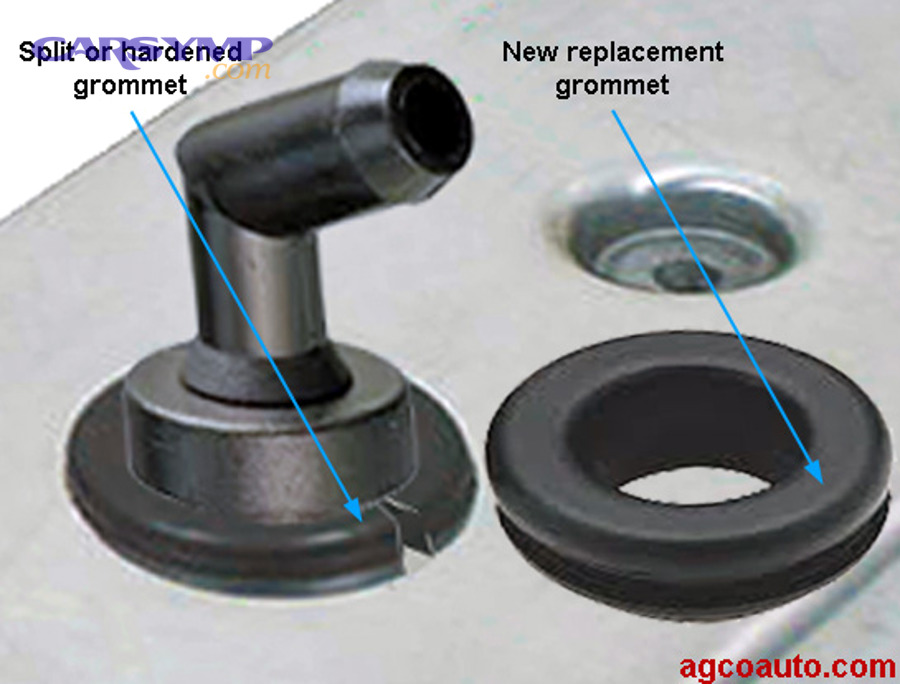
- Oil residue around the valve cover or grommet: can suggest blow-by pressure, leakage, or a failed grommet seal.
What the results mean:
- A cracked hose can create the same symptoms as a stuck-open valve, including Rough idle from PCV vacuum leak behavior—so fix the hose before condemning the valve.
What are the fastest “engine running” checks (idle change, oil cap behavior, whistling)?
Do these only if you’re comfortable working around a running engine (keep hands and clothing clear of belts/fans).
Fast checks:
- Listen for a hiss or whistle near the PCV area
- A high-pitched whistle can indicate a vacuum leak or a torn diaphragm on some integrated PCV designs.
- Observe idle consistency
- If the idle hunts or stumbles and you suspect a vacuum leak, small changes in airflow can make idle noticeably worse or better.
- Oil cap check (behavior-based, not a “perfect test”)
- Excessive suction or a big idle change when the cap is loosened can support a ventilation imbalance, but it’s not definitive by itself (engine designs vary).
A safety mindset:
- Avoid “creative” tests that risk introducing debris into the engine or creating large unmetered leaks. You want a confirmation signal, not a new problem.
What scanner or code checks help confirm the diagnosis (fuel trims, misfire counters)?
If you have even a basic OBD2 reader:
- Short-term fuel trim (STFT) and long-term fuel trim (LTFT):
- A vacuum leak pattern often shows higher positive trims at idle and improved trims with RPM.
- Misfire counters:
- If misfires cluster at idle and ease with throttle, that matches the vacuum leak pattern again.
- Freeze frame data:
- Helpful if the code sets consistently at idle or during decel.
This combination—symptoms + a quick physical inspection + trim behavior—usually gives a confident call on PCV failure without turning the diagnosis into a parts cannon.
Is the PCV valve stuck open or stuck closed—and why does it matter?
A PCV valve stuck open wins as the most likely cause when you see lean/rough-idle symptoms, while a PCV valve stuck closed is more consistent with crankcase pressure and oil leaks, and a restricted/partial failure often creates a mix of both. (mdpi.com)
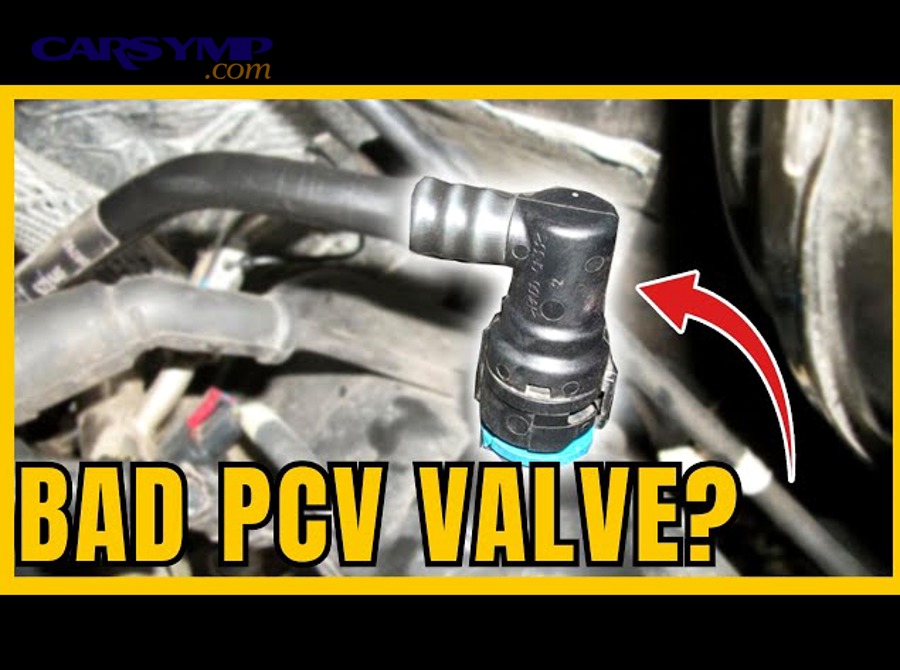
More importantly, this comparison tells you which direction to test and what “fix” actually fixes the root cause.
Stuck open (or leaking too much): the vacuum-leak side
Most likely signs:
- Rough idle, idle surge, stalling at stops
- Lean-related codes or high positive fuel trims
- Hissing/whistling near PCV hose/valve cover
Mechanism:
- Too much airflow bypasses the normal metered path, so fueling control struggles most at idle.
Stuck closed (or clogged/restricted): the pressure side
Most likely signs:
- New oil leaks, dipstick pushed up, oil seepage spreading
- Sludge/contamination risk increases over time
- Oil smell from seepage onto hot parts
Mechanism:
- Blow-by gases can’t evacuate efficiently, so crankcase pressure rises and forces oil outward.
Why this matters for repairs
If you replace only the valve but ignore a collapsed hose or a blocked passage, you may “fix nothing” while the symptoms return. Conversely, if the valve is fine but a hose is split, replacing the valve won’t remove the vacuum leak.
What problems can mimic bad PCV valve symptoms ?
A vacuum leak elsewhere wins as the most common mimic of PCV symptoms, oil burning from worn engine components is a frequent mimic of smoke, and EVAP purge or intake gasket problems can imitate the same fuel-trim patterns—so you should rule out these look-alikes before concluding the PCV valve is the only culprit.
In addition, a quick “rule-out” list prevents wasted money and helps you treat the correct failure.
Common mimics and fast rule-outs (practical checklist)
Here’s what you’re trying to separate:
- Vacuum leak not related to PCV (intake boot, manifold gasket, brake booster line)
- Rule-out: listen and inspect along other vacuum lines; look for obvious cracks and loose clamps.
- EVAP purge valve stuck open
- Rule-out: symptoms often show up as fueling irregularity and sometimes hard starts after refueling; scan data can help, but the key is not assuming “lean = PCV.”
- Ignition problems (plugs, coils)
- Rule-out: misfires that persist across RPM/load can point away from PCV; PCV-driven misfire often clusters at idle.
- Worn rings / high blow-by
- Rule-out: can elevate crankcase pressure even with a good PCV system; look for consistent oil consumption plus other wear signs.
- Turbo seal or boosted-engine oiling issues (where applicable)
- Rule-out: oil in charge pipes may have different causes; PCV routing differs on turbo engines (more on that later).
The goal isn’t to diagnose every possible engine problem—just to make sure you aren’t blaming PCV failure for an issue that would remain after a valve swap.
What should you do next if you suspect a bad PCV valve?
If you suspect a bad PCV valve, the best next step is to confirm the failure mode, inspect/replace compromised hoses, and proceed with PCV valve replacement only when the symptoms and quick tests align—because the correct fix removes the vacuum leak or pressure buildup, not just a part on a list.
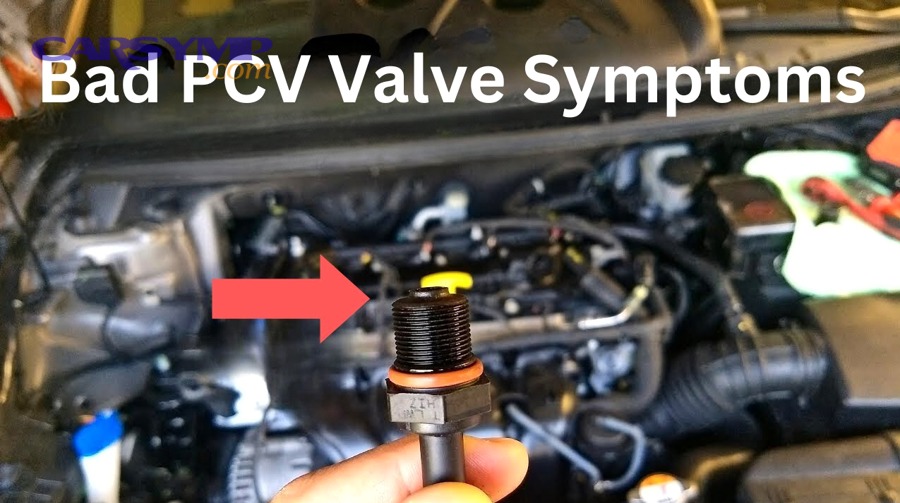
Next, treat the repair like a small system job, not a single-component gamble.
A practical action plan (in order)
- Fix obvious hose and fitting problems first
- A cracked elbow or loose hose can be the entire problem.
- Decide whether the PCV valve is serviceable or integrated
- Some are simple and accessible; others are part of a valve cover assembly.
- Perform PCV valve replacement (when indicated)
- Replace grommets/seals if they’re hardened, and ensure hose routing is correct.
- Verify the repair
- Idle stabilizes, hissing disappears, fuel trims improve, and new oil seepage stops progressing.
Where the required phrases belong (naturally)
- When a PCV valve is confirmed faulty, PCV valve replacement is typically the correct remedy—but only after you confirm the valve or the integrated PCV mechanism is actually failing.
- If your symptom pattern matches a vacuum leak (idle-heavy roughness + hiss), it often fits Rough idle from PCV vacuum leak, and the repair should focus on the leak source (valve, hose, grommet, or diaphragm).
- Planning matters: PCV valve replacement labor time varies widely because access varies widely; some valves take minutes, while others require removing intake components or replacing a valve cover assembly.
When to involve a professional
Consider a shop if:
- The PCV system is integrated into the valve cover and replacement is complex.
- You have persistent oil leaks that could involve multiple seals.
- Fuel trims and drivability issues remain after the obvious PCV fixes.
According to a study by Karlsruhe Institute of Technology from the Institute of Internal Combustion Engines, in 2022, increasing oil volatility (Noack ~13–25%) was associated with crankcase aerosol particle mass concentration rising by up to a factor of 5, highlighting how crankcase ventilation-related aerosols can meaningfully change with system conditions. (publikationen.bibliothek.kit.edu)
How do PCV systems differ across engines (simple valve vs integrated diaphragm vs turbo setups)?
PCV systems differ most in how they meter flow and manage pressure—simple replaceable valves are easiest to diagnose, integrated diaphragm systems fail differently, turbo setups add pressure/boost considerations, and these differences determine which “quick tests” are reliable on your specific engine. (mdpi.com)
Then, use the system type to interpret your symptoms correctly instead of forcing every engine into the same diagnostic script.
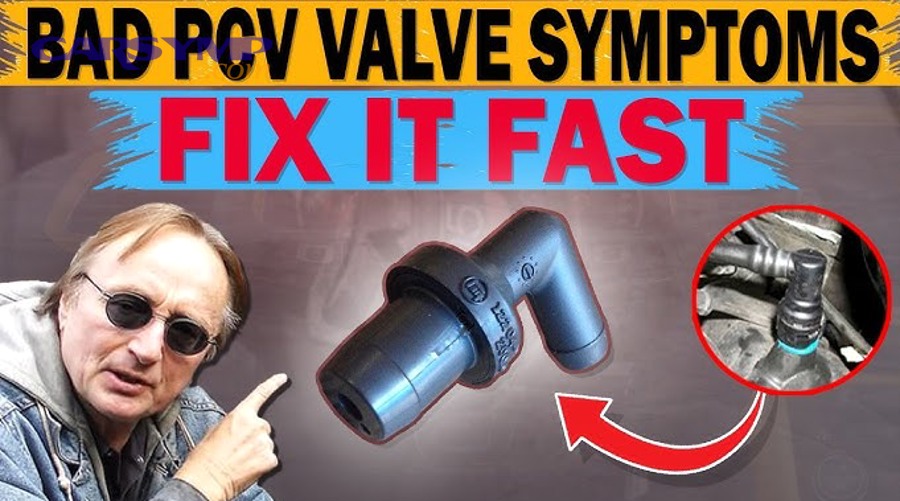
What is an integrated PCV (diaphragm) and what are its failure signs?
An integrated PCV system often places the metering mechanism inside the valve cover (commonly a diaphragm-style assembly), so failure may not look like a rattling valve problem.
Common failure signs:
- Persistent whistling noise near the valve cover area
- Rough idle and lean behavior that acts like a vacuum leak
- Oil seepage patterns that appear after ventilation imbalance
Why it’s different:
- The “valve” you’d replace on older designs may not exist as a standalone part; the repair might require replacing an assembly instead.
Why can turbo engines show different PCV symptoms than non-turbo engines?
Turbo engines operate in both vacuum and boost conditions, and that changes how crankcase vapors must be routed and checked.
What changes:
- Under boost, the intake manifold isn’t a vacuum source, so systems often rely on check valves, separators, or different routing to prevent pressurizing the crankcase.
- Symptoms can be load-dependent in a different way than naturally aspirated engines.
Practical takeaway:
- If you’re diagnosing a turbo setup, confirm the routing and check-valve function in the crankcase ventilation path before concluding the core PCV valve is the only issue.
When is the “PCV rattle test” unreliable or misleading?
Yes, the rattle test can be unreliable because many modern systems don’t use a simple free-moving pintle that rattles, and because a valve can rattle yet still flow incorrectly under real vacuum and blow-by conditions.
More importantly, your car doesn’t need a rattling sound—it needs correct metering and correct sealing. If symptoms and trim behavior are strong, rely on system behavior and leak checks, not the presence or absence of a rattle.
What’s the fastest way to confirm the repair worked after replacement?
The fastest confirmation is a short before/after comparison: idle smoothness, sound (no hiss/whistle), and (if available) fuel trims trending closer to normal during idle and light cruise.
A tight verification loop:
- Start the engine and let it reach stable idle.
- Confirm the symptom you were chasing is reduced (rough idle, smoke event, new leaks).
- Re-check the PCV hose connections and grommets for sealing.