


A stretched timing chain produces seven recognizable warning signs: a rattling noise at startup, repeated engine misfires, an illuminated check engine light with fault codes, noticeable power loss, hard starting or failure to start, cam or crank timing mark misalignment, and metal debris appearing in the engine oil. These signs do not always appear simultaneously — they tend to emerge in stages, beginning subtly and escalating in severity as the chain continues to elongate. Recognizing them early is the difference between a manageable repair and a destroyed engine.
Understanding why timing chain stretch happens is just as important as spotting the symptoms. The timing chain is a precision component that synchronizes the crankshaft and camshaft, and when its metal links begin to elongate from heat, friction, and wear, that synchronization breaks down. Oil quality and change frequency play a decisive role in how quickly this degradation occurs, making maintenance history a critical factor in any diagnosis.
Once stretch reaches a critical point, the consequences become severe — a stretched chain can jump a sprocket tooth, bend valves, and bring an engine to a sudden halt. Knowing how serious the condition is, and whether continuing to drive is safe, helps car owners make faster, better-informed decisions before permanent damage occurs.
To diagnose timing chain stretch accurately, mechanics rely on OBD-II codes, physical inspection of chain slack, and tensioner extension measurement. Understanding these methods helps car owners ask the right questions at the shop and recognize when a DIY assessment ends and professional diagnosis must begin. Below, each of the seven warning signs is examined in full — alongside the diagnostic process, urgency assessment, and the engine-specific factors that make some vehicles far more vulnerable than others.
What Is Timing Chain Stretch and Why Does It Happen?
A timing chain stretch is a condition where the metal links of a timing chain elongate permanently due to cumulative wear from heat, friction, and inadequate lubrication — disrupting the precise synchronization between the crankshaft and camshaft.
To better understand the stakes, it helps to know exactly what a timing chain does inside an engine. The timing chain connects the crankshaft — which moves the pistons — to the camshaft, which controls the opening and closing of the intake and exhaust valves. This relationship must be timed to within fractions of a millisecond. When the chain stretches, that timing shifts, and the engine’s combustion process becomes increasingly imprecise.
The root causes of timing chain stretch fall into several well-established categories. Oil starvation is the most damaging — without a consistent film of oil between each chain link’s pin and bushing, metal-on-metal contact accelerates wear at a rapid rate. High mileage compounds this naturally, as no mechanical component lasts indefinitely under constant thermal cycling. Heat cycling — the repeated expansion and contraction of metal during warming and cooling — gradually fatigues the link joints. Poor lubrication from dirty, degraded, or incorrect-viscosity oil acts as an abrasive rather than a lubricant, accelerating internal erosion. On modern engines equipped with Variable Valve Timing (VVT) systems, the chain experiences additional micro-load variations from constant camshaft position adjustments, increasing stress beyond what older, non-VVT designs experienced.
Most engines begin showing stretch-related symptoms between 80,000 and 120,000 miles, though this range is heavily influenced by oil change habits and engine design. Some well-maintained engines run well beyond 200,000 miles on an original chain, while others with chronic oil neglect show symptoms before 60,000 miles.
How Does a Timing Chain Stretch Over Time?
Timing chain stretch occurs at the microscopic level, inside each link’s pin-and-bushing connection. As the chain rotates continuously under load, the pins that connect each link wear against their surrounding bushings. Each wear event removes a near-invisible amount of metal — but over tens of thousands of rotations, the cumulative elongation across hundreds of links adds up to a measurable and mechanically significant stretch.
Dirty or low oil dramatically accelerates this process. Engine oil serves as both a lubricant and a coolant for the timing chain. When oil becomes contaminated with combustion byproducts, metal particles, or sludge — or when oil levels drop below the minimum threshold — the lubricating film between pin and bushing thins or disappears entirely. Metal contacts metal directly, and wear accelerates exponentially rather than linearly.
On engines with Variable Valve Timing, the situation is compounded further. VVT systems work by using hydraulic pressure to advance or retard the camshaft position in real time. Each adjustment creates a small tensile jerk on the timing chain. Over time, these repeated micro-stress events fatigue the chain links beyond what normal continuous-load wear would cause, explaining why VVT-equipped engines — particularly from BMW, Ford, and Audi — have become some of the most documented cases of premature timing chain stretch.
Is Timing Chain Stretch the Same as a Loose Timing Chain?
No — timing chain stretch and a loose timing chain are related but distinct conditions, and conflating the two can lead to the wrong repair. A stretched timing chain has permanently elongated links; the metal itself has changed shape and cannot be restored. A loose timing chain, by contrast, may result from a failed or depleted tensioner that can no longer apply adequate pressure to take up normal slack — the chain itself may not be stretched at all.
The practical distinction matters significantly for diagnosis and cost. A failed tensioner can sometimes be replaced independently, at a fraction of the cost of a full chain replacement. A stretched chain, however, requires full replacement regardless of tensioner condition — and in most cases, the tensioner, guides, and sprockets should be replaced at the same time to prevent immediate recurrence.
The key diagnostic question is: has the chain elongated beyond its original specification, or is the tensioner simply unable to compensate for normal slack? This is determined by physical measurement — either by checking cam and crank timing mark alignment or by measuring how far the tensioner ratchet has extended. A fully extended tensioner with timing marks still aligned points to tensioner failure; misaligned timing marks despite a functional tensioner point to chain stretch.
What Are the 7 Warning Signs of a Stretched Timing Chain?
There are 7 primary warning signs of a stretched timing chain: rattling noise, engine misfires, check engine light with fault codes, power loss, hard or failed starting, timing mark misalignment, and metal debris in the oil — identified based on how stretch disrupts engine synchronization at each stage of progression.
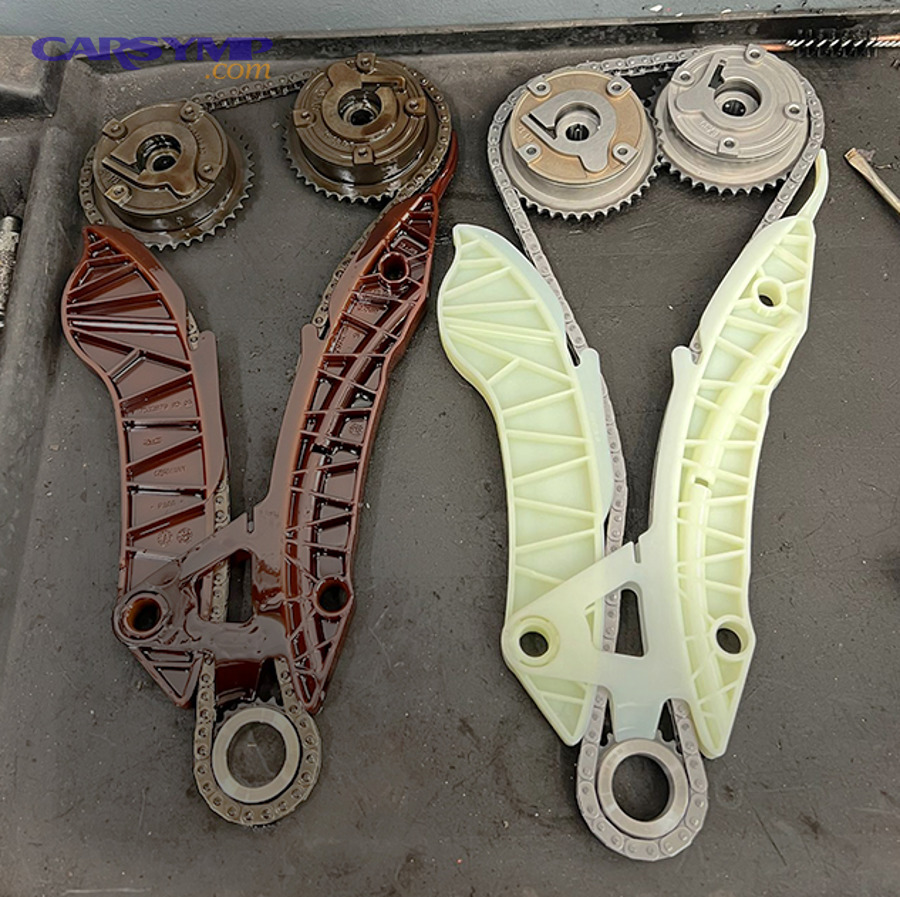
These symptoms rarely appear all at once. More commonly, they emerge in sequence, with acoustic signs appearing first, followed by performance degradation, then full diagnostic codes, and finally mechanical evidence. Understanding the order of progression helps identify stretch early — before it reaches the stage where catastrophic engine damage becomes likely.
Sign 1 — Does a Stretched Timing Chain Make a Rattling Noise?
Yes — a stretched timing chain produces a distinctive rattling or slapping noise, particularly at startup and when the engine is cold, because the elongated chain has excess slack that allows it to contact the timing cover or engine block before oil pressure builds.
Specifically, this sound occurs in the brief window between engine start and the moment the oil pump generates sufficient pressure to prime the hydraulic tensioner. During those first few seconds, the stretched chain slaps against its guide rails or the timing cover, producing a metallic rattle that often fades once oil pressure stabilizes. This fading quality makes the symptom deceptively easy to dismiss — many drivers assume the noise is normal cold-start behavior and ignore it for thousands of miles.
The character of the rattle carries diagnostic information. A chain-slap rattle is a dull, rhythmic knocking that correlates with engine RPM. This is distinct from a tensioner tick, which produces a higher-pitched, more rapid tapping, and from a jumped-chain grind, which is a harsh, irregular sound that typically does not fade and is accompanied by immediate performance loss. Distinguishing between these sounds is the first step in narrowing down whether timing chain repair is needed or whether the issue lies elsewhere in the valve train.
Sign 2 — Can Timing Chain Stretch Cause Engine Misfires?
Yes — timing chain stretch causes engine misfires because the elongated chain shifts the camshaft’s rotational position relative to the crankshaft, causing valves to open and close at the wrong moment in the combustion cycle.
More specifically, combustion requires a precise sequence: the intake valve opens to admit air and fuel, the valve closes, the piston compresses the mixture, the spark fires, and the exhaust valve opens to expel gases. When the timing chain stretches and the camshaft falls behind its intended position, this sequence becomes desynchronized. A valve may still be open when the spark fires, preventing proper compression — the result is a misfire, felt as a stumble, hesitation, or shudder.
These misfires tend to worsen at higher RPMs because the timing error becomes proportionally more disruptive as engine speed increases. At idle, the engine may run roughly but remain functional. Under acceleration or load, the misfires intensify and fuel economy degrades noticeably. Rough idle combined with acceleration hesitation — in the absence of a faulty spark plug or ignition coil — is a strong pattern indicator pointing toward a timing or chain-related cause.
Sign 3 — Will a Stretched Timing Chain Trigger the Check Engine Light?
Yes — a stretched timing chain will trigger the check engine light because the resulting camshaft-to-crankshaft timing offset is detected by the engine’s position sensors, which report the discrepancy as a fault to the ECU.
The specific codes generated are cam/crank correlation codes: P0016 (Crankshaft/Camshaft Timing Misalignment, Bank 1, Sensor A), P0017, P0018, and P0019, each covering different cam and bank combinations depending on the engine configuration. These codes are logged when the ECU detects that the camshaft position signal is not arriving at the expected moment relative to the crankshaft position signal. Cam/crank correlation codes explained in this context point directly to a mechanical timing problem — stretched chain, jumped chain, or failed VVT phaser — rather than an electrical sensor fault.
However, the check engine light alone is not a definitive diagnosis. The same codes can be triggered by a faulty camshaft position sensor, a failing VVT solenoid, or contaminated oil blocking the VVT system. This is why these codes must always be evaluated alongside physical symptoms — particularly the startup rattle and misfire pattern — before concluding that chain replacement is necessary.
Sign 4 — Does Timing Chain Stretch Affect Engine Performance and Power Loss?
Yes — timing chain stretch causes measurable performance loss because retarded camshaft timing reduces the efficiency of the intake and exhaust cycle, resulting in lower torque output, sluggish acceleration, and increased fuel consumption.
The relationship between cam timing and engine output is direct. As the chain stretches and the camshaft retards, the intake valves open later than designed, reducing the volume of the air-fuel mixture that enters the combustion chamber. Less mixture means less energy released per combustion event, which translates into reduced torque — particularly at low and mid-range RPMs where most everyday driving occurs.
Drivers typically notice this as a general “flatness” in acceleration: the engine feels less responsive when pulling away from stops, merging onto highways, or climbing grades. Fuel economy drops simultaneously, because the ECU compensates for the reduced combustion efficiency by injecting additional fuel. If a vehicle that has maintained consistent fuel economy begins consuming noticeably more fuel without any change in driving habits, timing chain condition is a legitimate factor to investigate — especially on high-mileage vehicles or those with overdue oil changes.
Sign 5 — Can a Stretched Timing Chain Cause Hard Starting or Failure to Start?
Yes — a stretched timing chain can cause hard starting or complete failure to start because the cam and crank position sensors detect a timing offset that prevents the ECU from correctly calculating injection and ignition timing, leading to extended cranking or a no-start condition.
More specifically, the engine’s start sequence depends on the ECU receiving synchronized signals from the crankshaft and camshaft position sensors within the first few crankshaft rotations. If the chain has stretched significantly, the camshaft signal arrives out of phase with the crankshaft signal. In moderate cases, the ECU eventually locks onto a firing sequence after prolonged cranking — explaining the “cranks for several seconds before starting” symptom. In severe cases, particularly after the chain has jumped a tooth, the ECU cannot establish a valid timing reference at all, and the engine will not start.
It is important to distinguish this symptom pattern from battery or starter motor issues. A timing-related hard start typically occurs on a warm, previously running engine and is accompanied by the other symptoms already described — rough idle, misfires, rattle. A battery or starter problem tends to manifest as a slow crank or clicking without the other performance symptoms. If hard starting appears alongside a P0016 code and startup rattle, the timing chain is the primary suspect.
Sign 6 — What Does Timing Offset on a Cam or Crank Indicate About Chain Stretch?
Timing offset on a cam or crank is a direct mechanical indicator of chain stretch — it means the chain has elongated enough to shift the camshaft’s rotational position out of alignment with the crankshaft’s factory-specified timing marks.
Mechanics verify this by bringing the engine to Top Dead Center (TDC) on the compression stroke and checking whether the camshaft timing marks align with their reference points on the engine. On a healthy chain, these marks align precisely. On a stretched chain, the cam marks will be offset — typically retarded, meaning the camshaft is lagging behind where it should be. The degree of offset reflects the severity of the stretch.
A secondary measurement involves inspecting the tensioner ratchet extension. Most hydraulic tensioners use a ratcheting mechanism to take up slack as the chain elongates. Each ratchet tooth represents a fixed increment of chain compensation. When the tensioner has extended to or near its maximum travel, it indicates that the chain has stretched to the outer limit of what the tensioner can accommodate. Once the tensioner runs out of travel, nothing prevents the chain from going slack — at which point a jump becomes imminent. Experienced mechanics use tensioner position as a leading indicator, often recommending chain replacement before the chain has actually jumped, avoiding the far more expensive repair that follows.
Sign 7 — Is Oil Contamination or Metal Debris a Sign of Timing Chain Stretch?
Yes — oil contamination with metal debris is a legitimate sign of advanced timing chain stretch, because the sustained metal-on-metal wear between elongated chain links, guides, and sprockets deposits fine metallic particles directly into the engine oil.
This sign is most reliably observed during an oil change. A mechanic inspecting the drain plug magnet on an engine with significant chain wear will typically find a coating of fine ferrous particles — more than what is considered normal for a high-mileage engine. The oil itself may also darken and degrade faster than expected between change intervals, due to the metal particles acting as abrasives that accelerate oxidation and viscosity breakdown.
Oil change neglect and timing chain wear are closely linked in both directions: dirty oil accelerates chain wear, and advanced chain wear contaminates the oil more rapidly. This creates a feedback loop where deferred maintenance leads to faster mechanical degradation. On any vehicle where the oil change history is unknown or irregular — such as a recently purchased used car — inspecting the drain plug magnet and evaluating oil condition at the first service is a simple, low-cost step that can reveal significant timing chain wear before audible symptoms fully develop.
How Serious Is a Stretched Timing Chain — Can You Still Drive?
No — you should not continue driving with a confirmed stretched timing chain, because the risk of the chain jumping a sprocket tooth or snapping entirely increases with every engine revolution, and the resulting engine damage is typically catastrophic and irreversible.
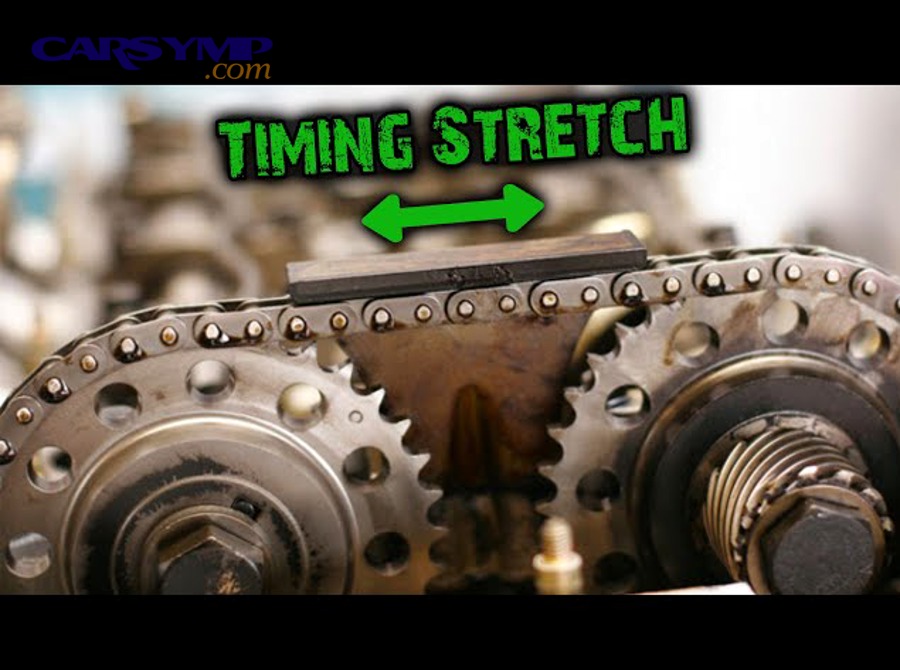
The failure cascade follows a predictable sequence. Once the chain stretches beyond the tensioner’s compensation range, it develops enough slack to skip over a sprocket tooth under load. When the chain jumps, the camshaft’s position shifts suddenly and dramatically relative to the crankshaft. In interference engines — where the pistons and valves occupy overlapping space at different moments in the cycle — this jump causes the pistons to strike the now-mispositioned valves. Bent or broken valves, damaged pistons, and scored cylinder walls are the typical results. In the worst cases, the chain snaps entirely, causing immediate engine shutdown and the same destructive contact between pistons and valves.
The financial comparison is unambiguous. A timing chain repair — covering the chain, tensioner, guides, and sprockets — typically costs between $600 and $1,800 depending on the vehicle and labor rates. An engine rebuild following chain failure ranges from $3,000 to $8,000 or more, and in many cases the repair cost exceeds the vehicle’s value, making the car an effective total loss. There is no additive, stop-gap treatment, or temporary fix for a stretched chain — chain elongation is permanent, and the component must be replaced. Continuing to drive after symptoms appear is not a calculated risk; it is a near-certain path to a far more expensive outcome.
How Do You Diagnose Timing Chain Stretch Correctly?
Timing chain stretch is correctly diagnosed through a combination of 4 methods: reading OBD-II fault codes, performing physical chain slack inspection, measuring tensioner extension, and executing a crankshaft rock test — each method confirming what the others suggest.
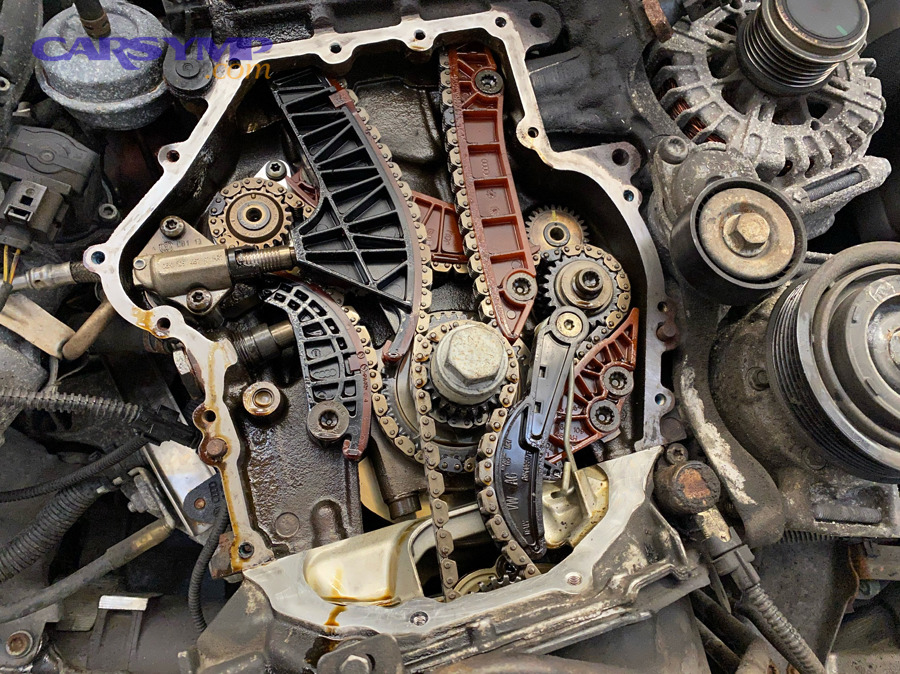
These diagnostic steps are complementary, not interchangeable. Relying on codes alone without a physical inspection can produce a misdiagnosis, because the same P001x codes appear with VVT solenoid failures and position sensor faults. Conversely, physical inspection without code data misses the ECU’s historical record of timing discrepancies. A thorough diagnosis uses all available inputs.
OBD-II Scanner — Reading P001x Codes: The first step in any timing chain diagnosis is connecting an OBD-II scanner to retrieve stored and pending fault codes. The presence of P0016, P0017, P0018, or P0019 — cam/crank correlation codes — flags a timing synchronization problem. These codes should be cross-referenced against freeze-frame data to understand the conditions under which they were set (cold start, acceleration, idle), which helps narrow the cause.
Physical Inspection — Removing the Timing Cover: On engines where access permits, a mechanic will remove the timing cover to visually inspect chain condition and directly measure slack. Chain slack is measured by checking how far the chain can be deflected laterally at its slack side. Manufacturers specify a maximum allowable slack; measurements beyond this threshold confirm stretch. Visual inspection also reveals guide wear — cracked, missing, or heavily grooved nylon guide rails indicate that the chain has been operating with excess slack long enough to erode its guides.
Tensioner Extension Measurement: As described under Sign 6, the tensioner ratchet position is a leading diagnostic indicator. If the tensioner is within one or two ratchet teeth of its maximum extension, the chain is operating at the outer limit of compensated stretch. Many experienced technicians treat a nearly maxed-out tensioner as sufficient justification for replacement, even before other symptoms become severe.
Crankshaft Rock Test: With the timing cover accessible, a mechanic can slowly rock the crankshaft back and forth by hand while observing the camshaft. On a chain with normal tension, the camshaft should respond immediately to crankshaft movement with no perceptible lag. On a stretched chain, there will be a brief delay — the slack side of the chain must take up tension before the camshaft begins to move. The amount of lag correlates with the degree of stretch.
DIY timing chain repair risks are significant and should be clearly understood before attempting home diagnosis beyond the OBD-II code stage. Timing the engine incorrectly during reassembly — even by a single tooth — can cause immediate engine damage on first start. Specialized tools are required to hold the camshaft and crankshaft in their locked positions during chain installation, and these tools are engine-specific. Without them, accurate timing is not achievable. For most car owners, the diagnostic work beyond code reading and symptom observation is best left to a qualified technician.
What Factors Make Timing Chain Stretch Worse in Specific Engines?
There are 3 primary factors that make timing chain stretch worse in specific engines: the presence of Variable Valve Timing systems, engine design vulnerabilities specific to certain manufacturers, and the compounding effect of guide failure occurring alongside chain elongation.
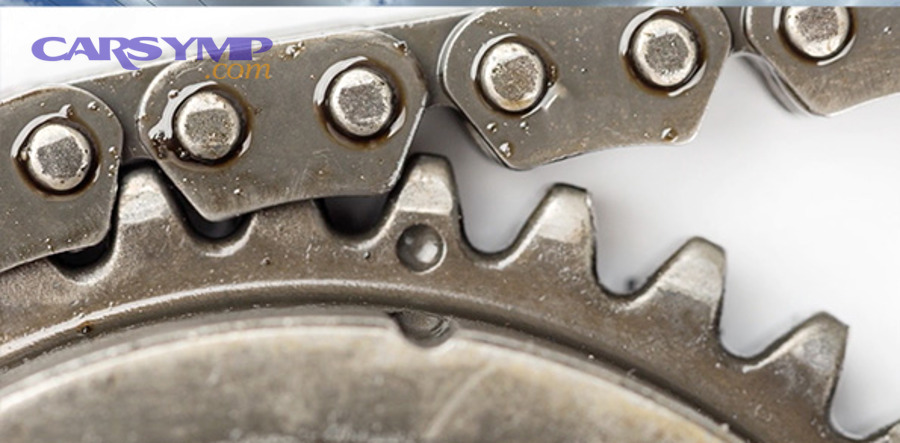
These factors explain why two vehicles of similar mileage and age can have dramatically different timing chain outcomes. A well-maintained naturally aspirated engine with a simple single-chain design may run 200,000 miles without issue, while a turbocharged VVT engine from the same era may develop stretch-related symptoms at 60,000 miles under identical driving conditions. Knowing which category your engine falls into shapes both maintenance strategy and risk awareness.
Does Variable Valve Timing (VVT) Make Timing Chains More Prone to Stretching?
Yes — Variable Valve Timing systems make timing chains significantly more prone to stretching because the continuous real-time adjustments to camshaft position create repeated tensile stress events that fatigue chain links beyond what standard continuous-load operation would cause.
In a conventional non-VVT engine, the timing chain operates under a consistent, predictable load as it rotates at a fixed ratio to the crankshaft. In a VVT-equipped engine, hydraulic pressure is constantly applied to advance or retard the camshaft position in response to throttle input, engine speed, and temperature. Each adjustment generates a brief tension spike in the chain. Individually, these spikes are small. Cumulatively, across millions of engine revolutions, they produce measurably faster link wear than steady-state operation.
Ford EcoBoost engines (2.0L and 3.5L), BMW N-series engines (N20, N47, N63), and Audi/VW TFSI engines are among the most commonly cited examples of VVT-related premature timing chain stretch. For owners of these engines, the practical implication is clear: oil change intervals should be shortened compared to the manufacturer’s generic recommendation, full-synthetic oil of the correct viscosity should be used without exception, and timing chain inspection should be initiated proactively at 60,000 miles rather than waiting for symptoms.
Which Car Engines Are Most Notorious for Timing Chain Stretch Problems?
There are 5 engine families with the most extensively documented timing chain stretch problems: BMW N47/N20/N63, Ford 2.0L/3.5L EcoBoost, Audi/VW 2.0 TFSI (CAEB), GM 3.6L V6, and certain Nissan VQ-series engines — each exhibiting distinct failure patterns tied to their specific design characteristics.
The following table summarizes the key attributes of each engine family’s timing chain vulnerability, including typical failure mileage, primary cause, and whether a recall or technical service bulletin has been issued:
| Engine | Common Failure Mileage | Primary Cause | Recall/TSB Status |
|---|---|---|---|
| BMW N47 (2.0L diesel) | 60,000–80,000 mi | Rear-mounted chain, oil starvation | Multiple TSBs; legal action in several markets |
| BMW N20/N63 | 70,000–100,000 mi | VVT stress, plastic guide wear | Extended warranty programs in some regions |
| Ford 2.0L/3.5L EcoBoost | 80,000–120,000 mi | VVT micro-fatigue, tensioner design | TSBs issued; tensioner redesigns released |
| Audi/VW 2.0 TFSI (CAEB) | 60,000–100,000 mi | Chain guide wear, oil sludge | TSBs; documented class actions in Europe |
| GM 3.6L V6 | 100,000–150,000 mi | Guide wear precedes chain stretch | TSBs; guide replacement often sufficient |
The BMW N47 deserves particular attention — uniquely among common engines, its timing chain is mounted at the rear of the engine rather than the front, meaning that replacement requires partial engine removal. This design choice makes timing chain repair on the N47 one of the most labor-intensive and expensive procedures on any production vehicle.
What Is the Difference Between Timing Chain Stretch and Timing Chain Guide Failure?
Timing chain stretch and timing chain guide failure are distinct conditions that produce overlapping symptoms — but they differ in root cause, diagnostic evidence, and repair scope, and confusing the two can result in an incomplete repair that fails quickly.
A timing chain guide is a nylon or plastic rail mounted alongside the chain’s path. Its function is to prevent the chain from oscillating laterally and to direct it smoothly over the sprockets. Guide failure occurs when these rails crack, fragment, or wear through — most commonly due to chain-slap from a stretched or slack chain eroding the guide surface over time.
The key diagnostic difference lies in the oil. Guide failure deposits plastic or nylon debris into the engine oil — visible as white or tan flecks on the oil drain plug or in the oil filter. Chain stretch, by contrast, produces metallic debris. When a mechanic finds plastic fragments in the oil, guide failure is confirmed, and the repair scope must include guide replacement even if the chain itself has not yet elongated beyond specification.
Critically, replacing a chain without simultaneously replacing worn guides creates an immediate recurrence risk. A new chain running against a heavily grooved or partially fragmented guide will develop abnormal wear patterns within the first few thousand miles, accelerating the return of stretch symptoms. Industry standard practice for any timing chain repair is to replace the full kit: chain, tensioner, all guides, and sprockets — never the chain in isolation.
How Can You Prevent Timing Chain Stretch from Happening in the First Place?
Timing chain stretch is prevented primarily through 4 practices: consistent full-synthetic oil changes at appropriate intervals, cold-start driving habits that allow oil pressure to stabilize, proactive inspection on known high-risk engines, and immediate attention to early startup rattle before it progresses.
Oil change neglect and timing chain wear are inseparable topics. The single most impactful preventive action any car owner can take is maintaining a consistent oil change schedule with the correct oil specification. On VVT-equipped and turbocharged engines, this means full-synthetic oil changed no less frequently than every 5,000–7,500 miles — not the extended 10,000–15,000-mile intervals that some manufacturers suggest under “ideal” conditions that rarely match real-world driving. Degraded oil loses its lubricating film thickness, and the timing chain — operating under continuous load — is among the first components to show the consequence.
Cold, high-RPM driving before oil pressure has stabilized is a secondary but significant contributor to accelerated chain wear. In the first 10–15 seconds after a cold start, oil has not yet fully circulated through the engine’s upper components. Revving the engine hard during this window subjects the timing chain to high load without adequate lubrication — a brief but repeated stress event that accumulates into measurable wear over years of operation. Allowing the engine to idle for 15–20 seconds before driving under load is a simple habit that meaningfully extends timing chain life.
For owners of BMW N-series, Ford EcoBoost, Audi TFSI, or GM 3.6L V6 engines, proactive inspection at 60,000 miles is a worthwhile investment. A mechanic can evaluate tensioner extension and check for early rattle without disassembly in most cases. Catching stretch at the tensioner-near-limit stage — before timing marks shift and before codes are set — allows replacement to be scheduled as planned maintenance rather than an emergency repair.
Finally, startup rattle should never be dismissed as a normal quirk. A cold-start rattle that lasts more than two or three seconds on a warm-climate startup, or that persists beyond oil pressure build on a cold-climate start, is an early warning that the timing chain or tensioner is operating at the margins. Addressing it at this stage — with a full inspection and, if confirmed, a complete chain kit replacement — is the most cost-effective timing chain decision a car owner can make.