


Power steering leaks reveal themselves through seven distinct warning signs: fluid puddles beneath your vehicle, whining or groaning noises when turning, a stiff or hard-to-turn steering wheel, burning smells near the engine, dashboard warning lights, visibly low fluid reservoir levels, and wet spots on steering components. These symptoms indicate hydraulic fluid escaping from your power steering system, reducing the pressure needed for smooth steering operation and creating safety hazards that demand immediate attention.
The leaks most commonly originate from three specific locations within your steering system. Your power steering pump develops leaks when shaft seals deteriorate, allowing fluid to drip from behind the pump pulley. Hoses and connections fail under constant pressure and heat exposure, creating cracks at junction points where rubber meets metal. The steering rack or gear assembly loses fluid through degraded internal seals that face continuous exposure to road debris and temperature extremes. Understanding where these leaks occur helps you locate the problem faster and communicate effectively with repair professionals.
Identifying the source of a power steering fluid leak requires systematic inspection starting under your hood. You check the power steering fluid reservoir first for low levels and air bubbles, then trace visible hoses for wet spots and damage. A simple overnight test using cardboard or white paper beneath your parked vehicle reveals the leak’s location based on where fluid accumulates. Fresh power steering fluid appears clear to pinkish-red with an oily texture and distinctive odor, distinguishing it from transmission fluid, coolant, or engine oil.
The severity of power steering leaks ranges from manageable inconveniences to dangerous mechanical failures depending on how quickly you respond. Ignoring early symptoms leads to complete loss of power steering assist, pump damage from overheating, increased accident risk during emergency maneuvers, and repair costs that escalate from simple seal replacements to full component overhauls. Next, let’s examine each warning sign in detail so you can diagnose your power steering system with confidence.
What Are the Most Common Warning Signs of a Power Steering Leak?
Power steering leaks produce seven primary warning signs that fall into visual, auditory, and physical symptom categories, with stiff steering, unusual noises, and fluid puddles representing the most immediately noticeable indicators. These symptoms appear progressively as the leak worsens, starting with subtle changes in steering feel and advancing to obvious fluid loss beneath your vehicle.
To better understand how these warning signs manifest, we need to examine each symptom type and what it reveals about your steering system’s condition.
Does Your Steering Wheel Feel Stiff or Hard to Turn?
Yes, a stiff or hard-to-turn steering wheel directly indicates a power steering fluid leak because reduced fluid levels decrease the hydraulic pressure that assists your steering input, forcing you to apply more physical effort to turn the wheels. This symptom becomes most noticeable at low speeds during parking maneuvers or tight turns where power steering assistance matters most.
The stiffness develops gradually as fluid levels drop. When your power steering system operates at full capacity, the hydraulic pump maintains approximately 1,000 to 1,500 PSI of pressure, which translates your gentle steering wheel rotation into significant force at the wheels. A leak reduces this pressure incrementally, first making low-speed turns slightly more difficult, then progressing to noticeably heavy steering even at moderate speeds. You might dismiss the initial stiffness as normal resistance, but any increase in steering effort compared to your vehicle’s typical feel signals hydraulic pressure loss.
The progressive nature of this symptom provides diagnostic value. If your steering feels normal at highway speeds but becomes heavy in parking lots, your system retains some hydraulic function but operates below optimal pressure. Complete steering failure occurs when fluid levels drop so low that the pump cannot generate any meaningful pressure, leaving you with manual steering that requires substantial upper body strength to operate.
Are You Hearing Whining, Groaning, or Squealing Noises?
Yes, whining, groaning, or squealing noises when turning your steering wheel indicate a power steering fluid leak because these sounds occur when the pump struggles to circulate insufficient fluid or draws air into the system through leak points. Each noise type corresponds to specific mechanical conditions within your steering system.
Whining noises typically emerge first as fluid levels begin dropping. The power steering pump creates this high-pitched whine when it attempts to pressurize a fluid volume lower than its designed operating capacity. This sound intensifies during turning maneuvers when the system demands maximum pressure and becomes most pronounced when you turn the wheel to its full lock position in either direction. The whine suggests your system still contains some fluid but operates below the optimal level.
Groaning or grinding sounds represent more severe conditions. These deeper, rougher noises indicate the pump is drawing air into the hydraulic circuit through the leak or that internal components are making metal-to-metal contact without adequate lubrication. Groaning specifically occurs when air bubbles compress and decompress within the hydraulic lines during steering inputs, creating a distinctive moaning sound that varies with steering wheel speed. This symptom warns that your leak has progressed beyond simple fluid loss to system contamination with air.
Squealing at engine startup points to belt-related issues rather than direct fluid loss. A worn or loose serpentine belt that drives your power steering pump slips against the pulley, producing a sharp squealing noise. While not directly caused by the leak itself, this symptom often accompanies leaking pumps because fluid escaping from pump shaft seals contaminates the belt and pulley surfaces, reducing friction and promoting slippage.
The timing of these noises provides diagnostic clues. Sounds that occur only during turning suggest low fluid levels affecting hydraulic pressure. Noises present at idle even without steering input indicate pump damage or severe air intrusion. Sounds that disappear after engine warm-up might relate to cold, thick fluid rather than an active leak, though this still warrants investigation.
Is There Red or Pink Fluid Pooling Under Your Car?
Yes, red or pink fluid pooling under your car indicates a power steering fluid leak because power steering systems use specially dyed hydraulic fluid that appears in these distinctive colors, easily distinguishing it from other automotive fluids based on location and appearance. This visual symptom provides the most direct evidence of fluid loss.
Fresh power steering fluid typically ranges from clear to light pink or red, depending on the manufacturer’s formulation and any dye additives. As the fluid ages within your system, it darkens to deeper red, amber, or even brown tones due to heat exposure and contamination with fine metal particles from normal component wear. The fluid maintains an oily, slippery texture regardless of color, leaving recognizable stains on concrete or asphalt that spread outward from the drip point.
The location of puddles helps identify leak sources. Fluid accumulating toward the front center of your vehicle, approximately where you sit while driving, typically originates from the power steering pump or its associated hoses. Puddles forming more toward the passenger side or extending further back under the engine bay suggest leaks from the steering rack, particularly in vehicles with transverse-mounted engines and rack-and-pinion steering systems. The exact position varies by vehicle design, but power steering leaks generally appear in the front half of the car rather than near the rear axle.
Timing affects puddle formation significantly. Power steering fluid leaks slowly accumulate rather than gushing rapidly unless a hose completely separates or a seal fails catastrophically. You typically discover these puddles after your vehicle sits overnight or for several hours, giving fluid time to drip from the leak point and pool on the ground. Morning inspections before you start your car provide the best opportunity to spot fresh fluid accumulation, as moving the vehicle spreads the fluid and makes the leak source harder to pinpoint.
The size and spread pattern of the puddle indicate leak severity. Small spots the size of a quarter or half-dollar suggest slow seepage from a worn seal or loose connection. Larger puddles spanning several inches in diameter indicate more serious leaks from cracked hoses or damaged pump seals. Fluid trails that show directional spreading where you last drove the vehicle demonstrate active leaking during operation rather than simple dripping after shutdown.
What Other Visual and Sensory Clues Indicate a Leak?
Additional warning signs include a burning smell from power steering fluid contacting hot engine components, dashboard warning lights, continuously low reservoir levels despite refilling, and visible wetness on steering system parts. These supplementary symptoms confirm the presence of a leak when combined with the primary indicators.
A burning odor near your engine compartment occurs when leaked power steering fluid drips onto heated surfaces like the exhaust manifold, engine block, or turbocharger housing. Power steering fluid has a relatively low flash point compared to engine oil, creating a distinctive acrid smell when it burns. This scent differs from burning oil, which produces a heavier, more pungent odor. If you smell burning immediately after turning sharply or during extended periods of low-speed maneuvering that strain the power steering system, leaked fluid is likely vaporizing on nearby hot surfaces.
Dashboard warning lights provide electronic confirmation of system problems. Modern vehicles equipped with electric power steering sensors trigger a warning light shaped like a steering wheel or display a “Power Steering” message when the system detects pressure loss or fluid level drops. Older hydraulic systems without electronic monitoring may not illuminate any warning, requiring you to rely on physical symptoms instead. The appearance of this warning light alongside steering difficulties or unusual noises confirms a developing leak rather than an electrical fault.
Persistent low reservoir levels represent a diagnostic indicator rather than just a symptom. If you check your power steering fluid reservoir and find it consistently below the “MIN” or “ADD” line, especially if you recently topped it off, active fluid loss through a leak is occurring. A healthy system maintains stable fluid levels for months or even years, with only minimal drops due to normal evaporation. Needing to add fluid more than once every few months signals a leak that requires professional attention.
Visible wetness or fluid coating on steering components confirms leak locations when you inspect under the hood. Run your hand (wearing a glove) along accessible portions of power steering hoses, the pump body, and reservoir connections. Fresh, oily residue indicates active leaking at or near that point. Some leaks spray fine mists under pressure rather than producing obvious drips, coating surrounding components and engine parts with a thin film of fluid that appears wet or sticky to the touch.
Where Do Power Steering Leaks Most Commonly Occur?
Power steering leaks most commonly occur at three primary locations: the power steering pump shaft seal, hoses and their connection points, and the steering rack or gear assembly seals. Understanding these failure points helps you inspect systematically and identify the source faster.
These three locations account for the vast majority of power steering leaks due to the mechanical stresses, heat exposure, and constant pressure cycling they endure during normal vehicle operation. Let’s examine each location and its characteristic failure patterns.
How Can You Tell If Your Power Steering Pump Is Leaking?
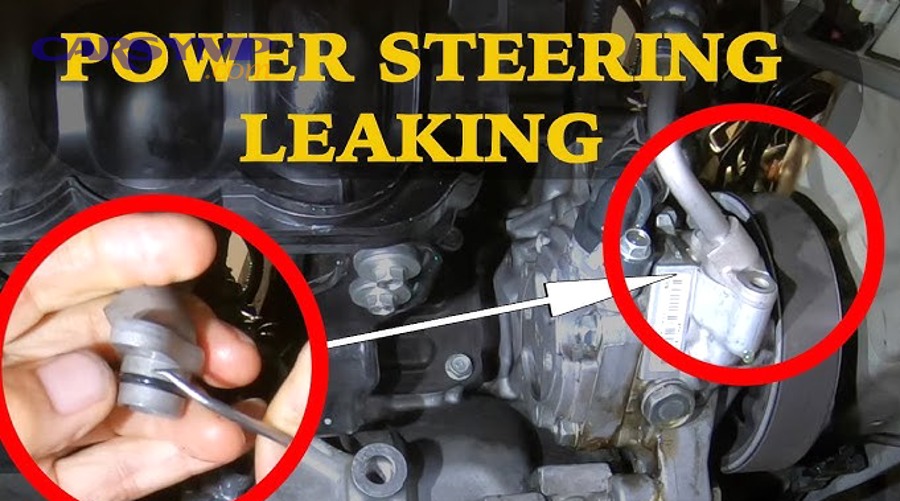
Your power steering pump is leaking if you observe fluid dripping from behind the pump pulley, notice wetness around the pump shaft where it enters the housing, or find fluid accumulating on the pump body itself. The pump shaft seal represents the most frequent failure point on this component.
The pump shaft extends from the pump housing to connect with a pulley that the serpentine belt drives. A seal surrounds this shaft where it exits the pump body, preventing pressurized fluid from escaping. Over time, constant rotation, exposure to engine heat, and normal seal material degradation cause this seal to harden and crack. Once the seal fails, pressurized fluid escapes with each pump revolution, initially creating a fine mist or light seepage that gradually progresses to steady dripping.
Visual inspection reveals pump leaks relatively easily since the pump typically mounts in an accessible location near the front of the engine. Look for fresh fluid glistening on the pump body or pulley, or check for a buildup of old, dried fluid mixed with road grime that appears as dark, greasy deposits. Active leaks show wet areas that remain moist even when the engine is cold, while old leaks leave only residue without current moisture.
The pump pulley itself provides a diagnostic clue. If fluid appears behind or underneath the pulley, dripping toward the belt or spraying onto surrounding components, the shaft seal has failed. This leak location often causes belt contamination, leading to the squealing noises mentioned earlier as secondary symptoms. The pump’s position relative to other components means leaked fluid may run down onto lower engine parts or the subframe, creating confusion about the actual leak source if you only inspect from beneath the vehicle.
Pump bearing failure sometimes accompanies or precedes seal leaks. A worn bearing allows excessive shaft movement, which damages the seal and accelerates fluid loss. If your pump produces rumbling or grinding noises in addition to leaking, bearing failure has likely occurred, requiring complete pump replacement rather than just seal service.
Are Your Power Steering Hoses and Connections the Problem?
Yes, power steering hoses and connections cause leaks when rubber hoses crack from age and heat exposure, metal lines corrode at vulnerable points, or connections loosen due to vibration and pressure cycling. These leaks typically manifest at junction points where dissimilar materials meet.
Power steering systems use both flexible rubber hoses and rigid metal lines to route fluid from the reservoir through the pump to the steering rack and back. The rubber hoses handle movement and vibration, connecting stationary metal lines to components that shift position with engine torque and steering inputs. These rubber sections endure continuous flexing, exposure to engine bay temperatures that can exceed 200°F, and internal pressure pulses every time you turn the steering wheel.
Hose deterioration follows predictable patterns. Surface cracking appears first, creating fine lines in the rubber exterior that don’t immediately penetrate to the inner layers. These surface cracks deepen over time, eventually reaching the internal rubber liner and allowing fluid to seep through. Hoses also develop bulges or soft spots where the reinforcement layers separate from the rubber, creating weak points that may burst under pressure. The areas most vulnerable to failure include bends where the hose curves sharply and sections closest to heat sources like the exhaust manifold or turbocharger.
Connection points represent another common leak source. Power steering hoses attach to pumps, racks, and metal lines using various fittings: crimp-style connections with metal sleeves, threaded fittings that screw together, or quick-disconnect couplers with O-ring seals. Vibration gradually loosens threaded connections, allowing fluid to seep past the threads. O-rings harden with age and lose their sealing ability, particularly in high-pressure circuits where fluid pressure exceeds 1,000 PSI. Crimp connections can fail if the crimp wasn’t properly formed during manufacturing or if the hose pulls against the fitting due to improper routing.
Identifying hose and connection leaks requires careful inspection since these components snake through crowded engine bays alongside wiring harnesses, coolant hoses, and other systems. Clean the suspected area with brake cleaner or degreaser, then run the engine and turn the steering wheel full lock in both directions several times. This pressurizes the system maximally, forcing fluid through any leak points. Fresh fluid appearing at a connection confirms that specific fitting as the source. Hose leaks may spray mist under pressure or produce steady drips depending on the crack size and location.
The distinction between high-pressure and low-pressure hoses matters for diagnosis and repair. The high-pressure hose runs from the pump outlet to the steering rack input, carrying pressurized fluid that performs the actual work of turning your wheels. This hose endures the most stress and typically uses reinforced construction with multiple layers. The return or low-pressure hose carries fluid from the rack back to the reservoir, operating at minimal pressure. Return hose failures usually cause slower leaks with less dramatic symptoms, while high-pressure hose failures can spray fluid rapidly and cause sudden loss of power steering assist.
Is the Leak Coming From Your Steering Rack or Gear?
The leak originates from your steering rack or gear if you find fluid accumulating at the rubber boots covering the rack ends, notice wetness on the rack housing body, or observe fluid dripping from the steering gear box on vehicles with traditional steering systems. These leaks result from internal seal degradation that allows fluid to escape from the sealed hydraulic chamber.
Rack-and-pinion steering systems, used on most modern vehicles, contain a pinion gear that meshes with a toothed rack. Hydraulic pressure applied to either side of a piston attached to the rack creates the power assist. Multiple seals isolate this hydraulic circuit: end seals where the rack shaft exits the housing to connect with tie rods, and internal seals that separate the high-pressure and low-pressure sides of the piston. When these seals fail, fluid leaks externally through the end seals or internally between the pressure chambers.
External rack leaks typically appear at the rubber boots or bellows that cover the rack ends. These accordion-like rubber covers protect the rack mechanism from road debris and contain any leaked fluid temporarily. If your rack’s internal seals fail, fluid escapes past the rack shaft and accumulates inside these boots, eventually saturating them and dripping from the boot’s edges or cracks. Squeezing the boots reveals their condition—a healthy boot feels soft and pliable, while a boot filled with leaked fluid feels heavy and sloshy. Some fluid may leak from small tears in the boots themselves, visible as wet spots or fresh fluid on the boot surface.
Central housing leaks occur less frequently but indicate more serious damage. The rack housing contains the pinion gear, and seals at the pinion shaft entry point prevent fluid loss. If these seals fail or the housing develops cracks from road damage or corrosion, fluid leaks from the housing’s midsection rather than the ends. This type of leak often requires complete rack replacement since the housing itself is damaged.
Traditional steering gear boxes, found on older vehicles and some trucks, use a different mechanism but similar sealing principles. The gear box contains a worm gear connected to the steering column and a sector gear that moves the pitman arm. Hydraulic pressure assists this gear interaction. Seals at the input shaft (where the steering column enters) and output shaft (where the pitman arm connects) prevent fluid loss. Gear box leaks appear as wetness on the box body or fluid dripping from the seals, often running down onto the frame or suspension components below.
The location of your vehicle’s steering rack or gear makes inspection challenging. Racks mount low in the engine bay, often behind the engine and above the front subframe, requiring you to raise the vehicle and inspect from underneath. Gear boxes typically mount on the frame rail, also requiring undercarriage access. The difficulty of inspection explains why rack and gear leaks often go unnoticed until they become severe enough to leave obvious puddles or cause noticeable steering symptoms.
Road conditions accelerate rack and gear seal failure. These components sit exposed beneath the vehicle where road salt, sand, and debris constantly bombard them. Salt corrosion degrades aluminum housings and attacks rubber boots. Temperature extremes cause seals to harden in winter and soften in summer, reducing their effective lifespan. Vehicles driven in harsh climates or on unpaved roads experience higher rates of steering rack and gear seal failure compared to vehicles operated in moderate conditions on maintained roads.
How Do You Quickly Locate the Source of a Power Steering Leak?
You quickly locate a power steering leak by systematically inspecting the fluid reservoir level, visually tracing accessible hoses and components for wetness, performing an overnight parking test with cardboard to identify drip locations, and using clean towels to pinpoint active leaks during engine operation. This methodical approach narrows the leak source from general area to specific component.
To begin your diagnostic process effectively, start with the most accessible inspection points under the hood before progressing to more difficult undercarriage examination.
What Should You Check First Under the Hood?
Check the power steering fluid reservoir first by locating the reservoir (usually a translucent plastic tank near the front of the engine with a steering wheel icon on the cap), removing the cap to inspect the fluid level against minimum and maximum marks, and examining the fluid’s color and clarity. This initial inspection reveals whether you have an active leak and provides baseline information about your system’s condition.
The reservoir check takes less than two minutes and provides immediate diagnostic value. Pop your hood and locate the power steering reservoir, which differs from the coolant overflow tank by its steering wheel symbol and typically smaller size. Most reservoirs use translucent plastic that allows you to see the fluid level without removing the cap, marked with “MIN” and “MAX” lines or “COLD” and “HOT” indicators. If your fluid sits below the minimum line, you’ve confirmed fluid loss that indicates a leak somewhere in the system.
Removing the reservoir cap allows closer fluid inspection. Fresh power steering fluid appears clear to light pink or red with a thin, oily consistency. Dark brown or black fluid indicates contamination from internal component wear or long service life. Foamy or bubbly fluid suggests air intrusion, which occurs when leaks in the low-pressure return side of the system draw air into the hydraulic circuit. A milky appearance indicates water contamination, possibly from a failed reservoir cap seal or condensation in an aging system.
After checking the reservoir, trace the visible hoses connected to it. Power steering systems typically have two hoses at the reservoir: one delivering pressurized fluid from the pump and another returning fluid from the rack. Follow these hoses as far as you can see without removing components, looking for wet spots, cracks, or obvious damage. Pay particular attention to hose connections where rubber meets metal fittings, as these junction points frequently develop leaks.
The power steering pump itself should be inspected next if you can see it from above. Some vehicles mount the pump in easily visible positions at the front of the engine, while others tuck it behind the engine or under intake manifolds. If accessible, examine the pump body for fresh fluid, particularly around the shaft seal behind the pulley. Shine a flashlight on the pump to reveal wet areas that might not be obvious in normal light.
Clean any suspected leak areas with brake cleaner or degreaser before performing further tests. A clean surface makes new fluid accumulation obvious, while trying to diagnose leaks through layers of old fluid, oil, and grime proves nearly impossible. Spray the cleaner, wipe with a rag, and allow the area to dry completely. This preparation step dramatically improves your ability to identify active leaks during subsequent testing.
How Can You Use Paper or Cardboard to Identify Leak Location?
Use clean cardboard or white paper placed under your parked vehicle overnight to identify leak location by positioning the material beneath the engine bay, allowing fluid to drip and accumulate, then examining the stain pattern in the morning to determine which component sits directly above the leak point. This passive test requires no tools and provides reliable location data.
Select a piece of cardboard large enough to extend under the entire front half of your vehicle, approximately 3 feet by 4 feet for most cars. Flattened moving boxes work perfectly for this purpose. Position the cardboard or paper on level ground in your garage or driveway, ensuring it lies flat without wrinkles or folds that might distort drip patterns. Park your vehicle over the material, centering it so the engine bay area sits completely above the cardboard.
Leave your vehicle parked for at least 8 hours, preferably overnight, to allow sufficient time for fluid accumulation. Power steering leaks typically drip slowly rather than gushing, requiring hours to create visible puddles. The overnight test period also ensures your engine cools completely, eliminating any confusion between active leaks and fluid that appears only when components expand from heat.
In the morning before moving your vehicle, slide out from under the car and examine the cardboard. Power steering fluid creates oily stains that range from clear to pink to red depending on fluid age. Note the exact position of any stains relative to the vehicle’s centerline and front-to-back position. Use a marker to outline the stain while the cardboard remains under the car, marking which end pointed toward the front bumper so you maintain orientation.
Interpret the stain location by correlating it with component positions. Stains centered under the engine typically indicate pump leaks. Stains offset toward the passenger side or extending rearward suggest rack leaks on vehicles with transverse engines. The exact correlation varies by vehicle design, but you can improve accuracy by consulting your vehicle’s service manual or online diagrams showing component locations for your specific make and model.
Multiple small stains scattered across the cardboard suggest several leak points or fluid spray patterns from a pressurized leak. A single concentrated puddle indicates one primary leak source. The stain’s size reflects leak severity—quarter-sized spots signal minor seepage, while hand-sized puddles demonstrate significant fluid loss that requires immediate attention.
Repeating the cardboard test after suspected repairs confirms whether you’ve successfully stopped the leak. Clean cardboard after a repair should show no new stains if you’ve properly addressed the leak source. Continued staining means either the repair failed or an additional leak exists that you haven’t yet identified.
What Does Power Steering Fluid Look and Smell Like?
Power steering fluid looks clear to reddish-pink when fresh, darkening to amber or brown with age, and feels slippery and oily to the touch while producing a distinct petroleum odor different from engine oil or transmission fluid. These characteristics help you distinguish power steering leaks from other automotive fluid losses.
Fresh power steering fluid most commonly appears clear or pale pink in color due to red dye added by manufacturers. Some brands use amber or yellow dye instead, creating fluids that look golden or honey-colored when new. The fluid’s transparency allows you to see through it when you hold a small amount in a clear container or observe it on a white paper towel. This see-through quality distinguishes it from engine oil, which appears opaque brown or black.
As power steering fluid ages in your system, it darkens progressively. Six-month-old fluid typically shifts to deeper red or amber tones. Fluid that has served for years turns dark brown or even black as it accumulates fine metal particles from normal pump and rack wear, mixes with trace amounts of moisture, and degrades from heat exposure. This color change doesn’t necessarily indicate a problem—it reflects normal fluid aging—but very dark fluid suggests your system would benefit from a fluid flush and fresh fluid replacement.
The texture of power steering fluid remains consistently thin and oily regardless of age. When you dip your finger in power steering fluid, it flows easily and coats your skin with a slippery film similar to motor oil but typically less viscous. Unlike brake fluid, which feels somewhat slippery but thinner and more water-like, power steering fluid maintains a definite oily character. Unlike coolant, which feels slick but not oily and often has a sweet smell, power steering fluid has a petroleum base that gives it that characteristic oil feel.
The smell of power steering fluid provides another identification method. Fresh power steering fluid has a mild petroleum odor similar to light machine oil, less pungent than gear oil but more noticeable than automatic transmission fluid. Aged power steering fluid develops a slightly burnt or acrid smell as it degrades from heat and oxidation. If you smell burning near your engine and find fluid with this burnt odor, you’ve likely located leaked power steering fluid that has contacted hot engine components.
Distinguishing power steering fluid from other automotive fluids becomes critical during leak diagnosis. Engine oil appears opaque and darker, even when new, and has a different, heavier smell. Transmission fluid looks very similar to power steering fluid—many vehicles actually use automatic transmission fluid in their power steering systems—making distinction difficult. Coolant appears brightly colored (green, orange, pink, or yellow depending on type) and feels less oily, often leaving a sticky residue when dried. Brake fluid looks clear to amber but feels thinner and less oily than power steering fluid. Windshield washer fluid appears blue or green and smells like alcohol or ammonia.
The location where you find the fluid provides context clues. Fluid dripping from the front-center or front-passenger area of your engine bay most likely comes from the power steering system. Fluid at the rear of the engine suggests oil leaks or transmission issues. Fluid from wheel areas indicates brake fluid leaks. Combine location data with visual and tactile inspection to identify the fluid type accurately.
How Serious Is a Power Steering Leak and Should You Drive With It?
A power steering leak ranges from moderately serious to dangerous depending on leak severity, requiring immediate attention to prevent complete loss of steering assist, pump damage, and accident risk, though you can drive short distances if you maintain adequate fluid levels and avoid situations requiring quick steering maneuvers. The progression from minor seepage to complete failure can occur rapidly under certain conditions.
Understanding the risks and consequences of driving with a power steering leak helps you make informed decisions about temporary operation versus immediate repair.
What Happens If You Ignore Power Steering Leak Symptoms?
Ignoring power steering leak symptoms leads to four primary consequences: complete loss of power steering assist leaving you with heavy manual steering, power steering pump failure from running dry and overheating, increased accident risk during emergency maneuvers, and repair costs that escalate from simple seal replacement to full component replacement. These outcomes represent a progression from inconvenience to serious safety hazards.
Complete loss of power steering assist occurs when fluid levels drop below the minimum needed for the pump to generate hydraulic pressure. Your steering doesn’t fail entirely—the mechanical connection between your steering wheel and wheels remains intact—but you lose the hydraulic assistance that makes steering effortless. Operating a vehicle without power steering requires significant physical strength, particularly at low speeds where you need maximum steering input to turn the wheels. What normally requires gentle steering wheel rotation becomes a workout, demanding both hands and considerable upper body effort to execute parking maneuvers or sharp turns.
This loss of assist appears gradually in most cases, giving you warning through progressively heavier steering before complete failure. However, if a high-pressure hose bursts or a connection separates completely during operation, you can experience sudden, dramatic loss of assist mid-turn. This scenario creates dangerous situations in traffic, especially if you’re making an evasive maneuver or navigating a sharp curve when the failure occurs. The unexpected heavy steering can cause you to under-steer through a turn because you can’t apply enough force quickly enough to complete the steering input.
Power steering pump damage represents the mechanical consequence of continued operation with low fluid. The pump depends on hydraulic fluid for lubrication and cooling, much like an engine depends on oil. When you run the pump with insufficient fluid, internal components operate without adequate lubrication, generating excessive heat through friction and metal-to-metal contact. The pump’s vanes, bushings, and bearing surfaces wear rapidly under these conditions, creating metal particles that contaminate the remaining fluid and accelerate wear throughout the system.
A pump operating dry or nearly dry often fails within hours of severe fluid loss. You’ll hear the failure approaching through increasingly loud grinding or howling noises as internal clearances open up and components make contact. Once the pump fails completely, you cannot simply refill the fluid and continue driving—you need pump replacement, which costs significantly more than addressing the original leak would have. Moreover, metal debris from the failed pump circulates through your entire steering system, potentially damaging the rack and requiring its replacement as well.
The accident risk from compromised power steering extends beyond your ability to turn the wheels. During emergency maneuvers—swerving to avoid a collision, correcting from a tire blowout, or handling unexpected road hazards—you need immediate, precise steering response. Steering that requires excessive force or responds sluggishly due to low hydraulic pressure compromises your ability to execute these maneuvers successfully. The fraction of a second you lose fighting heavy steering could mean the difference between avoiding an accident and causing one.
Additionally, the distraction of dealing with unexpected heavy steering pulls your attention from traffic conditions. If you’re concentrating on muscling the steering wheel through a turn, you’re not fully focused on pedestrians, other vehicles, or road hazards. This divided attention creates secondary accident risks beyond the purely mechanical steering difficulties.
Repair cost escalation follows a predictable pattern based on how long you ignore leak symptoms. Catching a leak early when it results from a loose connection means tightening a fitting or replacing a $30 hose. Waiting until the leak worsens might require pump seal replacement at $200-400 including labor. Continuing to drive until the pump fails internally pushes costs to $500-800 for pump replacement. If the failed pump contaminates the system and damages the rack, you’re facing $1,000-2,000 in repairs depending on your vehicle. The financial incentive to address leaks immediately becomes obvious when you consider this cost progression.
According to automotive repair data from AAA, power steering system repairs averaged $512 nationwide in 2024, with rack and pinion replacement averaging $1,135 and pump replacement averaging $382, demonstrating that preventive maintenance of small leaks costs substantially less than addressing complete system failures.
Can You Temporarily Drive With a Power Steering Leak?
Yes, you can temporarily drive with a power steering leak if you maintain the fluid reservoir above the minimum level, limit driving distance to essential trips, avoid highway speeds and quick maneuvers, and check fluid levels before each trip, though this approach only works for slow leaks and should last no more than a few days while you arrange proper repairs. Temporary operation requires constant vigilance and acceptance of significant safety compromises.
Maintaining adequate fluid levels represents your first priority during temporary operation. Check your power steering reservoir before starting the engine each time you plan to drive. If the level has dropped below the minimum mark, add fresh fluid until it reaches the maximum line. Use the fluid type specified in your owner’s manual—typically ATF (Automatic Transmission Fluid) or dedicated power steering fluid in the correct specification. Mixing incompatible fluid types can damage seals and worsen your leak, so verify compatibility before adding fluid.
The frequency of fluid checks depends on leak severity. A slow leak that drops the reservoir by a quarter-inch per day allows you to check once daily and top off as needed. A faster leak requiring daily refills suggests the leak has progressed beyond safe temporary operation and demands immediate professional attention. If you find yourself adding more than a cup of fluid every 24 hours, the leak is too severe for continued driving.
Distance limitations become critical during temporary operation. Restrict your driving to necessary trips—work commutes, essential errands, or traveling to the repair shop—and avoid recreational driving that puts unnecessary miles on a compromised system. The more you drive, the more you cycle pressure through the leak point, potentially accelerating leak progression and pump wear. Plan the shortest routes to your destinations and consolidate trips to minimize total driving time.
Speed and maneuver restrictions reduce the demands on your steering system. Avoid highway driving where high speeds require quick steering corrections for lane changes or emergency avoidance. Stick to surface streets with lower speed limits and more predictable traffic patterns. Minimize sharp turns and aggressive steering inputs that maximize hydraulic pressure and stress the leak point. Drive defensively, leaving extra following distance and anticipating traffic conditions further ahead to reduce the need for sudden maneuvers.
The mechanical stress of driving with low fluid, even if you maintain minimum levels, gradually damages your pump and rack. Each operating cycle with marginally adequate fluid accelerates component wear. While you might successfully drive for several days or even weeks by religiously maintaining fluid levels, you’re trading long-term system health for short-term mobility. This trade-off only makes sense when you’re actively working to schedule repairs and using the vehicle minimally in the interim.
Weather conditions affect safe temporary operation. Cold weather thickens power steering fluid, increasing the pressure required to circulate it and potentially worsening leak rates. Extremely hot weather thins the fluid, reducing its lubricating properties and increasing the risk of pump damage. If you must drive temporarily with a leak, moderate temperatures provide the safest conditions. Avoid temporary operation during temperature extremes if possible.
Recognize the warning signs that temporary operation has become unsafe. If your steering becomes noticeably heavier even after adding fluid, if you hear grinding or howling noises from the pump, if you see rapid fluid level drops suggesting leak acceleration, or if you observe smoke from burning fluid on hot engine components, stop driving immediately and arrange for towing to a repair facility. These symptoms indicate progression beyond safe temporary operation into the zone where continued driving risks complete failure and potential accidents.
How Can You Prevent Power Steering Leaks From Developing?
You prevent power steering leaks by using the manufacturer-specified fluid type, checking your steering system every 3-6 months for early signs of wear, replacing aging hoses before they fail, and maintaining proper fluid levels to reduce strain on seals and pumps. These preventive measures address the common causes of leak development before they progress to actual fluid loss.
Implementing a consistent prevention strategy costs far less than repairing established leaks and extends your power steering system’s operational life significantly. Below we explore the specific preventive actions you can take.
What Type of Power Steering Fluid Should You Use?
Use the specific power steering fluid type designated in your vehicle’s owner’s manual—commonly ATF Dexron III, ATF Dexron VI, Mercon V, or dedicated power steering fluid—because different formulations contain specific additives that protect seals, prevent foaming, and maintain viscosity across temperature ranges appropriate for your system’s design. Using incorrect fluid accelerates seal degradation and can cause leaks even in otherwise healthy systems.
Power steering fluid specifications vary significantly between manufacturers and even between different models from the same manufacturer. Some vehicles require synthetic power steering fluid that maintains consistent viscosity from sub-zero temperatures to over 200°F, ensuring reliable operation in extreme climates. Others specify mineral-based fluids with particular additive packages designed for the seal materials and metallurgy in that specific steering system. Mercedes-Benz, BMW, and some other European manufacturers use proprietary formulations that differ substantially from domestic vehicle requirements.
Many vehicles actually use automatic transmission fluid in their power steering systems. GM vehicles commonly specify ATF Dexron III or Dexron VI, Ford products often call for Mercon or Mercon V, and Chrysler vehicles may use ATF+4. These transmission fluids provide appropriate hydraulic properties and contain seal conditioners that keep power steering system seals pliable and functional. However, you cannot assume all vehicles accept ATF—some specifically require dedicated power steering fluid, and using ATF in these systems causes seal swelling, fluid foaming, and eventual system damage.
The additive package in power steering fluid serves multiple critical functions. Seal conditioner additives keep rubber seals soft and pliable, preventing the hardening and cracking that lead to leaks. Anti-foam agents prevent air entrapment when the fluid circulates rapidly through the pump and rack. Viscosity index improvers maintain consistent fluid thickness across temperature ranges. Corrosion inhibitors protect aluminum and steel components from oxidation. Using generic or incorrect fluid means you lose these protective properties, allowing accelerated system aging.
Synthetic power steering fluids offer advantages over conventional mineral-based products in terms of temperature stability and oxidation resistance. Synthetic fluids maintain their protective properties longer under high temperatures, potentially extending service intervals. However, synthetics cost more than conventional fluids and provide marginal benefits in most passenger vehicles operating in moderate climates. The critical factor isn’t synthetic versus conventional—it’s using the specification your vehicle manufacturer engineered the system around.
Check your owner’s manual or the reservoir cap for fluid specifications before purchasing replacement fluid. Many reservoir caps list the acceptable fluid types directly on the cap or on a label nearby. If you’ve lost your owner’s manual, dealership parts departments can provide the correct specification for your vehicle based on the VIN. Using the correct fluid represents cheap insurance against seal damage and premature leaks.
Never mix different power steering fluid types unless you’re certain they’re compatible. Mixing incompatible fluids can cause chemical reactions that form deposits, attack seals, or change fluid viscosity unpredictably. If you need to switch fluid types—for example, upgrading to a synthetic fluid or correcting someone’s previous use of wrong fluid—perform a complete system flush to remove the old fluid before adding the new type. Partial mixing often causes more problems than it solves.
How Often Should You Check Your Power Steering System?
Check your power steering system every 3-6 months or every 5,000 miles by inspecting fluid level and color, listening for unusual noises during steering operations, and visually examining accessible hoses and connections for early signs of wear, cracks, or seepage. This inspection frequency catches developing problems before they become serious leaks.
Fluid level and condition checks take less than five minutes per inspection. Open your hood, locate the power steering reservoir, and check the fluid level against the minimum and maximum marks. If you consistently find the level near maximum with no drops between checks, your system maintains its fluid properly. A gradual level decrease over several months suggests very minor seepage that you should monitor closely and address before it worsens. Note the fluid color during each check—darkening fluid indicates aging that may eventually warrant a fluid change, though power steering fluid doesn’t require replacement as frequently as engine oil.
Listen to your steering system during every driving session, not just during formal inspections. Develop familiarity with your vehicle’s normal steering sounds and feel so you’ll immediately notice changes. New whining during turns, increased steering effort, or groaning noises all signal developing problems that inspection should investigate. Catching these auditory warnings early often reveals minor issues before they cause actual leaks.
Visual hose inspection requires good lighting and sometimes a mirror to see components from different angles. Examine the visible portions of power steering hoses for surface cracks, bulges, or soft spots. Check connection points where hoses meet pumps, racks, or metal lines for wetness or seepage. Run your gloved hand along accessible hose sections to feel for oily residue that indicates early seepage. Pay particular attention to hose sections near heat sources like the exhaust manifold, as these areas age faster than cooler sections.
Inspection frequency should increase with vehicle age and mileage. Vehicles over 7 years old or with more than 100,000 miles benefit from monthly checks rather than quarterly ones, as component aging accelerates and leak risk increases. Vehicles driven in harsh conditions—extreme temperatures, heavy urban traffic with constant steering inputs, or areas with road salt—also warrant more frequent inspection since these conditions stress power steering components beyond normal wear patterns.
Seasonal inspections prove particularly valuable. Check your power steering system thoroughly before winter since cold weather stresses aged seals and thickens fluid, increasing leak potential. A pre-winter inspection lets you address marginal components before they fail during the demanding winter driving season. Similarly, inspect before summer since heat accelerates seal degradation and can cause borderline components to begin leaking as temperatures climb.
Document your inspection findings to track changes over time. Keep a simple log noting inspection dates, fluid levels, fluid color, and any observations about hoses or connections. This record helps you identify gradual changes that signal developing problems—for example, fluid that progresses from light red to amber to brown over two years suggests normal aging, while fluid that darkens dramatically in three months indicates a system problem requiring investigation.
Professional inspections complement your DIY checks. During routine maintenance appointments—oil changes, tire rotations, or annual state inspections—ask the technician to specifically check your power steering system. Professional mechanics have lifts that provide better access to racks and lower hoses than you can achieve on the ground. They also have experience recognizing early leak signs and component wear patterns that might escape your notice. This professional oversight adds minimal cost when combined with already-scheduled service but provides expert evaluation of your system’s condition.
Are Power Steering Stop Leak Additives Effective?
Power steering stop leak additives are moderately effective for minor seal seepage but ineffective for significant leaks, working by softening and swelling rubber seals to temporarily improve sealing while potentially causing long-term seal damage, clogging of small passages, or compatibility issues with power steering fluid. These products provide short-term emergency fixes rather than permanent solutions.
Stop leak additives work through chemical action on rubber seals. The active ingredients—typically petroleum distillates and seal swell agents—penetrate rubber seal material, causing it to swell slightly and become more pliable. This swelling can close small gaps where hardened seals no longer make complete contact with metal surfaces, temporarily stopping or reducing minor seepage. The pliability improvement helps seals flex better and maintain contact during temperature changes and pressure cycling.
The effectiveness of stop leak additives depends entirely on leak severity and cause. Products work best on slow seepage from slightly hardened seals—the kind of leak that causes a few drops overnight but doesn’t create large puddles. Leaks from cracked hoses, loose connections, or damaged pump shafts don’t respond to stop leak additives because these mechanical failures require physical repairs, not chemical seal treatment. A hose crack won’t close from seal swelling, and a loose fitting won’t tighten itself regardless of what chemicals you add to the fluid.
Application requires following manufacturer instructions precisely. Most stop leak products instruct you to add the specified amount to your power steering reservoir with the engine off, then start the engine and turn the steering wheel full lock in both directions several times to circulate the additive through the system. The chemicals need 100-200 miles of driving to fully penetrate seals and produce maximum effect. Expecting immediate results leads to disappointment—these additives work gradually if they work at all.
The risks of stop leak additives warrant careful consideration. Excessive seal swelling can cause seals to bind or create excessive friction against moving parts, actually increasing wear. Some additives contain particles or thickeners that can clog small orifices in the rack or pump, causing reduced assist or complete steering failure. Compatibility issues arise when additives react poorly with certain fluid types or seal materials, particularly in European vehicles using specialized fluids. The temporary fix often fails after a few months, requiring repeated application that accelerates the negative effects.
Professional mechanics generally advise against stop leak products except as emergency measures. If you’re stranded away from home with a slow power steering leak, adding stop leak might get you to a repair facility without calling a tow truck. This emergency use justifies the risks since you’re already committed to proper repairs. Using stop leak as a long-term solution to avoid replacing worn seals or damaged components eventually costs more as the additives mask symptoms while underlying problems worsen.
Alternative approaches to managing minor leaks prove more reliable. Slight seal seepage often responds well to simple fluid changes that remove aged, contaminated fluid and replace it with fresh fluid containing modern seal conditioner additives. This approach addresses one cause of seal hardening—old fluid that has lost its seal-conditioning properties—without introducing additional chemicals or risks. For slightly loose connections, proper tightening stops leaks immediately without any additives. These mechanical and maintenance-based solutions provide permanent fixes rather than temporary chemical patches.
If you choose to use stop leak additives despite the risks, select products from reputable manufacturers that specifically state compatibility with your vehicle’s power steering fluid type. Avoid generic “universal” products that claim to work in all systems—power steering formulations vary too much for truly universal additives to exist. Follow dosage instructions exactly rather than adding extra product thinking more will work better; excess additives increase the risk of negative effects without improving leak-stopping performance.
What’s the Difference Between Hydraulic and Electric Power Steering Leaks?
Hydraulic power steering systems develop fluid leaks from seals, hoses, pumps, and racks, while electric power steering systems cannot leak fluid because they use electric motors for assist and contain no hydraulic components, though electric systems can fail through electrical connector corrosion, motor bearing wear, or control module faults. This fundamental design difference means leak diagnosis and prevention strategies apply only to hydraulic systems.
Hydraulic power steering, the traditional technology used in most vehicles manufactured before 2010, employs a belt-driven pump that pressurizes hydraulic fluid circulated through hoses to a steering rack or gear box. The entire system operates as a sealed hydraulic circuit containing 1-2 quarts of pressurized fluid. Any seal, hose, or component failure allows this fluid to escape, creating the leaks discussed throughout this article. Every hydraulic power steering system eventually faces leak risk as components age, seals harden, and hoses deteriorate from heat and pressure cycling.
Electric power steering (EPS), increasingly common in vehicles manufactured after 2010, eliminates hydraulic components entirely. An electric motor mounted either on the steering column or integrated into the steering rack provides assist force directly based on electronic signals from steering sensors. No pump, no fluid, no hoses—just electric motor, gearing, and control electronics. This design eliminates fluid leaks completely since there’s no fluid to leak. If you own a vehicle with electric power steering, the leak prevention and diagnostic information in this article doesn’t apply to your system.
The distinction between systems isn’t always obvious from the driver’s seat. Both hydraulic and electric power steering provide similar steering feel and effort levels, making them difficult to differentiate during normal operation. You can identify your system type by looking under the hood for a power steering fluid reservoir—if one exists, you have hydraulic steering; if you see no reservoir or power steering pump, you have electric steering. Some hybrid and advanced vehicles use both systems, with electric steering at low speeds and hydraulic assist at higher speeds, though these dual systems remain rare.
Electric power steering systems develop their own failure modes unrelated to leaks. Electric motors can wear out internal bearings, producing grinding noises and poor assist quality. Electrical connections corrode, creating intermittent assist failures or warning lights. Control modules fail, causing complete loss of power assist or erratic steering behavior. Steering angle sensors provide incorrect data, confusing the control module and producing inappropriate assist levels. While these failures create steering problems, they don’t involve fluid leaks and require completely different diagnostic and repair approaches than hydraulic system issues.
The maintenance requirements differ substantially between system types. Hydraulic systems need periodic fluid level checks, eventual fluid replacement, and visual inspection of hoses and seals. Electric systems require no scheduled maintenance beyond ensuring electrical connections remain clean and secure. Hydraulic systems typically cost more to repair when major components fail—a rack replacement involves dealing with fluid lines, flushing, and bleeding. Electric system repairs often involve expensive electronic components but simpler labor since there’s no fluid system to service.
Fuel efficiency represents one reason manufacturers adopted electric power steering. Hydraulic pumps run continuously whenever the engine operates, consuming power and fuel even when you’re driving straight with no steering input. Electric motors only consume power when you actually turn the steering wheel, reducing parasitic power loss by 3-5 horsepower on average and improving fuel economy by 0.2-0.4 MPG. This efficiency advantage, combined with eliminating fluid leaks and reducing maintenance, explains why electric power steering has become the dominant technology in new vehicles.
If you’re purchasing a used vehicle and want to avoid potential power steering leak issues, selecting a model with electric power steering eliminates this concern entirely. However, for the millions of vehicles currently operating with hydraulic power steering, understanding leak symptoms, locations, and prevention remains critically important for safe vehicle operation and cost-effective maintenance.