


A rear main seal leak reveals itself through seven distinct warning signs: oil puddles under your vehicle’s center, oil saturation on the transmission bell housing, rapidly dropping oil levels, burning oil smell at high RPMs, check engine light activation, oil residue on the flywheel and starter, and oil trails along the driveshaft toward the rear axle. These symptoms occur when the seal between your engine’s crankshaft and transmission fails, allowing pressurized engine oil to escape into areas where it doesn’t belong. Recognizing these signs early prevents catastrophic engine damage and helps you avoid misdiagnosing the problem as a less serious oil pan or valve cover leak.
Understanding what distinguishes a rear main seal leak from other common oil leaks saves both time and money during diagnosis. Unlike valve cover leaks that originate from the top of your engine and leave oil trails down the sides, or oil pan leaks that drip from the very bottom front of your vehicle, a rear crank seal leak creates specific patterns in the middle-to-rear section of your engine bay. The leak’s location between the engine block and transmission, combined with the high oil pressure pushing against the seal, produces symptoms that differ markedly from other seal failures.
The severity of rear main seal leak symptoms determines whether you need immediate repair or can safely monitor the situation. A minor seepage that leaves small spots on your garage floor represents a different urgency level than a major leak that creates large puddles and requires constant oil top-ups. Knowing how to assess leak severity helps you make informed decisions about repair timing and prevents unnecessary panic while ensuring you don’t ignore a serious problem.
Before diving into the specific symptoms, understanding the rear main seal’s function and common failure causes provides essential context for recognizing when this component has failed. This knowledge empowers you to identify the problem accurately and communicate effectively with mechanics about your vehicle’s condition.
What is a Rear Main Seal and Why Does It Leak?
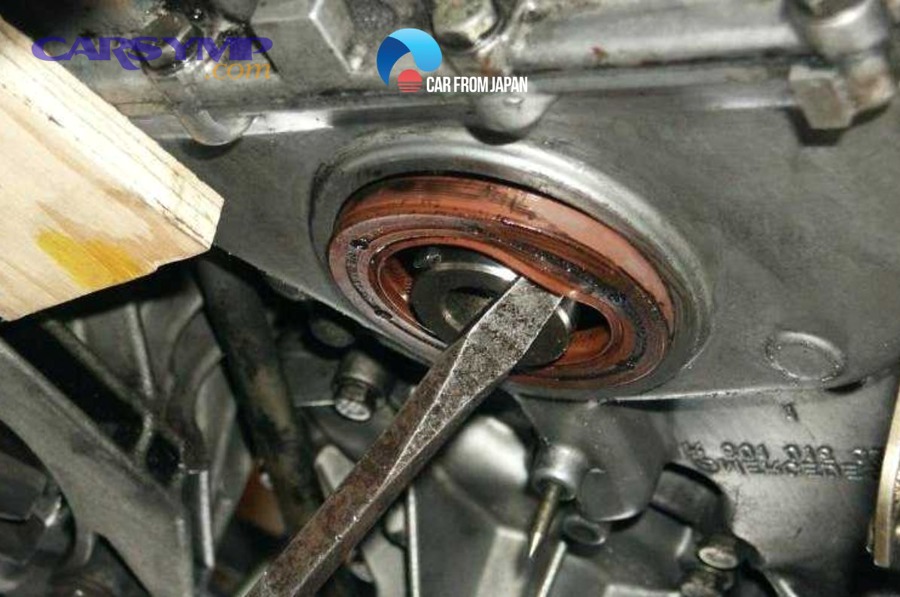
A rear main seal is a circular rubber gasket positioned at the rear of the engine block where the crankshaft exits to connect with the transmission, designed to contain pressurized engine oil within the crankcase while allowing the crankshaft to rotate freely. This seal faces constant mechanical stress from crankshaft rotation, oil pressure ranging from 20-45 PSI during operation, and exposure to engine heat that can reach over 200 degrees Fahrenheit.
To better understand this critical component, let’s examine how it functions within your engine system and what causes it to deteriorate over time.
How Does the Rear Main Seal Work in Your Engine?
The rear main seal serves as the final barrier preventing engine oil from escaping where the crankshaft passes through the engine block to connect with the transmission’s input shaft or torque converter. The crankshaft, supported by several main bearings throughout its length, receives constant lubrication from pressurized oil delivered through passages in the engine block. At the rear of the engine, where the crankshaft extends beyond the last main bearing to connect with the flywheel or flexplate, the seal must contain this oil while accommodating the crankshaft’s high-speed rotation.
The seal typically consists of a rubber or silicone lip that maintains contact with the crankshaft’s smooth surface, creating a dynamic seal that flexes with crankshaft movement while preventing oil passage. Modern rear main seals are usually one-piece designs, though older engines may feature two-piece seals that fit into grooves on either side of the rear main bearing cap. The seal housing bolts to the rear of the engine block, and proper alignment during installation is crucial—even slight misalignment can cause premature seal failure and leakage.
During engine operation, the crankshaft spins at speeds ranging from 600-7000 RPM depending on engine load and throttle position. The rear main seal must maintain its sealing capability across this entire speed range while withstanding the constant pressure from engine oil attempting to escape past it. A thin film of oil between the seal lip and crankshaft surface actually helps reduce friction and wear, but the seal’s spring-loaded lip design ensures this film remains microscopic rather than allowing significant oil passage.
What Causes Rear Main Seals to Fail Over Time?
Rear main seals fail primarily due to four factors: natural rubber deterioration from age and heat exposure, oil contamination that causes seal material breakdown, worn main bearings that allow excessive crankshaft movement, and improper installation during engine rebuilds or seal replacement.
Natural aging represents the most common failure mode. The rubber or silicone material comprising the seal gradually hardens and loses flexibility after years of exposure to engine heat cycling between ambient temperature and operating temperature. This heat-induced hardening causes the seal lip to lose its ability to conform to minor surface irregularities on the crankshaft, creating microscopic gaps that allow oil to seep past. The process accelerates in vehicles operating in extreme temperature environments or those with extended oil change intervals that leave the seal exposed to degraded oil.
Oil contamination accelerates seal deterioration significantly. When engine oil becomes contaminated with fuel, coolant, or combustion byproducts due to worn piston rings or extended service intervals, the contaminated oil acts as a solvent that attacks the seal material. This chemical attack causes swelling, softening, or hardening of the rubber, compromising the seal’s ability to maintain proper contact pressure against the crankshaft. Vehicles that consume oil due to worn valve guides or piston rings often develop rear main seal leaks faster because the oil contains higher concentrations of combustion byproducts.
Worn main bearings create a mechanical failure path by allowing excessive crankshaft movement or “whip” during operation. The crankshaft should remain centered within very tight tolerances, but as main bearings wear from accumulated mileage, they develop increased clearance that permits lateral and vertical crankshaft movement. This movement causes the crankshaft to contact the seal lip unevenly, creating wear grooves in both the seal and the crankshaft sealing surface. Once a groove forms on the crankshaft, even a new seal cannot effectively seal against the damaged surface, resulting in continued leakage.
Improper installation during engine rebuilds or seal replacement accounts for many premature failures, particularly in DIY repairs. The seal housing must align perfectly with the crankshaft centerline—misalignment of even a few thousandths of an inch can cause the seal lip to contact the crankshaft at an angle, leading to rapid wear and leakage. Additionally, the seal lip can fold or roll during installation if not properly lubricated or if the housing is forced over the crankshaft rather than carefully aligned and pressed into place. Installation damage often causes immediate leakage or failure within the first few hundred miles of operation.
What Are the 7 Most Common Symptoms of a Rear Main Seal Leak?
The seven most common symptoms of a rear main seal leak are oil puddles forming under the vehicle’s center, oil saturation coating the transmission bell housing, rapidly dropping oil levels requiring frequent top-ups, burning oil smell detectable at high RPMs, check engine light activation from low oil pressure, oil residue visible on the flywheel and starter motor, and oil trails running along the driveshaft toward the rear axle. These symptoms appear individually or in combination depending on leak severity and how long the seal has been failing.
Specifically, these symptoms manifest in a predictable progression as the seal deteriorates from minor seepage to complete failure. Let’s examine each symptom in detail to help you identify exactly what to look for during inspection.
Sign #1 – Oil Puddles Forming Under Your Vehicle
Oil puddles from a rear main seal leak appear directly beneath the center or slightly rear-of-center section of your vehicle, typically between the front wheels and rear wheels rather than at the very front or very back. These puddles range from small spots the size of a quarter to large accumulations several inches in diameter, depending on leak severity and how long the vehicle has been parked. Fresh puddles appear dark brown or black with a viscous, slippery consistency, while older spots may darken further and attract dirt and debris that create a tar-like appearance on your garage floor or driveway.
The location of these puddles provides a crucial diagnostic clue. Front engine oil leaks from components like the valve cover gasket, oil filter housing, or front crankshaft seal create puddles toward the front of the vehicle, beneath or slightly behind the radiator area. Conversely, rear main seal leaks position puddles more centrally, directly under the transmission bell housing where the engine meets the transmission. This central positioning occurs because gravity pulls leaking oil straight down from the seal’s location at the rear of the engine block.
Puddle size correlates directly with leak severity and parking duration. A minor seepage produces small spots or streaks that may take hours to develop into visible puddles, while a significant leak creates noticeable puddles within 15-30 minutes of parking. Vehicle owners often notice these puddles first thing in the morning after overnight parking, or when returning to their car after work. The pattern of multiple puddles in your regular parking spots—home garage, workplace parking lot, grocery store—confirms consistent leakage rather than a one-time spill from an oil change or other service.
Temperature affects puddle formation timing. Cold weather causes engine oil to thicken, slowing leak rate and delaying puddle formation. Conversely, hot weather and recent driving thin the oil, accelerating leak rate and producing puddles more quickly after parking. Some rear main seal leaks only produce visible puddles after extended highway driving when engine oil reaches full operating temperature and pressure, making the leak more active during and immediately after operation.
Sign #2 – Oil Saturation on Transmission Bell Housing
Oil saturation on the transmission bell housing appears as a thick coating of dark, sticky oil residue covering the exterior surface where the transmission bolts to the engine, often accompanied by accumulated dirt and road debris that adheres to the oil creating a grimy, crusted appearance. This saturation results from oil escaping past the rear main seal and running down the back of the engine block before coating the bell housing’s curved surface, where airflow during driving causes some oil to spread and create widespread contamination.
The bell housing, which forms the protective cover around the flywheel or flexplate and connects the engine to the transmission, provides excellent evidence of rear main seal leakage when you inspect underneath your vehicle. Fresh oil saturation appears wet and glossy, indicating active leakage, while older accumulation develops a dry, crusty texture as the volatile components evaporate leaving behind oxidized oil residue. The thickness of this coating indicates leak duration—thin, light coating suggests recent seal failure, while heavy, tar-like buildup indicates months or years of leaking.
Inspecting the bell housing requires safely elevating your vehicle on jack stands or ramps to provide clear underneath access. Using a flashlight, examine the rear surface of the engine block and the entire bell housing exterior, paying particular attention to the top where the bell housing meets the engine block. Oil typically originates from this junction where the rear main seal housing bolts to the engine, then flows downward following gravity and engine/transmission contours. You may observe “run marks” or streaks showing oil’s path from the seal location down across the bell housing surface.
Distinguishing between fresh and old saturation helps determine if the leak is actively worsening or has stabilized. Clean a small section of the bell housing with a rag and degreaser, noting the effort required to remove the oil. Mark the cleaned area with chalk or a paint marker, then drive the vehicle for several days before re-inspecting. Fresh oil accumulation in the cleaned area confirms active leakage, while a clean area indicates the leak may have been historical or has self-sealed due to seal swelling or debris lodging in the leak path.
Sign #3 – Rapidly Dropping Oil Levels
Rapidly dropping oil levels manifest as your engine consuming one or more quarts of oil between normal oil change intervals, requiring frequent top-ups to maintain the dipstick reading within the safe operating range. Normal engines consume minimal oil—typically less than one quart per 3,000-5,000 miles—so consumption exceeding this rate, especially when combined with external oil evidence, strongly suggests a rear main seal leak rather than internal oil burning.
The check oil light or low oil pressure warning light on your dashboard provides the first alert of this symptom. Modern vehicles monitor oil level through sensors in the oil pan or calculate approximate level based on oil pressure readings. When oil level drops below the minimum safe threshold, the warning system activates, prompting you to check the dipstick and add oil. Vehicles with severe rear main seal leaks may trigger these warnings within days or weeks of an oil change, whereas normal oil consumption wouldn’t trigger warnings between standard 3,000-7,500 mile service intervals.
Monitoring oil consumption accurately requires establishing a baseline measurement routine. Check your oil level weekly at the same time—ideally first thing in the morning before starting the engine when oil has drained into the pan overnight. Note the dipstick reading and track how much oil you add between checks. If you’re adding a quart every 500-1,000 miles without visible exhaust smoke (which would indicate internal burning), external leakage is the likely culprit, and the leak’s central location points toward the rear main seal.
Severe leaks can consume oil at alarming rates. Some rear main seal failures allow oil loss of one quart per 100-300 miles, requiring daily monitoring and top-ups to prevent engine damage from oil starvation. This severity level produces obvious puddles and extensive undercarriage contamination, making the leak source unmistakable. However, moderate leaks present more subtly, consuming oil slowly enough that owners might attribute the loss to normal consumption until they inspect underneath and discover the telltale oil accumulation.
The relationship between leak rate and engine operation varies. Some seals leak primarily at idle when crankcase pressure is lower, producing steady drips after parking. Others leak more severely during highway driving when engine RPM and oil pressure peak, creating the burning oil smell discussed in the next symptom. Understanding your leak’s behavior pattern helps predict oil consumption rate and plan monitoring intervals.
Sign #4 – Burning Oil Smell at High RPMs
Burning oil smell at high RPMs emerges as a distinct acrid odor detectable inside the cabin or near the engine bay when operating your vehicle at elevated engine speeds, typically above 3,000 RPM during highway acceleration or spirited driving. This smell results from oil that has leaked past the rear main seal and accumulated inside the transmission bell housing coming into contact with the hot flywheel or flexplate, which can reach temperatures exceeding 300-400 degrees Fahrenheit during operation, causing the oil to smoke and emit characteristic burning petroleum odors.
The smell intensifies during performance driving because higher RPMs increase both oil leak rate and flywheel temperature. At idle or low speeds, minimal oil escapes the seal and the flywheel remains relatively cool, producing little to no odor. However, sustained highway driving or aggressive acceleration spins the flywheel faster, generating more friction heat while simultaneously increasing crankcase pressure that forces more oil past the failing seal. The combination creates ideal conditions for oil vaporization inside the bell housing.
Drivers typically first notice this smell when ventilation systems draw air from the engine bay into the cabin, or when stopped at a light after highway driving allows rising smoke to become visible. The odor differs from other automotive smells—it’s sharper and more chemical than coolant’s sweet smell, less pungent than burning clutch material, and distinct from exhaust odors. Once you’ve experienced burning oil smell from a rear main seal leak, you’ll recognize it immediately in future occurrences.
This symptom poses both diagnostic and safety concerns. From a diagnostic perspective, burning oil smell confirms that leaked oil is reaching hot components, indicating the leak has progressed beyond minor seepage. Safety-wise, while burning oil itself rarely causes fires in the enclosed bell housing, the smoke can reduce visibility if it enters the cabin heavily, and the smell can distract drivers or cause discomfort during long trips. Additionally, oil burning inside the bell housing can contaminate the clutch disc in manual transmission vehicles, causing clutch slippage and requiring costly clutch replacement in addition to seal repair.
Sign #5 – Check Engine Light Activation
Check engine light activation from a rear main seal leak occurs when oil loss becomes severe enough to reduce oil pressure below the minimum threshold required for proper engine lubrication, triggering pressure sensors that illuminate the dashboard warning light and store diagnostic trouble codes (DTCs) in the vehicle’s computer system. Common codes associated with low oil pressure include P0520 (Engine Oil Pressure Sensor Circuit), P0521 (Engine Oil Pressure Sensor Range/Performance), and P0522 (Engine Oil Pressure Sensor Low), though specific codes vary by manufacturer.
The check engine light serves as an early warning system preventing catastrophic engine damage. Modern engines require consistent oil pressure to lubricate bearings, pistons, camshafts, and other moving components. When a rear main seal leaks severely enough to drop oil level below the pickup tube in the oil pan, the oil pump begins drawing air instead of oil, causing pressure to fluctuate or drop completely. The pressure sensor detects this condition and alerts you immediately, potentially saving your engine from seizure or bearing failure.
Not all rear main seal leaks trigger the check engine light—only those severe enough to affect oil pressure or level monitoring systems. Minor seepage that loses a quart every few thousand miles won’t activate warnings because the oil level remains within safe operating range between your regular top-ups. However, if you neglect monitoring and allow level to drop critically low, or if the leak suddenly worsens, the light will illuminate, often accompanied by audible warning chimes in newer vehicles.

Responding to check engine light activation requires immediate action. Stop driving as soon as safely possible and check your oil level using the dipstick. If the level reads below the minimum mark, add oil immediately to bring it to the full mark before continuing driving. Even if the light extinguishes after adding oil, schedule immediate diagnosis to identify the leak source and assess repair urgency. Continuing to drive with low oil pressure, even briefly, can cause bearing damage that necessitates complete engine rebuild rather than simple seal replacement.
Reading stored diagnostic codes helps confirm the cause. Use an OBD-II scanner to retrieve codes from your vehicle’s computer. If codes indicate low oil pressure or oil level sensor issues, combined with visible external oil leakage in the rear main seal area, you’ve confirmed the diagnosis. However, oil pressure codes can also result from failed oil pumps, clogged oil passages, or faulty sensors, so comprehensive diagnosis including visual inspection remains essential for accurate problem identification.
Sign #6 – Oil Residue on Flywheel and Starter
Oil residue on the flywheel and starter motor appears as a coating of dark oil covering these components visible through the inspection plate or dust cover opening on the transmission bell housing, confirming that oil has breached the rear main seal and entered the sealed space between engine and transmission where these components operate. This internal contamination provides definitive evidence of rear main seal failure because no other common oil leak source deposits oil in this protected area.
Accessing this evidence requires removing the inspection plate, a small cover typically located on the bottom or side of the bell housing secured by two to four bolts. The inspection plate exists to allow flywheel timing marks visibility during certain service procedures, but it also provides a diagnostic window into the bell housing interior. Removing this plate—which takes only minutes with basic hand tools—reveals the flywheel’s outer edge and often the starter motor’s nose, both of which should be completely dry and clean in a healthy engine.
Fresh oil on these components appears wet or sticky, while older oil accumulation may be dry and crusty with embedded dust and metal particles from flywheel/clutch wear. The oil typically concentrates on the upper rear portion of the flywheel nearest the rear main seal, though centrifugal force from flywheel rotation can distribute oil across the entire flywheel surface. On the starter motor, oil accumulation usually appears on the nose housing and gear mechanism, potentially causing starter problems if contamination becomes severe enough to affect electrical connections or mechanical operation.
Distinguishing rear main seal leaks from input shaft seal leaks requires examining oil location patterns inside the bell housing. Oil from a rear main seal appears on the flywheel’s engine side and runs down from the top of the bell housing where the seal housing bolts to the engine block. Conversely, input shaft seal leaks produce oil on the transmission side of the flywheel and often show oil trails running down from the transmission input shaft bearing retainer. Some vehicles unfortunately experience both leaks simultaneously, requiring transmission removal to replace both seals during repair.
Photographing the inspection plate opening using your phone’s camera with flash can document the leak evidence for mechanic consultation. Many vehicle owners discover this symptom while investigating other issues or during pre-purchase inspections, finding the telltale oil accumulation that confirms what external symptoms suggested. Once verified, this evidence eliminates diagnostic uncertainty and justifies the transmission removal required for seal replacement.
Sign #7 – Oil Trail Along Driveshaft
Oil trails along the driveshaft manifest as streaks or coating of engine oil extending from the transmission bell housing rearward along the driveshaft tube toward the differential, sometimes creating secondary puddles beneath the rear axle area that can mislead diagnosis if you don’t trace the trail to its source. This symptom occurs in rear-wheel-drive and four-wheel-drive vehicles when airflow during driving carries leaked oil from the bell housing area rearward, depositing it along the driveshaft’s length and creating widespread undercarriage contamination.
The physics behind this oil migration involves both gravity and aerodynamics. Oil leaking from the rear main seal initially drops onto the driveshaft’s front universal joint or directly onto the driveshaft tube immediately behind the transmission. As you drive, airflow beneath the vehicle flows from front to rear, carrying oil droplets and creating the characteristic streaking pattern. Additionally, driveshaft rotation at speeds matching wheel rotation can fling oil radially, creating a spray pattern that coats surrounding components including exhaust systems, crossmembers, and the undercarriage floor.
Identifying this symptom requires careful inspection starting from the front and working rearward to trace the oil’s origin. Begin at the transmission bell housing and examine the driveshaft’s front section where it connects to the transmission output shaft. Fresh oil accumulation here, combined with streaking extending rearward, confirms the leak originates from the bell housing area rather than the differential or driveshaft center support bearing. Conversely, oil accumulation only at the rear near the differential, with no forward trail, suggests a differential pinion seal leak instead.
The severity of driveshaft contamination indicates leak duration and volume. Light oil film suggests recent seal failure or minor seepage, while heavy coating with dirt and debris accumulation indicates months or years of leaking. Some severe leaks create enough oil volume to drip continuously during driving, leaving a trail of spots on the road surface behind your vehicle—a symptom other drivers may notice and alert you about. This extreme leakage requires immediate attention to prevent engine oil starvation.
Environmental concerns arise from driveshaft oil trails because the oil can drip onto roadways, creating hazards for motorcyclists and contaminating waterways through storm drain runoff. Many jurisdictions enforce regulations against vehicles leaving oil trails on public roads, potentially resulting in citations or failed emissions inspections. Beyond legal considerations, responsible vehicle ownership demands addressing leaks that spread petroleum products through the environment.
How Can You Tell if It’s a Rear Main Seal Leak vs. Other Oil Leaks?
Rear main seal leaks are distinguishable from other oil leaks by their central location between engine and transmission producing oil accumulation on the bell housing exterior, whereas oil pan leaks originate from the bottom-front of the engine creating puddles beneath the oil pan itself, and valve cover leaks start at the top of the engine leaving oil trails down the sides of the engine block with minimal bell housing contamination. These location-based differences, combined with leak pattern analysis, enable accurate diagnosis without transmission removal in most cases.
However, oil’s tendency to migrate downward and rearward along the engine’s surface can complicate diagnosis. To eliminate confusion, let’s compare rear main seal leaks directly against the most commonly misdiagnosed leak sources.
Rear Main Seal Leak vs. Oil Pan Gasket Leak – Key Differences
Rear main seal leaks concentrate oil accumulation at the junction between engine and transmission with heavy bell housing contamination, while oil pan gasket leaks produce oil concentration around the oil pan’s perimeter where the pan bolts to the engine block with minimal or no bell housing involvement. The oil pan leak’s location at the very bottom of the engine causes puddles to form more toward the front or center-front of the vehicle, whereas rear main seal leak puddles appear more centrally or slightly rearward.
Oil pan gasket leaks develop when the rubber or cork gasket sealing the oil pan to the engine block deteriorates, hardens, or becomes crushed from over-tightened pan bolts. Unlike rear main seals that face constant oil pressure and crankshaft rotation stress, oil pan gaskets simply prevent oil from seeping out of the pan while the engine is tilted or oil sloshes during operation. The gasket failure typically produces relatively slow seepage rather than the more substantial leakage possible with rear main seal failure, though severely damaged pan gaskets can leak significantly.
Visually distinguishing these leaks requires examining leak location and oil accumulation patterns. Slide under your vehicle with a flashlight and inspect the oil pan’s edges where it meets the engine block. Oil pan leaks show wet or oily areas around the pan’s bolt line, often concentrated at corners where gasket stress is highest. You may see oil drops forming at specific bolts or seeping from gasket areas between bolts. In contrast, rear main seal leaks show little to no oil around the pan edges but heavy accumulation on the bell housing and rear engine block surface.
The Repair labor time for rear main seal replacement significantly exceeds oil pan gasket replacement effort. Oil pan gasket replacement typically requires 2-4 hours of labor—drain oil, remove pan bolts, clean mating surfaces, install new gasket, reinstall pan, and refill oil. Rear main seal replacement requires 6-12 hours because mechanics must remove the transmission to access the seal, adding complexity and cost. This labor difference makes accurate diagnosis financially important—you don’t want to pay for transmission removal only to discover the pan gasket was the actual leak source.
Pressure testing provides definitive diagnosis when visual inspection leaves uncertainty. Mechanics can pressurize the crankcase with compressed air while blocking the PCV system, then use UV dye and black light to trace the exact leak origin. The pressurization amplifies leak rate, making the source obvious. However, this testing adds diagnostic cost, so thorough visual inspection should precede any advanced testing procedures.
Rear Main Seal Leak vs. Valve Cover Gasket Leak – How to Distinguish
Rear main seal leaks and valve cover gasket leaks differ fundamentally in origin location—valve cover leaks begin at the top of the engine where the valve cover(s) bolt to the cylinder head, while rear main seal leaks originate at the rear-bottom of the engine where the crankshaft exits the block. This height difference creates distinct oil migration patterns: valve cover leaks leave oil trails running down the sides of the engine block with potential for oil to reach the rear main seal area through gravity flow, while rear main seal leaks concentrate oil specifically in the bell housing region without upper engine contamination.
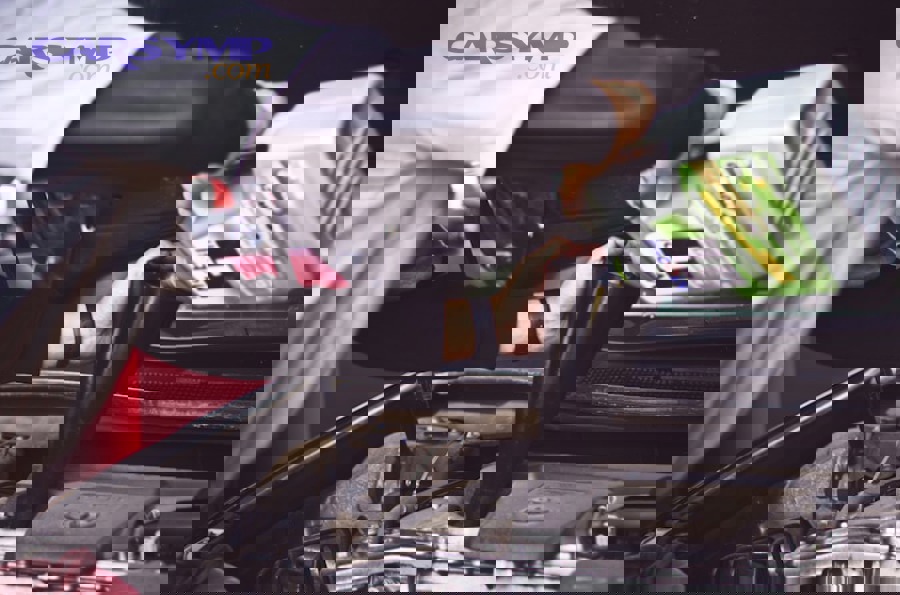
The valve cover gasket seals the top of the engine where the valve cover protects the camshaft(s), valves, and valve train components from contamination while containing oil splashed by moving parts. When this gasket deteriorates from heat, age, or over-torqued bolts, oil seeps from beneath the valve cover edge and flows downward following engine contours and gravity. On many engines, this oil runs down the engine’s rear surface, potentially reaching the bell housing area and creating confusion about the leak’s true source.
Distinguishing between these leaks requires systematic inspection from top to bottom. Start at the valve cover edges using a bright flashlight to examine the gasket line where the cover meets the cylinder head. Fresh oil or wet areas indicate active valve cover leakage. Trace any oil trails downward with your finger or a clean white cloth, noting where oil accumulation is heaviest. Valve cover leaks show progressive contamination from top to bottom with heaviest concentration near the leak source, while rear main seal leaks show clean upper engine areas with sudden heavy contamination beginning at the bell housing level.
The “clean finger test” helps verify leak origin. Thoroughly clean both the valve cover area and the bell housing/rear engine area with degreaser and allow to dry completely. Run the engine at operating temperature for 15-20 minutes, then shut down and immediately inspect with good lighting. Fresh oil appearing at the valve cover gasket indicates valve cover leak, while fresh oil appearing only at the bell housing indicates rear main seal leak. If both areas show fresh oil, you may have multiple leaks requiring comprehensive repair.
Misdiagnosis commonly occurs when owners observe oil at the back of the engine and assume rear main seal failure without checking upper engine areas. This mistake leads to unnecessary transmission removal and rear seal replacement that doesn’t solve the problem because the valve cover leak continues contaminating the engine exterior. Always inspect top-to-bottom systematically, and consider that older vehicles often develop multiple leaks simultaneously requiring comprehensive gasket renewal rather than single-component repair.
Rear Main Seal Leak vs. Input Shaft Seal Leak – Critical Distinction
Rear main seal leaks and input shaft seal leaks both occur within the transmission bell housing area, making them the most challenging leaks to distinguish without removing the transmission or inspection plate. The rear main seal prevents oil from escaping the engine’s crankshaft, while the input shaft seal (also called front transmission seal) prevents transmission fluid from leaking from the input shaft where it enters the transmission. Both produce similar external symptoms—oil accumulation on the bell housing exterior and puddles underneath—but they originate from opposite sides of the flywheel.
The key distinction lies in leak location relative to the flywheel when viewed through the inspection plate opening. Engine oil from rear main seal leaks appears on the engine side (rear) of the flywheel, coating the flywheel’s engine-facing surface and showing oil trails running down from the rear main seal housing at the engine block’s rear surface. Transmission fluid from input shaft seal leaks appears on the transmission side (front) of the flywheel, coating the flywheel’s transmission-facing surface and showing fluid running from the input shaft bearing retainer where the transmission input shaft enters the bell housing.
Fluid characteristics provide additional diagnostic clues. Engine oil appears dark brown to black with viscous consistency, while automatic transmission fluid (ATF) typically appears red or amber with thinner consistency, and manual transmission fluid may be clear to amber or even dark if gear oil type. Smell differs as well—engine oil has a petroleum smell, ATF has a distinct sweetish smell, and gear oil smells strongly sulfurous. Collect fluid from puddles or bell housing accumulation and evaluate color, consistency, and smell to help identify the source.
However, fluid identification has limitations because both fluids mix once inside the bell housing, and engine oil can appear similar to heavily oxidized transmission fluid. Additionally, some rear main seal leaks are severe enough that engine oil level drops substantially, while transmission fluid level remains normal—checking both fluid levels helps identify which system is losing fluid. If engine oil requires frequent top-ups but transmission fluid level remains stable, rear main seal leak is likely. Conversely, if transmission fluid is low but engine oil level is stable, input shaft seal leak is probable.
The repair decision point changes based on which seal is failing. If you’re already removing the transmission for clutch replacement or other transmission work, replacing both seals preventatively makes sense because labor is already invested. However, if only one seal is leaking and transmission removal is required solely for seal access, accurate diagnosis prevents unnecessary replacement of a perfectly functional seal. Many mechanics recommend replacing both seals simultaneously when transmission is removed because the incremental parts cost ($20-60 for both seals) is minimal compared to the labor cost ($400-800) of removing and reinstalling the transmission.
Is a Rear Main Seal Leak Serious? Understanding Severity Levels
A rear main seal leak’s seriousness ranges from minor nuisance requiring monitoring and periodic oil top-ups, to severe emergency demanding immediate repair to prevent catastrophic engine damage from oil starvation—the determining factors are leak rate measured in oil loss per mile driven, oil pressure maintenance during operation, and contamination risk to clutch or other drivetrain components. Minor seepage losing less than one quart per 1,000 miles poses little immediate threat, while severe leaks losing one quart per 100-200 miles can cause engine failure within hours if oil level isn’t vigilantly monitored.
To better understand when to repair versus when to monitor a rear main seal leak, let’s examine the characteristics distinguishing minor from major leaks and the driving considerations for each severity level.
Minor Seepage vs. Major Leak – What’s the Difference?
Minor seepage from a rear main seal manifests as small oil spots (quarter-sized or smaller) developing over hours of parking, slight oil film on the bell housing exterior visible during inspection, and oil consumption of less than one quart per 1,000-2,000 miles requiring occasional top-ups between normal oil changes. This seepage level indicates early seal deterioration or minor damage where the seal lip maintains partial contact with the crankshaft but allows microscopic oil passage. Many vehicles develop minor rear main seal seepage at high mileage (150,000+ miles) and operate reliably for years with only monitoring and periodic oil addition.
Major leaks produce dramatically different symptoms: large puddles (hand-sized or larger) forming within 15-30 minutes of parking, heavy oil coating on the bell housing creating dripping or running oil visible during operation, and oil consumption exceeding one quart per 500 miles requiring frequent monitoring and top-ups. This severity indicates substantial seal failure where the seal lip has torn, folded back, or completely separated from the crankshaft surface, allowing unrestricted oil flow. Major leaks can also result from crankshaft damage where the seal surface has developed grooves or deep scratches that prevent any seal from sealing effectively.
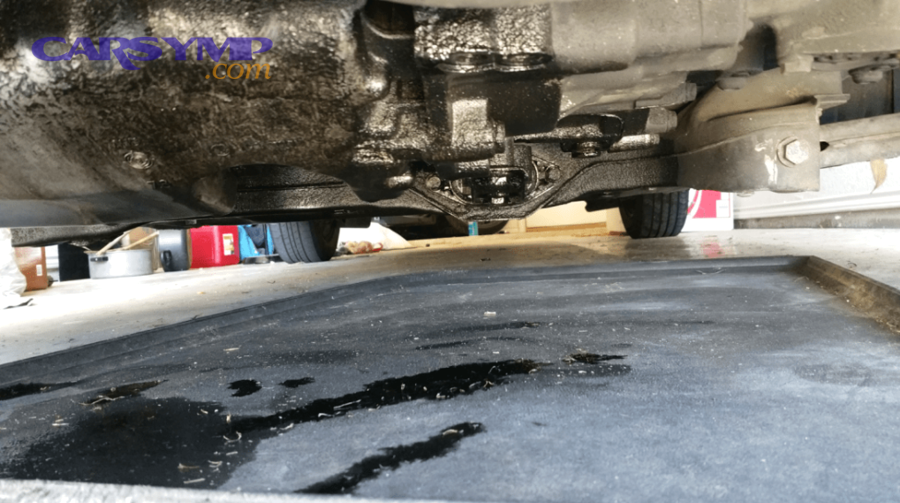
The progression from minor to major leak varies by several factors. Age-related seal deterioration typically progresses slowly over months or years, giving owners time to plan repair during convenient scheduling. Conversely, sudden seal failure from installation damage or crankshaft bearing failure can progress from no leak to major leak within days or even hours. Understanding your leak’s progression rate helps determine repair urgency—stable minor seepage can be monitored indefinitely, while rapidly worsening leaks demand immediate attention.
Quantifying leak severity objectively requires measuring oil consumption rate. Establish baseline by checking oil level on the dipstick at the same time weekly (preferably cold engine, level ground) and recording the reading. Note how much oil you add between checks and calculate consumption per mile: (quarts added) ÷ (miles driven) = quarts per mile. Multiply by 1,000 to express as quarts per 1,000 miles for easier comparison. Consumption under 0.5 quarts per 1,000 miles indicates minor seepage, 0.5-1.0 quarts per 1,000 miles indicates moderate leak, and over 1.0 quarts per 1,000 miles indicates major leak requiring urgent repair.
Seasonal variations affect leak rate due to temperature’s influence on oil viscosity and seal flexibility. Cold winter weather thickens oil and hardens seals, potentially reducing leak rate and creating a false impression of improvement. Hot summer weather thins oil and softens seals, often increasing leak rate and revealing the leak’s true severity. Monitor consumption across seasons to understand your leak’s complete behavior pattern rather than making repair decisions based on temporary winter improvement.
Can You Drive with a Rear Main Seal Leak?
Yes, you can drive with a rear main seal leak if the leak rate is minor, you maintain vigilant oil level monitoring with top-ups before level drops below the minimum mark, and you’re prepared for potential emergency oil addition during longer trips, but you cannot safely drive with a severe leak that drops oil level from full to minimum within one tank of fuel or creates visible oil smoke from burning oil in the bell housing. The decision to continue driving depends entirely on leak severity and your commitment to frequent monitoring—neglecting oil level monitoring with any rear main seal leak can destroy your engine within hours through bearing damage and oil starvation.
Short-term driving with minor seepage involves minimal risk when proper precautions are followed. Carry at least two quarts of the correct oil specification in your vehicle at all times to enable roadside top-ups if needed. Check oil level before every driving session, especially before highway trips or long commutes. Set a mileage reminder (every 250-500 miles depending on leak rate) to recheck level even during routine driving. This vigilance ensures oil level never drops into the danger zone where oil pickup tube exposure could cause pressure loss.
The risks of continued driving escalate with leak severity. Minor seepage primarily creates environmental impact from oil residue on roads and parking areas, plus the inconvenience and cost of frequent oil purchases. Moderate leaks add risk of clutch contamination in manual transmission vehicles—oil entering the bell housing eventually reaches the clutch disc, causing it to slip and requiring clutch replacement in addition to seal repair. Severe leaks pose immediate engine damage risk because oil level can drop from full to critically low within hours of driving, and if you don’t notice the warning light or gauge, bearing damage occurs rapidly.
Engine damage progression from oil starvation follows a predictable sequence. Initially, reduced oil level decreases oil pressure slightly, but pressure remains adequate for lubrication—no immediate damage occurs. As level drops further and oil pickup tube begins drawing air intermittently, oil pressure fluctuates during cornering or acceleration when oil sloshes away from the pickup. This causes momentary lubrication interruption, and bearings begin experiencing increased wear. When oil level reaches critically low, the pickup tube draws mostly air, oil pressure drops to near zero, and bearing surfaces contact directly without lubrication film. This metal-to-metal contact generates extreme heat and rapid wear—bearings can fail within minutes, and crankshaft seizure can occur within an hour of operation without adequate oil pressure.
Financial considerations influence the drive-or-repair decision. Rear main seal replacement costs $600-2,000 depending on vehicle type, engine configuration, and regional labor rates. The repair labor time for rear main seal replacement varies from 6-8 hours for simple rear-wheel-drive vehicles to 12+ hours for transverse-mounted engines or all-wheel-drive vehicles requiring extensive disassembly. This high cost tempts owners to defer repair, but the calculation changes when considering that engine replacement or rebuild costs $3,000-8,000 or more. Spending $1,000-1,500 on seal replacement now prevents potentially destroying a $5,000 engine later through neglected monitoring.
Insurance and legal implications also deserve consideration. Most auto insurance policies don’t cover mechanical failures like rear main seal leaks, considering them normal maintenance rather than insurable events. However, if your leaking oil contributes to an accident—for example, oil dripping on your rear tire reduces traction causing loss of control, or your engine seizes on the highway causing a collision—liability questions arise. Additionally, many states prohibit operating vehicles that leave substantial oil trails on roadways, and you could face citations or failed safety inspections. These factors argue for prompt repair rather than indefinite monitoring, especially for severe leaks.
How to Diagnose a Rear Main Seal Leak Yourself (Before Seeing a Mechanic)
Diagnosing a rear main seal leak yourself involves four systematic steps: using UV dye and black light to pinpoint the exact leak source among multiple potential origins, conducting thorough visual inspection of the bell housing area and rear engine block while safely under the vehicle, removing the inspection plate to examine the flywheel and bell housing interior for oil contamination, and avoiding common misdiagnosis pitfalls where oil migration from upper engine leaks mimics rear seal symptoms. This DIY diagnosis completed before mechanic consultation saves diagnostic fees ($100-150) and ensures you’re prepared with specific information about your leak’s characteristics when discussing repair options.
Performing these diagnostic steps requires basic tools—floor jack and jack stands or ramps for safe vehicle elevation, flashlight or work light for inspection visibility, basic hand tools for inspection plate removal, and optionally a UV dye kit ($15-30) for definitive leak source identification. Let’s examine each diagnostic method in detail.
Using UV Dye and Black Light for Accurate Leak Detection
UV dye leak detection provides the most accurate method for identifying rear main seal leaks by introducing fluorescent dye into the engine oil, operating the vehicle to allow the dye to reach all oil passages and leak points, then using a black light (UV light) to illuminate the dye which glows bright yellow-green at the exact leak source, eliminating guesswork about whether oil accumulation originated from the rear seal or migrated from elsewhere. This method costs $15-30 for a complete kit including dye, black light, and UV-blocking glasses, and provides definitive results that prevent misdiagnosis and unnecessary repairs.
The dye application process begins with purchasing an appropriate UV dye kit designed for engine oil—don’t confuse with coolant dye or transmission fluid dye which use different formulations. Add the dye to your engine oil through the oil filler cap following package instructions (typically one small bottle treats 4-6 quarts of oil). The dye concentration is minimal and won’t harm your engine or affect oil performance, though you should perform an oil change after completing diagnosis and any resulting repairs to remove the dye from your system.
After adding dye, drive your vehicle normally for 50-100 miles or several days to allow the dye to circulate through the entire lubrication system and reach any leak points. The dye must make its way to the rear main seal area, leak past the seal if it’s failing, and accumulate in visible amounts on the bell housing or other surfaces. Immediate inspection after adding dye won’t reveal anything because insufficient dye has leaked out to create visible fluorescence—patience is essential for this method’s success.
Inspection with the UV black light reveals the leak’s location unmistakably. Elevate your vehicle safely on jack stands or ramps to access the undercarriage, then darken your work area as much as possible—UV dye fluorescence is most visible in darkness or dim lighting. Wearing the UV-blocking glasses included with quality kits (or standard safety glasses), shine the black light on the rear engine area, bell housing, oil pan, and surrounding components. Dye that has leaked will glow bright yellow-green, showing exactly where oil is escaping.

The fluorescence pattern tells the complete story. Rear main seal leaks show concentrated fluorescence at the junction between engine block and transmission bell housing, with dye trails running down the bell housing exterior. The glow appears brightest at the leak’s origin point—the rear main seal housing area—and diminishes as it spreads across surrounding surfaces. Compare this to valve cover leaks which show fluorescence originating at the top of the engine with trails running downward, or oil pan leaks showing fluorescence concentrated around the pan gasket line. The location and pattern eliminate all diagnostic uncertainty.
UV dye diagnosis also identifies multiple simultaneous leaks common in high-mileage engines. You might discover your rear main seal is leaking moderately, but your valve covers are also seeping, and your oil pan gasket has begun weeping—all revealed by distinct fluorescence patterns. This comprehensive leak mapping allows you to prioritize repairs based on severity and address all issues during one service session rather than fixing one leak only to discover another immediately afterward.
Visual Inspection Checklist – What to Look for Under Your Vehicle
Visual inspection without UV dye provides preliminary diagnosis by examining specific areas for oil accumulation patterns, fresh versus old oil appearance, and leak source location relative to surrounding components. Begin by ensuring safe vehicle elevation using properly rated jack stands with the vehicle on level, solid ground, never relying solely on a jack to support the vehicle during underneath work. Position yourself comfortably beneath the vehicle with adequate lighting—a bright LED work light or headlamp provides the best visibility for inspection.
Start your inspection at the rear of the oil pan where it meets the engine block near the rear main seal housing. This area should be completely dry and clean on a healthy engine, showing only the normal road dirt and dust common to undercarriage surfaces. Fresh oil appears dark brown to black with a glossy, wet appearance, while older oil accumulation appears dry and crusty with dust and debris embedded in oxidized oil residue. Run your finger along the junction between oil pan and engine block, feeling for oil wetness—fresh leak creates slippery, oily sensation, while old accumulation feels tacky or crusty.
Move your inspection to the transmission bell housing exterior, examining all visible surfaces for oil coating. Pay particular attention to the top of the bell housing where it bolts to the engine block—this is where rear main seal oil first appears after leaking past the seal. Look for “run marks” or streaks showing oil’s path downward from this junction across the bell housing’s curved surface. Heavy accumulation here, combined with relatively clean oil pan areas, strongly suggests rear main seal leak rather than oil pan gasket leak.
Examine the starter motor if visible, noting any oil contamination on its housing or electrical connections. Oil reaching the starter usually indicates significant leak volume because the starter mounts to the bell housing side, and oil must spread substantially to coat this component. Similarly, inspect any heat shields, crossmembers, or exhaust components near the bell housing for oil contamination—widespread contamination indicates long-term leaking or severe current leak rate.
The “tissue test” provides simple confirmation of leak activity. Clean a small section of the bell housing or suspected leak area thoroughly with degreaser and allow to dry completely. Place a piece of white paper towel or tissue against the cleaned area and secure it with tape. Drive the vehicle normally for a day, then remove and examine the tissue. Fresh oil staining confirms active leakage, while a clean tissue indicates the leak may be historical or currently inactive. This test works best on areas where you suspect the leak originates rather than areas where oil may have migrated.
Documenting your findings with photos using your phone camera helps track leak progression over time and provides visual evidence when discussing diagnosis with mechanics. Take multiple photos showing the bell housing from various angles, close-ups of heavy oil accumulation areas, and wider shots showing leak location relative to the overall engine and transmission. Date these photos and repeat photography monthly if you’re monitoring a minor leak—the visual progression record helps determine when monitoring should transition to repair.
When to Remove the Inspection Plate for Internal Bell Housing Examination
Removing the inspection plate becomes necessary when external symptoms suggest rear main seal leak but you need definitive confirmation before authorizing expensive transmission removal for repair, or when you must distinguish between rear main seal leak and input shaft seal leak which both produce similar external symptoms. The inspection plate, also called dust cover or flywheel access cover, bolts to the bottom or side of the transmission bell housing with 2-4 bolts, and its removal provides direct visual access to the flywheel and bell housing interior where oil presence confirms internal seal failure.
Locating the inspection plate requires consulting your vehicle’s service manual or searching online for your specific make and model, as placement varies widely. Most rear-wheel-drive vehicles position the plate on the bell housing’s bottom surface directly below the engine-transmission junction, while some vehicles place it on the driver’s or passenger side. The plate typically measures 4-8 inches in diameter or width and is secured by bolts around its perimeter. On vehicles with manual transmissions, the inspection plate may provide clutch inspection access and will be larger to allow viewing of clutch components.
Removing the plate requires basic hand tools—typically a 10mm, 12mm, or 13mm socket or wrench depending on vehicle. Position yourself comfortably beneath the vehicle with good lighting, then remove all bolts securing the plate. On some vehicles, the plate may stick to its gasket or sealer—gently pry with a flat screwdriver or putty knife to break the seal. Once removed, set the plate and bolts aside in a safe location to prevent loss. If a gasket or O-ring seals the plate, note its condition for reinstallation—you may need to replace it if damaged or if it was sealed with RTV silicone.
Inspecting through the opening requires a flashlight or work light to illuminate the bell housing interior. You’ll see the flywheel’s outer edge, and on manual transmissions, you may see portions of the clutch disc and pressure plate. Examine the flywheel surface for oil coating—a dry, clean flywheel indicates no current seal leak, while oil coating confirms leakage. Note whether oil appears on the engine side (rear) of the flywheel suggesting rear main seal leak, or the transmission side (front) suggesting input shaft seal leak, or both sides indicating dual leak sources.
Look upward through the opening toward the top of the bell housing where the rear main seal housing bolts to the engine block. Fresh oil here appears wet and may show active dripping if the leak is severe, while older oil appears as crusty accumulation. You may also see oil on the bell housing’s interior walls showing how oil has run down from the seal location. This internal inspection provides the most definitive non-invasive diagnosis possible short of transmission removal—if you see oil inside the bell housing on the flywheel or walls, the rear main seal is failing and requires replacement.
Photograph the bell housing interior if possible using your phone camera with flash, though the confined space makes this challenging. Many modern smartphones have excellent low-light camera performance that captures surprising detail even in tight, dark spaces. These photos document the leak evidence and can be shown to mechanics during consultation, potentially saving diagnostic time and fees since you’ve already performed preliminary diagnosis.
Reinstalling the inspection plate requires cleaning both the plate and bell housing mating surface of any old gasket material or RTV sealer residue using a scraper and degreaser. Apply a thin bead of RTV silicone to the plate’s mating surface or install a new gasket if required by your vehicle’s design. Position the plate carefully and thread all bolts finger-tight before torquing them to specification (typically 8-12 ft-lbs) in a cross-pattern to ensure even seating. Over-tightening can warp the plate or crack the bell housing, while under-tightening may allow the plate to loosen and leak or fall off during driving.
Common Misdiagnosis Pitfalls to Avoid
The most common rear main seal leak misdiagnosis mistake is attributing all oil accumulation on the bell housing and rear engine area to rear main seal failure without first checking for upper engine leaks whose oil migrates downward, creating false evidence of rear seal problems. Valve cover gaskets, intake manifold gaskets, oil pressure sender seals, and rear camshaft plugs all leak from higher positions, and gravity carries their oil down the engine block’s rear surface directly onto the bell housing, where it accumulates in patterns nearly identical to true rear main seal leaks.
Preventing this costly error requires top-to-bottom inspection methodology. Begin your diagnosis at the highest engine point and work systematically downward, checking each potential leak source before moving to the next lower component. Start with valve covers, examining gasket edges for fresh oil seepage. Continue to the intake manifold’s rear seal, oil pressure sending unit, distributor shaft seal (on older engines), and any other upper engine oil seals. Only after confirming these components are dry and leak-free should you conclude that bell housing oil accumulation originated from the rear main seal itself.
The “degreaser reset” method eliminates false evidence from oil migration. Thoroughly degrease and clean the entire rear engine area from valve covers down to bell housing using automotive degreaser and a brush. Rinse with water, dry completely, then run the engine at operating temperature for 20-30 minutes. Immediately inspect while the engine is still hot using bright lighting to identify where fresh oil first appears. True rear main seal leaks show fresh oil at the seal housing area with no upper engine wetness, while migration from upper leaks shows fresh oil at the valve covers or other upper components with subsequent downward trails.
Another common pitfall involves misidentifying oil pan bolt leaks as rear main seal leaks. The oil pan’s rear bolts are located very close to the bell housing, and oil seeping from these bolts or from the pan gasket near these bolts can appear to originate from the rear seal area. Distinguishing these requires careful examination of oil’s exact origin point—pan bolt leaks show oil concentration directly at the bolt or gasket immediately adjacent to the bolt, while rear seal leaks show oil originating from higher on the engine block at the seal housing level, not at the pan gasket level.
Temperature-dependent leak behavior creates diagnostic challenges because some seals only leak when hot (oil is thinner and pressure is higher) or only when cold (seal hasn’t expanded to full sealing contact). Inspect your vehicle both after it has sat overnight (cold inspection) and immediately after a drive to operating temperature (hot inspection). Seals that leak only hot may appear completely dry during cold inspection, leading you to conclude incorrectly that leaking has stopped. Conversely, some aged seals actually seal better when hot because heat expands the rubber, potentially hiding leaks during hot inspection that are obvious when cold.
Confusing transmission fluid leaks with engine oil leaks represents another diagnostic pitfall, particularly on vehicles where transmission pan gaskets or cooler lines leak in areas near the rear main seal. Automatic transmission fluid typically appears red or amber and has a distinct sweet smell, while engine oil appears dark brown-black with petroleum smell, but these differences diminish as fluids age and mix with dirt. Collect fluid samples from leak sources and compare fresh samples of both fluids from your vehicle to identify which is leaking. Additionally, monitor fluid levels—if engine oil requires frequent addition but transmission fluid level remains stable, engine leak is confirmed regardless of fluid appearance ambiguity.
The table below summarizes key diagnostic differences between rear main seal leaks and commonly confused leak sources:
| Leak Source | Location | Oil Pattern | Distinguishing Features |
|---|---|---|---|
| Rear Main Seal | Engine-transmission junction | Heavy bell housing coating, clean upper engine | Oil on flywheel when inspecting through plate |
| Oil Pan Gasket | Bottom of engine block | Accumulation around pan perimeter | Oil concentrated at pan bolt line, minimal bell housing coating |
| Valve Cover Gasket | Top of engine | Trails running down engine sides | Fresh oil visible at valve cover edges, progressive contamination top-to-bottom |
| Input Shaft Seal | Transmission input shaft | Bell housing coating similar to rear seal | Oil on transmission side of flywheel, transmission fluid level drops |
| Intake Manifold Rear Seal | Rear of intake manifold | Oil at rear of engine block top | Oil originates from intake-to-head junction at engine top rear |
Understanding these diagnostic pitfalls and implementing systematic inspection methodology saves the substantial cost of unnecessary rear main seal replacement—a repair that requires transmission removal and 6-12 hours of labor. Mechanics report that approximately 30-40% of suspected rear main seal leaks actually originate from upper engine components, making thorough diagnosis essential before authorizing expensive repairs. Taking time to diagnose accurately, possibly investing in UV dye confirmation, and consulting with a trusted mechanic about your findings leads to correct repairs and proper resolution of oil leak problems.