


Oil leaking between your engine and transmission typically originates from one of seven common seal failures: the rear main seal, transmission input shaft seal, torque converter seal, oil pan gasket, transmission sealing bolt, valve cover gasket, or oil pump seal. Accurately diagnosing which component has failed requires systematic inspection, fluid identification, and pattern analysis to pinpoint the exact source before investing in repairs. The diagnostic process combines visual inspection techniques with specialized tools like UV dye tracing to eliminate guesswork and prevent unnecessary transmission removal.
Distinguishing between engine oil and transmission fluid is the critical first step in diagnosis, as each fluid type points to different failure mechanisms. Engine oil appears amber to dark brown and typically drips downward, while transmission fluid shows a red or pink color and tends to fling outward when the transmission is running. This color-based differentiation guides mechanics toward either engine-side seals like the rear main seal or transmission-side components like the input shaft seal.
Understanding the seven most common seal failures helps vehicle owners recognize patterns and symptoms specific to their situation. Each seal type presents distinct leak characteristics—rear main seal failures create centered drips at the bell housing bottom, transmission input shaft leaks show fluid accumulation inside the bell housing, and valve cover gasket failures produce oil migration down the back of the engine that pools at the junction. Recognizing these patterns accelerates accurate diagnosis and prevents misidentification of the actual problem component.
Diagnostic methods range from simple visual inspections to advanced UV dye tracing, with each technique revealing different aspects of the leak source. Next, we’ll explore how the engine-transmission junction functions and why this area is particularly vulnerable to seal failures.
What Causes Oil to Leak Between the Engine and Transmission?
Oil leaks between the engine and transmission occur because multiple seals and gaskets at this junction deteriorate over time, allowing pressurized fluids to escape from the bell housing area where these two major components mate together. The primary cause is seal degradation from heat cycles, age, and crankcase pressure.
To better understand why this area is leak-prone, we need to examine how the engine-transmission junction is designed and which seals protect this critical connection point.
How Does the Engine-Transmission Junction Work?
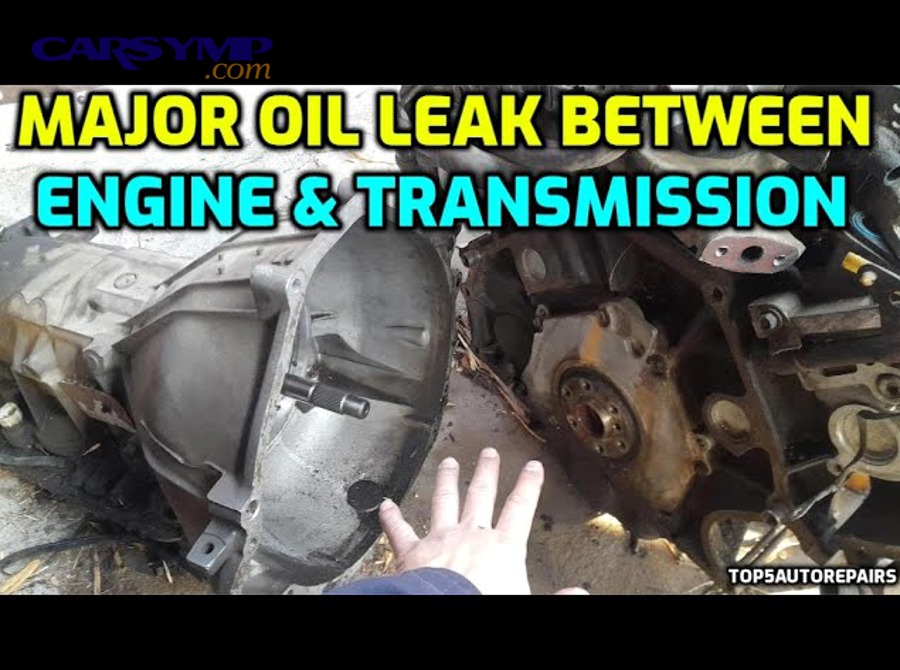
The engine-transmission junction consists of the bell housing, a cast aluminum or iron enclosure that surrounds the flywheel (manual transmission) or flexplate (automatic transmission). This bell housing bolts directly to the back of the engine block, creating a sealed chamber where the transmission input shaft penetrates into the engine’s rotating assembly. The crankshaft extends from the rear of the engine and connects to either the flywheel or flexplate, which then couples with the torque converter or clutch assembly.
Multiple seals protect this junction from fluid leakage. The rear main seal sits at the very back of the engine block, encircling the crankshaft where it exits the engine. This seal prevents engine oil from leaking out of the crankcase. On the transmission side, the input shaft seal prevents transmission fluid from escaping where the input shaft enters the transmission case. Between these components, various gaskets seal the mating surfaces where the bell housing, oil pan, and transmission case join together.
The bell housing creates a confined space where any leak becomes immediately visible. When seals fail in this area, fluid accumulates inside the bell housing or drips from the lowest point where the engine and transmission meet. The rotating components inside—particularly the flywheel or flexplate spinning at engine speed—can fling leaked fluid around the entire interior of the bell housing, making visual identification of the exact leak source challenging without proper cleaning and inspection.

What Are the Most Common Seal Failures in This Area?
The seven most common seal failures at the engine-transmission junction are rear main seal (crankshaft seal), transmission input shaft seal, torque converter seal, rear oil pan gasket, transmission sealing bolt with washer, valve cover gasket causing oil migration, and oil pump seal. Each of these failures presents distinct symptoms and diagnostic indicators.
Rear main seal failure ranks as the most frequent cause, accounting for the majority of leaks between the engine and transmission. This seal encircles the crankshaft at the back of the engine block and experiences constant exposure to high temperatures, crankcase pressure, and rotational stress. When this seal degrades, engine oil seeps past the crankshaft and drips directly down onto the bell housing or transmission case.
Transmission input shaft seal leaks occur on both manual and automatic transmissions when the seal surrounding the input shaft deteriorates. This seal prevents transmission fluid from escaping where the input shaft enters the transmission. Input shaft seal failures often create a distinctive pattern where fluid accumulates inside the bell housing rather than dripping externally, and the spinning input shaft flings fluid around the bell housing interior.
Torque converter seal failures affect automatic transmissions specifically, occurring where the torque converter hub enters the transmission pump. When this seal fails, transmission fluid leaks from the front of the transmission and appears at the engine-transmission junction. This type of leak can be confused with rear main seal failure because both create similar drip patterns at the bottom of the bell housing.
Oil pan gasket leaks at the rear of the pan can mimic junction leaks because the rear edge of the oil pan sits very close to where the transmission bell housing begins. A degraded gasket at the rear corners of the oil pan allows engine oil to drip down and appear to originate from between the engine and transmission, though the actual leak source sits slightly forward of the junction.
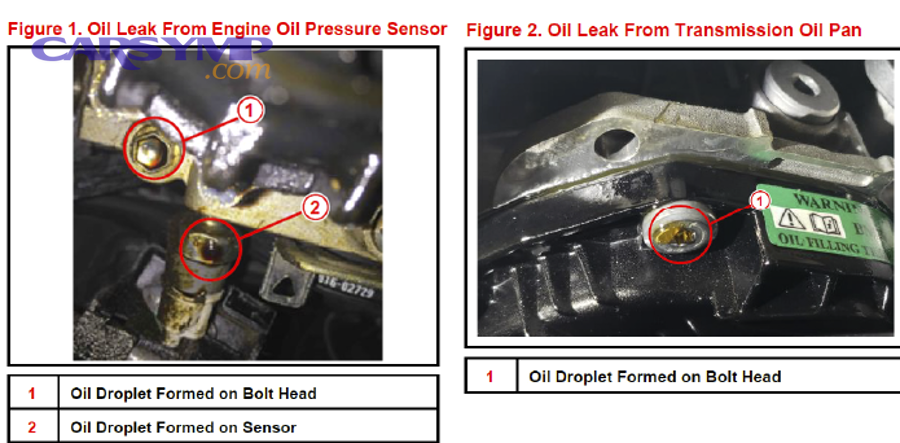
Transmission sealing bolt leaks represent a less common but documented failure mode where a bolt that passes through the bell housing has a deteriorated sealing washer. This 14mm hex bolt with a copper or aluminum crush washer can develop leaks if the washer flattens over time or if the bolt loosens slightly, allowing oil to seep through the threads.
Valve cover gasket failures on certain engine designs cause oil to run down the back of the engine and pool at the engine-transmission junction, creating the appearance of a junction leak when the actual source is several inches higher. This misdiagnosis is particularly common on V-shaped engines where valve covers sit at the rear of the cylinder heads, and on engines like the Toyota 5VZ-FE where valve cover gasket leaks near the rear cam plugs drip directly down onto the bell housing.
Oil pump seal leaks occur during or after timing belt service when the oil pump seal at the front of the engine develops problems, but oil migrates along the bottom of the engine and appears at the rear junction. While technically not a junction leak, this failure pattern can confuse diagnosis if mechanics don’t trace the oil path completely from front to rear.
Is It Engine Oil or Transmission Fluid Leaking?
Engine oil wins for leaks showing amber to dark brown color and dripping behavior, transmission fluid is best identified by red to pink color with flinging patterns, and mixed presentations require both fluids to be tested separately using UV dye diagnostics. This differentiation determines whether to focus diagnosis on engine-side seals or transmission-side components.
Specifically, fluid identification must occur before any diagnostic work proceeds, as pursuing the wrong seal type wastes time and money on unnecessary repairs.
How Can You Identify Engine Oil vs. Transmission Fluid by Appearance?
Engine oil appears in shades ranging from light amber (when fresh) to dark brown or black (when used), with a slippery, viscous consistency that varies with temperature. Fresh engine oil has a relatively clean appearance with minimal particulate matter, while used oil develops a darker color from combustion byproducts and suspended particles. The viscosity of engine oil changes with temperature—it flows more easily when warm and becomes thicker when cold. When you rub engine oil between your fingers, it feels slick and leaves a noticeable residue that takes soap and water to remove completely.
Transmission fluid typically shows a red or pink color when new or lightly used, though this color characteristic applies specifically to automatic transmission fluid (ATF). Manual transmission gear oil appears amber to brown, similar to engine oil, making differentiation more challenging on manual transmission vehicles. The critical distinction is that most modern automatic transmissions use fluid that maintains a reddish tint even after significant use.
However, transmission fluid color changes complicate identification. Mercon LV transmission fluid, used in many Ford vehicles, turns brown almost immediately after one heat cycle, losing its distinctive red color within the first few hundred miles of use. Similarly, heavily used or overheated transmission fluid darkens to brown or black, making visual distinction from engine oil nearly impossible based on color alone.
The smell test provides an additional differentiation method. Transmission fluid has a distinct petroleum smell that differs subtly from engine oil, though this requires experience to distinguish reliably. Burned transmission fluid develops an acrid, unpleasant odor that’s unmistakable, while burned engine oil smells different—more like burning rubber or oil paint.
Consistency differences also help identify fluid type. Transmission fluid generally maintains a thinner, more consistent viscosity across temperature ranges compared to engine oil. When cold, transmission fluid remains relatively flowable, while engine oil can become quite thick. This viscosity difference becomes apparent when comparing fluid samples side by side.
Where Does Each Type of Fluid Accumulate?
Engine oil from rear main seal or oil pan gasket leaks typically drips straight down due to gravity, creating vertical streaks on the bell housing exterior and accumulating at the lowest point of the junction. The leak pattern shows concentrated fluid at the bottom center of the bell housing, with drips falling directly onto the ground or splash shield below. Engine oil doesn’t get distributed widely inside the bell housing unless the leak is severe and the rotating flywheel or flexplate contacts the pooled oil.
Transmission fluid from input shaft seal or torque converter seal failures exhibits a flinging pattern because the spinning transmission components actively distribute the fluid throughout the bell housing interior. The input shaft rotates whenever the vehicle moves, and any fluid leaking past the input shaft seal gets thrown centrifugally outward, coating the inside surfaces of the bell housing. This creates a characteristic pattern where the bell housing interior shows even fluid coverage rather than concentrated drips.
The bell housing inspection cover, a small removable plate on the bottom or side of the bell housing, provides access to observe these different patterns. Removing this cover reveals whether fluid has been flung around the interior (indicating transmission-side leak) or whether fluid simply drips from above (suggesting engine-side leak). Manual transmission vehicles often have more accessible inspection covers, while some automatic transmissions require removing the starter motor to gain visual access.
External versus internal leak location provides diagnostic value. Engine oil leaks usually show external evidence first—visible drips on the outside of the bell housing, oil spots on the ground, and accumulation on the transmission case exterior. Transmission fluid leaks may not show external evidence immediately because the fluid gets contained inside the bell housing and only escapes when the volume exceeds the bell housing’s capacity to contain it.
The underside of the vehicle reveals accumulation patterns that distinguish leak sources. Engine oil drips create a concentrated spot on the ground directly beneath the junction, typically in line with the center of the engine. Transmission fluid leaks may create a wider distribution pattern because the rotating components fling fluid backward, and the airflow under the vehicle while driving carries the fluid rearward along the transmission case.
What Are the 7 Common Seal Failures That Cause This Leak?
The 7 common seal failures causing engine-transmission junction leaks are rear main seal degradation, transmission input shaft seal wear, torque converter seal failure, rear oil pan gasket deterioration, transmission sealing bolt washer compression, valve cover gasket leakage with oil migration, and oil pump seal degradation during timing service. Each presents distinct diagnostic indicators and repair requirements.
Below, we examine each seal failure type in detail, covering symptoms, identification methods, and vehicle-specific vulnerabilities.
What Is Rear Main Seal Failure and How Do You Diagnose It?
Rear main seal failure occurs when the crankshaft seal at the back of the engine block deteriorates, allowing pressurized engine oil to escape from the crankcase and drip onto the bell housing. This seal consists of a rubber or synthetic elastomer lip that maintains contact with the crankshaft’s smooth surface, creating a barrier against oil leakage. Over time, heat cycles, oil contamination, and excessive crankcase pressure cause the seal material to harden, crack, or lose its sealing lip tension.
Symptoms of rear main seal failure include visible oil dripping from the center bottom of the bell housing, oil accumulation on the rear of the oil pan, and oil spots on the ground positioned directly beneath the engine-transmission junction. The leak typically starts as minor seepage, showing only slight dampness around the seal area, then progresses to active dripping as the seal degradation worsens. Vehicle owners often notice the leak after parking, when oil has had time to accumulate and drip onto the garage floor or driveway.
The burning oil smell accompanies rear main seal leaks because leaked oil drips onto the hot exhaust system components located beneath the engine. As the vehicle operates and exhaust temperatures rise above 400°F, any oil contacting the exhaust pipes or catalytic converter burns, creating a distinctive acrid smell that enters the cabin through the ventilation system. This smell becomes particularly noticeable when the heater is operating, as the HVAC system draws air from the engine compartment.
Diagnosis of rear main seal failure requires cleaning the junction area with a degreaser to remove old oil and grime, then running the engine while observing for fresh oil seepage. The leak source should appear at the very center of the junction, where the crankshaft passes through the back of the engine block. Using an inspection mirror to view the seal area from multiple angles helps confirm that oil is coming from the crankshaft seal rather than running down from higher engine components.
Excessive crankcase pressure accelerates rear main seal failure, making the PCV (positive crankcase ventilation) system condition relevant to diagnosis. A clogged PCV valve or restricted crankcase ventilation creates pressure buildup inside the engine, forcing oil past seals that would otherwise contain it. Checking the PCV system condition should be part of rear main seal diagnosis, as replacing the seal without addressing pressure issues leads to premature failure of the new seal.
Vehicle-specific vulnerabilities affect certain models disproportionately. Honda Odyssey vans, particularly 2002-2010 models, develop rear main seal leaks frequently enough that owner forums discuss it as a common maintenance item. Ford Fusion Sport models with the 2.7L EcoBoost engine show rear main seal failures even at relatively low mileage (30,000-90,000 miles), suggesting a design weakness or seal material issue in this application.
How Does a Transmission Input Shaft Seal Leak Present?
Transmission input shaft seal leaks present as transmission fluid accumulation inside the bell housing, often discovered when the bell housing inspection cover is removed or when transmission removal reveals a fluid-filled chamber. The input shaft seal prevents transmission fluid from escaping where the input shaft enters the transmission case, and when this seal fails, fluid leaks directly into the enclosed bell housing space rather than dripping externally.
The spinning input shaft creates a characteristic flinging pattern that distinguishes this leak from engine-side failures. As the input shaft rotates with the transmission in gear, any leaked fluid gets thrown centrifugally outward, coating the entire interior surface of the bell housing. This creates an even distribution of fluid rather than concentrated drips, and the bell housing interior appears “painted” with fluid when inspected.
External symptoms of input shaft seal failure may not appear immediately because the bell housing contains the leaked fluid initially. Only after significant fluid volume accumulates does it begin seeping from the bell housing seams or dripping from the lowest point of the junction. This delayed external evidence can lead to misdiagnosis, as the leak may go unnoticed until transmission fluid levels drop noticeably or the accumulation becomes severe enough to overflow the bell housing.
Clutch contamination accompanies input shaft seal leaks on manual transmissions, as leaked fluid saturates the clutch disc facing material. A fluid-contaminated clutch exhibits slipping behavior, particularly when the clutch is cold, and may produce a burning smell as the contaminated facing material heats up during engagement. Automatic transmissions don’t have this complication, but the leaked fluid can still contaminate the flexplate and torque converter mounting area.
Ford Focus models from 2012-2016 with the DPS6 PowerShift dual-clutch transmission experience input shaft seal leaks as a documented, widespread problem covered by Technical Service Bulletin (TSB) 14-0047. This known defect affects enough vehicles that Focus owner communities discuss it extensively, with many vehicles requiring transmission removal and input shaft seal replacement even at relatively low mileage. The prevalence of this issue in one specific model demonstrates how vehicle-specific defects can make certain seal types more likely to fail.
Honda K-series engines in vehicles like the Acura RSX and Civic Si can develop input shaft seal leaks, though in some cases the leak actually originates from a transmission-side sealing bolt rather than the input shaft seal itself. This diagnostic complexity requires careful inspection to differentiate between the input shaft seal and the adjacent bolt seal, as both create similar symptoms but require different repair approaches.
Can a Torque Converter Seal Cause This Type of Leak?
Yes, torque converter seal failure can cause leaks at the engine-transmission junction, appearing similar to rear main seal leaks because leaked transmission fluid drips from approximately the same location. The torque converter seal sits at the front of the automatic transmission where the torque converter hub enters the transmission pump, and when this seal fails, transmission fluid escapes and drips down the front of the transmission case.
The leak mechanism involves the torque converter hub, which extends from the torque converter body into the transmission pump assembly through a seal. This seal must contain transmission fluid pressure generated by the pump while allowing the torque converter to rotate freely. When the seal deteriorates, fluid leaks past the torque converter hub and accumulates at the lowest point of the bell housing, creating drip patterns identical to those from rear main seal failure.
Distinguishing torque converter seal leaks from rear main seal leaks requires fluid identification, as both create centered drips at the bell housing bottom. If the leaked fluid is clearly transmission fluid (red/pink color on newer fluid, or confirmed through fluid testing), this points toward torque converter seal rather than rear main seal. However, if the transmission fluid has darkened from use, visual identification becomes unreliable.
The repair complexity for torque converter seal replacement matches that of rear main seal replacement—both require complete transmission removal to access the failed seal. This labor-intensive process means that mechanics often recommend replacing both seals simultaneously when the transmission is already removed, as the additional parts cost is minimal compared to the labor already being performed. Some technicians also recommend replacing the transmission front pump seal at the same time, as these three seals are all accessible once the transmission is separated from the engine.
Transmission fluid level drop provides a diagnostic clue for torque converter seal leaks. A vehicle losing significant transmission fluid (more than a few ounces per week) likely has a torque converter seal or input shaft seal problem rather than a minor rear main seal seep. Checking the transmission fluid level regularly and documenting fluid consumption helps differentiate between minor engine oil seepage and more serious transmission fluid leakage.
What About Oil Pan Gasket Leaks at the Rear?
Oil pan gasket leaks at the rear of the oil pan can appear to originate from the engine-transmission junction because the rear edge of the oil pan sits immediately adjacent to the front of the bell housing. The oil pan gasket seals the junction between the oil pan and the engine block, running completely around the perimeter of the pan. When the rear portion of this gasket fails, oil drips from a location that appears to be between the engine and transmission.
The misdiagnosis occurs because visual inspection from underneath the vehicle shows oil dripping from the junction area, leading observers to assume a rear main seal or transmission seal problem when the actual source is slightly forward. The rear corners of the oil pan are particularly vulnerable to gasket failure because this area experiences significant stress from engine movement on its mounts, and the gasket material can separate or compress unevenly.
Differentiation requires careful cleaning and inspection of the entire junction area. After degreasing the area completely, running the engine while observing with good lighting reveals whether the leak originates from the oil pan gasket seam or from further back at the crankshaft seal. The oil pan gasket leak will show fresh oil appearing along the gasket line, while a rear main seal leak shows oil coming from behind the oil pan’s rear edge.
Some engine designs make the oil pan gasket more vulnerable to leakage at the rear. Engines with two-piece rear main seal designs (older technology where the seal splits horizontally into upper and lower halves) often have the oil pan gasket interfacing directly with the lower portion of the rear main seal. If the oil pan gasket installation didn’t properly align with the seal, or if the seal and gasket interface degrades over time, leaks can develop that appear to be rear main seal failures but actually involve the gasket-to-seal junction.
Oil pan bolt torque affects rear gasket seal integrity. If oil pan bolts at the rear corners are over-torqued, the gasket compresses excessively and can crack or extrude from the sealing surface. If under-torqued, the gasket doesn’t compress enough to create a reliable seal, allowing oil seepage. Following manufacturer torque specifications precisely during oil pan installation prevents these problems.
How Do You Identify a Transmission Sealing Bolt Leak?
Transmission sealing bolt leaks occur when a bolt that passes through the bell housing has a failed sealing washer, allowing oil to seep through the bolt threads and emerge at the bolt head location. This represents a less common but documented leak source that can be misidentified as a seal failure requiring transmission removal.
The specific bolt in question is typically a 14mm hex head bolt with a copper or aluminum crush washer that seals the bolt hole penetration through the bell housing. On some Honda K-series engines, this bolt sits on the transmission side of the bell housing and passes through into the engine block. When the crush washer deteriorates or the bolt loosens slightly, engine oil seeps through the threads and accumulates around the bolt head.
Identification of this leak requires close inspection of all bolts in the junction area, looking for oil accumulation around bolt heads or washers. The leak may be subtle, showing only slight dampness around the bolt rather than active dripping. Cleaning the area thoroughly and observing where fresh oil appears helps pinpoint this leak source.
Repair for a sealing bolt leak is straightforward compared to seal replacement—the bolt can be removed, the threads cleaned, a new crush washer installed, and the bolt reinstalled to proper torque specification without removing the transmission. This represents a rare scenario where a junction leak can be addressed without the labor-intensive transmission removal process.
The diagnostic value of identifying this leak type is significant because it saves the vehicle owner from unnecessary transmission removal and seal replacement. A mechanic who overlooks this possibility and proceeds directly to rear main seal replacement will complete an expensive repair that doesn’t address the actual leak source, leading to continued leakage and customer dissatisfaction.

Can Valve Cover Gaskets Cause Leaks That Run Down to This Area?
Yes, valve cover gasket leaks can cause oil to run down the back of the engine and pool at the engine-transmission junction, creating the false appearance of a rear main seal or transmission seal leak. This misdiagnosis is particularly common on V-configuration engines and certain inline engines where the valve covers sit near the rear of the engine.
The leak mechanism involves oil seeping from deteriorated valve cover gaskets and following gravity and engine contours downward to the lowest point, which is often the engine-transmission junction. As the engine runs, oil leaks from the valve cover gasket, runs down the back of the cylinder head and engine block, and eventually drips from the bell housing area. The oil accumulation at the junction gives every appearance of originating there, when the actual source is several inches higher.
Toyota 5VZ-FE engines in vehicles like the 4Runner and Tacoma demonstrate this problem frequently. The valve cover gaskets on this V6 engine tend to leak at the rear corners near the camshaft position sensor plugs. Oil from these leaks runs down the back of the engine block and accumulates at the bell housing, leading many mechanics to diagnose rear main seal failure incorrectly. Owners of these vehicles report instances where mechanics replaced the rear main seal only to discover continued leakage because the valve cover gasket was the actual source.
Identification of valve cover gasket leaks requires methodical inspection starting from the top of the engine and working downward. Cleaning the entire back of the engine—from valve covers down to the bell housing—and then running the engine while observing with good lighting reveals the true leak source. Fresh oil appearing at the valve cover gasket confirms the diagnosis, while a clean valve cover area and fresh oil only at the junction indicates an actual junction leak.
The financial impact of misdiagnosis is substantial. Valve cover gasket replacement typically costs $200-500 depending on engine configuration and labor rates, while rear main seal replacement costs $800-1500 due to transmission removal requirements. A mechanic who jumps to the rear main seal diagnosis without checking valve covers first commits the vehicle owner to unnecessary expense.
Preventing seal leaks requires proper maintenance of the PCV system and regular inspection of all gaskets before they progress to severe leakage. According to automotive engineering data from SAE International, maintaining proper crankcase ventilation reduces seal stress by 40-60%, significantly extending seal service life.
What Role Does the Oil Pump Seal Play?
The oil pump seal prevents engine oil from leaking where the crankshaft passes through the front of the engine to drive the oil pump, and while this seal sits at the front of the engine rather than the junction, oil from a failed oil pump seal can migrate along the bottom of the engine and appear at the rear junction. This creates a diagnostic challenge where a front-engine leak manifests as apparent rear-engine leakage.
Oil pump seal replacement typically occurs during timing belt service on interference engines, as the timing belt removal process provides access to the oil pump area. If the oil pump seal is not replaced during timing belt service, or if the new seal is installed improperly, leakage can develop. The leaked oil follows the engine’s underside toward the rear, accumulating at the lowest points along the way.
The migration path depends on engine design and undertray configuration. Engines with smooth undersides and plastic undertrays channel oil toward the rear, while engines with complex casting features may trap oil in various locations before it reaches the junction. Following the oil trail from the junction forward toward the oil pump area reveals whether the leak source is actually at the front rather than the rear.
Diagnosis requires comprehensive inspection of the entire engine rather than focusing solely on the junction area. A mechanic who only inspects the junction will miss an oil pump seal leak and may unnecessarily replace rear main seal or transmission seals. Proper diagnostic procedure involves cleaning the entire engine underside, running the engine, and observing where fresh oil first appears.
The timing belt service interval creates a natural opportunity to replace the oil pump seal preventively. Many mechanics recommend oil pump seal replacement during every timing belt service, even if the seal shows no signs of leakage, because the incremental parts cost ($15-30) is minimal compared to the labor already being performed. This preventive approach avoids the scenario where an oil pump seal fails shortly after timing belt service, requiring a second round of labor to access the same area.
How Do You Perform an Accurate Diagnosis of the Leak Source?
Accurate diagnosis of engine-transmission junction leaks requires a four-step systematic process: thorough cleaning of the area, visual inspection for fresh leaks, UV dye tracing if visual inspection is inconclusive, and verification through selective inspection cover removal. This methodical approach eliminates guesswork and identifies the exact leak source before committing to repairs.
To better understand the diagnostic process, let’s examine each method in detail and learn when each technique provides the most value.
What Is the Step-by-Step Visual Inspection Process?
The visual inspection process begins with cleaning the entire junction area using a automotive degreaser or engine cleaner to remove all accumulated oil and grime. This cleaning step is essential because old oil residue obscures the actual leak source, and attempting to diagnose a leak on a dirty engine leads to incorrect conclusions. Spray the degreaser liberally on the junction area, the back of the engine block, the front of the transmission, and all visible surfaces in between. Allow the degreaser to penetrate for 5-10 minutes, then rinse with water or wipe clean with shop towels.
After cleaning, position the vehicle on a level surface over clean cardboard or paper. This clean surface underneath the vehicle allows you to observe where fresh oil drips accumulate during the test. Start the engine and allow it to reach normal operating temperature, as oil leaks often don’t appear or worsen when the engine is cold due to oil viscosity and seal expansion characteristics.
With the engine running at operating temperature, use a bright flashlight or inspection light to observe the junction area from multiple angles. Look for wet areas, fresh oil seepage, or active dripping. The leak source will show fresh, clean oil against the recently cleaned background, making it relatively easy to identify where oil first appears.
Observing from different positions provides complete coverage. View the junction from directly underneath, from the sides through the wheel wells (if accessible), and from above using an inspection mirror. Some leaks only become visible from specific angles, particularly if the leak is at the top rear of the junction or hidden behind structural components.
Allow the engine to run for 15-20 minutes during the inspection, as some leaks develop slowly and require time for oil to accumulate and drip. Check the cardboard or paper underneath the vehicle periodically to see if drips are forming and where they land. The drip location on the paper indicates the general area of the leak, though oil can run along surfaces before dripping, so the drip point may be offset from the actual leak source.
Document your findings with photographs showing the leak source, the accumulated oil pattern, and the overall condition of the junction area. These photos provide valuable reference if the leak diagnosis requires consultation with other mechanics or if you need to compare the leak severity over time.
How Does UV Dye Diagnosis Work for These Leaks?
UV dye diagnosis provides definitive leak source identification when visual inspection alone proves inconclusive or when multiple potential leak sources exist in close proximity. The process involves adding fluorescent UV dye to the suspected fluid (engine oil, transmission fluid, or both), operating the vehicle to allow the dyed fluid to leak, then using a UV blacklight to trace the leak path visually.
Engine oil UV dye comes in small bottles that add to the engine oil through the oil filler cap or dipstick tube. The dye concentration is very low—typically one bottle treats 4-6 quarts of oil—and does not affect oil properties or engine lubrication. After adding the dye, run the engine for 10-15 minutes to circulate the dyed oil throughout the engine, ensuring it reaches all potential leak points.
For transmission fluid testing, UV dye is added through the transmission dipstick tube (if equipped) or through the fill plug on transmissions without dipsticks. The same circulation principle applies—the transmission must be operated through all gear ranges to distribute the dye throughout the transmission and reach all seals.
The inspection process uses a UV blacklight (365-395 nanometer wavelength) to illuminate the junction area in darkness or heavily shaded conditions. The UV dye glows bright yellow-green under UV light, creating a highly visible contrast against the dark engine and transmission components. The leak source appears as a bright glowing area where dyed fluid is actively seeping, and the leak path shows as a glowing trail from the source to wherever the fluid has accumulated.
UV dye diagnosis excels at differentiating between adjacent leak sources. If both engine oil and transmission fluid are leaking, using different color dyes (or testing one fluid at a time) reveals which seal is responsible for which leak. This precision prevents the scenario where a mechanic replaces the rear main seal but the leak continues because the actual source was the input shaft seal.
The timing for UV dye inspection depends on leak severity. For active leaks, inspection can occur within 30 minutes of adding the dye and running the engine. For slow seeps, allowing the vehicle to sit overnight or be driven for a day before inspection gives the dye time to accumulate at the leak source in detectable quantities.
Professional mechanics keep UV dye kits in their diagnostic tool inventory because the dye method provides certainty that justifies its $20-40 cost. For vehicle owners attempting DIY diagnosis, UV dye kits are available at auto parts stores and represent a worthwhile investment to avoid misdiagnosis and unnecessary repairs.

Should You Remove the Starter or Inspection Cover for Better Access?
Yes, removing the starter motor or bell housing inspection cover provides direct visual access to the interior of the bell housing, revealing whether fluid has accumulated inside and showing the leak pattern more clearly than external inspection alone. This invasive inspection step is worthwhile when diagnosis remains uncertain after cleaning and visual inspection.
The bell housing inspection cover, when present, is a stamped steel or cast aluminum plate that bolts to the bottom or side of the bell housing, providing access to the flywheel or flexplate for installation and timing purposes. Removing this cover requires only basic hand tools—typically two or three bolts secure it—and takes 5-10 minutes. Once removed, the cover opening allows direct viewing of the flywheel/flexplate, the rear main seal area, and the interior of the bell housing.
Interior inspection reveals the fluid accumulation pattern. If the bell housing interior is dry or shows only minor dampness, the leak is either very minor or originates from outside the bell housing (such as valve cover gasket oil running down externally). If the bell housing contains significant fluid volume, this confirms a junction leak rather than oil migration from higher engine components.
The fluid distribution pattern inside the bell housing differentiates leak types. Even distribution of fluid coating all interior surfaces indicates a transmission-side leak (input shaft seal or torque converter seal) where rotating components fling fluid around. Concentrated fluid at the bottom with wet areas only on lower surfaces indicates an engine-side leak (rear main seal or oil pan gasket) where fluid drips rather than flings.
Starter motor removal provides similar access on vehicles without inspection covers. The starter motor typically bolts to the bell housing with two or three bolts and disconnects electrically via a battery cable and a smaller trigger wire. After disconnecting the battery, removing the starter creates an opening into the bell housing interior. Using a flashlight through the starter opening allows viewing the same interior areas accessible through an inspection cover.
The decision to remove the starter or inspection cover depends on diagnostic certainty needed versus time investment. If visual inspection and UV dye testing already provide strong evidence of the leak source, removing covers may be unnecessary. If diagnosis remains ambiguous—for example, if you can’t determine whether the leak is engine oil or transmission fluid, or if you see evidence of both fluids—interior inspection provides the clarity needed to proceed with the correct repair.
Safety considerations apply when removing electrical components like the starter. Always disconnect the battery negative terminal before removing starter electrical connections to prevent accidental short circuits or starter engagement. Label the starter wiring connections before disconnecting them to ensure correct reconnection during reinstallation.
What Do Different Leak Patterns Tell You About the Source?
Different leak patterns reveal specific information about the leak source: slow drips from the center bottom indicate rear main seal or torque converter seal, fluid coating the bell housing interior indicates input shaft seal, oil concentrated at rear corners suggests oil pan gasket, and oil trails from higher engine areas indicate valve cover gasket migration. Pattern recognition accelerates diagnosis and prevents misidentification.
Specifically, learning to read leak patterns requires understanding how fluids behave under different conditions and how vehicle design influences where fluids accumulate.
What Does a Slow Drip vs. Active Leak Indicate?
A slow drip leak—producing only a few drops per day or small spots on the ground after overnight parking—indicates early-stage seal degradation where the seal still provides partial sealing function but has developed minor defects. Slow drips typically come from rear main seals that have hardened slightly or developed minor surface cracks but haven’t completely failed. The seal’s sealing lip still contacts the crankshaft but allows a small amount of oil to bypass during periods of high crankcase pressure or when the engine sits and pressure equalizes.
An active leak—producing steady dripping during engine operation, visible fluid streams, or large puddles under the vehicle—indicates advanced seal failure where the seal has lost most or all sealing capability. Active leaks come from seals with major cracks, missing chunks of sealing material, or complete detachment from the seal housing. These leaks progress rapidly from moderate to severe as the damaged seal deteriorates further under operating stress.
The leak behavior change over time provides diagnostic information. A leak that starts as occasional seepage and progresses to steady dripping over weeks or months follows the typical rear main seal failure progression. A leak that appears suddenly as active dripping without a prior seepage phase may indicate a different failure mode—such as a transmission seal that failed catastrophically or a bolt seal washer that compressed suddenly.
Temperature dependence of the leak indicates seal material condition. Seals that leak more when the engine is hot suggest seal hardening from heat exposure, where the seal material loses elasticity at operating temperature and can’t maintain contact pressure. Seals that leak more when cold may indicate seal shrinkage or crankshaft surface roughness that the seal can’t conform to when the rubber is less pliable.
Leak quantity estimation helps prioritize repair urgency. A leak depositing a few drops (less than a teaspoon) per day represents minor seepage that doesn’t require immediate repair, though it should be monitored. A leak depositing 1-2 ounces per day requires attention within a few weeks, as this quantity can lead to low oil levels if not monitored. A leak depositing 4+ ounces per day requires immediate repair, as this represents rapid fluid loss that can cause engine or transmission damage if fluid levels drop critically.
According to automotive service data from carsymp.com, rear main seal leaks causing more than 4 ounces of oil loss per week are classified as severe and warrant immediate repair to prevent engine damage from low oil levels.
How Does Leak Location Point to Specific Seal Failures?
Leak location at the vertical center of the bell housing, equidistant from the sides, points definitively toward rear main seal or torque converter seal because these components sit on the engine-transmission centerline. The crankshaft and torque converter hub both align with the engine’s longitudinal axis, and any leak from their associated seals drips straight down from this centerline position.
Leaks offset to one side of the bell housing suggest oil pan gasket failure at the rear corners rather than a centered seal failure. The oil pan gasket runs along the sides of the engine, and corner failures create drips that appear off-center when viewed from underneath. Left or right offset by several inches from centerline indicates oil pan gasket rather than rear main seal.
Leak location at the top rear of the junction, visible from the engine compartment but difficult to see from underneath, indicates valve cover gasket leakage with downward migration. Oil from valve cover gaskets appears first at the cylinder head-to-valve cover seam, then runs down the back of the cylinder head to the engine block, eventually reaching the bell housing area. This top-down progression creates a distinctive pattern where oil evidence appears at multiple vertical levels rather than only at the bottom.
Leak location inside versus outside the bell housing provides crucial differentiation. Interior accumulation (visible only after removing starter or inspection cover) indicates transmission-side seals—input shaft seal or torque converter seal. Exterior accumulation with no interior evidence indicates engine-side leaks—rear main seal, oil pan gasket, or valve cover gasket migration.
The relationship between leak location and access points affects diagnosis. Leaks visible from standard under-vehicle viewing positions (without removing components) are typically external leaks from engine-side sources. Leaks requiring starter removal or inspection cover removal to visualize are often transmission-side leaks or severe rear main seal leaks that have filled the bell housing interior.
Front-to-back location within the junction area differentiates oil pan gasket (forward position, at the rear edge of the oil pan) from rear main seal (rearward position, at the flywheel/flexplate mounting surface). Careful observation of exactly where fresh oil appears helps distinguish these adjacent leak sources.
Transmission case wetness patterns extend the diagnostic area beyond the immediate junction. Oil appearing on the transmission case several inches back from the junction suggests that leaked fluid is being carried backward by airflow while driving, indicating an active leak of significant volume. Dry transmission case with wetness only at the immediate junction suggests minor seepage that hasn’t yet accumulated enough volume to spread.
How Complex Are Repairs for Engine-Transmission Junction Leaks?
Repairs for engine-transmission junction leaks range from simple (accessible bolt seal replacement requiring 1-2 hours) to complex (rear main seal replacement requiring 8-12 hours of transmission removal labor), with most seal failures requiring transmission removal and costing $800-1500 in total repair costs. Repair complexity determines whether DIY repair is feasible or professional service is necessary.
More importantly, understanding repair complexity helps vehicle owners make informed decisions about pursuing repairs versus living with minor seepage, choosing independent repair shops versus dealerships, and timing repairs with other maintenance needs.
Which Seal Repairs Require Transmission Removal?
Rear main seal replacement absolutely requires transmission removal because the seal sits at the very back of the engine block, sandwiched between the engine and transmission bell housing. Accessing this seal requires separating the transmission completely from the engine, removing the flywheel or flexplate from the crankshaft, and then extracting the old seal from its housing in the engine block. No shortcuts or alternative access methods exist for this repair on modern vehicles.
The transmission removal process involves extensive disassembly. On rear-wheel-drive vehicles, the driveshaft must be disconnected and removed, the exhaust system may require partial removal for clearance, shift linkage must be disconnected, electrical connections to the transmission must be unplugged, and the transmission mount and crossmember must be removed. On front-wheel-drive vehicles, the axle shafts (CV axles) must be disconnected, the subframe may require dropping or removal, and various engine-to-transmission brackets and braces must be removed.
Transmission input shaft seal replacement requires the same transmission removal process as rear main seal replacement, since the input shaft seal sits at the front of the transmission where it mates to the engine. The transmission must be separated from the engine to access the input shaft and its associated seal. This labor-intensive requirement explains why mechanics often recommend replacing both the rear main seal and input shaft seal simultaneously when the transmission is already removed.
Torque converter seal replacement on automatic transmissions requires transmission removal plus additional disassembly to access the front pump assembly inside the transmission. After removing the transmission from the vehicle, the torque converter pulls out of the transmission, then the front pump retaining bolts are removed, and the pump assembly is separated from the transmission case. The seal can then be replaced on the pump body. This represents the most labor-intensive junction seal repair because it combines transmission removal with internal transmission disassembly.
The labor time for these repairs reflects the extensive disassembly required. Rear main seal replacement labor ranges from 6-10 hours depending on vehicle configuration, with rear-wheel-drive vehicles typically requiring less time than front-wheel-drive vehicles. Input shaft seal replacement takes similar time. Torque converter seal replacement adds 2-4 hours beyond basic transmission removal because of the internal transmission work required.
Parts costs for seals are relatively modest—rear main seals cost $15-50, input shaft seals cost $10-30, and torque converter seals cost $15-40. The dramatic difference between parts cost and total repair cost illustrates how labor dominates the expense for these repairs. A $1200 repair bill might consist of $30 in parts and $1170 in labor.
The Repair labor time for rear main seal replacement is substantial, typically requiring 8-12 hours of professional mechanic time according to factory service manual specifications, making it one of the most labor-intensive seal repairs on modern vehicles.
Can Any of These Leaks Be Fixed Without Dropping the Transmission?
Yes, transmission sealing bolt leaks can be fixed without dropping the transmission because the bolt is accessible from outside the bell housing, requiring only bolt removal, thread cleaning, new washer installation, and proper torque. This repair takes 30-60 minutes and costs $50-100 in labor plus minimal parts cost.
Valve cover gasket leaks that create the appearance of junction leaks are fully repairable without transmission removal, as valve cover gaskets are among the most accessible engine seals. Valve cover gasket replacement typically requires removing the valve cover bolts, lifting the cover away from the cylinder head, cleaning both sealing surfaces, installing a new gasket, and reinstalling the cover with proper bolt torque. This repair takes 2-4 hours for V-configuration engines (requiring two valve cover gasket sets) and 1-2 hours for inline engines.
Oil pan gasket leaks at the rear corners technically don’t require transmission removal, but the repair difficulty varies dramatically by vehicle design. Some vehicles provide enough clearance to drop the oil pan with the transmission in place, allowing rear gasket section replacement. Other vehicles position the transmission so close to the oil pan that even minor pan movement is impossible without transmission removal. This vehicle-specific consideration means that oil pan gasket repair may or may not require transmission removal depending on the specific model.
Oil pump seal leaks repair through the front of the engine during timing belt service and never require transmission removal. This represents the complete opposite end of the accessibility spectrum from rear main seal replacement.
The cost differential between accessible and inaccessible seal repairs is dramatic. A valve cover gasket replacement costing $200-400 solves what appears to be a junction leak without the $1000+ expense of transmission removal. A sealing bolt repair costing $50-100 provides similar savings. These alternative repairs make thorough diagnosis financially critical—jumping to rear main seal replacement without confirming that the valve covers and accessible seals are not the leak source commits the vehicle owner to unnecessary expense.
DIY repair feasibility depends almost entirely on whether transmission removal is required. Experienced home mechanics with proper tools can perform valve cover gasket replacement, oil pan gasket replacement (on accessible vehicles), and sealing bolt repairs successfully. Very few home mechanics have the equipment, knowledge, and physical capability to remove a transmission safely, making rear main seal, input shaft seal, and torque converter seal repairs professional-service repairs for most vehicle owners.
What Is the Role of PCV Valve Pressure in Seal Failures?
The PCV (positive crankcase ventilation) valve regulates pressure inside the engine crankcase by venting combustion blow-by gases back into the intake manifold for re-combustion. When the PCV system functions properly, crankcase pressure stays near atmospheric pressure. When the PCV valve fails or becomes clogged, pressure builds inside the crankcase, forcing oil past seals that would otherwise contain it effectively.
Excessive crankcase pressure acts on every seal in the engine simultaneously, pushing oil toward any potential leak path. The rear main seal, valve cover gaskets, and front crankshaft seal all experience increased stress under elevated crankcase pressure. A marginally degraded seal that would produce only minor seepage under normal pressure can develop significant leakage when crankcase pressure rises.
PCV valve failure modes include complete blockage (no flow) and stuck-open condition (excessive flow). A completely blocked PCV valve creates maximum crankcase pressure because blow-by gases have no exit path. A stuck-open PCV valve allows excessive intake manifold vacuum to pull on the crankcase, potentially drawing oil vapor into the intake system and causing rough idle or smoke from the tailpipe.
Diagnosing PCV system problems before replacing seals prevents premature failure of new seals. If the PCV valve is clogged and causing pressure-related seal leakage, replacing the rear main seal without addressing the PCV system results in rapid failure of the new seal. The pressure condition that caused the original seal failure will immediately begin degrading the replacement seal.
PCV valve inspection is simple on most vehicles. The valve typically installs in a grommet on the valve cover or intake manifold and can be removed by pulling firmly. Shaking the valve should produce a rattling sound from the internal check valve; absence of rattling indicates a stuck or failed valve. Blowing through the valve (with breath, not compressed air) should show easy airflow in one direction and resistance in the other direction; equal resistance in both directions indicates valve failure.
PCV valve replacement costs $10-30 for the part and requires 15-30 minutes of labor, making it extremely inexpensive preventive maintenance. Replacing the PCV valve before replacing major seals provides insurance that the seal replacement will be successful and long-lasting.
The Ford Fusion V6 Sport example from earlier discussion illustrates this principle. Multiple owners reported rear main seal failures, and recommendations included PCV valve inspection and replacement to prevent recurrence. The code P051B specifically relates to crankcase ventilation problems and can indicate developing PCV system issues before they cause seal failures.
Are There Temporary Solutions Like Seal Conditioners That Work?
Yes, seal conditioner additives like ATP AT-205 Re-Seal can reduce or stop minor seal leaks temporarily by softening and swelling hardened seal material, though effectiveness varies and these products work only on active rubber seals, not on gaskets or mechanical seals. Seal conditioners provide a low-cost option for managing minor leaks while delaying major repairs.
ATP AT-205 Re-Seal has documented success stories for rear main seal leaks according to Honda Odyssey owner forums, where users report reducing significant rear main seal leakage from daily fluid loss to minor seepage after adding the product. The active ingredients in AT-205 include petroleum distillates and seal-conditioning agents that penetrate rubber seal material, restoring some elasticity and causing slight swelling that improves sealing contact.
The application process for seal conditioners is straightforward. AT-205 adds directly to the engine oil through the filler cap, using one 8-ounce bottle for 4-6 quart oil capacity. The product circulates with the engine oil and reaches all seals throughout the engine, treating the rear main seal along with valve cover gaskets, front crankshaft seal, and cam seals simultaneously. Results typically appear within 100-200 miles of driving as the product penetrates seal material.
Effectiveness limitations mean seal conditioners cannot repair severely damaged seals. A seal with chunks missing, major cracks, or complete detachment from its housing will not respond to conditioning treatment because the physical damage prevents proper sealing regardless of material condition. Seal conditioners work best on seals that have hardened from heat and age but remain structurally intact.
The temporary nature of seal conditioner results requires realistic expectations. Many users report that seal conditioners reduce but don’t completely eliminate leaks, converting an active dripping leak to minor seepage. The treatment effects may last 6-12 months before repeat application is needed, as seal material gradually returns to its previous hardened condition. Seal conditioners represent a maintenance approach rather than a permanent repair.
Cost comparison favors seal conditioners for managing minor leaks. An $8-12 bottle of seal conditioner that reduces rear main seal leakage to manageable levels for 6-12 months costs far less than $1200+ for transmission removal and seal replacement. For vehicles approaching end-of-life or for owners with limited budgets, seal conditioners provide a practical solution to extend vehicle usability without major repair investment.
The skepticism around seal conditioners in the mechanic community stems from past products that made exaggerated claims and failed to deliver results. Modern formulations like AT-205 have better track records, but mechanics still approach them cautiously because they prefer permanent repairs over temporary measures. For vehicle owners, seal conditioners represent a reasonable option worth trying before committing to major seal replacement repairs.
How serious a rear main seal leak is depends on leak severity and progression rate. Minor seepage producing a few drops per day poses no immediate danger and can be managed with regular oil level monitoring. Active leaks producing ounces of fluid loss per day require prompt repair to prevent engine damage from low oil levels. Vehicle owners should assess leak quantity weekly and make repair decisions based on whether the leak is stable, worsening slowly, or progressing rapidly.
This comprehensive guide to diagnosing oil leaks between the engine and transmission empowers vehicle owners to identify leak sources accurately, understand repair complexity, and make informed decisions about pursuing professional diagnosis versus attempting DIY solutions. The seven common seal failures each present distinctive patterns that, once recognized, eliminate diagnostic uncertainty and prevent costly misdiagnosis. Whether facing a minor seepage manageable with seal conditioners or a severe leak requiring transmission removal, understanding the diagnostic process and repair options helps navigate this common automotive maintenance challenge effectively.