


Car owners comparing press-in bearings with hub assemblies are really deciding between two different wheel-end repair designs, not just two part numbers. A press-in bearing usually separates the bearing from the hub and knuckle and often needs a hydraulic press, while a hub assembly is typically a more complete bolt-on unit that speeds up service and reduces installation risk. That is why the right answer depends less on buzzwords and more on design, labor, tools, and the condition of the surrounding parts. moogparts.com
That comparison matters because parts price alone rarely tells the full story. A bearing-only repair can cost less at the parts counter, but the job often demands more labor, more setup time, and more technique. A hub assembly usually costs more as a component, yet it often simplifies access, shortens service time, and lowers the chance of press-related mistakes. gspnorthamerica.com
The second issue is practical decision-making. Many readers are not asking for a textbook definition; they want to know which setup fits their car, their budget, and their mechanical ability. That means looking at ABS integration, corrosion, whether the knuckle must come off, and whether the repair is realistic in a driveway or better left to a shop. moogparts.com
The third issue is repair outcome. The wrong method can lead to noise, repeat failures, damaged seals, encoder-ring problems, or ABS warnings that look like a bad hub even when the real fault is elsewhere. Introduce a new idea: once you understand the design difference, the smarter repair choice becomes much easier to make. cdn.skfmediahub.skf.com
What Is the Difference Between a Press-In Bearing and a Hub Assembly?
A press-in bearing is a serviceable bearing installed into the knuckle, while a hub assembly is a pre-assembled wheel-end unit that usually combines the hub, bearing, seals, and sometimes the wheel speed sensor in one replaceable package.
To better understand that difference, it helps to look at what each design includes, how each one mounts to the vehicle, and why the repair path changes so much from one platform to another.
What Is a Press-In Wheel Bearing?
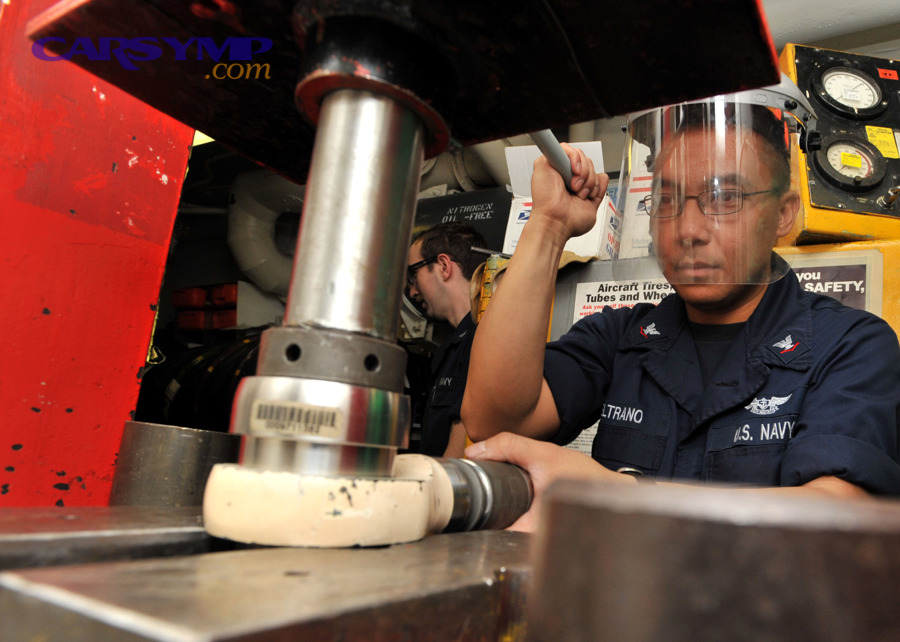
A press-in wheel bearing is a bearing unit that fits into the steering knuckle or rear carrier and must be removed and installed with force, usually through a hydraulic press or specialty on-car press tools.
Specifically, this design separates the bearing from at least some of the surrounding wheel-end hardware. On many vehicles, the technician removes the knuckle, pushes the old hub out, removes a snap ring, presses the old bearing out of the bore, then presses the new bearing in before reinstalling the hub. That sequence is why a press-in design often looks cheaper on the invoice for parts but more demanding in practice.
The main advantage of this design is serviceability. If the hub flange and related hardware are still good, a shop can replace only the failed bearing rather than the entire assembly. That can make sense on vehicles where the surrounding components remain in good condition or when bearing-only parts are significantly less expensive than complete wheel-end units.
The trade-off is sensitivity to technique. Bearings are precision components. Load must be applied to the correct race during installation, the bore must be clean, and the new part must seat squarely. When those details are ignored, the bearing can be damaged before the car even leaves the lift.
What Is a Hub Assembly Wheel Bearing?
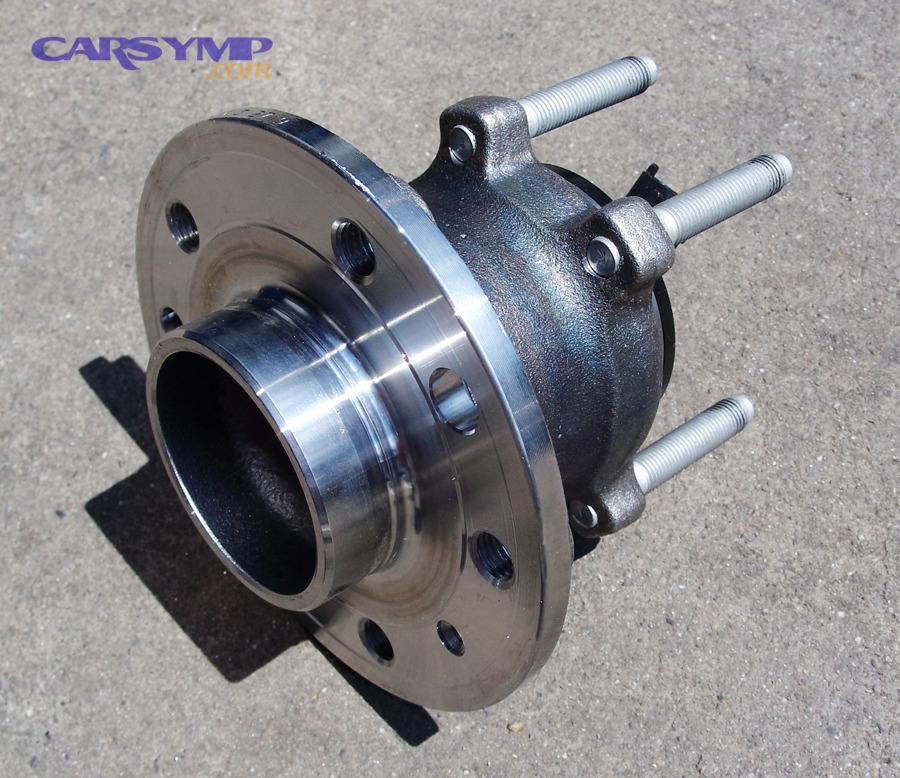
A hub assembly wheel bearing is a pre-assembled wheel-end module that typically includes the hub flange, bearing, wheel studs, seals, and in many cases ABS-related sensor elements or sensor interfaces.
More specifically, this design reduces the number of separate operations during service. Instead of disassembling the hub and pressing a bearing into a housing, the technician often removes the brake components, disconnects the sensor if needed, unbolts the hub from the knuckle, and installs a new unit. MOOG describes a wheel hub assembly as a pre-assembled unit with precision bearings, seals, and sensors, mounted between the axle and the brake hardware. moogparts.com
That pre-assembled structure is why hub assemblies are so common on late-model vehicles. They support wheel rotation, keep the wheel attached, and frequently interact with ABS and traction-control systems through wheel speed sensing. For car owners, the practical meaning is simple: the repair is often more straightforward, but the part itself is usually more expensive.
Are Press-In Bearings and Hub Assemblies the Same Type of Repair?
No, press-in bearings and hub assemblies are not the same type of repair because they differ in component scope, installation method, and risk profile.
However, the confusion is understandable because both fixes solve the same general problem: a noisy or failing wheel-end bearing. The difference is in how that solution happens. A press-in repair focuses on the bearing as an individual component inside a housing. A hub assembly repair replaces a larger wheel-end module in one step.
That distinction affects nearly everything that follows. It changes whether you need a press, whether the knuckle may have to come off, whether the hub flange is renewed at the same time, and how much room there is for installation error. It also changes how quickly the job moves once rust, seized bolts, or sensor wiring enter the picture.
For readers researching wheel bearing replacement, this is the foundational concept: a press-in job is usually a precision-bearing service procedure, while a hub assembly job is usually a module swap. According to MOOG, many late-model vehicles use wheel hub assemblies that are replaced as units when they fail, while older serviceable-bearing arrangements differ in how they are maintained. moogparts.com
How Do Press-In Bearings and Hub Assemblies Compare in Parts, Labor, and Tools?
Press-in bearings usually win on parts cost, hub assemblies are often better on labor simplicity, and the tool burden is far higher for press-in repairs.
Next, the real comparison needs to move from definitions to ownership realities: how long the job takes, what equipment the job demands, and why two repairs that sound similar can have very different total cost.
Which One Usually Takes More Labor Time to Replace?
Press-in bearings usually take more labor time to replace because they add disassembly, pressing, alignment, and reassembly steps that a typical bolt-on hub assembly avoids.
To better understand labor, think in operations instead of minutes. A hub assembly often comes off as a unit after the wheel, brake components, axle fastener, and hub bolts are removed. A press-in design often adds hub separation, snap-ring removal, bearing extraction, bore cleanup, bearing installation, and hub reinstallation. If corrosion locks the hub or knuckle together, time rises even more.
This is why Wheel bearing replacement labor time varies so widely by platform. The same bearing failure can be a relatively direct bolt-on repair on one vehicle and a much more involved knuckle-and-press procedure on another. GSP notes that pre-pressed hub assemblies offer advantages in time savings and tool requirements over traditional press-in designs. gspnorthamerica.com
For a shop, more steps mean more billed labor and more opportunity for delay. For a DIY owner, more steps mean more chances to stop mid-job because a snap ring will not release, the hub will not separate cleanly, or the press setup is not square.
What Tools Are Needed for Each Type of Wheel Bearing Repair?
There are two main tool groups for this job: standard wheel-end tools for hub assemblies and standard wheel-end tools plus pressing equipment for press-in bearings.
Specifically, a typical hub assembly repair may require:
- Jack and stands or a lift
- Lug tools
- Socket set and breaker bar
- Axle-nut socket where applicable
- Torque wrench
- Penetrant, hammer, and sometimes an air hammer for seized hubs
- Basic brake-service tools
A press-in repair may require all of the above plus:
- Hydraulic shop press or on-car bearing press kit
- Bearing adapters and drifts
- Snap-ring pliers
- Support plates or press collars
- More careful measurement, alignment, and race-support technique
That tool gap matters because the job outcome depends on using the correct force path. SKF’s installation guidance states that proper bearing performance depends on skill, cleanliness, choosing the correct mounting method, and using the correct tools for the job. cdn.skfmediahub.skf.com
Is a Hub Assembly Usually More Expensive in Parts but Cheaper in Labor?
Yes, a hub assembly is usually more expensive in parts but often cheaper in labor because it combines multiple wheel-end elements into one replacement unit and cuts down the number of service operations.
However, “usually” is the key word. Some vehicle platforms have expensive hub assemblies, some have affordable bearing kits, and some rust-prone applications erase any labor advantage because the old hub seizes inside the knuckle. Even so, the general pattern remains: larger assembly cost, simpler installation.
This trade-off is one reason owners sometimes see two very different repair quotes for what sounds like the same problem. One quote may reflect a bearing-only route that looks economical on paper. The other may favor a complete unit because it lowers labor uncertainty, shortens downtime, and reduces installation risk.
That matters even more when the car is already showing Bad wheel bearing symptoms such as humming, growling, steering shake, or an ABS light. When speed of repair, reliability, and reduced comeback risk matter more than the lowest possible parts price, a hub assembly often becomes the more attractive choice. MOOG lists common hub-assembly failure signs as growling or humming noises, steering shake, and ABS warning issues tied to sensor signal loss. moogparts.com
Which Wheel Bearing Setup Makes More Sense for Car Owners?
The better wheel bearing setup depends on three things: your vehicle’s design, your repair environment, and whether you value lower parts cost or a faster, lower-risk installation.
Let’s explore that decision from a car-owner perspective, because the smartest answer is not always the cheapest part and not always the most complete assembly.
When Does a Press-In Bearing Make Sense?
A press-in bearing makes sense when the vehicle was designed around a serviceable bearing, the surrounding hardware is still healthy, and the repair will be done by someone with the right equipment and experience.
More specifically, this route often works well when the hub flange, studs, and sensor-related parts do not need replacement and when the shop already has a press workflow in place. In that context, replacing only the failed bearing can preserve usable components and lower parts spend.
It can also make sense for owners using a trusted local machine shop or full-service repair facility. A bearing-only job is not automatically a bad idea; it simply has a narrower margin for error. On the right platform with the right technician, it can be entirely appropriate and durable.
The caution is that car owners should not assume “bearing only” automatically means “best value.” If the job requires knuckle removal, extra alignment work, or repeated press operations, the labor side may quickly offset the cheaper component price.
When Does a Hub Assembly Make More Sense?
A hub assembly makes more sense when speed, convenience, and lower installation complexity matter more than minimizing parts price alone.
For example, a bolt-on hub assembly is often the better choice when the vehicle uses a unitized wheel end, when the hub flange or wheel studs are worn, or when the owner wants a more predictable repair with fewer specialized steps. It also makes sense when the car is a daily driver and downtime matters.
Hub assemblies can also be a stronger choice when wheel speed sensing is integrated into the unit. If the sensor path, encoder, or related sealing is part of the wheel end, replacing the complete assembly can simplify diagnosis and reduce the chance of disturbing old, fragile components more than once. MOOG notes that hub assemblies can include sensor elements critical to ABS and traction control operation. moogparts.com
GSP adds an important practical point: factory-assembled pre-pressed hubs reduce installation-error risk compared with traditional press-in setups, which is one reason many customers prefer them for reliability and consistency. gspnorthamerica.com
Which Option Is Better for DIY Car Owners vs Professional Shops?
Hub assemblies are usually better for DIY owners, while press-in bearings are often better left to professional shops unless the DIY owner has the proper press tools, setup knowledge, and patience.
Meanwhile, a professional shop can absorb the complexity of a press-in repair more easily because it already has presses, drifts, adapters, and experience with race support and seating depth. A driveway DIYer may not. That difference is not about intelligence; it is about equipment and repeatable process.
A DIY owner can still handle some hub-assembly jobs very well. Many bolt-on hub replacements mainly require safe lifting, brake removal, stubborn-fastener management, and correct torque on reassembly. The job can still fight back because corrosion may seize the old hub in place, but the process is easier to understand and less dependent on bearing-installation technique.
By contrast, press-in work punishes shortcuts. A bearing pressed through the wrong race, a bore left dirty, or a hub installed out of square can fail early. If your goal is one clean repair with minimal risk, the DIY-friendly path is usually the complete unit. According to SKF, proper mounting and the correct tools are essential to prevent premature failure. cdn.skfmediahub.skf.com
What Problems Can Happen If the Wrong Bearing Type or Installation Method Is Chosen?
The wrong bearing choice or installation method can cause premature failure, persistent noise, ABS faults, damaged seals, and unnecessary repeat labor.
In addition, many owners misdiagnose the outcome. They assume the new part was defective, when the real issue was incorrect pressing, contamination, improper torque, or a sensor-related problem that looked like a failed hub.
Can Incorrect Pressing Damage a New Wheel Bearing?
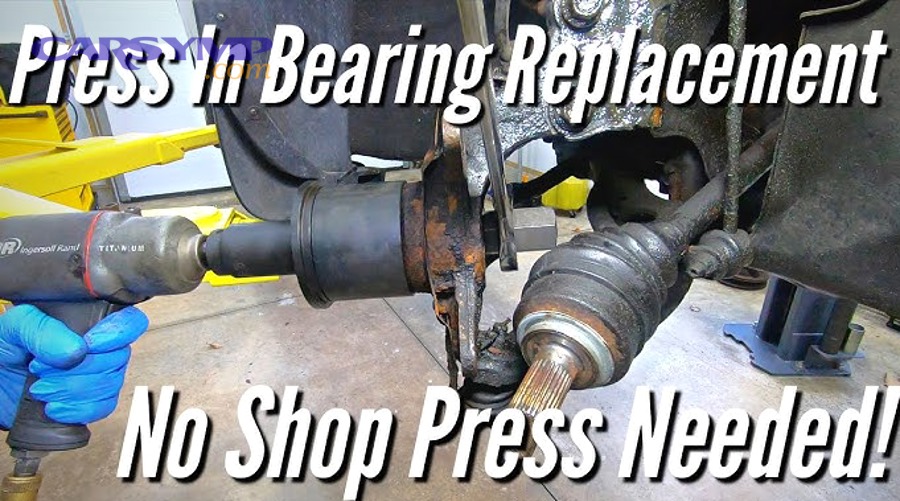
Yes, incorrect pressing can damage a new wheel bearing because force applied through the wrong race or through misaligned supports can injure the precision surfaces before the vehicle is even driven.
Specifically, bearings do not tolerate careless load paths. If force meant for the outer race passes through rolling elements into the inner race, or vice versa, the bearing can suffer internal damage that later shows up as humming, roughness, or short service life. Even if the wheel spins after installation, hidden damage may already be present.
This is why experienced technicians emphasize support and alignment during pressing. The assembly must sit squarely, the correct adapters must be used, and the force must go where the bearing design expects it to go. SKF states that improper mounting techniques can easily damage bearings and cause premature failure. cdn.skfmediahub.skf.com
What Common Installation Mistakes Cause Noise, ABS Issues, or Early Failure?
The most common mistakes are wrong torque, contaminated installation surfaces, damaged seals, incorrect pressing support, and mishandling of sensor or encoder components.
More specifically, problems often begin with basics:
- Reusing damaged hardware or ignoring torque specifications
- Pressing through the wrong race
- Leaving rust or debris in the bore or on the mounting face
- Damaging the outer seal during cleaning or installation
- Misaligning the wheel speed sensor or disturbing the encoder surface
- Confusing a sensor or debris problem with a failed hub assembly
These mistakes explain why some repeat failures are not truly “bad parts.” In GM service information carried by NHTSA, many ABS wheel speed sensor faults led to good hub assemblies being returned under warranty even though the hub itself was functioning properly. Another GM bulletin notes that many repairs can be completed by cleaning debris from the magnetic encoder ring without replacing the hub assembly at all. static.nhtsa.gov
That is also why post-repair inspection matters. A quiet road test, correct torque procedure, clean sensor routing, and stable ABS behavior tell you much more than a quick spin by hand in the air.
How Can Car Owners Decide the Right Repair Before Buying Parts?
Car owners can decide the right repair by checking the vehicle design, confirming fitment, inspecting related hardware, and matching the job to the available tools and skill level.
To sum up, use this decision path:
- Confirm whether your vehicle uses a serviceable press-in bearing or a bolt-on hub assembly.
- Check whether the hub flange, studs, and sensor-related parts are also worn or damaged.
- Consider corrosion. Seized hubs and rusty knuckles increase labor uncertainty.
- Decide whether you or your shop truly have the equipment for a press-in job.
- Compare total repair cost, not just part price.
This step prevents the most expensive mistake of all: ordering a cheaper component that creates a harder job, extra downtime, or a comeback repair. It also protects owners from chasing the wrong fault when symptoms come from the ABS side rather than from the bearing itself. In one Honda safety recall summarized by NHTSA, improperly installed wheel speed sensors could allow water into the hub assembly, accelerating corrosion and bearing damage. static.nhtsa.gov
What Secondary Factors Can Change the Choice Between a Press-In Bearing and a Hub Assembly?
Secondary factors that can change the choice include ABS sensor integration, corrosion level, vehicle architecture, and the quality of post-install setup such as torque and sensor alignment.
Below, those details move beyond the main comparison and into the real-world variables that often decide whether one repair strategy remains sensible once the car is actually on the lift.
Does ABS Sensor Integration Change Whether a Hub Assembly Is Better Than a Press-In Bearing?
Yes, ABS sensor integration can make a hub assembly the better choice because wheel speed sensing may be built into the wheel end, and faults in that system can overlap with bearing-related complaints.
More specifically, modern hubs often support ABS and traction control through integrated sensor paths or encoder-related elements. That means the wheel end is no longer just a rotating support part; it is also part of the vehicle’s braking and stability electronics. If the sensor signal is lost or corrupted, the owner may see an ABS light, traction-control intervention, or erratic low-speed behavior.
That integration changes the repair decision in two ways. First, a complete hub assembly may restore several functions at once. Second, diagnosis must be more careful because not every ABS complaint means the hub is physically bad. GM bulletin material shows that non-defective hub assemblies were sometimes returned because the actual issue involved wheel speed sensor diagnostics rather than failed bearings. static.nhtsa.gov
How Does Rust or Corrosion Affect Press-In Bearing Removal?
Rust and corrosion make press-in bearing removal harder because they increase seizure between the hub, bearing, knuckle, and related hardware.
For example, a clean southern car and a rust-belt vehicle can turn the same repair into two completely different jobs. Corrosion can lock the hub into the knuckle, resist bore cleanup, damage sealing surfaces, and stretch labor far beyond expectations. That is one reason some owners start a “simple” job on a weekend and end up towing the car to a shop on Monday.
Corrosion also matters for hub assemblies. Even a bolt-on hub can seize in place and demand an air hammer, penetrant, heat management, and patience. But on a press-in job, corrosion compounds the difficulty because removal and installation tolerances matter more and cleanup quality becomes critical.
The safety side matters too. In a Honda recall notice carried by NHTSA, water intrusion around the wheel speed sensor could damage the wheel bearing, and in road-salt environments the resulting corrosion could progress enough to raise the risk of wheel separation. static.nhtsa.gov
Why Do Some Vehicles Use Press-In Bearings While Others Use Hub Assemblies?
Vehicles use different wheel-bearing setups because OEMs balance packaging, manufacturing strategy, cost, service philosophy, and the integration of hub, axle, brake, and sensor systems in different ways.
In short, one design is not universally superior. Older or certain platform-specific layouts may favor serviceable bearings. Many later vehicles favor unitized hub assemblies because they package multiple functions into a single wheel-end module and simplify factory assembly as well as field replacement. MOOG notes that many late-model vehicles use hub assemblies at each wheel, while older designs can use separately serviceable bearings and seals. moogparts.com
That OEM choice explains why internet advice often sounds contradictory. One mechanic may say wheel bearings are quick and easy. Another may say the same job is a press-heavy headache. Both can be right, depending on the platform.
Can Post-Repair Torque, Runout, or Sensor Alignment Affect Long-Term Results?
Yes, post-repair torque, runout, and sensor alignment can affect long-term results because wheel-end durability depends on accurate clamping, clean mating surfaces, and stable sensor behavior after reassembly.
Especially on modern vehicles, success is not just “the part fits.” A wheel end can be quiet at first and still develop trouble if the axle nut was not torqued correctly, the mounting face trapped debris, or the sensor gap and encoder condition were compromised. That is why a careful final check matters as much as the install itself.
A good closing routine should include:
- Verifying all fastener torque to spec
- Confirming smooth rotation and no abnormal looseness
- Checking sensor routing and connector security
- Looking for ABS or traction-control warnings
- Performing a controlled road test for noise, vibration, and brake feel
This is where the repair circles back to the owner’s goal. A successful wheel bearing replacement is not only about removing noise today. It is about preventing the same corner from coming back with humming, warning lights, or unstable braking behavior next month. GM’s bulletin guidance warns technicians not to damage the encoder or outer seal during debris cleaning, underscoring how sensitive wheel-end and sensor interfaces can be after service. static.nhtsa.gov
In short, press-in bearings and hub assemblies solve the same broad problem, but they do so through very different repair paths. If you want the lowest part cost and have shop-level pressing capability, a press-in bearing can make sense. If you want lower complexity, faster installation, and fewer opportunities for technique-related damage, a hub assembly is often the better setup for everyday car owners.