


Wheel vibration from bent or damaged rims can be diagnosed through specific vibration patterns, visual inspection methods, and differentiation tests that distinguish rim damage from tire balance or alignment issues. A bent rim typically causes speed-specific vibrations felt in the steering wheel (front damage) or seat (rear damage), accompanied by tire pressure loss and uneven wear patterns that signal structural wheel problems requiring immediate attention.
Recognizing the key signs and symptoms of rim damage is essential for accurate diagnosis. Steering wheel shaking at highway speeds, persistent tire pressure loss despite refills, and visible deformities on the rim surface all indicate potential wheel damage. These symptoms often appear after hitting potholes, curbs, or road hazards that compromise the rim’s circular integrity.
Performing diagnostic procedures requires understanding both DIY inspection methods and professional testing capabilities. The spin test, straightedge measurement, and visual examination provide preliminary diagnosis, while professional runout measurement and road force balancing offer definitive assessment. Each diagnostic approach serves a specific purpose in confirming whether vibration stems from rim damage or alternative mechanical issues.
Safety considerations and repair decisions depend on damage severity and material type. Driving on a bent rim increases blowout risk and compromises vehicle control, making timely professional evaluation critical. Below, we’ll explore comprehensive diagnostic methods, symptom patterns, and decision-making frameworks that help car owners identify and address rim damage causing wheel vibration.
What is Rim Damage and How Does It Cause Wheel Vibration?
Rim damage is structural deformation or fracturing of the wheel that disrupts its circular shape, occurring primarily from impact with potholes or curbs, creating uneven tire-to-road contact that generates vibration through the steering column or vehicle body. When a rim loses its perfect circular form, the tire can no longer rotate smoothly, producing oscillating forces that transmit vibrations at specific speeds.
To understand this mechanical relationship, consider how wheel rotation works. A properly functioning wheel maintains consistent distance from its center point to every edge point—this is what creates smooth rotation. However, when rim damage creates flat spots, bends, or warps, the wheel becomes elliptical rather than circular. Each rotation brings the deformed section into contact with the road surface, creating a repetitive bump that amplifies as rotational speed increases.
What Types of Rim Damage Cause Vibration?
The four primary types of rim damage that generate vibration differ in formation mechanism and severity. Bent rims occur when lateral force pushes the rim edge inward or outward from its original plane, creating a wobble during rotation. Inner lip bends are particularly insidious because they remain hidden behind the tire bead, causing vibration without visible external damage. Outer lip bends are more obvious but equally problematic, forcing the tire to make irregular contact with pavement.
Cracked rims develop from stress concentrations at impact points or material fatigue over time. Stress fractures typically radiate from the spoke area toward the rim edge, while bead cracks form along the tire seating surface. These cracks compromise structural integrity and allow air leakage, combining vibration with pressure loss. Hairline bead cracks are especially common on premium aluminum wheels from manufacturers like BMW and Mercedes, where thinner rim profiles prioritize weight reduction over impact resistance.
Warped or out-of-round rims lose their circular geometry without visible bending. This deformation creates radial runout—variation in the distance from the hub center to the rim edge. Even minor runout of 0.060 inches can generate noticeable vibration at highway speeds. Warping often results from uneven heat distribution during hard braking or prolonged high-speed driving.
Dented rims from direct impact damage create localized depressions that flatten one section of the wheel’s circumference. Each wheel rotation brings this flat spot into road contact, producing a characteristic thumping vibration. Multiple dents create complex vibration patterns that vary with speed and load.
Why Do Bent Rims Create Vibration at Certain Speeds?
Speed-specific vibration occurs because rotational imbalance generates centrifugal forces that amplify proportionally with velocity. A bent rim creates an eccentric mass distribution around the wheel’s center axis. At low speeds (below 40 mph), these imbalance forces remain small enough that suspension components absorb the irregularity. However, as speed increases, the centrifugal force increases exponentially—doubling the speed quadruples the force.
The 50-70 mph range represents the critical vibration zone where most drivers first notice rim damage. At these speeds, the imbalance force overcomes the suspension’s dampening capacity, transmitting vibration through the chassis to the steering wheel or seat. The vibration frequency matches the wheel’s rotation rate: at 60 mph, a typical 26-inch diameter tire rotates approximately 13.6 times per second, creating a vibration frequency around 13.6 Hz.
Harmonic resonance with vehicle components explains why vibration intensity varies at different speeds. Every vehicle component has a natural vibration frequency at which it oscillates most readily. When the vibration frequency from a bent rim matches the natural frequency of the steering column, subframe, or seat mounts, resonance amplification occurs. This phenomenon explains why some vehicles exhibit severe vibration at 55 mph, minimal vibration at 60 mph, then renewed vibration at 75 mph—each speed range excites different resonant frequencies in the chassis structure.
The relationship between rim damage severity and vibration onset speed follows a predictable pattern. Minor bends generate vibration only at higher speeds (above 65 mph), while severe damage produces noticeable shaking beginning around 45 mph. This correlation helps diagnose damage severity during road testing.
What Are the Key Signs and Symptoms of Rim Damage?
There are five primary symptom categories of rim damage: vibration patterns distinguishable by location and speed, tire pressure anomalies, uneven wear characteristics, steering behavior changes, and visual deformities—each providing diagnostic information about damage type and severity. Recognizing these symptoms requires systematic observation during driving and stationary inspection.
Understanding symptom patterns allows car owners to differentiate rim damage from other mechanical issues. Vibration symptoms manifest differently depending on which wheel suffers damage and the specific deformation type. Meanwhile, secondary symptoms like pressure loss and tire wear develop progressively as damaged rims continue operating under load.
What Vibration Patterns Indicate Front Wheel Rim Damage?
Front wheel rim damage generates steering wheel vibration that intensifies with speed and transmits directly through the steering column. This vibration typically begins as subtle shaking around 50-55 mph, progressing to pronounced oscillation by 65-70 mph. The steering wheel exhibits side-to-side motion, creating a rhythmic pulling sensation that requires constant correction to maintain straight-line tracking.
The intensity progression follows a characteristic curve. Between 45-50 mph, sensitive drivers may detect faint steering wheel tremor. At 55-60 mph, vibration becomes unmistakable, with visible steering wheel movement. Beyond 65 mph, the vibration can become severe enough to make highway driving uncomfortable or unsafe. Some vehicles experience peak vibration at specific speeds (commonly 60-63 mph) due to harmonic resonance, with reduced intensity at slightly higher or lower speeds.
Front rim damage affects steering precision beyond simple vibration. The damaged wheel creates variable resistance as the bent section contacts the road, producing inconsistent steering feedback. Drivers often describe this as “wandering” or “tracking poorly,” requiring frequent small steering corrections. During lane changes or turns, the steering may feel notchy or catch at specific rotation angles corresponding to the bent rim section’s position.
The vibration frequency provides diagnostic information about damage severity. High-frequency buzzing (above 15 Hz) typically indicates minor rim deformation or tire imbalance, while low-frequency shaking (8-12 Hz) suggests significant structural bending. Very low frequency thumping (below 8 Hz) often indicates severe denting or flat-spotting that creates a pronounced deviation from circular geometry.
What Vibration Patterns Indicate Rear Wheel Rim Damage?
Rear wheel rim damage produces vibration felt primarily through the seat and vehicle floor rather than the steering wheel. This whole-body vibration creates a different sensory experience than front wheel damage, often described as “sitting on a washing machine” or experiencing earthquake-like shaking. The vibration transmits through the chassis frame, rear suspension mounting points, and seat rails.
Speed ranges where rear damage manifests mirror front wheel patterns, typically beginning around 50 mph and intensifying through 70 mph. However, rear vibration often feels more diffuse and less directional than steering wheel shaking. Some drivers report that rear rim damage creates audible noise—a rhythmic thumping or droning that synchronizes with wheel rotation frequency.
The seat vibration pattern varies by seating position. Drivers and passengers directly above the damaged rear wheel experience more intense vibration than those on the opposite side. This asymmetry helps identify which rear wheel suffers damage during diagnostic driving. Additionally, rear rim damage may create trunk or cargo area rattling as vibration excites loose items or trim panels.
Rear wheel damage affects vehicle stability differently than front damage. While front rim damage primarily compromises steering feel, rear damage can create unpredictable handling during acceleration, particularly in rear-wheel-drive or all-wheel-drive vehicles. The damaged wheel’s variable contact patch affects traction distribution, causing the rear end to feel “loose” or unstable during power application or cornering.
What Other Physical Signs Suggest Rim Damage?
Tire pressure loss represents one of the most reliable secondary indicators of rim damage. A bent rim cannot maintain proper seal against the tire bead, allowing air molecules to escape at the rim-tire interface. This manifests as slow leaks requiring inflation every few days or weeks, distinguishable from puncture leaks by the absence of visible tire damage and the leak’s location at the rim edge rather than tread surface.
The tire pressure monitoring system (TPMS) provides early warning of rim-related pressure loss. When one specific tire consistently shows 3-5 PSI lower pressure than its counterparts despite regular inflation, rim damage is the probable cause. In severe cases, damaged rims cause complete pressure loss overnight, leaving drivers with a flat tire in the morning despite proper inflation the previous evening.
Uneven or accelerated tire wear follows predictable patterns with rim damage. The damaged rim forces irregular tire-to-road contact, creating concentrated wear on specific tread sections. Scalloping or cupping—a wavy wear pattern across the tread surface—commonly develops with bent rims. Flat spots or bald patches appear where the bent rim section causes excessive localized pressure. Shoulder wear accelerates when rim bending alters the tire’s contact angle with the road.
Vehicle pulling indicates alignment disruption from rim damage. When a bent rim changes the wheel’s mounting angle or creates drag from irregular rotation, the vehicle drifts toward the damaged side. This differs from alignment issues in that the pull intensity varies with speed—typically worsening at higher speeds—whereas pure alignment problems maintain consistent pull across all speed ranges.
Visual deformities provide definitive confirmation when other symptoms suggest rim damage. Dents appear as inward depressions on the rim surface, visible as irregular contours that break the wheel’s circular profile. Cracks manifest as thin lines radiating from impact points or stress concentrations, sometimes requiring close inspection to detect. Warping creates visible wobble when the wheel rotates, observable during slow-speed maneuvering in parking lots. Paint or finish damage—chipping, scraping, or gouging—often accompanies structural deformation, marking impact locations where rim bending occurred.
How Do You Diagnose Rim Damage Causing Vibration?
Diagnosing rim damage requires four progressive inspection methods: visual examination for obvious deformities, spin testing for wobble detection, straightedge measurement for bend quantification, and professional runout testing for precise assessment—each providing increasing diagnostic accuracy. Starting with simple visual inspection and progressing to specialized testing ensures comprehensive evaluation while avoiding unnecessary professional service costs.
To effectively diagnose rim damage, car owners should follow a systematic approach that eliminates ambiguity. Begin with methods requiring minimal equipment, then advance to specialized techniques only when initial findings remain inconclusive. This progressive diagnostic strategy identifies obvious damage quickly while reserving professional assessment for subtle or borderline cases.
How to Perform a Visual Inspection for Rim Damage?
Visual inspection begins with removing hubcaps or wheel covers to expose the complete rim surface. Plastic or metal hubcaps conceal rim damage on steel wheels, while alloy wheels typically feature exposed rims requiring only wheel well access. Use a flashlight or work light to illuminate the rim from multiple angles, as shadows reveal surface irregularities invisible under direct overhead lighting.
Examine the inner and outer rim surfaces systematically. The outer rim face—the surface visible when viewing the vehicle from the side—shows impact damage from curb strikes or collision contact. Look for scrapes, gouges, or paint damage that indicate impact locations. The inner rim surface, facing the brake rotor, often sustains damage from pothole strikes that compress the wheel vertically. Inspect spoke junctions where they meet the rim barrel, as stress cracks commonly originate at these connection points.
Check both the inner and outer rim lips carefully. The outer lip forms the rim’s extreme edge where the tire bead seats against the wheel. Bend this lip outward with finger pressure to inspect for cracks along the tire mounting surface. The inner lip, located on the wheel’s inside diameter, requires reaching through the spoke openings or removing the tire for complete visibility. Inner lip bends are particularly problematic because they remain hidden during casual inspection yet cause significant vibration and air leakage.

Examine the tire bead seating area where rubber contacts metal. This critical interface requires perfect mating to maintain air pressure. Look for gaps between tire and rim, indicating improper seating from rim deformation. Check for corrosion, rust, or paint bubbling that suggests moisture intrusion through rim cracks. On aluminum wheels, white powdery corrosion (oxidation) often accumulates around crack locations.
Document findings with photographs from multiple angles. Capture close-up images of suspicious areas, then take full-wheel photos showing damage context. These visual records help compare damage progression over time and provide reference information when consulting professional technicians. Mark suspect areas with chalk or temporary marker to facilitate location during subsequent testing.
How to Use the Spin Test to Detect Bent Rims?
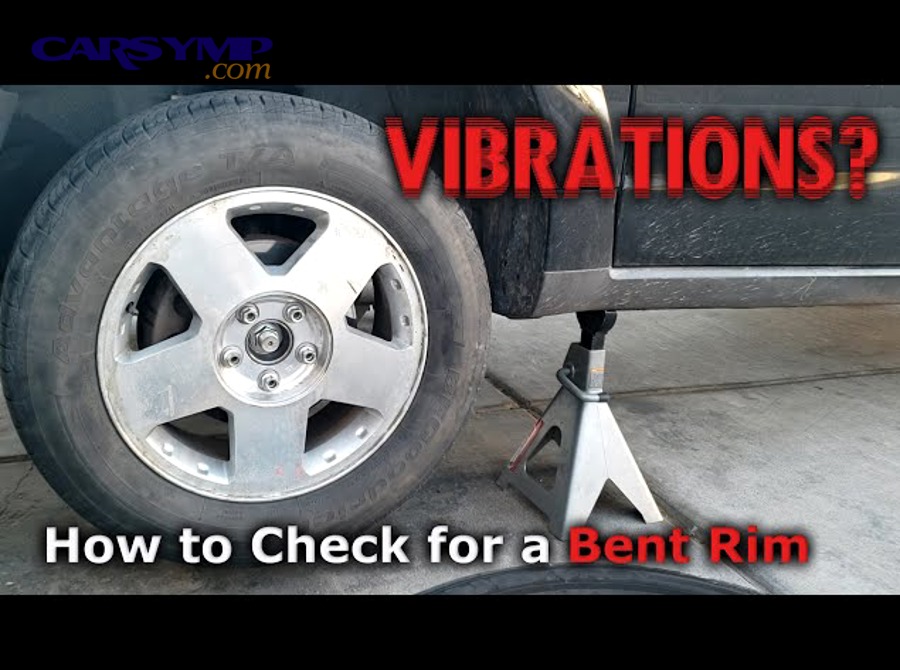
The spin test reveals bent rims through observable wobble during wheel rotation. Begin by safely lifting the vehicle using a floor jack and supporting it on jack stands—never rely solely on the jack for safety. Ensure the vehicle remains stable and the wheel rotates freely without brake drag or transmission engagement. Select neutral gear (manual transmission) or park with emergency brake released (automatic transmission) to allow free wheel rotation.
Spin the wheel slowly by hand, applying steady rotational force to the tire tread. Observe the rim edge as it rotates past a fixed reference point—use a screwdriver, pen, or finger held steady near the rim lip as a pointer. A perfectly round wheel maintains constant distance between the rim edge and your reference pointer throughout rotation. A bent wheel exhibits lateral movement (side-to-side wobble) or radial movement (up-and-down deviation) that varies during rotation.
Watch for wobbling or non-circular rotation patterns. Lateral wobble appears as the rim edge moving toward and away from the reference pointer during each revolution, indicating the rim bends inward or outward from its mounting plane. Radial wobble shows as the rim edge rising and falling relative to the pointer, revealing high and low spots on the wheel’s circumference. Severe damage produces visible oval or egg-shaped rotation instead of circular motion.
Mark suspect areas for further inspection using chalk or removable marker. When wobble appears, stop the wheel at the point of maximum deviation and mark this location on the rim. Rotate the wheel 180 degrees to check if deviation appears at the opposite position, confirming a bent condition rather than tire irregularity. Multiple marked locations around the wheel’s circumference indicate complex damage requiring professional assessment.
Measure deviation magnitude using a ruler or caliper held against the reference pointer. Deviations exceeding 0.060 inches (1.5mm) generally require correction. Minor deviations between 0.030-0.060 inches may not cause noticeable vibration at normal speeds but could worsen over time. Document measurements at multiple rotation positions to characterize damage severity comprehensively.
How to Use a Straightedge to Check for Rim Bends?
Straightedge testing quantifies rim deformation with simple tools available in most households. A carpenter’s level, metal ruler, or dedicated straightedge serves as the measurement reference. The straightedge must exceed the wheel diameter—typically 18-24 inches for passenger vehicles—to span from rim edge to rim edge across the wheel’s centerline.
Place the straightedge against the rim surface, orienting it to cross the wheel’s center point. The tool should contact the rim at the topmost and bottommost points when positioned vertically, or at the extreme left and right points when positioned horizontally. Ensure the straightedge remains stable and perpendicular to the wheel’s mounting surface, avoiding angular tilt that creates false deviation readings.
Check for gaps indicating bends at multiple measurement positions. A perfectly straight rim creates continuous contact between straightedge and rim surface across the entire span. Bent rims produce visible gaps where the metal curves away from the straightedge. Illuminate from behind the straightedge using a flashlight or work light—light passing through gaps confirms deviation. Insert feeler gauges or folded paper into gaps to measure deviation magnitude.
Test multiple positions around the rim’s circumference to map the damage pattern. Rotate the wheel 45 degrees between measurements, creating an eight-point assessment grid. Record gap measurements at each position to identify if damage concentrates at one location (localized bend from single impact) or distributes around the wheel (general warping from multiple impacts or manufacturing defect). Asymmetric gap patterns—large deviation at one position, minimal at opposite position—indicate single-point impact damage amenable to repair.
Measure deviation from true circle at each test position. Professional standards typically allow maximum radial runout of 0.060 inches for passenger vehicle wheels. Deviations exceeding this tolerance require repair or replacement. Minor deviations between 0.030-0.060 inches may remain acceptable if no vibration occurs at the vehicle’s typical operating speeds.
When Should You Get Professional Runout Measurement?
Professional runout measurement becomes necessary when DIY testing reveals borderline deviations (0.030-0.060 inches), when vibration persists despite normal visual and spin test results, or when repair decisions require precise damage quantification before investing in the Rim repair cost estimate. Tire shops and wheel specialists use computerized balancing machines that measure both radial and axial runout with 0.001-inch precision.
Radial runout testing measures variation in the distance from the hub center to the rim edge as the wheel rotates. The tire technician mounts the wheel on a calibrated spindle, then uses a dial indicator or electronic sensor positioned against the rim lip to measure deviation during rotation. Maximum radial runout specifications vary by wheel type—typically 0.060 inches for passenger cars, potentially 0.090 inches for light trucks. Excessive radial runout creates the up-and-down wobble causing vibration.
Axial runout testing measures side-to-side deviation as the rim moves laterally during rotation. The measurement sensor contacts the rim’s outer face rather than its edge, detecting bends that cause the wheel to wobble perpendicular to its rotation axis. Acceptable axial runout generally matches radial tolerances at 0.060 inches or less. Excessive axial runout produces lateral tire sway that generates steering vibration and irregular wear patterns.
Road force balancing machine capabilities exceed standard spin balancing by simulating real-world load conditions. These advanced machines press a weighted roller against the mounted tire, applying force equivalent to vehicle weight while measuring vibration and force variation during rotation. This load simulation reveals problems invisible during unloaded spin testing, including tire defects, improper bead seating, and subtle rim deformations. Road force variation exceeding 20-25 pounds typically generates noticeable vibration requiring correction.
Professional assessment provides definitive diagnosis when the Wheel straightening process explained becomes relevant. The technician’s report specifies runout measurements, identifies damage location, and recommends repair versus replacement. For aluminum wheels showing cracks or multiple bend locations, replacement is mandatory. For steel wheels or aluminum wheels with isolated bends below 0.100 inches, the Rim repair vs replacement decision often favors repair when damage remains within straightening tolerances.
How Do You Differentiate Rim Damage from Other Vibration Causes?
Differentiating rim damage from tire imbalance shows that rim damage creates speed-specific vibration with progressive pressure loss and visual deformities, while tire imbalance causes highway-speed vibration (above 60 mph) without pressure loss—whereas alignment issues produce steering pull without necessarily causing vibration. This diagnostic differentiation prevents misdiagnosis and unnecessary repairs while directing attention to the actual problem source.
Accurate differentiation requires systematic symptom comparison and targeted testing. Many vibration causes share overlapping symptoms, creating diagnostic challenges for car owners. However, careful attention to symptom patterns, speed ranges, and accompanying indicators reliably identifies the root cause.
Is It a Bent Rim or Tire Imbalance?
Tire imbalance creates characteristic vibration at highway speeds (typically 60-70 mph) that intensifies smoothly as speed increases, without the speed-specific peaks common with bent rims. Imbalanced tires accumulate weight unevenly around their circumference due to manufacturing variation, uneven wear, or lost balance weights. This weight distribution creates centrifugal force during rotation, generating vibration that increases exponentially with speed—doubling speed quadruples vibration intensity.
Bent rim vibration exhibits speed-specific intensity peaks and valleys due to harmonic resonance, often severe at 55 mph, reduced at 65 mph, then returning at 75 mph. The damaged rim’s irregular rotation excites different chassis resonance frequencies at varying speeds, creating this characteristic non-linear vibration pattern. Additionally, bent rim vibration often begins at lower speeds (45-50 mph) compared to imbalance vibration appearing primarily above 60 mph.
How rebalancing affects each condition provides definitive differentiation. When vibration stems from tire imbalance, professional wheel balancing eliminates or dramatically reduces symptoms. The technician adds small weights to the rim edge, counterbalancing heavy spots in the tire assembly. If vibration persists unchanged after proper balancing, the rim likely suffers structural damage. Conversely, attempting to balance a bent rim may temporarily reduce vibration but cannot eliminate it completely—the imbalance weights cannot compensate for the rim’s geometric deformation.
Visual symptoms also differentiate these conditions. Tire imbalance produces no visible deformation, pressure loss, or irregular wear when the wheel is new and properly inflated. Bent rims show obvious physical damage, progressive air leakage, and accelerated tire wear concentrated at specific locations. During the spin test, an imbalanced tire appears perfectly round with no wobble, while a bent rim exhibits visible lateral or radial deviation.
The location where vibration is felt provides additional diagnostic information. Front tire imbalance typically creates steering wheel vibration, while rear tire imbalance produces seat or floor vibration—matching rim damage symptoms. However, imbalance vibration feels smoother and more uniform, described as “buzzing” or “humming.” Rim damage vibration feels rougher and more irregular, described as “thumping” or “shaking.”
Is It a Bent Rim or Wheel Alignment Issue?
Wheel alignment problems create characteristic steering pull where the vehicle drifts consistently toward one side, requiring continuous steering correction to maintain straight tracking, but alignment issues rarely produce vibration unless severely misaligned. The vehicle pulls in the direction of the wheel tilted inward (negative camber) or outward (positive camber), or toward the wheel pointed inward (toe-in) or outward (toe-out). This pull remains constant across all speeds, unlike speed-variable rim damage symptoms.
Rim damage symptoms combine vibration with pulling, but the pull intensity varies with speed and may reverse direction at different speeds. A bent rim changes the wheel’s effective mounting angle, creating alignment-like pull. However, this pull typically worsens at higher speeds as vibration intensifies, whereas true alignment pull maintains consistent intensity regardless of speed. Additionally, rim damage pull may alternate directions—pulling right at 50 mph, then left at 70 mph—as different rim sections engage the road.
Combination scenarios occur when rim damage causes alignment disruption. Impact severe enough to bend a rim often simultaneously knocks suspension components out of specification, creating both rim damage and alignment problems. In these cases, drivers experience both speed-specific vibration (from bent rim) and constant directional pull (from alignment). Professional diagnosis separating these overlapping symptoms requires alignment measurement before and after rim repair.
Steering wheel position provides diagnostic information. Alignment problems typically cause steering wheel off-center position—the wheel sits rotated 15-45 degrees from straight when driving straight ahead. Rim damage alone rarely affects steering wheel position, though severe front wheel bending may cause minor deviation. If the steering wheel is significantly off-center and the vehicle pulls consistently, alignment correction is necessary regardless of rim condition.
Tire wear patterns differentiate alignment from rim damage. Alignment problems create predictable wear patterns: inner or outer shoulder wear (camber misalignment), feathered tread wear across the width (toe misalignment), or diagonal wear across the tire face (combination misalignment). Rim damage creates irregular wear patterns: scalloping, cupping, flat spots, or concentrated bald patches. Examining tire tread carefully reveals which condition predominates.
Is It a Bent Rim or Suspension/Driveline Problems?
CV joint and driveshaft vibration produces clicking, popping, or clunking noises during turns or acceleration, typically felt as vibration concentrated in the floor area rather than the steering wheel or seat. Worn CV joints create characteristic audible symptoms: repetitive clicking sounds when turning sharply at low speeds, clunking when accelerating from a stop, or vibration that intensifies under power application. These symptoms differentiate CV problems from rim damage, which maintains consistent vibration independent of acceleration or turning.
Suspension component wear symptoms include rattling over bumps, clunking when hitting potholes, or vibration that varies with road surface quality. Worn shock absorbers or struts create bouncing, wallowing sensations rather than the rhythmic vibration characteristic of rotating wheel problems. Worn ball joints or control arm bushings produce clunking noises and may cause the vehicle to wander or feel loose, but rarely create the speed-specific vibration pattern typical of bent rims.
Brake rotor warping causes vibration specifically when applying brakes, distinguishable from rim damage that vibrates continuously during driving. Warped rotors create pulsation felt through the brake pedal—a rhythmic pushing sensation synchronizing with wheel rotation. Steering wheel vibration from warped front rotors occurs only during braking, not during steady cruising. Warped rear rotors cause brake pedal pulsation without steering wheel symptoms. If vibration disappears when coasting at constant speed and reappears only under braking, rotor warping is the probable cause rather than rim damage.
The timing and conditions when vibration appears help differentiate sources. Rim damage vibration begins immediately when reaching the critical speed range (typically 50-70 mph), continues at constant intensity during steady cruising, and persists when coasting or lightly braking. Driveline vibration often worsens under acceleration and reduces when coasting. Suspension vibration correlates with road surface roughness rather than vehicle speed. Brake system vibration appears exclusively during brake application.
Load sensitivity provides additional diagnostic information. Rim damage vibration typically maintains consistent intensity regardless of passenger or cargo load. Suspension problems often worsen with increased load as worn components compress further. Driveline vibration may change character with load as drivetrain angles shift. Testing with and without passengers or cargo helps isolate the vibration source.
Can You Drive on a Bent Rim and When Should You Seek Professional Help?
No, you should not drive on a bent rim because it increases tire blowout risk, compromises vehicle control, and accelerates suspension component wear—minor cosmetic damage may allow brief low-speed driving to reach a repair facility, but any rim damage causing vibration or pressure loss requires immediate professional assessment. The safety risks escalate with damage severity and driving speed, making continued operation potentially dangerous.
Understanding risk levels and appropriate response helps car owners make informed decisions when discovering rim damage. While some damage types allow cautious short-distance driving, others demand immediate vehicle shutdown to prevent catastrophic failure.
What Are the Safety Risks of Driving on a Bent Rim?
Tire blowout potential represents the most severe safety risk from driving on bent rims. The damaged rim cannot maintain proper seal against the tire bead, causing progressive air pressure loss. As pressure drops, the tire sidewall flexes excessively during rotation, generating internal heat from friction. This heat buildup degrades the tire’s structural integrity, weakening the rubber compound and internal cords. Eventually, the tire fails catastrophically—the sidewall tears or the tread separates, causing sudden complete deflation at highway speed.
Blowout risk increases exponentially with speed and temperature. Highway driving generates maximum heat buildup in underinflated tires, while summer temperatures add environmental heat stress. A tire operating at 20 PSI below specification may survive city driving at 35 mph but fail violently at 70 mph on the interstate. The blowout typically occurs without warning—sudden loud explosion, immediate steering pull, and rapid deceleration as the shredded tire creates massive drag.
Loss of vehicle control during bent rim operation manifests in multiple ways. The irregular contact patch creates unpredictable traction variation, particularly during emergency maneuvers or poor weather conditions. Braking distances increase as the bent wheel achieves less consistent road contact. Cornering stability diminishes because the damaged wheel cannot maintain optimal contact angle through turns. Emergency lane changes or obstacle avoidance maneuvers may trigger loss of control as the bent rim fails to respond predictably to steering input.
Accelerated wear on suspension components occurs because bent rims transmit vibration directly into suspension mounting points. The constant oscillating force stresses shock absorbers, struts, control arms, and bushings beyond their design parameters. Ball joints experience excessive lateral loading from the wobbling wheel. Wheel bearings sustain hammering forces from the irregular rotation. These components designed for smooth operation degrade rapidly under vibration stress, requiring premature replacement.
Brake performance degradation results from the bent rim’s inability to maintain proper alignment with brake components. The wobbling wheel creates variable spacing between the brake rotor and caliper, potentially causing brake pad contact at some rotation positions but excessive clearance at others. This irregular braking creates pulsation, reduces stopping power, and accelerates brake wear. In severe cases, the bent rim may contact the brake caliper during rotation, causing grinding damage to both components.
When Is DIY Diagnosis Sufficient vs. Professional Inspection Required?
Minor cosmetic damage—shallow scratches, finish chips, or paint scrapes that don’t penetrate the rim’s structural material—allows DIY assessment and continued careful driving. These surface blemishes affect appearance without compromising structural integrity. If visual inspection reveals only cosmetic damage, the spin test shows no wobble, and no vibration or pressure loss occurs during driving, professional inspection is unnecessary. However, monitor the wheel regularly to ensure damage doesn’t progress.
Structural issues—visible bends, cracks, dents deeper than 1/8 inch, or any damage causing vibration or pressure loss—demand immediate professional inspection. These conditions indicate compromised wheel integrity requiring expert evaluation. Professional technicians possess specialized equipment (runout gauges, crack detection tools, load testing machinery) that reveals damage invisible to DIY inspection. They also understand manufacturer-specific repair tolerances and safety standards.
Aluminum versus steel rim repairability differences influence the DIY versus professional decision. Steel rims tolerate bending and straightening because steel’s ductility allows plastic deformation without fracturing. Minor steel rim bends often respond to careful DIY straightening using hydraulic jacks and wooden blocks, though professional rim repair ensures proper geometry restoration. Aluminum alloy rims cannot tolerate DIY straightening attempts—aluminum’s brittleness causes cracking under bending forces. Any aluminum rim damage requires professional assessment to determine if repair or replacement is necessary.
The cost-benefit of professional assessment favors expert evaluation when uncertainty exists. Professional wheel inspection typically costs $20-50 per wheel, providing definitive diagnosis. This modest investment prevents the far higher costs of driving on damaged rims: tire blowouts ($200-400 for emergency tire replacement), suspension damage ($500-2000 for component replacement), or accident costs (potentially thousands in vehicle damage and injury). When doubt exists about rim condition, professional inspection provides cost-effective risk mitigation.
Specific scenarios requiring immediate professional help include: any crack visible on the rim surface (cracks propagate unpredictably and cause sudden failure), bent rims causing steering wheel vibration above 50 mph (indicates significant deformation affecting safety), persistent tire pressure loss despite repeated inflation (confirms loss of bead seal), impact severe enough to activate airbags or damage suspension (likely caused rim damage plus hidden structural problems), and unusual noises—grinding, scraping, or clicking—synchronized with wheel rotation (suggests rim contact with brake or suspension components).
What Are Your Options for Repairing or Replacing Damaged Rims?
Your repair or replacement options include professional straightening for minor steel rim bends ($100-150 per wheel), specialized hydraulic repair for aluminum rims without cracks ($150-400 per wheel), or complete replacement for severely damaged or cracked wheels ($200-800+ per wheel depending on material and design)—with the decision based on damage location, extent, and wheel material type. Understanding these options helps car owners make cost-effective repair decisions while maintaining safety standards.
Evaluating repair versus replacement requires considering multiple factors beyond simple cost comparison. Wheel material, damage type, manufacturer specifications, and vehicle safety systems all influence the appropriate course of action.
Can Bent Rims Be Straightened or Must They Be Replaced?
Steel rim straightening capabilities allow correction of most bend types that don’t involve cracks or torn metal. Professional technicians mount the steel wheel on a specialized straightening machine featuring hydraulic rams that apply controlled force to the bent section. The technician gradually applies pressure while measuring progress with dial indicators, slowly pushing the deformed metal back toward its original position. Steel’s ductility permits this plastic deformation without fracturing, though the process work-hardens the metal at the bend location.
The wheel straightening process explained involves heating in some cases to reduce force requirements and minimize work hardening. Technicians apply heat using induction coils or torches, raising the metal temperature to 400-600°F where steel becomes more malleable. After straightening, the wheel undergoes stress relieving—controlled cooling that prevents residual stresses from causing future cracking. Finally, the rim receives balance checking and finish restoration to complete the repair.
Aluminum rim structural integrity concerns limit straightening feasibility. Aluminum alloy—the material used in most modern passenger vehicle wheels—exhibits lower ductility than steel. Straightening attempts exceed aluminum’s elastic limit, creating permanent molecular structure changes that compromise strength. Even successful straightening work-hardens the aluminum at the bend location, creating a brittle zone susceptible to future cracking under road shock loads.
When straightening compromises safety becomes the critical question for aluminum rims. Any aluminum rim showing visible cracks cannot be straightened—the cracks will propagate during force application, causing sudden failure. Rims with multiple bend locations require replacement because straightening one area concentrates stress at adjacent bends. Bends exceeding 0.125 inches (3mm) deviation generally cannot be straightened to factory tolerances without creating stress concentrations. Professional technicians refuse straightening repairs when damage exceeds these safety limits, regardless of customer cost concerns.
According to wheel safety standards established by the Tire Industry Association, straightened aluminum rims should not exceed 50% of the original deviation after repair, and any rim requiring force above 3000 pounds during straightening should be rejected as beyond safe repair limits.
What Does Professional Rim Repair Cost and What’s Involved?
Typical repair cost ranges vary by damage type and wheel material. Minor steel rim straightening costs $100-150 per wheel, involving 1-2 hours of technician labor and machine time. Aluminum rim straightening for isolated minor bends costs $150-250 per wheel, requiring specialized equipment and careful technique to avoid cracking. Complex aluminum repairs involving multiple bend locations or severe deformation cost $300-400 per wheel, sometimes approaching replacement cost thresholds. Cosmetic refinishing—powder coating, polishing, or painting after straightening—adds $100-200 per wheel to restore appearance.
Specialized equipment used in the rim repair vs replacement decision includes computerized wheel straightening machines that measure runout in real-time during repair. These machines feature hydraulic rams applying up to 30 tons of force, precision dial indicators measuring deviation to 0.001 inches, and programmable controls that apply force gradually to prevent over-correction. Three-dimensional scanners map the wheel’s geometry before and after repair, comparing results to manufacturer specifications. Crack detection equipment uses magnetic particle inspection (for steel) or dye penetrant testing (for aluminum) to reveal hidden structural damage invisible to visual inspection.
Mobile rim repair services versus shop-based facilities offer convenience tradeoffs. Mobile technicians travel to customer locations, performing straightening and refinishing on-site using portable equipment. This service suits fleet vehicles, dealerships, or customers unable to transport damaged vehicles. Mobile service typically costs 20-30% more than shop repairs ($150-200 per wheel vs. $100-150) due to travel time and equipment transport. However, mobile technicians may lack the advanced diagnostic and repair capabilities available at specialized wheel shops, limiting their suitability for complex damage.
Insurance coverage considerations affect out-of-pocket costs. Comprehensive coverage typically includes wheel damage from road hazards, subject to deductibles ($250-1000 commonly). For rim repair costing $150-400 per wheel, filing claims makes financial sense only when multiple wheels require repair and total costs exceed the deductible. Additionally, comprehensive claims may affect future premium rates despite being “no-fault” events. Many insurers designate specialized wheel repair shops as preferred providers, offering direct billing and potentially waiving deductibles for repairs below certain thresholds.
How Do You Prevent Rim Damage and Vibration Issues?
Defensive driving techniques around potholes minimize impact damage risk. Reduce speed when approaching visible potholes—even 10 mph reduction significantly decreases impact force. If avoidance is impossible, release brakes just before impact; braking during pothole contact compresses the suspension, reducing the wheel’s ability to absorb shock. Straddle wide potholes when safe, allowing the vehicle to pass over with wheels on either side. After unavoidable pothole strikes, test for vibration during the next highway-speed driving opportunity to detect damage early.
Proper tire pressure maintenance prevents rim damage in two ways. Correctly inflated tires provide cushioning that absorbs road shock before it reaches the rim. Underinflated tires flex excessively, allowing the rim to contact pavement directly during pothole strikes. Check tire pressure monthly using an accurate gauge, inflating to the vehicle manufacturer’s specification (found on the driver’s door jamb sticker, not the tire sidewall). Seasonal temperature changes affect pressure—tire pressure drops approximately 1 PSI per 10°F temperature decrease—requiring adjustment when weather shifts.
Regular visual inspections catch developing problems before they cause symptoms. Inspect wheels monthly during routine maintenance or fuel stops. Look for fresh scrapes, new dents, or finish damage indicating recent impacts. Check for uneven tire wear patterns suggesting alignment or rim problems developing. Monitor tire pressure consistency—one tire requiring repeated inflation suggests rim seal degradation. Early detection allows addressing minor damage before it progresses to safety-critical conditions.
Careful parking prevents curb strike damage, a leading cause of rim bending. Approach parking spaces slowly, stopping when the front tire touches the curb rather than climbing it. Use mirrors and parking sensors to judge curb distance. When parallel parking, leave 4-6 inches between tire and curb to prevent scraping during angle adjustment. Avoid mounting curbs when entering driveways or parking lots—drive slowly over transitions at perpendicular angles to minimize impact forces.
Seasonal considerations—winter de-icer corrosion prevention—extend rim life in cold climates. Road salt and chemical de-icers accelerate corrosion on aluminum and steel wheels, penetrating through finish chips or scratches. Wash wheels weekly during winter months to remove salt accumulation, paying special attention to inner rim surfaces and spoke intersections. Apply wheel wax or sealant before winter to protect finish integrity. Consider winter wheel sets—inexpensive steel wheels with winter tires—to protect expensive alloy wheels from seasonal damage.
What Are the Differences Between Aluminum Alloy and Steel Rim Damage Patterns?
Aluminum brittleness versus steel malleability creates fundamentally different damage responses. Aluminum alloy wheels crack rather than bend when impact forces exceed material limits. The crack typically originates at the impact point, radiating toward spoke junctions or the rim’s inner diameter. These cracks may remain hairline-thin and difficult to detect initially, then propagate rapidly under continued stress. Steel wheels bend and deform plastically without cracking, creating visible dents or warps but rarely fracturing completely.
Repair feasibility for each material reflects these property differences. Steel rims tolerate multiple straightening repairs throughout their service life because steel can undergo repeated plastic deformation without losing structural integrity. Aluminum rims can be straightened once if damage remains minor and no cracks exist, but straightened aluminum exhibits reduced strength at the repair location. Second straightening attempts on previously repaired aluminum wheels are unsafe—the work-hardened material will crack rather than bend.
Cost implications for premium wheels escalate dramatically with aluminum damage. High-end aluminum alloy wheels cost $400-1200 each for makes like BMW, Mercedes, Audi, or aftermarket performance brands. Minor damage to these wheels faces the rim repair cost estimate of $200-400, approaching 50% of replacement cost. Severe damage necessitates replacement at full price, often requiring purchasing sets of four wheels to maintain appearance uniformity. Comparatively, steel wheels cost $75-150 for replacement, making the repair versus replace decision favor replacement for all but minor damage.
Heat resistance and weight differences affect damage likelihood and progression. Aluminum’s superior heat dissipation prevents brake heat from weakening the rim during extended hard driving. However, aluminum’s lower density (one-third steel’s weight) means aluminum rims feature thinner cross-sections to achieve target strength, making them more susceptible to bending from impact. Steel’s higher density allows robust construction that better resists impact but retains brake heat, potentially causing finish degradation or tire bead seal problems from thermal cycling.
Common failure modes for each type guide diagnostic priorities. Aluminum wheels most commonly fail through spoke cracking at high-stress junctions, bead seat cracking allowing air leaks, and impact-induced bending at the rim barrel. Inspect aluminum wheels carefully at spoke-to-barrel joints where stress concentrates. Steel wheels typically fail through corrosion perforation at the drop center (creating slow leaks), impact bending at the rim flanges, and finish failure allowing rust propagation. Inspect steel wheels for rust bubbles indicating subsurface corrosion that compromises strength.
Understanding material-specific damage patterns helps car owners set appropriate inspection priorities and make informed repair decisions. Aluminum wheels demand careful inspection for cracks even when bending appears minor, while steel wheels require corrosion assessment that may not be obvious externally. Both materials require professional evaluation when damage extends beyond superficial cosmetic issues, ensuring safety standards guide repair versus replacement choices rather than cost considerations alone.