


TPMS sensor replacement costs between $50 and $350 per sensor, including parts and labor — but the total you pay depends heavily on where you go, what vehicle you drive, and what the service actually includes. Most car owners receive a quote without fully understanding the line items behind it, which makes it nearly impossible to judge whether the price is reasonable or inflated. This guide cuts through the confusion with real price benchmarks, clear breakdowns, and the exact questions you should ask before approving any tire pressure monitoring system service.
Several factors push that cost range wider in both directions. Your vehicle’s make and model plays a major role — luxury brands and newer EVs often require proprietary sensors that can cost two to three times more than those for standard domestic vehicles. Your choice of repair provider matters just as much: a dealership typically charges 50% more than an independent tire shop for the identical job, a gap that adds up quickly when all four sensors need replacement.
Beyond the base sensor price, many drivers are caught off guard by add-on charges they didn’t anticipate — including tire dismounting, rebalancing, and a separate reprogramming or relearn fee. These line items are legitimate parts of the service, but they are not always disclosed upfront, which is where inflated quotes tend to hide. Understanding what each charge covers puts you in a far stronger negotiating position.
Whether you are staring at a warning light on your dashboard, preparing for a seasonal tire swap, or already holding a quote that feels too high, the information below walks you through every cost scenario in detail. Next, we begin with the foundation: exactly what a TPMS sensor is and what a full service actually involves.
What Is a TPMS Sensor and What Does a TPMS Service Include?
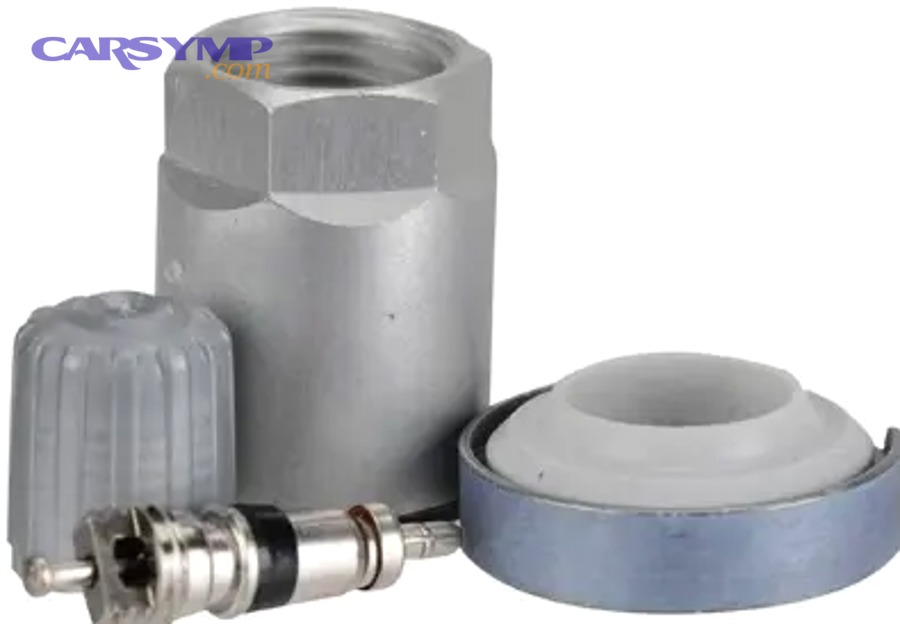
A TPMS sensor is an electronic safety device — either mounted inside each wheel or linked through the ABS system — that monitors tire air pressure and alerts the driver when inflation drops below a safe threshold. Understanding what this sensor does and what “service” means in practice is the essential first step before evaluating any quote, because the term tire pressure monitoring system service can refer to several different procedures with very different price tags. Specifically, shops may use that phrase to mean a sensor replacement, a system relearn/reset, a valve stem service, or a combination of all three — and each one carries its own cost.
What Are the Two Types of TPMS Sensors?
There are two main types of TPMS sensors: direct and indirect, classified by how they measure tire pressure.
Direct TPMS is the more common system found in virtually all vehicles manufactured after 2008 in the United States. Each wheel contains a physical battery-powered sensor that measures actual tire pressure in real time and transmits the data wirelessly to the vehicle’s computer. When pressure in any tire drops below roughly 25% of the recommended level, a warning light triggers on the dashboard. Because direct sensors are physical hardware components inside the tire, they wear out, their batteries deplete, and they can be damaged by impacts — all of which require physical replacement.
Indirect TPMS, by contrast, contains no physical sensor inside the tire at all. Instead, it uses the vehicle’s existing anti-lock braking system (ABS) to detect differences in wheel rotation speed. An underinflated tire rotates at a slightly different rate than a properly inflated one, and the system interprets that variance as low pressure. Indirect systems are far less expensive to “service” because there is no hardware to replace — a recalibration or system reset typically resolves most issues. Indirect systems are less precise than direct systems and cannot tell you the actual pressure reading for each individual tire.
To find out which system your vehicle uses, check your owner’s manual or ask any tire shop to scan your wheels — the distinction matters significantly when budgeting for service.
What Is Included in a Full TPMS Service?
A full TPMS service for a direct sensor system typically includes four to five separate line items, each of which a shop may bill individually or bundle into a single price.
Here is what a complete service breakdown looks like:
| Line Item | What It Covers | Typical Cost Range |
|---|---|---|
| Sensor unit (part) | The physical sensor itself (OEM or aftermarket) | $40 – $200 per sensor |
| Installation labor | Removing the old sensor, mounting the new one | $20 – $50 per sensor |
| Tire dismount & remount | Taking the tire off and back onto the rim | $15 – $30 per tire |
| Rebalancing | Ensuring the wheel spins evenly after reassembly | $10 – $20 per wheel |
| Reprogramming / Relearn | Programming the new sensor ID to the vehicle’s ECU | $25 – $100 total |
The table above shows every potential charge you might see on an invoice. The most commonly misunderstood line item is the reprogramming or relearn fee. When a new sensor is installed, the vehicle’s computer does not automatically recognize it — a technician must use a specialized scan tool to register the new sensor’s unique ID. Some shops include this in the labor charge; others list it separately. Always ask upfront whether reprogramming is bundled or billed as an additional service, as it can add $25 to $100 to your total even for a single-sensor job.
According to RepairPal’s national service database, labor costs for TPMS sensor replacement are estimated between $77 and $113, while parts are priced between $169 and $200 — figures that do not include taxes, fees, or the relearn procedure, reinforcing why asking for a fully itemized quote matters.
How Much Does TPMS Sensor Replacement Cost?
There are three primary service scenarios for TPMS sensor replacement cost: single-sensor replacement, full four-sensor replacement, and standalone reprogramming — each with a distinct price range based on parts, labor, and provider type. To better understand where your quote falls, it helps to look at each scenario independently.
What Is the Average Cost to Replace a Single TPMS Sensor?
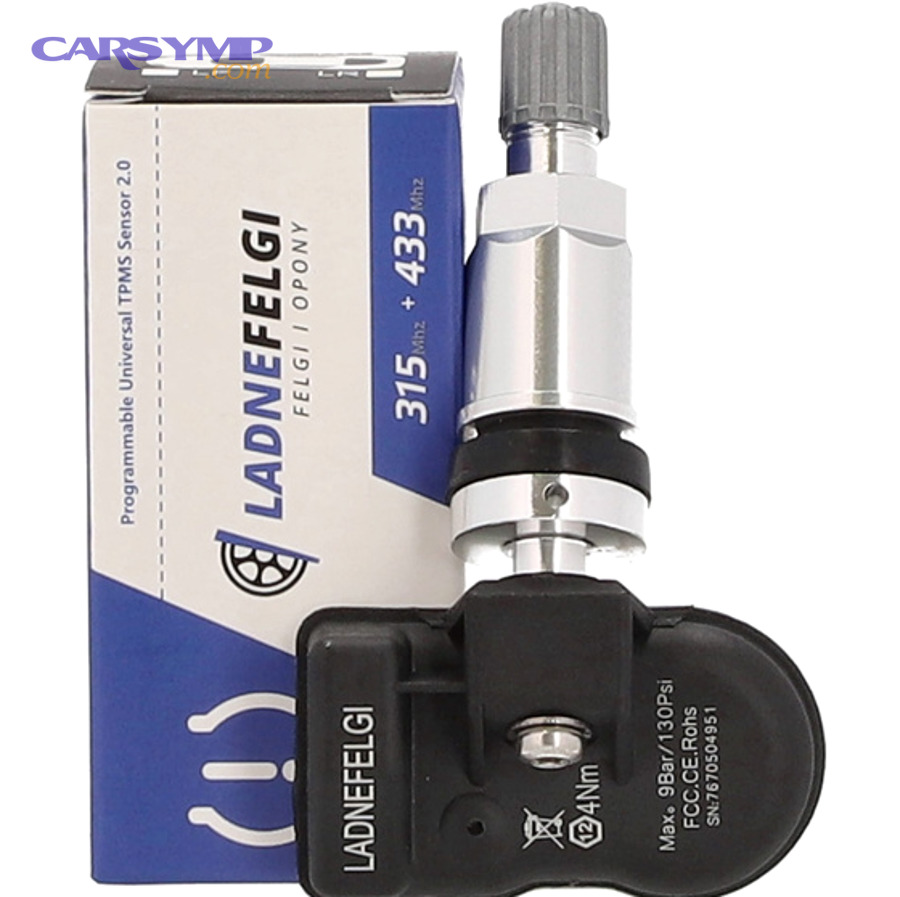
Replacing a single TPMS sensor costs between $50 and $350 in total, depending on the sensor type, vehicle model, and service provider.
The sensor part itself accounts for $40 to $200 of that range. An OEM sensor sourced from a dealership sits at the higher end; a quality aftermarket sensor from a brand like Schrader or VDO/Continental can be purchased for $25 to $70. Labor for the full job — dismounting the tire, swapping the sensor, remounting, rebalancing, and reprogramming — typically adds $50 to $100 on top of the part cost at an independent shop.
The following table provides a clear breakdown by service provider tier to help you benchmark a quote you have already received:
| Provider Type | Sensor (Part) | Labor + Relearn | Estimated Total (1 sensor) |
|---|---|---|---|
| Dealership | $100 – $200 | $80 – $150 | $180 – $350 |
| National Tire Chain (Discount Tire, Firestone) | $60 – $120 | $50 – $80 | $110 – $200 |
| Independent Tire Shop | $40 – $100 | $40 – $70 | $80 – $170 |
| Warehouse Club (Costco, Sam’s) | $35 – $60 | $30 – $60 | $65 – $120 |
| DIY + Shop Programming Only | $25 – $70 | $25 – $50 | $50 – $120 |
For example, Car Talk research found that a local Boston mobile tire service charged $40 per sensor including installation and programming during a tire-off service — compared to $171 per sensor at a Subaru dealership for the identical component. The gap between those two numbers is the same sensor, the same job, and roughly $130 in price difference per wheel.
How Much Does It Cost to Replace All Four TPMS Sensors?
Replacing all four TPMS sensors at once costs between $150 and $600 or more, with the final total shaped by your vehicle type and service provider.
While it may seem like an expense you can defer, replacing all four sensors in a single visit is almost always more cost-effective than replacing each one individually as they fail. The reason is straightforward: the most expensive part of any TPMS replacement is not the sensor itself — it is the labor required to dismount, service, and remount each tire. When a shop does all four tires in one appointment, that labor is performed once. When sensors fail one at a time over two or three separate visits, you pay that labor charge repeatedly.
Additionally, TPMS sensor battery life expectations are typically five to ten years. If one sensor battery has failed, the remaining three are statistically close behind. Replacing a single dead sensor today while leaving three aging sensors in place often means a return visit within one to two years — and paying the full labor cost again. Mechanics at reputable shops almost universally recommend the full-set replacement when any sensor exceeds the seven-year mark or when tires are being changed anyway.
Most national tire chains and independent shops also offer a modest discount when all four sensors are replaced in a single service visit, making the full-set approach the smarter financial decision in the long run.
How Much Does TPMS Reprogramming or Relearn Cost?
A standalone TPMS reprogramming or relearn service costs between $25 and $100, depending on the shop and whether it is bundled with replacement labor.
Not every TPMS warning light means a sensor has failed. In many cases — particularly after a tire rotation, tire replacement, or seasonal wheel swap — the vehicle’s computer simply loses track of which sensor is in which wheel position. This is one of the most common TPMS issues after tire rotation or replacement, and it requires nothing more than a relearn procedure using a scan tool to resolve. No new parts are needed.
However, many drivers who bring in a car showing a TPMS warning are immediately quoted for full sensor replacement when a $30 relearn would fix the problem entirely. Always ask the technician to perform a diagnostic scan first to confirm whether the sensor itself has failed or whether the system simply needs to be relearned. A reputable shop will do this before recommending any parts replacement.
What Factors Affect the Cost of TPMS Service?
There are four primary factors that affect TPMS service cost: vehicle make and model, choice of repair provider, sensor type (OEM vs. aftermarket), and geographic location. Understanding these variables explains why two drivers replacing the same number of sensors can receive quotes that differ by hundreds of dollars.

Does Your Vehicle’s Make and Model Change the Price?
Yes — your vehicle’s make and model directly affects TPMS sensor cost because different vehicles require different sensor specifications, and some require proprietary OEM parts that cannot be substituted with aftermarket alternatives.
Standard domestic and Japanese vehicles (Ford, Toyota, Honda, Subaru, Chevrolet) generally accept universal programmable aftermarket sensors from brands like Autel, Schrader, or VDO. These sensors typically cost $25 to $70 each and are compatible across a wide range of vehicles, keeping total replacement costs manageable.
European luxury brands — including BMW, Mercedes-Benz, Audi, and Porsche — often require vehicle-specific sensors that must be purchased through authorized channels. These sensors can cost $100 to $250 each before labor, and the reprogramming process may require brand-specific diagnostic equipment only available at the dealership. The practical result is that an Audi owner may pay $400 to $600 for a single-sensor replacement that would cost a Honda Civic owner $80 to $120 at the same type of shop.
Electric vehicles introduce their own cost variables, which are covered in more detail in the Supplementary Content section below.
Does the Choice of Repair Shop Affect TPMS Replacement Cost?
Yes — the choice of repair shop is one of the single largest variables in TPMS sensor replacement cost, with dealerships consistently charging 50% to 100% more than independent shops for the same service.
However, choosing the right shop involves more than just finding the lowest price. Consider the following factors when selecting a provider:
- Dealerships use OEM sensors guaranteed to be compatible with your vehicle and have factory-trained technicians, but charge a significant premium for both parts and labor.
- National tire chains (Discount Tire, Firestone, Mavis, NTB) offer competitive pricing, standardized service quality, and often include sensor installation for free or at a reduced rate when you purchase tires from them simultaneously.
- Independent tire and auto shops typically offer the best hourly labor rates and are willing to install sensors you supply yourself, which can reduce costs substantially.
- Warehouse clubs (Costco, Sam’s Club) are among the most competitive options for combined tire-and-sensor jobs, frequently offering sensor installation at $35 to $45 per unit when tires are purchased.
The key trade-off is OEM parts vs. aftermarket parts and the warranty coverage that comes with each. Dealerships warranty both the part and the labor; independent shops may offer a shorter warranty period or limit coverage to the labor only.
Does Location and Local Labor Rate Impact the Total Cost?
Yes — geographic location affects TPMS replacement cost because auto service labor rates vary significantly across regions and between urban and rural markets.
In major metropolitan areas such as New York, San Francisco, or Chicago, shop labor rates commonly run $120 to $180 per hour. In suburban or rural markets, the same work may be performed for $70 to $100 per hour. Because TPMS sensor replacement involves a meaningful amount of tire labor — dismounting, remounting, and rebalancing — even a moderate difference in the hourly rate translates to a noticeable difference in your final invoice.
One of the most practical tools for validating a quote against your specific location is RepairPal’s Fair Price Estimator, which generates price ranges filtered by ZIP code and vehicle type. Entering your information before accepting any quote gives you an independent data point that is difficult for a service advisor to argue against.
It is also worth noting that most online price estimates — including those on KBB and RepairPal — explicitly exclude taxes, shop fees, and environmental disposal charges. Always request the out-the-door total, not the pre-tax estimate, when comparing quotes across providers.
Is My TPMS Replacement Quote Fair?
Yes, a TPMS replacement quote is fair when it falls within the established benchmark ranges for your vehicle type and provider, and when it includes all labor components — dismounting, remounting, rebalancing, and reprogramming — without unexplained markups.
What Is Considered a Fair Price for TPMS Service?
The following table summarizes fair price benchmarks by scenario and provider type, based on aggregated national pricing data from RepairPal, Kelley Blue Book, Car Talk, and AutoZone:
| Scenario | Dealership | National Chain | Independent Shop |
|---|---|---|---|
| 1 sensor (standard vehicle) | $180 – $350 | $110 – $200 | $80 – $170 |
| 4 sensors (standard vehicle) | $500 – $900 | $300 – $600 | $250 – $500 |
| 1 sensor (luxury/European brand) | $300 – $600 | $200 – $400 | $180 – $350 |
| Relearn/reprogram only | $50 – $100 | $25 – $75 | $25 – $60 |
| Valve stem replacement only | $30 – $60 | $15 – $40 | $10 – $30 |
The table above covers the most common service scenarios. Use it as a reference range rather than a hard ceiling — regional labor rates and vehicle-specific parts can push legitimate quotes slightly above these figures. However, any quote for a standard vehicle that significantly exceeds the high end of the “National Chain” column warrants a second opinion.
Red flag situations include: being quoted over $300 per sensor for a standard domestic vehicle at an independent shop; being charged a separate relearn fee on top of full replacement labor without prior disclosure; or being told that reprogramming requires a return visit and will carry an additional charge.
What Questions Should You Ask Before Approving a TPMS Service Quote?
Asking five specific questions before approving a TPMS quote puts you in control of the transaction and protects you from hidden charges.
1. Is the sensor OEM or aftermarket?
OEM sensors cost more but offer guaranteed compatibility and typically come with a longer warranty. Aftermarket sensors from reputable brands (Schrader, VDO, Autel) are a legitimate and cost-effective alternative for most standard vehicles. Ask which brand will be used and look it up before agreeing.
2. Is the reprogramming or relearn fee included in the quoted price?
This is the most commonly hidden line item. If the technician says reprogramming is “extra,” ask for the specific fee amount and have it added to the written quote before the work begins.
3. Does the quote include tire dismount, remount, and rebalancing?
For a sensor-only job (not during a tire change), all three steps are required to access and replace the sensor. If any of these are absent from the quote, ask why.
4. What warranty comes with the sensor and the labor?
A quality shop should offer at minimum a 12-month or 12,000-mile warranty on the part and labor. Dealerships typically offer longer coverage periods. If no warranty is mentioned, ask for it in writing.
5. Did a diagnostic scan confirm the sensor is actually faulty?
This question alone can save you hundreds of dollars. A technician should be able to show you the diagnostic result indicating sensor failure before recommending replacement. If the answer is that they “assume” the sensor is bad based on the warning light alone, ask for the scan to be performed first.
How Can You Reduce the Cost of TPMS Sensor Replacement?
The most effective way to reduce TPMS sensor replacement cost is to combine three strategies: use quality aftermarket sensors instead of OEM, time the replacement to coincide with a scheduled tire change, and supply your own sensors to an independent shop that will install them for a flat labor fee. Together, these approaches can reduce your total cost by 40% to 70% compared to a standard dealership quote.
Is It Cheaper to Use Aftermarket TPMS Sensors Instead of OEM?
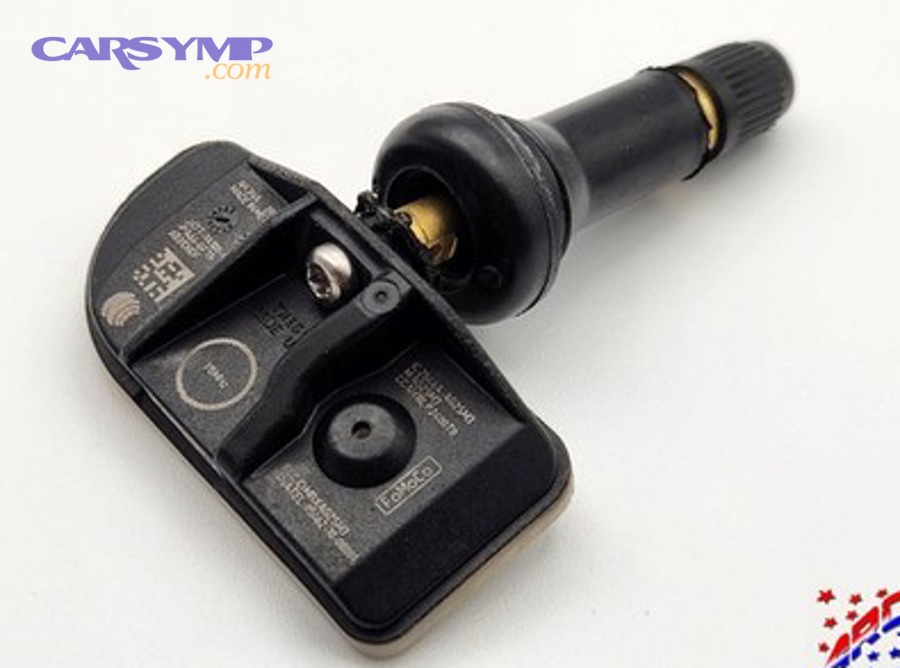
Yes — aftermarket TPMS sensors are typically 40% to 60% cheaper than OEM equivalents, making them the most straightforward cost-reduction option for most standard vehicles.
OEM sensors are manufactured to the exact specification of your vehicle’s original equipment and are guaranteed to integrate seamlessly with the factory system. For most vehicles, however, quality aftermarket sensors from brands such as Schrader, VDO/Continental, and Autel perform identically in real-world conditions. These brands manufacture sensors for both the OEM and aftermarket markets — meaning the physical hardware is often produced in the same facilities.
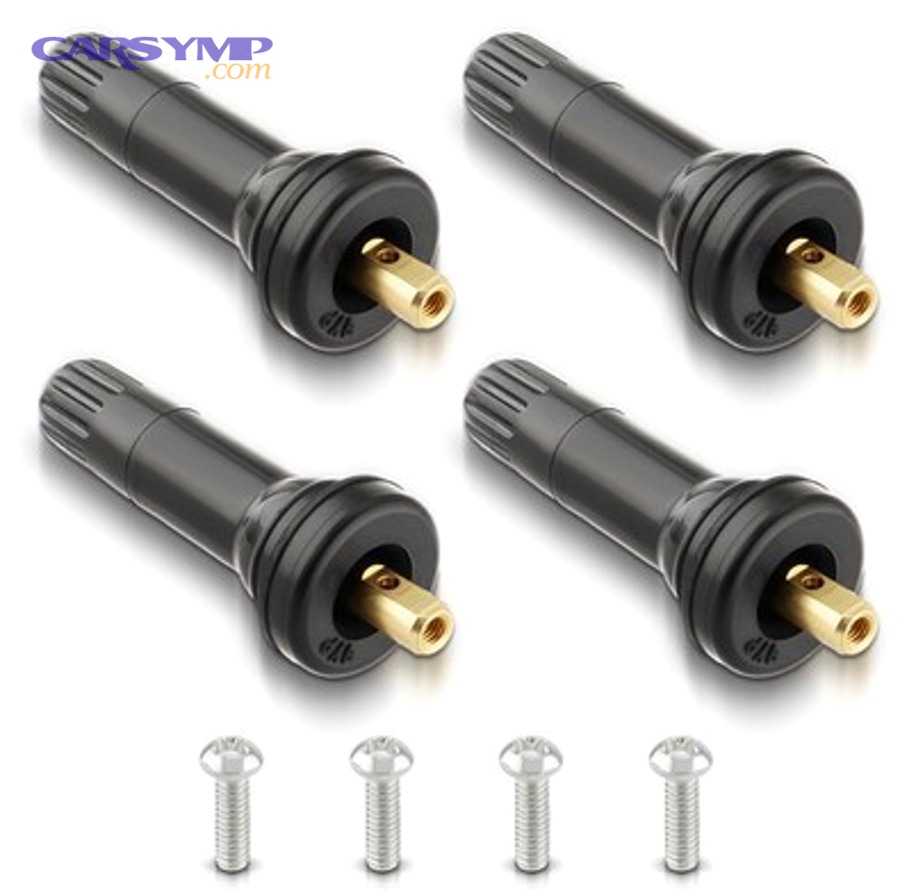
The metal vs. rubber valve stem sensor differences are worth understanding here as well. Direct TPMS sensors come with either a metal (aluminum) valve stem or a rubber snap-in valve stem. Metal stems are more durable and tend to last longer in harsh conditions; rubber stems are more affordable and easier to install. When purchasing aftermarket sensors, confirm which stem type your vehicle’s wheel requires, as using the wrong type can lead to installation issues or air leaks over time.
Potential trade-offs of aftermarket sensors include: slightly shorter warranty coverage, the occasional need for additional programming steps (particularly on European vehicles), and variable compatibility across vehicle platforms. For peace of mind, verify compatibility using the vehicle’s year, make, model, and trim before purchasing.
According to a review of aftermarket TPMS pricing on Amazon and RockAuto, quality Schrader and VDO sensors for a standard domestic vehicle retail for $25 to $40 per unit — compared to $80 to $150 for the equivalent OEM sensor at a dealership parts counter.
Can You Save Money by Bundling TPMS Replacement With a Tire Change?
Yes — bundling TPMS sensor replacement with a scheduled tire change is one of the most effective ways to reduce labor costs, and in some cases, eliminates the installation charge entirely.
The logic is simple: the most labor-intensive part of TPMS sensor replacement is the tire dismount and remount. When a shop is already removing your tires to install new ones, that labor is already paid for. Adding a sensor swap to that same service requires very little additional time — often just five to ten minutes per wheel — which is why many shops will install customer-supplied sensors for free or at a nominal charge of $10 to $20 per wheel when a tire purchase is involved.
Costco, Sam’s Club, and Discount Tire have widely reported policies of installing sensors at no additional labor charge during tire purchase appointments when sensors are provided by the customer. Purchasing four quality aftermarket sensors online for approximately $100 to $120 and having them installed for free during a tire change can save $150 to $300 compared to a standard shop quote for the same service.
The best time to proactively replace TPMS sensors is when your vehicle’s sensors are five to seven years old and you are due for new tires. Replacing both simultaneously costs only marginally more than replacing tires alone, while virtually guaranteeing you will not face an unexpected TPMS service call within the lifespan of your new tires. TPMS sensor battery life expectations of five to ten years mean that waiting until a battery dies — which triggers a mandatory sensor replacement — costs significantly more in emergency labor than a planned bundle service.
Can You Replace a TPMS Sensor Yourself to Save on Labor?
Yes — a hybrid DIY approach, where you purchase sensors yourself and pay a shop only for the physical tire work and programming, can reduce total costs by 50% or more compared to full-service dealer pricing.
A true full DIY replacement requires a tire mounting machine, a wheel balancer, and a TPMS programming tool — equipment that most home mechanics do not own. However, the hybrid approach is practical for any driver willing to invest thirty minutes of preparation:
- Purchase compatible aftermarket sensors online (Schrader, VDO, or Autel dual-frequency sensors cost $25 to $40 each on Amazon)
- Bring the sensors to an independent tire shop or national chain
- Ask the shop to mount, balance, and program the sensors you supply, paying only for labor and the relearn procedure
This approach typically costs $25 to $50 in shop labor per sensor (for the tire service) plus $25 to $50 for the full-vehicle relearn, compared to $100 to $200 per sensor if the shop supplies the part. On a four-sensor job, that difference can represent $250 to $500 in savings.
For experienced DIYers who already own or are willing to invest in a TPMS programming scan tool — such as the Autel TS508 or ANCEL X7, both of which retail for $80 to $200 — the cost per sensor replacement can fall as low as $25 to $40 (the sensor itself) plus a one-time tool investment. At that level, the tool pays for itself after the first service.
Does TPMS Service Cost More for Electric Vehicles?
Yes — TPMS service for electric vehicles can cost significantly more than for equivalent gasoline-powered vehicles, primarily due to proprietary sensor systems and manufacturer service requirements that limit your choice of provider.
The most documented example is the Tesla Model S (2012–2019), which uses a first-generation TPMS system that Tesla service centers often recommend replacing with the newer second-generation Continental/Baolong sensor platform when any single sensor fails. That upgrade involves replacing not just the sensors but the control module and harness — a job that Tesla service centers have quoted at $700 to over $1,000 for the complete package.
However, third-party options exist at a fraction of the cost. Compatible Baolong sensors for early Tesla Model S vehicles are available for approximately $60 to $70 per sensor through specialty retailers like TPMS Online, and qualified independent shops with EV experience can perform the installation without the manufacturer’s upgrade upsell.
For other EV platforms — including the Chevrolet Bolt, Nissan Leaf, and Ford Mustang Mach-E — TPMS sensor costs are generally comparable to their gasoline counterparts, since these vehicles use standard direct TPMS systems that accept common aftermarket sensors.
The key recommendation for EV owners is to verify, before any service appointment, whether an independent tire shop in your area has confirmed experience with your specific EV platform’s TPMS system. Many do — and the cost savings compared to the manufacturer’s service center can be substantial.
In short, TPMS sensor replacement is a service where the range between the lowest and highest legitimate price is enormous — and where an informed car owner consistently pays far less than one who simply approves the first quote they receive. Knowing what the service actually includes, what drives the price, and what questions to ask before authorizing any work transforms a stressful dashboard warning light into a straightforward, manageable repair.