


Every time a tire pressure sensor is replaced, rotated, or remounted, the vehicle’s computer loses track of which sensor belongs to which wheel — and that is precisely when a TPMS relearn procedure becomes mandatory. A TPMS relearn is the process of re-registering each sensor’s unique ID into the vehicle’s electronic control unit (ECU), restoring the tire pressure monitoring system’s ability to alert the driver to low pressure or a system fault. Without completing this step, the TPMS warning light will stay illuminated on the dashboard regardless of whether the tires are perfectly inflated.
Not all vehicles handle this registration the same way. Across every make and model on the road today, there are three distinct relearn methods — stationary, OBD, and auto — and the correct one for any given vehicle is determined entirely by the manufacturer, not by the technician’s preference. Understanding which method applies before beginning tire pressure monitoring system service is the single most important preparation step a shop or DIY mechanic can take.
The tools required vary just as widely as the methods. Some vehicles need nothing more than a button sequence and a low-frequency activation tool, while others demand a full OBD scan tool connected directly to the vehicle’s diagnostic port. A handful of makes — including Nissan and certain Lexus models — require brand-specific tools or multi-step switch sequences that are easy to miss without proper reference material.
Beyond method selection and tooling, there are common failure points that cause relearns to go incomplete even when a technician follows the correct sequence. RF signal interference, module replacements, indirect system confusion, and seasonal wheel changeovers all introduce variables that are not covered in a basic procedure chart. This guide addresses every layer — from foundational definitions through make-specific step-by-step procedures, tool requirements, and troubleshooting fixes — so that any technician or informed vehicle owner can complete a TPMS relearn correctly the first time.
What Is a TPMS Relearn Procedure?
A TPMS relearn procedure is a calibration process in which new or repositioned tire pressure sensor IDs are registered to a vehicle’s ECU, restoring accurate wheel-position mapping and extinguishing the TPMS dashboard warning light.
To better understand why this process exists at all, it helps to start with how the system works at the hardware level.
Each wheel on a TPMS-equipped vehicle contains a battery-powered sensor attached to the valve stem or wheel band. That sensor has a unique hexadecimal ID number — similar to a serial number — programmed into it at the factory. The vehicle’s TPMS module stores a table that maps each sensor ID to a specific wheel position: left front, right front, right rear, left rear. When the module detects a pressure reading below threshold from a known sensor ID, it knows exactly which tire is low and triggers the appropriate warning.
When sensors are replaced, wheels are rotated, or rims are swapped, the sensor IDs in those positions no longer match the IDs stored in the module’s table. The system cannot verify the mapping, so it defaults to a warning state. The relearn procedure is the mechanism that updates the module’s table to reflect the new physical reality of which sensor is in which position.
Why Does a TPMS Sensor Need to Be Relearned?
The TPMS sensor must be relearned because the vehicle’s ECU stores a fixed map of sensor IDs to wheel positions, and any change to sensor hardware or wheel placement breaks that map permanently until a new relearn is performed.
Specifically, each sensor transmits its ID on a radio frequency — typically 315 MHz or 433 MHz depending on the vehicle — along with its pressure and temperature readings. The TPMS module listens for transmissions from the four IDs it has on file. If a sensor is replaced, the new sensor has a different ID that the module has never seen before. The module does not recognize it, cannot assign it a position, and cannot process its pressure data. The result is a continuous TPMS fault or low-pressure warning that no amount of inflation will fix.
This is why relearn is not optional. It is the functional bridge between new hardware and the vehicle’s software.
Is Sensor Programming the Same as a TPMS Relearn?
No — sensor programming and a TPMS relearn are two entirely separate steps, and confusing them is one of the most common mistakes made during tire pressure monitoring system service.
Sensor programming refers to configuring a universal or multi-application aftermarket sensor to match the specific make, model, and year (MMY) of the vehicle being serviced. This step sets the sensor’s transmission protocol, frequency, and data format so it communicates in a language the vehicle’s module understands. Programming is done on the bench, before the sensor is mounted.
A TPMS relearn, by contrast, happens after the sensor is already installed on the vehicle. It is the step that introduces the newly programmed sensor’s unique ID to the ECU and assigns it a wheel position. Even a perfectly programmed sensor will cause a TPMS fault if the vehicle is never relearned afterward. The correct sequence is always: program the sensor first → mount and inflate the wheel → then relearn the vehicle.
When Is a TPMS Relearn Required?
A TPMS relearn is required any time a sensor’s physical position or hardware identity changes relative to what the vehicle’s ECU currently has on record — covering sensor replacement, wheel rotation, rim changes, module replacement, and seasonal swaps.
This requirement is broader than many vehicle owners realize, which is why TPMS lights so frequently reappear after routine tire service.
Do You Need a Relearn After Every Tire Rotation?
Yes — a TPMS relearn is required after every tire rotation on the majority of TPMS-equipped vehicles, because the sensor IDs move with the wheels, not the positions, and the ECU’s stored map no longer matches physical reality after any rotation.
The one exception is vehicles equipped with a true auto relearn system, which can detect sensor movement and update the wheel-position table automatically after the vehicle is driven at the appropriate speed for the required duration. However, even on auto relearn vehicles, it is best practice to confirm the system has updated before returning the vehicle to the customer — an incomplete auto relearn will still produce a warning light.
What Events Require a TPMS Relearn Procedure?
There are six primary trigger events that require a TPMS relearn procedure, regardless of vehicle make or method type:
- Single or full sensor replacement — any new sensor introduces a new ID the ECU has not seen
- Tire rotation or wheel position swap — existing IDs are in the wrong positions after rotation
- Wheel or rim replacement — a new rim typically means a new sensor or a remounted sensor
- BCM or keyless-entry module replacement — these modules store sensor ID tables on many platforms, and replacement wipes that data
- Seasonal tire changeover — swapping between dedicated winter and summer wheel sets involves sensors the ECU may not have mapped to current positions
- Any TPMS scan tool reset — some diagnostic procedures intentionally clear stored sensor IDs as part of troubleshooting
Missing any of these trigger events and skipping the relearn is the most common reason a TPMS light persists after otherwise correct tire service.
What Are the Three Types of TPMS Relearn Methods?
There are three main types of TPMS relearn methods — stationary, OBD, and auto — each defined by how sensor IDs are transferred to the vehicle’s ECU and whether driving is required to complete the process.
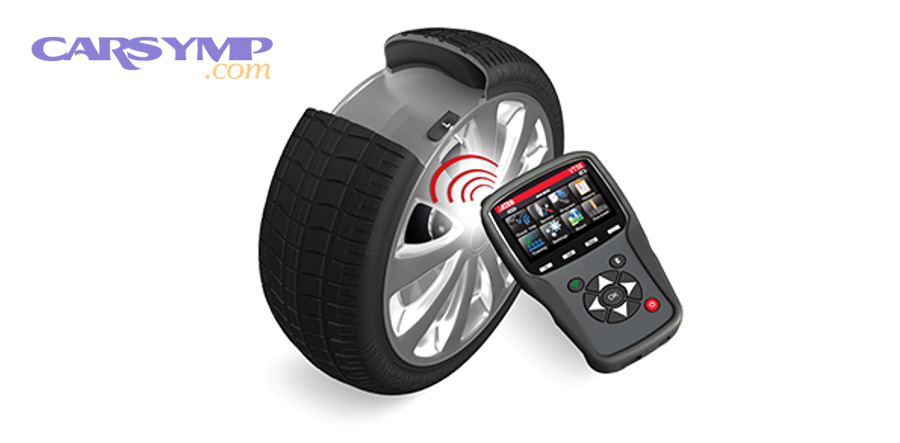
The table below summarizes the three methods at a glance before the individual deep-dives that follow. Understanding these distinctions upfront makes it easier to identify which procedure applies to the vehicle in service.
| Method | Tool Required | Drive Required | Approx. Vehicle Coverage | Time to Complete |
|---|---|---|---|---|
| Stationary | TPMS activation tool | No | ~25% of TPMS vehicles | 5–15 minutes |
| OBD | Activation tool + scan tool | No | ~36% of TPMS vehicles | 5–10 minutes |
| Auto | None (or activation tool) | Yes | ~39% of TPMS vehicles | 10–40+ minutes driving |
What Is a Stationary TPMS Relearn and Which Vehicles Use It?
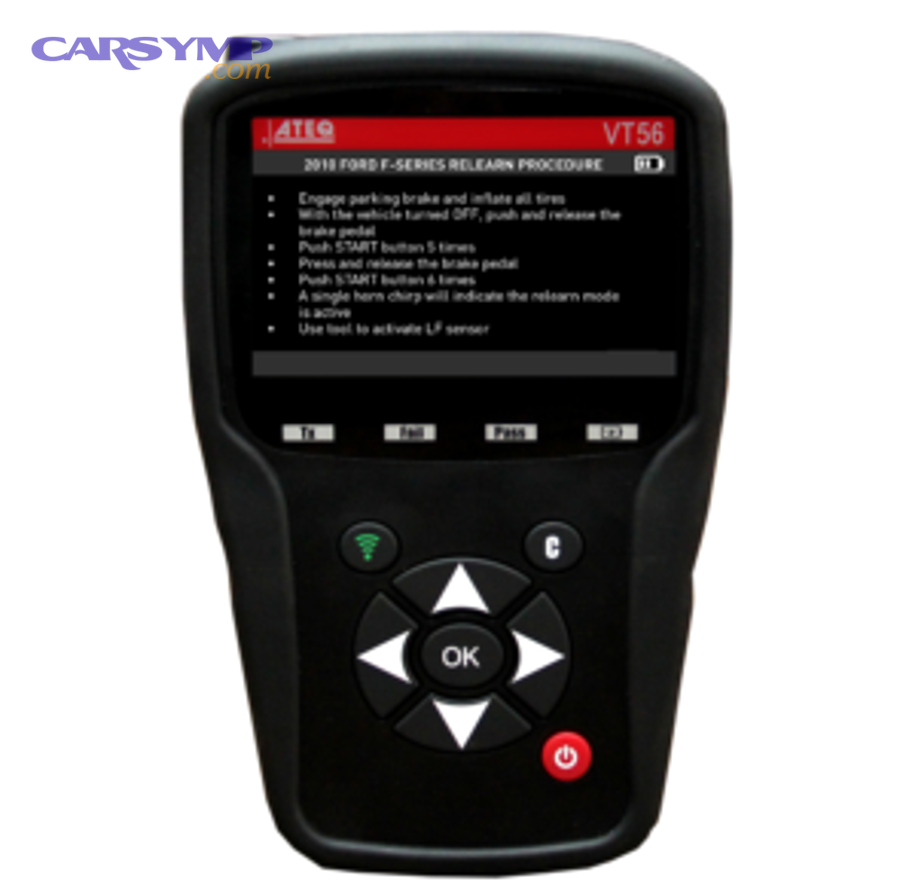
A stationary relearn is a procedure in which new sensor IDs are transferred to the vehicle’s ECU while the car remains parked, using a low-frequency TPMS activation tool to trigger each sensor while the vehicle is held in a manufacturer-defined relearn mode.
The activation tool emits a low-frequency magnetic field when placed against the tire sidewall near the valve stem. This field activates the sensor’s internal coil, prompting the sensor to broadcast its ID in “learn mode.” The TPMS module, already placed in its listening state through a key or menu sequence, captures that ID and assigns it to the wheel position in the order the technician activates sensors.
Common vehicles using stationary relearn include:
- GM platforms: Buick, Chevrolet, GMC, Cadillac, Hummer, Pontiac, Saturn (most 2007+ models)
- Ford, Lincoln, Mercury: the majority of non-EV models
- Select Nissan models: though many Nissan vehicles require an additional reset tool
A successful stationary relearn is confirmed by a horn chirp and/or a dashboard message such as “TRAINING MODE COMPLETE” or “TIRE LEARNING ACTIVE” transitioning to off.
What Is an OBD TPMS Relearn and Which Vehicles Require It?
An OBD relearn is a procedure in which a TPMS scan tool connects to the vehicle’s OBD-II diagnostic port and writes new sensor IDs directly into the ECU’s TPMS module, bypassing the need for the vehicle to be placed in a manual relearn mode.
The technician first activates each sensor with the low-frequency tool to read and capture its ID, then connects the scan tool to the OBD port and transfers those IDs to the vehicle. This two-step approach — activate, then write — is more controlled than stationary relearn and less dependent on the technician following a precise key-cycling sequence.
Vehicles that commonly require OBD relearn include:
- Japanese makes: Toyota, Lexus, Scion, Honda, Acura, Nissan (many models), Infiniti, Subaru, Mitsubishi
- Korean makes: Hyundai, Kia
- European makes: Mercedes-Benz, many Audi, BMW, and Volkswagen models
According to data published by Bartec USA, OBD relearn is now the fastest-growing relearn category, with an increasing number of new-model vehicles from all regions shifting to OBD-only procedures due to tighter ECU security protocols.
What Is an Auto TPMS Relearn and How Does It Work?
An auto relearn is a procedure in which the vehicle’s TPMS module learns new or repositioned sensor IDs automatically after the vehicle is driven at a specified minimum speed — typically 15 to 25 mph — for a required continuous duration, without requiring a manual activation tool in most cases.
Despite its name, auto relearn is not entirely passive. The technician must still ensure all tires are inflated to the placard pressure before driving, and many auto relearn systems require a specific ignition or menu step to arm the system before the drive begins. The “automatic” element refers to the fact that no activation tool is placed against each tire — the module captures IDs through normal sensor transmissions as the vehicle moves.
Key vehicles using auto relearn include:
- FCA group: Dodge, Jeep, Ram, Chrysler, Alfa Romeo, Maserati
- Some BMW and MINI models (newer platforms)
- Select Audi and Volkswagen models
One important limitation: some auto relearn systems can only accept one new sensor ID per learning cycle. If all four sensors are new — such as after a complete sensor replacement job — the technician may need to drive multiple cycles or use an OBD tool to write all four IDs simultaneously.
Stationary vs. OBD vs. Auto Relearn: Which Method Is Right for Your Vehicle?
Stationary relearn wins for speed and simplicity on GM and Ford platforms; OBD relearn is best for Asian and European vehicles with secure ECUs; auto relearn is optimal when no tools are available and driving time is not a constraint.
The single most reliable way to confirm which method applies to a specific vehicle is to look it up by VIN or MMY using one of these sources:
- The built-in relearn database on a quality TPMS scan tool (such as the ATEQ VT56 or Autel MX-Sensor tool)
- The Tire Industry Association (TIA) relearn flip chart
- The vehicle owner’s manual
- The manufacturer’s service portal
Never assume a method based on brand alone — many manufacturers use different methods across model years, trim levels, and regional markets. A 2018 Toyota Camry and a 2022 Toyota Tundra, for example, may require different OBD procedures despite being from the same manufacturer.
How to Perform TPMS Relearn Procedures by Vehicle Make and Model
Completing a TPMS relearn correctly requires 3 consistent preparation steps across all vehicles — inflate all tires to the placard pressure, confirm the correct relearn method by MMY, and gather the required tools — before following the make-specific sequence below.
Preparation is not a formality. Beginning any relearn with incorrect tire pressures, the wrong tool, or the wrong method will result in an incomplete procedure — and a customer returning with the same TPMS light that was supposedly fixed.
How to Complete a TPMS Relearn on GM Vehicles (Buick, Chevrolet, GMC, Cadillac)
GM uses a stationary relearn on the majority of its TPMS-equipped vehicles from 2007 onward, and it is one of the most straightforward procedures in the industry when performed in the right environment.
Step-by-step procedure:
- Inflate all four tires to the pressure listed on the door placard
- Turn the ignition to the ON position (engine off)
- Press the MENU button on the turn signal lever or DIC controls to access the Vehicle Information Menu
- Use the thumbwheel or scroll button to navigate to Tire Pressure Menu
- Press SET/CLR to begin the sensor matching process; press again to confirm — the horn will sound twice and “TIRE LEARNING ACTIVE” will display
- Place the activation tool antenna against the sidewall of the left front tire, near the valve stem, and press the button — wait for one horn chirp confirming that sensor’s ID has been matched
- Repeat in this sequence: right front → right rear → left rear
- After the left rear sensor is confirmed, “TRAINING MODE COMPLETE” will display, or the horn will remain silent when ignition is turned off
Critical tip: Perform this relearn in an open parking lot, away from the shop bay. Shop equipment, keyless entry signals from other vehicles, and nearby RF transmitters can all interfere with the sensor’s 315 MHz broadcast and cause the relearn to fail silently. If a sensor will not respond, try rolling the vehicle forward 12–18 inches — the signal can be blocked by the rotor, caliper, or knuckle, and repositioning often clears the obstruction.
How to Complete a TPMS Relearn on Ford, Lincoln & Mercury Vehicles
Most Ford, Lincoln, and Mercury vehicles use a stationary relearn triggered by a key-cycling sequence rather than a DIC menu, making it accessible without a display screen but more dependent on executing the correct ignition steps.
Step-by-step procedure (standard ignition Ford):
- Inflate all tires to placard pressure
- Turn ignition to OFF, then back to ON (do not start engine) three times, ending in the ON position
- Press and release the brake pedal
- Turn ignition to OFF
- Turn ignition to ON again — the horn will chirp once and the TPMS telltale will flash, indicating train mode is active
- Starting with the left front tire, hold the activation tool against the sidewall near the valve stem and activate — horn chirps once to confirm
- Proceed in order: right front → right rear → left rear
- After the left rear is confirmed, the horn chirps twice to signal training is complete
Note: Some newer Ford models, particularly EV platforms and post-2020 F-Series trucks, have migrated to OBD relearn. Always verify by scanning the VIN before beginning — attempting a stationary sequence on an OBD-only vehicle will not produce an error, it simply will not complete the relearn.
How to Complete a TPMS Relearn on Toyota, Lexus & Scion Vehicles
Toyota, Lexus, and Scion vehicles overwhelmingly require an OBD relearn, meaning a scan tool capable of writing sensor IDs via the OBD-II port is not optional — it is mandatory for these platforms.
Step-by-step procedure:
- Inflate all tires to placard pressure
- Activate each sensor using the TPMS tool in the following order: left front → right front → right rear → left rear — the tool captures each sensor’s ID
- Connect the TPMS scan tool to the vehicle’s OBD-II port
- Use the tool’s menu to select the vehicle’s MMY and choose “Write IDs to vehicle”
- Confirm the transfer is complete on the tool’s screen
- Start the vehicle and drive above 25 mph for a minimum of 10 minutes to allow the system to confirm all sensors are communicating
Lexus-specific note: Many Lexus models incorporate a secondary switch procedure in addition to the OBD write. The tool will prompt the technician to press both a main switch and a secondary switch (typically located on the instrument panel or near the gear selector) during the relearn sequence. Missing this step will leave the relearn incomplete even after a successful OBD ID transfer.
How to Complete a TPMS Relearn on Honda & Acura Vehicles
Honda and Acura vehicles use OBD relearn as their standard method, but the Honda Civic stands out as one of the most unusual relearn requirements of any vehicle on the market — a mandatory pressure-drop sequence before inflation.
Honda Civic pressure-drop procedure:
- Deflate each tire below 8 psi and hold at that pressure for a minimum of one full minute
- Re-inflate each tire to placard pressure
- Connect scan tool and perform standard OBD ID write
- Drive the vehicle to confirm system communication
For all other Honda and Acura models, the standard OBD procedure applies:
- Inflate all tires to placard pressure
- Use the activation tool to trigger each sensor and capture IDs
- Connect to the OBD port and write IDs using the scan tool
- Drive above 25 mph for 10 minutes to finalize
When considering DIY vs shop TPMS service considerations on Honda platforms, the pressure-drop requirement on Civic models makes it one of the harder procedures for a home mechanic to complete correctly without prior knowledge of this step, as no warning light or error code will indicate the skipped step — the relearn simply will not hold.
How to Complete a TPMS Relearn on Nissan & Infiniti Vehicles
Nissan and Infiniti vehicles require a dedicated TPMS reset tool — not just a standard activation tool — making them among the more tool-intensive platforms in the market.
Step-by-step procedure:
- Inflate all tires to placard pressure
- Use the Nissan-compatible reset tool (not a generic TPMS activation tool) to place the vehicle in relearn mode according to the model-year-specific sequence
- For OBD-required models: connect the scan tool to the OBD port after sensor activation and write IDs directly
- For stationary-method models: activate sensors in the standard LF → RF → RR → LR order and wait for horn confirmation
- Drive the vehicle as directed by the tool to complete the procedure
The most critical mistake on Nissan platforms is using a standard activation tool that cannot communicate with the Nissan-specific TPMS reset protocol. The sensors may activate and transmit, but the vehicle will not enter relearn mode without the correct tool initiating it.
How to Complete a TPMS Relearn on FCA Vehicles (Dodge, Jeep, Ram, Chrysler)
FCA group vehicles — including Dodge, Jeep, Ram, and Chrysler, as well as Alfa Romeo and Maserati — predominantly use auto relearn, requiring a drive cycle at specified speeds after a brief setup step.
Step-by-step procedure:
- Inflate all tires to placard pressure
- Turn the ignition to the ON position (engine off)
- Press and hold the TPMS reset button (location varies: instrument panel, glove box, or near steering wheel) until the TPMS telltale flashes three times
- Start the vehicle and drive above 15–25 mph for a minimum of 40 seconds (some models require 10 minutes of continuous driving above this threshold)
- The system will automatically learn the sensor IDs through normal transmission during the drive; the TPMS light will extinguish when learning is complete
Ram 3500 DRW-specific note: On dual-rear-wheel Ram 3500 models, the inner rear sensors must remain in their inner positions during any rotation. They may swap sides (driver-side inner to passenger-side inner), but they cannot move to outer positions — the system cannot learn inner sensor IDs in outer positions and the relearn will fail.
For shops that cannot accommodate extended drive time, a properly formatted OBD scan tool can write FCA sensor IDs directly via the diagnostic port, bypassing the drive requirement entirely.
How to Complete a TPMS Relearn on BMW & MINI Vehicles
BMW and MINI vehicles use a combination of auto relearn confirmed through the iDrive menu system, with OBD scan tool capability available for sensor replacement scenarios where IDs must be registered without driving.
Step-by-step procedure (auto relearn via iDrive):
- Inflate all tires to placard pressure
- With the vehicle running, open the iDrive menu and navigate to Settings → Vehicle → Tires
- Select “Perform reset” or “Wheel change” depending on the model year
- Confirm the selection — the system will display “Reset in progress”
- Drive above 15 mph for a minimum of 15 minutes to allow the system to learn all four sensor IDs
Sensor replacement via OBD: When sensors are physically replaced on BMW or MINI models, a properly formatted scan tool must be used to register the new sensor IDs to the vehicle’s TPMS module before or instead of the drive reset. The iDrive reset alone will not register a brand-new sensor ID that the module has never encountered.
How to Complete a TPMS Relearn on Hyundai, Kia & Subaru Vehicles
Hyundai, Kia, and Subaru vehicles require OBD scan tool relearn as standard, and these platforms include a specific post-relearn activation step that is often overlooked — causing a dome light flash that technicians frequently misdiagnose as a failed relearn.
Step-by-step procedure:
- Inflate all tires to placard pressure
- Activate each sensor with the TPMS tool to capture IDs: LF → RF → RR → LR
- Connect scan tool to OBD-II port and write the four captured sensor IDs to the TPMS module
- With the ignition still ON after the OBD write, re-activate each sensor in the same LF → RF → RR → LR sequence
- The dome light flash will stop and the TPMS telltale will extinguish, confirming successful relearn
Step 4 — re-activating the sensors after the OBD write with the ignition still on — is unique to many Hyundai, Kia, and Subaru models. Skipping it leaves the system in a partially learned state, producing the dome light flash that trips up technicians unfamiliar with the platform.
What Tools Are Needed to Complete a TPMS Relearn?
Completing a TPMS relearn requires either a basic TPMS activation tool, a combined TPMS activation and OBD scan tool, or no specialized tool at all — depending entirely on which of the three relearn methods the specific vehicle requires.
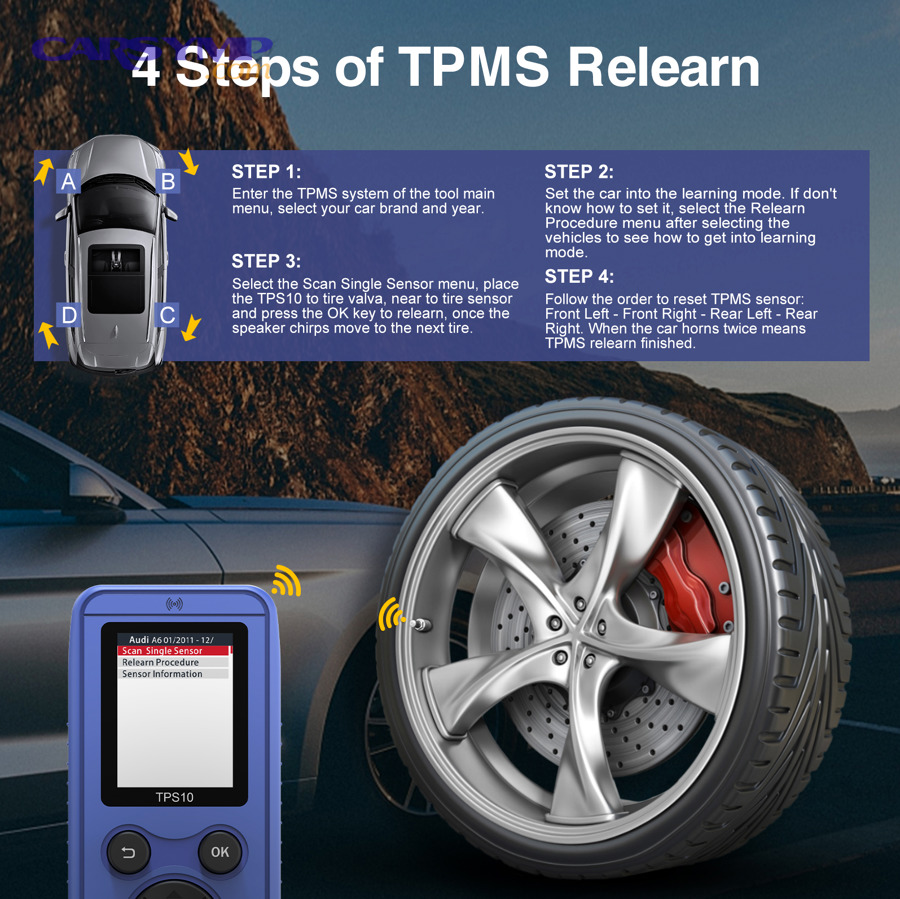
The table below outlines the tool requirements by relearn method, helping technicians and informed DIY owners quickly assess what equipment is needed before beginning service.
| Relearn Method | Minimum Tool Required | Optional Upgrade | Notes |
|---|---|---|---|
| Stationary | TPMS low-frequency activation tool | TPMS combo tool with built-in procedures | Must be compatible with vehicle’s sensor frequency (315 or 433 MHz) |
| OBD | Activation tool + OBD scan tool (combined) | Premium TPMS diagnostic tool with wide vehicle coverage | Some vehicles require manufacturer-specific tool (e.g., Nissan) |
| Auto | None required | OBD combo tool (to skip drive cycle) | Tool accelerates process but is not mandatory |
According to data from Bartec USA, more than 60% of all TPMS-equipped vehicles on the road require at minimum a TPMS activation tool, and the share requiring a full OBD scan tool capability continues to grow as new model years enter the market.
Can You Perform a TPMS Relearn Without a Tool?
No — a TPMS relearn can only be completed without any tool on auto relearn vehicles, which represent approximately 39% of TPMS-equipped vehicles; all stationary and OBD relearn vehicles require at minimum a low-frequency TPMS activation tool.
Attempting to complete a stationary or OBD relearn without the proper tool will produce one of two outcomes: the vehicle simply never enters relearn mode and the TPMS light remains on, or the relearn appears to complete but the sensor IDs are never actually written to the ECU, causing the light to return after the vehicle is driven.
For those evaluating DIY vs shop TPMS service considerations, tool availability is the deciding factor on most modern vehicles. The investment in a quality TPMS combo tool — capable of both activation and OBD write — ranges from $200 to $600 depending on vehicle coverage, and it is the single piece of equipment that determines whether a complete relearn is even possible without visiting a professional shop.
Knowing How to check tire pressure correctly before beginning any relearn is also essential. Every relearn procedure starts with tires inflated to the exact placard pressure — not the maximum sidewall pressure, and not an estimate. Incorrect starting pressure can cause the system to flag a pressure fault immediately after relearn, making the procedure appear to have failed when the sensor registration itself was successful.
Why Is My TPMS Light Still On After a Relearn? Common Problems and Fixes
A TPMS light that persists after a correctly performed relearn points to one of four specific failure categories: RF signal interference during the procedure, a module replacement that wiped stored IDs, an indirect TPMS system that does not use sensor IDs at all, or an incomplete seasonal sensor transition.

Identifying the correct failure category before repeating the relearn saves significant time and prevents the frustration of running the same procedure multiple times without result.
Did the Relearn Fail Because of RF Signal Interference?
Yes — RF signal interference is one of the most common causes of silent relearn failure, particularly on stationary relearn vehicles in busy shop environments.
The 315 MHz and 433 MHz frequencies used by TPMS sensors are shared with keyless entry fobs, shop diagnostic equipment, and sensors from other nearby vehicles. When multiple signals occupy the same frequency during a stationary relearn, the vehicle’s TPMS module may capture the wrong ID, fail to capture any ID, or assign an ID to the wrong wheel position.
Fixes:
- Move the vehicle at least 30 feet away from other TPMS-equipped vehicles and diagnostic equipment before beginning
- Ask all shop personnel to keep key fobs away from the relearn area during the procedure
- If a sensor will not respond after two activation attempts, roll the vehicle forward 12–18 inches — rotors, calipers, and suspension knuckles can physically block the activation tool’s low-frequency field from reaching the sensor coil
- On GM platforms specifically, Bartec and ATEQ both recommend parking lot relearns as a baseline best practice
What Happens to TPMS Relearn When the BCM or Keyless Entry Module Is Replaced?
Replacing the Body Control Module (BCM) or keyless entry module on any vehicle that routes TPMS communication through those modules completely erases the stored sensor ID table, requiring a full four-sensor relearn from scratch as though all sensors were brand new.
On GM platforms in particular, the TPMS antenna is physically integrated with the keyless entry system — typically sandwiched in the front or rear glass layers or mounted on a dedicated antenna in the body. The BCM and keyless entry module share the same communication bus with the TPMS module via CAN BUS. When either module is replaced, its new firmware contains no stored sensor data.
This is a scenario that catches technicians off-guard when the tire service was completed correctly weeks earlier and the TPMS light appears suddenly after unrelated electrical work. The correct diagnosis is to verify whether any module replacement or reflash occurred since the last successful relearn, then perform a complete stationary or OBD relearn as appropriate for the vehicle.
What Is an Indirect TPMS System and Does It Need a Relearn?
No — an indirect TPMS system does not use physical pressure sensors in the wheels and therefore does not require a traditional relearn; instead, it requires a calibration reset through the vehicle’s onboard menu after any tire service.
An indirect TPMS system works by monitoring wheel speed data from the vehicle’s existing ABS sensors. Because an underinflated tire has a slightly smaller rolling circumference than a properly inflated one, it rotates faster than the other wheels at the same vehicle speed. The system detects this rotational difference and triggers a pressure warning — without ever reading an actual pressure value.
Because no sensor IDs are involved, there is nothing to “relearn” in the traditional sense. However, after any tire rotation, inflation adjustment, or wheel change, the indirect system must be reset so it establishes a new baseline calibration. This reset is typically performed through a steering wheel button hold or a vehicle settings menu, and it requires driving afterward to allow the system to collect new baseline wheel speed data.
Common vehicles with indirect TPMS include many older BMW models, some early Honda models, and certain Volkswagen and Porsche applications. Attempting a stationary or OBD relearn on an indirect system vehicle is harmless but completely ineffective.
How Does TPMS Relearn Work After a Seasonal Tire Changeover?
A seasonal tire changeover relearn works identically to a standard sensor replacement relearn — the vehicle must be relearned with the IDs of the sensors currently mounted, whether those are the summer set or the winter set.
The complication with seasonal changeovers is organizational. Many vehicle owners and shops maintain two complete wheel and tire sets — dedicated summer and winter assemblies — each with their own sensors already mounted. When the winter set is installed in October and the summer set is stored, the ECU is now seeing four sensor IDs it may not have encountered in months, or has never formally mapped to those wheel positions.
Best practices for seasonal changeover relearn:
- Label each stored wheel set with a tag showing its sensor IDs — this allows the technician to verify before mounting that all four sensors are transmitting correctly
- Use the TPMS activation tool to wake each sensor before mounting to confirm battery health — sensors stored for 6+ months may have depleted batteries that cannot be recharged
- Perform the appropriate stationary, OBD, or auto relearn for the vehicle immediately after the seasonal changeover, not after returning the vehicle to the customer
For shops that manage high-volume seasonal changeovers, pre-programming a set of universal sensors to match the vehicle’s MMY during the off-season allows for a clean, immediate relearn every time — rather than discovering a dead sensor when the customer is already in the bay.
Completing a TPMS relearn correctly is not a single-step process — it is a sequence of decisions that begins with identifying the right method for the specific vehicle, gathering the correct tools, and following the manufacturer’s procedure without shortcuts. Whether the vehicle requires a stationary key sequence, an OBD scan tool write, or a post-drive auto calibration, the underlying goal is always the same: ensure the ECU’s sensor ID table accurately reflects the four sensors currently installed in their current positions. When that mapping is correct, the tire pressure monitoring system functions as designed — and the TPMS warning light stays off.