


A condenser fan that won’t run is one of the fastest ways to turn a normal A/C day into rising pressures, weak cooling, and overheating risk—so the right diagnosis matters more than quick guesses.
If you’re dealing with an AC fan issue, you can narrow it down logically by checking the command (is the fan being asked to run?), the power path (fuse/relay/wiring), and the motor/control (fan motor, module, resistor, ground).
You’ll also learn how the symptom changes with vehicle speed, ambient temperature, and A/C demand—because those patterns often point to the exact failure.
To begin, here’s the simple rule: when the condenser fan is non-spinning, heat can’t leave the condenser efficiently, so system pressure rises and the A/C often protects itself by reducing performance or shutting off. After that, we’ll work step-by-step through the checks that confirm the real cause.
What does a condenser fan do, and why does it stop A/C cooling so quickly?
The condenser fan is the front-of-car airflow helper that removes heat from the A/C condenser at idle and low speeds, so when it fails, head pressure climbs, vent temps rise, and the system may cycle the compressor to protect itself.
Next, it helps to connect “what you feel” to “what the system is doing” so your diagnosis stays grounded.
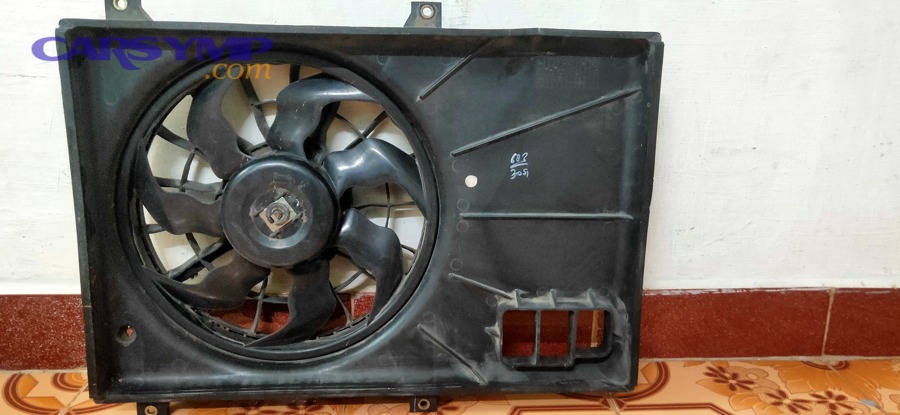
Which symptoms most strongly suggest the fan is the problem?
Yes—several patterns strongly point to the fan: A/C cools while driving but warms at stops, the high-side line feels extremely hot, and the fan never kicks on even when the A/C is set to MAX; these signs often appear before any obvious overheating.
In other words, if airflow is missing only at idle, the condenser can’t reject heat when you need it most.
More detailed clues include: the compressor sounds like it cycles rapidly, the A/C may start cold then fade within minutes, and the engine bay feels unusually hot near the condenser area.
Can a bad condenser fan also cause engine overheating?
Yes—on many vehicles the condenser fan and radiator fan strategy are linked, so if the control circuit fails, both A/C performance and engine cooling can suffer, especially in traffic, high ambient temperatures, or when towing.
However, some cars have dual fans or staged operation, so the engine might stay normal while the A/C struggles—making fan diagnosis even more important.
That’s why the next sections focus on proving whether the fan is not being commanded, not receiving power, or unable to run.
When should the condenser fan turn on during normal operation?
In most vehicles, the condenser fan should run when A/C demand is high at low speed, when refrigerant pressure climbs, or when coolant temperature reaches a threshold—so “when it should run” becomes your baseline test.
After that, you can reproduce the condition safely and watch what the system does.
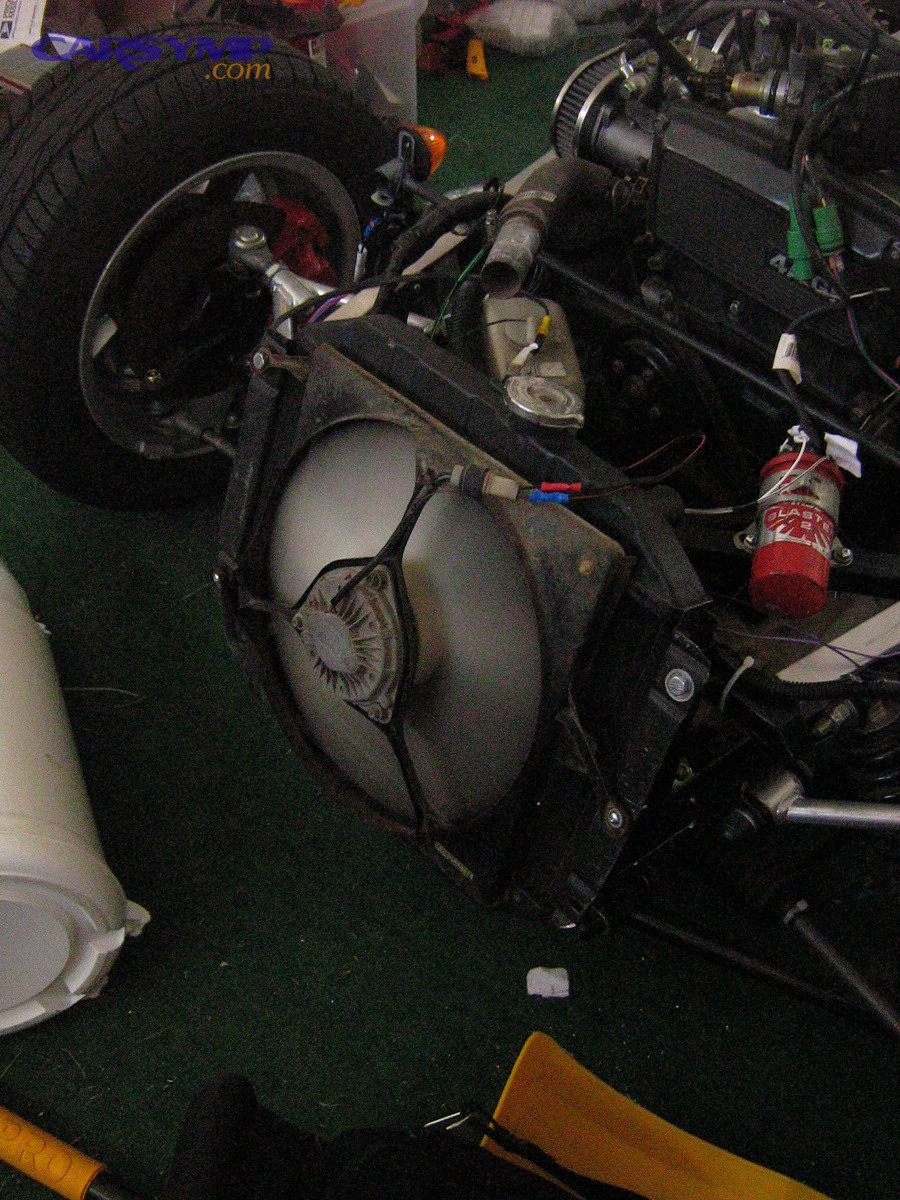
Idle test: how to trigger the fan without guessing
The most reliable method is: start the engine, set A/C to MAX, blower high, recirculation on (if available), and let the car idle for several minutes while monitoring fan behavior—if the fan never engages as cabin heat load increases, you have a strong direction.
To be specific, watch for a staged response: some vehicles start low speed first, then increase speed as pressure rises.
Safety note: keep hands, tools, clothing, and wires away from the fan blades and belt drive. A fan can start unexpectedly.
Road-speed clue: why cooling improves while driving
When you drive, natural airflow through the condenser can partially replace the fan, so the A/C may feel “fine on the highway” but weak at stoplights; that contrast is a classic diagnostic clue for missing fan airflow.
In contrast, if A/C is weak at all speeds, your problem may be broader than the fan alone.
How do you confirm it’s truly a condenser fan failure and not another A/C fault?
You confirm condenser fan diagnosis by separating airflow faults from refrigerant/controls faults: if pressures rise quickly at idle and the fan never runs (or runs weakly), airflow is the immediate issue; if the fan runs correctly, look elsewhere.
Next, use the simplest checks that prevent wasted parts.

Quick “feel and listen” checks that actually matter
Yes—basic checks are useful when done correctly: listen for relay clicks, watch for fan twitching, and feel for strong airflow at the grille when the fan should run; weak airflow can indicate a failing motor or a damaged shroud, not just a complete no-run.
For example, a fan that starts only when tapped (or after several tries) often points to worn brushes or a failing motor module.
If the fan is spinning but airflow is poor, look for broken blades, missing shroud sections, or debris blocking the condenser face.
Airflow side-checks that prevent false diagnoses
Sometimes the fan isn’t the only airflow limiter, so do a basic cabin-side verification without changing the main conclusion: a clogged filter, blocked vents, or weak blower can make A/C “feel” broken even if condenser airflow is the real culprit.
Moreover, don’t skip “Cabin air filter and airflow checks” if the complaint is weak vent volume plus warm air—two issues can stack and confuse the diagnosis.
Is the fan being commanded on: what to check before touching parts?
Yes—first determine whether the fan is being commanded on by the vehicle’s control strategy, because a fan that isn’t commanded may be healthy but never receives the signal due to sensor logic, pressure thresholds, or module communication issues.
After that, you’ll know whether to focus on control inputs or on power delivery.
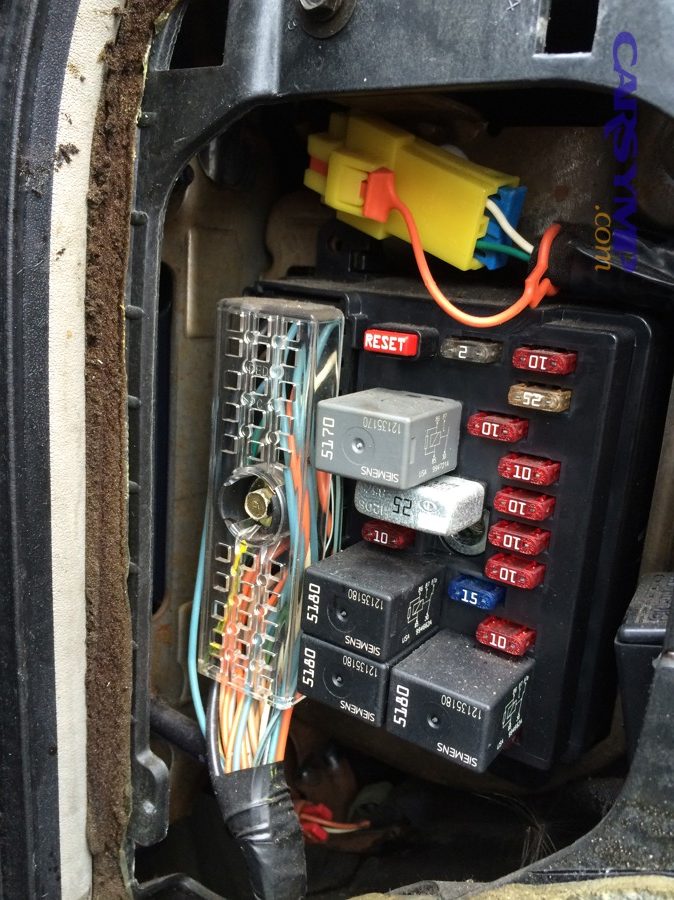
Scan-tool approach: the cleanest proof (if available)
The best proof is reading commanded fan percentage (or fan request), refrigerant pressure (or pressure sensor voltage), and coolant temperature on a scan tool; if the computer requests fan ON but the fan stays OFF, the fault is in power, ground, wiring, relay, or fan module.
In other words, command vs reality is your fastest fork in the diagnostic tree.
If the computer never requests fan even when A/C is MAX and pressure rises, focus on pressure sensor input, A/C request signal, or control module strategy.
No scan tool: simple “command clues” you can still use
Even without a scan tool, you can use behavior: does the compressor clutch engage (if equipped), does the idle change, do you hear the relay click, and does the fan try to start? These indirect signs help you infer whether the request exists.
Next, you’ll verify the power path because it’s the most common failure route and the easiest to test.
Fuse and relay checks: the most common causes of an AC fan issue
Yes—blown fuses, weak relays, and corroded fuse-box connections are among the most frequent reasons a condenser fan won’t run, especially after water intrusion, vibration, or heat cycling.
Next, you’ll check the circuit in the order that isolates failure quickly.
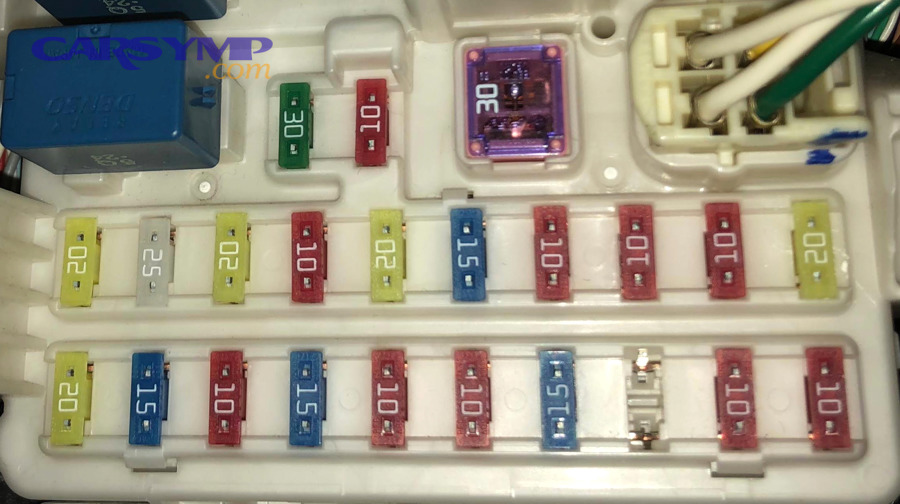
How to check a fuse correctly (not just visually)
Do this: check the fan fuse with a test light or multimeter on both sides of the fuse with the circuit loaded; a fuse can look fine but fail under load, and some fuse sockets develop poor contact that mimics a blown fuse.
To illustrate, if you have voltage on one side of the fuse but not the other, the fuse is open; if you have voltage on both sides but the fan stays dead, move to relay and output checks.
Relay swapping and confirmation without guesswork
Yes—relay swapping is valid only if you confirm the swapped relay is identical and the donor circuit is known-good; a better check is verifying relay control (coil) and relay output (load) with voltage tests under fan-request conditions.
However, if swapping temporarily “fixes” the fan, treat it as proof of a weak relay and replace it rather than moving on.
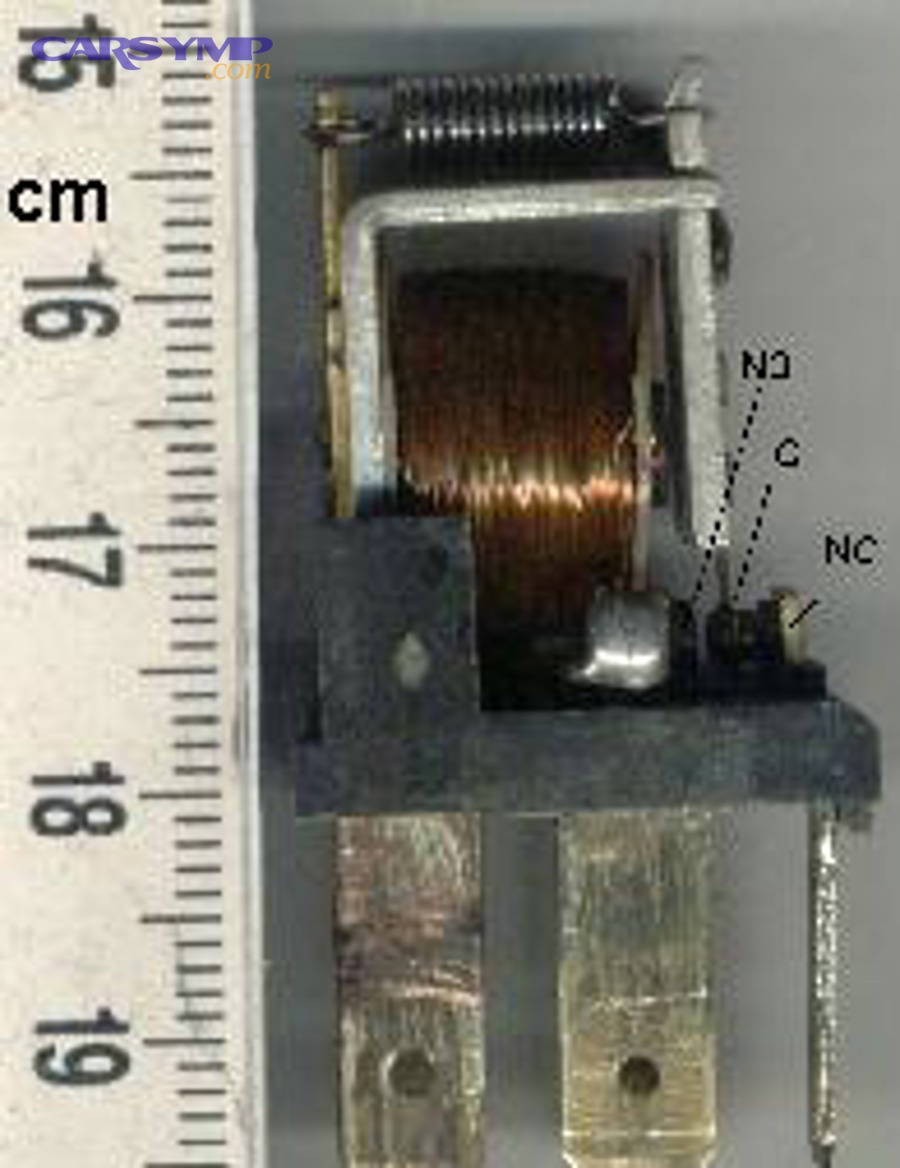
Table: symptoms, quick tests, and likely fault area
This table shows the most common symptom patterns, the fastest confirming test, and the most likely fault area—so you can avoid replacing good parts.
This table helps you decide whether you should test control, power delivery, or the motor/module first.
| What you observe | Fast confirming test | Most likely fault area |
|---|---|---|
| Fan never runs, no relay click | Check relay coil voltage/ground during A/C MAX | Control signal, sensor input, module command |
| Relay clicks, fan still off | Check relay output voltage at fan connector | Relay contacts, wiring to fan, connector corrosion |
| Fan runs only sometimes | Load-test power and ground, wiggle test harness | Loose pins, failing relay, failing motor/module |
| Fan spins but airflow is weak | Inspect blades, shroud, condenser blockage | Mechanical damage or obstruction |
| A/C cold at speed, warm at idle | Observe fan at idle with A/C MAX | Fan not running or underperforming |
Power and ground at the fan connector: the decisive test
Yes—checking power and ground at the fan connector under a real “fan should be on” condition is the decisive test, because it tells you whether the problem is upstream (no power) or inside the fan assembly (power present but no spin).
After that, you’ll know exactly which direction to go.
How to test without damaging connectors
Use back-probing pins or a proper piercing probe, and measure voltage between the power feed and ground while the fan is commanded ON; a reading near battery voltage suggests the supply is present.
Specifically, if you see good power but the fan does not move, suspect the motor, internal electronics, or a seized bearing.
If you see low voltage (for example, it drops dramatically when the fan should start), suspect high resistance: corroded connections, weak relay contacts, damaged wiring, or a failing fan control module.
Ground matters: why “power present” can still be a no-run
Yes—many fans fail to run because the ground path is weak; a voltage-drop test on the ground side under load is the best way to prove it, because continuity checks can look “good” with no current flowing.
Moreover, if wiggling the harness changes the reading or the fan twitches, you likely have a connector or wire break near the fan shroud where heat and vibration are highest.
Fan motor, fan module, and resistor: how to pinpoint the failed component
There are three common “inside the fan system” failure points—motor wear, an integrated electronic control module, or a low-speed resistor—so the right diagnosis depends on whether the fan is single-speed, multi-speed, or PWM-controlled.
Next, you’ll match your vehicle’s fan design to the correct test.
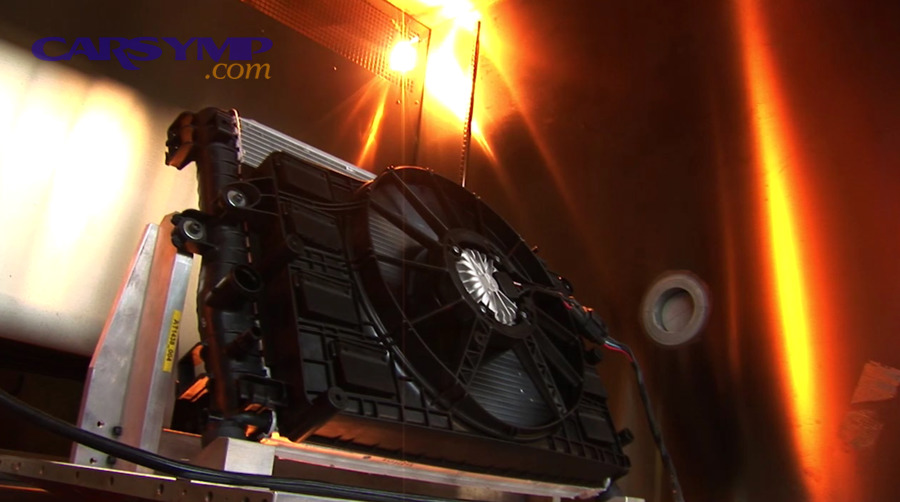
Single-speed fan: what failure looks like
Yes—single-speed fans usually fail as a dead motor (no movement), noisy bearings, or intermittent starts; if power and ground are confirmed at the connector and the fan remains still, replacement of the fan motor or fan assembly is typically required.
To understand why, internal brush wear and heat damage commonly prevent the motor from generating enough torque to start.
Two-speed fan: how resistor failures mimic bigger problems
Two-speed systems can fail in “low speed only” or “high speed only” patterns; a burned resistor or failing low-speed circuit can make the fan look dead during light A/C load, then suddenly run when conditions demand high speed.
However, if your complaint is “A/C weak at idle but improves after a while,” this staged behavior is a strong clue.
PWM / module-controlled fans: common pitfalls
Yes—module-controlled fans can receive constant battery power and a separate control signal; in that case, testing for power alone is not enough, and you must verify the control signal and module ground integrity.
In other words, a healthy power feed with a missing control signal can still produce a non-spinning fan.
Also, don’t ignore heat-soak behavior: some modules fail only when hot, then recover when cooled.
Wiring, connectors, and corrosion: where “good parts” still won’t run
Yes—wiring faults are common because the fan area sees heat, moisture, road salt, and vibration; a small amount of resistance at a connector can prevent the fan from starting even if voltage appears “close enough” on a basic test.
Next, you’ll inspect the high-risk spots systematically.
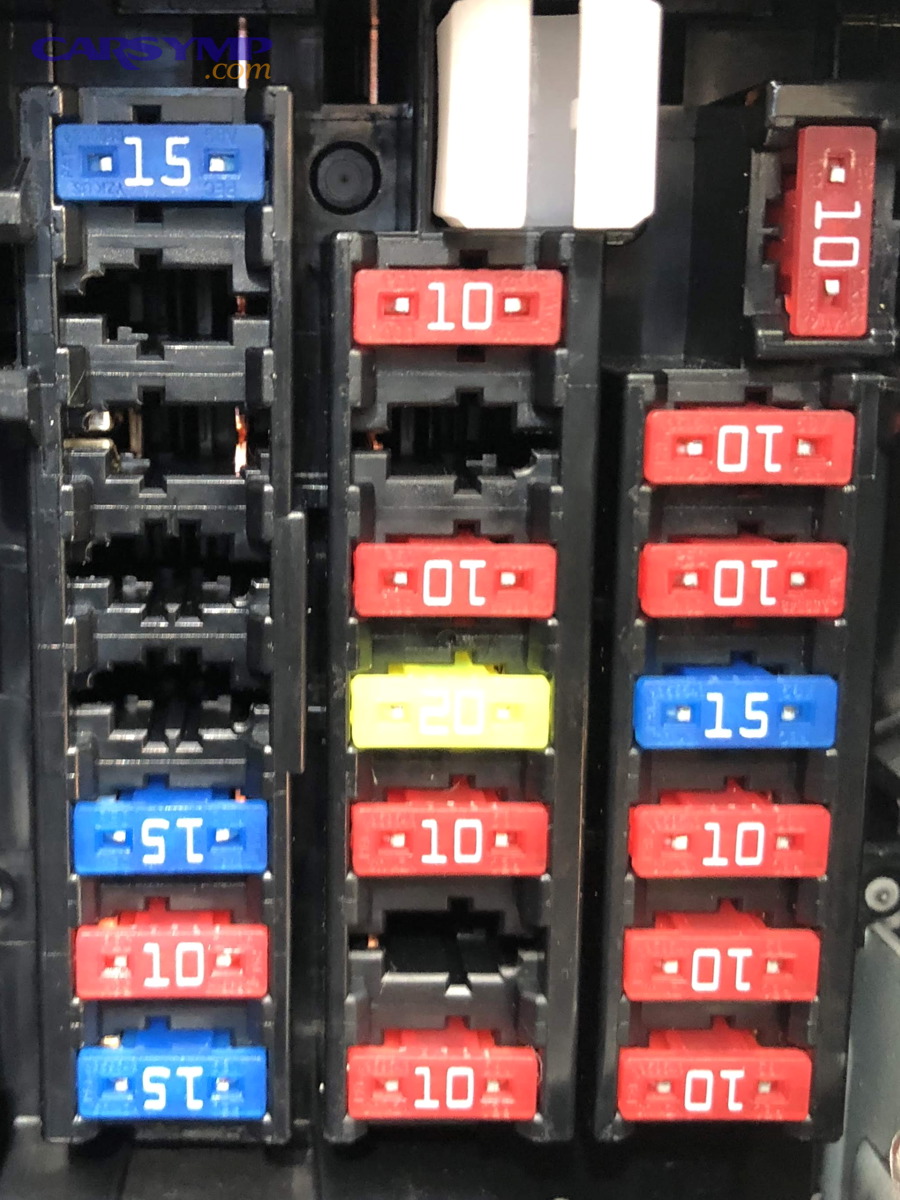
High-risk locations to inspect first
Start at the fan connector, then follow the harness along the shroud and radiator support, and finally check the fuse/relay box underside; look for green corrosion, overheated pins, looseness, and chafed insulation.
For example, a connector that’s slightly melted can pass a small test current but fail under the heavy start-up load of a fan motor.
Load testing: the only way to catch hidden resistance
Yes—load testing is better than continuity checks because it forces current through the circuit; you can apply a known load or use the fan’s own start-up demand to measure voltage drop across suspect sections.
Moreover, if your readings improve when you bypass a section with a jumper wire, you’ve proven a wiring/connection fault rather than a bad fan.
Could sensors or A/C logic prevent the fan from running even if the fan is fine?
Yes—sensor inputs and control logic can keep the fan off if the system doesn’t “see” the conditions that require it, so a bad pressure sensor, temperature sensor, or missing A/C request can mimic a fan failure.
After that, you’ll know whether you’re chasing a command problem rather than a motor problem.
Refrigerant pressure sensor and A/C request
If the pressure sensor reads incorrectly (too low or invalid), the module may not request fan operation aggressively; likewise, if the A/C request signal is missing, the system may behave as if A/C is off even while you press the buttons.
However, avoid jumping to refrigerant conclusions without evidence—fan diagnosis must still start from command vs power vs motor.
This is where many “AC not cold fix” attempts go wrong: people chase refrigerant first, but the fan is the airflow bottleneck at idle.
Coolant temperature strategy and fail-safes
Some cars run fans based on coolant temp even with A/C off; if the temperature sensor is faulty, the fan logic may behave unpredictably—either running constantly or not running when needed.
In contrast, if the engine is clearly hot and the fan never comes on, suspect control or power delivery issues immediately.
Is it safe to keep driving, and what should you do right now?
No—driving for long with a non-working condenser fan is risky in traffic because A/C pressure can spike and engine temperatures can climb; you can often limp short distances with A/C off, but continued heat loading can cause more expensive failures.
Next, use short-term steps that protect the system while you confirm the cause.
Immediate protective steps before diagnosis continues
Turn A/C off if the engine temperature begins to rise, avoid long idling, and keep airflow moving when possible; if you must stop, consider shutting the engine off rather than heat-soaking the condenser and radiator stack.
More importantly, if you smell burning electrical odor near the fuse box or fan connector, stop and inspect—overheated connectors can become a safety hazard.
Why quick refrigerant cans can make it worse
Yes—adding refrigerant without confirming airflow can raise pressures further and increase the chance of compressor cycling or system shutdown; “DIY recharge risks and safer steps” start with proving the fan works, verifying airflow, and using proper gauges or professional service when readings are unclear.
In other words, fix the airflow and electrical cause first, then evaluate refrigerant condition after the system can reject heat normally.
Video: how pros troubleshoot a condenser fan motor step-by-step
A visual walk-through can help you recognize what “command vs power vs motor” looks like in real time, especially if you’re new to multimeter testing and relay logic.
Next, compare the workflow in this video to your own checks and note where your results diverge.
FAQ: quick answers for condenser fan not running diagnosis
These short answers address the most common “yes/no” questions people ask mid-diagnosis, so you can decide the next test with confidence.
After that, we’ll draw a contextual border and cover uncommon causes and prevention.
Can a bad relay make the fan intermittent?
Yes—relay contacts can heat up, develop resistance, and fail intermittently; if the fan works sometimes after a relay swap, treat it as proof and replace the relay with a quality part.
Moreover, always check the relay socket pins for looseness or heat discoloration, because a bad socket can damage new relays.
Can the fan run but still be “bad” for A/C?
Yes—if airflow is weak due to cracked blades, a missing shroud, or a tired motor, condenser heat rejection can still be insufficient; the A/C may cool slightly but struggle at idle.
In contrast, a strong, stable airflow often restores normal idle cooling immediately when the fan issue is the root cause.
Will a clogged condenser cause the same symptoms?
Yes—blocked condenser fins can mimic a fan failure by restricting airflow; inspect the condenser face for packed debris, bent fins, and oil stains that may indicate a leak.
Next, if the condenser is obstructed, clean it gently and reassess fan performance before buying parts.
Contextual border: Up to this point, you’ve diagnosed the main failure routes (command, power, motor/module, wiring). Next are the less common causes and the prevention habits that reduce repeat failures.
Uncommon causes and prevention for recurring AC fan issue
Beyond the basics, a few rare faults can keep returning even after parts replacement, especially when heat, vibration, or poor mounting causes repeat electrical stress.
Next, these targeted checks help you prevent “fix today, fail tomorrow” outcomes.
Fan shroud fitment and mounting stress
If the shroud is misaligned or missing fasteners, vibration can damage wiring at the fan connector and fatigue the motor bearings; confirm the fan assembly is mounted firmly and the harness is clipped away from sharp edges.
In particular, look for harness rub points at the radiator support and along plastic clips that became brittle with age.
Aftermarket fan assemblies and connector mismatch
Some aftermarket fans draw different current or use slightly different connector tolerances, leading to overheating pins; if a replacement fails early, compare connector tightness, pin contact area, and wire gauge to the original.
However, don’t assume “new equals good”—verify voltage drop on the new assembly under load.
Fuse box water intrusion and hidden corrosion
Water intrusion can corrode the underside of a fuse/relay box where you can’t see it from above; if fan problems are intermittent after rain or car washes, inspect for moisture trails and corrosion on the box’s lower terminals.
Moreover, sealing issues near the cowl or missing covers can keep reintroducing the problem until corrected.
Preventive habits that reduce fan system failures
Keeping the condenser face clean, ensuring the fan spins freely without noise, and securing wiring away from heat sources reduces repeat issues; periodic inspection during oil changes is often enough to catch early connector heating and worn bearings.
In summary, a careful, test-driven approach beats parts swapping: prove the command, prove power and ground under load, and only then replace the component that failed your test.