


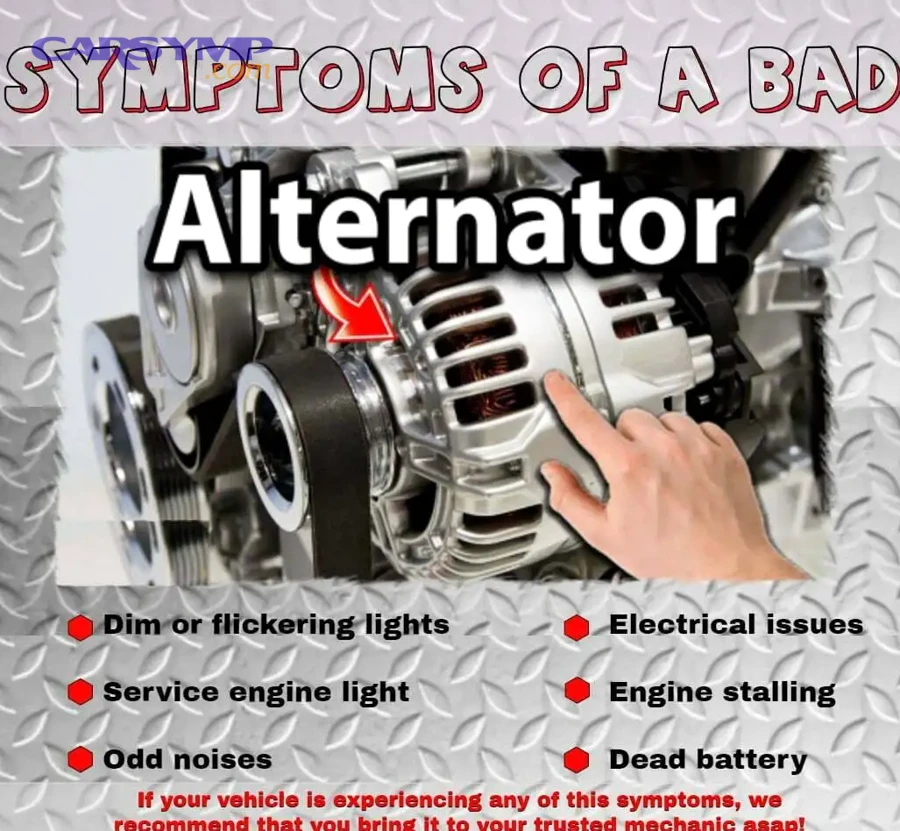
Alternator failure symptoms usually show up as unstable electrical power while driving—warning lights, dim or fluctuating headlights, weak accessories, and a battery that keeps “mysteriously” dying even after you charge or replace it.
In practice, the fastest way to protect yourself from a roadside breakdown is to recognize bad alternator signs early, then confirm them with a couple of simple observations and tests before the car stalls.
Many drivers get stuck because the first clue feels vague (“my lights look weird”), so this guide connects each symptom to what’s happening inside the charging system and what you should check next—without guessing or swapping parts blindly.
Giới thiệu ý mới: Below, we’ll move from the most common symptoms to quick confirmation tests, then finish with the edge cases that can mislead you.
What are alternator failure symptoms, and why do they appear so suddenly?
Alternator failure symptoms appear when the charging system can’t keep vehicle voltage stable, so the battery is forced to carry loads it was never designed to support for long—causing rapid, cascading electrical glitches.
To connect the dots, think of your alternator as the car’s “power plant” and the battery as the “buffer.” When the alternator output drops or becomes noisy (electrically), your lights, modules, and ignition supply start behaving inconsistently.
Why symptoms can escalate within minutes
A weak alternator often still works at idle with minimal loads, but it collapses when demand rises—headlights, HVAC blower, rear defroster, heated seats, audio, wipers—so the “problem” looks intermittent until it isn’t.
To make that progression clearer, the battery begins discharging during driving instead of charging. Once battery voltage drops far enough, critical systems (fuel pump control, ignition coils, ECU power feeds) can misbehave, leading to stalling.
What actually fails inside the alternator
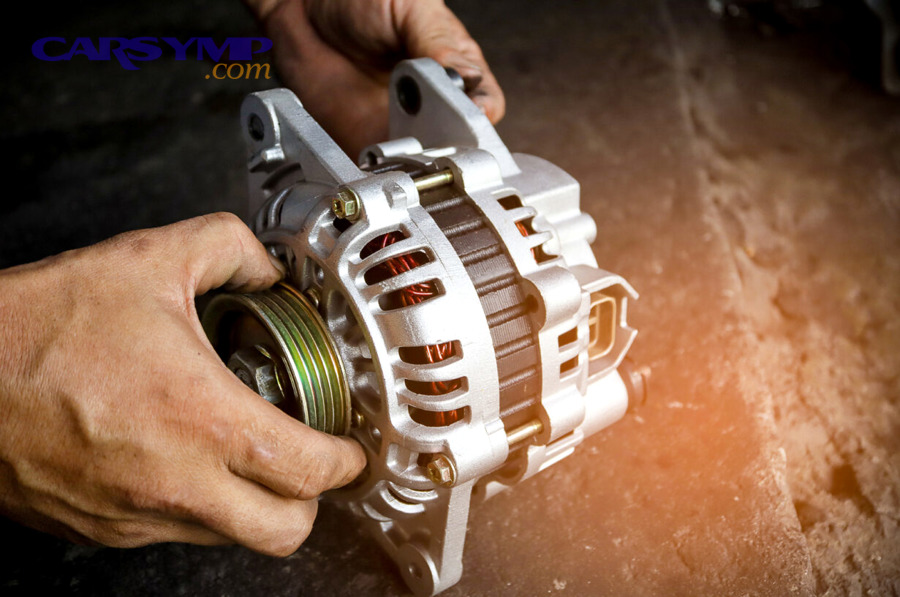
Common internal failure points include the voltage regulator, rectifier/diodes, brushes/slip rings, and bearings. Each one produces a slightly different symptom pattern—flicker versus overvoltage, whining noise versus no-charge.
As a practical next step, you’ll get the best accuracy by matching the symptom “signature” (light behavior, warning lamps, noise, smell, timing) to a targeted test rather than relying on a single clue.
When the alternator is “okay,” but the charging system still isn’t
Loose or corroded battery terminals, a worn serpentine belt, a failing belt tensioner, or high-resistance wiring can mimic alternator failure symptoms by preventing current from reaching the battery and loads consistently.
So before you conclude the alternator is dead, you’ll want to look for telltales like belt squeal, heat at connections, and voltage drop under load—topics we’ll cover in the testing section.
Which warning lights and electrical glitches are the clearest bad alternator signs?
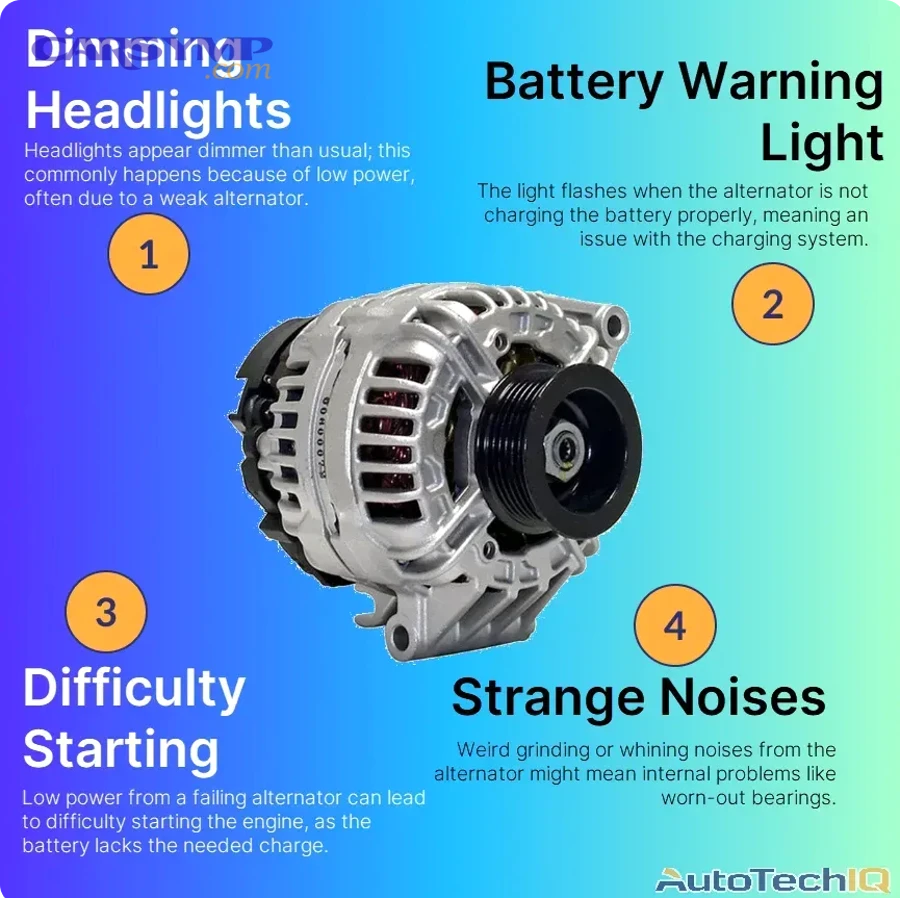
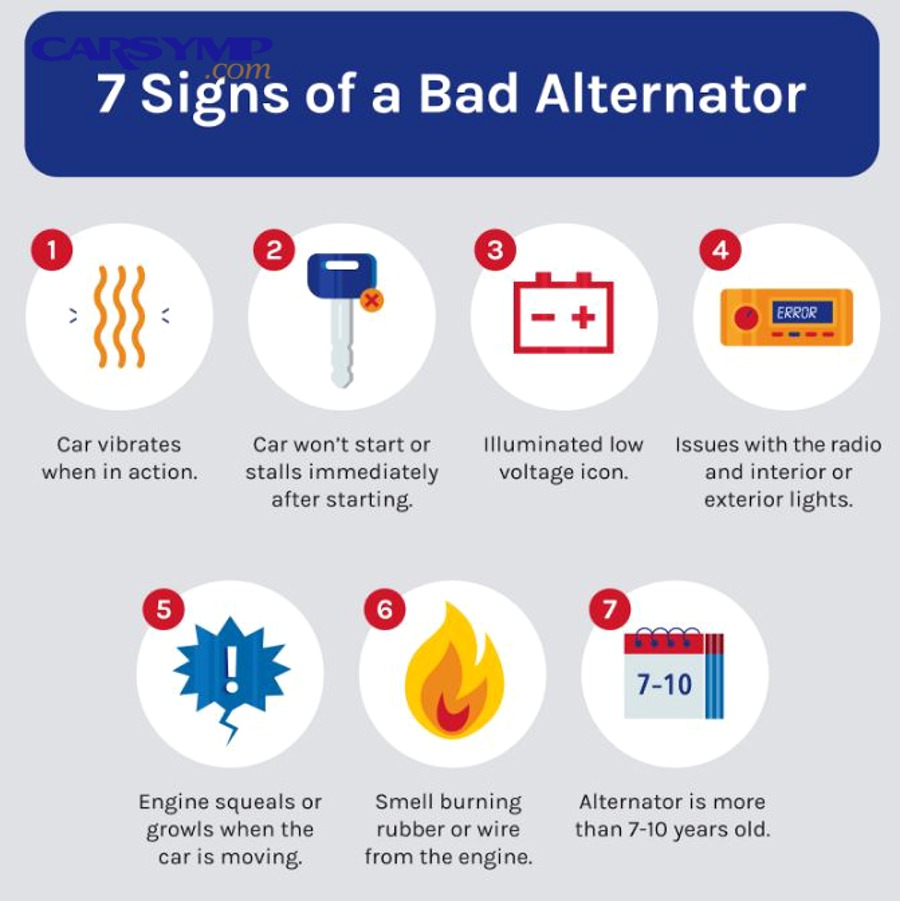
The clearest bad alternator signs are a battery/charging warning light, dim or fluctuating headlights, and accessories that slow down or reset—especially when multiple electrical loads are turned on.
To keep your diagnosis grounded, focus on patterns: if lights brighten and dim with engine RPM or with the blower motor switching speeds, that points to unstable charging rather than a single failed bulb or switch.
Battery light, check engine light, and “random” alerts
The battery/charging symbol is the obvious one, but modern vehicles may also throw stability control, ABS, or multiple module warnings when system voltage dips below what electronics require to stay online. That “Christmas tree dash” effect can be a voltage problem first, not five separate failures.
To support this, many service resources list battery indicator illumination and fluctuating electrical performance as top alternator-related signs.
Headlights that dim, flicker, or pulse with RPM
Dim lights at idle that improve when you rev slightly often indicate the alternator isn’t producing enough current at low speed, while pulsing lights can suggest regulator/diode issues that create unstable output.
To be more specific, a healthy charging system typically maintains roughly mid-13s to mid-14s volts during operation; when regulation fails, you may see undercharging, overcharging, or instability.
Power windows, blower fan, and infotainment glitches
Slow windows, a blower fan that changes speed on its own, radios that reset, and phone chargers that stop working are classic because these components are sensitive to voltage stability and current availability.
To make this actionable, treat “multiple unrelated electrical weirdness” as a single clue: the shared dependency is system voltage, not the individual devices.
Bảng này chứa gì/giúp gì: The table below helps you map a specific electrical symptom to the most likely charging-system direction so you can choose the next test instead of guessing.
| Symptom you notice | What it usually suggests | Best next check |
|---|---|---|
| Battery/charging light comes on while driving | Charging output low or unstable; belt/wiring also possible | Measure battery voltage engine running; inspect belt |
| Headlights brighten/dim with RPM or loads | Alternator output not meeting demand or regulation instability | Voltage test under load; voltage drop test on cables |
| Infotainment resets, gauges glitch | Low voltage event or electrical noise from diodes | Check charging voltage stability; scan for low-voltage codes |
| Windows slow + blower weak | System voltage sagging under load | Load test; inspect grounds and connections |
Can a failing alternator cause stalling, hard starts, or a dead battery?
Yes—an alternator that can’t charge will eventually drain the battery, and once battery voltage drops far enough, the engine may stall and then refuse to restart even though the starter and fuel system were fine earlier.
To see the chain reaction, remember: the starter uses the battery to crank the engine, but after that the alternator must replenish the battery while powering the car’s electrical demands; if it doesn’t, you’re driving on borrowed time.
Frequent jump-starts that “work” briefly
If the car starts with a jump but dies soon after, it strongly suggests the alternator isn’t sustaining vehicle operation—because the jump only gives the battery enough energy to crank, not a continuous charge.
To reinforce that pattern, consumer auto-service guidance commonly lists “vehicle stops running after a jump start” and frequent stalling as alternator-related clues.
Hard starting versus slow cranking
Slow cranking often points toward a weak battery or high resistance at terminals, while a car that cranks normally but won’t fire may be unrelated. However, if hard starts appear after a drive (hot restart) and the battery keeps going flat, alternator failure symptoms rise to the top of the list.
To keep the logic tight, you’re looking for repeatability: does the problem correlate with time spent driving (battery should be more charged) but instead seems worse? That reversal is a strong charging-system clue.
Dead battery “overnight” after normal driving
A fully healthy alternator should keep the battery at a high state of charge during regular use; if you drive normally and still wake up to a dead battery, either the battery is failing, there’s a parasitic drain, or the alternator never truly recharged the battery in the first place.
To separate those quickly, you’ll test resting battery voltage and charging voltage, then consider a parasitic draw test only if charging is confirmed normal.
Do noises, smells, or heat point to alternator bearing or diode failure?
Yes—whining or grinding noises can indicate alternator bearings, while a hot electrical smell or melting insulation can suggest overcharging, shorted diodes, or high resistance at connections generating heat.
To avoid missing a safety issue, treat burning smells and visible smoke as urgent: shut down, inspect, and avoid repeated driving until you identify the heat source.
Squeal versus whine: belt slip and bearing noise
A sharp squeal often points to belt slip or a tensioner problem, especially right after start-up or when loads spike (A/C on, steering turned). A steady whine or growl that changes with RPM can be alternator bearing-related.
To connect this to symptom flow, belt slip can cause undercharging even if the alternator internals are fine—so a “bad alternator” diagnosis can be wrong if the belt system is the real culprit.
Burning rubber smell or hot electrical odor
Burning rubber can come from a slipping belt, while an acrid electrical smell can come from overheated wiring, a failing rectifier, or a regulator pushing abnormal current. Either scenario is a warning because heat accelerates failure.
To ground this in typical service descriptions, less common alternator-related signs often include burning smell and unusual noises linked to alternator stress or abnormal output.
Overcharging symptoms you should not ignore
Overcharging can manifest as overly bright lights, battery swelling/odor, and electronics behaving strangely. While drivers often focus on “not charging,” a regulator failure can swing the other way and create damaging voltage levels.
To add a practical benchmark, charging-system guides commonly describe normal operating voltage in the mid-13s to mid-14s range; persistent readings well above that deserve immediate attention.
How can you confirm alternator failure symptoms with simple tests at home?
You can confirm alternator failure symptoms by measuring battery voltage with the engine off and running, then repeating the measurement under electrical load to see whether the charging system maintains stable voltage.
To start safely, use a digital multimeter, keep hands and leads away from moving belts, and test at the battery terminals first—because that reflects what the vehicle actually receives.
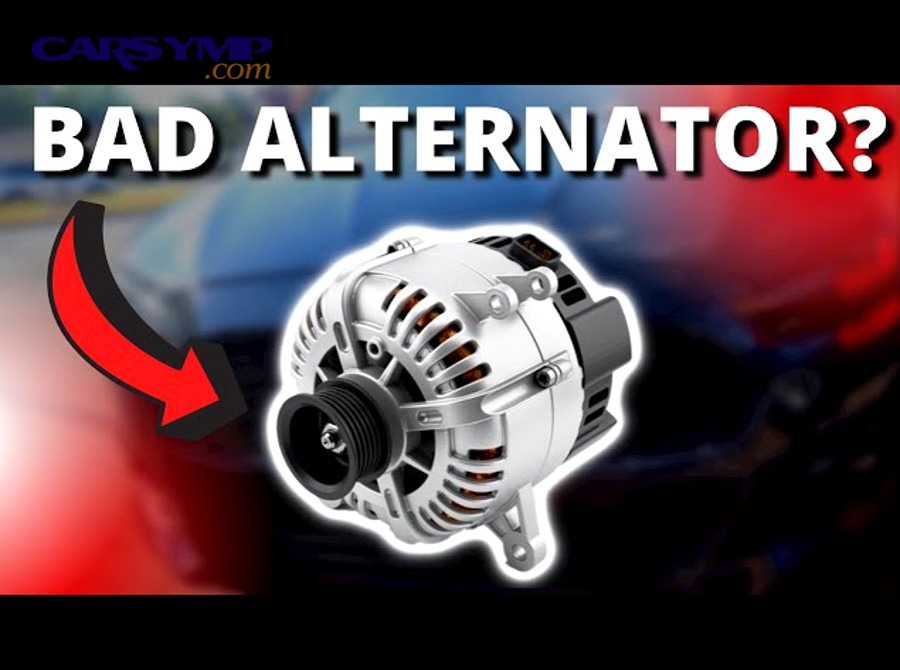
Voltage test: engine off versus engine running
With the engine off, a healthy, fully charged 12V battery typically rests around the mid-12s. With the engine running, a healthy charging system usually rises into the ~14V range and stays relatively stable as you turn loads on and off.
To interpret results quickly: if voltage barely increases after starting, or drops when you add loads (headlights + blower), the alternator may not be producing enough current or the wiring path is restricted.
Load test: simulate real driving demand
Turn on headlights, high blower, rear defroster, and seat heaters (if equipped). Watch whether voltage stays stable or sags noticeably. A system that collapses under load often produces the exact “flicker + resets + warning lights” pattern drivers report.
To make this more reliable, repeat at idle and at ~1500–2000 RPM; a marginal alternator may recover with RPM, while a wiring/ground issue may remain inconsistent.
Voltage drop test: find hidden resistance in cables and grounds
A voltage drop test can reveal cable/connection problems that mimic alternator failure symptoms even when alternator output is good. Under load, excessive drop on the positive or negative side indicates resistance from corrosion, loose fasteners, or damaged wiring.
To anchor a threshold, technical guidance from a major alternator/remanufacturer bulletin uses practical cutoffs (for example, inspecting/repairing circuits when drop is above certain limits such as 0.40V in a given step) to identify wiring issues that reduce charging effectiveness.
One video that demonstrates voltage drop testing clearly
If you prefer a visual walkthrough before you touch a meter, this short tech-tip style demonstration shows how voltage drop testing applies to the battery, alternator, and starter circuits.
As you plan next actions, keep in mind that alternator replacement decisions should come only after you’ve ruled out high-resistance cables and belt drive issues, because those can produce identical readings at the battery under certain conditions.
How do you separate alternator vs battery vs starter problems when symptoms overlap?
You separate alternator, battery, and starter issues by matching when the symptom occurs (before start, during start, or while driving) to what component is responsible at that moment, then verifying with voltage behavior under load.
To make this simple, think in phases: the battery supplies cranking power, the starter consumes it to spin the engine, and the alternator must recharge and power systems once running—so timing is your first diagnostic filter.
If the car is dead before you turn the key
If interior lights are weak or dead and the car won’t crank at all, suspect a discharged battery, terminal corrosion, or a major connection issue first. Then ask: did the battery have a chance to recharge recently? If yes, alternator failure symptoms rise on the list.
To add a structured mental model, many “battery or alternator” guides emphasize stalling after starting, warning indicators, and dimming/brightening lights as alternator-leaning patterns.
If the engine cranks slowly but starts with a jump
Slow cranking usually points to a weak battery or resistance at terminals. However, if the battery is new or recently tested good and the issue returns quickly, you may be seeing a battery that’s being undercharged by the alternator.
To resolve that ambiguity, measure charging voltage after the jump and after a 10–15 minute drive; if it never rises into a normal charging range, the alternator or its control/wiring is suspect.
If the engine starts fine but stalls later
Stalling after the vehicle has been running is a classic alternator signature because the battery begins as a buffer but gradually discharges while the alternator fails to sustain demand. Eventually the voltage drops below what engine management needs.
To keep your flow consistent, this is where dashboard warning lights, dimming headlights, and accessory slowdowns become your “early warnings” before the stall happens.
When to suspect the starter instead
Starter problems are most visible during cranking: a single click, repeated clicks, or no crank with good battery voltage can point to starter solenoid, starter motor, or control circuit issues. Once the engine is running, the starter isn’t in play.
To avoid confusion in discussions, you can refer to the overall decision path as Alternator vs battery vs starter diagnosis, but your tests should stay phase-based and voltage-based so the conclusion is evidence-driven.
What should you do once you recognize alternator failure symptoms on the road?
Once you recognize alternator failure symptoms, you should reduce electrical load, avoid long idling, and plan the shortest safe route to service—because the remaining battery capacity is your only “fuel” for the electrical system.
To protect the most important systems, prioritize what keeps the engine running and visibility safe, while turning off non-essential loads that accelerate battery discharge.

Immediate steps to stretch remaining battery power
- Turn off high-draw loads: rear defroster, heated seats, auxiliary lights, high blower, phone chargers.
- Keep RPM steady: avoid repeated stop/start cycles and long idle time if you can move safely.
- Watch temperature and warning lights: low voltage can trigger multiple alerts; the key is whether the engine starts stumbling.
To ensure you don’t misread the situation, remember that a fully charged battery can mask a charging failure briefly—so “it’s still driving” doesn’t mean the alternator is healthy.
How to avoid damaging electronics
If you suspect overcharging (lights unusually bright, harsh electrical smell, battery hissing, odd module behavior), stop and shut down. Overvoltage can be harder on electronics than undercharging because it can stress sensitive control modules.
To support the normal-range concept again, charging-system references commonly describe regulated output staying around the mid-13s to mid-14s volts in typical operation.
What a professional service should verify
A good shop should confirm charging voltage and ripple/stability, check belt and tensioner condition, inspect battery state of health, and perform cable/ground integrity checks. If you’re quoted a part immediately without those checks, ask how they verified the root cause.
For planning purposes, an Alternator replacement steps overview in a service context typically includes removing the belt, disconnecting the battery, transferring brackets/connectors correctly, and verifying charging output afterward—so you can ask informed questions about what will be done and tested.
Contextual border: Up to this point, you’ve been using “classic” symptom patterns and tests. Next, we’ll expand the context to modern smart charging systems where “normal voltage” may vary—and that can confuse even careful drivers.
How do smart charging systems change what “normal” alternator behavior looks like?
Smart charging systems can intentionally vary alternator output voltage based on battery state, temperature, and load strategy, so “normal” may dip lower than older fixed-regulation systems and still be functioning correctly.
To keep your diagnosis accurate, the goal shifts from chasing one fixed voltage number to evaluating whether the system responds correctly to load and maintains battery health over time.

Variable voltage is sometimes a feature, not a bug
Some regulated voltage control strategies allow charging voltage to drop below the “traditional” 13.8–14.8V expectations under certain conditions to reduce engine load and manage battery life, which can surprise drivers watching a gauge.
To interpret that correctly, you should look for whether voltage rises appropriately when loads increase or when the battery is low, instead of expecting a constant number.
Battery sensors and control modules can create intermittent “ghost” symptoms
Because system control can change output dynamically, you may see voltage swing more often than you’d expect—yet still be normal. However, a failing sensor, corroded connection, or control fault can also cause unstable charging decisions that mimic alternator failure symptoms.
To stay evidence-based, compare multimeter readings with scan tool data where possible; if the system “commands” charging but voltage doesn’t rise, the alternator/wiring path is suspect.
Why electrical noise (ripple) still matters on modern cars
Even when average voltage seems acceptable, a bad rectifier/diode can introduce electrical ripple that disturbs sensitive electronics. This can show up as flicker, audio noise, or module resets—especially at certain RPM ranges.
To move from suspicion to confirmation, a shop may use an oscilloscope or a meter with AC ripple measurement capability to detect abnormal ripple patterns.
When you should rely on a scan tool instead of dashboard clues
If your vehicle uses smart charging, the dashboard battery light may appear only when the system detects a fault condition, not when the battery is slowly being undercharged. A scan tool can reveal low-voltage events, charging commands, and battery sensor readings that explain confusing behavior.
To wrap this up logically, your best decision is the one backed by measured response under load: stable charging behavior and a healthy battery point away from alternator failure, while instability, sag under load, or persistent undercharging point back toward it.