


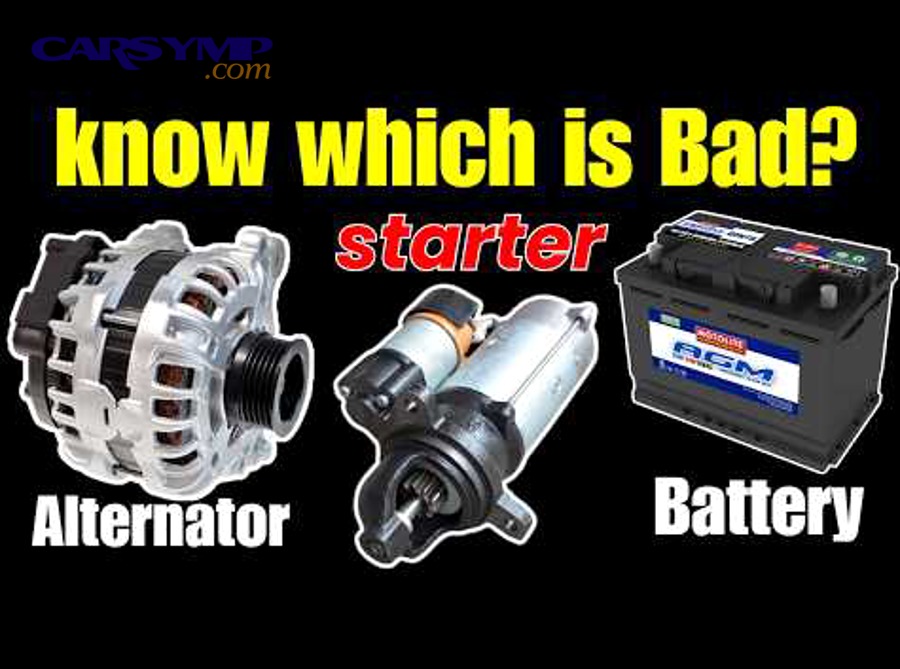
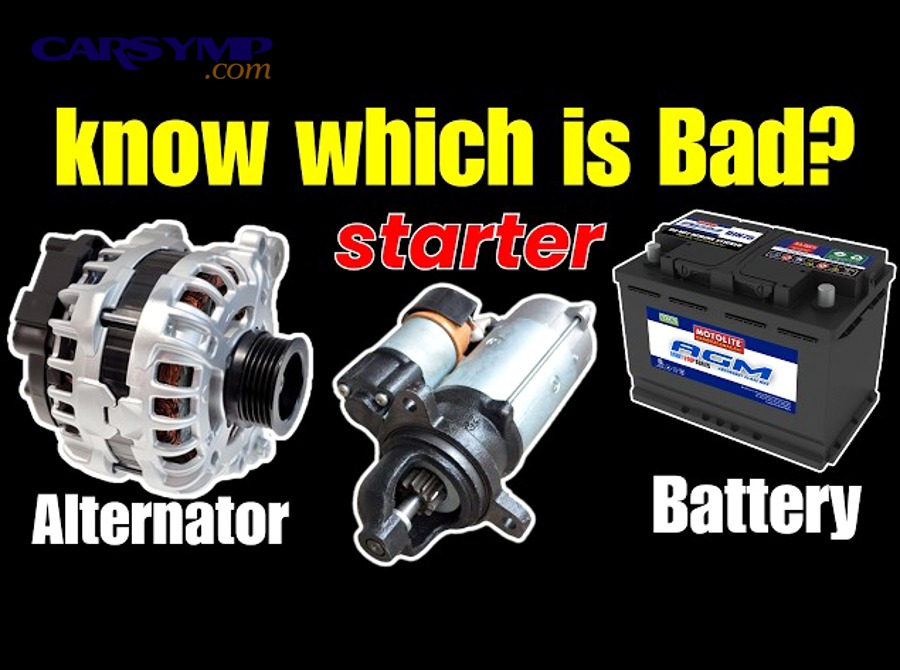
Alternator vs battery vs starter diagnosis is easiest when you treat the starting/charging system like a chain: power storage (battery), power generation (alternator), and power delivery (starter + cables). If one link fails, your car either won’t crank, won’t stay running, or keeps killing batteries.
Next, you’ll learn how to separate “no-crank” problems from “no-charge” problems using quick symptom clues, a few voltage checks, and simple decision rules you can repeat on any vehicle.
After that, we’ll walk through battery testing, alternator output testing, and starter circuit voltage-drop testing—so you stop guessing and start proving what’s bad.
To finish, Giới thiệu ý mới: we’ll cover edge cases like intermittent failures, parasitic drain, belt/tensioner issues, and when it makes sense to replace more than one component.
What is the battery, alternator, and starter supposed to do in a healthy system?
In a healthy system, the battery stores energy, the starter converts that energy into cranking torque, and the alternator replenishes the battery while powering the vehicle’s electrical loads. However, each part fails in a different “signature” way, which is the key to accurate diagnosis.
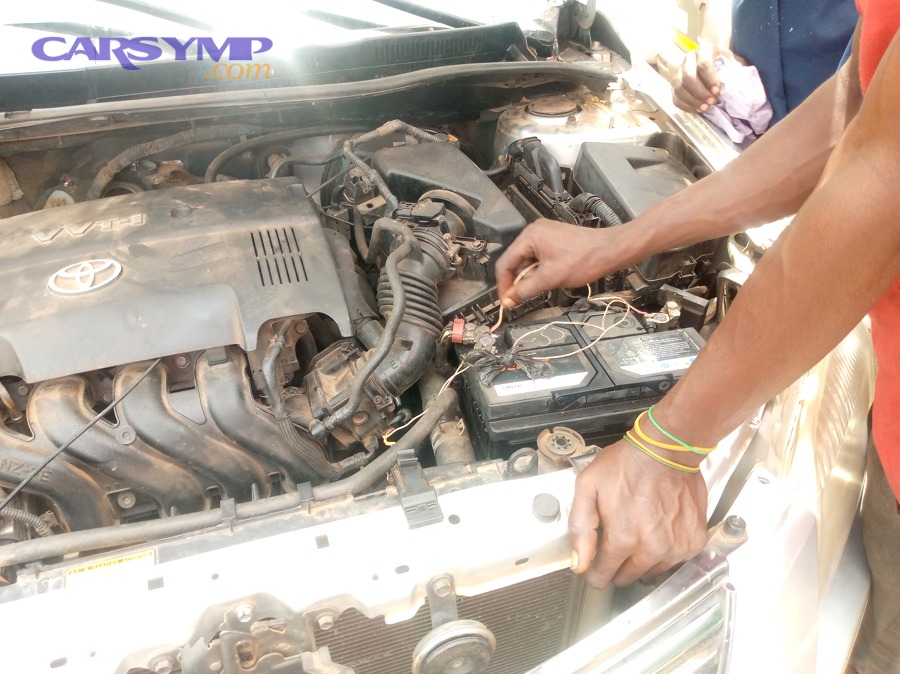
To start, think in time order:
- Before you crank: the battery’s state-of-charge and internal health determine whether voltage stays stable under load.
- During cranking: the starter demands high current; cable resistance and grounds become “make-or-break.”
- After the engine starts: the alternator should carry the electrical load and recharge the battery.
So the fastest way to interpret symptoms is to ask: “When does the problem happen—before, during, or after cranking?” Next, match that timing to the likely component.
Battery failure patterns you can recognize quickly
A battery typically fails by low capacity (it charges but doesn’t hold), high internal resistance (voltage collapses under load), or connection problems (corroded terminals). For example, you may get a single click, dim lights, or slow cranking that improves after a jump.
One clue that matters more than most people realize is age: AAA notes that car batteries commonly last about three to five years, so “age + symptoms” is often your first strong hypothesis. According to research by AAA from its Automotive unit, in May 2025, a typical car battery life range was described as three to five years.
Alternator failure patterns that mimic “dead battery”
An alternator can fail by low output, intermittent output, overcharging, or diode/ripple issues. In contrast to a weak battery that struggles mainly during cranking, a weak alternator often shows up after starting: the car runs briefly, then the dash lights come on, electrical accessories act weird, and the engine may stall as voltage drops.
Starter failure patterns that look dramatic but testable
A starter fails by mechanical wear (bushings/armature), solenoid issues, or high-resistance power/ground paths. To understand it better, remember: the starter is the biggest short-term electrical load in the car, so small resistance in cables can create huge voltage loss.
Which symptoms point to battery vs alternator vs starter—fast triage without tools?
You can triage symptoms fast: no-crank usually points to battery/starter/cables, while crank-but-dies or repeated dead batteries often point to charging or drain issues. Next, use a few simple observations to narrow the suspect list before you touch a meter.
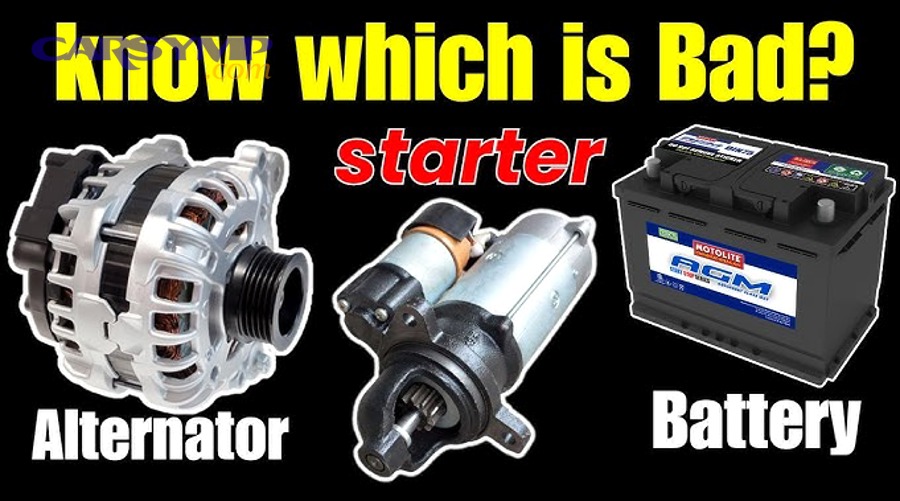
Use the “lights + click + crank speed” checklist
Here’s a practical checklist that works in real driveways:
- Dash lights bright, then one click: suspect starter solenoid/starter motor or high-resistance cable/ground.
- Dash lights dim heavily, rapid clicking: suspect low battery charge, weak battery, or severe terminal corrosion.
- Slow crank that improves after a jump: suspect battery weakness or poor connections; alternator may be the root cause if it keeps returning.
- Starts, then battery light comes on: suspect alternator output, belt drive, wiring to the alternator, or main fuse links.
- Starts fine today, dead tomorrow morning: suspect parasitic drain, a battery that can’t hold charge, or an alternator diode leak.
In other words, “clicking” is not a diagnosis—it’s a category. To begin, your goal is to determine whether the battery voltage is collapsing, or whether voltage is fine but cannot reach the starter.
This table contains common symptoms, the most likely culprit, and the quickest confirmation test to avoid guessing.
| Symptom | Most likely cause | Fast confirmation |
|---|---|---|
| Rapid clicking + dim lights | Low battery charge / bad battery / corroded terminals | Measure resting voltage; inspect terminals for corrosion |
| Single click + lights stay bright | Starter/solenoid or cable/ground resistance | Voltage-drop test on starter power/ground during crank |
| Starts then stalls + battery lamp | Charging system not maintaining voltage | Measure running voltage at battery; load test alternator output |
| Battery keeps dying overnight | Parasitic drain or battery not holding charge | Parasitic draw test; battery load/conductance test |
| Intermittent no-crank, works after tapping | Starter internal wear / solenoid sticking | Repeated crank test + voltage drop; listen for solenoid engagement |
According to research by AAA from its Automotive guidance, in May 2025, battery age was emphasized as a key risk factor (commonly 3–5 years) for no-start situations—so triage should always consider age alongside symptoms.
How do you test the battery correctly (resting voltage, load, and connections)?
You test a battery correctly by checking state-of-charge, then proving how it behaves under load, and finally verifying the terminals and cables are not adding resistance. Next, do the checks in this order so you don’t mistake a bad connection for a bad battery.
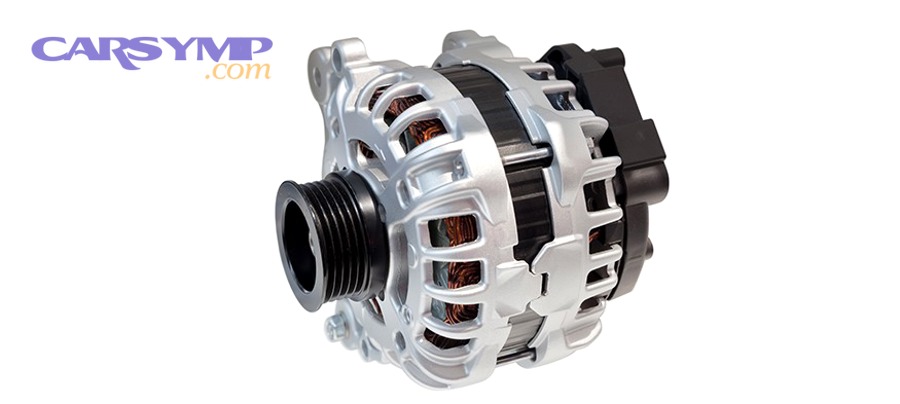
Step 1: Resting voltage (quick state-of-charge screen)
With the engine off for a while (ideally 30–60 minutes, or overnight), measure voltage directly on the battery posts (not the cable clamps). Specifically:
- ~12.6 V suggests a fully charged lead-acid battery.
- ~12.2–12.4 V suggests partial charge (may still start, but is weaker).
- ~12.0 V or less suggests a deeply discharged battery (or a battery that won’t accept/hold charge).
According to research by Hemmings from its Tech & Tools guidance, in January 2022, a healthy, fully charged 12-volt battery was described as reading about 12.6 volts at rest.
However, resting voltage alone can be misleading: a sulfated battery can show “okay” voltage but collapse under load. To understand it better, you need a loaded test.
Step 2: Voltage during crank (simple load behavior)
Have a helper crank the engine while you watch battery voltage. If voltage drops sharply and the engine barely cranks, you likely have a battery capacity issue or extreme resistance at the terminals. In contrast, if voltage stays relatively stable but the starter doesn’t turn, suspect starter/cable/ground issues.
Practical tip: if the clamps are corroded, test on the posts and on the clamps; a large difference indicates connection loss, not battery loss.
Step 3: Terminal and ground inspection (the hidden “battery killer”)
Corrosion creates resistance, which steals voltage exactly when you need it most—during cranking. Clean corrosion, tighten clamps, and check the ground strap from battery negative to body/engine. Next, look for:
- White/blue powder at terminals
- Loose clamps that rotate by hand
- Frayed ground strap or broken engine ground
- Heat marks on cable ends (a sign of high resistance)
To illustrate, heavy corrosion can make the starter “act dead” even if the battery itself is good—because current cannot flow efficiently.
How do you test the alternator and charging circuit (voltage, load, and belt drive)?
You test the alternator by confirming it raises system voltage above resting battery voltage, holds that voltage under electrical load, and does not show obvious drive or wiring faults. Next, combine a simple multimeter test with a quick belt/tensioner check so you don’t misdiagnose a slipping belt as a bad alternator.
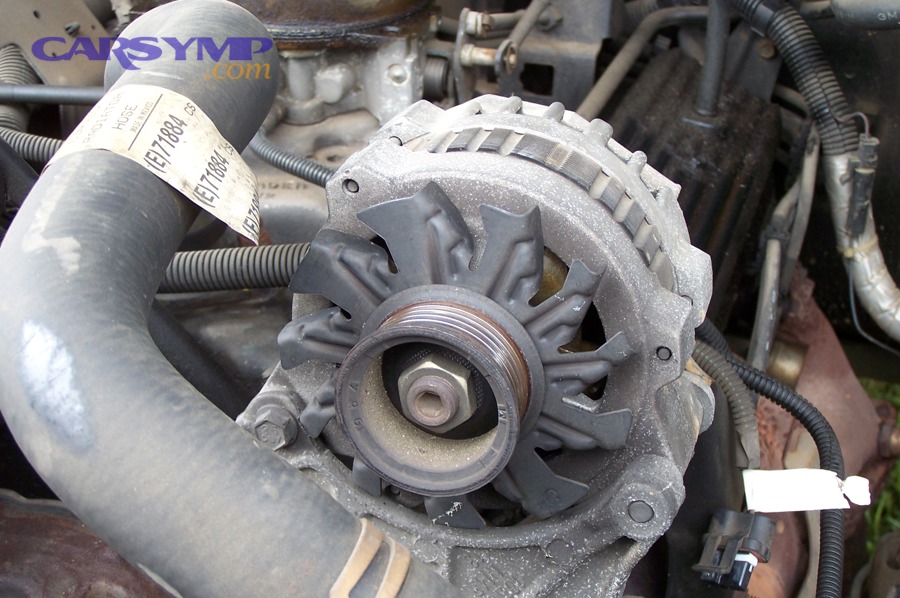
Step 1: Running voltage at the battery (baseline charging proof)
Start the engine and measure voltage at the battery posts. If the alternator is charging, the reading typically rises into the mid-to-high 13s or 14s on many vehicles. In contrast, if the reading stays near resting voltage, the car may be running mostly on battery power.
According to research by DENSO from its Technical Support troubleshooting guidance, in October 2022, typical charging system voltage was stated as approximately 13–15 V with the engine running.
Next, don’t stop at “it charges”; you must see if it charges under load.
Step 2: Load test the charging system (headlights, blower, rear defogger)
Turn on headlights, blower motor, and rear defogger. Watch the voltage: a healthy system usually maintains stable charging voltage; a weak alternator may sag toward battery voltage as load increases. However, some modern vehicles regulate voltage dynamically, so judge trends and stability rather than one perfect number.
Step 3: Quick belt and tensioner check (mechanical cause of “no charge”)
If the alternator pulley isn’t driven properly, output drops even if the alternator is electrically fine. Inspect belt condition (cracks, glazing), listen for squeal on load, and watch the tensioner while the engine idles. To begin, a bouncing tensioner or a belt that slips under load can cause intermittent battery lights and low voltage.

According to research by Wikipedia from its Serpentine belt overview, in a continuously updated reference, a serpentine belt drives key accessories such as the alternator, and belt/tensioner issues can affect accessory function.
Step 4: Basic ripple/diode clue (when charging “looks fine” but batteries keep dying)
Some alternators fail in ways that still produce voltage but with unstable current, electrical noise, or diode leakage. If you notice flickering lights, radio noise, repeated dead batteries, or a battery that drains while parked, suspect diode-related issues or an external drain. Next, you’ll confirm this with a parasitic draw test later.
How do you test the starter circuit (voltage drop, solenoid, and high-current path)?
You test the starter circuit by proving that battery voltage can reach the starter under load, then measuring how much voltage is lost across the positive cable and the ground return while cranking. Next, voltage-drop testing turns “mystery clicks” into a clear pass/fail decision.
Why voltage-drop beats “parts swapping”
During cranking, the starter draws high current, so even small resistance creates large voltage loss. For example, a slightly loose ground can steal enough voltage that the starter won’t spin, even though lights look normal.
According to research by Fluke from its Automotive diagnostic guidance, in August 2018, acceptable starter-circuit voltage drop was commonly described in the range of about 0.2–0.5 V per side (positive or ground), depending on the circuit and manufacturer guidance.
Test 1: Positive-side voltage drop (battery + to starter B+)
Place the meter’s red lead on the battery positive post and the black lead on the starter’s main B+ terminal (not the cable end if possible). Have a helper crank. The reading is the voltage lost across the positive cable and connections. Next, interpret it:
- Low drop suggests the positive cable path is good.
- High drop suggests corrosion, loose terminals, damaged cable strands, or a failing connection at a fuse link/junction.
Test 2: Ground-side voltage drop (starter case to battery -)
Place the red lead on the starter case (clean metal) and black lead on the battery negative post. Crank and read the drop. A high reading means the ground strap, engine ground, or battery negative cable is not carrying current effectively. In contrast, a low ground drop plus a high positive drop points you back to the positive path.
Test 3: Solenoid trigger signal (control side)
If you have access, verify the solenoid “S” terminal receives a strong trigger voltage during crank. If it doesn’t, the issue can be upstream: ignition switch, clutch/neutral safety switch, starter relay, or wiring. Next, this is where fuses and relays become the main suspects.
According to research by the National Highway Traffic Safety Administration from a Technical Service Bulletin example, in March 2006, starter-related no-crank diagnostics referenced checking starter-circuit voltage drop (such as not exceeding about 0.5 V under load) as part of troubleshooting guidance.
What wiring, fuse, and ground faults can mimic a bad alternator, battery, or starter?
Wiring and protection faults can mimic component failure: a blown fuse link can look like a dead alternator, and a weak ground can look like a dead starter. Next, you’ll inspect the “connectors and protection layer” before you replace expensive parts.
Main fuse links and charging fuses (the silent alternator killer)
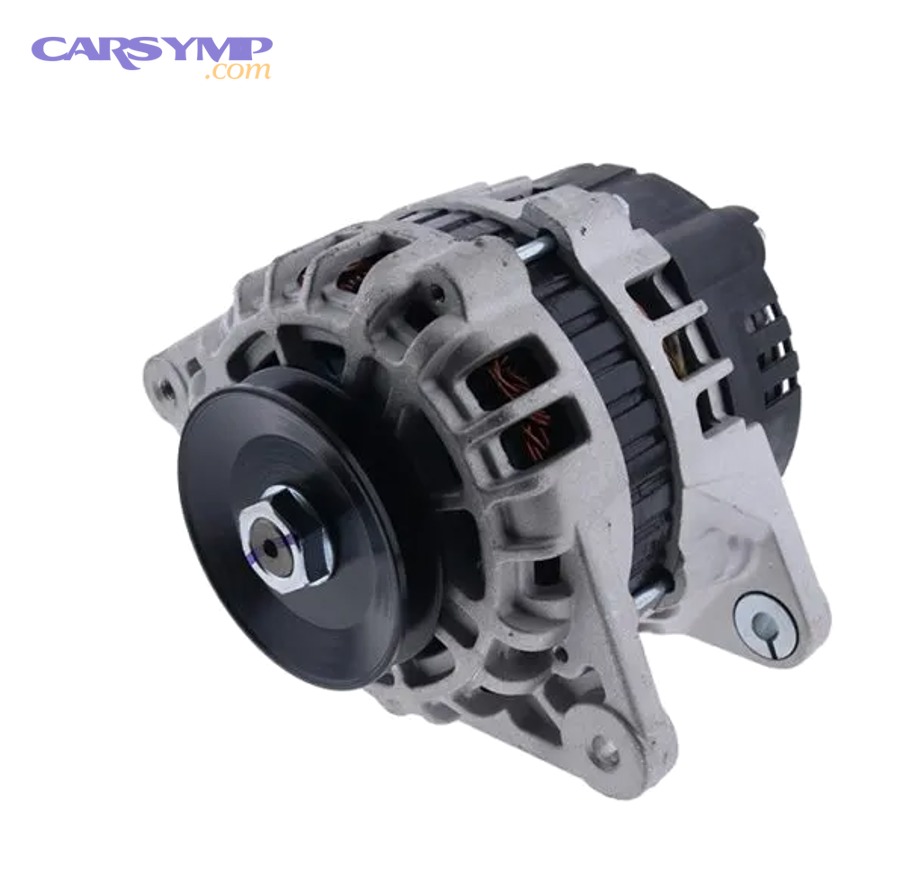
Many vehicles route alternator output through a high-amperage fuse or fusible link. If it’s open, the alternator may produce output internally but never charge the battery. To illustrate, you might measure healthy voltage at the alternator but not at the battery because the path between them is broken.
Ground integrity (engine-to-body strap matters more than you think)
The starter current must return to the battery through the engine block and ground straps. If the strap is loose, corroded, or broken, you’ll see high ground-side voltage drop and intermittent no-crank. In contrast, battery negative clamps that “look tight” can still hide corrosion under the contact surface.
According to research by Fluke from its Automotive diagnostic guidance, in August 2018, voltage-drop testing was recommended specifically because high-current circuits can fail due to small resistances at grounds and connections that are not obvious in visual inspection.
Battery clamp vs battery post (a common measurement trap)
Always compare readings on the battery posts vs the clamps. If you read 12.6 V on the post but significantly less on the clamp, the clamp-to-post connection is the fault. Next, clean and re-tighten before you blame any component.
How do you run a complete DIY diagnosis workflow with only a multimeter?
You can diagnose the system in one workflow: confirm battery baseline, verify crank behavior, verify charging voltage, then isolate losses with voltage-drop tests. Next, follow this sequence to avoid circular results and repeat dead-battery cycles.
Step-by-step sequence (do not skip the order)
- Battery rest check: measure at posts and note voltage.
- Crank check: watch battery voltage while cranking; listen for click/slow crank.
- Jump comparison: if a jump starts it easily, suspect battery weakness or connection resistance; if it doesn’t, suspect starter path or control side.
- Running check: measure charging voltage at battery posts at idle, then with electrical loads on.
- Voltage-drop confirmation: test positive and ground drop to starter during crank; test alternator output path if charging is weak.
Interpretation rules (the “decision tree” in plain English)
- Resting voltage low + jump helps + charging voltage normal: battery is likely weak or not holding charge.
- Resting voltage normal + single click + lights bright: starter circuit voltage drop or starter/solenoid issue is likely.
- Starts with jump but keeps dying later + running voltage low: charging system issue is likely.
- Running voltage normal but battery dies overnight: parasitic drain or battery internal defect is likely.
After you classify the fault, you can choose repair steps with confidence rather than replacing parts by guesswork.
One video demo (useful when you want to see the meter placements)
According to research by Midtronics from its Technical guidance on common no-start patterns, in December 2025, symptoms like clicking and no-crank were discussed as outcomes of insufficient available power or high resistance in the starting path—supporting a test-first workflow rather than immediate parts replacement.
Once you’ve proven which link is failing, you can plan the repair. For example, if the charging test fails and the drive path is solid, you may be heading toward an alternator replacement; and when you shop, it helps to understand New vs reman alternator pros/cons so you match budget to reliability expectations. Likewise, an Alternator replacement steps overview is valuable because many vehicles require removing nearby components to access mounting bolts or tensioners.
Contextual border: Up to this point, you’ve diagnosed the core triad (battery, alternator, starter). Next, we’ll expand into edge cases that frequently mislead people—especially drains, intermittent faults, and “it tests fine today” scenarios.
Beyond the basics: what edge cases change the diagnosis (drain, intermittents, and smart replacement choices)?
Edge cases change the diagnosis when the problem is not constant: parasitic drain, heat-soak starter issues, belt slip, or intermittent regulator faults can pass a quick test and still fail in real life. Next, use these targeted checks when the basic triage feels inconsistent.
How do you diagnose a battery that dies overnight (parasitic draw vs bad battery)?
If a battery dies overnight, it’s either losing charge internally or something in the car is drawing current while parked. To begin, fully charge the battery, then measure key-off draw with an ammeter (or use a clamp meter). Many modern cars have modules that “go to sleep,” so wait long enough for sleep mode before judging draw.
According to research by Steve Bisel from Ozark Technical Community College, in January 2016, typical parasitic draw after modules time out was described in the neighborhood of 10–30 mA, with higher draw indicating a problem depending on the vehicle and equipment.
Next, if draw is high, pull fuses one at a time (watching draw) to locate the circuit that’s staying awake.
What causes intermittent no-crank when the battery tests “good”?
Intermittent no-crank commonly comes from a starter solenoid that sticks when hot, a loose ground that changes with vibration, or a relay/ignition-switch control issue. In contrast, a truly bad battery usually fails more consistently under load. If the symptom appears after a hot soak, repeat the voltage-drop test during the failure, not when it’s behaving.
When should you replace more than one part (battery + alternator, or battery + cables)?
You replace more than one part when evidence shows chain damage: a failing alternator can repeatedly undercharge and age a battery early, while bad cables can overload a starter and mimic component failure. Next, use logic:
- If the alternator consistently undercharges and the battery is old/weak, replacing both can prevent a comeback.
- If voltage-drop is high, replace/repair cables and grounds before replacing the starter.
- If corrosion is severe, addressing terminals and grounds often “fixes” what looks like a major failure.
How do you reduce misdiagnosis and save money on parts?
You reduce misdiagnosis by testing under the same conditions that produce the failure, using voltage-drop measurements, and confirming charging behavior under load. Finally, if you must choose one replacement first, choose the component that failed a measured test—then retest the system after repair to confirm the chain is restored.