


After replacement battery charging tips come down to one goal: get the battery to a stable state of charge while confirming the charging system can maintain it during real-world driving.
Beyond “it starts,” you also want to verify voltage behavior under load, because lights, HVAC blowers, heated seats, and modern electronics can expose weak connections or regulation problems quickly.
Just as important, you’ll want to reduce silent drain when the engine is off—small current draws can empty a healthy battery over a few days if something is misbehaving.
To begin, here’s a practical sequence you can follow right after installation—Giới thiệu ý mới—so you can confidently drive away without guessing.
What should you do in the first 10 minutes after a battery swap?
Use a simple 6-step checklist to secure the battery, protect connections, and avoid accidental drain so the battery can charge efficiently as soon as the engine runs.
To start, focus on safety and connection quality before you even turn the key.
Step 1: Confirm polarity and clamp seating
Make sure the positive clamp is on the positive post and the negative clamp is on the negative post, then push each clamp fully down so it grips the post evenly.
Next, try rotating each clamp by hand; if it twists, it’s not tight enough, and the car may charge poorly even if it starts.
- Why it matters: A loose clamp increases resistance, which can reduce charging current and create heat.
- Quick win: Tighten to a secure fit, but avoid overtightening that can crack soft lead posts.
Step 2: Secure the hold-down and inspect for vibration risk
Lock the battery with its hold-down bracket so it cannot shift during braking or bumps, because vibration accelerates internal plate damage and can loosen terminals over time.
Then, check that nothing rubs the battery case—especially metal edges, wiring looms, or accessory brackets.
Step 3: Clean and protect the terminals
Remove visible corrosion, then apply a thin protective layer (terminal protectant spray or a light coating of appropriate grease on the outside of the connection area).
After that, keep the top of the battery clean and dry, since grime can create tiny leakage paths that slowly discharge the battery.
Step 4: Turn everything off before the first start
Switch off headlights, HVAC blower, defrosters, seat heaters, audio, and chargers before cranking, so the starter gets maximum voltage and the alternator can stabilize quickly after startup.
In addition, remove or unplug any accessory plugged into the 12V outlet that might stay powered with the key off.
Step 5: Do a quick “key-on” light check
With the key in the ON position (engine off), confirm the dash battery/charging light illuminates; that indicates the bulb/circuit is able to warn you if charging fails.
Then, start the engine and confirm the light turns off within a moment; if it stays on, treat charging as unverified until tested.
Step 6: Set a baseline by waiting 60–120 seconds at idle
Let the engine idle briefly, then listen and look for anything abnormal: belt squeal, burning smell, flickering lights, or erratic idle speed.
Tóm lại, these first minutes are about establishing reliable connections, preventing avoidable drain, and creating a clean starting point for voltage checks.
How can you verify charging voltage without special tools?
You can verify charging health with a basic digital multimeter in 5 steps: measure resting voltage, measure running voltage, add electrical load, compare results to safe ranges, then re-check after a short drive.
To make this easy, use a small voltage “map” so you know what the numbers mean immediately.
This table contains common voltage checkpoints and what they typically indicate, helping you decide whether to keep driving, recharge, or diagnose charging faults.
| Test condition | Typical voltage range | What it often means |
|---|---|---|
| Engine off, battery at rest | ~12.6–12.8V (healthy, fully charged lead-acid) | Battery is likely well charged; baseline looks good |
| Engine running, minimal load | ~13.5–14.5V | Alternator/regulator is generally charging normally |
| Engine running, heavy electrical load | Often stays above ~13.3V (varies by vehicle) | System should hold voltage without wild swings |
| Engine running, voltage persistently high | ~15.0V+ (sustained) | Possible overcharge/regulation/ground issue |
Step-by-step multimeter routine
Step 1: With the engine off, wait a few minutes after any charging or driving, then measure across the battery posts (not the clamps) for a true resting voltage.
Next, start the engine and measure again at idle; the jump from resting to running voltage is your first sign that charging is happening.
Step 2: Turn on headlights, rear defroster, and blower fan, then re-check voltage; stable output suggests the system can handle real demand.
Then, raise engine speed slightly (around 1,500–2,000 rpm) and watch for steadiness; big oscillations can hint at connection or regulation issues.
Use a short drive to validate real charging
After a 10–15 minute drive, shut the engine off and re-check resting voltage after a few minutes; it should be higher than your pre-drive baseline if the battery started low.
According to EcoFlow’s technical content team, in April 2025, a fully charged 12V lead-acid battery typically reads around 12.6–12.8V at rest, making it a useful baseline for quick checks.
Should you charge a brand-new battery before driving?
Yes, sometimes you should charge a new battery before driving because storage time, short-trip patterns, and vehicle power management can leave it less than fully charged—even if it starts the engine.
However, the key is to decide based on measured voltage and your driving pattern rather than assumptions.

Three reasons a “new” battery may benefit from a top-up
Reason 1: Batteries self-discharge during storage and shipping, so state of charge on the shelf is not guaranteed.
Next, modern vehicles can draw small current even when parked, which can lower a battery that is already not at 100%.
Reason 2: Short trips may not replace the energy used to start the engine, especially in cold weather or with many accessories running.
In other words, repeated starts plus low drive time can slowly drain the battery even though the alternator is functioning.
Reason 3: Some vehicles manage charging “smartly” for efficiency or emissions strategies, so charging may be intentionally reduced in certain conditions.
Therefore, a gentle charger session can quickly bring the battery to a solid baseline before the vehicle’s strategy takes over.
When you can skip pre-charging
If your resting voltage is healthy and you regularly drive long enough to recharge, you can usually skip pre-charging and simply validate running voltage as described earlier.
Tổng kết lại, measuring is faster than guessing—and prevents you from blaming the battery when the real issue is usage or charging behavior.
How long should you drive to restore charge after repeated short starts?
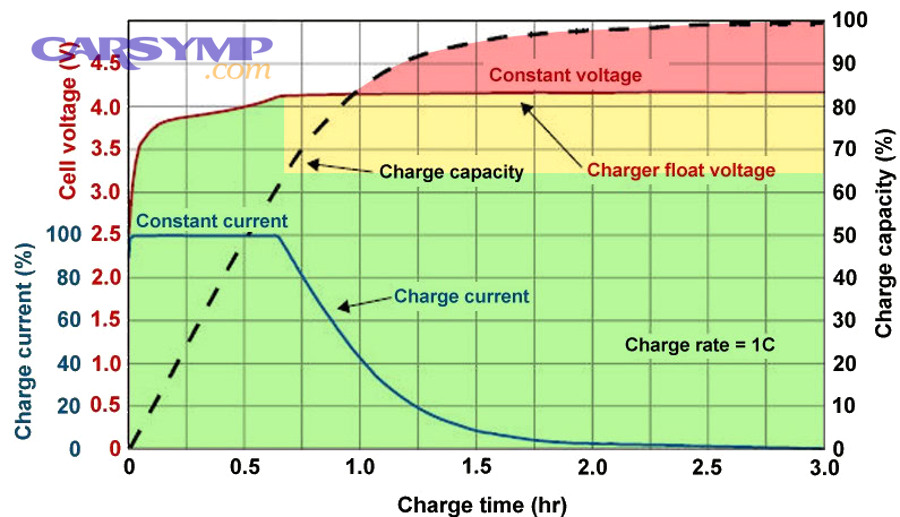
Drive long enough to replace starting losses and stabilize state of charge; for many drivers, that means favoring fewer, longer drives over many short hops—because the alternator’s main job is maintaining, not rapid recharging from deep deficits.
To understand this, think in terms of “energy balance”: starts and accessories consume energy; driving time restores it.
What changes the required drive time?
Factor 1: Temperature. Cold cranking draws more from the battery and increases engine load, often extending recovery time.
Next, accessory load matters: high blower speed, heated seats, and defrosters can reduce net charging current available to refill the battery.
Factor 2: Battery condition. A battery that is aging or partially sulfated accepts charge less efficiently, making recovery slower.
In addition, if the battery was deeply discharged, it may take more than a single drive to fully restore charge.
Factor 3: Vehicle strategy. Some vehicles reduce charging under certain conditions, so a “quick recharge” isn’t always what happens in practice.
Therefore, if your schedule is mostly short trips, a periodic external charge can be the simplest solution.
Make it practical: plan for a “recovery drive”
If you notice frequent slow cranking after a series of short starts, plan a single longer drive (or combine errands) rather than multiple short trips.
As a planning note, when you schedule shop work, knowing the Alternator replacement labor time helps you avoid stacking short post-repair errands that never let the battery recover.
Như vậy, the habit shift—fewer starts, longer drives—often delivers the biggest real-world improvement without changing any parts.
What settings on a smart charger keep the battery healthy?
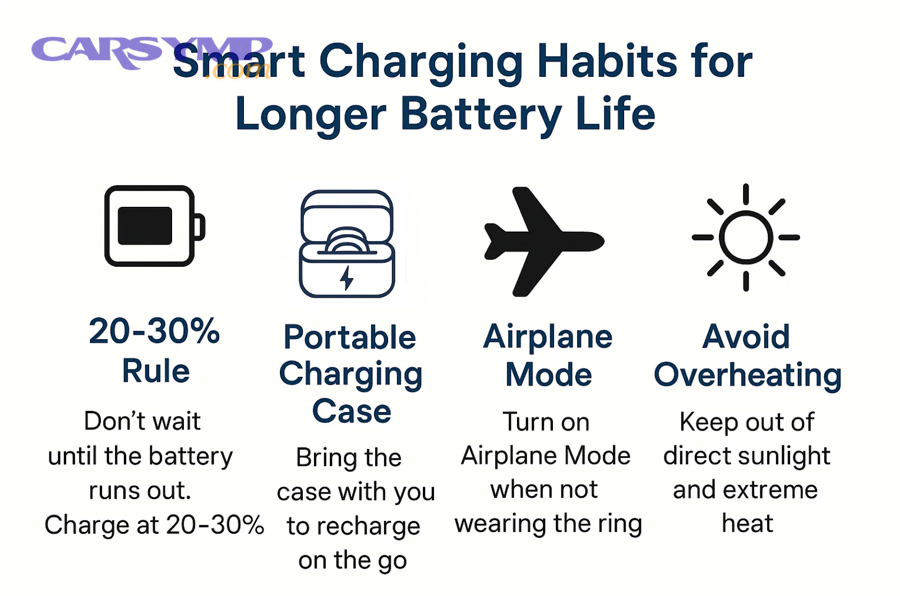
Use a smart charger that matches your battery type, then follow three settings principles—correct mode, moderate current, and temperature awareness—to charge fully without overheating or overcharging.
To begin, the best setting is the one that matches the battery chemistry your car uses.
Choose the correct battery mode first
Pick the correct mode (flooded, AGM, EFB, or lithium where applicable) so voltage targets and charging phases align with the battery’s design.
Next, if your vehicle has stop-start, it often requires an AGM or EFB battery; charging it with the wrong profile can reduce lifespan.
Use moderate charge current for longevity
Moderate amperage is usually gentler, especially for routine top-ups; fast charging can be convenient but may increase heat and stress if used repeatedly.
In other words, if you’re not in a hurry, a slower, smarter charge is often kinder to the battery over time.
Let the charger finish absorption and float phases
Smart chargers typically move from bulk charging to absorption and then to float/maintenance; let it complete the cycle rather than unplugging early.
To illustrate, stopping early can leave the battery undercharged, which encourages sulfation and reduces usable capacity.
Temperature awareness prevents “good charging” from turning harmful
Heat increases chemical activity and cold increases resistance; chargers with temperature compensation adjust voltage targets to stay safe across seasons.
Tóm lại, correct mode plus moderate current plus complete cycles is the most repeatable recipe for a healthy post-replacement charge routine.
How do you reduce parasitic drain that kills a fresh battery?
Reduce parasitic drain by identifying abnormal current draw, fixing the culprit circuit, and adjusting habits that keep electronics awake—because even “small” drains can empty a battery over time when the engine is off.
To begin, you need a realistic benchmark for what “normal” looks like in modern vehicles.
Start with a current draw test (the safe way)
With the vehicle off and doors closed, wait for modules to go to sleep, then measure draw using a multimeter in series at the battery (or use a clamp meter designed for low DC current if available).
Next, if the reading stays high after the vehicle should be asleep, you likely have an abnormal draw that needs isolating.
Isolate the culprit circuit with a fuse pull method
Pull fuses one by one while watching current draw; when the reading drops significantly, you’ve found the circuit feeding the drain.
Then, trace components on that circuit: glovebox light switches, aftermarket accessories, relays, infotainment modules, or improperly wired chargers are common suspects.
Fix behaviors that prevent sleep mode
Leaving a key fob too close, keeping a phone plugged into a live USB port, or using certain aftermarket add-ons can keep modules awake.
In addition, check that doors and hatches fully latch—misaligned switches can keep interior lights or modules active without being obvious.
According to Continental Battery Systems’ battery education team, in February 2025, a typical “normal” parasitic draw is cited as about 50–85 milliamps for newer cars and under 50 milliamps for older cars, making readings above that range a strong clue to investigate.
What connection and ground checks prevent undercharge?
Prevent undercharge by ensuring low-resistance connections at the battery, chassis ground, and charging output path—because a charging system can test “good” at the alternator yet fail to deliver adequate charge to the battery through corroded or loose links.
To start, treat charging as a full circuit, not a single component.

Battery terminals: clean metal-to-metal contact
Corrosion between clamp and post acts like a resistor; remove it until you see clean metal, then clamp firmly.
Next, check for damaged clamps that “bottom out” before tightening; worn clamps can feel tight but still slip.
Ground path: battery negative to chassis to engine
Inspect the main ground cable and its contact points; a loose or corroded ground can cause low charging, strange sensor behavior, and intermittent warning lights.
Then, look for auxiliary ground straps between engine and chassis; missing or cracked straps can create voltage drops under load.
Positive charging path: alternator output to battery
Inspect the alternator output connection, fuse links, and junction blocks; heat marks, green corrosion, or loose nuts can reduce delivered charging current.
After that, do a simple voltage-drop check under load: measure between alternator output and battery positive while accessories are on; excessive drop indicates resistance in the path.
Don’t ignore belt drive and tension quality
If the belt slips, charging output drops—especially at idle or under high electrical load. Even a good electrical system can undercharge if the drive system can’t transmit torque consistently.
To connect this to repair decisions, the New vs reman alternator pros/cons discussion often misses that belt condition and tension are “silent partners” that determine how well any alternator can actually deliver power.
Như vậy, strong electrical parts still need strong mechanical support to charge reliably every day.
Is overcharging possible after battery service?
Yes, overcharging is possible after battery service, and the fastest way to catch it is to measure running voltage and watch for sustained readings that are too high—because overvoltage can damage electronics and shorten battery life.
To understand why, remember that charging voltage is regulated; when regulation or grounding fails, voltage can rise beyond safe limits.
Three common causes of overcharging
Cause 1: Faulty voltage regulator behavior (internal or external, depending on vehicle design).
Next, regulators can fail intermittently, so a single “good” reading doesn’t always clear the system.
Cause 2: Bad ground or high resistance in sensing circuits.
In other words, if the regulator “thinks” voltage is low due to resistance, it may command higher output and create real overvoltage at the battery.
Cause 3: Incorrect battery type or mismatched charging strategy.
Some vehicles expect specific battery characteristics (AGM/EFB) and may behave poorly if a different battery chemistry is installed.
What readings should trigger concern?
Monitor voltage at idle and at slightly elevated rpm; if voltage is consistently very high, treat it as urgent and reduce driving until diagnosed.
According to ClickMechanic’s automotive guidance team, in March 2023, a normal alternator charging range is generally considered about 13.5–14.5V, and readings above roughly 15V can indicate overcharging concerns.
Noise and smell cues that matter
If you notice a hot electrical smell, battery swelling, or unusually bright/flickering lights, stop and test immediately.
Also note that Common alternator noise causes include belt slip, bearing wear, and misalignment—issues that can show up right after service and indirectly affect charging stability.
Tóm lại, voltage checks plus sensory cues (sound/smell/lighting behavior) provide a practical early-warning system.
How do temperature and driving habits change charging strategy?
There are four common “charging contexts” that change what you should do after replacing a battery: cold-weather short trips, hot-weather heat soak, infrequent driving/storage, and high-accessory commuting.
To make the right choices, match your routine to the context you’re in rather than using one-size-fits-all advice.
Context 1: Cold-weather short trips
Cold increases starting demand and reduces charge acceptance; combine trips or plan periodic longer drives so the battery can recover.
Next, reduce accessory load in the first minutes after startup (seat heaters, max defrost) if you frequently drive short distances.
Context 2: Hot-weather heat soak
Heat accelerates chemical reactions and can increase self-discharge and corrosion at terminals; keep terminals clean and avoid leaving the battery at chronic high temperature when possible.
In addition, verify that your charging voltage isn’t excessively high, because heat plus overvoltage is especially damaging.
Context 3: Infrequent driving or storage
If the car sits for days or weeks, use a maintenance charger (battery maintainer) to prevent slow discharge and sulfation.
Then, address parasitic drain early—storage magnifies the impact of “small” currents.
Context 4: High-accessory commuting
Frequent night driving with HVAC, defrost, audio, and chargers increases load; ensure running voltage stays stable and avoid repeated engine-off accessory use.
Như vậy, your environment and habits shape whether you should rely on driving alone or add periodic charger support.
What warning signs mean your new battery isn’t being charged?
There are five common warning categories—starting behavior, lighting behavior, dashboard indicators, smell/heat, and recurring discharge—that tell you a new battery isn’t being charged properly.
To diagnose efficiently, group symptoms instead of chasing one sign at a time.
Warning 1: Slow crank returns within days
If the engine cranks slowly again soon after replacement, suspect undercharging, parasitic drain, or poor connections—especially if resting voltage is low after sitting overnight.
Next, verify charging voltage at the battery posts (not clamps) to avoid being misled by clamp resistance.
Warning 2: Battery/charging warning light behavior
A battery or charging light that stays on, flickers, or comes on with load (lights + blower) suggests the charging system isn’t maintaining voltage under demand.
In addition, intermittent lights can be caused by belt slip or wiring issues, not just a failing component.
Warning 3: Lights dimming or electronics resetting
Dimming headlights at idle or infotainment resets during cranking can indicate low system voltage or high resistance in the main power/ground paths.
Then, inspect grounds and positive junctions for looseness or corrosion.
Warning 4: Heat, swelling, or odor
A hot battery case, swelling, or a sulfur-like odor can indicate overcharging or internal battery damage and should be treated as urgent.
Therefore, measure running voltage immediately and stop driving if readings are dangerously high.
Warning 5: Repeat dead-battery events despite “good parts”
If the car repeatedly needs a jump, the root cause is often drain, connection resistance, or regulation—not simply “a bad battery.”
When people respond by doing an alternator replacement without testing current draw and voltage drop, the same issue can persist even after new parts are installed.
Tổng kết lại, consistent measurement beats part-swapping: voltage at rest, voltage running, and current draw parked form the diagnostic triangle.
Contextual border: Up to this point, you’ve covered core charging checks and fixes. Below are advanced, less-obvious tips that improve reliability in special vehicle designs and edge cases.
Advanced tips that protect charging reliability in modern vehicles
Use these four advanced practices when your vehicle has special power management, stop-start systems, or battery monitoring that can make “normal” behavior look confusing after replacement.
Để hiểu rõ hơn, focus on the vehicle’s electronics and calibration behaviors, not just the battery itself.
Tip 1: Expect system resets and relearns after power loss
Some vehicles need window, steering-angle, or idle relearns after battery disconnect; this can temporarily change idle speed and accessory behavior, which can affect perceived charging stability.
Next, avoid drawing heavy electrical loads immediately after reconnecting if the vehicle is still stabilizing idle and charging control.
Tip 2: Battery monitoring and “registration” can matter
Certain makes/models track battery age/health and adjust charging strategy; if the system is not informed of a new battery, charging may be suboptimal or warning lights may appear.
Then, if your vehicle supports it, use proper service procedures (scan tool or approved steps) to update battery parameters.
Tip 3: Stop-start battery types are not interchangeable
Vehicles designed for stop-start typically require AGM or EFB batteries; using a standard flooded battery can lead to premature failure and odd charging behavior.
In other words, “it fits” is not the same as “it matches” for charging strategy and cycling tolerance.
Tip 4: Storage strategy is a charging strategy
If the vehicle sits, prevent deep discharge with a maintainer, but also re-check drain sources because maintainers can mask a problem that will reappear later.
Như vậy, advanced reliability comes from aligning battery type, vehicle logic, and storage habits into one consistent system.
Frequently asked questions
Can I rely on the alternator alone to recharge a low battery?
Usually, the alternator is best at maintaining charge during normal driving rather than quickly restoring a deeply discharged battery; if resting voltage is low and you do short trips, use a smart charger to bring the battery back to a strong baseline.
What’s the quickest way to tell battery vs charging problem?
Measure resting voltage (engine off) and running voltage (engine on). If resting is low and running is normal, the battery may simply need a full charge; if running is low or unstable, suspect charging/connection issues first.
Is it normal for voltage to change with headlights and blower on?
Some change is normal, but voltage should remain reasonably stable; large swings or persistently low voltage under load suggests resistance, belt slip, or regulation problems.
How often should I use a maintainer if I drive rarely?
If the car sits for extended periods, a quality maintainer can be used regularly to prevent slow discharge, but you should still test for abnormal drain so the underlying cause doesn’t remain hidden.