


If your vehicle is showing charging-system trouble, an alternator replacement steps overview helps you move from diagnosis to a verified fix without guessing. The core method is simple: make the car safe, relieve belt tension, disconnect wiring, remove the unit, install the new alternator, then confirm correct charging.
Beyond the basic steps, you’ll want a clear checklist of tools, access strategies, and fast “before-you-remove-it” tests so you don’t replace the wrong part. That preparation reduces broken connectors, misrouted belts, and repeat repairs.
You’ll also need post-install checks—belt tracking, connector security, and a voltage test—so the fix holds under real load. Those checks are quick, but they’re the difference between “it runs” and “it’s done.”
Giới thiệu ý mới: below is a step-by-step framework you can adapt to most vehicles, including common variations like tight engine bays and spring-loaded belt tensioners.
What does an alternator replacement job include from start to finish?
It includes safe shutdown, access planning, belt removal, electrical disconnects, unbolting the alternator, installing the new unit, then verifying charging voltage and belt alignment. Next, you’ll map the workflow so each step protects wiring, threads, and routing.
To begin, think of the process as three phases: preparation, removal/installation, and verification—each with a specific “done-right” checkpoint.
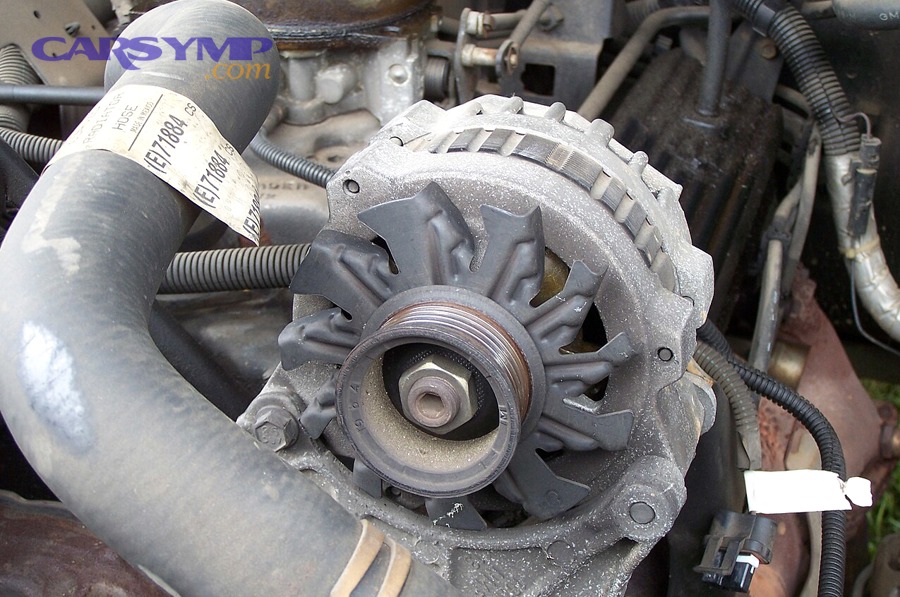
Phase 1: Preparation and safety checkpoint
The checkpoint is simple: the engine is off and cool, the battery negative is disconnected, and you can access the alternator without forcing hoses or harnesses. After that, you’ll document belt routing and connector locations so reassembly is confident rather than hopeful.
- Park on level ground, set the parking brake, and let the engine cool.
- Open the hood and identify the alternator’s location and the belt path.
- Take photos of belt routing and wiring connections before touching anything.
Phase 2: Removal and installation checkpoint
The checkpoint is that the belt is fully free from the alternator pulley, all electrical connectors are disconnected without damage, and mounting bolts come out without cross-threading. Then you’ll reverse the sequence using correct seating and torque awareness.
- Relieve belt tension and slip the belt off the alternator pulley.
- Disconnect the alternator’s electrical connections.
- Remove mounting bolts and lift out the alternator.
- Install the replacement alternator, reconnect wiring, reinstall the belt.
Phase 3: Verification checkpoint
The checkpoint is that the belt tracks correctly, there are no warning lights, and charging voltage at the battery is in the normal range with accessories on. Next, you’ll confirm there’s no squeal, no hot-smell from slipping, and no flicker under load.
According to AutoZone, the job commonly involves belt removal, disconnecting wires, unbolting the alternator, and reinstalling in reverse order, with accessibility varying by model.
What tools, parts, and prep prevent delays mid-repair?
You prevent delays by gathering the correct sockets/wrenches, a belt tool (or long breaker bar), a multimeter, and the exact replacement alternator (plus any required hardware). Next, you’ll set up the workspace so you can label wires and manage bolts by location.
To make the job predictable, plan for “access time” (moving covers/airbox) to be as significant as the alternator itself on some vehicles.
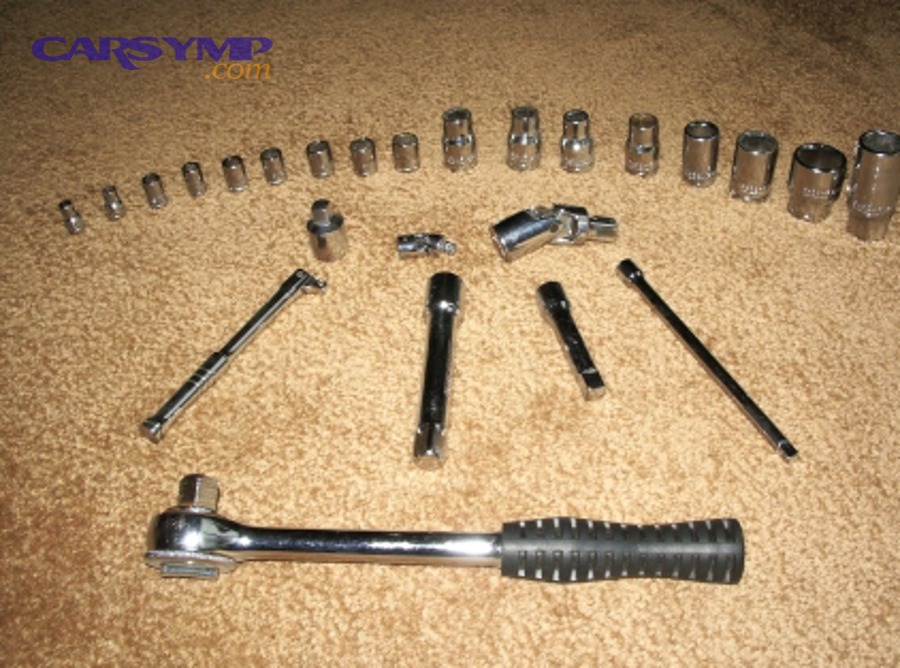
Core tool list (most vehicles)
- Socket set and ratchet (often 10–15 mm common), extensions, and a breaker bar
- Serpentine belt tool or long-handled wrench for the tensioner
- Screwdrivers or trim tools for covers, air ducting, splash shields
- Multimeter (for pre- and post-checks)
- Torque wrench if your service info provides specific values
- Penetrating oil (for stubborn bolts) and a small wire brush for terminals
Parts and “while you’re there” items
Buy the correct alternator by engine, trim, and charging output rating; some models differ by amperage, pulley type, or connector design. After that, consider the belt and tensioner if they’re noisy, cracked, glazed, or near service interval.
- New or remanufactured alternator (verify connector and pulley match)
- Serpentine belt (optional but wise if worn)
- Belt tensioner or idler pulley (optional if noisy or rough)
- Dielectric grease (light use on connector seals, not on contact faces)
Prep steps that save the most time
Use photos and labeling to avoid mixed-up cables and misrouted belts. Next, stage a parts tray and separate bolts by location, because many brackets use different lengths that look similar until they don’t.
- Photograph belt routing and the alternator wiring from multiple angles.
- Find the belt routing diagram (often on a radiator support sticker) or print one.
- Confirm the new alternator has the same mounting ears and connector indexing.
When you see the phrase alternator replacement in parts listings, treat it as a fitment problem first: match connectors, pulley grooves, and bracket geometry before you ever touch a bolt.
How do you confirm the charging system is the real problem before removal?
You confirm it by checking for charging voltage at the battery with the engine running, observing symptom patterns, and inspecting belt drive condition. Next, you’ll do quick tests that separate a weak battery, loose belt, bad connections, and a failing alternator.
To start, avoid “parts darts”: a 3-minute voltage check can prevent hours of unnecessary work.
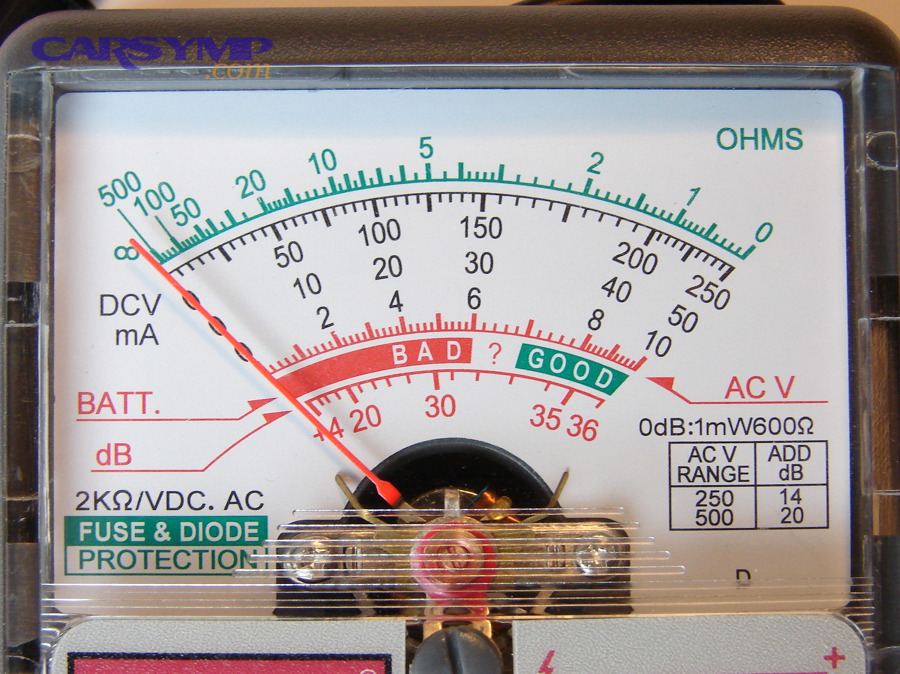
Fast voltage check with a multimeter
Measure the battery at rest, then with the engine running. Next, turn on headlights, blower fan, and rear defroster to add load and watch whether voltage remains stable or sags toward battery-only levels.
- Engine off: a healthy, fully charged battery often reads around the mid-12V range.
- Engine running: charging voltage typically rises into a higher band as the alternator supports the electrical system.
O’Reilly notes alternators are designed to charge typically between 13.5 and 14.5 volts, and a reading significantly higher or lower suggests a charging-system problem.
Inspect the belt drive and tension
A slipping or misrouted belt can mimic alternator failure by under-driving the pulley. Next, look for cracking, glazing, frayed ribs, and a tensioner that doesn’t hold steady tension.
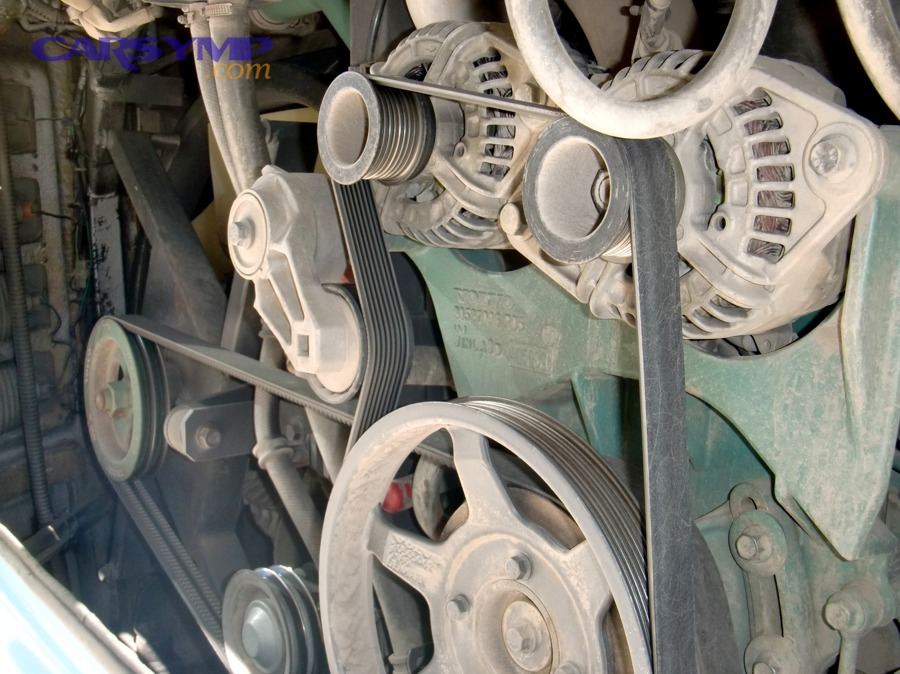
Spot the pattern in electrical behavior
Charging problems often show up as warning lights, dimming or flickering lights, slow accessories, or repeated dead-battery situations. Next, note whether symptoms worsen at idle, with accessories on, or after rain—those clues point toward belt slip, connection corrosion, or internal alternator issues.
Firestone highlights warning-light and voltage irregularities as common indicators of alternator trouble.
If you’re documenting Alternator failure symptoms, write down exactly when they occur (idle vs. cruising, dry vs. wet weather, accessories on vs. off). That timeline helps you distinguish a belt/tensioner issue from an internal regulator/diode problem.
The following video shows a real-world alternator replacement workflow, including access steps and belt handling, which is useful for visualizing the sequence before you start.
How do you make the car safe before touching wiring or the belt?
You make it safe by cooling the engine, securing the vehicle, disconnecting the battery negative terminal, and protecting yourself from pinch points and accidental shorts. Next, you’ll create “no-power” conditions so the alternator’s main cable can’t spark.
To begin, treat the alternator’s B+ cable as always-hot until the battery negative is disconnected—because in many cars, it is.

Battery disconnect order and why it matters
Remove the negative (ground) terminal first to reduce the risk of a short if your tool contacts metal. Next, isolate the cable so it can’t spring back onto the post while you work.
- Engine off, key removed; wait a few minutes for modules to sleep.
- Loosen and remove the negative battery terminal.
- Tuck the cable aside and secure it (zip tie or nonconductive wedge).
Prevent injuries from tensioners and fans
Spring-loaded tensioners store energy and can snap back; fans can run unexpectedly on some vehicles even after shutdown. Next, keep fingers clear of belt paths and avoid placing hands near fan blades unless you’ve confirmed the system is fully inactive.
- Wear gloves and eye protection when working near the belt and battery.
- Use the correct tool on the tensioner’s hex or square drive.
- Never lever against fragile plastic covers or radiators.
Work-area setup that prevents lost bolts and stripped threads
Organize bolts by location and length and clean obvious dirt around fasteners. Next, you’ll reduce the chance of cross-threading during reassembly, especially on aluminum brackets where threads can be unforgiving.
How do you remove the belt from the alternator pulley without losing routing?
You remove it by relieving tension at the tensioner, slipping the belt off the alternator pulley, and preserving the belt path using a routing diagram or photos. Next, you’ll choose the safest slip-off point—often the alternator pulley itself.
To start, locate the tensioner and identify the correct direction of rotation; many tensioners have an arrow or tool boss designed for leverage.
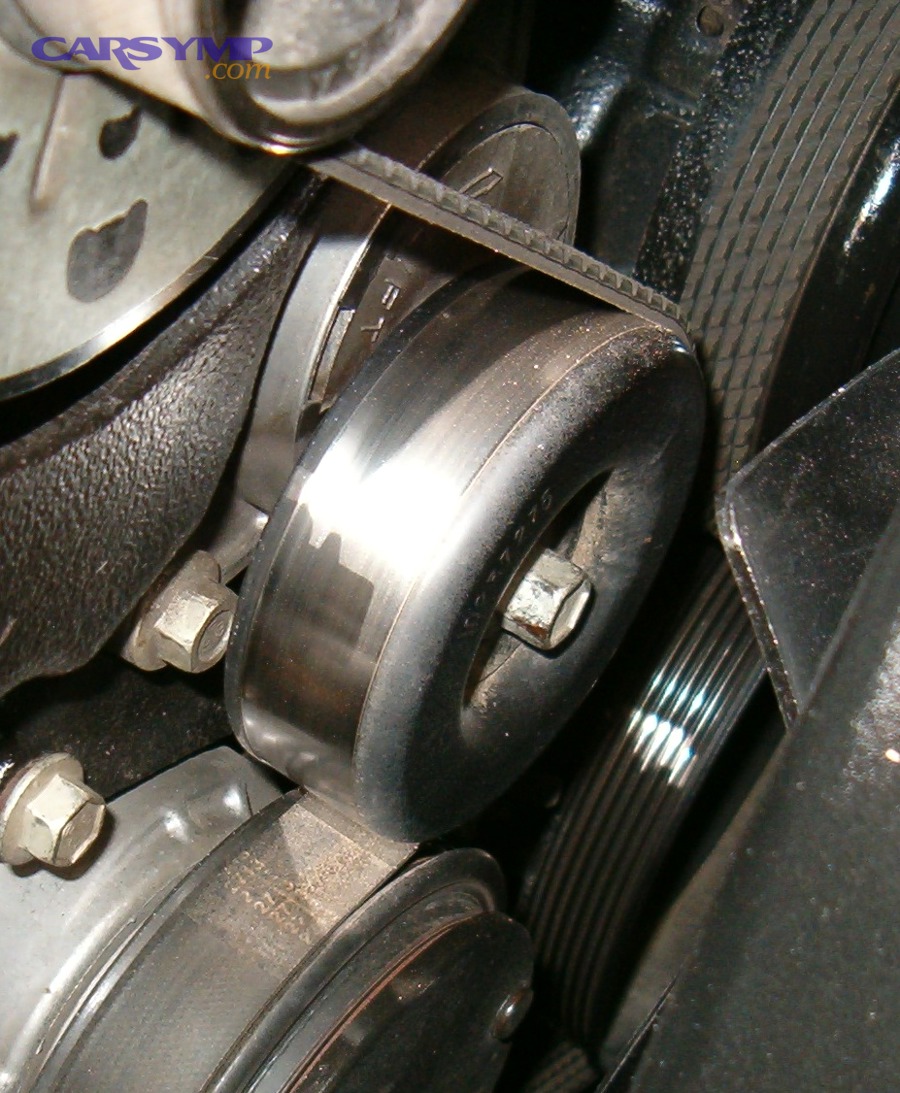
Spring-loaded vs. screw-type tensioners
Most modern vehicles use spring-loaded tensioners, while some older or specialty layouts use an adjuster bolt. Next, you’ll match your approach to the system so you don’t damage the tensioner arm or strip an adjuster thread.
- Spring-loaded: rotate the tensioner with a wrench/belt tool, then slip the belt off a smooth pulley or the alternator pulley.
- Adjuster-type: loosen the pivot, back off the adjuster, then remove belt tension gradually.
Routing preservation techniques
Use a photo plus a simple “one-pulley-at-a-time” rule when reinstalling. Next, if the belt is completely removed, place it on a clean surface with the ribbed side orientation noted so you don’t twist it accidentally.
- Photograph the belt around each pulley before removal.
- Sketch the path if no under-hood diagram exists.
- Leave the belt partially routed on other pulleys if access allows.
When to replace the belt or tensioner during the job
If the belt shows cracks, glazing, fraying, or chirping under load, replacement is usually smart while everything is accessible. Next, spin idlers and check for roughness; a noisy pulley can shorten alternator life by inducing slip and heat.
How do you disconnect alternator wiring without breaking connectors?
You disconnect it by removing the main output cable nut (after battery negative is off), unplugging the regulator/field connector, and labeling any secondary leads. Next, you’ll protect the connector locks and boots so they reseal properly against moisture.
To begin, treat wiring as a “do not pry” zone: most alternator plugs release with a small tab press and a straight pull.
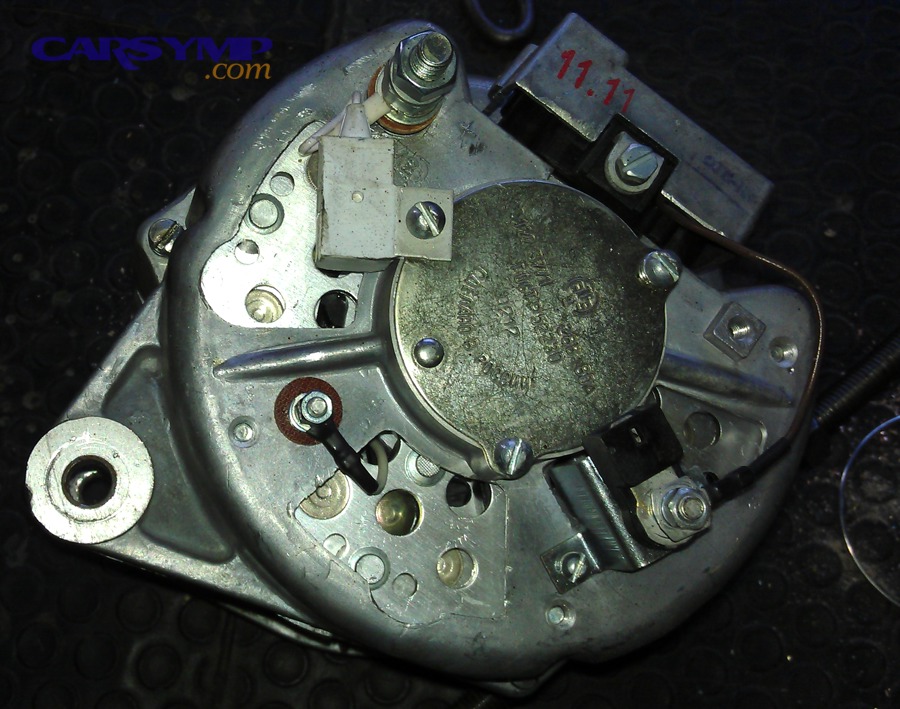
Main B+ cable removal
Remove the protective boot, then remove the retaining nut and lift off the cable. Next, cover the cable end with tape or a nonconductive cap so it can’t touch metal while you reposition it.
- Pull back the rubber boot on the alternator’s B+ stud.
- Use the correct socket to remove the nut (avoid rounding).
- Lift the cable eyelet off the stud and secure it aside.
Regulator/field connector removal
Press the lock tab fully before pulling to avoid snapping the housing. Next, inspect for green corrosion or heat discoloration; those are clues the connector or wiring needs attention, not just the alternator.
- Press tab, pull straight back—no twisting.
- Check the connector seal for tears or missing grommets.
- Clean light corrosion with electrical contact cleaner (dry fully).
Labeling and bolt-stud awareness
Some vehicles use multiple studs or a separate sense wire. Next, label each lead so you don’t place a smaller wire on the wrong stud or pinch it under the nut, which can cause intermittent charging issues later.
O’Reilly’s alternator replacement guide emphasizes disconnecting the battery first, then removing the belt, then unplugging the regulator connector and removing the positive cable before unbolting the alternator.
How do you unbolt and remove the alternator without stripping threads?
You remove it by supporting the alternator’s weight, loosening mounting bolts in a controlled order, and gently working the unit free from bracket alignment sleeves. Next, you’ll prevent cross-threading on reassembly by cleaning threads and starting bolts by hand.
To start, identify how many mounting points exist—commonly two or three—and whether a brace or pivot bolt is hiding behind an accessory.
Common mounting designs and what they imply
Alternators may use a pivot bolt plus a lock bolt, or two parallel bolts into a bracket, sometimes with a separate brace. Next, expect a tight fit: many brackets include steel sleeves that seize lightly from heat cycles.
- Two-bolt mount: support the alternator, remove upper then lower bolt.
- Pivot/lock mount: loosen lock bolt first, then back out pivot while supporting.
- Brace-equipped: remove brace bolt/nut to free movement before main bolts.
Stuck alternator: safe ways to break it free
Use gentle rocking and a nonmarring pry point only on robust bracket areas, never on plastic housings. Next, a small amount of penetrating oil on the sleeve area can help, but keep it off the belt surfaces.
- Rock the alternator by hand while pulling outward evenly.
- Tap the bracket ear lightly with a rubber mallet if needed.
- Avoid prying on the alternator fan blades or connector housing.
Thread protection strategy for reassembly
Start all bolts by hand for several turns before using a ratchet. Next, if a bolt binds early, stop and realign; forcing it can destroy bracket threads and turn a simple job into a bracket replacement.
In practical terms, this is where most DIY delays happen: you remove bolts quickly, but freeing the alternator from its bracket sleeves takes patience and even pressure.
How do you install the new alternator correctly and restore belt tension?
You install it by seating the alternator fully into the bracket, hand-starting all fasteners, reconnecting wiring, then reinstalling the belt with proper routing and tension. Next, you’ll verify pulley alignment so the belt doesn’t walk off under load.
To begin, compare the old and new alternator side-by-side: mounting ears, connector position, pulley grooves, and overall offset should match.
Seating and bolt-start technique
Seat the alternator squarely in the bracket before tightening anything. Next, hand-start every bolt to ensure threads align and the alternator sits flat against mounting faces.
- Position alternator and align mounting holes.
- Insert bolts by hand and turn several threads.
- Tighten gradually, alternating bolts to pull the unit in evenly.
Wiring reconnection order
Reconnect the regulator/field plug until it clicks, then install the B+ cable and nut, then refit the protective boot. Next, ensure the cable is routed away from sharp edges and hot exhaust components to prevent future shorts.
- Plug in the regulator connector and confirm the lock tab is engaged.
- Attach B+ cable, tighten the retaining nut snugly (avoid overtightening).
- Return the rubber boot fully over the stud for moisture protection.
Belt reinstall and tension confirmation
Route the belt exactly as documented, then relieve the tensioner and slip the belt onto the final pulley. Next, rotate the engine by hand only if your vehicle’s procedure recommends it, and visually confirm the ribs are seated in every pulley groove.
Before moving on, do a final visual scan: belt centered, wiring secured, no tools left in the engine bay, and all covers positioned correctly.
How do you verify charging performance after the alternator is installed?
You verify it by reconnecting the battery, starting the engine, measuring voltage at the battery, and checking stability under electrical load. Next, you’ll listen for belt noise and watch for warning lights or flicker that signals misalignment or a weak connection.
To start, keep your first run short and observant—your goal is to catch belt tracking or hot-spot issues early.
Voltage verification under load
Measure voltage at the battery terminals with the engine idling, then repeat with high loads (headlights, blower, defroster). Next, consistent readings in the expected range indicate the alternator and regulator are functioning and connections are solid.
Firestone notes that if an alternator isn’t providing enough voltage—ideally 13.5–14.5 volts—it can’t charge the battery effectively.
Belt tracking and noise checks
Watch the belt on the alternator pulley: it should run centered without wobble. Next, listen for chirping or squeal that rises with RPM; those sounds often mean belt slip, misalignment, or a failing tensioner.
- Look for belt “walk” toward the pulley edge.
- Check for oscillation of the tensioner arm (excess bounce suggests wear).
- Smell for burning rubber after a few minutes of operation.
Warning lights and accessory behavior
A proper fix should eliminate charging warnings and stabilize accessory performance. Next, if the battery light remains on, recheck the regulator plug seating, the B+ nut tightness, and ground connections.
According to Firestone Complete Auto Care from its batteries and charging guidance in June 2024, alternator output ideally sits around 13.5–14.5 volts while driving, supporting effective battery charging.
What are the most common mistakes during alternator replacement, and how do you avoid them?
The most common mistakes are skipping battery disconnect, misrouting the belt, damaging connector locks, and cross-threading bolts. Next, you’ll use a short “stop-and-check” routine at each phase so mistakes are caught before they become failures.
To begin, treat every reassembly step as a verification step—because alternator jobs fail more often from reassembly errors than from the new part itself.
Mistake 1: Working “hot” and creating a short
Forgetting to disconnect the battery negative can arc the B+ cable to metal, damaging electronics or causing injury. Next, always remove the negative terminal first and isolate it so it can’t spring back.
Mistake 2: Belt routing or seating errors
A belt one groove off can squeal, shred, or throw itself off quickly. Next, confirm every pulley rib is seated and the smooth pulleys contact the belt’s smooth back side as intended.
Mistake 3: Forcing connectors or bolts
Connector tabs snap when pried, and bolts strip when started with a ratchet. Next, press release tabs fully, pull straight, and hand-start bolts for several turns before tightening.
Mistake 4: Ignoring underlying causes
A worn tensioner, corroded cable, or poor ground can overload a new alternator. Next, inspect belt drive components and cable ends so the replacement doesn’t inherit the same stress that killed the old unit.
Use the phrase Alternator replacement labor time as a planning tool, not a guarantee: tight engine bays, seized bolts, and extra covers can turn a “book” job into a longer real-world job even for experienced DIYers.
What step-by-step checklist can you follow during the job?
You can follow a checklist that sequences safety, belt handling, electrical disconnect, mounting removal, installation, and verification. Next, the table below helps you track each step and avoid skipping rechecks that prevent comebacks.
This table contains a practical alternator replacement checklist, showing what to do, what to verify, and what common problem each step prevents.
| Step | Action | Verify | Prevents |
|---|---|---|---|
| 1 | Cool engine, secure vehicle | No moving fans, stable parking | Burns, pinch injuries |
| 2 | Disconnect battery negative | Cable isolated from post | Short circuits, sparks |
| 3 | Document belt routing | Photo/diagram available | Misrouted belt |
| 4 | Relieve tensioner, remove belt from alternator pulley | Belt free and undamaged | Tensioner snap-back, belt tear |
| 5 | Disconnect regulator plug and B+ cable | Tabs intact, boot preserved | Broken connectors, corrosion entry |
| 6 | Remove mounting bolts and alternator | Threads intact, sleeves freed | Stripped bracket threads |
| 7 | Install new alternator, start bolts by hand | Alternator seated flat | Cross-threading, misalignment |
| 8 | Reinstall belt and recheck routing | Ribs seated on every pulley | Squeal, thrown belt |
| 9 | Reconnect battery, start engine, measure voltage | Charging in expected range | Repeat failure, dead battery |
For a quick planning reference, Kelley Blue Book notes that DIY alternator replacement time is often around 2–3 hours on average, while a professional shop may complete it faster depending on access.
Advanced notes: labor time, drivability risk, and part-quality choices
This section summarizes deeper considerations—time planning, whether it’s safe to keep driving, and how part quality affects durability. Next, use these notes when your vehicle has tight packaging, smart charging, or repeated charging failures.
Contextual border: once you understand the physical steps, the next layer is risk management—what you can safely do now versus what must wait for proper service.
How long does the job usually take in real life?
Many alternator jobs are straightforward, but access drives time. Next, plan for removal of covers, airboxes, or splash shields, especially on transverse engines where the alternator may sit low.
AutoZone states that in most cases alternator replacement takes one to two hours, with variability depending on accessibility and vehicle design.
Can you drive with a failing alternator without getting stranded?
Usually you can drive only until the battery’s remaining charge is depleted, and modern vehicles can shut down quickly as voltage drops. Next, if you suspect alternator trouble, minimize electrical load and prioritize a safe stop rather than pushing your luck.
Batteries Plus notes that without a working alternator, driving time can range from minutes to about an hour depending on battery health and electrical demand, and it’s safer to stop driving if you know the alternator is failing.
If you’re asking, “Can you drive with a failing alternator,” the safest practical answer is: only far enough to reach a safe place, because the shutdown point is unpredictable and can remove power steering or other critical systems.
New vs. remanufactured alternators and what “quality” really means
Quality is about voltage stability, bearing longevity, and regulator reliability—not just “it charges today.” Next, confirm warranty terms and ensure the unit matches your vehicle’s amperage needs, pulley type, and connector design.
- New: often higher price, potentially higher consistency, depends on brand.
- Remanufactured: can be cost-effective, but quality varies by rebuilder process.
- OEM vs aftermarket: OEM match is straightforward; aftermarket can be excellent but requires careful fit verification.
Smart charging systems and why voltage can “look weird”
Some vehicles vary charging voltage strategically for efficiency and battery management. Next, check for manufacturer guidance if your voltage fluctuates but remains within a controlled range and there are no warning lights—your car may be behaving normally.
O’Reilly explains that alternator charging typically falls in the 13.5–14.5V range, and readings significantly outside that range can indicate alternator or regulator trouble; use that as your baseline before assuming failure.
FAQs
These questions address common uncertainties that come up right before or right after alternator replacement. Next, use them as quick checks when something doesn’t feel right during the job.
Do I need to remove the battery to replace an alternator?
Not always, but you must disconnect the battery negative terminal first. Next, some vehicles require battery or battery tray removal for access, while others allow alternator removal from above with minimal disassembly.
What if the battery light stays on after replacement?
Recheck the regulator plug seating, B+ cable tightness, and belt routing first. Next, inspect grounds and the main charging cable for corrosion; a poor connection can mimic a bad alternator even when the new unit is fine.
Should I replace the belt and tensioner at the same time?
If the belt is worn or the tensioner is noisy/rough, replacing them is often efficient while access is open. Next, a weak tensioner can cause belt slip that reduces charging and shortens alternator life.
Is it normal for voltage to vary after installation?
Some variation can be normal on vehicles with smart charging, but it shouldn’t sag toward battery-only levels under load. Next, if lights flicker or the battery warning returns, test charging voltage again and check connections.