


Belt dressing (often sold as belt spray) can quiet a squeal quickly, but it’s usually a symptom masker, not a root-cause fix.
To decide wisely, you need to separate “temporary traction change” from the real reasons belts make noise: tension, alignment, pulley condition, contamination, and belt material.
This guide weighs the practical benefits against the mechanical risks so you can choose the safest, cheapest path to silence—without turning a small squeak into a bigger repair.
Giới thiệu ý mới: Below are the key questions drivers should ask before reaching for a can, plus what to do when belt dressing doesn’t solve anything.
What is belt dressing, and what does it actually do?
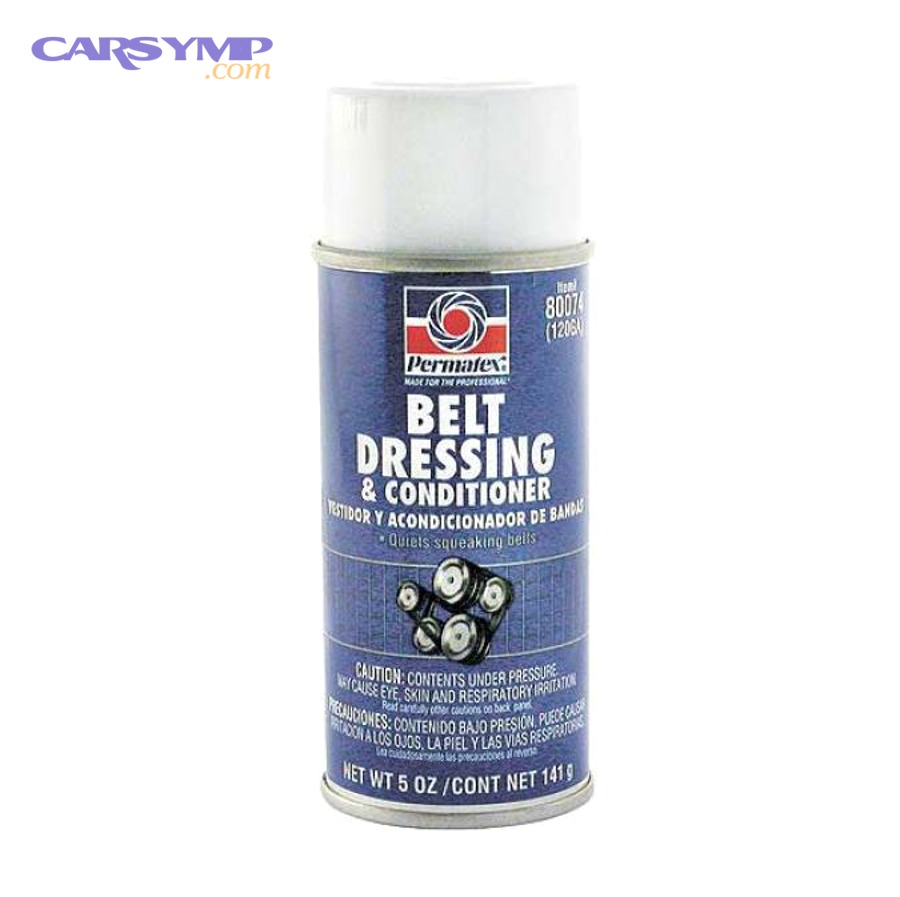
Belt dressing is a sticky conditioner sprayed onto a drive belt to temporarily change friction and reduce slip noise, especially on older V-belts.
To connect the dots, it helps to understand what “quiet” means: belt noise happens when the belt’s friction behavior and the pulley’s surface speed aren’t matching smoothly.
How belt dressing changes friction (and why it can quiet squeal)
The spray leaves a tacky film that can boost grip for a short time, especially if the belt is glazed, dry, or lightly slipping under load. In the best-case scenario, it shifts the belt from “micro-slip” to “stable traction,” which reduces the high-frequency vibration we hear as squeal.
However, the same film can also attract dust, amplify contamination, or create uneven friction zones—so the initial improvement can fade or even reverse.
What belt dressing does not fix
It does not correct the underlying mechanical conditions that create slip: worn tensioners, weak belt tension, pulley misalignment, pulley surface damage, belt stretch, or bearing drag. If those causes remain, the noise often returns—sometimes louder—after the solvent flashes off.
Why modern belt materials change the “value” of belt dressing
Many modern serpentine belts are EPDM-based and don’t behave like the older neoprene belts people remember “quieting” with spray. Gates has warned that belt dressings can be a bad idea for modern EPDM serpentine belts, because the root cause is rarely “dryness,” and sprays can contaminate the system instead.
Theo nghiên cứu của CRC Industries từ Product Safety, vào August 2023, sản phẩm belt dressing dạng aerosol được phân loại là “extremely flammable aerosol,” nghĩa là dùng trong khoang máy nóng cần cực kỳ thận trọng.
Does belt spray stop squeal—or just mask it?
No—most of the time belt spray only masks squeal by altering friction briefly, while the underlying cause (tension, alignment, pulley condition, or contamination) keeps developing.
To move from “quiet now” to “quiet later,” you need to treat belt noise like a diagnostic clue rather than a nuisance to silence.
When belt spray appears to “work”
If the belt is slipping lightly because the tension is borderline, a tacky film can temporarily restore grip. You’ll notice squeal fade quickly—often within seconds—especially during cold starts or sudden accessory loads (A/C clutch engagement, steering at idle).
But that improvement is often a clue that you have a tension or alignment issue, not a “dry belt” problem.
When belt spray makes noise worse over time
Dust sticks to the film, the belt surface loads up, and friction becomes uneven. That can trigger chirps, squeaks, or intermittent squeal that is harder to reproduce—and harder to diagnose—because the belt now has a changing surface condition every time it heats up and cools down.
A better “quick test” than belt dressing
Many techs prefer a controlled water-spray test (light mist) to see whether noise changes, because it’s easier to clean off and is less likely to create a sticky residue. Gates training materials commonly demonstrate a spray-bottle method to narrow the cause before changing parts.
Theo nghiên cứu của Gates từ Training content, vào các bài hướng dẫn chẩn đoán tiếng kêu dây curoa, việc dùng nước phun sương giúp phân biệt tiếng kêu do ma sát bề mặt và do cơ khí (tension/alignment) tốt hơn so với dùng hóa chất bám dính.
What are the real pros of belt dressing?
Yes—belt dressing has real benefits, but they’re narrow: it can provide short-term noise reduction and sometimes buy time on older belt systems.
Next, let’s define the “good use cases” clearly so you don’t apply a temporary hack to a problem that needs a mechanical fix.
Pro #1: Short-term quiet to confirm slip-related noise
When used sparingly and thoughtfully, belt dressing can help confirm whether a squeal is belt-slip related (as opposed to a pulley bearing noise). If the sound changes immediately, you learn “belt friction is involved.” That can guide your next steps—tighten, align, inspect, or replace—without guessing blindly.
Pro #2: Temporary relief for older V-belts in low-stakes situations
Older V-belts on older accessory drives sometimes respond to conditioning because they can glaze and harden with age. In a pinch—say, you need to finish a short drive home—belt dressing may reduce slip noise long enough to avoid stress.
Pro #3: May reduce squeal caused by mild glazing or humidity
In damp conditions, belts can squeal due to transient moisture films or slight glaze. A light treatment can briefly stabilize traction. The key word is briefly: if the squeal returns quickly, you likely have a mechanical issue.
Theo nghiên cứu của Gates từ Automotive Aftermarket guidance, vào các tài liệu về belt noise, tiếng kêu thường liên quan đến hệ thống (tensioner/pulley/alignment) hơn là “dây khô,” nên spray chỉ nên xem như biện pháp xác nhận hoặc tạm thời.
What are the cons and risks of belt dressing on modern engines?
Yes—there are meaningful downsides: belt dressing can contaminate pulleys, attract abrasive dust, worsen belt slip patterns, and increase fire and inhalation risk when sprayed in a hot engine bay.
However, the biggest risk is strategic: it can delay the real repair while the belt system continues wearing.
Con #1: Contamination spiral (dust + tack = abrasive paste)
The tacky film that “helps” friction also traps dust. Over time, that grime can behave like an abrasive, accelerating belt wear and leaving deposits on pulley grooves. The result can be more squeal, more belt dust, and faster deterioration of the belt’s ribs.
Con #2: Can confuse diagnosis by changing symptoms
Once you coat the belt, you’ve changed the surface condition. Noise may fade, return, move to a different RPM, or become intermittent. That makes the next round of troubleshooting less clean, because you don’t know whether you’re hearing the original problem or the spray’s side effects.
Con #3: Not ideal for EPDM serpentine belts
Many modern serpentine belts don’t benefit from “conditioning” the way older belts did. Gates explicitly cautions against using belt dressing on modern EPDM belts because the underlying causes are usually tension, alignment, or worn components, and sprays can cause contamination.
Con #4: Safety hazards—flammability and exposure
Spraying aerosol chemicals near a hot exhaust manifold, alternator, or spinning belt is inherently risky. Many belt dressings are classified as highly flammable aerosols; CRC’s SDS for belt dressing products highlights this hazard category.
Theo nghiên cứu của CRC Industries từ Product Safety, vào August 2023, cảnh báo “extremely flammable aerosol” cho thấy việc xịt khi máy đang nóng hoặc gần nguồn đánh lửa có thể nguy hiểm, nên ưu tiên tắt máy, thông gió, và tránh tia lửa.
Should you use belt dressing on a serpentine belt or a V-belt?
It depends: belt dressing is generally more defensible on older V-belts as a short-term measure, and much less advisable on modern serpentine belts where system faults are the usual culprit.
To make that choice confidently, you need to match the product’s “strength” to the belt type’s real failure modes.
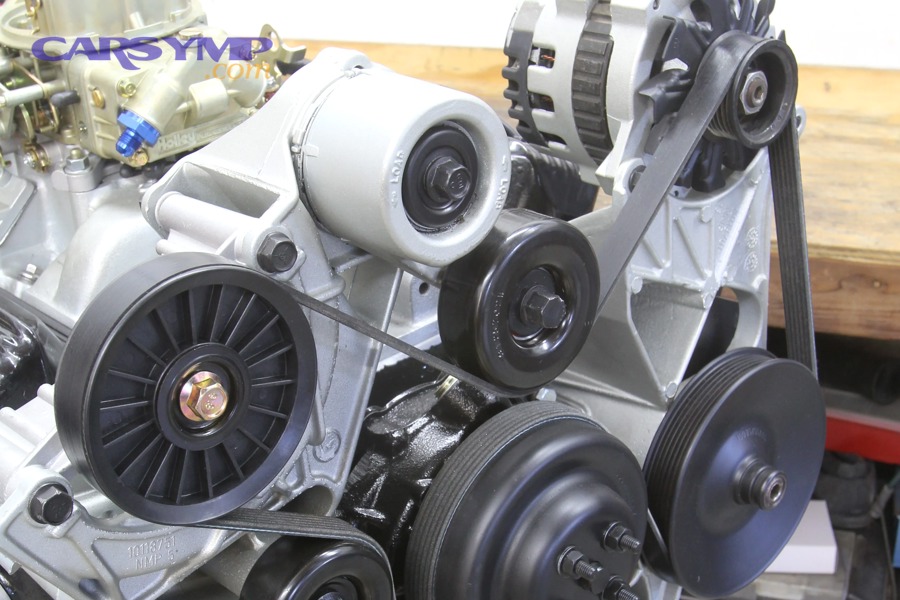
V-belt systems: where belt dressing can be a temporary helper
V-belts often run multiple belts, can glaze, and may be manually adjustable. If the belt is slightly glazed and the pulley grooves are otherwise healthy, a short-term dressing can reduce noise until you can re-tension or replace the belt.
Serpentine systems: why spray is usually the wrong direction
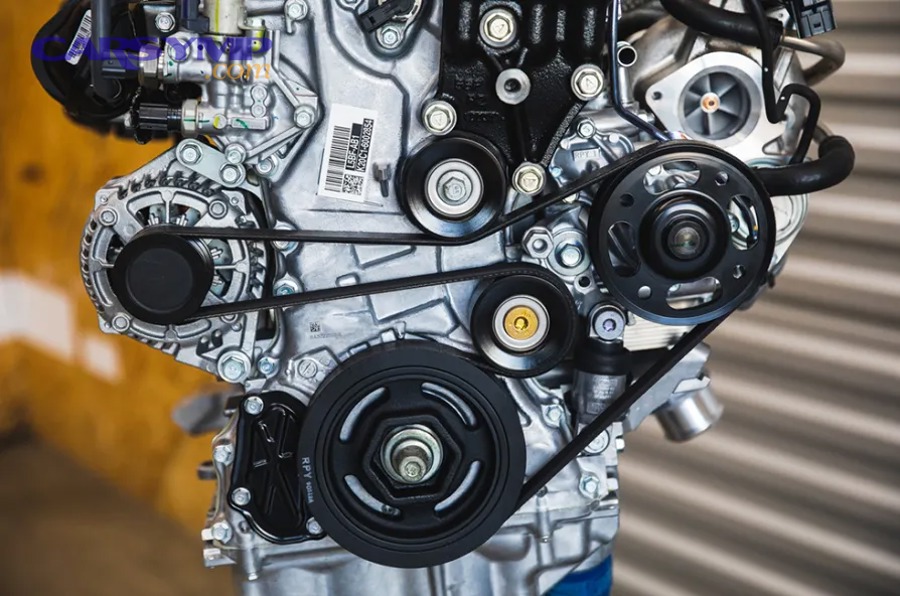
Serpentine belts rely on a spring-loaded tensioner, multiple idlers, and precise alignment. Noise is frequently a system problem—weak tensioner, failing pulley bearing, misalignment, or contamination. A spray may quiet the belt but leaves the system fault untouched.
2CarPros notes that belt tensioners and their pulley bearings can wear and create squealing noises, and that these components are normal wear items requiring inspection and replacement when needed.
Rule of thumb: don’t “spray” your way past a mechanical defect
If your belt squeal is loud, recurring, or tied to accessory load (A/C on, steering input), treat it as a mechanical warning. Belt dressing should never be the final step—only a brief test or emergency measure.
Theo nghiên cứu của 2CarPros từ Technical Article team, vào May 2022, pulley bearing và tensioner wear có thể gây squeal và có thể dẫn đến belt throw-off nếu bỏ qua, nên xử lý theo hướng kiểm tra và thay thế linh kiện mòn.
How do you diagnose belt squeal without relying on spray?
You can diagnose belt noise reliably by checking belt condition, alignment, tension, and pulley health in a repeatable sequence—before applying any chemicals.
To keep the process practical, use a “fast-to-check first” order that narrows the cause with each step.
Step 1: Inspect the belt surface and edges
Look for cracks, missing ribs, glazing (shiny surface), fraying edges, and embedded debris. Also check for fluid contamination: oil or coolant can make rubber slip and squeal. If the belt is contaminated, cleaning pulleys and replacing the belt often beats any spray solution.
Step 2: Verify tension and tensioner behavior
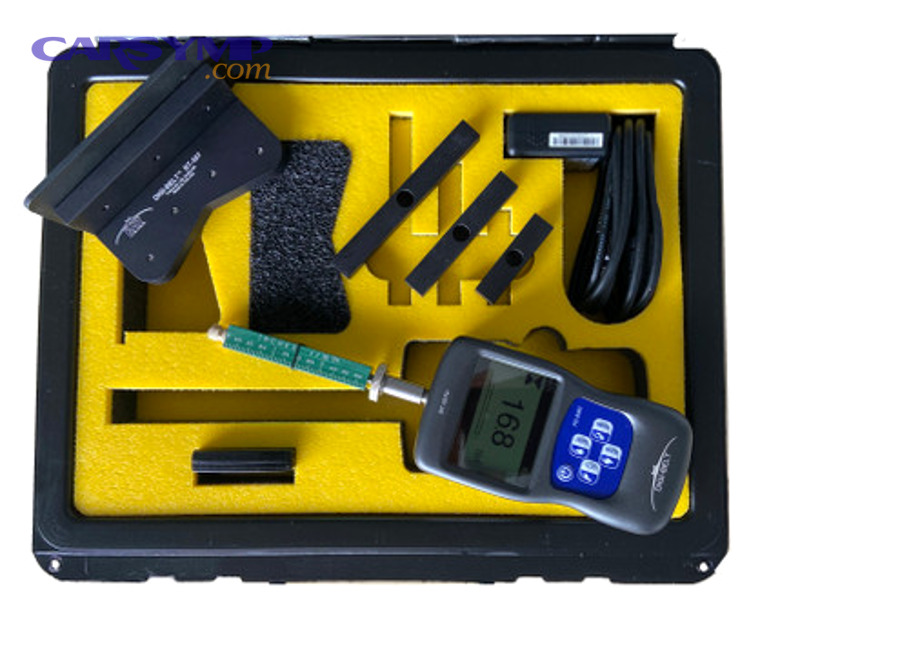
On serpentine systems, watch the tensioner: excessive flutter, weak spring feel, or a tensioner sitting near the end of its travel suggests the system can’t maintain proper tension under load. In industrial contexts, digital tension testers are used to ensure repeatable tension measurements—highlighting how critical tension is for noise control.
Step 3: Check alignment and pulley faces
Misalignment can be subtle: one pulley slightly out of plane can create chirps and squeals. Look for uneven belt tracking, shiny “polished” pulley edges, or belt ribs wearing on one side.
Step 4: Isolate the suspect accessory
Turn accessories on/off: A/C on, steering input, electrical load (headlights + rear defogger). If the noise strongly correlates with a load change, you’re narrowing the suspect zone (tensioner, alternator clutch/pulley, A/C pulley, power steering load).
To tie this together, a structured belt squeal diagnosis sequence typically outperforms “spray and pray,” because it keeps symptoms stable and repeatable.
How can you tell belt noise from pulley bearing noise?
Yes—you can usually tell by listening patterns and simple isolation tests: belt noise changes with friction and load, while bearing noise often persists as a dry whine, growl, or grind tied to pulley rotation.
Next, use a consistent method to avoid replacing the wrong part.
Listen for “texture”: squeal vs growl
Belt squeal is often sharp and tonal. Bearing noise tends to be rougher—like a growl, rumble, or scraping that may change with RPM but not with moisture or friction changes.
Use safe isolation: remove the belt only if you understand the consequences
With the engine off and cool, removing the belt briefly lets you spin idlers and pulleys by hand to feel roughness or hear scraping. If a pulley feels gritty, wobbly, or noisy by hand, that’s a strong indicator of bearing failure.
Use a stethoscope (or screwdriver) technique carefully
A mechanic’s stethoscope can help pinpoint a noisy bearing by amplifying vibration at the housing. SKF notes that bearing damage and lubrication issues can be detected through changes in vibration and noise characteristics, supporting the idea that “sound” is a real diagnostic channel—not just an annoyance.
In practice, the phrase “How to test pulleys for bearing noise” matters because it steers you away from belt spray and toward component-level confirmation, which prevents repeat comebacks.
Theo nghiên cứu của SKF từ Bearing Condition Monitoring guidance, vào các tài liệu kỹ thuật về chẩn đoán ổ bi, sự thay đổi vibration/noise là chỉ dấu đáng tin để nhận biết hư hỏng và bôi trơn kém, giúp khoanh vùng pulley trước khi thay dây.
When is belt dressing a reasonable short-term choice?
Yes—belt dressing can be reasonable when the risk is low and the goal is temporary: you’re on an older V-belt system, you need short-term quiet, and you’re already planning a proper repair.
To keep it controlled, define what “short-term” means and set a clear endpoint.
Scenario A: You need to drive today, repair tomorrow
If you’re away from tools and the squeal is mild, a light application may buy time to get home or to a shop. The key is to treat it like a temporary bandage, not a cure.
Scenario B: You’re using it as a diagnostic “yes/no” test
If a tiny amount changes the noise immediately, you’ve confirmed belt friction is part of the symptom. That’s useful information—then stop and move to root cause checks.
Scenario C: You’ve already verified tension and alignment are correct
On some older setups where tension and alignment are verified and the belt still squeals due to glazing, a conditioner may reduce noise. Still, a new belt is often the more durable solution.
Theo nghiên cứu của Dayco từ Tech Bulletin về belt noise, vào các hướng dẫn chẩn đoán, việc xác nhận nguyên nhân (tension/alignment/contamination) nên ưu tiên trước khi dùng “quick fix,” vì hệ thống mới thường không cần dressing nếu các yếu tố cơ khí đúng.
How do you use belt dressing safely if you choose to use it?
Use belt dressing only with the engine off, in small amounts, aimed carefully, and with strict safety precautions to reduce fire risk and overspray contamination.
To do it correctly, you need technique—not more product.
Safety checklist before spraying
- Engine off and cool (avoid hot exhaust surfaces and sparks).
- Work in a ventilated area; avoid inhaling aerosol mist.
- Keep the can away from ignition sources; treat it like a flammable solvent.
- Cover nearby components if overspray would be harmful (alternator vents, sensors, painted surfaces).
Application technique that minimizes mess
Spray lightly onto the belt’s contact surface (or onto a cloth applied to the belt with the engine off). Avoid soaking. Excess product is what turns dust into abrasive paste.
What to do immediately after
Let the solvent flash off before restarting. If the noise returns quickly, stop repeating the spray and proceed to mechanical diagnosis; repeated applications usually worsen contamination and hide the real timeline of failure.
Theo nghiên cứu của CRC Industries từ Product Safety, vào August 2023, phân loại aerosol dễ cháy nhấn mạnh rằng thao tác an toàn (tắt máy, tránh nguồn lửa, thông gió) là điều kiện bắt buộc khi dùng belt dressing.
What fixes usually beat belt dressing long-term?
Replacing or repairing the underlying cause—belt, tensioner, idler pulley, alignment, or contamination—beats belt dressing for durability, safety, and repeatability.
To make the trade-offs obvious, compare “quick quiet” with “real quiet.”
This table summarizes common options, what they solve, and what they risk—so you can pick the right move for your situation.
| Option | What it helps | Best use case | Main downside |
|---|---|---|---|
| Belt dressing / belt spray | Temporary friction change; short-term noise reduction | Emergency relief on older systems; quick confirmation test | Contamination, masking, safety risk, not a real fix |
| New belt | Restores correct belt surface and flexibility | Cracks, glazing, age, contamination | Won’t fix a bad tensioner or misalignment alone |
| Replace tensioner / idler pulley | Restores correct tension and smooth pulley rotation | Tensioner flutter, weak spring, noisy pulley bearing | Higher cost than a belt; needs correct diagnosis |
| Clean pulleys + fix leaks | Removes oil/coolant contamination that causes slip | Visible fluid on belt or pulleys | Requires finding leak source; belt often still needs replacement |
Why replacing worn components often saves money
A worn tensioner or idler bearing can lead to repeat squeal and even belt throw-off. 2CarPros highlights that tensioner pulley bearings can go bad and create squealing noise, and that neglect can allow the belt to roll off pulleys.
Why “quiet” should be repeatable, not conditional
If the noise disappears only after chemicals, it’s not truly solved—it’s temporarily altered. A proper fix should remain quiet across cold start, wet weather, accessory load changes, and idle.
In real repair planning, the phrase “Labor cost to fix belt squeal” matters because the cheapest path is often a correct first-time diagnosis: replacing the right part once beats paying labor twice.
Theo nghiên cứu của 2CarPros từ Technical Article team, vào May 2022, thời gian công thay tensioner có thể dao động theo xe và thao tác, nên chẩn đoán đúng giúp tránh thay sai và tốn công nhiều lần.
What symptoms tell you to skip belt dressing and repair immediately?
Yes—certain symptoms mean you should skip belt dressing and repair now: loud squeal under load, visible belt damage, pulley wobble, burning smell, or repeated noise after brief relief.
To keep the engine safe, treat these as red flags rather than “annoyances.”
Red flag #1: Burning rubber smell or visible smoke
This can indicate significant slip generating heat. Spraying flammable aerosol in this context is a bad idea. Fix tension/alignment or replace the failing component.
Red flag #2: Belt edge fraying, missing ribs, or cracking
A damaged belt can shed material, slip unpredictably, and fail suddenly. Replace it, then confirm the system is healthy so the new belt doesn’t immediately deteriorate again.
Red flag #3: Pulley wobble, roughness, or grinding
A pulley bearing that feels rough by hand is a mechanical failure. No spray will rebuild a bearing; it only delays the inevitable and can increase the chance of belt loss.
Red flag #4: Noise tied strongly to steering or A/C engagement
If the squeal spikes when turning the wheel at idle or when A/C kicks on, the system is telling you “load + insufficient tension or drag.” In diagnostic language, “Squeal on startup vs when turning clues” can help you decide whether you’re seeing cold-start slip, power steering load slip, or a failing tensioner reacting poorly to demand.
Theo nghiên cứu của Gates từ Automotive Aftermarket guidance, vào các tài liệu về belt noise, tiếng kêu gắn với tải (steering/A-C) thường cho thấy vấn đề tension hoặc pulley drag, vì vậy nên chẩn đoán cơ khí trước khi dùng hóa chất.
At this point, you’ve covered the core decision: whether belt dressing is a temporary tool or a distraction. Next is the “micro” layer—details that help you choose the right product behavior and prevent repeat squeal.
Supplementary: How to prevent repeat squeal after the fix
The best prevention is system hygiene: clean surfaces, correct tension, good pulleys, and the right belt material for the application.
To close the loop, focus on the small habits that keep the belt system stable over time.
Choose the right belt type and quality
Quality belts maintain rib geometry and friction behavior better over heat cycles. If you replace a belt, consider replacing worn idlers/tensioners at the same time if they’re near end-of-life, so the new belt isn’t forced to run on noisy bearings or poor alignment.
Clean pulleys the right way (no residue)
Use appropriate cleaning methods that don’t leave oily films. A residue-free pulley face helps the belt grip consistently, reducing the conditions that trigger squeal.
Recheck tension and alignment after a few days
Some systems settle after installation; a quick recheck catches early misalignment or an underperforming tensioner before it becomes another squeal episode.
Keep leaks away from rubber
Oil and coolant are belt enemies. Fix small leaks early, because contamination is one of the fastest ways to create recurring noise that no belt spray can solve reliably.
FAQ
Is belt dressing bad for your engine?
It’s not “bad for the engine” directly, but it can be bad for the belt system by contaminating pulleys and attracting dirt, and it can be hazardous if used unsafely around hot or sparking components.
Can belt dressing damage an alternator?
Overspray can contaminate the alternator’s vents or electrical surfaces, and the belt can sling residue around the engine bay. That’s why careful, minimal application with the engine off matters—and why many pros avoid it entirely on modern serpentine systems.
How long does belt spray last?
Often hours to days, sometimes less, depending on heat, moisture, and dust. If it “works” briefly and then fails, treat that as evidence of an underlying tension/alignment/pulley issue rather than a reason to spray again.
Should I replace the belt or the tensioner first?
If the belt is old or damaged, replace it; but if the tensioner is weak or the idler bearing is noisy, replace those too—because a new belt won’t stay quiet on a failing system.