


A squeal that shows up only on startup tells a different story than a squeal that appears mainly when turning, even if both sound like the same high-pitched chirp. The key is to treat the noise like a clue: when it happens, how long it lasts, and what changes it.
Beyond pinpointing the likely cause, you’ll also want a quick way to separate a harmless “brief slip” from a risky condition like a failing pulley bearing or a tensioner that’s no longer controlling the belt under load.
And once you know the pattern, you can decide whether this is a driveway-level inspection or a “stop driving and book it” situation—especially if the squeal comes with steering heaviness, charging warnings, or visible belt wobble.
To make the diagnosis actionable, we’ll connect sound patterns to specific components, then tie those findings to common repair paths—so you’re not guessing or replacing random parts. After that, we’ll move into edge cases that imitate belt noise but behave differently.
What does a squeal right after startup usually indicate?
Most of the time, a squeal that happens at startup is belt slip caused by low effective tension, temporary moisture, or an accessory load spike when the engine first fires. After that, the pattern of how fast it disappears narrows the culprit.
To connect the timing to the mechanism, start by thinking about what changes most between “engine off” and “engine just started”: belt surface condition, tensioner damping, and cold friction behavior in the drive system.
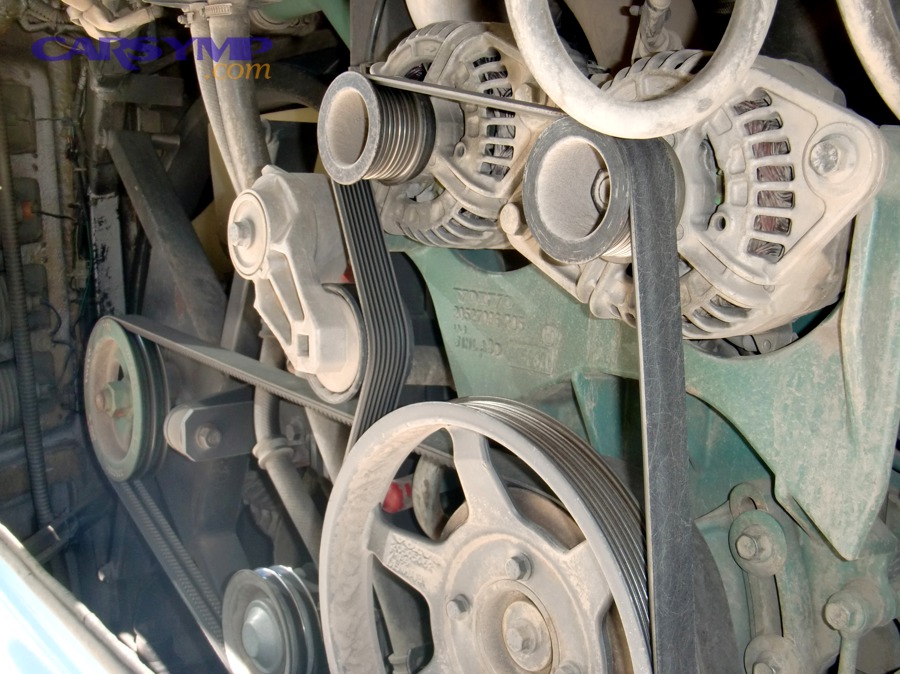
If the squeal lasts 1–5 seconds and fades fast, what’s the likely cause?
If it squeals briefly and then quiets down, it’s often a momentary slip as the belt transitions from static to dynamic friction, especially if there’s light moisture on the ribs or the belt has hardened with age.
Next, confirm the “brief slip” theory by observing whether it’s worse after rain, car washes, or overnight humidity, because moisture can temporarily reduce grip until heat dries the belt path.
In practice, a belt that’s glazed (shiny rib surface) or a tensioner that’s slightly weak can squeal only during that first torque pulse—then behave normally once the belt warms and the tensioner settles.
If the squeal repeats in pulses, what should you suspect?
If the noise comes in rhythmic pulses, suspect a tensioner arm that’s oscillating or a belt that’s tracking inconsistently across a pulley face, rather than a simple “wet belt” moment.
Then, look for visible belt flutter and listen for a chirp that rises and falls with small RPM changes—because a worn tensioner damper can allow bouncing that briefly unloads the belt and re-loads it.
Gates notes that belt squealing can indicate insufficient belt tension, and that tensioner damping wear can contribute to belt slip and heat buildup in the belt system.
If startup squeal returns after a new belt, what does that imply?
If a new belt doesn’t fix it, that usually implies the belt wasn’t the root cause; the underlying issue is often tension control, misalignment, or accessory drag.
Next, shift your attention from the belt material to the system that guides it: the tensioner, idlers, and accessory pulleys—because high drag from an idler or accessory can force slip even with a fresh belt.
Dayco highlights three common drivers of belt squeal: low tension, high pulley/accessory drag (including seized bearings), and fluid contamination.
What does a squeal mainly when turning the steering wheel point to?
A squeal that shows up when turning typically points to increased load on the belt drive—most commonly from the power steering system (hydraulic pump load) or an electric-hydraulic assist component that spikes demand during steering input.
To narrow it down, you’re looking for a load-triggered pattern: the squeal appears when steering effort rises, then reduces when the wheel is centered or the assist demand drops.
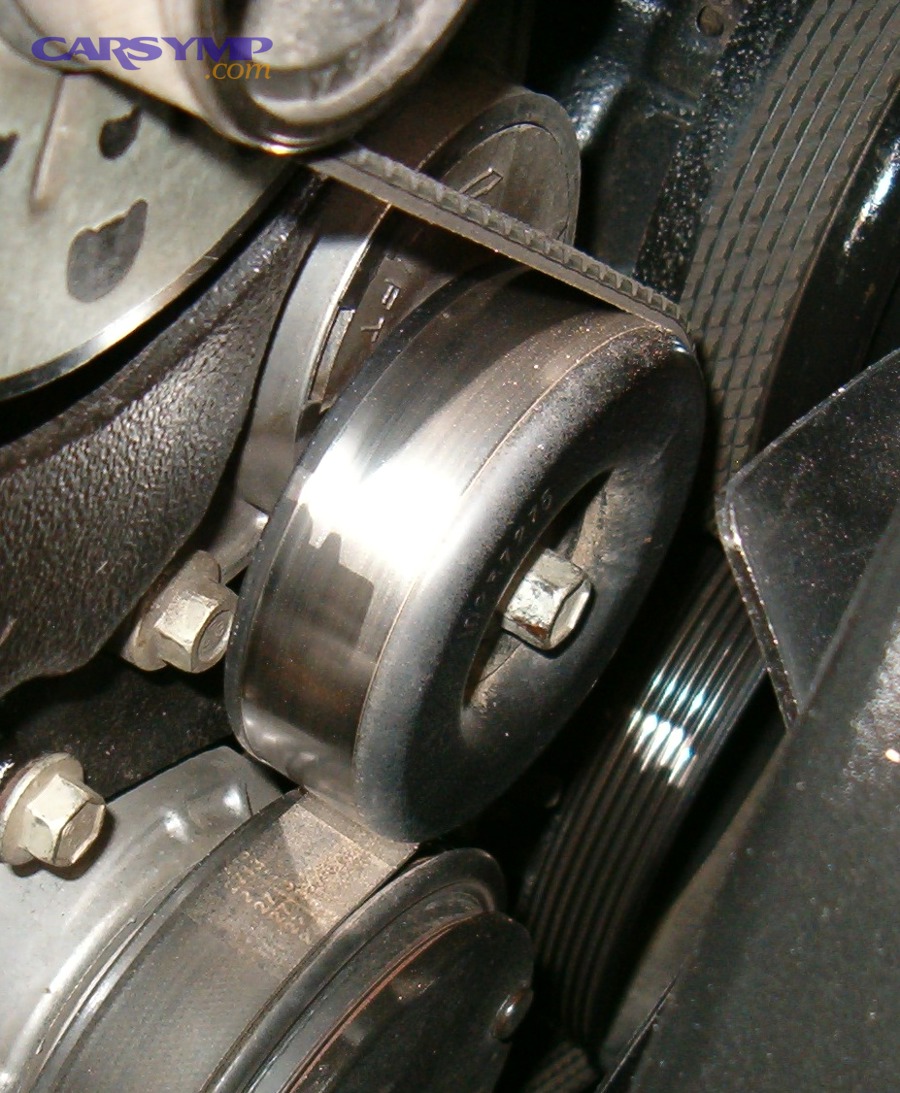
How does steering load create squeal even if the belt “looks fine”?
Steering input can increase accessory resistance quickly, and that sudden drag can overwhelm a marginal belt/tensioner setup, causing slip and squeal even if the belt isn’t visibly cracked.
Next, treat this like a stress test: if the squeal is strongest at low RPM while parking, it supports the “high load at low speed” profile that makes slip more likely.
This is why a vehicle can be quiet at cruise but squeal when backing out of a spot—because the assist load rises while RPM and belt speed are relatively low.
What if it squeals only at full lock?
If it squeals mostly at full lock, it may be normal for some systems to increase load at the end of travel, but persistent squeal suggests belt slip, pump strain, or a tensioner that can’t stabilize load changes.
Then, check whether the squeal is paired with steering heaviness or jerky assist—because that combination suggests the assist system is working harder than it should, raising belt demand.
Also consider fluid condition and correct level on hydraulic systems, since low or aerated fluid can increase pump effort and noise under steering load.
What if it squeals when turning plus you hear a whining noise?
If squeal and whine happen together during steering, the system may be under abnormal load; the belt can slip while the pump (or assist unit) also produces its own tone.
Next, separate “belt squeal” from “pump whine” by briefly revving: belt squeal often changes sharply with RPM, while whine tends to track steering demand more than engine speed.
Many service guides note that power steering-related noises change with turning input, which is a helpful clue when distinguishing steering-load sounds from pure belt slip patterns.
How can you tell belt slip from pulley or accessory bearing noise?
You can usually separate belt slip from bearing noise by combining when it happens (load vs constant), how it sounds (squeal vs growl), and how it responds to simple tests like controlled load changes and careful listening at specific points.
To make this more reliable, use a structured checklist instead of guessing based on volume alone.
Dưới đây là bảng giúp bạn đối chiếu “khi nào kêu” và “kêu như thế nào” để khoanh vùng belt, tensioner, hoặc bearing nhanh hơn. Bảng này tập trung vào các dấu hiệu dễ quan sát mà không cần tháo rời.
| Clue | More consistent with belt slip | More consistent with bearing/pulley issue |
|---|---|---|
| Squeal at cold start, fades quickly | Yes—brief slip from low effective tension/moisture | Less likely unless bearing is already rough and cold-sensitive |
| Squeal mainly during steering input | Yes—load spike can trigger slip | Possible if pump pulley/bearing is rough, but usually adds growl/whine |
| Constant growl/rumble that rises with RPM | Uncommon | Yes—classic rolling element bearing signature |
| Chirp that changes with water mist test | Often yes—points to belt traction/alignment/tension | Usually no change if it’s internal bearing noise |
| Visible pulley wobble or belt tracking off-center | Can contribute | Strongly suggests pulley/tensioner/idler hardware issue |
What sound quality is the biggest giveaway?
A sharp, high-pitched squeal or chirp is more typical of belt slip, while a growl, grind, or “dry rumble” is more typical of a bearing that’s losing smooth rotation.
Next, focus on consistency: bearing noise often persists across warm/cold conditions and may worsen steadily over weeks, while belt slip can be intermittent and weather-sensitive.
SKF notes that healthy bearings tend to produce a more even, smooth sound, while abnormal noise patterns can indicate deterioration—an idea that supports using “sound quality + consistency” as a diagnostic anchor.
How does misalignment mimic both squeal types?
Misalignment can trigger squeal by reducing effective belt contact and creating micro-slips as the belt tries to track, which can show up at startup or under steering load.
Next, look for visual tracking clues—belt riding near the edge of an idler or tensioner pulley—because that often points to bracket alignment or mounting surface issues rather than belt age alone.
Gates’ diagnostic materials emphasize that misalignment and mounting issues can cause abnormal belt tracking and noise, reinforcing why alignment checks belong early in the process.
What quick tests can you do safely without special tools?
Yes—you can do several safe checks: a visual belt-path inspection, a controlled “load change” test, and targeted listening, all while avoiding dangerous practices like hands near moving belts.
To keep it both effective and safe, treat this as an observation exercise first, then move to simple confirmation tests that don’t require disassembly.
How do you run a visual inspection that actually finds clues?
Start with a visual scan for cracks, glazing, missing ribs, or frayed edges, then check pulley faces for rust, residue, or obvious misalignment.
Next, look for belt dust (black powder) around pulleys and under the hood—because it often indicates ongoing slip or rapid belt wear from mis-tracking.
Also inspect tensioner arm position (if visible) for an unusually “near the end of travel” stance, which can suggest the belt is stretched or the wrong length.
What is the “spray bottle” test and what does it tell you?
A light mist of water onto the ribbed side of the belt can change the noise if the issue is belt traction or alignment; if the sound changes quickly, it supports a belt slip/misalignment direction.
Next, use the result carefully: a change doesn’t automatically mean “replace the belt,” it means “the belt interface is involved,” so you still verify tensioner control and pulley drag.
Gates training specifically demonstrates a spray-bottle method as a simple diagnostic approach for belt noise, aimed at separating system issues such as tension or alignment problems.
How do you use load changes to isolate turning-related squeal?
With the vehicle safely parked, you can observe whether noise appears when turning the wheel at idle versus when slightly increasing RPM, which changes belt speed and available drive torque.
Next, interpret the shift: if a small RPM increase greatly reduces squeal during steering, that often supports “slip under low-speed load,” which points back to tension, belt condition, or contamination.
If the noise remains harsh and constant even as RPM changes, that pushes suspicion toward a rough pulley or accessory bearing rather than pure slip.
Which components most commonly cause startup squeal vs turning squeal?
There are two main groups: startup squeal is most often belt traction and tension-control related, while turning squeal more often appears when steering load exposes a marginal belt system or a stressed steering assist component.
To translate that into actionable checks, map each noise pattern to the components that change load or tension in that exact moment.
Startup squeal: what are the top suspects and why?
Common startup squeal suspects include a glazed or aged belt, a weak automatic tensioner (spring/damper wear), minor misalignment, or light contamination that reduces friction until heat clears it.
Next, prioritize tension control because it’s the “system-wide multiplier”: a weak tensioner can make a good belt behave badly, while a strong tensioner can sometimes mask minor belt aging until it can’t.
Dayco’s diagnostic guidance underscores low tension, pulley drag, and contamination as dominant causes, which matches the “startup moment” where belt grip and tension control matter most.
Turning squeal: what changes under steering load?
When turning, the steering assist load rises, increasing resistance on the drive system; that can force belt slip or expose a marginal tensioner, and it can also amplify noise from stressed pulleys.
Next, treat this as a load-based symptom: if it squeals most during parking maneuvers, you’re seeing the belt drive near its highest low-RPM demand, which is where weak tension control is most obvious.
In real repairs, this is why “belt + tensioner + idler condition” often matters even when the customer thinks it’s “the pump,” because the pump load may just be the trigger.
What about contamination—does it cause both patterns?
Yes, contamination can cause both: oil or coolant reduces belt friction, so it can squeal at startup and also squeal when steering adds extra load.
Next, find the source, not just the symptom: a small valve cover seep or coolant drip onto the belt path can repeatedly “re-seed” squeal even after a new belt install.
Because contamination is a known belt noise driver, replacing the belt without fixing the leak often leads to repeat squeal within weeks.
How do you test pulleys for bearing noise without guessing?
You can’t confirm bearing failure purely by sound from the driver’s seat, but you can screen for it by targeted listening, checking for wobble, and feeling for roughness during inspection—then confirm with deeper shop-level checks if needed.
To keep the process practical, use a stepwise approach that rules out belt slip first, then focuses on pulley smoothness and alignment.
In plain terms, How to test pulleys for bearing noise starts with identifying which pulley “broadcasts” the harshest sound, then verifying whether it’s tied to belt slip or to rolling-element roughness.
What driveway clues hint at a failing idler or tensioner pulley bearing?
Clues include a persistent growl that rises with RPM, visible pulley wobble, belt tracking that drifts, or a squeal that doesn’t respond to traction-based tests like light misting.
Next, look for heat patterns after a short run: an overheating pulley area (carefully checked without touching moving parts) can suggest excessive drag, which aligns with bearing stress.
Dayco notes that high accessory or idler pulley drag from seized bearings is a common squeal driver, which supports treating “drag” as a core diagnostic target.
What does “bearing noise monitoring” mean in real life?
At a professional level, monitoring often relies on vibration/noise evaluation concepts—healthy bearings tend to sound smoother, while damage creates distinctive abnormal noise and vibration signatures.
Next, translate that idea into your check: you’re listening for “even and smooth” versus “rough and textured,” and you’re watching whether the trend worsens steadily over time.
SKF’s condition monitoring guidance frames listening and vibration observation as practical ways to identify bearing deterioration, reinforcing why consistent rough sounds are a red flag.
When is it unsafe to keep driving, and what should you fix first?
No, it’s not always safe to keep driving with squeal: if the noise is paired with steering heaviness, charging warnings, overheating risk, or visible belt damage, you should treat it as urgent because a belt failure can disable critical systems.
To prioritize correctly, focus on the failure modes that can strand you or create loss of control: belt breakage, loss of assist, or loss of charging.
Which red flags mean “stop driving and inspect now”?
Stop and inspect if you see fraying, missing ribs, chunks, heavy cracking, or if the belt is walking off a pulley edge—because those can precede sudden belt loss.
Next, take warning lights seriously: battery/charging indicators or overheating signs can mean the belt is slipping enough to reduce alternator output or cooling circulation, depending on your setup.
Also treat loud, persistent grinding as urgent, since it can indicate a bearing that may seize—turning a noise problem into a belt-destruction event.
What should you fix first if you have both startup and turning squeal?
Fix the system foundation first: correct belt type/routing, then belt condition, then tension control and idler health, because these influence both patterns and prevent repeat failures.
Next, address steering-load triggers: if turning squeal is severe, verify steering fluid condition/level (where applicable) and check for pump or pulley issues—but only after the belt system is confirmed stable.
In practice, many repeat squeal cases happen because the belt was replaced but the tensioner or a dragging pulley was left behind, so the new belt is forced to slip again.
What does a proper repair plan look like, and what might it cost?
A solid repair plan follows a sequence: verify correct belt and routing, identify the noise pattern under load, inspect tensioner/idlers for control and alignment, and only then replace the parts that match the observed failure mode.
To keep costs predictable, think in “packages”: belt-only, belt + tensioner, or belt + tensioner + idlers—depending on what your diagnosis shows.
In workshop terms, this is where belt squeal diagnosis prevents wasted parts: you’re paying for correctness, not for random replacement.
How much does a typical serpentine belt replacement cost?
Serpentine belt replacement is often one of the lower-cost paths, especially if there’s no seized pulley or alignment hardware problem.
Next, use a range rather than a single number because labor and parts vary by vehicle and location; the goal is to decide whether you’re in “basic service” territory or “system repair” territory.
According to RepairPal’s estimator, the average cost for a serpentine belt replacement is commonly presented in the mid-hundreds, with labor and parts broken out by ranges.
What about the labor cost to fix belt squeal if the tensioner is involved?
The Labor cost to fix belt squeal rises when you add tensioner or idler replacement, because access and component count drive time—even if the parts themselves aren’t expensive.
Next, expect more variance than a belt-only job: some engines have straightforward access, while others require removing covers, wheels, or additional components to reach the tensioner safely.
Real-world estimates frequently show that tensioner-related repairs can cost more than belt-only service due to added parts and labor, so it’s worth diagnosing the tensioner early instead of stacking repeat visits.
How do you avoid paying twice for the same noise?
Avoid repeat costs by fixing the cause chain: if contamination is present, fix the leak; if drag is present, fix the dragging pulley; if tension control is weak, replace or correct it—then install the belt.
Next, confirm with a post-repair load check: steering at idle, A/C on, headlights on, and a brief cold-start observation the next morning to ensure the symptom pattern is gone, not just “masked.”
For vehicle-specific symptom mapping and related noise troubleshooting references, many readers also cross-check common patterns at resources like carsymp.com—but your strongest result still comes from matching the observed noise to the mechanical load change.
The above sequence is guided by the same principles highlighted in manufacturer diagnostic materials: belt squeal often traces back to tension, alignment, drag, or contamination—so a repeatable plan beats guesswork.
Contextual border: Now that you can map startup vs turning squeal to the most probable belt-drive causes, we’ll broaden into uncommon scenarios that imitate belt squeal but require different fixes.
What uncommon issues can mimic startup or turning squeal?
There are a few less-common issues that can imitate belt squeal: intermittent misalignment from a bracket flex, a pulley that wobbles only under load, or a component that creates a squeal-like resonance rather than true slip.
To avoid misdiagnosis, treat these as “only if the common checks don’t fit” candidates—then validate them with the same pattern logic you used earlier.
Could an overrunning alternator pulley or alternator drag cause squeal-like noises?
Yes, alternator-related drag can contribute to belt noise, especially when electrical load spikes at startup; it can behave like a slip trigger even if the belt is not severely worn.
Next, correlate it with electrical load: if the sound changes when headlights, rear defroster, or HVAC blower load changes, it may indicate alternator resistance affecting the belt system.
Can a bent pulley or bracket flex create “only when turning” squeal?
Yes—if a bracket shifts slightly under steering load (or engine torque reaction), belt alignment can change just enough to create slip only during that moment.
Next, watch belt tracking while an assistant gently turns the wheel (with safe distance): if the belt walks or the tensioner arm oscillates more during steering input, alignment or mounting issues move up the list.
Gates diagnostic guidance includes misalignment and mounting surface issues as contributors to abnormal tracking and noise, which aligns with this “load-induced misalignment” scenario.
Could fluid aeration or steering system strain change the noise pattern?
Yes—on hydraulic steering systems, low or aerated fluid can increase pump effort and add noise during turning, which can trigger belt slip and create mixed sound signatures.
Next, check for foamy fluid and consistent steering feel; if steering assist varies or feels jerky, you may be dealing with a steering-side issue that’s forcing belt load spikes.
Can belt dressing “fix” squeal, or does it make diagnosis harder?
It can temporarily change the sound, but it often makes diagnosis harder and can worsen contamination issues, so it’s not a reliable solution for modern ribbed belt systems.
Next, if dressing was used, consider cleaning and correcting the underlying cause (tension, alignment, drag) rather than chasing a sound that’s being chemically masked.
Dayco includes contamination and chemical exposure as belt noise contributors, which is why “quick-fix sprays” can backfire over time.
FAQ
These quick answers cover the most common follow-ups people ask after they’ve identified whether the squeal is startup-driven or steering-load-driven.
To keep the troubleshooting flow consistent, each answer ties back to the same core logic: timing + load change + system condition.
Is it normal for a belt to squeal once in a while on a cold morning?
Sometimes yes, but only if it’s brief, rare, and not getting worse; repeated cold-start squeal usually indicates a belt surface/tension/control issue that’s trending toward failure.
Next, treat frequency as the deciding factor: “once a season” is different from “every morning,” and the latter deserves inspection.
Can I just tighten the belt to stop squeal?
Sometimes no—many vehicles use automatic tensioners, and overtightening (where applicable) can overload bearings and create new problems even if it reduces slip noise.
Next, aim for correct tension/control rather than maximum tension, because the system is designed to manage load changes without damaging pulleys or accessories.
If the squeal happens when I turn, does that mean the power steering pump is bad?
No, not automatically; turning squeal can be a belt system weakness revealed by steering load, so you confirm belt/tensioner/idler condition before condemning the pump.
Next, use the load-change logic: if a slight RPM increase eliminates the squeal, belt slip becomes more likely than a failing pump bearing.
What’s the fastest way to avoid misdiagnosing the noise?
The fastest way is to match the symptom pattern to the mechanism: startup timing points to traction/tension, turning points to load spikes, and constant rough sounds point to bearings—then confirm with a simple, safe test rather than assumptions.
Next, follow a system-first repair plan so you don’t replace a belt when the real issue is drag, alignment, or tensioner control.