


Wet-weather belt noise diagnosis is usually about one thing: the belt is slipping on a pulley because grip drops when water hits rubber and metal at the wrong time.
To narrow it down fast, you’ll focus on where the sound happens (startup, acceleration, steering load, A/C on) and what instantly changes it (load, water mist, temperature, or accessory engagement).
You’ll also learn how to separate true belt slip from “belt-adjacent” noises like a failing idler bearing, a weak tensioner spring, or misalignment that only shows up when everything is damp.
To begin, here’s the key shift in thinking: wet weather rarely “creates” a new problem—rather, it reveals a marginal one that was already close to slipping or squealing, and that’s where the diagnosis becomes predictable.
Why does a belt squeal mostly in wet weather?
Wet-weather belt squeal happens because water reduces friction at the belt–pulley interface, so a belt that is slightly loose, glazed, misaligned, or contaminated can slip and sing.
Tiếp theo, once you understand why grip drops, every common cause becomes easier to spot because each cause changes belt traction in a different way.
Water film turns “almost OK” into “now slipping”
In dry conditions, an aging belt can still “hook” into pulley grooves well enough to stay quiet; in rain, a thin water film acts like a temporary lubricant and the belt starts micro-slipping.
Cụ thể, that micro-slip is what produces the high-pitched squeal: rubber skids, releases, re-grips, and repeats rapidly, creating a vibration you hear as a squeal or chirp.
The key clue is consistency: if the noise appears right after driving through puddles, during misty mornings, or after a car wash, you’re seeing traction sensitivity—not random noise.
Theo nghiên cứu của American Physical Society từ Physical Review B, vào 2005, nước có thể làm giảm ma sát cao su bằng cách “làm mịn” bề mặt tiếp xúc và giảm phần đóng góp ma sát do biến dạng nhớt đàn hồi.
Low tension, glazing, and misalignment are the “big three” exposed by rain
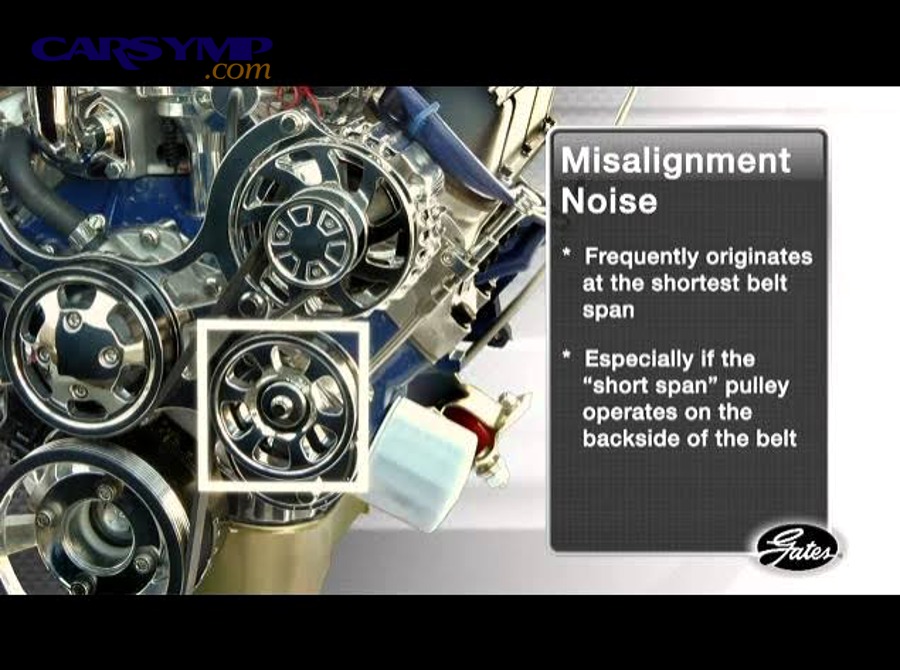
Loose belt tension allows slip under load; glazing makes the belt surface harder and slicker; misalignment forces the belt to scrub sideways and lose effective grip.
Ngoài ra, any one of those can be borderline on a sunny day and obvious on a wet one—so rain becomes the stress test you didn’t know you needed.
Common paths to those “big three” include: a tired automatic tensioner spring, a stretched or wrong-length belt, a pulley with wobble, or a bracket that’s slightly bent from past repairs.
Contamination acts like a friction modifier
Oil, coolant, power steering fluid, and even over-sprayed cleaners can soak into belt ribs and change the rubber’s friction and stiffness, making wet squeal more likely.
Quan trọng hơn, water may not be the only liquid involved—rain can wash existing oily residue into the belt path and briefly make the squeal worse.
If you smell burning rubber or see shiny ribs, treat contamination as a high-probability cause and inspect for leaks before replacing parts.
Is the noise definitely the belt, not a pulley bearing?
No—wet weather can also change bearing noise and resonance, so you must confirm belt slip before buying parts.
Bên cạnh đó, a good diagnosis protects you from the most expensive mistake in this category: replacing belts repeatedly when the real culprit is a rough idler bearing or a weak tensioner.
Sound signature: squeal vs growl vs chirp
Belt slip typically sounds like a sharp, high-pitched squeal that changes instantly with load; bearings more often produce a growl, rumble, or grinding that rises with RPM and doesn’t “switch off” cleanly.
Ví dụ, if you blip the throttle and the noise spikes immediately then fades, that’s classic slip behavior; if it slowly increases with RPM and stays, that leans bearing.
Chirp can go either way: a misaligned belt can chirp rhythmically, and a dry bearing can chirp as its seal fails—so you need one more test to decide.
Quick isolation method: remove the belt (when safe)
If you can safely remove the serpentine belt briefly, you can start the engine for a very short time to see if the noise disappears—if it does, the noise is in the belt drive system, not internal engine components.
Để bắt đầu, do this only if you understand what that belt drives on your vehicle; many engines will overheat quickly if the water pump is belt-driven, so keep runtime minimal and follow safety precautions.
With the belt off, spin each pulley by hand: any pulley that feels gritty, wobbly, or noisy is a strong bearing suspect.
Theo nghiên cứu của Gates Corporation từ bộ phận Tech Tips, vào 2015, tiếng squeal của belt thường chỉ ra lực căng không đủ và cần kiểm tra tình trạng pulley/bearing và chiều dài belt phù hợp trước khi thay tensioner.
“Water mist test” can mislead—use it correctly
Lightly misting water near the belt can change the sound, but the direction of change matters: a squeal that gets louder often suggests more slip, while a squeal that briefly changes pitch may indicate belt surface condition or alignment.
Tuy nhiên, don’t soak the belt and don’t spray chemicals on it—your goal is diagnosis, not temporary silence.
If a tiny mist causes a dramatic change, you’re dealing with traction sensitivity—usually tension, glazing, or contamination—rather than a purely mechanical bearing roar.
What do startup squeal, turning squeal, and rain-only squeal each suggest?
These patterns point to different loads and pulley behaviors, so the “when” of the noise is your fastest shortcut to the “why.”
Hơn nữa, this is where many people misdiagnose: the belt squeals, but the real clue is which accessory load triggers the slip.
Squeal on cold startup: tension and belt surface first
Startup squeal often means the belt is slipping before the tensioner stabilizes and before rubber warms up, so low tension or a glazed belt surface is the top suspect.
Cụ thể, cold rubber is stiffer, and a cold, damp pulley face can be slicker—so a belt that is marginally tight in summer may squeal in winter rain.
Also check for incorrect routing or a belt riding on the wrong pulley surface (ribbed vs smooth), because that can squeal immediately and consistently.
Squeal when turning the steering wheel: power steering load or misalignment
Squeal during steering input usually indicates the belt is slipping under increased power steering pump load, or the belt path is misaligned so load amplifies side-scrub.
Ngược lại, if the sound is more of a groan that matches steering effort, it may be power steering fluid or pump issues—but a sharp squeal is still commonly belt slip.
This is where “Squeal on startup vs when turning clues” becomes practical: the steering-triggered squeal highlights load sensitivity, not just moisture sensitivity.
Rain-only squeal while driving through puddles: water path and splash control
If the noise appears only when water hits the belt area at speed, suspect a missing splash shield, an undertray gap, or a wheel-well liner that lets water spray directly onto the belt.
Đặc biệt, a belt can be healthy yet still squeal if it’s getting repeatedly “washed” by a strong spray pattern, especially on vehicles with low engine bay sealing.
Inspect the plastic shields and liners near the belt side of the engine; a cheap clip or missing panel can create an expensive annoyance.
Squeal when A/C turns on: compressor load exposes weak grip
When the A/C clutch engages, compressor load jumps and a weak belt/tensioner can slip instantly, producing a repeatable squeal.
Ngoài ra, if the squeal happens in cycles as the A/C cycles, that repeating pattern is a strong indicator that accessory load—rather than random wetness—is the trigger.
In that case, focus on belt tension, tensioner travel, and the compressor pulley condition first.
How do you diagnose wet-weather belt noise step-by-step at home?
You can diagnose wet-weather belt noise at home by inspecting belt condition, checking tensioner behavior, testing load triggers, and verifying pulleys for rough bearings—then confirming with one controlled, repeatable change at a time.
Sau đây, follow this workflow in order; it’s designed to prevent “parts-cannon” repairs and to make your conclusion defensible.
Step 1: Visual belt check (rib condition, glazing, tracking)
Look for cracks, missing ribs, fraying edges, shiny/glassy rib faces, or rubber dust around the pulleys; any of these can indicate slip or misalignment.
Để minh họa, a belt that looks “fine” can still be worn: modern EPDM belts can lose rib profile without obvious cracking, so check rib depth and sharpness, not only cracks.
Also watch the belt while idling (from a safe distance): if it wanders side-to-side on a pulley, misalignment or a worn pulley bearing is likely.
Step 2: Confirm correct routing and pulley contact
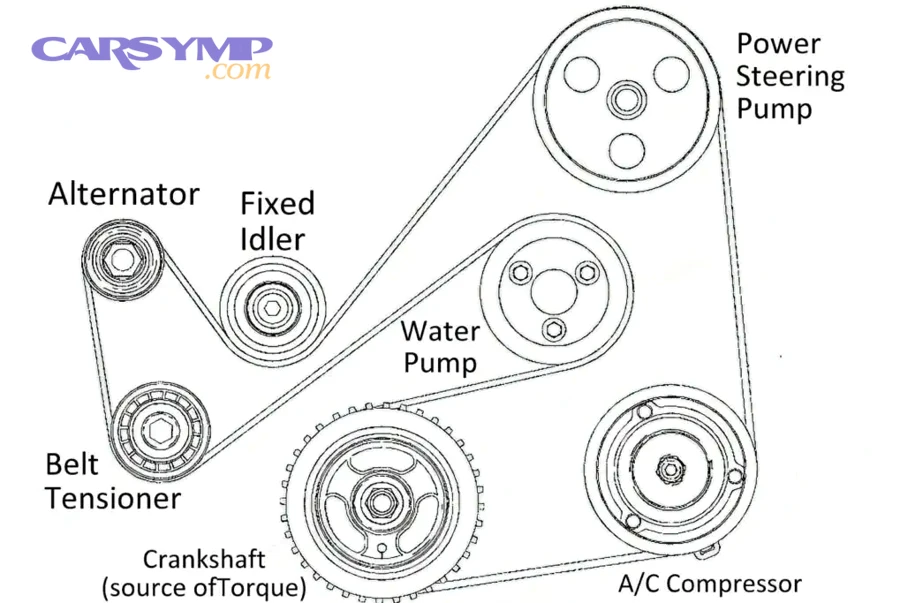
Verify the belt routing against the under-hood diagram or a reliable routing guide, because one wrong wrap angle can reduce contact area and cause wet squeal.
Cụ thể hơn, ensure the ribbed side runs on ribbed pulleys and the smooth back side runs on smooth idlers/tensioners designed for back-side contact.
If routing is wrong, fix that first; every other test becomes unreliable when the belt path is incorrect.
Step 3: Check tensioner range and damping
With the engine off, observe the tensioner arm position and its movement: it should resist motion smoothly and return without bouncing excessively.
Tiếp theo, if the tensioner is near the end of its travel, the belt may be stretched or the wrong length; if it flutters a lot at idle, the tensioner damper may be weak.
A weak spring or damper can act “fine” when dry but slip under wet, sudden loads like A/C engagement or steering input.
Step 4: Load-trigger test (steering, A/C, electrical load)
Reproduce the noise by adding loads one at a time: turn the steering wheel at idle, switch A/C on, then add electrical load (rear defroster, headlights) to load the alternator.
Hơn nữa, note which load produces the quickest change; this maps the squeal to the accessory that demands torque and exposes slip.
Write down the pattern—this becomes your decision tree: steering = pump load; A/C = compressor load; electrical = alternator load.
Step 5: Pulley hand-spin inspection (with belt removed)
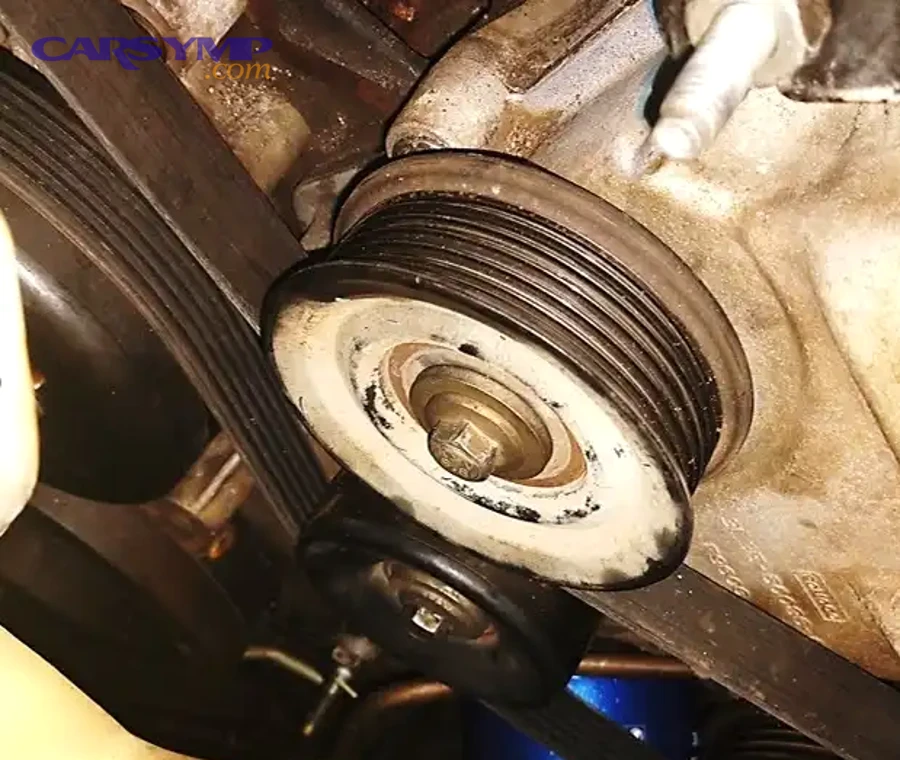
Remove the belt and spin each pulley by hand, listening and feeling for roughness, notchiness, or wobble; any pulley that feels “sandpaper rough” is suspect.
Quan trọng hơn, check idlers and tensioner pulleys closely—they are common wear items and can fail quietly until wet conditions amplify noise.
If you find a rough pulley, replacing only the belt won’t fix the root cause; the noise will return quickly.
Step 6: Confirm the conclusion with one controlled change
Before buying multiple parts, confirm your top diagnosis by changing one variable: replace a clearly worn belt, correct routing, fix a leak, or replace a proven rough pulley—then retest in similar wet conditions.
Tóm lại, if one change makes the noise disappear and it stays gone, you’ve earned your fix—otherwise, return to the decision tree and move to the next most-likely cause.
Which fixes are safe, and which are traps?
Safe fixes address root causes—tension, alignment, wear, and contamination—while traps only mask symptoms and can damage belts or bearings.
Ngoài ra, this is where many “quick hacks” waste time: if your goal is a lasting repair, you want cause control, not temporary quiet.
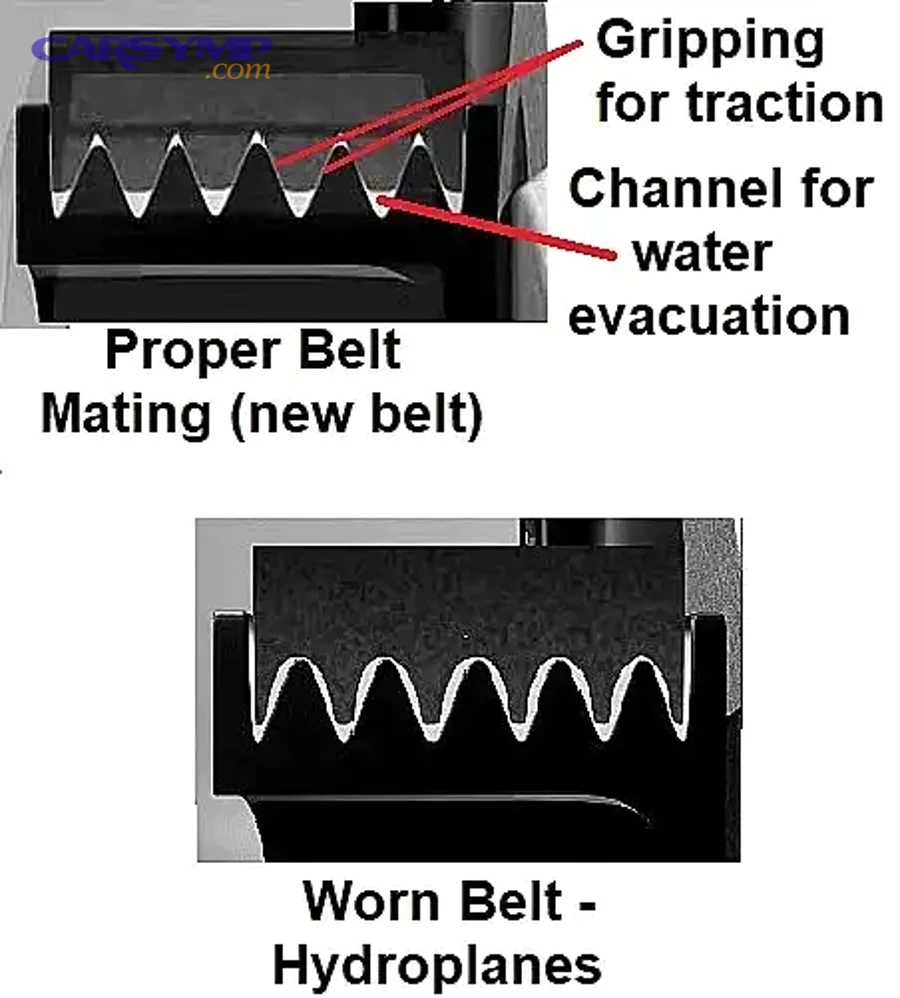
Safe fix: replace a worn or glazed belt (and clean the pulleys)
If the belt is glazed, hardened, rib-worn, or contaminated, replacement is the correct fix—especially when wet weather consistently triggers noise.
Cụ thể, wipe pulley grooves and smooth faces with a clean rag to remove rubber dust and residue before installing the new belt, so the new belt doesn’t inherit a slick surface.
Also confirm the new belt is the correct length and rib count; an “almost fits” belt can create persistent squeal even when brand new.
Safe fix: correct tensioner problems (spring, damper, pulley)
If the tensioner is weak, bouncing, at end-of-travel, or its pulley bearing feels rough, replacing the tensioner assembly (or pulley where serviceable) is a lasting repair.
Hơn nữa, tensioner issues are a leading reason why repeated belt replacements fail; a new belt on a weak tensioner still slips when wet.
Use the tensioner’s behavior as evidence, not guesswork, and prioritize the component that fails a physical test.
Safe fix: stop leaks and contamination
Fixing an oil or coolant leak is not optional if it’s reaching the belt path—contamination can destroy friction behavior and shorten belt life dramatically.
Đặc biệt, rain can carry leaked fluid across the belt and pulleys, so wet days may look “worse” even though the leak is the real villain.
After leak repair, replace the belt if it has been soaked; many belts absorb oils and won’t fully recover friction stability.
Trap: belt dressing, sticky sprays, and “quiet for a day” chemicals
Belt dressings and random sprays can temporarily change friction, but they often attract dirt, accelerate glazing, and can damage rubber over time.
Tuy nhiên, if you’re searching “belt squeal diagnosis” and keep finding spray solutions, treat them as diagnostic crutches at best—not a repair strategy.
The phrase “DIY fixes that actually work” should mean tension, alignment, and clean contact surfaces—because those are the mechanisms that create lasting silence.
When should you replace the belt, tensioner, or pulleys?
There are three primary replacement targets—belt, tensioner, and idler/accessory pulleys—and you choose based on evidence from wear, movement, and bearing feel.
Sau đây, use this structured grouping so you replace the right part once, instead of replacing everything twice.
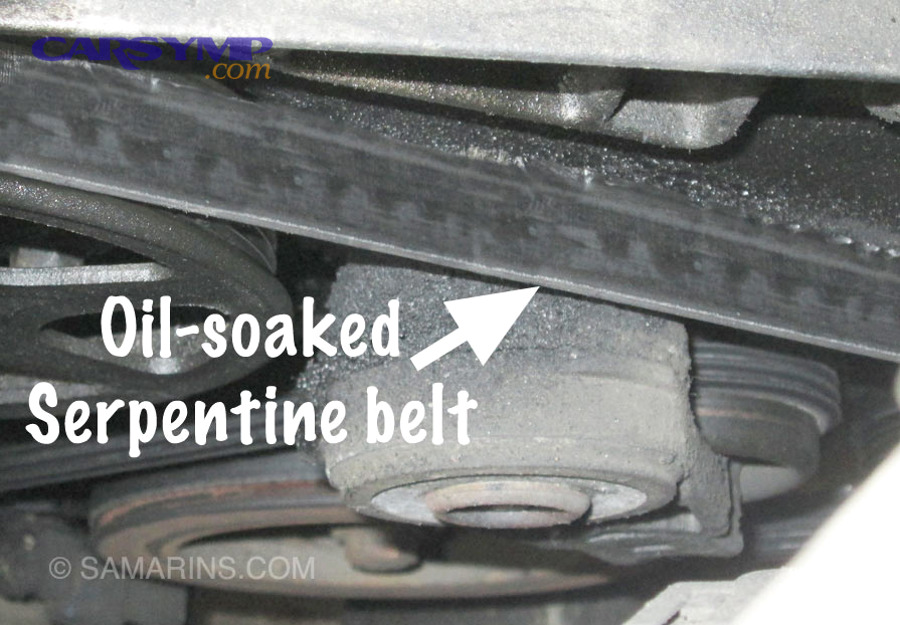
Replace the belt when you see traction loss signs
Replace the belt if ribs are worn shallow, edges are frayed, the surface is shiny/glazed, rubber dust is present, or contamination has soaked into the belt.
Cụ thể hơn, even without cracks, EPDM belts can be “spent” by profile loss; if the ribs look rounded instead of crisp, wet squeal becomes more likely.
If the noise pattern matches load-trigger slip (A/C or steering), a worn belt is often the first, simplest corrective action—provided tensioner function is good.
Replace the tensioner when it can’t control tension dynamically
Replace the tensioner if it’s at travel limit, bounces excessively, has weak return force, or shows pulley bearing roughness.
Quan trọng hơn, a tensioner that “looks okay” can still be weak; if your wet squeal happens under sudden loads, dynamic control is the deciding attribute.
Because tensioners are wear items, a high-mileage vehicle with recurring wet squeal often benefits from tensioner replacement as a root-cause fix—when the tests point there.
Replace idlers/pulleys when bearings fail the hand test
Replace any idler or accessory pulley that feels gritty, has wobble, or makes noise when spun by hand, because bearing failure will keep generating noise regardless of belt condition.
Hơn nữa, a bad bearing can heat up, seize, and throw the belt—turning an annoying wet squeal into a roadside breakdown.
If one pulley is bad, inspect the rest; multiple pulleys can age together, especially on vehicles with the original hardware past 100k miles.
A table to match symptoms to the most likely cause
This table helps you map the timing and trigger of the noise to the most likely root cause so you can prioritize tests and parts logically.
| When it squeals | Most likely cause | Fast check | Best fix |
|---|---|---|---|
| Cold, wet startup | Low tension or glazed belt | Inspect belt ribs, check tensioner bounce | Replace belt; replace tensioner if weak |
| Turning steering at idle | Slip under power steering load | Reproduce with steering input | Check tensioner; verify belt condition; inspect pump pulley |
| A/C engagement or cycling | Slip under compressor load | Toggle A/C and listen for instant change | Improve tension control; belt replacement if worn |
| Only after puddles at speed | Water spray path to belt | Inspect splash shield/liner/undertray | Repair shields; confirm alignment and belt condition |
| Persistent with RPM, dry or wet | Idler/tensioner bearing | Spin pulleys by hand with belt off | Replace pulley/tensioner |
How do you prevent wet-weather belt noise from coming back?
You prevent recurring wet-weather belt noise by maintaining correct tension and alignment, keeping the belt path dry and clean, and replacing wear items before they become marginal.
Tiếp theo, prevention is easiest when you treat belt noise as a system issue—belt, pulleys, tension control, and contamination—rather than a single part.
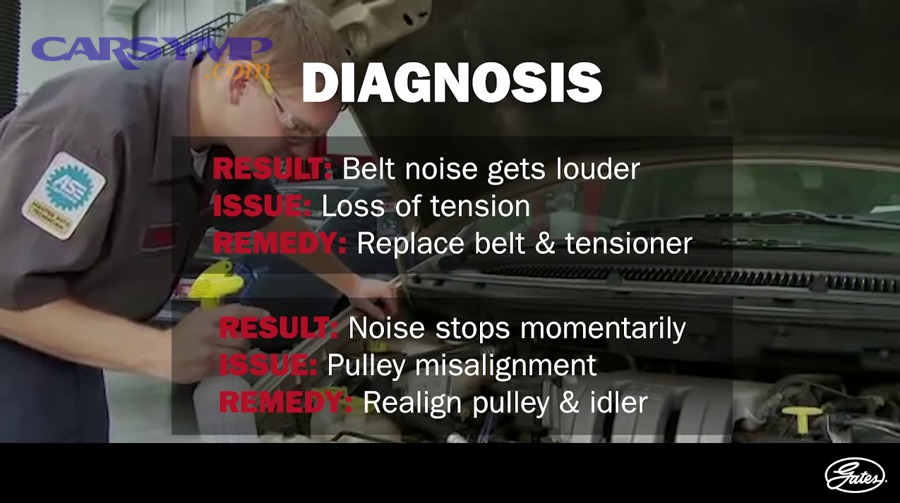
Keep friction stable: clean contact surfaces and avoid contamination
Every time you service the engine bay, avoid spraying oily products near the belt path; even small amounts can change friction enough to trigger wet squeal later.
Ví dụ, if you clean the engine, cover the belt area or clean it deliberately afterward; “shiny engine bay” and “quiet belt” don’t always coexist.
Also, repair minor leaks early—because a slow seep becomes a belt-soaking event after enough rainy drives.
Maintain tension control: don’t ignore flutter
Belt flutter at idle is a common early sign of weak tensioner damping, and it often precedes wet squeal under accessory loads.
Hơn nữa, flutter indicates dynamic instability: the belt alternates between too tight and too loose across engine pulses, and water pushes it over the edge.
If flutter is visible, plan tensioner inspection and replacement before the belt fails on the road.
Protect the belt from water paths: shields, liners, and undertrays matter
A missing splash shield can act like a pressure washer aimed at your belt, creating a rain-only squeal even with good parts.
Đặc biệt, check for broken clips, missing fasteners, or deformed wheel-well liners near the crank pulley side.
Restoring the intended airflow and spray barrier is often a low-cost, high-impact fix for wet-only symptoms.
Install correctly: alignment and torque aren’t optional
After any front-end or accessory repair, confirm pulley alignment and proper bolt torque; a slightly cocked pulley can squeal under wet conditions long before it fails outright.
Tóm lại, correct install details prevent the subtle misalignments that rain is best at exposing.
Rare causes and edge cases that mimic wet belt squeal
Some “wet belt” noises are actually rare failures that only sound like belt slip, so you should screen for them when the usual fixes don’t change anything.
Giới thiệu ý mới, this contextual border is where you stop chasing the obvious and start checking the uncommon—but still realistic—mechanisms.
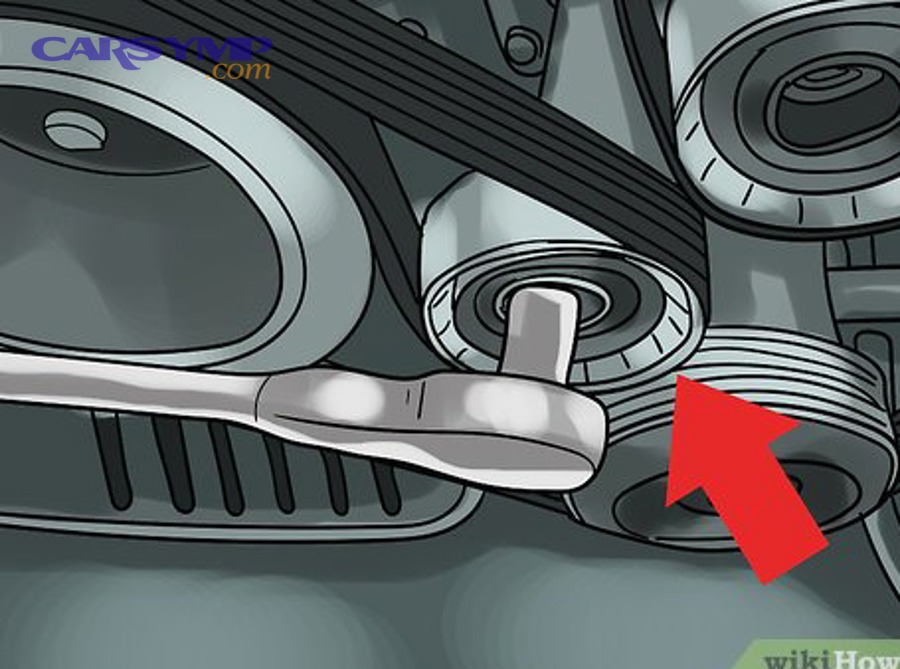
Overrunning alternator pulley (OAP) issues amplify belt vibration
If your alternator uses an overrunning/decoupler pulley, failure can cause chirps and tensioner flutter that become more noticeable when damp.
Cụ thể, the belt may not be slipping as much as it is oscillating, and the noise you hear is the system vibrating rather than pure traction loss.
Watch the tensioner arm while revving slightly; excessive snapping movement suggests a decoupling issue or alternator drag problem.
Harmonic balancer wobble changes belt tracking
A failing crank pulley/harmonic balancer can wobble slightly, pushing the belt off-center and causing intermittent chirp that gets worse when wet.
Hơn nữa, wobble can be subtle at idle but obvious with a flashlight and careful observation from a safe angle.
If the crank pulley looks like it “walks” side-to-side, treat it as urgent—because a failed balancer can create far more than noise.
Engine mount movement shifts alignment under load
Worn engine mounts can let the engine twist under torque, changing belt alignment and causing squeal only during certain maneuvers—often worse when surfaces are wet.
Tuy nhiên, the belt isn’t the only moving part; alignment can change with engine movement, especially on transverse engines with high accessory loads.
If the squeal appears during shifts, acceleration, or turning while accelerating, add mount inspection to your plan.
“Perfect parts” but wrong belt type or wrong pulley design
Some engines require specific belt constructions, and a low-quality or mismatched belt can squeal more readily in wet conditions even if tension is correct.
Quan trọng hơn, a belt that fits dimensionally can still behave differently in friction and stiffness, which is why repeated squeal after replacement can happen with the “wrong” belt choice.
If everything tests good yet the noise persists, switching to an OEM-equivalent premium belt is a reasonable controlled experiment.
FAQ
Can you drive with wet-weather belt squeal?
You can often drive short-term, but you shouldn’t ignore it because the same slip that squeals can overheat the belt, reduce accessory performance, and eventually lead to belt failure.
Does pouring water on the belt prove it’s the belt?
No—water can change multiple noises, so it’s only a clue; you still need to verify tensioner behavior and pulley bearing condition with a controlled test and inspection.
Why did the squeal start right after a belt replacement?
Common reasons include wrong routing, wrong belt length, contaminated pulleys, a weak tensioner that the old belt “tolerated,” or a misaligned pulley that became obvious with a new belt.
Is belt dressing ever recommended?
It’s rarely a true fix because it doesn’t restore correct tension, alignment, or clean traction surfaces; it can also attract dirt and accelerate glazing, making wet squeal worse later.
What if the noise only happens when turning and it’s raining?
That pattern strongly suggests the power steering load is triggering slip and rain is lowering friction further, so check belt tension control first, then inspect the pump pulley and alignment.
How do I make sure the repair is “real,” not temporary?
Use the same trigger that used to cause the squeal (A/C engagement, steering input, or wet spray exposure) and confirm the noise stays gone for multiple wet drives, not just one dry test.