


Types of brake noises and what they mean usually comes down to where friction is happening, what is moving that shouldn’t, or what is worn past its safe point—and you can often tell which one by the sound, speed, and pedal feel.
Beyond comfort, the real goal is to sort “annoying but normal” from “unsafe right now,” so you can decide whether to clean, lubricate, bed-in, adjust, or schedule service before damage spreads.
Also, brake noises can be intermittent: they may appear only in the morning, only in reverse, or only with light pedal pressure, so pattern recognition matters as much as the sound itself.
To begin, Giới thiệu ý mới: we’ll group the common sounds, decode what they typically indicate, then show a fast, safe triage process you can use without guessing.
How many brake-noise categories matter most on the road?
There are six brake-noise categories most drivers should recognize: squeal, grind, click/clunk, scrape, hum/whir, and pulsing/“whoomp”—because each points to a different mechanism and urgency level.
Next, to turn this into action, use the table below as a “sound-to-meaning” map before you start pulling parts apart.
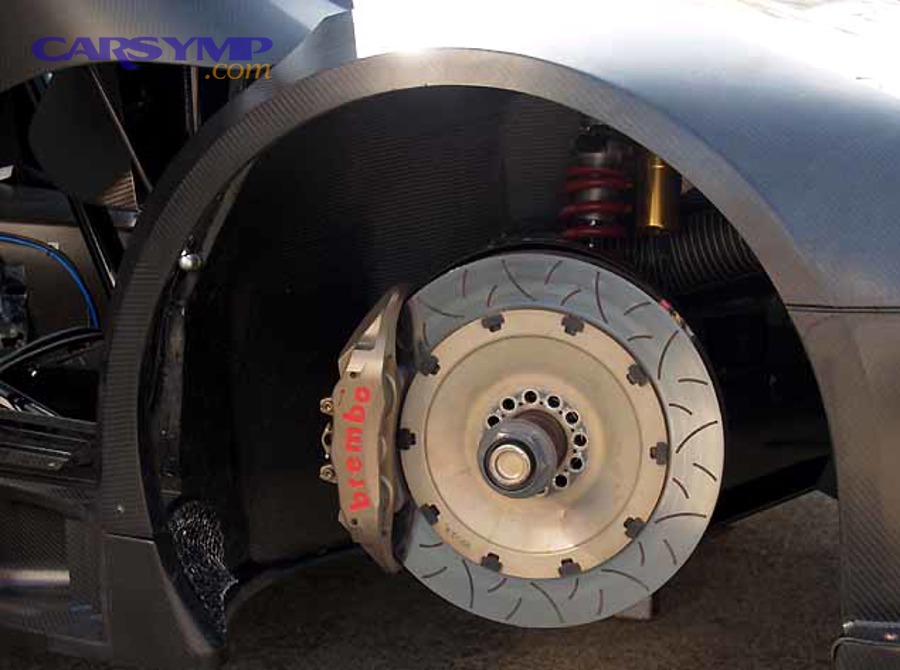
This table contains the most common brake-noise types, what they often mean, and the quickest first check so you don’t waste time.
| Noise you hear | What it often means | Urgency | Fast first check |
|---|---|---|---|
| High-pitched squeal (light braking) | Pad vibration, glazing, light contact, or wear indicator nearing limit | Low–Medium | Look through wheel: pad thickness, shiny/glazed rotor face |
| Loud metal-on-metal grind | Pad material gone; backing plate contacting rotor | High | Stop driving; inspect immediately to prevent rotor/caliper damage |
| Clicking/rattling | Loose hardware, pad clips, caliper slides, or anti-rattle spring issues | Medium | Listen over bumps; check caliper bracket movement and clips |
| Scraping while driving (no pedal) | Dust shield touching rotor, debris caught, or backing plate bent | Medium | Steer left/right; inspect shield clearance and rotor edge |
| Hum/whir that changes with speed | Rotor surface pattern, pad compound, or sometimes wheel bearing | Low–Medium | Coast vs brake test: does it change only when braking? |
| Pulsing/“whoomp” with vibration | Rotor thickness variation, deposits, or runout-related pedal pulsation | Medium | Feel pedal + steering wheel; check for uneven rotor face or hot spots |
Why the same brakes can make different noises on different days
Brake noise is sensitive to temperature, humidity, surface films, and light-contact pressure, so a “cold morning squeal” can fade once heat and friction stabilize the pad-to-rotor interface.
In addition, the same sound can have different meanings depending on context: a short squeak at the first stop after rain can be benign surface rust, while a constant squeal that grows louder can be a wear limit warning.
To make this practical for brake noise diagnosis, always log three clues: when it happens (cold/hot), how it changes (light vs hard braking), and what else you feel (pulsation, pulling, vibration).
One evidence-based clue that reduces guessing
The highest-value hint is whether squeal is a “defect” or a friction behavior; Theo nghiên cứu của Porsche Cars North America từ AfterSales, vào 03/2016, disc brake squeal is described as a common customer complaint and can be a normal result of different factors acting on the brake system rather than a defect.
What does a high-pitched squeal during light braking usually signal?
A high-pitched squeal during light braking most often signals pad vibration or stick-slip at the pad/rotor interface, sometimes amplified by glazing, missing lubrication points, or a wear indicator nearing its threshold.
Next, instead of swapping parts blindly, match the squeal to its most common triggers and confirm with a quick visual check.

Common squeal triggers that are “annoying but not always dangerous”
Light pedal pressure is the squeal sweet spot because it can allow micro stick-slip transitions; that’s why many cars squeal in parking lots but go quiet during firmer stops.
Glazing (a smooth, shiny pad surface) can raise the chance of squeal, especially after repeated gentle stops or overheating; you may also notice reduced initial bite.
Surface films from moisture or light rust can create short-lived squeaks on the first few stops; the key is that it diminishes as the rotor cleans up.
When squeal is a warning: wear indicators and thin pads
Many pads use a small metal “squealer” that touches the rotor when pad thickness is low; it creates a sharp chirp to prompt service before metal-on-metal damage.
To avoid misreading the sound, confirm by looking through the wheel: if you can’t see at least a few millimeters of friction material, it’s time for a proper inspection.
And if you’re trying to document Pad wear indicator sound identification for your notes, describe the squeal as “high, constant, and speed-dependent under light braking,” then verify pad thickness to close the loop.
Rotor surface and fitment factors that turn squeal on
Uneven pad material transfer (“patchy” deposits), rotor runout, or a dirty hub face can lead to intermittent squeal that comes and goes as the rotor rotates.
Also, missing or incorrectly installed shims and anti-rattle hardware can let the pad vibrate like a tuning fork, especially on vehicles that are sensitive to NVH.
To anchor this with service data, Theo nghiên cứu của Toyota Motor Sales, USA từ Service (Brake/Front), vào 08/2016, a front brake squeak condition under light-to-moderate braking is addressed with a repair procedure that includes pad/anti-squeal shim-related parts.
What does a grinding sound mean, and when should you stop driving?
A grinding sound usually means hard metal is contacting the rotor—most commonly the pad backing plate after the friction material is worn out—so you should treat it as stop-soon (often stop-now) if it’s loud, persistent, or paired with poor braking.
Next, use a simple “severity test” to decide whether you can creep to a shop or must stop immediately.

The two grinding categories: “soft grind” vs “metal-on-metal”
Soft grind can happen when debris (sand, small stones) gets trapped between pad and rotor; it may come and go and sometimes changes after a few stops.
Metal-on-metal grind is louder, harsher, and often consistent whenever the pedal is pressed; it can quickly score the rotor and overheat the caliper.
As a rule, if the sound appears with every brake application and you feel reduced braking performance, stop driving and inspect before the repair escalates.
Why grinding is expensive: damage cascades
Once the pad backing plate contacts the rotor, it can cut grooves that prevent resurfacing, push heat into seals, and cause uneven braking that affects steering stability.
In addition, overheated components can warp or develop thickness variation, turning a “pads only” job into pads + rotors + possibly caliper service.
How to decide “unsafe to drive” in real life
If the pedal sinks, the car pulls strongly, braking distance increases, smoke appears, or you hear grinding even with very light pressure, consider it unsafe to continue.
And if you are documenting Grinding vs squealing vs clicking diagnosis for your workflow, remember: grinding is the one sound most likely to indicate immediate component damage when persistent under braking.
To connect this to industry guidance, Theo nghiên cứu của Audi (Technical Service Bulletin) từ Revision History, vào 04/2016, customers may report brake squeal at slow-speed stops and the service direction includes improved brake pads and discs—highlighting how friction materials and hardware changes are used to address noise complaints before they escalate.
Why do brakes click, clunk, or rattle over bumps or at low speed?
Clicking, clunking, or rattling usually means something is moving that should be constrained—often pad hardware, caliper slides, loose anti-rattle springs, or worn mounting points—so it’s a “fix soon” sound that can become unsafe if hardware loosens further.
Next, the fastest way to narrow it down is to separate “noise when braking” from “noise when the wheel moves.”
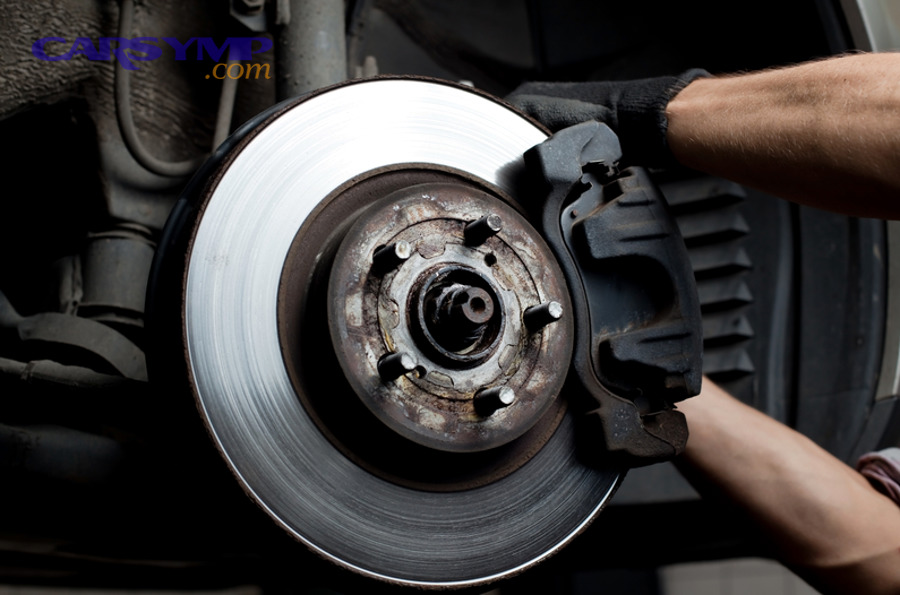
Hardware movement: the most common cause
Disc brakes rely on clips, springs, and shims to keep pads from chattering; when a clip is missing, bent, or installed incorrectly, the pad can tap the bracket and create a click.
Similarly, dry or sticking slide pins can cause uneven pad contact; the pad “releases” abruptly, producing a knock or tick as you transition on/off the pedal.
How to reproduce the sound safely
Try this pattern test: drive slowly on a smooth surface, apply the brake lightly, then release; if the noise appears exactly on the transition, suspect pad movement or caliper slides.
Then drive over a small bump without braking; if the sound persists, you may be dealing with loose hardware, a bent backing plate, or even suspension components that mimic brake noise.
What to check before replacing anything
Look for missing anti-rattle springs, uneven pad wear, torn slide pin boots, and contact marks on the bracket where the pad ears sit.
And if you’re compiling Rotor issues that cause noise into your notes, remember that rotor faults usually show up under braking (pulsation, whoomp, scraping with pedal), while hardware rattles can happen even without pedal input.
Why do you hear scraping even when you are not pressing the pedal?
Scraping without braking most often means rotor contact with a stationary part—such as a bent dust shield—or debris trapped between rotor and shield, and it commonly changes with steering angle or road bumps.
Next, use steering and speed as your diagnostic lever because true pad-to-rotor scraping usually changes when you apply the brake, while dust-shield scraping often does not.
Dust shield contact: the classic “after a pothole” scrape
The thin metal shield behind the rotor can bend inward from road debris, jack placement, or rough impacts, then lightly touch the spinning rotor.
This often produces a constant metallic scrape that can get louder when turning because the hub and rotor shift slightly under side load.
Debris between rotor and shield: the intermittent scrape
Small stones can lodge near the rotor edge and create a scrape that appears suddenly, then vanishes after a few turns or after reverse/forward changes.
If the scrape is rhythmic with wheel rotation and disappears briefly after braking, debris is a strong suspect.
Backplate or pad edge contact: a more serious scrape
If a pad is installed incorrectly, hardware is broken, or a backing plate is bent, you can get scrape-like noises that worsen with braking and may create visible rotor scoring.
In that case, don’t rely on “it went away,” because light contact can still overheat components and accelerate wear.
What does pulsing, vibration, or a “whoomp” noise during braking suggest?
Pulsing, vibration, or a “whoomp” during braking usually suggests uneven rotor thickness or friction variation (often from deposits or runout), which causes the pad to grip-release rhythmically and transmits vibration into the pedal and steering.
Next, the key is to confirm whether it’s brake-induced by comparing how it behaves while coasting versus while braking.

Why it feels like “warped rotors” even when the rotor isn’t bent
Many people call this “warped rotors,” but the sensation often comes from disc thickness variation or uneven pad material transfer, which creates changing brake torque as the rotor turns.
That changing torque is what you feel as pedal pulsation or steering shake—especially at higher speeds or during moderate stops.
What patterns point to deposits vs mechanical runout
If the vibration is strongest after a series of hot stops and improves after gentle driving, deposits or uneven transfer films are more likely.
If the vibration is consistent every time you brake at a certain speed range, or you just installed rotors and didn’t clean the hub face, runout-related issues climb the list.
A service-data clue about squeal patterns and temperature
Some bulletins highlight that noise changes with temperature and warm-up behavior; Theo nghiên cứu của American Honda Motor Co. từ Service Bulletin 19-053, vào 11/2019, a high-pitched squeal under light braking at 15 mph or less is documented with inspection conditions including ambient temperature thresholds and whether the squeal goes away after warm-up.
How can you narrow down the source safely in 10 minutes at home?
You can narrow the source safely by using a four-step triage: confirm the trigger, localize the corner, inspect visible wear points, and then decide whether cleaning/lubrication/bedding-in or professional service is appropriate.
Next, follow the steps in order so you don’t confuse brake sounds with tire, bearing, or suspension noises.
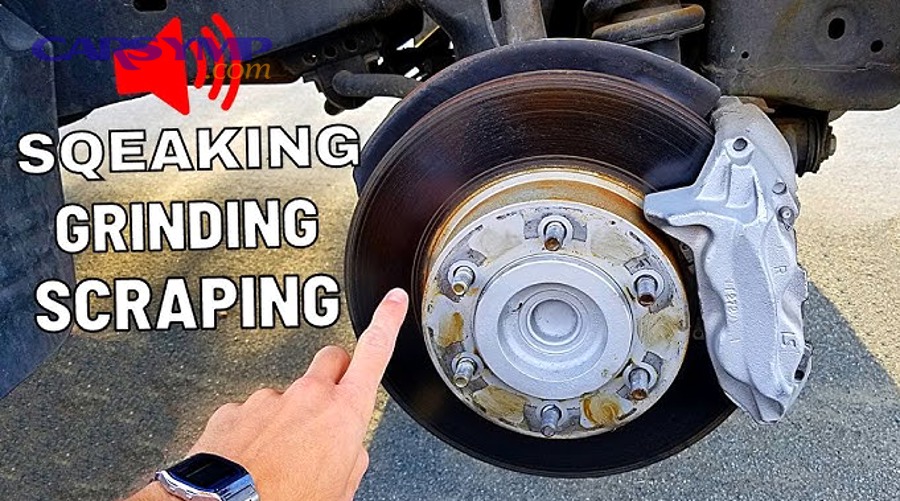
Step 1: Confirm the trigger (brake-on vs brake-off)
On a quiet road, coast without braking and listen; then apply the brake lightly and listen again. If the sound only appears with braking, you’re likely in pads/rotors/calipers, not wheel bearings.
To lead into the next step, focus on repeatability: repeat the same light stop at the same speed to see if the sound is consistent.
Step 2: Localize the corner (front-left, front-right, rear)
Open windows and do a gentle stop; sound often “pulls” to one side. If you have a helper outside the vehicle, they can sometimes identify the corner at very low speed.
Then, if the sound changes when turning left vs right (without braking), suspect shield or debris rather than pad wear.
Step 3: Quick visual inspection through the wheel
Look for pad thickness, rotor scoring, rust ridges, and any shiny “polished” line where something is rubbing. Also look for uneven pad wear (inner vs outer), which hints at slide pin or caliper issues.
After that, check for heat signs: a strong burnt smell, discoloration, or one wheel much hotter than others suggests dragging brakes that deserve immediate attention.
Step 4: Decide “DIY safe” vs “shop now”
DIY-safe actions are limited: cleaning debris, checking dust shield clearance (without bending brake lines), and verifying obvious wear. Anything involving caliper removal, pad hardware, or suspected metal-on-metal contact should move to professional service if you’re not equipped.
And if your plan includes Rotor issues that cause noise, prioritize hub cleaning, correct torque, and proper bedding-in because those steps prevent repeat noise after replacement.
FAQ: quick answers to common brake-noise questions
These answers address the most repeated patterns drivers report, so you can avoid overreacting to normal sounds and avoid underreacting to unsafe ones.
Next, use the questions that match your exact pattern—cold start, reverse-only, or low-speed squeal—and apply the check that follows.
Why do brakes squeal only in reverse?
Reverse-only squeal often comes from pad edge geometry, slight rotor surface rust, or hardware resonance that appears at low speed and light pressure; it’s commonly less severe if it fades after a few stops.
Is a brief squeak after rain normal?
Yes, a brief squeak can be normal because a thin rust film or moisture changes friction for the first few stops; it should diminish quickly as the rotor surface cleans.
Can new pads and rotors be noisy even if installed correctly?
Yes, some compounds are noisier until bedding-in establishes stable transfer films; however, persistent squeal, vibration, or grinding after installation can indicate missing shims, dirty hub faces, or hardware fit issues.
What sound means “stop immediately”?
Persistent loud grinding, smoke, a sinking pedal, or severe pulling under braking are the strongest “stop now” signs because they imply component damage or braking loss risk.
Contextual Border: Up to this point, you’ve learned the common sound categories and a safe triage method. Next, we move into less common patterns and prevention details that change the meaning of the same noise depending on vehicle design, materials, and conditions.
Less common patterns and prevention that change the meaning
Less common brake-noise patterns usually reflect special pad materials, temperature windows, or design-specific damping, so the meaning changes even when the sound seems identical.
Next, use these edge-case cues to prevent repeat noise after service and to avoid mislabeling “normal friction behavior” as a defect.
High-performance pads that squeal but still stop well
Some aggressive compounds trade comfort for bite and heat tolerance, so light-braking squeal can be “normal” even with good pad life—especially when cold. The key is that braking performance stays strong and there is no grinding or severe vibration.
Noise that appears right after brake service
After service, noise is commonly caused by missing/incorrectly seated shims, dry contact points, or uncleaned hub/rotor mating surfaces that introduce runout. If the sound started immediately after a brake job, double-check assembly and bedding-in rather than assuming “the parts are bad.”
To ground the prevention angle with a measurable spec, Theo nghiên cứu của Brembo từ Maintenance (Noises and vibrations), vào 2025 (theo dữ liệu trang hỗ trợ hiện hành), brake disc oscillation on the wheel hub is typically recommended not to exceed 0.10 mm and wheel hub oscillation not to exceed 0.050 mm to reduce vibration/noise risk.
Cold-weather squeal that disappears when warm
Cold squeal that fades after warm-up often reflects friction behavior changes and transfer film stabilization. If the sound is only at low speed and disappears after several stops, it’s usually less urgent than noise that grows with temperature.
Similarly, some service bulletins explicitly differentiate squeal symptoms by warm-up behavior; Theo nghiên cứu của American Honda Motor Co. từ Service Bulletin 19-053, vào 11/2019, squeal conditions are separated by whether the noise goes away after the brakes are warmed up after several stops.
Prevention checklist that keeps noise from coming back
Prevention is mostly about consistency: clean hub faces, use correct torque sequence, replace hardware when specified, lubricate the right contact points (not the friction surface), and perform bedding-in appropriate to the pad/rotor set.
And if you maintain a written workflow for brake noise diagnosis, add one final step: record whether noise changed after bedding-in, because that single observation often separates “surface/transfer” problems from “hardware/wear” problems.