


If your locks act up, the fastest way to get the right fix is to diagnose the pattern first: does one door not locking happen alone, or do all doors fail together? That single observation often narrows the cause from “one local door problem” to “a shared power/control problem.”
When only one door won’t lock, the fault is usually inside that door—think actuator, latch linkage, the door’s switch, or a wire break where the harness flexes. However, when every door refuses to lock or unlock, you’re more likely dealing with shared fuses, relays, wiring feeds/grounds, or a control module decision (body control module/security logic).
In many real-world cases, the symptom isn’t perfectly clean: one door fails first, then others become intermittent; or everything works from the inside switch but not the remote. To begin, you’ll compare input method (key fob, driver switch, passenger switch, key cylinder) with scope (one door vs all doors) and with direction (locks vs unlocks).
To start, here’s the “Giới thiệu ý mới” that matters most: pattern-based diagnosis prevents you from replacing parts blindly and helps you test the right thing in the right order.
What does “one door vs all doors” reveal about the root cause?
Yes—this pattern is diagnostic: one-door failure points to a local door circuit or mechanism, while all-doors failure points to a shared power/control path. To connect the dots, you’ll map the failure pattern to the simplest shared component first.
Tiếp theo, treat the locks like a small network: each door has its own “endpoint” hardware (actuator/latch/switch), but they share “infrastructure” (power, grounds, command signals, and control logic). If only one endpoint drops out, suspect the endpoint. If every endpoint drops out, suspect the infrastructure.
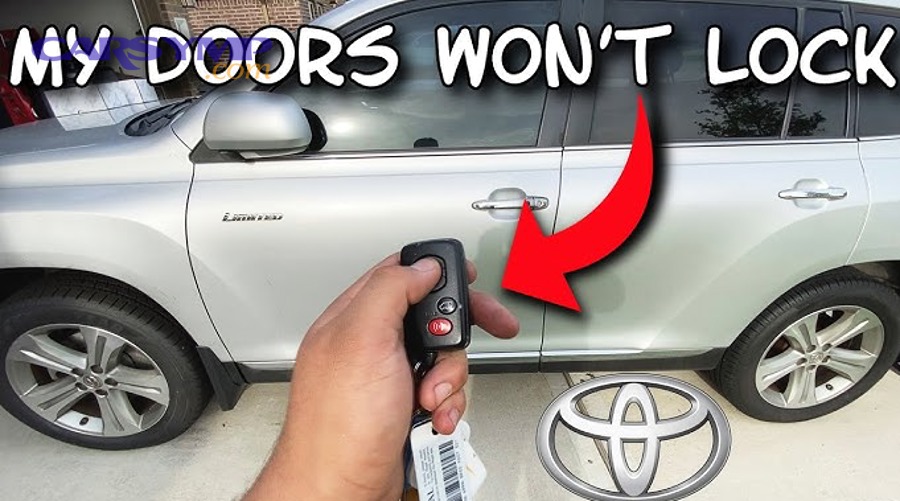
Here’s a quick mental model you can use before touching tools:
- One door won’t lock/unlock → actuator motor, latch/lock mechanism binding, door switch, door wiring (especially the flex point), or that door’s connector.
- All doors won’t lock/unlock → fuse/power feed, lock relay (where used), BCM command logic, shared ground, or a system-wide input failure (remote not recognized, security state, dead vehicle battery).
- All doors fail only from one input (e.g., remote) but work from the inside switch → the “input side” (remote battery, receiver, programming, antenna path) is more likely than the actuators.
To make this even more actionable, the table below contains the most common symptom patterns, the likely causes, and the quickest confirmation test.
| Symptom pattern | Most likely cause category | Fast confirmation test |
|---|---|---|
| Only one door won’t lock; others normal | Local door actuator / latch / door wiring | Listen for actuator noise + test door harness flex point + compare lock/unlock behavior |
| All doors won’t lock from remote; work from inside switch | Remote battery / receiver / programming / antenna | Try spare remote + check remote range + confirm hazards/horn response if equipped |
| All doors won’t lock from any input | Fuse/power feed/ground/BCM control | Check lock fuse(s) + verify voltage at switch or fuse panel + scan BCM if available |
| Locks work sometimes; fail after rain or door movement | Door jamb wiring break or moisture intrusion | Operate locks while gently moving the door harness boot |
| One door locks but won’t unlock (or vice versa) | Actuator weak/binding latch mechanism | Compare current draw/strength; check for stiff linkage or frozen latch |
If only one door won’t lock, which components fail most often?
Group-wise, there are four main one-door culprits: actuator motor weakness, latch/lock mechanism binding, door-switch signal issues, or a broken wire at the door hinge/jamb. To narrow it down, you’ll decide whether the door is “silent,” “clicking,” or “trying but failing.”
Cụ thể, start with what you can observe without disassembly: does the faulty door make any sound when you command lock/unlock? Sound suggests the actuator receives a command; silence suggests no power/ground/signal reaching it—or the actuator is completely open-circuit.
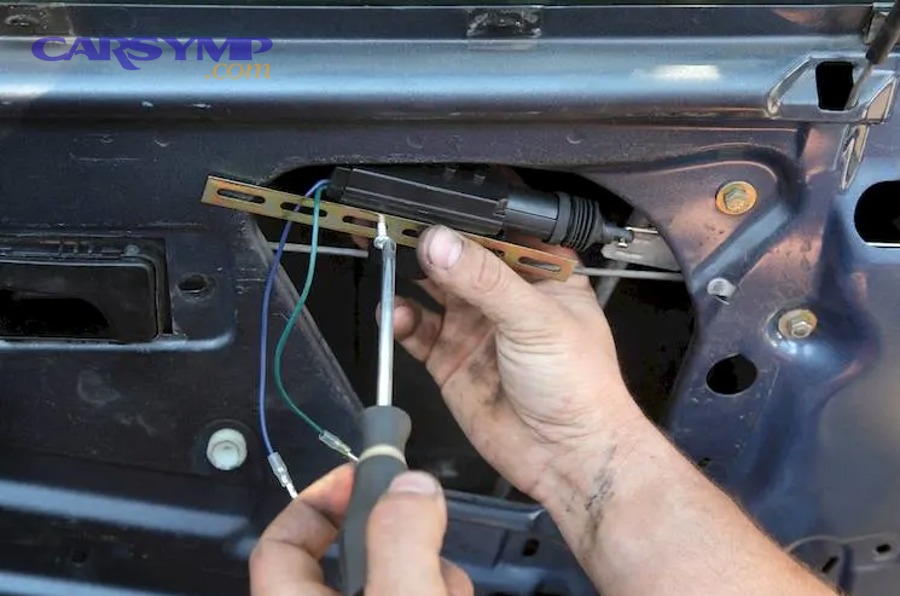
How do you tell a weak actuator from a stuck latch?
Comparison: a weak actuator often moves a little (or works when warm), while a stuck latch feels mechanically stiff and may resist even manual movement. Tuy nhiên, both can look identical until you test “lock effort” with the door panel off.
To connect the symptom to the part, try these quick checks:
- Manual lock knob test: if the knob is hard to push/pull, the latch or linkage may be binding.
- Temperature clue: if it fails in cold mornings but improves later, grease thickening or latch icing can overload a marginal actuator.
- Direction clue: if it locks strongly but won’t unlock (or vice versa), internal actuator gearing or the latch cam can be failing asymmetrically.
Why the door-jamb harness is the “rare-but-real” one-door cause
Definition: the door-jamb harness is the wire bundle that bends every time the door opens; over time, copper strands can fracture inside intact insulation. Để minh họa, a door can fail intermittently when the door is half-open, yet behave normally when fully closed.
Do this non-invasive test: with the vehicle safely parked, repeatedly command lock/unlock while gently flexing the rubber boot between the door and the body. If the lock suddenly works or fails as you move that boot, you’ve found a high-probability wiring fault.
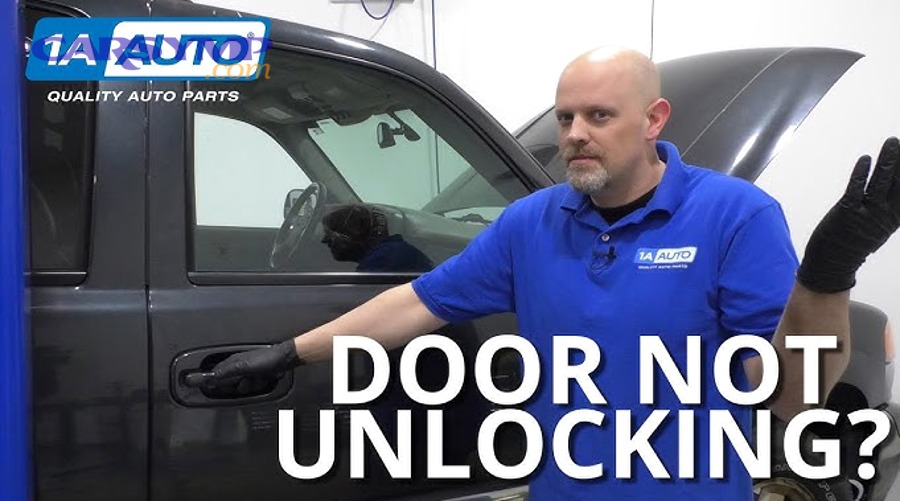
What if the inside switch works but the key cylinder doesn’t (or vice versa)?
Grouping: there are two “command paths”—electrical commands (switch/remote) and mechanical commands (key cylinder/rod). Ngược lại, if mechanical action locks fine but electrical commands fail for one door, the actuator circuit is suspect; if electrical commands work but the key cylinder doesn’t, linkage or cylinder wear is suspect.
Look for a loose rod clip, excessive play at the cylinder lever, or a worn plastic retainer. These issues are door-specific and match the “one door” pattern perfectly.
If all doors won’t lock, what should you check first?
How-to in three steps: confirm vehicle power/voltage stability, check the fuse/relay path for the lock system, then verify whether any input (switch/remote) can command the locks. Để hiểu rõ hơn, you’re hunting for a shared failure that would affect every door.
Sau đây is the fastest order that avoids chasing ghosts:
- Step 1: Battery/voltage sanity check. Low voltage can cause modules to ignore lock commands or behave erratically.
- Step 2: Lock-related fuse(s) and power feeds. Many vehicles have separate fuses for “BCM/Body,” “Door locks,” “Keyless,” or “Accessory.”
- Step 3: One input at a time. Test inside switch, remote, and key. If one works, the shared actuator hardware is likely fine.

How do you separate “remote problem” from “system problem” quickly?
BOOLEAN test: If the inside door switch locks/unlocks all doors but the remote fails, then the actuators and shared power are likely OK, and the issue is on the remote/receiver side. Cụ thể, the quickest confirmation is trying a spare remote or standing closer to the vehicle to see if range is the only problem.
If neither the remote nor the inside switch can move any lock, you’re likely dealing with a fuse, a shared ground, a main feed issue, or module control logic.
What does “all doors fail in one direction only” mean?
Comparison: If every door locks but won’t unlock, suspect a command-side or logic-side issue (input, module decision, or a stuck “unlock inhibit”). In contrast, if every door won’t lock but will unlock, suspect a lock-command circuit, lock relay path, or a module output driver problem.
This “direction-only” clue is valuable because it suggests the system still has power and can move actuators—just not in both directions.
How do you diagnose actuator vs switch vs wiring without guesswork?
How-to with four checks: listen for actuator response, verify command signals at the switch, inspect the door harness flex point, and confirm mechanical freedom at the latch. Bên cạnh đó, you’ll use “comparison across doors” as your strongest diagnostic tool.
Instead of measuring everything on the first attempt, compare the bad door to a good door under the same command. That comparison acts like a built-in control group.
What the sounds tell you in 10 seconds
Grouping: you’ll usually hear one of three behaviors: (A) a solid “thunk,” (B) a faint click or buzzing, or (C) silence. Cụ thể, A suggests normal actuator movement, B suggests a weak actuator or binding latch, and C suggests a missing command/power/ground or a dead actuator.
Try locking/unlocking with the door open and closed. If it works with the door open but fails closed, alignment or latch friction may be contributing.
When the key fob is the only input failing
Definition: a key fob is a low-power transmitter; a weak battery reduces range and can create “works sometimes” behavior that mimics a bigger electrical problem. Hơn nữa, a fob can appear dead even when the car’s lock system is fine.
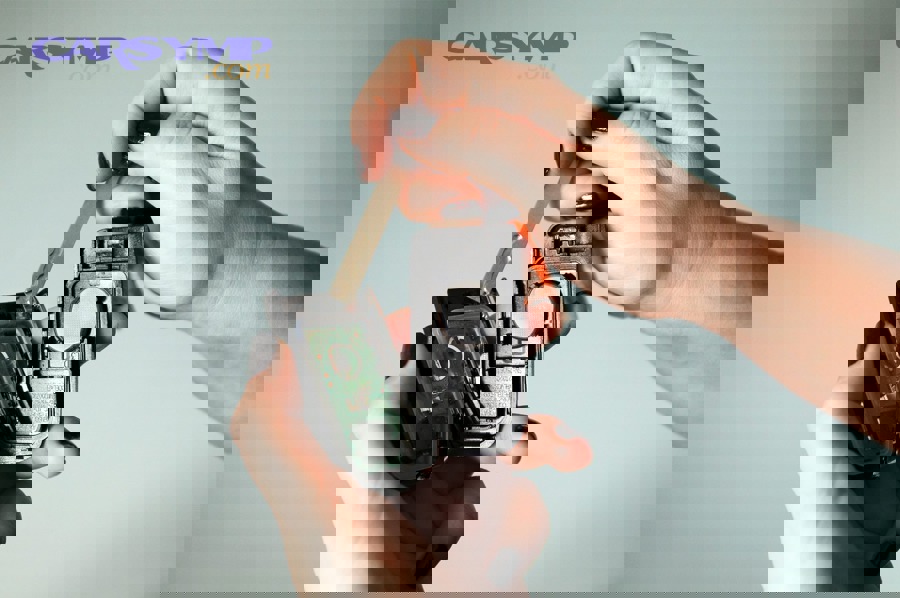
Use these fast differentiators:
- Range test: stand right next to the driver door and try again.
- Spare test: try a second fob if you have one.
- Indicator test: if the fob has an LED, see if it dims or doesn’t light when pressed.
How to catch an intermittent wiring fault
HOW-TO: operate the locks while moving the door harness boot gently; this creates the same mechanical stress that happens during normal use. Đặc biệt, intermittent faults love movement, temperature changes, and moisture because those conditions change resistance.
If the lock responds differently as you flex the boot, treat it as a wiring integrity problem until proven otherwise.
Which shared electrical parts distinguish “all doors” failures?
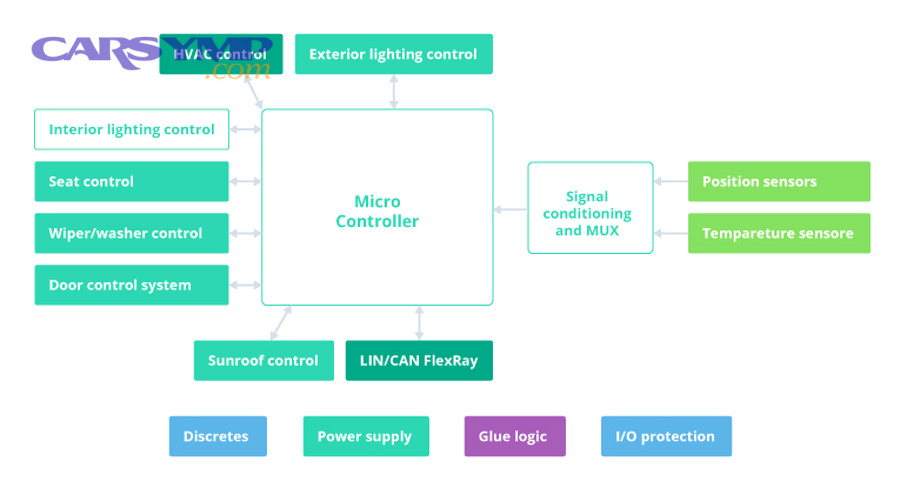
Grouping: there are three shared categories: (1) fuse/relay/power distribution, (2) shared ground or communication path, and (3) control logic (BCM/security/keyless receiver). Để bắt đầu, you’ll rule out the simplest shared failures before suspecting modules.
Quan trọng hơn, modern vehicles route lock commands through the BCM (or an equivalent body electronics module). That means a failure can be “electrical” even when no single door part is broken.
Fuse vs relay vs module output: what symptoms differ?
Comparison: a blown fuse typically causes a hard, consistent failure with no intermittent recovery; a relay (where used) may create intermittent or temperature-related behavior; a module output/logic issue may present as “works from one input but not another,” or “fails only under certain states.”
Try this decision path:
- No locks respond from any input → prioritize shared power (fuses/feeds/grounds).
- Locks respond from inside switch but not remote → prioritize remote/receiver/input recognition.
- Locks respond sometimes; behave oddly with ignition state → consider logic/state conditions (child safety logic, auto-lock features, BCM behavior).
When to suspect the BCM or body electronics
BOOLEAN rule: Yes, you should suspect BCM/body electronics when multiple unrelated body functions show issues together (locks + interior lights + windows + remote functions). Tuy nhiên, don’t jump there first—confirm power and grounds because modules cannot “decide correctly” without clean voltage.
If you have a scan tool that reads body codes, checking for BCM-related fault codes can turn a vague symptom into a precise direction. If you don’t, your best proxy is symptom clustering across body features.
What steps confirm the fix and prevent the problem from returning?
How-to with three outcomes: verify every input method works, confirm every door behaves consistently, then reduce future stress on the failure point (wiring flex, moisture, friction). Tóm lại, you’re not done when it “works once”—you’re done when it repeats reliably.
After any successful fix, do a full functional sweep:
- Lock/unlock from the driver switch, passenger switch (if present), and the remote.
- Test with the door open and closed (especially the repaired door).
- Test lock and unlock directions multiple times to catch a weak actuator before it strands you.
Here’s where the “móc xích” matters: if you found a door-jamb wire issue, reinforce that area and ensure the rubber boot seats correctly so water and repeated sharp bending don’t recreate the failure. If you found latch friction, clean and lubricate the latch mechanism appropriately so the actuator doesn’t fight unnecessary resistance.
In many real repairs, the work that follows is as important as the part replacement: central locking repair is most reliable when you remove the underlying stressor (binding latch, corroded connector, or harness fatigue) instead of only swapping the end component.
If the symptom began after battery replacement or a remote battery swap, some vehicles may require a relearn/resync procedure; in that situation, drivers often ask about How to reprogram key fob after repair because the lock system can be functional while the remote link is not.
And if you’re dealing with a vehicle that routes lock commands through a dedicated receiver or body electronics gateway, careful Keyless entry module troubleshooting can help confirm whether the issue is command recognition, antenna path, or a state-based inhibit—especially when the interior switch still works.
Contextual Border: The main diagnosis above focuses on root-cause patterns (one door vs all doors) and the fastest checks. Next, we’ll cover edge cases that mimic lock failures, plus rare attributes that can send you in the wrong direction if you don’t recognize them.
Edge cases that mimic a lock failure but aren’t the actuator
Grouping: there are four common “look-alikes”: mechanical obstruction, temperature-related latch behavior, security/immobilizer states, and aftermarket accessories. Ngoài ra, these often create confusing intermittency that feels like an electrical failure.
Could a frozen or contaminated latch make one door “act dead”?
Yes: cold, dirt, or dried grease can prevent the latch from moving freely, making the actuator sound weak or silent. Cụ thể, if the lock works after warming the car or after cycling the latch manually, friction is a primary suspect.
Can child safety features or anti-theft logic block commands?
Yes, sometimes: certain vehicles may inhibit specific unlock behaviors under particular states (ignition, speed, security mode). Tuy nhiên, these usually don’t affect only one door—so if only one door fails, return to local door causes first.
Do aftermarket alarms/remote starters create “all doors” symptoms?
Definition: aftermarket systems often splice into lock/unlock trigger wires; a poor splice, loose connector, or failed module can interrupt commands for the whole system. Hơn nữa, because these add a new “command path,” they can create failures that mimic BCM problems.
Is a weak vehicle battery enough to cause lock chaos?
Yes: low system voltage can cause relays to chatter, modules to reset, and actuators to underperform—sometimes affecting all doors. Tổng kết lại, if multiple electrical features act strange at the same time, start with battery/charging checks before chasing door parts.
FAQ
Why does one door lock fine but won’t unlock?
This often points to a weak actuator or a latch mechanism that binds more in one direction. To connect the symptom to the cause, compare the “effort” of the lock knob on that door versus a normal door and check for stiffness or misalignment.
Why do all doors lock from inside but not from the remote?
That pattern strongly suggests the lock system is healthy but the remote command is not being delivered or recognized. Try a spare fob, reduce distance, replace the fob battery, and consider receiver/antenna or programming issues if the symptom persists.
What if locks fail only when it rains or after a car wash?
Moisture intrusion commonly affects connectors, door switches, and the door-jamb harness area. To begin, inspect the rubber boot seating and look for green corrosion at connectors; then test lock function while gently moving the harness.
Is it safe to keep driving if a door won’t lock?
It’s typically drivable, but it’s a security and safety inconvenience—especially if the door might open unexpectedly due to latch issues. If the latch feels abnormal or the door doesn’t close securely, prioritize inspection immediately.