


Calculating a repair cost estimate accurately is the single most important step between discovering damage and handing over money for a fix. A repair cost estimate is a projected total of parts, labor, and fees that tells you — before any work begins — what a repair is likely to cost. Whether you are dealing with a cracked foundation, a failing car engine, or a roof buckling under years of weather exposure, knowing how to read, verify, and calculate that estimate protects you from unexpected bills and bad decisions. The estimate is not a guarantee, but it is your most powerful planning tool.
The most common causes of damage span two major categories: vehicle damage and home damage. Car owners regularly face repair cost estimates for battery failure, brake wear, cooling system breakdowns, and collision damage — while homeowners confront estimates for foundation cracking, plumbing failures, HVAC breakdown, and water intrusion. Each cause carries its own cost signature, shaped by the type of parts required, the complexity of the labor involved, and the region where the repair takes place. Understanding which damage cause you are dealing with immediately narrows the estimate range you should expect.
Even a well-prepared estimate can shift once repairs begin. Hidden damage revealed after disassembly, parts substitution due to supply chain delays, and labor complications that were not visible at intake are the primary reasons a final bill exceeds the original quote. Knowing what causes an estimate to change — and knowing your rights when it does — keeps you in control of the repair process rather than at the mercy of it.
Beyond calculation, repair cost estimates intersect with insurance claims, financing decisions, and the fundamental question of whether a repair is even worth pursuing. When repair costs approach or exceed the value of what you are fixing, the estimate stops being a repair guide and becomes a replacement signal. To better understand how all of these factors work together, let’s explore each layer of repair cost estimation in detail.
What Is a Repair Cost Estimate?
A repair cost estimate is a formal projection — combining parts costs, labor charges, and ancillary fees — issued by a repair provider before work begins, giving the owner a baseline for budgeting and decision-making.
Specifically, understanding what a repair cost estimate is and what it is not will prevent the most common frustration in the repair process: the surprise final bill.

What Does a Repair Cost Estimate Include?
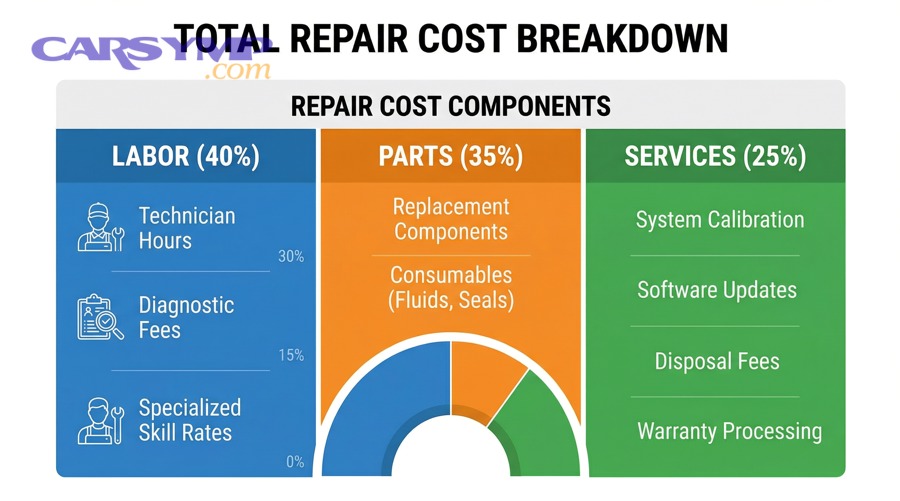
A complete repair cost estimate breaks down into three core components, each of which contributes to the total figure in a different way.
Parts cost covers every physical component that needs to be replaced or restored. This includes both OEM (Original Equipment Manufacturer) parts — which are made by or for the original manufacturer and carry a premium price — and aftermarket parts, which are produced by third-party suppliers and are typically less expensive. The choice between the two directly affects the estimate total, sometimes by hundreds of dollars on a single repair line item.
Labor cost reflects the number of hours a certified technician is expected to spend on the repair, multiplied by the shop’s hourly labor rate. Labor rates vary significantly by region and provider type. A dealership in a major metropolitan area may charge $150 or more per hour, while an independent shop in a smaller city may charge $75–$100 per hour for equivalent work.
Ancillary fees are the line items that many cost estimator tools do not include by default. These can include:
- Diagnostic charges (the cost of identifying the problem before repair begins)
- Shop supply fees (consumables like cleaning fluids, rags, and protective materials)
- Disposal fees (for hazardous materials such as used oil, brake fluid, or refrigerant)
- Applicable sales taxes
RepairPal’s Fair Price Estimator explicitly notes that its estimate ranges do not include taxes, disposal fees, diagnostic charges, or related repairs that may become necessary once work is underway. Always request a fully itemized written estimate that lists all three component categories before authorizing any work.
Is a Repair Cost Estimate the Same as a Final Repair Bill?
No — a repair cost estimate is not the same as a final repair bill. The estimate is a projection based on visible damage and assumed scope; the final bill reflects what was actually discovered, sourced, and completed once the repair was fully executed.
The gap between the two exists for several consistent reasons. When a technician disassembles a vehicle or opens up a wall cavity, damage that was invisible at the intake inspection often becomes apparent. What appeared to be a minor fender impact may reveal bent internal structural components. A plumbing repair that looked straightforward on the surface may expose corroded pipe sections that extend far beyond the original scope. Additionally, if parts originally quoted become unavailable between the time of estimate and the time of repair, the shop must source alternatives — sometimes at a higher cost.
The most important protection a consumer has is the right to written authorization before any scope changes are made. Reputable repair shops are required to notify you and receive your approval before performing any work beyond the original estimate. If a shop completes additional repairs without notifying you first, you have grounds to dispute those charges.
What Are the Most Common Causes of Damage That Require Repair Cost Estimates?
There are two primary groupings of common damage causes requiring repair cost estimates: vehicle damage causes and home damage causes, each classified by the system or structure affected and the severity of impact on the overall asset.
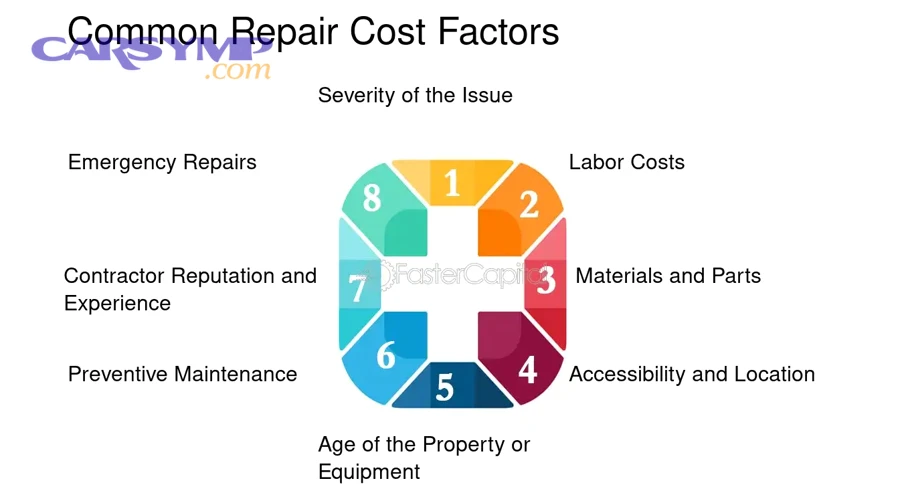
To better understand how damage type drives estimate size, it helps to examine the most frequent causes within each category and the cost ranges they produce.
What Are the Most Common Causes of Car Damage and Their Estimated Repair Costs?
Car owners encounter repair cost estimates most frequently when one of five core vehicle systems fails. The table below organizes common vehicle damage causes by system affected, typical symptom, and estimated repair cost range to give owners a quick reference point before visiting a shop.
| Damage Cause | Affected System | Common Symptom | Estimated Cost Range |
|---|---|---|---|
| Battery/Alternator failure | Electrical | Dimming lights, no-start | $100 – $700 |
| Brake wear | Braking | soft brake pedal, grinding | $150 – $800 |
| Cooling system failure | Engine temperature | overheating at idle or on highway | $500 – $1,333 |
| Collision / body damage | Structural / cosmetic | Visible dents, panel gaps | $500 – $5,000+ |
| Transmission failure | Drivetrain | Slipping gears, no movement | Up to $6,000 |
A soft brake pedal is one of the earliest warning signs that brake system components are degrading, and ignoring it typically converts a moderate repair cost estimate into a significantly larger one. Similarly, overheating at idle and overheating on highway are two distinct diagnostic patterns — idle overheating typically points to a failing radiator fan or low coolant, while highway overheating more often signals a water pump or thermostat failure. A low coolant warning light appearing on the dashboard should trigger an immediate inspection before a cooling system repair estimate becomes an engine replacement estimate.
A clicking noise when turning is another commonly misdiagnosed symptom. CV joint clicking diagnosis is the most likely explanation — a worn or damaged CV (constant velocity) joint produces a distinct clicking or popping sound during turns, particularly at low speeds. Wheel bearing vs CV joint noise comparison is a common source of confusion for vehicle owners: wheel bearing noise is typically a continuous hum or growl that increases with vehicle speed, while CV joint clicking is most pronounced during turns and tends to disappear when driving straight. Low power steering fluid noise confusion adds another layer — a whining or groaning sound during steering input is often misattributed to CV joints when it is actually caused by low power steering fluid, a far less expensive fix.
tire noise diagnosis is similarly important: a rhythmic thumping or droning at highway speeds that changes with lane changes is most often a tire wear or balance issue, not a bearing or drivetrain problem. Correct diagnosis before requesting an estimate prevents unnecessary repair scope expansion.
For oil consumption diagnosis, technicians typically look for blue-tinted exhaust smoke, a persistently low oil level between changes, and spark plug fouling. Left unaddressed, excessive oil consumption can escalate from a minor valve seal replacement into a full engine overhaul.
According to data from Kelley Blue Book, common car repairs range from approximately $169 for a wheel alignment to over $1,251 for fuel injector replacement, with transmission and engine repairs reaching $6,000 and $10,000 respectively according to AAA.
What Are the Most Common Causes of Home Damage and Their Estimated Repair Costs?
Home repair cost estimates are most frequently triggered by six structural and systems-level failure types. The table below presents the most common home damage causes, their typical origins, and the cost ranges homeowners should anticipate.
| Damage Cause | Typical Origin | Estimated Cost Range |
|---|---|---|
| Foundation cracking/settling | Soil pressure, tree roots, erosion | $2,224 – $8,129 |
| Roof deterioration | Age, weather, storm damage | $1,500 – $15,000+ |
| Plumbing failure | Pipe corrosion, joint failure | $500 – $5,000 |
| HVAC breakdown | Component wear, refrigerant loss | $150 – $12,000 |
| Water intrusion / damage | Flooding, roof leaks, pipe bursts | $1,200 – $10,000+ |
| Termite damage | Structural wood compromise | $500 – $30,000+ |
According to Angi’s 2025 State of Home Spending Report, the average household spent $2,041 on maintenance and $1,143 on emergency repairs, with Millennials leading all generations at an average total home spend of $14,199 — the highest of any demographic group tracked.
How Do You Calculate a Repair Cost Estimate Step by Step?
Calculating a repair cost estimate involves three sequential steps — identifying parts costs, determining labor charges, and adding ancillary fees — with the outcome being a realistic total range that allows for informed budgeting and provider comparison.
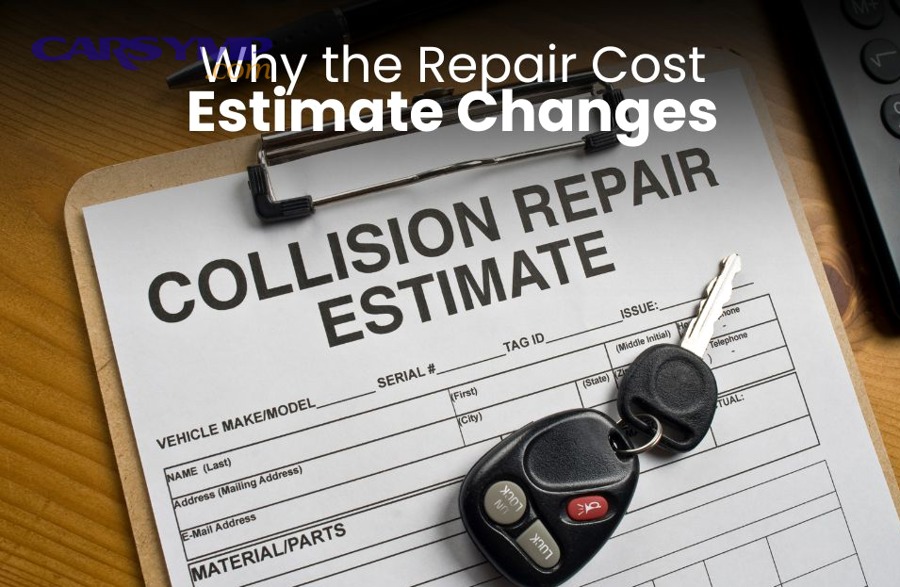
To better understand each step in this process, let’s explore the specific methodology behind each cost component and where the most significant variation occurs.
How Are Parts Costs Calculated in a Repair Estimate?
Parts costs are calculated based on the specific components identified during the initial inspection, priced at either OEM or aftermarket rates depending on the owner’s preference and the shop’s sourcing capabilities.
OEM parts are manufactured to the exact specifications of the original vehicle or structure and carry a reliability premium — they cost more but typically come with a warranty and guaranteed compatibility. Aftermarket parts are produced by independent manufacturers and can cost significantly less, though quality varies widely by brand and application. For a brake pad replacement, the difference between OEM and aftermarket parts alone can shift the estimate by $100 to $200 per axle.
Parts availability is an increasingly important pricing variable. Supply chain disruptions — particularly acute since 2020 — have caused certain parts to be backordered for weeks, forcing shops to source from secondary suppliers at elevated costs. If you receive an estimate that seems inconsistent with online pricing tools like RepairPal or KBB, ask the shop to specify which parts tier (OEM or aftermarket) they are quoting and from which supplier.
How Is Labor Cost Calculated in a Repair Estimate?
Labor cost is calculated using one of two billing models: flat-rate billing or hourly billing, with flat-rate being the most common in automotive repair and hourly more common in home repair.
In flat-rate billing, a standardized labor time is assigned to each repair type — for example, a CV axle replacement might be assigned 1.5 flat-rate hours regardless of how long the actual repair takes. The flat rate is multiplied by the shop’s labor rate per hour to produce the labor line item in the estimate. This means that an efficient technician completing the job in one hour still bills for 1.5 hours.
In hourly billing — standard in home contracting — the labor cost reflects actual time spent, which makes it more variable and harder to predict in advance. A plumber may estimate two hours for a pipe repair, but if the wall cavity reveals additional damage, actual hours could double. This is why home repair estimates have a wider tolerance range than automotive estimates, and why the written scope of work in a home repair contract is particularly important.
Regional labor rate variation is substantial. Labor rates in major cities like New York or San Francisco regularly exceed $150 per hour for skilled trades, while rates in smaller markets may range from $60 to $100 per hour for equivalent expertise.
What Additional Fees Are Included in a Repair Cost Estimate?
Beyond parts and labor, a complete repair cost estimate includes diagnostic charges, shop supply fees, disposal fees, and applicable taxes — none of which are automatically included in most online estimator tools.
Diagnostic charges are the fees associated with identifying the root cause of the problem before any repair begins. A full engine diagnostic at a dealership can cost $100 to $200 and is typically not included in the repair estimate itself. Always ask upfront whether the diagnostic fee will be credited toward the repair cost if you authorize the work.
Shop supply fees cover consumables used during the repair — lubricants, cleaning solvents, protective covers, and similar materials. These are typically small (1–3% of the labor charge) but should appear as a line item.
Disposal fees apply to hazardous materials, including used motor oil, refrigerants, tires, and batteries. These vary by jurisdiction but typically range from $5 to $30 per material type.
Taxes apply to both parts and labor in most jurisdictions, though the exact rate depends on local regulations. On a $1,500 repair estimate, taxes alone can add $90 to $150 depending on your state or municipality.
What Factors Cause a Repair Cost Estimate to Change After It Is Issued?
There are four primary factors that cause a repair cost estimate to change after issue: hidden damage discovered during disassembly, parts price changes or substitutions, labor scope expansion, and technician-recommended upgrades — each of which can add meaningfully to the original total.
Understanding why estimates shift is the foundation of knowing how to respond when they do.
Does Hidden Damage Always Increase the Repair Cost Estimate?
Yes — hidden damage almost always increases the repair cost estimate, because the initial inspection is based on visible surface conditions and the actual scope of damage becomes fully apparent only once components are disassembled.
This pattern is most pronounced in three scenarios. First, in collision repairs, structural components beneath the body panels — frame rails, crumple zones, mounting brackets — frequently sustain damage that is invisible until the outer panels are removed. Second, in home water damage repairs, the extent of rot, mold, or corrosion behind walls and under floors is never fully visible from the surface. Third, in mechanical repairs, adjacent components connected to the failed part may show wear or damage that only becomes apparent once the primary component is removed.
Your most effective protection is to request that any discovered hidden damage be documented with photos or diagnostic reports before the shop proceeds. Ask for a revised written estimate reflecting the additional scope and explicitly authorize the new work in writing before it begins. Reputable shops will not proceed without your approval.
How Do Parts Availability and Market Prices Affect the Final Estimate?
Parts availability and market pricing affect the final estimate when the specific component quoted at intake becomes unavailable or is replaced with a higher-cost alternative between the time of estimate and the time of repair.
This is particularly common with older vehicles, imported equipment, and post-disaster home repairs when demand for specific materials spikes regionally. A roof repair estimate issued before a major storm in a given region may be accurate the day it is written, but two weeks later — when every roofing contractor in the area is sourcing the same materials — those parts prices can increase by 20 to 40%.
One protective mechanism is a written price guarantee — RepairPal’s model, for example, offers a 30-day price guarantee period during which Certified Shops agree to honor the estimate range. When negotiating with a shop, ask directly whether they offer a price lock on parts, and get the answer in writing.
How Do Repair Cost Estimates Compare Across Different Types of Repair Providers?
Online estimator tools win for benchmarking and pre-visit preparation, dealerships are best for warranty-covered or complex OEM repairs, and independent shops offer the most competitive pricing for standard repairs outside of warranty.
To better understand how these provider types differ in practice, the comparison below addresses both accuracy and cost positioning across estimate sources.
Are Dealership Repair Estimates Higher Than Independent Shop Estimates?
Yes — dealership repair estimates are generally higher than independent shop estimates, primarily due to higher labor rates, mandatory OEM parts usage, and dealership overhead structures.
Dealerships employ factory-certified technicians trained specifically on the brand’s vehicles and required to use OEM parts in most repair scenarios. This ensures exact-fit components and certified workmanship, but the premium is real. For a brake pad and rotor replacement on a mid-size sedan, a dealership may quote $600 to $900, while an independent shop using quality aftermarket parts might quote $350 to $550 for the same functional outcome.
However, the dealership premium is justified in specific situations:
- Warranty repairs: If the repair falls within the manufacturer’s warranty or an extended warranty, the dealership is typically the only authorized provider.
- Software and programming: Modern vehicles require dealer-level diagnostic tools for certain repairs involving the ECU, transmission programming, or advanced driver assistance systems.
- Rare or complex components: On vehicles where OEM parts are difficult to source through aftermarket channels, the dealership’s direct manufacturer access can actually result in faster turnaround and equivalent pricing.
For standard wear-and-tear repairs outside of warranty coverage — brakes, oil consumption maintenance, cooling system service, suspension — an independent shop with strong reviews and transparent pricing typically offers better value.
How Accurate Are Online Repair Cost Estimator Tools Compared to In-Person Quotes?
Online repair cost estimator tools are accurate for establishing a reasonable price range and identifying outlier quotes, but they cannot replace in-person diagnostic inspection for final cost accuracy.
The three major online tools — RepairPal, Kelley Blue Book, and AAA’s estimator — each use vehicle-specific data (make, model, year, trim, engine configuration) combined with regional labor rate data to produce estimate ranges. Their strength is benchmarking: if a shop quotes you $2,400 for a radiator replacement and RepairPal’s range for your vehicle in your zip code is $900 to $1,333, you have concrete grounds to question the quote or seek a second opinion.
Their limitation is scope specificity. Online tools cannot account for the condition of surrounding components, the extent of corrosion, or the presence of non-standard modifications. They provide ranges; in-person inspection provides specifics. The recommended approach is to use online estimators before visiting any shop, bring the range data with you, and use it as a negotiating baseline rather than a definitive figure.
When Does a Repair Cost Estimate Exceed the Value of What You’re Repairing?
A repair cost estimate exceeds the value of what you are repairing when the projected repair total approaches or surpasses the current market value (or replacement cost) of the asset — the threshold at which replacement becomes more financially rational than repair.
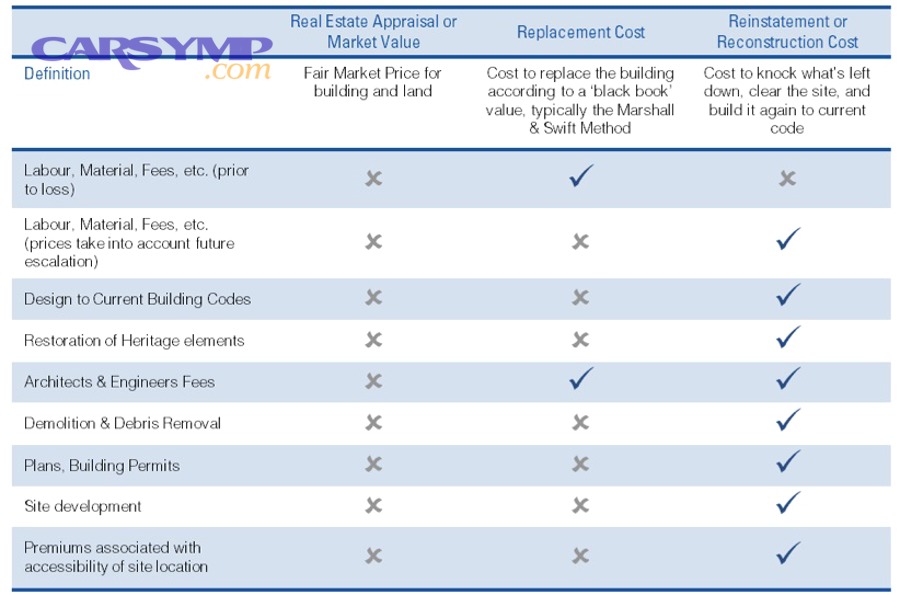
This transition from repair logic to replacement logic is one of the most important — and often most emotionally difficult — decisions a vehicle owner or homeowner faces. The sections below address how to calculate that threshold and navigate the institutional processes around it.
What Is the Repair Cost Percentage Threshold That Triggers a Total Loss Decision?
The repair cost percentage is calculated by dividing the estimated repair cost by the estimated replacement cost, with the resulting percentage compared against established thresholds to determine whether repair or replacement is the rational choice.
In auto insurance contexts, the standard threshold is the vehicle’s Actual Cash Value (ACV) — the pre-damage market value of the car. Most insurers declare a vehicle a total loss when repair costs reach or exceed 70–80% of the ACV, though the exact percentage varies by insurer and state regulation. A vehicle with an ACV of $8,000 that sustains $6,500 in collision damage will typically be declared a total loss rather than repaired.
In disaster and infrastructure contexts, FEMA applies a 50% threshold: if the estimated repair cost for a facility exceeds 50% of the estimated replacement cost, the facility may be eligible for replacement funding rather than repair funding. This methodology — repair cost ÷ replacement cost — is the same fundamental formula that applies in both residential and commercial damage assessment.
For homeowners, the practical equivalent is comparing repair estimates against the current market value of the home. A $40,000 foundation repair on a $120,000 property warrants serious reconsideration of whether the asset justifies the investment, especially if other major systems are also approaching end of life.
How Does an Insurance Adjuster’s Repair Cost Estimate Differ From a Shop Estimate?
An insurance adjuster’s repair cost estimate is a benchmark figure established by the insurer to set the initial payment ceiling — it is not a final determination, and it is not binding on the repair shop you choose.
When you file a claim, the adjuster inspects the damage and issues an estimate based on standardized repair data and the insurer’s preferred pricing models. This figure represents what the insurer believes the repair should cost, which is not always what it actually costs at the shop you select. The Insurance Information Institute is explicit that adjusters’ estimates are starting points, not total claim payments, and consumers have the right to obtain independent shop estimates before accepting the adjuster’s figure.
If your chosen shop’s estimate exceeds the adjuster’s figure significantly, you have several options. First, request that the adjuster re-inspect the vehicle or property with the shop’s documentation of additional damage. Second, ask the shop to submit a supplement directly to the insurer — this is standard practice in body shop workflows. Third, note that your insurer cannot require you to use a specific repair facility, though they may insist on multiple estimates if they believe the original quote is inflated. Critically, do not authorize repairs before receiving insurer approval, as unauthorized work can result in out-of-pocket costs that the insurer declines to reimburse.
Can You Negotiate a Repair Cost Estimate With a Contractor or Mechanic?
Yes — repair cost estimates are negotiable in specific components, particularly labor rates, repair phasing, and ancillary fees, though parts costs are generally fixed by supplier pricing.
The most effective negotiation strategies include:
- Using benchmark data as leverage: Arriving at a shop with RepairPal or KBB range data for your specific repair gives you a factual basis for questioning quotes that fall outside the expected range.
- Requesting phased repairs: If the total estimate is overwhelming, ask which repairs are safety-critical and must be done immediately versus which can be deferred. Phasing repairs across multiple service visits reduces the immediate financial burden without compromising safety.
- Asking about loyalty discounts and promotions: Regular customers at the same dealer or independent shop can often negotiate a modest labor discount, particularly for non-urgent maintenance work. Many shops also honor coupons for common services like oil changes, brake inspections, and alignments.
- Comparing multiple estimates: Collecting quotes from at least three providers — a dealer, a national chain, and an independent shop — creates competitive pressure and the most accurate picture of fair market pricing for your specific repair.
Fixed costs include OEM parts (priced by the manufacturer), disposal fees (set by local regulations), and taxes (non-negotiable). Labor rates, shop supply markups, and diagnostic fee credits are the most realistic areas for negotiation.
What Are the Repair Cost Estimate Differences Between Traditional and AI-Powered Estimator Tools?
Traditional repair cost estimators provide standardized range data based on vehicle or property type and regional labor rates, while AI-powered estimator tools analyze the specific condition of the asset — including inspection report data — to generate a prioritized, customized repair cost estimate with far greater specificity.
Traditional tools such as RepairPal, KBB, and AAA’s estimator are efficient for benchmarking standard repairs but work from general assumptions rather than the actual condition of your asset. They cannot differentiate between a foundation with two hairline cracks and one with active settling and wall bowing — two situations that could carry $2,000 and $20,000 repair estimates respectively.
AI-powered platforms address this gap by accepting uploaded home inspection reports and processing the specific findings through algorithms that factor in damage criticality, recommended repair method, and localized pricing data by zip code. The output is a prioritized repair plan that separates urgent safety-critical repairs from deferred maintenance items, and provides both budget-tier and premium-tier cost options for each issue identified.
This distinction is particularly valuable for real estate buyers and sellers. A buyer who uploads their home inspection report to an AI estimator before closing negotiations can quantify the exact cost of identified defects and use that figure as a basis for price reduction requests — a far more defensible position than a vague reference to inspection findings. Sellers can use the same tool to identify which repairs will produce the highest return on investment before listing the property.
In short, traditional estimators tell you what a repair typically costs; AI-powered estimators tell you what your specific repair is likely to cost — and which repairs to address first.