


A correct clutch break-in (also called bedding-in or run-in) is a simple 500-mile driving routine that seats the friction disc evenly against the flywheel and pressure plate so the clutch grips predictably and lasts longer. If you follow the procedure below—smooth engagement cycles, controlled heat, and no high-torque abuse—you dramatically reduce the risk of glazing, hotspots, chatter, and early slip.
Next, you’ll see what “break-in” really means inside the bellhousing, because understanding the why makes the do’s and don’ts feel obvious—especially when you’re tempted to “test” the new clutch on day one.
Then, you’ll get a concrete step-by-step 0–50 and 50–500 mile plan that works for most street clutches, plus adjustments for stop-and-go city driving versus long highway commuting that many drivers worry about.
Introduce a new idea: once you know the routine, the real win is learning to recognize “normal new clutch behavior” versus symptoms that point to a problem with installation, setup, or heat management—so you can react early instead of replacing parts twice.
What is clutch break-in (bedding-in), and what is actually happening between the disc and flywheel?
Clutch break-in is a controlled seating process where the friction disc gradually conforms to the flywheel and pressure plate faces, building an even contact pattern and stable friction behavior without overheating the surfaces.
To better understand why the first 500 miles matter, it helps to visualize what the clutch is trying to “learn” under light load.
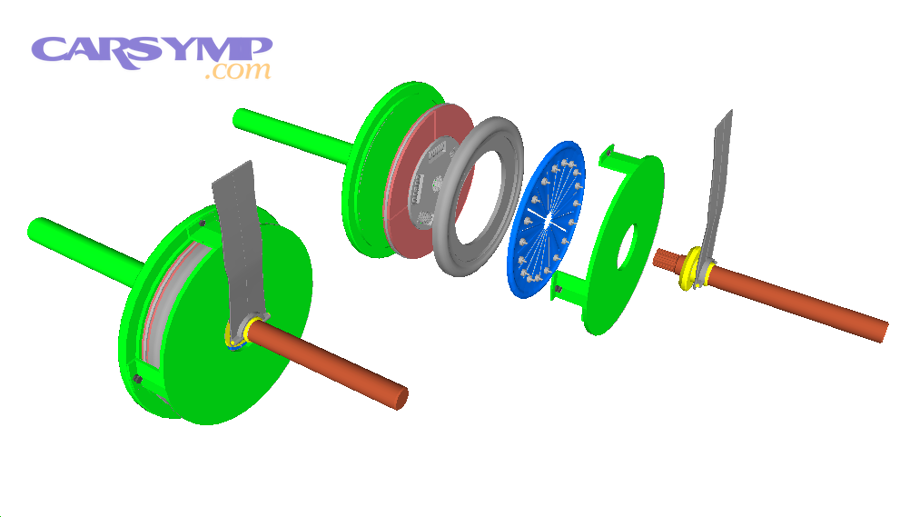
A new clutch doesn’t start life with perfect, full-surface contact. Even with proper machining and clean installation, the friction material, the flywheel face, and the pressure plate face have microscopic peaks and valleys. During break-in, repeated gentle engagements press these surfaces together, wearing high spots and distributing friction material more uniformly across the faces. The goal is not to “burnish” the clutch with heat; it’s to create consistent bite with controlled temperature.
Heat is the spoiler in this story. When you slip a clutch too aggressively—long holds on hills, repeated hard launches, or high-RPM shifts—surface temperature spikes can harden or glaze the friction material and create localized “hot spots.” That reduces coefficient of friction and can make the clutch feel grabby, shuddery, or weak under load. Manufacturers warn against overheating during break-in for exactly this reason.
Is “break-in” the same as “bedding-in” or “run-in”?
Yes—“break-in,” “bedding-in,” and “run-in” are synonyms that describe the same seating process, just borrowed from different communities (manufacturers, motorsport, and brake/friction terminology).
Specifically, “bedding-in” emphasizes friction surfaces mating and stabilizing; “run-in” emphasizes a mileage/time window before full load; and “break-in” is the common garage term. In practice, they all point to the same outcome: a predictable clutch engagement that resists slip when you ask for torque.
If your title says “break in (bed in) a new clutch,” you are already doing smart semantic work: you’re matching how real people search (“break in”) while also covering the technically accurate synonym (“bed in”), which helps search engines and readers connect the concept.
Why can a new clutch slip or chatter if you skip break-in?
Skipping break-in can cause slip or chatter because the disc may never develop an even contact pattern before being exposed to high torque, and uneven friction plus heat can glaze surfaces or create hotspots.
However, the bigger issue is that “skipping break-in” is rarely just skipping—most drivers replace the seating process with a few harsh tests: a hard pull in a tall gear, a launch, or repeated aggressive shifts. Those are the exact conditions that can damage the new friction interface before it stabilizes.
Here’s how that shows up behind the wheel:
- Early slip under load: Engine RPM rises faster than vehicle speed when you accelerate hard in a higher gear.
- Chatter/shudder on takeoff: The clutch grabs and releases in pulses, often worse when cold.
- Burning smell after takeoffs: A sign of excessive slip heat during engagement cycles.
- Inconsistent bite point: Engagement point changes from stop to stop because surfaces are not stabilizing.
Evidence: According to a study by the University of Baghdad from the Department of Automated Manufacturing Engineering (Al-Khwarizmi College of Engineering), in 2024, increasing ambient temperature from 300 K to 390 K reduced measured friction force from 54 N to 36.98 N and lowered average friction coefficient from 0.43 to 0.30, showing how heat can directly reduce friction performance in clutch materials.
Do you really need to break in a new clutch?
Yes, you should break in a new clutch because it improves surface mating, prevents glazing/hotspots, and stabilizes engagement feel—three factors that directly affect grip, smoothness, and service life.

Moreover, the most persuasive reason is simple: major clutch manufacturers publish break-in guidance precisely to avoid early failures and inconsistent performance.
In real terms, break-in is cheap insurance. A clutch job can be labor-heavy, and if you’re already in “clutch replacement” territory, the last thing you want is to pull the transmission again because the clutch was overheated during the first weekend.
To keep the logic crisp, think of break-in benefits as three layers:
- Surface layer: contact becomes more uniform across the disc face
- Thermal layer: you avoid temperature spikes that damage friction material
- Behavior layer: pedal feel and engagement become consistent, which reduces bad habits like riding the clutch
Does the break-in requirement change for organic vs ceramic/metallic discs?
Yes, break-in expectations change by material: organic street discs typically require a longer, gentler mileage-based break-in, while ceramic/metallic (and some race-oriented) discs may use shorter, more specific heat-cycle routines—yet both still require controlled seating.
For example, ACT states that organic street discs should be broken in for 300–500 miles with mild engagement (often stop-and-go), while some race discs “lap in” differently—but overheating is still explicitly warned against.
The reason is friction chemistry and compliance. Organic linings tend to be more forgiving and progressive, but they’re also easier to glaze if you cook them early. Ceramic/metallic linings often tolerate heat better in operation, yet they can feel harsher and may require a very deliberate seating approach to avoid uneven bite.
A practical rule that stays safe across materials is: follow the manufacturer first, then use the generic 500-mile plan if you don’t have a spec. Brand guidance is usually tuned to the friction compound and pressure plate clamp load.
Can a “no break-in” clutch claim be trusted?
Sometimes yes—but only in the narrow sense that the clutch may reach usable grip quickly; in practice, you should still treat the first miles as a controlled seating period because surface mating and heat management still apply.
On the other hand, “no break-in” is often marketing shorthand for “it will hold power quickly,” not “you can launch it immediately with zero risk.” Even performance clutches benefit from avoiding early abuse, because the flywheel and pressure plate faces still need to settle into a stable friction relationship.
If you want a mental check: if the clutch relies on friction to transmit torque, it benefits from controlled friction conditioning. The words may change, but the physics does not.
Evidence: According to technical guidance by EXEDY, the recommended break-in allows 500 city miles or 1,000 highway miles, with driving “easily” and avoiding high-RPM shifting, quick shifting, and launching during that period.
What is the best 500-mile break-in procedure for a new clutch (step-by-step)?
The best 500-mile clutch break-in method is a two-phase routine (0–50 miles and 50–500 miles) that prioritizes frequent gentle engagements, controlled temperatures, and zero launching, producing a fully seated clutch with consistent bite and strong grip.
Below is the exact routine to follow, and once you apply it, the “mystery” of break-in disappears because the steps are repeatable and easy to feel.

What should you do during miles 0–50 to set the clutch up for success?
During miles 0–50, drive like you’re teaching someone smooth takeoffs: light throttle, early upshifts, short slip times, and plenty of complete engagements—because the goal is contact consistency, not heat.
Then, keep your choices simple and intentional:
- Plan routes with stops. Parking lots, local streets, errands—anything that creates controlled engagement cycles.
- Use gentle throttle on takeoff. Aim for clean engagement without rev flare.
- Shift smoothly at modest RPM. Avoid “quick shifting” and aggressive rev-matching games early.
- Avoid hill holds with the clutch. Use the brake (or handbrake) instead.
- Allow cooling gaps. If you smell clutch after a few takeoffs, reduce slip and cruise lightly to cool.
What “gentle engagement” feels like: you release the pedal steadily, the car moves off smoothly, and the clutch is fully engaged quickly—without dragging the pedal halfway for seconds at a time.
This is also the phase where installation issues sometimes reveal themselves. If the pedal feels spongy, engagement point is bizarrely high/low, or shifting is difficult, you may be dealing with Clutch hydraulic system bleeding needs rather than a “break-in problem.” A properly bled hydraulic system helps the clutch fully disengage and engage cleanly, which makes break-in more controlled.
What should you do during miles 50–500 to complete the bed-in evenly?
During miles 50–500, keep building engagement cycles while gradually using normal driving range—still avoiding launches and high-load pulls—so the disc seats evenly across varied conditions without glazing the surfaces.
Specifically, this phase is about volume and consistency, not intensity:
- Mix city and light highway. City miles add engagement cycles; light highway miles add steady-state cooling.
- Vary gears and speeds gently. Don’t do one repetitive pattern for hours.
- Keep slip short. Smooth takeoff, then fully engaged.
- Avoid full-throttle in tall gears. High torque at low RPM can load the clutch hard while it’s still seating.
- Stop if you overheat it. If you get repeated smell or chatter, cool down and reduce slip.
Many drivers ask, “Can I do the whole break-in on the highway?” You can make progress, but it’s slower because you’re not engaging the clutch often. That’s why EXEDY distinguishes 500 city miles vs 1,000 highway miles: the engagement count matters.
Here’s a simple table that summarizes what your driving should look like at each phase (this table is a quick “routine card,” not a brand-specific substitute):
| Break-in phase | Goal | What to do most | What to avoid most |
|---|---|---|---|
| 0–50 miles | Start uniform contact | Stop-and-go, gentle takeoffs | Any launch, long slipping |
| 50–500 miles | Build stable friction | Mixed driving, smooth shifts | High-RPM/quick shifts, hard pulls |
| After 500 miles | Confirm stability | Normal driving | “Testing” in tall gear if symptoms exist |
And if you want a visual walkthrough, one reliable approach is to watch a manufacturer-backed explanation once, then stick to your routine.
Evidence: According to ACT technical support, organic street discs should be broken in for 300–500 miles with mild engagement (often stop-and-go driving) and should not be overheated because overheating can cause hot spots and glazing.
What should you avoid while breaking in a clutch to prevent glazing and hotspots?
You should avoid hard launches, quick/high-RPM shifting, and overheating slip during break-in because these three behaviors spike surface temperature, create uneven contact patches, and can glaze the friction material before it seats.
However, “avoid abuse” is vague, so the real value is naming the exact habits that quietly cook a new clutch.
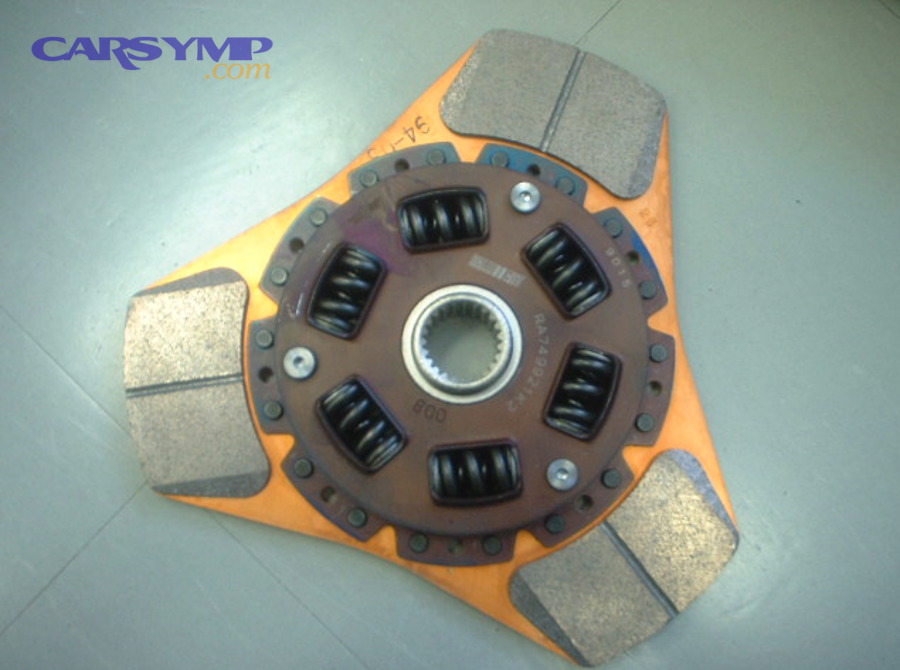
Here are the most common break-in killers, explained in plain driving terms:
- Hard launches: High RPM + fast clutch release + high torque load. Even one or two can create hot spots.
- Power shifting / speed shifting: Quick shifts that shock-load the disc and pressure plate before surfaces stabilize.
- Long clutch slip: Holding the car on a hill with the clutch, creeping for long periods, or modulating half-engaged for seconds.
- High-torque pulls in tall gear: Rolling into throttle in 5th/6th at low RPM can load the clutch hard.
- Repeated heat without cooling: Doing many starts back-to-back without any cooling cruise.
South Bend’s break-in protocol explicitly separates disc types and emphasizes mileage ranges and avoiding improper heat, which aligns with what most manufacturers warn about: you’re protecting the friction interface while it stabilizes.
Should you avoid hard launches, power shifts, and high-torque pulls (yes or no)?
Yes, you should avoid hard launches, power shifts, and high-torque pulls during break-in because they (1) overheat the friction faces, (2) can glaze the disc, and (3) can create uneven “bedded” patches that feel like chatter later.
More importantly, these are exactly the moves people do to “see if it holds,” which is backwards: you prove the clutch later by giving it the best chance to seat now.
If you need a practical substitute for the urge to test: use smooth, moderate acceleration in lower gears after you’re past the initial phase, and only move toward higher load once you’re confident engagement is consistent and smell-free.
Is highway-only driving enough, or do you need stop-and-go engagement cycles?
Stop-and-go engagement cycles are more effective than highway-only driving for break-in progress, while highway driving helps cooling and adds mileage with minimal seating—so the best approach is a mix that favors engagement count without overheating.
Meanwhile, if you must do a long highway commute right after installation, you can still break in safely by doing controlled engagements at the start/end of the trip and adding short “errand loops” during the week to increase engagement cycles.
EXEDY’s guideline (500 city vs 1,000 highway) is essentially a proxy for engagement frequency: city miles equal more starts, which equal more controlled seating opportunities.
Evidence: According to a study by the University of Baghdad from the Department of Automated Manufacturing Engineering, in 2024, higher operating temperature significantly reduced friction coefficient and friction force in clutch friction material tests, supporting why overheating during break-in can reduce grip.
How do you know your clutch is fully broken in?
A clutch is fully broken in when engagement becomes consistently smooth and predictable, the bite point stabilizes, and the clutch holds normal acceleration without RPM flare—because the friction surfaces have seated evenly and stopped changing behavior.
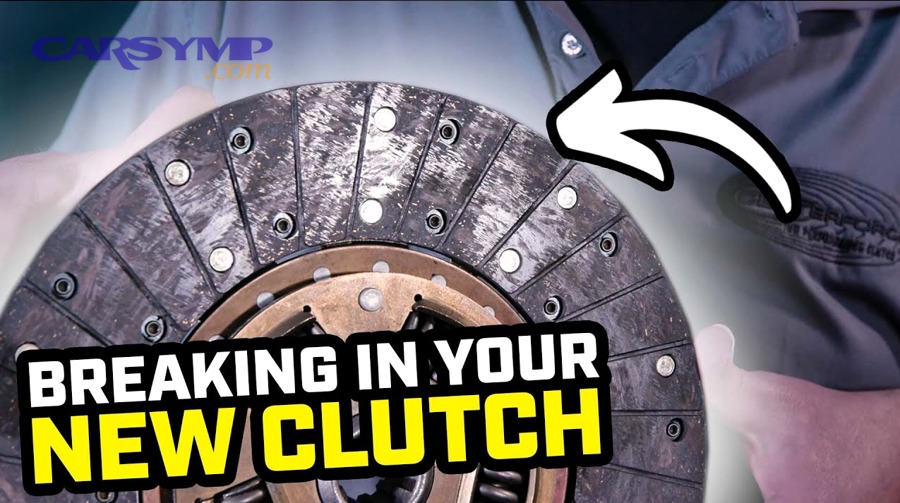
Next, you want a simple set of checks that confirm readiness without “torture testing” the clutch.
What “fully broken in” feels like in daily driving:
- Takeoffs are repeatable. No random grab one stop and soft feel the next.
- Chatter is minimal or gone. A slight texture can remain depending on flywheel type, but it shouldn’t worsen.
- No persistent burning smell. Occasional odor after a mistake can happen; repeated odor means too much slip.
- Shifts feel normal. Engagement and disengagement are clean, with no odd dragging.
If you still struggle with shift quality or engagement feels inconsistent even after the routine, don’t assume it’s “not broken in yet.” That’s where “Manual transmission vs clutch diagnosis” becomes useful: sometimes the symptom you attribute to the clutch is actually synchros, shifter linkage, mounts, or hydraulic release behavior.
What quick checks can you do to confirm it’s bedded-in without damaging it?
You can confirm bedding-in with three low-risk checks: (1) moderate acceleration in a mid gear, (2) consistent takeoff feel across several stops, and (3) stable engagement point over a full drive—because these tests reflect real load without heat shock.
To illustrate, try this safe routine after you’ve completed the break-in mileage:
- Warm the drivetrain normally (10–15 minutes of easy driving).
- In 3rd or 4th gear at moderate RPM, apply smooth, moderate throttle—not full throttle—and watch for RPM flare.
- Do 5–8 normal takeoffs in a row with good technique. The feel should remain consistent, not degrade.
- Smell check: if you smell clutch after normal takeoffs, you are still slipping too long or the clutch is unhappy.
If you notice RPM flare under moderate load, stop “testing” and reassess technique and conditions. Repeated tests can turn a borderline situation into real glazing.
Evidence: According to South Bend Clutch break-in guidance, typical full break-in mileage ranges often fall in the 300–500 mile range depending on the disc type, reinforcing why “fully broken in” is typically measured as a completed mileage window plus stable behavior.
What do you do if the clutch slips, chatters, or smells during break-in?
If the clutch slips, chatters, or smells during break-in, reduce heat immediately, adjust your driving technique to shorten slip time, and diagnose whether the symptom is normal settling or a sign of contamination, hydraulic issues, or surface prep problems.

Then, follow a calm decision tree—because panic-testing is how people turn a minor issue into a damaged disc.
Start with the simplest truth: smell = heat. A one-off smell after you botch a hill start is not the same as a repeated smell after normal takeoffs. The pattern matters.
Here’s a practical response plan:
- Stop the high-heat behavior right away. No more hill holds, no more creeping half-engaged, no more “one more test pull.”
- Cool-down drive. Cruise in gear with the clutch fully engaged for several minutes to reduce temperature.
- Reset your technique. Lower RPM on takeoff, lighter throttle, quicker full engagement.
- Re-check pedal feel and disengagement. Spongy pedal or hard shifting can signal hydraulic air—again pointing to Clutch hydraulic system bleeding needs.
- If slip persists, stop and inspect. Continued slip can burn the disc quickly.
Is some chatter or smell normal during the first 100 miles (yes or no)?
Yes, a small amount of chatter or a brief odor can be normal during the first 100 miles because surfaces are still seating and the driver is adapting to a new bite point, but it should (1) be mild, (2) decrease over time, and (3) not appear after normal takeoffs.
However, if chatter worsens, becomes violent, or shows up even with careful technique, treat it as a sign to investigate rather than “drive through it.”
A key nuance: dual-mass flywheels, aggressive friction compounds, and certain drivetrain mounts can increase perceived chatter even when the clutch is healthy. That’s why symptom trend (improving vs worsening) is the best quick read.
What are the most common causes of early slip: break-in mistake vs installation issue?
Break-in mistakes most often cause early slip through overheating and glazing, while installation issues most often cause early slip through contamination, incorrect surface prep, or incomplete release/engagement—so you diagnose by looking for heat patterns versus mechanical inconsistencies.
More specifically, use this comparison lens:
Break-in mistake clues (behavior-driven):
- Slip appears after a hot event (hill hold, launches, repeated creeping)
- Strong smell accompanies the symptom
- Feel changes with temperature (worse when hot)
- Improves when you drive gently and cool it
Installation/setup clues (mechanical-driven):
- Slip appears immediately from first drive, even with gentle technique
- Pedal feel is abnormal or shifting is difficult (possible hydraulic/adjustment)
- Oil leak signs (rear main seal, input shaft seal) can contaminate disc
- Flywheel face was reused without proper prep
This is where your Flywheel resurfacing vs replacement decision can make or break results. A flywheel that is improperly resurfaced (wrong finish, uneven surface, incorrect step where applicable) can prevent uniform seating and encourage chatter or slip. Even if the clutch kit is new, the mating surfaces still need to be correct.
Evidence: According to ACT technical support, overheating during break-in can cause friction surfaces to fuse, develop hot spots, and glaze—conditions that directly contribute to slip and poor engagement.
How does clutch break-in differ for performance, twin-disc, and non-organic clutch setups?
Clutch break-in differs by setup: organic street clutches typically need longer gentle mileage, ceramic/metallic and racing compounds may use shorter and more specific routines, and twin-disc systems often require careful consistency because their engagement characteristics and surface interactions can feel less forgiving.
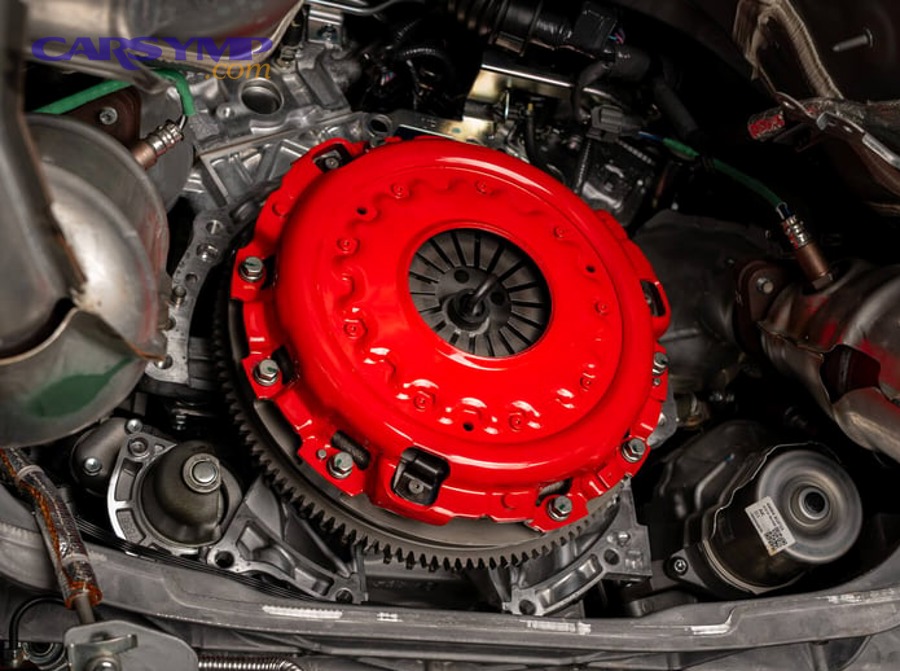
Next, you’ll apply the same core principle—controlled seating without overheating—while adjusting the details to match your clutch’s friction behavior.
To anchor this section: if you have exact manufacturer instructions, follow them first. When you don’t, default to a conservative plan (controlled engagements, no launches, cool-down discipline) because it protects all compounds.
How is a ceramic/metallic clutch break-in different from an organic clutch break-in?
Ceramic/metallic break-in typically emphasizes controlled seating with minimal long slip and may complete in fewer miles, while organic break-in emphasizes a longer window of mild engagement cycles to build a stable friction layer—because the materials respond differently to heat and surface conditioning.
On the other hand, ceramic/metallic clutches can still be damaged by uncontrolled heat spikes, and they can feel “grabby” or abrupt before they settle, which tempts drivers to slip them longer—exactly the wrong move.
Practical adjustments if you’re running ceramic/metallic:
- Keep slip time shorter than you would with organic
- Favor clean engagement over “smoothing it out” with prolonged slip
- Give more cool-down time between repeated takeoffs
- Expect some harshness early, but don’t “polish” it with heat
South Bend’s protocol, for example, differentiates organic vs ceramic vs racing compounds with different break-in characteristics and ranges—an example of why disc type matters.
Do twin/dual-disc clutches require a different bedding method (yes or no)?
Yes, twin/dual-disc clutches often require a more disciplined bedding method because they can clamp harder, engage differently, and react more sharply to uneven seating; the safest approach is (1) stricter heat control, (2) smoother engagement cycles, and (3) longer patience before hard use.
However, “different” doesn’t mean complicated—it means you should be even more conservative with launches and heat early, because the system may hold enough torque to mask early seating issues until it suddenly chatters or behaves inconsistently.
If your twin-disc is designed for street use, many manufacturers still recommend a mileage-based break-in (often in the same broad range), but the penalty for early abuse can feel bigger because engagement behavior is more sensitive.
How does a dual-mass flywheel vs single-mass flywheel affect break-in behavior?
A single-mass flywheel tends to transmit more vibration and can feel more prone to chatter during early seating, while a dual-mass flywheel often feels smoother but can still suffer if surfaces are not seated correctly—so the “best” feel depends on NVH goals, not just break-in.
Meanwhile, the break-in technique stays the same: gentle engagements and heat control. What changes is what you interpret as “normal.” A single-mass setup can make normal break-in sensations feel alarming if you’re used to a quieter OEM dual-mass system.
This is another reason not to confuse comfort with correctness: a smoother feel does not guarantee proper seating, and a noisier feel does not guarantee a problem.
What rare issues can “undo” break-in even if you drove gently?
Rare issues can “undo” break-in when the friction interface is compromised by contamination, incorrect flywheel surface prep, mismatched new/old parts, or release system problems—because even perfect driving cannot overcome a faulty friction environment.
Especially watch these edge cases:
- Oil/grease contamination: A small leak can soak the disc and cause chronic slip.
- Improper flywheel finish or incorrect resurfacing: Wrong surface texture can prevent stable seating; incorrect step (on stepped flywheels) can reduce clamp effectiveness.
- Mixed hardware: New disc with old pressure plate, or reused components with uneven faces, can cause persistent chatter.
- Release system drag: Air in hydraulics or misadjustment can keep the clutch partially disengaged, overheating it during normal driving.
Evidence: According to a study by the University of Baghdad from the Department of Automated Manufacturing Engineering, in 2024, clutch friction characteristics measurably declined as temperature increased, supporting why any rare issue that adds heat (dragging release, slipping from contamination) can degrade friction and shorten clutch life.