


A practical clutch replacement cost estimate usually lands in a wide range because the total is driven by two big variables: how long it takes to remove the transmission (labor) and what parts must be replaced once everything is apart (parts). If you know those two numbers, you can build a realistic budget in minutes.
Next, you’ll see exactly what a “clutch job” quote typically includes, what it often leaves out, and why two shops can give you very different totals for the same vehicle—even when both are honest.
Then, you’ll learn how to estimate your own price range step-by-step, using a simple formula that accounts for local labor rates, drivetrain layout, and the most common add-on parts that change the invoice.
Introduce a new idea: once your estimate makes sense, you’ll be able to judge quotes quickly, avoid surprise charges, and choose cost-saving options that don’t increase the risk of doing the job twice.
What does “clutch replacement cost estimate” mean, and what does it include?
A clutch replacement cost estimate is a budget range for replacing the worn clutch components and the labor to access them, usually combining parts pricing plus transmission removal/installation time. Next, the key is separating “included” work from “possible add-ons” so your estimate matches reality.
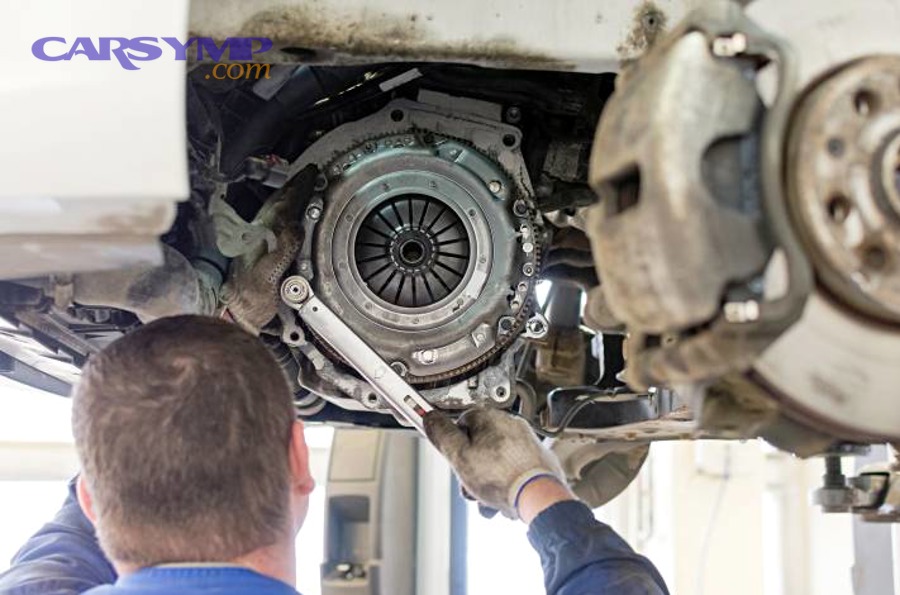
What parts are typically included in a clutch replacement quote?
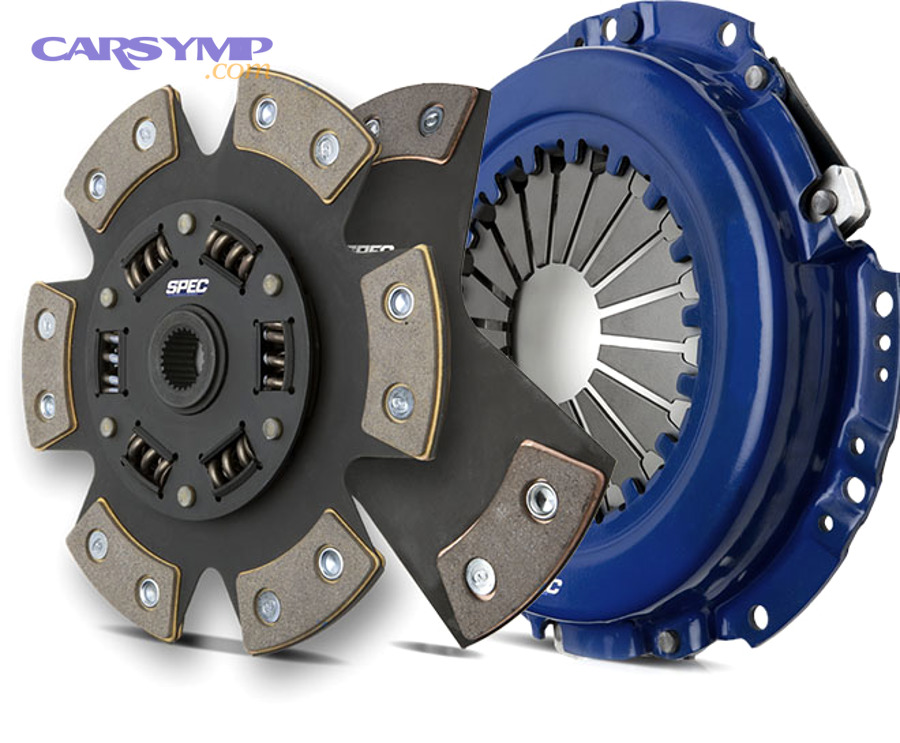
Most quotes include a clutch kit (or the core clutch components) because replacing only one worn piece often leads to early failure or repeat labor. Specifically, you’ll usually see these parts on the estimate:
- Clutch disc (friction disc): the wear item that grips the flywheel.
- Pressure plate: clamps the disc; spring force weakens with heat and age.
- Release bearing (throwout bearing): allows smooth disengagement when you press the pedal.
- Pilot bearing/bushing (where applicable): supports the transmission input shaft on many RWD layouts.
- Alignment tool / small hardware: sometimes included in kits, sometimes billed as shop supplies.
To better understand how this impacts cost, remember that labor is the expensive part; parts are the “insurance” that helps you avoid paying labor twice.
What services are commonly bundled into the total price?
A standard clutch replacement estimate typically bundles the labor steps required to access the clutch, plus basic finishing work. Moreover, what’s bundled varies by shop policy, which is why you want to confirm line items.
Commonly bundled services include:
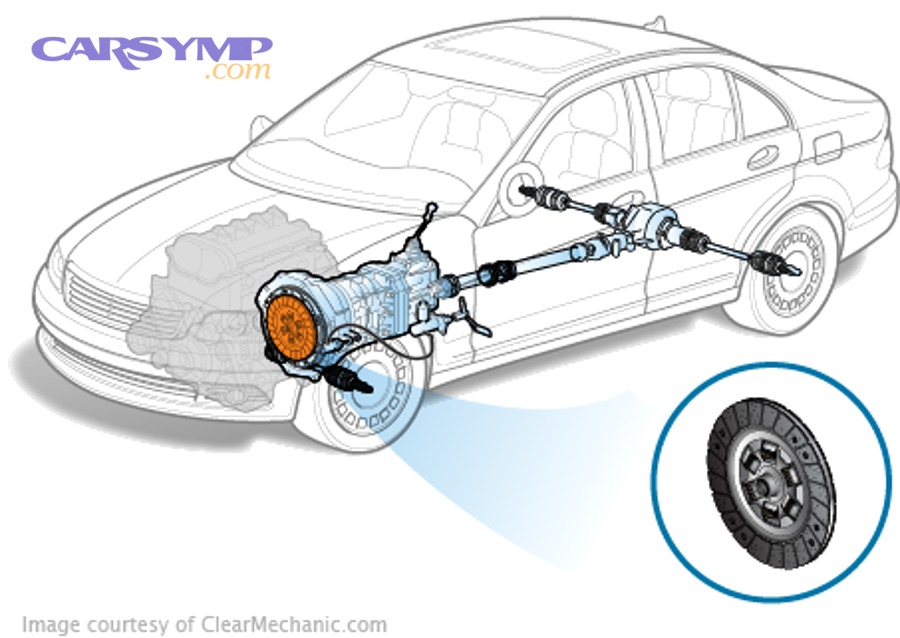
- Transmission removal and reinstallation (R&R): the largest labor component.
- Inspection of flywheel surface: for hot spots, cracking, glazing, or runout.
- Clutch system inspection/adjustment: pedal free play, engagement point, linkage or hydraulics check.
- Test drive and verification: ensures clean engagement and smooth shifting.
- Fluid-related items (sometimes): topping off or replacing fluid depending on design and shop practice.
If you’re comparing online averages, RepairPal’s estimator shows an average clutch replacement range and explicitly breaks out labor vs. parts, which reinforces why “what’s included” matters.
How much does a clutch replacement cost on average?
A clutch replacement cost on average typically falls into a broad range—roughly $500 to $2,000+—because vehicle design and labor time vary dramatically. Next, you’ll narrow that range by recognizing the patterns that push the total up or down.
Is clutch replacement usually under $1,000?
No—clutch replacement is not usually under $1,000 for most modern cars, for three main reasons: (1) transmission removal is labor-heavy, (2) labor rates are often $75–$125/hr (or more in some markets), and (3) many jobs require additional parts like hydraulics or flywheel work. Next, those same factors also explain why some economy cars can slip under $1,000 in the right conditions.
Here’s when you might realistically see under $1,000:
- The vehicle has easy access (more space, simpler layout).
- The shop’s labor rate is lower and the book time is modest.
- The job only needs a basic clutch kit with no flywheel replacement.
- There are no hydraulic leaks and no “while you’re in there” surprises.
Here’s when “under $1,000” is unlikely:
- AWD layouts that require more disassembly.
- Vehicles with dual-mass flywheels.
- Internal hydraulic components (like some concentric slave cylinders).
- Performance/luxury platforms with higher parts prices and longer book time.
AutoZone’s guidance summarizes this spread clearly, describing typical ranges around $1,000–$1,500 while noting lower-end economy cases and higher-end performance/luxury totals.
What are realistic low, typical, and high-end cost ranges by vehicle category?
There are 4 main cost bands you’ll commonly see for clutch replacement cost estimate ranges, based on vehicle category and drivetrain complexity: economy FWD, mainstream midsize, trucks/SUVs, and AWD/performance/luxury. Next, use these bands as a starting point, then refine with your local labor rate.
A practical set of “realistic bands” looks like this:
- Economy FWD (simpler packaging): often $500–$1,200 (best-case to typical)
- Mainstream midsize (mixed complexity): often $900–$1,800
- Trucks/SUVs (varies widely by access and parts): often $1,000–$2,000+
- AWD / performance / luxury: commonly $1,500–$2,500+
These bands align with multiple consumer-facing estimators and cost guides that emphasize wide variance by vehicle type and labor.
What drives clutch replacement cost the most—labor or parts?
Labor usually drives clutch replacement cost the most, parts matter second, and add-ons become the tie-breaker when the transmission is already out. However, the exact “winner” depends on whether your vehicle needs major extras like a dual-mass flywheel or internal hydraulics.

How many labor hours does a clutch replacement take for common drivetrains?
There are 3 common labor-time groupings for clutch replacement work based on drivetrain layout: typical FWD transaxle jobs, typical RWD jobs, and higher-complexity AWD jobs. Next, you can map those groupings to your local shop rate for a fast estimate.
A realistic grouping looks like:
- RWD (often more straightforward access): commonly mid-range book times
- FWD transverse (tight packaging): often similar or higher time than RWD
- AWD (additional hardware and access constraints): frequently the highest time
Even general transmission removal guides commonly cite wide labor ranges (for removal/reinstall) depending on manufacturer design, which is the core reason clutch labor varies.
Do higher-quality parts reduce total cost over time?
Higher-quality parts reduce total cost over time because they (1) last longer under heat and load, (2) reduce the chance of chatter/slip that forces a repeat repair, and (3) often include better warranty coverage. Next, the savings show up most when the alternative is paying labor twice.
This is where semantic “price vs cost” matters:
- Price is what you pay today for the parts.
- Cost is what you pay over the lifecycle, including the risk of redo labor.
If you commute in heavy traffic, tow, or drive aggressively, a stronger friction material and better pressure plate design can prevent early slip or hot spotting that shortens service life. Research on clutch wear modeling highlights how operating conditions like temperature and slip speed strongly influence wear rates, which supports the idea that design/material choices matter for longevity.
How can you calculate your clutch replacement cost estimate step-by-step?
You can calculate your clutch replacement cost estimate by using a simple 4-factor method—labor hours × labor rate, plus parts, plus likely add-ons, plus taxes/fees—to produce a realistic low/typical/high budget. Next, you’ll plug in vehicle-specific details to tighten the range.
Before the steps, here’s what the table below contains: a quick worksheet you can copy into notes to build three scenarios (low/typical/high) without guessing wildly.
| Input | Low Scenario | Typical Scenario | High Scenario |
|---|---|---|---|
| Labor hours (book time) | lower bound | midpoint | upper bound |
| Labor rate ($/hr) | local low | local avg | local high |
| Clutch kit parts | economy | mid-grade | OEM/performance |
| Add-ons (flywheel/hydraulics) | none | possible | likely |
| Fees/taxes | minimal | typical | typical |
What is the simplest formula for estimating total cost (labor + parts + add-ons)?
The simplest formula is: (Labor Hours × Labor Rate) + Parts + Add-ons + Fees/Tax = Total Estimate, and you should run it three times (low/typical/high) to avoid underbudgeting. Next, you’ll use “add-ons” as a controlled list instead of a scary unknown.
A practical step-by-step:
- Find a realistic labor-hours range for your vehicle class (shop can tell you, or you can compare multiple estimates).
- Use a local labor rate you’ve actually seen in quotes (or a conservative range like $75–$125/hr as a baseline).
- Price the clutch kit (economy vs OEM vs performance).
- Add likely extras (flywheel service, hydraulics, seals if leaking).
- Add shop fees/tax (varies by area).
If you want one place to sanity-check your final number, RepairPal’s breakdown illustrates how labor and parts can be similarly sized in some estimates, which is why your inputs must include both.
Which vehicle details change the estimate the most?
There are 6 vehicle details that change the estimate the most: drivetrain layout, transmission type, engine bay packaging, flywheel type, clutch actuation design, and intended use/modifications. Next, you’ll use these details to predict which “extras” are likely before you approve a quote.
Focus on these details:
- FWD/RWD/AWD: affects access and labor time.
- Manual transmission type and packaging: some are simple, some require subframe drops.
- Flywheel type: solid vs dual-mass changes parts cost materially.
- Hydraulic design: external slave vs internal/concentric changes replacement strategy.
- Mileage and symptoms: high mileage increases the odds of “while you’re in there” wear items.
- Mods/usage: big torque, towing, track use increases heat load.
If you’re unsure whether your symptoms are even a clutch issue, don’t skip diagnosis—use an internal guide like Manual transmission vs clutch diagnosis before you commit to a major repair.
What extra parts might be replaced during a clutch job, and how do they change the estimate?
Extra parts might be replaced because the transmission is already removed, and replacing certain wear items at that moment can prevent a second teardown later. Next, the goal is to treat add-ons as a probability-based list, not an automatic upsell.

Should the flywheel be resurfaced or replaced, and how much does each option cost?
Flywheel resurfacing wins for cost, flywheel replacement is best for damaged or out-of-spec surfaces, and doing nothing is only acceptable when the surface is confirmed healthy and within spec. Next, your estimate should include either resurfacing or replacement when you don’t yet know the flywheel condition.
Typical cost impact:
- Resurfacing: often a relatively small machining fee.
- Replacement: can jump substantially, especially on certain designs.
A recent flywheel guide from a clutch manufacturer notes typical resurfacing costs in a low range and replacement parts costs that can be several times higher, which is why flywheel decisions swing totals. In addition, industry trade guidance highlights that dual-mass flywheels can be very expensive as a parts line item, which is why some quotes look “shockingly high.”
Do you need to replace the slave cylinder/master cylinder at the same time?
It depends—but often yes when there are leak signs or the design is internal, for three reasons: (1) a hydraulic failure can mimic clutch failure, (2) a leak can contaminate friction surfaces, and (3) replacing an internal unit later can require repeating most of the labor. Next, you’ll decide based on design and symptoms, not fear.
A practical rule set:
- Replace hydraulics now if there’s any leak, spongy pedal, fluid loss, or a history of failure.
- Strongly consider replacement if the vehicle uses an internal hydraulic throwout bearing (concentric slave cylinder), because labor overlap is high.
- Inspect and test if the system is external and accessible, especially at lower mileage.
A LuK troubleshooting guide explicitly recommends replacing the hydraulic concentric slave cylinder when changing the clutch in certain contexts, which reflects the real-world labor overlap logic.
How do you evaluate a quote and avoid surprise charges?
You evaluate a quote by confirming inclusions, matching the parts list to your vehicle’s design, and comparing labor assumptions—not just the final number. Next, you’ll use a short checklist that reveals whether a quote is truly complete or quietly missing essentials.
What questions should you ask a shop before approving clutch replacement?
There are 8 questions you should ask before approving a clutch job, based on what typically causes surprise charges. Next, asking them upfront keeps your estimate stable.
Ask these questions:
- Which exact parts are included? (disc, pressure plate, release bearing, pilot bearing if applicable)
- What is your flywheel policy? (inspect only, resurface, replace; and what triggers replacement)
- Is hydraulic work included? (bleed, slave/master, concentric unit)
- Are fluids included? (gear oil, hydraulic fluid)
- What is the labor time you’re charging? (book hours vs flat-rate, and what could add time)
- What brand/grade are the parts? (OEM, equivalent, performance)
- What warranty applies to parts and labor?
- What fees should I expect? (shop supplies, disposal, tax)
If the shop can’t clearly answer these, your “estimate” isn’t really an estimate—it’s a placeholder.
Is it cheaper to go dealership or independent shop for a clutch replacement?
Independent shops usually win on price, dealerships are often best for model-specific procedures and OEM warranty alignment, and specialty transmission shops can be optimal for tricky platforms. Next, you should compare them by transparency and competence, not just the hourly rate.
A simple comparison:
- Dealership: higher labor rate; OEM parts; strong procedural consistency; sometimes better on complex late-model platforms.
- Independent general repair: often lower labor rate; more flexible parts options; quality varies by shop.
- Transmission/drivetrain specialist: strong diagnostic skill; often best for repeatability and difficult designs; pricing can be competitive for their expertise.
When you’re comparing quotes, it helps to treat the phrase clutch replacement as a defined scope: transmission out, clutch system renewed, flywheel addressed appropriately, and hydraulics verified.
Can you reduce clutch replacement cost without increasing risk?
Yes—you can reduce clutch replacement cost without increasing risk by (1) doing accurate diagnosis first, (2) choosing the right-quality parts for your use, and (3) preventing “redo labor” with smart while-you’re-in-there decisions. Next, you’ll separate safe savings from false savings that backfire.

Is DIY clutch replacement worth it for most car owners?
No—DIY clutch replacement is not worth it for most car owners because (1) it requires heavy equipment and safe lifting, (2) mistakes can force a second teardown, and (3) diagnosis and reassembly details (alignment, torque, hydraulics bleeding) can be unforgiving. Next, DIY becomes reasonable only when you have the tools, space, and time to do it correctly.
DIY can make sense if:
- You have a safe lift/jack setup and a transmission jack.
- You can follow torque specs and procedures precisely.
- You’re replacing related wear items in one pass.
- You accept that the job can take far longer than a shop.
If you’re deciding DIY vs shop, start with symptom confirmation using Clutch slipping symptoms and tests so you don’t replace parts for a problem that’s actually linkage, hydraulics, or gearbox-related.
Which cost-cutting choices are “false savings” that often backfire?
There are 6 common false savings in clutch work: cheapest-possible kits, skipping flywheel inspection, reusing questionable release bearings, ignoring hydraulics, skipping small wear parts, and delaying the repair once slip begins. Next, each one increases the chance you’ll pay labor twice.
False savings to avoid:
- Ultra-cheap clutch kit with poor friction material or weak clamp load.
- Not addressing the flywheel surface when it’s glazed or heat-spotted.
- Reusing the release bearing because it “feels fine.”
- Ignoring a marginal slave/master cylinder (especially if internal).
- Skipping pilot bearing/bushing on applicable setups.
- Driving long-term with a slipping clutch which can overheat and damage surfaces.
To illustrate why operating conditions matter, clutch wear research emphasizes how slip speed and temperature influence wear behavior in dry friction clutches—meaning “driving it until it gets worse” often accelerates damage.
Which clutch type and platform-specific designs can dramatically change your estimate?
Platform-specific designs can dramatically change your estimate because certain components are expensive, labor overlap is high, and access constraints add hours. Next, you’ll learn the four design “red flags” that most often turn a normal estimate into a high one.
Is a dual-mass flywheel the reason your clutch quote is so high?
Yes—a dual-mass flywheel is often the reason your clutch quote is so high because (1) the part itself can be expensive, (2) many shops replace rather than machine it, and (3) it’s frequently paired with clutch replacement due to shared labor. Next, if your vehicle has a DMF, your estimate should include an explicit flywheel line item.
Evidence that supports the “why” (not just the price): a master’s thesis from Chalmers University of Technology, Department of Applied Mechanics, in 2016, explains that a dual-mass flywheel isolates transmission input from engine-generated torsional vibration and reduces vibration amplitude through its two-mass spring/damper design.
What is a concentric slave cylinder, and why does it change replacement strategy?
A concentric slave cylinder is a hydraulic release bearing that sits around the transmission input shaft inside the bell housing, combining the slave cylinder and release mechanism into one unit. Next, that location changes everything because failure often requires the same labor as a clutch job.
Why it affects your estimate:
- Internal location: replacing it later often means removing the transmission again.
- Leak risk: leaks can contaminate friction surfaces.
- Bleeding requirements: proper bleeding is essential for pedal feel and release.
A LuK troubleshooting guide specifically advises replacing the hydraulic concentric slave cylinder when changing the clutch in certain cases, reflecting the real-world cost of repeating labor.
Which drivetrains and layouts typically have the highest clutch labor costs (AWD vs FWD vs RWD)?
AWD typically has the highest clutch labor costs, FWD is often next due to tight packaging, and RWD is frequently the most straightforward—though there are exceptions by model. Next, you’ll use layout as a quick predictor of labor hours before you even get a quote.
Common reasons AWD trends higher:
- Additional driveline components reduce access.
- Subframe or crossmember drops are more common.
- More steps add time and increase “book hours.”
If you’re seeing large labor numbers, it helps to remember that many procedures require extensive removal steps simply to access the clutch—manual transmission removal guides routinely emphasize how design drives labor time variability.
Could a dual-clutch/DCT “clutch pack” be a different repair than a manual clutch replacement?
Yes—a dual-clutch/DCT “clutch pack” can be a different repair than a manual clutch replacement because it uses different components, different diagnostics, and often different labor procedures. Next, confirming transmission type early prevents a mismatched estimate.
A quick way to verify:
- Traditional manual clutch: clutch pedal, manual shift pattern, typically one clutch disc.
- DCT/dual-clutch: may have no clutch pedal, uses electronically/hydraulically controlled clutches, and diagnosis often requires scan tools and system testing.
If you’re unsure whether your symptoms are clutch slip or something else, revisit the diagnostic flow in Manual transmission vs clutch diagnosis before approving a repair path.