


You can usually diagnose clutch vs gearbox (manual transmission) issues by watching for three high-signal patterns: whether symptoms change with the clutch pedal, whether RPM rises without speed, and whether grinding is gear-specific rather than constant.
Next, you’ll learn the most reliable clutch failure clues—what “slip” and “drag” really mean, how pedal feel fits in, and which noises tend to point to the release system versus the friction surfaces.
Then, you’ll learn the most reliable gearbox clues—how synchronizer wear feels, what “popping out of gear” suggests, and how to separate internal transmission sounds from clutch-related sounds.
Introduce a new idea: the fastest way to avoid misdiagnosis is to run a few simple, repeatable tests in a safe place, log what happens, and use that evidence to decide whether you can drive, need repairs, or should stop driving.
Is my problem more likely the clutch or the gearbox? (Yes/No decision tree)
Yes—you can usually diagnose clutch vs gearbox issues with three practical signals: pedal-dependent symptoms, RPM-to-speed mismatch, and gear-specific grinding or engagement patterns.
More importantly, that quick triage prevents you from “chasing the wrong part,” so you can protect the gearbox while you narrow the cause.
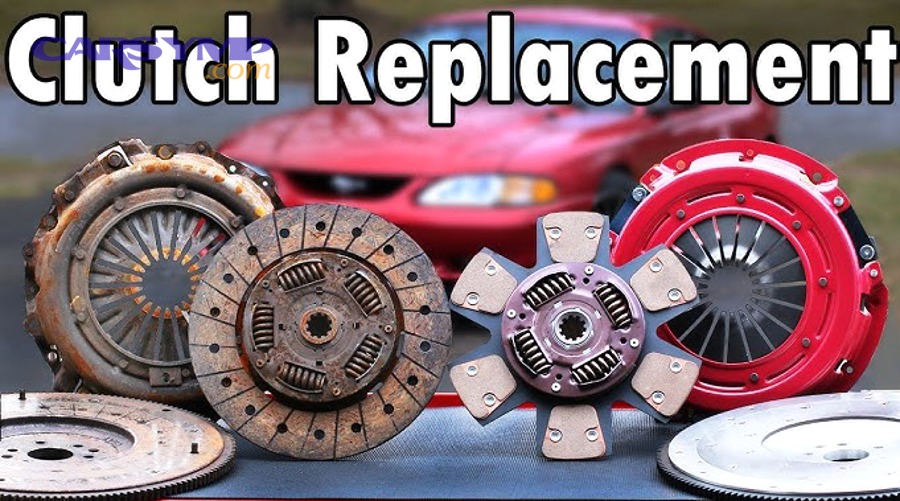
A good decision tree works because a manual drivetrain has two different jobs:
- The clutch system connects/disconnects engine torque to the transmission input shaft.
- The gearbox changes ratios and uses synchronizers (synchros) to match speeds during shifts.
If you watch when a symptom happens (pedal up vs down, in gear vs neutral, load vs no load), the answer often becomes obvious.
To make this easier, the table below summarizes the most common “clutch vs gearbox” symptom splits. It’s not a substitute for a professional diagnosis, but it’s a strong first filter.
Quick symptom-to-cause cheat sheet (what the pattern usually points to):
| Symptom pattern | More likely clutch-side | More likely gearbox-side |
|---|---|---|
| RPM rises fast but speed doesn’t (especially in higher gears) | ✅ Clutch slip | ❌ Rare for gearbox alone |
| Hard to engage gears while stopped; reverse is worst | ✅ Clutch drag / hydraulic issue | ⚠️ Possible linkage issue |
| Grinding mainly on 1–2 or 2–3 shifts, improves with double-clutching | ⚠️ Can be clutch drag | ✅ Synchronizer wear |
| Whine that changes with vehicle speed (in gear) | ❌ | ✅ Bearings/gear mesh |
| Noise only when clutch pedal is pressed | ✅ Release bearing / release system | ❌ |
Do the symptoms change when the clutch pedal is pressed (Yes/No)?
Yes—if the symptom changes when you press the clutch pedal, it strongly points to the clutch release system because you’re changing load and motion inside the bell housing.
To better understand the cause, focus on exactly when the noise or vibration appears:
- Pedal up (clutch engaged): the engine is connected to the input shaft; drivetrain components are under load.
- Pedal down (clutch disengaged): the input shaft should unload; the release bearing and pressure plate fingers are engaged.
Use this simple observation grid:
- Noise appears only with pedal down: often release bearing, pressure plate fingers, or release fork contact.
- Noise appears only with pedal up: could be input shaft bearing, pilot bearing/bushing, or gearbox-related.
- Noise changes at “half pedal” (bite point): can indicate a release system issue or a warped friction surface.
If you can repeat the symptom in neutral by pressing/releasing the pedal, you’ve already narrowed your search to the clutch side.
Does engine RPM rise without matching speed increase (Yes/No)?
Yes—RPM rising without matching road speed is the classic signature of clutch slip because the engine is spinning faster than the friction surfaces can transmit torque.
However, the conditions matter, so log what you feel:
- Slip shows up most clearly in higher gears (4th/5th/6th) at low RPM with moderate throttle.
- Slip is more obvious on hills, during passing, or when carrying extra load.
- Some drivers notice a burning smell after repeated slip events (overheated friction material).
A gearbox can “slip” in rare failure scenarios, but in a typical manual transmission, gears are mechanically locked—so speed mismatch usually isn’t the gearbox.
If your notes scream “slip,” you may be heading toward clutch replacement rather than gearbox work, and that distinction can save a lot of money and downtime.
Is the car hard to put into gear while stopped (Yes/No)?
Yes—difficulty selecting gears while stopped usually points to clutch drag because the clutch isn’t fully disengaging, so the input shaft keeps spinning.
Specifically, this pattern happens because the synchronizers are being forced to do extra work while you’re not moving.
Look for these “drag” tells:
- Reverse grinds or is hard to select (reverse often lacks a synchronizer).
- First gear resists engagement at a stop but feels fine once rolling.
- The car creeps forward slightly with the clutch fully pressed (on level ground).
Common reasons include:
- Air in a hydraulic clutch system, low fluid, or a leaking master/slave cylinder.
- Improper adjustment on a cable clutch (where applicable).
- Mechanical binding in the release mechanism.
If stopped-gear engagement is the main complaint, don’t jump to “bad transmission” first—many “transmission” complaints are actually clutch drag.
Does it grind only in one gear or multiple gears (Which group)?
There are 2 main grinding patterns: single-gear grinding and multi-gear grinding, based on whether the issue is localized to one synchronizer set or caused by a system-wide disengagement problem.
Meanwhile, the pattern you fall into guides your next test.
1) Grinding mostly in one gear (or one shift pair):
- Often points to a specific synchronizer (like 2nd gear synchro).
- Can also point to shift linkage alignment that affects one gate more than others.
2) Grinding across multiple gears:
- Can indicate clutch drag (input shaft still spinning).
- Can indicate driver/technique factors, wrong fluid, or broader internal wear.
If grinding is consistent only on one upshift/downshift, start thinking “synchro.” If grinding shows up almost everywhere—especially at stops—start thinking “clutch not fully disengaging.”
What does the clutch do, and how does it fail?
The clutch is a friction coupling system that temporarily disconnects engine torque from the gearbox, using a disc and pressure plate (and a release mechanism) so you can start, stop, and shift smoothly.
Specifically, clutch failures produce symptoms that follow torque and heat—so your best clue is how the symptom behaves under load.

The clutch has a few core jobs:
- Transmit torque without slipping during normal driving.
- Release cleanly so the gearbox input shaft can slow down for gear changes.
- Manage heat during engagement (especially from a stop).
When it fails, it usually fails in one of two ways: it slips (can’t hold torque) or it drags (won’t fully release).
What is clutch slip, and what symptoms confirm it?
Clutch slip is loss of friction grip between the clutch disc and flywheel/pressure plate, causing RPM to rise without proportional vehicle acceleration.
For example, the most revealing moment is a high-gear, low-RPM pull where torque demand is high.
Common “confirmed slip” symptoms:
- RPM climbs quickly while speed barely increases.
- Acceleration feels soft or delayed under load.
- Burning smell after hard acceleration or hill climbs.
- Engagement point may feel higher than normal (varies by vehicle).
Why it happens:
- Friction material is worn thin.
- Pressure plate clamp load is reduced (springs/diaphragm fatigue).
- Oil contamination from a rear main seal or transmission input seal.
- Driver habit heat-loading the clutch (riding the pedal).
If your tests confirm slip, you can usually skip gearbox diagnostics and focus on repair planning, including Clutch kit components explained (disc, pressure plate, release bearing, and often pilot bearing/bushing).
What is clutch drag, and how is it different from slip?
Clutch drag is incomplete disengagement that keeps the gearbox input shaft spinning, while slip is incomplete engagement that can’t hold torque under load.
However, both can make shifting feel “bad,” so you need to separate them with a clean comparison.
Here’s the practical contrast:
- Slip (engaged but weak):
- Happens while driving under load.
- Feels like power disappears even though RPM rises.
- Gets worse with throttle and higher gears.
- Drag (disengaged but still turning):
- Shows up at stops or during shifts.
- Causes hard-to-engage gears, especially reverse/first.
- May cause creeping with clutch pressed.
Drag is often caused by hydraulics (air/leaks), incorrect cable adjustment, warped components, or release travel issues—problems that are very different from “worn disc,” even though both live in the clutch system.
Which clutch noises mean “stop driving” vs “monitor”?
There are 3 practical noise groups—urgent, caution, and monitor—based on whether the sound suggests metal-to-metal contact, loss of control, or progressive wear.
In addition, noise timing (pedal up vs down) tells you which subcomponent is involved.
Urgent (stop driving or limit driving immediately):
- Loud grinding when selecting gears at a stop (possible severe drag).
- Sudden inability to disengage the clutch (pedal to floor + can’t select gears).
- Strong burning smell paired with noticeable slip.
Caution (drive gently, diagnose soon):
- Chirping/squeal only when pressing the pedal (possible release bearing).
- Shudder or vibration during takeoff (could be hot spots, contamination, or mounts).
Monitor (log it, but don’t panic):
- Mild noise that’s consistent, not worsening, and not paired with shift difficulty.
If you’re trying to budget repairs, this is where a Clutch replacement cost estimate becomes useful—because the severity of symptoms can influence whether you can schedule the job or need immediate service.
What does the manual transmission (gearbox) do, and how does it fail?
The manual transmission (gearbox) is a geared speed-and-torque multiplier that locks selected ratios via synchronizers and engagement teeth, enabling smooth shifts while transmitting torque through shafts and bearings.
On the other hand, gearbox failures tend to be gear-specific and speed-dependent, which makes their symptom patterns distinct from clutch failures.
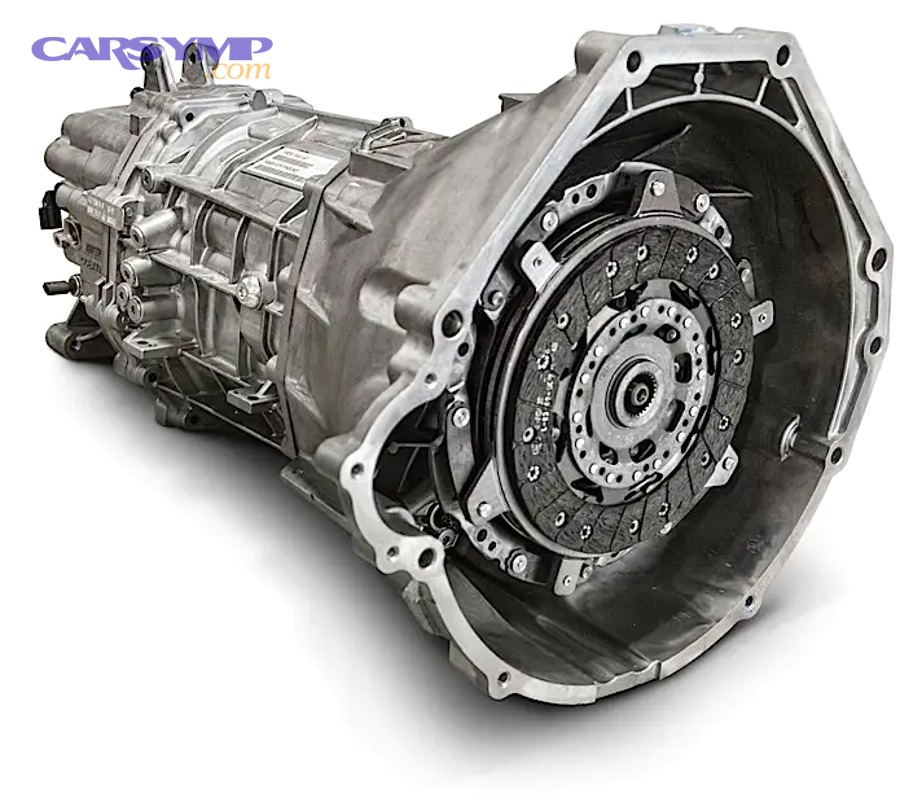
A manual gearbox typically fails through:
- Synchronizer wear (grinding during shifts).
- Bearing wear (whine/howl that follows speed).
- Gear/tooth damage (noise under load, sometimes pop-out).
- Shift mechanism issues (selection problems that mimic internal failure).
What is a synchronizer problem, and how does it feel while shifting?
A synchronizer problem is wear or damage that prevents the synchro from matching gear and shaft speeds, causing grinding or resistance during a specific shift.
To illustrate, many drivers feel this most on quick 1–2 shifts when cold.
Typical synchro patterns:
- Grinding is strongest in one gear (often 2nd) or one shift pair.
- Grinding occurs during the shift, not while cruising steadily.
- Double-clutching or rev-matching sometimes reduces grinding (diagnostic hint, not a cure).
What it’s not:
- RPM-speed mismatch under steady throttle (that’s more clutch slip).
- Stopped-gear engagement failure across all gears (more like clutch drag).
If your notes show “one-gear grind,” you’re firmly in gearbox territory, not clutch replacement territory—unless drag is also present.
What does “gear pops out” usually indicate?
“Gear pops out” usually indicates internal engagement wear or misalignment that prevents the gear from staying locked under load, and it’s often more gearbox-related than clutch-related.
However, mounts and linkage can contribute, so you should still observe conditions carefully.
Most common “pop-out” contexts:
- Pops out under acceleration in one gear.
- Pops out on deceleration or engine braking.
- Requires holding the shifter to keep it engaged.
Why it happens (high-level):
- Worn engagement teeth/dog teeth.
- Worn shift fork or rail issues.
- Excessive shaft play from bearings.
- Misadjusted or worn external linkage or bushings.
A slipping clutch won’t usually cause a gear to disengage. So if pop-out is your headline symptom, prioritize gearbox and shifter system inspection.
How do gearbox bearing noises differ from clutch-related noises?
Gearbox bearing noise usually changes with vehicle speed and gear selection, while clutch-related noise usually changes with clutch pedal position and engagement load.
Meanwhile, you can separate them with two quick comparisons: speed correlation and pedal correlation.
Use these “noise correlation” checks:
- In neutral, moving:
- Some vehicles are quiet; if you hear a strong whine that scales with speed, think wheel bearings or driveline first—not gearbox.
- In gear, steady speed:
- Gearbox bearing/gear mesh noise tends to change by gear and speed.
- Press clutch at the same road speed:
- If noise drops when you press the clutch (and coast), it suggests drivetrain load-related noise, potentially gearbox or driveline.
A clean log might look like: “Whine present in 3rd and 4th, louder at 45–60 mph, unchanged by pressing clutch at idle.” That’s very different from: “Chirp appears only when pressing clutch pedal.”
Which simple tests can I do at home to diagnose clutch vs gearbox?
There are 4 simple tests you can do—high-gear load test, creep/drag test, double-clutch test, and hot-vs-cold pattern check—to narrow clutch vs gearbox causes without disassembly.
Next, run them in a safe area, keep each test short, and write down exactly what happens.
Before you start:
- Choose an empty, flat road or parking lot.
- Don’t repeat slip tests excessively (you can overheat a slipping clutch).
- If shifting is extremely difficult or you suspect you can’t disengage, stop the tests and avoid forcing gears.
Can a high-gear acceleration test confirm clutch slip (Yes/No)?
Yes—a high-gear acceleration test can confirm clutch slip because it loads the clutch heavily and reveals RPM-speed mismatch quickly, especially in 4th/5th/6th gear.
Specifically, the goal is to demand torque without downshifting so the clutch must hold.
How to do it safely:
- Drive at a steady low-to-mid RPM in a higher gear on a flat road.
- Apply moderate throttle (not a full-throttle abuse run).
- Watch/feel: does RPM jump faster than speed?
Interpretation:
- RPM jumps, speed lags: strong slip signal.
- Both climb together: clutch likely holding.
- Shudder or vibration only at engagement: could be takeoff shudder, contamination, or mounts.
A practical note: if this test repeatedly shows slip, you’re likely beyond “adjustment” and closer to a repair plan—often clutch replacement with a complete kit and proper resurfacing/inspection of mating surfaces.
Can a “creep test” confirm clutch drag (Yes/No)?
Yes—a creep test can confirm clutch drag because a properly disengaged clutch should not transmit enough torque to move the vehicle with the pedal fully pressed.
To better understand the result, focus on whether the vehicle wants to move and whether gear selection improves after pumping the pedal.
How to do it:
- On level ground, start the engine.
- Press clutch fully.
- Select first gear.
- Hold brake, then gently release brake (do not add throttle).
Interpretation:
- Car creeps forward: drag likely.
- Hard to engage first/reverse at a stop: drag likely.
- Pumping clutch temporarily improves engagement: hydraulic issue is more likely.
Hydraulic drag is common enough that it’s worth checking the basics before blaming the gearbox: fluid level, leaks, and pedal feel changes. (For a broad overview of failing slave cylinder symptoms, see general repair references.)
Does double-clutching reduce grinding (Yes/No), and what does that mean?
Yes—if double-clutching reduces grinding, it often suggests synchronizer weakness because you’re manually helping match shaft speeds, reducing the synchro’s workload.
However, if double-clutching changes nothing, clutch drag or linkage issues may be more likely.
Quick “double-clutch” concept (diagnostic use only):
- Shift to neutral, release clutch, rev-match, press clutch again, then shift into the next gear.
Interpretation:
- Grinding improves: synchro likely worn in that gear.
- Grinding persists: clutch may not be disengaging fully, or the issue isn’t synchro-related.
This test doesn’t “fix” a gearbox, but it’s a strong data point for your diagnosis notes.
Do shifting symptoms change hot vs cold (Which pattern)?
There are 2 main patterns—cold-only stiffness and consistent grinding—based on whether fluid/viscosity behavior is involved or whether mechanical wear is present.
Meanwhile, documenting this pattern makes your diagnosis much clearer.
Pattern A: Cold-only stiffness
- Shifts feel notchy when cold, improve after warm-up.
- Can be influenced by fluid condition/viscosity and general wear.
Pattern B: Consistent grinding
- Same gear grinds warm or cold.
- Stronger indicator of synchro or mechanical issues.
Be honest in your notes: “notchy” is different from “grinds.” Notchy can be annoying; grinding is destructive.
What should I do next based on the result—drive, repair, or diagnose deeper?
There are 3 next-step paths—drive gently and monitor, schedule targeted repair, or stop driving and tow—based on safety risk, damage risk, and symptom severity.
Thus, once your tests point in one direction, your best move is to act before collateral damage spreads.
When is it unsafe to drive (Yes/No) and why?
Yes—it can be unsafe to drive if clutch vs gearbox issues prevent predictable gear engagement because you can lose the ability to accelerate, merge, or control speed safely.
More importantly, forcing shifts can rapidly damage synchronizers and gears.
Stop driving (or drive only to a safe location) if:
- You cannot reliably select gears.
- The clutch pedal goes to the floor and gears won’t engage.
- There is severe grinding on engagement that worsens quickly.
- The vehicle slips so badly it can’t maintain speed.
Safety is not just about breakdown risk—it’s about being unable to respond in traffic.
Which fixes are external (linkage/hydraulics) vs internal (clutch/gearbox teardown)?
Clutch/hydraulic fixes win for “external repairs,” while gearbox fixes win for “internal teardown,” and a full clutch job is best when friction surfaces can’t hold torque anymore.
However, your test results decide which bucket you’re in.
External-ish (often simpler):
- Bleed hydraulic system, repair leaks, replace master/slave cylinder.
- Adjust or replace clutch cable (if equipped).
- Repair shift linkage/bushings.
Internal-ish (more labor-intensive):
- Replace worn clutch disc/pressure plate/release bearing (typical clutch job).
- Inspect/replace flywheel, pilot bearing/bushing.
- Gearbox rebuild/replace for synchro, bearing, or gear damage.
If you’re planning a clutch job, it’s smart to learn what’s included: Clutch kit components explained can help you avoid replacing only one part and paying labor twice.
What information should I bring to a mechanic to speed diagnosis?
Yes—bringing a structured symptom log speeds clutch vs gearbox diagnosis because it turns vague complaints into repeatable conditions and saves diagnostic time.
In addition, it reduces the chance of replacing the wrong component.
Bring:
- Your decision-tree answers: pedal-dependent? RPM-speed mismatch? gear-specific grind?
- When it happens: cold/hot, uphill, only in one gear, only at stops.
- Any video/audio clips (safe, short).
- Results of the four tests (even if “inconclusive”).
- Maintenance history: fluid changes, recent work, clutch age if known.
If the outcome is clutch replacement, ask for a Clutch replacement cost estimate that clearly separates parts, labor, flywheel work, and any hydraulics.
And if you do replace the clutch, ask about the Break-in procedure for a new clutch—because gentle heat-cycling and proper seating can dramatically affect drivability and lifespan.
What else can mimic clutch or gearbox problems in a manual car?
There are 4 common mimics—hydraulic faults, shift linkage wear, flywheel issues, and fluid-related shifting behavior—based on whether the symptom is caused outside the clutch/gearbox core assemblies.
Next, use these checks after you’ve completed the main diagnosis flow, because they explain “false positives” that waste time and money.

Can hydraulic issues (master/slave cylinder) cause hard shifting even if the clutch is fine (Yes/No)?
Yes—hydraulic issues can cause hard shifting even if the clutch friction parts are fine because insufficient hydraulic travel prevents full clutch disengagement.
For example, a soft pedal, a pedal that slowly sinks, or shifting that improves after pumping the pedal all point here.
Common hydraulic signals:
- Spongy or inconsistent clutch pedal.
- Fluid loss (often shared with brake fluid reservoir in many designs).
- Difficulty engaging gears worsens over time or after heat soak.
This is a classic “looks like a bad transmission” scenario—because the gearbox resists shifts when the input shaft won’t slow down.
Can worn shift linkage/bushings feel like internal gearbox failure (Yes/No)?
Yes—worn linkage or bushings can feel like internal gearbox failure because sloppy movement prevents clean gate selection and can mimic “won’t go into gear” symptoms.
However, the tell is often inconsistency: the gear is sometimes there, sometimes not, depending on alignment.
Watch for:
- Excess side-to-side play in the shifter.
- Difficulty finding one gate (like 5th/reverse) without grinding.
- Improvement after re-centering the shifter or changing hand pressure.
If the clutch tests are normal but selection feels vague, linkage becomes a high-probability culprit.
Is a dual-mass flywheel (DMF) noise the same as gearbox noise (Yes/No)?
No—a dual-mass flywheel (DMF) noise is not the same as gearbox noise because DMF issues often create rattle or clunking tied to engine pulses and engagement transitions, not gear-speed relationships.
Meanwhile, gearbox bearing noise tends to follow road speed and gear load.
DMF-like patterns (varies by vehicle):
- Rattle at idle that changes when you press the clutch.
- Clunk during takeoff or shutdown.
- Vibration under specific load transitions.
Because DMF symptoms overlap with clutch release noises, the pedal-dependent observation you made earlier is especially valuable here.
Can gear oil condition or wrong viscosity cause “bad synchro” symptoms (Yes/No)?
Yes—gear oil condition or viscosity can exaggerate “bad synchro” symptoms because synchronizers rely on friction and controlled speed-matching, which fluid properties can influence, especially when cold.
However, fluid won’t usually cause isolated, severe grinding in one gear if mechanical wear is advanced.
Use this logic:
- If shifts are notchy only when cold, fluid condition is worth checking.
- If shifts grind consistently, mechanical wear is more likely.
Evidence (research-based reference)
According to a study by Dunarea de Jos University of Galati from the Mechanical Engineering Department, in 2024, the tested clutch disc friction materials showed mean coefficients of friction ranging from 0.286 to 0.423, illustrating how friction behavior can vary significantly across clutch materials and influence heat and slip characteristics.