


If your car clunks over bumps or during turns and also wanders at speed, the fastest path to a correct fix is to diagnose the looseness first—because the same worn joint can create both noises and vague steering feel. This guide helps you narrow the causes to the most common culprits: tie rods, ball joints, and the steering rack (or its mounts/bushings).
Next, you’ll learn what “clunking” and “wandering (loose) steering” actually mean in real driving terms, so you can describe the symptoms accurately and avoid swapping parts blindly. That symptom clarity is what makes your diagnosis reliable.
Then, you’ll get a prioritized list of the most common causes and a step-by-step way to confirm them using quick checks, safe jack tests, and a simple road-test pattern that reveals whether the problem is steering-side or suspension-side.
Introduce a new idea: once you’ve confirmed the big three (tie rods, ball joints, rack/mounts), you’ll also see the less-common mimics—tires, alignment geometry, steering column joints, and EPS-related issues—so you don’t stop diagnosing too early.
What does “clunking and wandering (loose) steering” mean in practical driving terms?
Clunking and wandering (loose) steering is a combined steering-symptom pattern that typically comes from mechanical play in steering or suspension joints, showing up as a knock/impact sound plus vague on-center control that forces constant corrections. Next, the key is to separate what you hear (clunk) from what you feel (wander) because each symptom points to different failure modes.
Is wandering steering the same as loose steering?
Yes—wandering steering is often the same as loose steering, because both describe reduced directional stability and delayed response, and they usually share three causes: toe change from worn tie rods, compliance from worn bushings, or poor tire contact from alignment/tire issues. Specifically, when drivers say “wandering,” they usually mean constant micro-corrections at highway speed, while “loose steering” often means dead zone around center.
Here’s how to translate your sensation into a diagnostic clue:
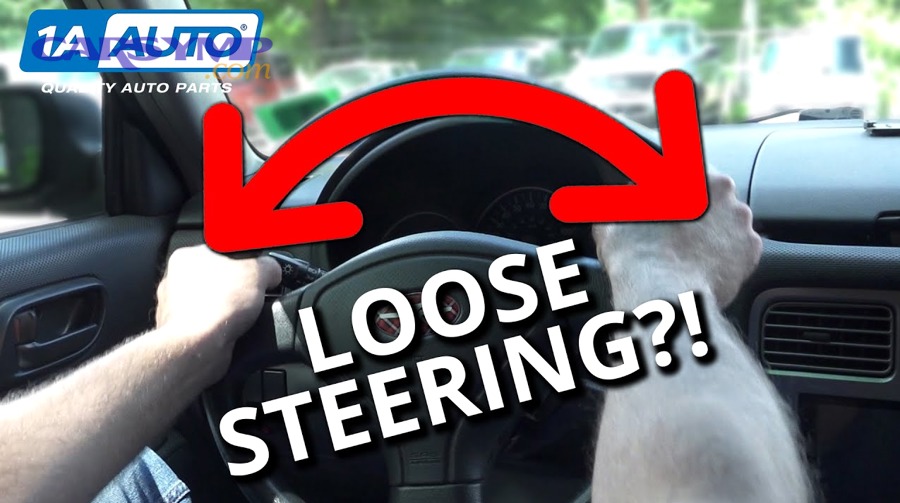
- Dead zone on-center (you move the wheel, car doesn’t react immediately): commonly points to steering play (inner/outer tie rods, rack lash, intermediate shaft joint).
- Darting or tramlining (car follows road grooves): often points to tires or alignment (toe/caster) rather than a single loose joint.
- Drifts one direction (pull): more consistent with camber/caster imbalance, brake drag, or tire conicity than pure “wander.”
The practical takeaway is simple: “Wandering” describes behavior; “loose” describes mechanism. Your job is to connect the behavior to a mechanism by noticing speed, road surface, and steering input.
Can clunking and wandering come from the same part, or are they usually separate issues?
Yes, clunking and wandering can come from the same part, because both symptoms can share three root mechanisms: joint play, bushing compliance, and mounting movement under load. However, they can also be separate—especially when clunking comes from a mount/link, and wandering comes from tires or alignment.
Use this quick rule that saves time:
- If clunking and wandering increase together after bumps or during turning transitions, suspect one shared loose component (tie rod end, inner tie rod, ball joint, control arm bushing, rack mount).
- If clunking happens mainly at low speed but wandering is worse at highway speed, suspect two contributors (example: sway bar link clunk + toe/caster issue).
- If the steering wheel kicks or “taps” when the clunk happens, bias toward steering-side components (rack mounts, tie rods, column/shaft joints) rather than purely suspension links.
This distinction matters because the right repair depends on whether you’re chasing one failure or a stack of small issues.
What are the most common causes of clunking and wandering steering?
There are 6 main categories of clunking and wandering steering causes: tie-rod play, ball-joint play, control arm bushing compliance, steering rack/mount movement, wheel bearing/hub looseness, and tire/alignment problems—grouped by how they change toe and steering precision. Then, you prioritize by “most likely + most dangerous,” not by what’s cheapest.

Which steering and suspension parts most often cause clunking under steering input or bumps?
There are 5 common part-groups that cause clunking under steering input or bumps: outer/inner tie rods, ball joints, control arm bushings, sway bar links, and strut/top mounts—based on which joint takes the impact load first. More specifically, the “clunk” often happens when a loose joint re-seats as load changes.
Typical clunk triggers and likely suspects:
- Clunk when turning into a driveway or over a curb cut:
- Outer tie rod end play
- Lower ball joint play
- Control arm rear bushing compliance (arm shifts)
- Clunk when braking or releasing brake (weight transfer):
- Control arm bushings (fore-aft movement)
- Loose subframe hardware/bushings
- Rack mount bushing allowing rack shift
- Clunk when you quickly steer left-right while parked:
- Inner tie rod play
- Steering rack mount/gear lash
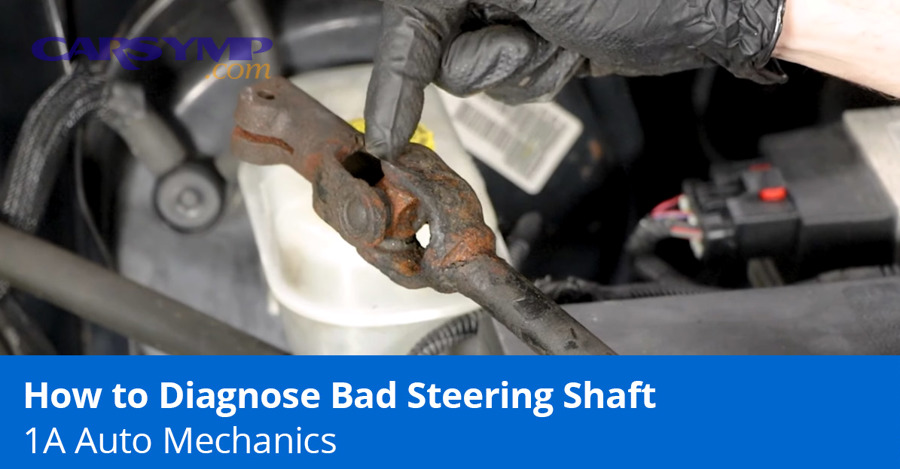
- Intermediate shaft U-joint play
A useful mental model: clunking is usually the sound of slack being taken up. That slack can be in a ball-and-socket joint, a rubber bushing, or a mount.
Which parts most often cause wandering or vague on-center steering at speed?
There are 4 common sources of wandering or vague on-center steering: toe instability (tie rods), compliance steer (bushings), weak self-centering (caster issues), and inconsistent tire contact (tires/pressure)—grouped by what makes the car stop tracking straight. In addition, wandering is strongly amplified at highway speed because small toe changes create big lane-position changes.
What “wandering” usually correlates with:
- Toe instability (tie rods / inner joints): car feels like it’s always “searching,” and the wheel needs constant small inputs.
- Compliance steer (control arm bushings): the car tracks differently under throttle vs coast, or it shifts direction after bumps.
- Caster loss or mismatch (alignment / bent parts): weak self-centering, twitchiness, poor straight-line stability.
- Tires and pressure: tramlining on grooves, pull that swaps sides after rotating tires, or “floaty” response.
Evidence you can trust: under-inflation changes handling balance and stability characteristics; for example, a published vehicle-handling study reports that front-axle under-inflation increases understeer tendencies while rear-axle under-inflation can promote oversteer behavior, which directly affects how stable a vehicle feels in a straight line. (sciencedirect.com)
How do you diagnose the cause at home before paying for parts?
You can diagnose clunking and wandering steering at home with a 5-step workflow—observe, localize, load-test, check for play, and confirm with a targeted road test—so you identify the loose component before buying parts. To better understand what’s actually moving, start with the simplest checks and only then move to jack tests.
What quick checks can you do on the ground—without jacking the car up?
There are 6 quick ground checks you can do without jacking: steering free-play check, stationary left-right “rock” test, visual boot/leak scan, tire pressure and tread scan, wheel offset check, and symptom mapping by speed/load—based on how fast they reveal steering slack. Next, use these checks to decide whether you even need to lift the car.
- Steering free play at center (engine running):
Turn the wheel a few degrees left-right. If you feel a dead zone before the tires react, suspect tie rods, rack lash, or column/shaft play. - Stationary steering rock (helper method):
Have a helper rock the wheel left-right rapidly while you listen at the front wheels. A sharp knock that matches steering movement suggests steering-side play. - Visual scan:
Look for:- Torn boots on tie rods or ball joints
- Grease leakage
- Wetness around the rack boots (possible inner tie rod/rack leak)
- Shifted witness marks around subframe bolts (possible movement)
- Tire condition scan:
Run your hand across the tread blocks. Feathered edges often point to toe problems, which can be caused by alignment or looseness. - Road-surface sensitivity:
If the car wanders more on grooved pavement than smooth asphalt, tires and alignment climb higher on the suspect list. - Brake-load sensitivity:
If the car changes direction slightly when you tap the brakes, bushings and control arms deserve attention.
This is also where you make a practical repair decision: if you see bushing deterioration or arm movement, you may end up weighing Press-in bushing options vs full arm replacement based on tools, labor, and how many joints are already worn.
What jack-and-check tests confirm tie rod ends, ball joints, or wheel bearings?
There are 3 core jack-and-check tests—3&9 o’clock for tie rods, 12&6 o’clock for ball joints/bearings, and joint-visual confirmation while a helper loads the wheel—because each test isolates play to a different axis. However, you must do them safely and interpret them correctly for your suspension design.
Safety first
- Use jack stands on solid ground.
- Chock rear wheels.
- Never rely on the jack alone.
Test 1: 3 and 9 o’clock (tie rods / steering play)
- Grab the tire at 3 and 9.
- Push-pull rapidly.
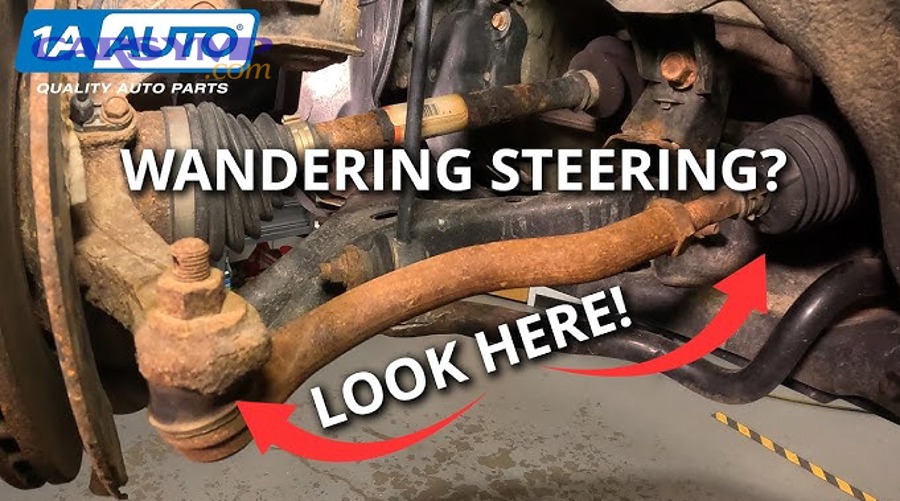
- Watch the outer tie rod end and the inner tie rod area (near rack boot).
Movement at the joint before the steering rack reacts = tie rod play.
Test 2: 12 and 6 o’clock (ball joints / bearings)
- Grab the tire at 12 and 6.
- Push-pull.
- Watch the lower ball joint and the hub.
If movement is accompanied by bearing roughness or noise when spinning, suspect wheel bearing. If movement is clearly at the ball joint stud, suspect ball joint.
Test 3: Loaded joint check (most reliable)
- Use a pry bar carefully under the tire (or under the control arm where appropriate).
- Apply slight lift while watching the joint.
Ball joints often reveal play when loaded, not just in free-hang.
If you confirm bushing or ball joint looseness in the control arm, this becomes a decision point for control arm replacement—especially when the ball joint is not serviceable separately on your vehicle.
One important caution: if you’re considering doing this job yourself, be honest about DIY control arm replacement risks—rusted fasteners, torque-critical hardware, and the requirement for an alignment afterward can turn a “simple swap” into a safety issue if done incorrectly.
How can you tell if it’s tie rods vs ball joints vs the steering rack?
Tie rods win as the most common cause of wandering, ball joints are best known for clunking under vertical load, and the steering rack (or its mounts) is optimal to suspect when the clunk is felt directly through the steering wheel—because each component affects steering precision differently. Meanwhile, the cleanest diagnosis comes from matching symptom patterns to what physically changes: toe, camber/caster, or rack movement.
Before the details, here’s a quick comparison map. The table below summarizes what you feel, what you see, and what usually fails for each suspect group.
| Symptom clue | Tie rods (inner/outer) | Ball joints | Steering rack / rack mounts |
|---|---|---|---|
| Main driving feel | Wander / loose on-center | Clunk over bumps, occasional pull | Clunk felt in wheel, inconsistent steering feel |
| Tire wear tendency | Feathering/scuffing from toe change | Edge wear if alignment shifts, less “feather” | Can cause inconsistent toe if rack shifts |
| Best test | 3&9 play + watch joints | 12&6 + pry/load check | Helper rocks wheel while you watch rack shift |
| Sound character | Knock on steering reversals | Clunk on bumps/turn-in load | Tap/knock through steering wheel |
Are tie rod problems more likely when the steering feels loose and the car wanders?
Yes, tie rod problems are more likely when steering feels loose and the car wanders, because tie rods directly control toe, they create on-center play when worn, and they allow toe to change under load, which forces constant corrections. Specifically, wandering that worsens with speed is a classic “toe stability” problem.
What makes tie rods stand out:
- Wander + steering corrections: toe is drifting while driving, or the steering linkage has slack.
- Feathered tire wear: toe misalignment commonly produces a sawtooth/feather pattern; major tire-industry guidance links feathering to toe being out of specification. (goodyear.com)
- Knock during steering reversals: a worn outer tie rod end can “tap” when you turn left-right rapidly.
Also, tie rod failure isn’t just a comfort issue. NHTSA recall risk descriptions explicitly warn that a tie rod ball stud fracture can lead to detachment/disconnection and potential loss of steering control, which is why confirmed tie rod looseness should be treated as urgent. (static.nhtsa.gov)
Do worn ball joints cause clunking more than wandering—or both equally?
Ball joints win as a more common cause of clunking than wandering, while wandering becomes more likely when the joint wear is severe enough to change alignment under load—because ball joints primarily manage vertical and lateral wheel movement, not steering toe directly. On the other hand, a very worn ball joint can still create a “loose” feel because the wheel no longer holds its intended geometry consistently.
How ball joints usually present:
- Clunk over bumps or during turn-in load: especially when the suspension compresses.
- Steering pull that changes with braking/acceleration: geometry shifts as load transfers.
- Visible boot damage and contamination: once the boot is torn, wear can accelerate quickly.
Ball joint looseness often intersects with control arm decisions. On many modern designs, the ball joint is integrated into the arm, meaning the practical fix becomes control arm replacement rather than a standalone joint swap.
Does a steering rack (or rack mounts/bushings) cause a clunk you can feel in the wheel?
Yes, a steering rack or its mounts can cause a clunk you feel in the wheel, because rack movement shifts the pinion/rack interface, mount bushings allow lateral rack “jump,” and internal lash can create a knock during quick direction changes. Moreover, rack-related clunks often feel more direct than suspension clunks because the steering wheel becomes the sound conductor.
Rack/mount clues that differ from tie rods and ball joints:
- Clunk matches steering input more than bumps: especially in parking maneuvers.
- You can feel it in your hands: a tap or knock through the wheel rim.
- Visual rack shift: with a helper rocking the wheel, you may see the rack housing move relative to the subframe.
If you see rack movement, you’re looking at rack bushings/mounts or loose mounting hardware—issues that can mimic tie rod symptoms by creating “effective play” in the system.
When is it unsafe to drive with clunking and wandering steering?
Yes, it can be unsafe to drive with clunking and wandering steering, because steering-linkage failures can escalate, looseness can reduce your ability to maintain lane position during emergencies, and some components (like tie rod ball studs) can fail in ways that cause loss of steering control. In short, you don’t wait for a “bigger noise” when the symptom involves steering precision.

Can a bad tie rod or ball joint fail suddenly?
Yes, a bad tie rod or ball joint can fail suddenly, because wear can progress beyond the remaining material strength, contamination can accelerate joint degradation, and impact loads (potholes/curbs) can push an already-worn joint past its limit. Especially with steering linkage, the consequence is severe: the wheel may no longer track with steering input.
Treat these as stop-driving signs:
- Sudden increase in steering play in one day
- Loud repeated metal clunk that gets worse quickly
- Steering wheel angle changes abruptly while driving straight
- Visible joint separation, missing hardware, or a joint boot that has failed and is leaking grease heavily
- Vehicle darts unpredictably with small steering inputs
And again, NHTSA safety-risk language in tie rod recall documentation highlights the crash risk pathway if ball studs fracture and steering linkage detaches. (static.nhtsa.gov)
Should you get an alignment first—or fix worn parts first?
Fix worn parts first, then get an alignment, because alignment cannot hold with loose joints, new alignment angles will shift under load, and uneven tire wear will continue until the mechanical play is removed. Thus, alignment is the final calibration step, not the first repair.
A practical order that prevents wasted money:
- Confirm and repair looseness (tie rods, ball joints, bushings, rack mounts).
- Inspect tires for damage or abnormal wear; replace if needed.
- Perform a professional alignment (and request before/after printout).
- Re-check after a short drive if you replaced major components.
If the looseness is in control arm bushings, the repair path often becomes a choice between Press-in bushing options vs full arm replacement—and whichever path you choose, alignment remains mandatory afterward.
What less-common (but important) causes can mimic clunking and wandering steering?
There are 4 less-common but important mimics of clunking and wandering steering: tires/pressure and tread behavior, EPS-related assist or sensor issues, steering column/intermediate shaft joint play, and alignment geometry problems like caster loss or subframe shift—grouped by how they imitate mechanical looseness. Below, you’ll use “mimic logic”: if the big three check out, you confirm the systems that change steering feel without obvious joint play.

Can tires, wheel balance, or road grooves cause “wandering” even when parts are tight?
Yes, tires, balance, and road grooves can cause wandering even when parts are tight, because tread design can tramline, uneven wear can steer the car, and incorrect pressure changes the size and stiffness of the contact patch, which alters straight-line stability. For example, a car that feels stable on smooth asphalt but “hunts” on grooved concrete may be experiencing tramlining rather than steering play.
How to confirm a tire-driven wander:
- Check pressures cold and set to door-jamb spec (not sidewall max).
- Swap front tires left-right (if directional tires allow) or rotate front-to-rear to see if the behavior changes.
- Look for:
- Feathering (toe-related)
- Cupping/scalloping (often shock/strut control issues)
- Belt separation bulges or out-of-round condition
Evidence that connects to “feel”: published handling research reports that tire pressure changes can shift handling balance (understeer/oversteer tendencies), which is exactly what drivers experience as stability changes on-center and mid-corner. (sciencedirect.com)
Can electric power steering (EPS) or steering angle/torque sensor issues create a vague on-center feel?
Yes, EPS or steering angle/torque sensor issues can create a vague on-center feel, because assist calibration can reduce self-centering sensation, sensor drift can misinterpret driver input, and intermittent faults can change assist levels unpredictably across speeds. However, EPS issues usually show patterns that mechanical wear does not.
EPS-related clues:
- Feel changes with drive modes (Comfort/Normal/Sport) more than with bumps.
- On-center “lightness” appears without audible clunks.
- Warning lights, stored codes, or intermittent steering assist changes.
Practical diagnostic approach:
- Check for codes with a scan tool that can read EPS modules.
- Compare steering feel at low vs highway speed; EPS maps vary by speed, so a fault may show up as inconsistency.
- Confirm mechanical tightness first; EPS diagnosis is cleaner when the chassis is known-good.
Do intermediate shaft joints, U-joints, or a steering column “clunk” show up mainly at low speed?
Yes, intermediate shaft joints, U-joints, or steering column clunks often show up mainly at low speed, because tight steering angles and rapid left-right inputs load those joints directly, and small clearances can “click” or “knock” during direction reversals. Meanwhile, these noises can feel alarmingly similar to a rack issue.
How to separate column/shaft clunk from rack/suspension clunk:
- Noise is most consistent in parking maneuvers and less dependent on bumps.
- You feel a tick/knock in the column area rather than near the wheels.
- A helper rocking the wheel while you listen near the firewall/column can localize it.
This is also where many DIYers go wrong: replacing suspension parts because the noise sounds front-end when it’s actually inside the steering linkage path.
Could alignment geometry problems like bump steer, caster loss, or subframe shift cause both symptoms?
Yes, geometry problems like bump steer, caster loss, or subframe shift can cause both symptoms, because they change toe dynamically over bumps, reduce self-centering stability, and misalign suspension pickup points so the car “steers itself” with vertical travel. More importantly, these issues can persist even after you replace worn joints.
What to watch for:
- Bump steer behavior: the car changes direction slightly when hitting bumps without steering input.
- Caster loss: weak return-to-center and poor straight-line stability, especially in crosswinds.
- Subframe shift: steering wheel off-center after impact, inconsistent alignment readings, or witness marks showing movement.
Confirmation steps:
- Request an alignment printout showing caster/camber/toe on both sides.
- Inspect subframe bolts and bushings; look for movement marks.
- If caster is out and no adjustment exists, consider bent components or shifted structure.
Evidence (summary points used above)
- Tire pressure changes can measurably alter vehicle handling balance and stability tendencies in published vehicle-handling research. (sciencedirect.com)
- Tire feathering is commonly associated with toe being out of specification, which can result from alignment or worn suspension/steering components. (goodyear.com)
- NHTSA safety-recall documentation describes steering-risk pathways where tie rod ball stud fractures can lead to linkage detachment and potential loss of steering control. (static.nhtsa.gov)