


DIY suspension work can be safe and successful, but control arms sit on the “high consequences” list because they directly affect steering stability, braking feel, and tire contact with the road. The biggest dangers usually come from three places: unsafe lifting, incorrect fastener clamping (torque), and geometry mistakes that feel “fine” at first but become unstable or destroy tires later.
Next, you’ll learn how to judge whether you personally should DIY this job by matching your tools, workspace, and experience to the real-world failure points—especially seized hardware, ball joint separation, and bushing preload issues that turn into persistent clunks.
Then, you’ll get a practical decision framework for DIY versus professional installation, so you can compare cost savings against time, risk, and the likelihood you’ll need help midway (or pay twice).
Introduce a new idea: below is a step-by-step, intent-matching safety guide that moves from “what makes this risky” to “how to avoid the biggest mistakes” and finally into special cases that make the job much harder than most tutorials admit.
What makes DIY control arm replacement risky in the first place?
A DIY control arm job is risky because it combines heavy vehicle support, high-torque fasteners, and suspension geometry that can change handling dramatically if even one critical step is wrong. Next, to better understand why the risk feels disproportionate, you need to see what the part does and why the system reacts so strongly to small errors.
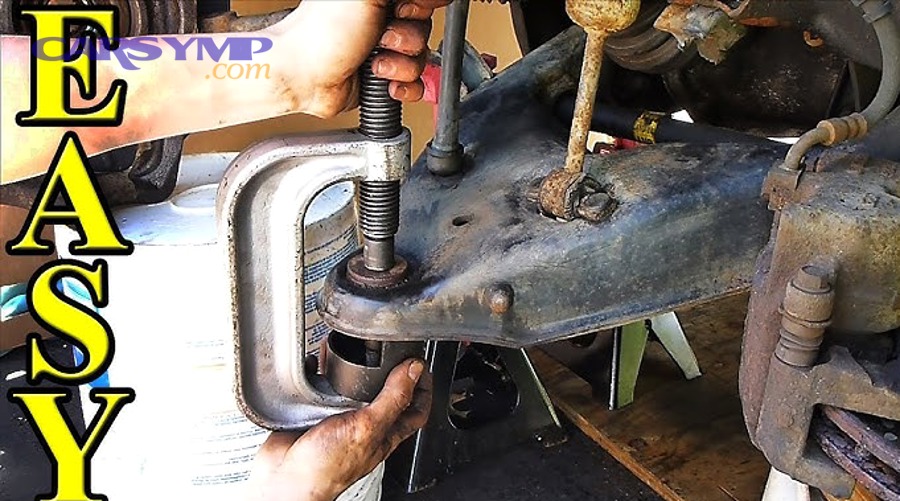
Control arms are not “just brackets.” They are load paths. Under braking, cornering, and bumps, they locate the wheel in space while the bushings and ball joint allow controlled movement. If the wheel location changes unexpectedly—because a bolt is loose, a bushing is preloaded wrong, or a cam bolt slips—you can get wandering steering, a sudden pull, or tire scrub that escalates fast.
A helpful mental model is to think in layers:
- Safety layer (your body): lifting/support and working under load
- Mechanical integrity layer (the car stays together): correct clamping force, correct seating, correct hardware
- Geometry layer (the car drives straight): alignment angles and repeatability after the install
When DIY goes wrong, it usually fails in the safety layer first (lifting), or it “passes” initially and fails later in the integrity/geometry layers (clunks, pulls, tire wear).
What does a control arm do, and what parts are you actually changing?
A control arm is a suspension link that connects the vehicle body/subframe to the steering knuckle while allowing the wheel to move up and down and steer left and right. Specifically, the “what you’re changing” part matters because different designs hide different risk points.
Most control arm assemblies include:
- Arm body (steel or aluminum): the structural link
- Bushings (usually rubber-bonded): allow controlled twist and isolate vibration
- Ball joint (sometimes integrated): the pivot that lets the knuckle steer and move with suspension travel
- Mounting bolts/cam bolts: clamp the arm to the subframe/frame and may also provide alignment adjustability
DIYers often assume they’re only replacing a worn bushing or a noisy ball joint, but they’re also disturbing the “reference” position of the wheel. That’s why Alignment required after control arm replacement is a practical expectation, not a surprise.
If you’re doing a full assembly swap, you’re also introducing tolerance differences between old and new parts. A few millimeters at the bushing mounts can become a noticeable toe change at the tire contact patch.
Why can one “small mistake” cause big handling problems after the install?
One small mistake can cause big handling problems because suspension fasteners don’t just “hold parts on”—they generate clamping force that keeps parts from sliding, rotating, or shifting under load. More specifically, suspension joints behave like engineered friction clamps, and that means the bolt torque, the contact surfaces, and the hardware condition all matter.
Here are common “small mistakes” with “big outcomes”:
- Under-torqued bushing bolts: the bushing sleeve can slip or the joint can shift, producing clunks and geometry change under braking.
- Over-torqued fasteners: stripped threads, stretched bolts, or crushed bushing sleeves can fail later.
- Tightening rubber-bonded bushings at full droop: preloads the rubber at rest, causing memory steer, harshness, and premature bushing failure.
- Mis-seating a ball joint taper: may feel tight initially but can loosen if not seated and secured properly.
- Forgetting eccentric cam position: changes toe/camber immediately.
Evidence: According to a study by LeTourneau University’s Interdisciplinary Mobility Lab from 2016, rolling resistance increased 25.5% with just 1° of toe misalignment, illustrating how small angle changes can create large mechanical consequences.
Is it safe to replace a control arm yourself?
Yes—DIY control arm replacement can be safe if you (1) support the vehicle correctly, (2) control ball joint and spring/suspension loads carefully, and (3) follow torque and alignment discipline without shortcuts. Then, the real question becomes whether your tools, space, and patience match the job’s most common failure points.

DIY is safest when you can work slowly, on a flat surface, with correct support equipment and the ability to stop if something feels wrong. It becomes unsafe when you’re forced into improvisation—wrong jack points, unstable ground, no torque wrench, or rushing because the car must be back on the road tonight.
A practical “yes, if” test:
- Yes, if you can lift and support the vehicle with redundancy and stability.
- Yes, if you can separate and reassemble suspension joints without uncontrolled force.
- Yes, if you can torque correctly and get a post-install alignment quickly.
If any of those are “no,” the safe answer is usually “don’t DIY this one.”
Do you have the minimum tools and conditions to do this safely?
You have the minimum tools and conditions only if you can lift securely, break fasteners loose without unstable force, and torque everything back to specification with confidence. Next, let’s translate that into a checklist you can actually audit before you unbolt anything.
Minimum safety and control checklist (non-negotiable):
- Flat, hard surface (concrete is ideal; avoid soft asphalt in heat)
- Quality jack + jack stands rated appropriately
- Wheel chocks and parking brake use
- Torque wrench (covering the suspension torque range)
- Breaker bar/impact-rated socket set (not a 3/8" ratchet fighting 150 ft-lb fasteners)
- Ball joint separator tool suited to your suspension design
- Penetrating oil + wire brush for rusty threads
- Lighting + time buffer (rushing causes mistakes)
Minimum skill checklist (honesty test):
- You can identify jacking points and support points from the vehicle manual.
- You know how to keep the vehicle stable when pulling hard on bolts.
- You can recognize cross-threading and stop before damage is permanent.
- You understand that torque is not “tight enough”—it’s a target.
Evidence: According to a study by the U.S. Department of Transportation’s National Highway Traffic Safety Administration from 1998, an estimated 4,822 people were treated in U.S. emergency rooms in one year for injuries resulting from motor vehicle jack failures.
Should you stop and use a professional if you hit certain warning signs mid-job?
Yes, you should stop and use a professional if you hit warning signs that indicate escalating risk, irreversible damage, or uncertain reassembly—because the most dangerous DIY outcomes usually happen after “forcing it.” In addition, the smartest DIY move is often knowing when to pause before a small problem becomes a broken knuckle, stripped subframe threads, or an unsafe joint.
Stop-now warning signs (don’t “push through”):
- Seized eccentric cam bolts that spin but won’t slide out (often rusted to bushing sleeves)
- Rounded or slipping fastener heads (you’re losing control of the hardware)
- Ball joint taper won’t separate without extreme force or unsafe hammering
- Damaged threads on the subframe, knuckle, or critical bolts
- Subframe shifting because multiple mounting points were loosened unintentionally
- You cannot achieve torque because the fastener spins, binds, or the tool won’t fit properly
A shop has presses, torches, extraction tools, and the experience to recognize when replacement hardware, thread repair, or different separation methods are required.
What are the biggest risks and dangers of DIY control arm replacement?
There are 6 main types of DIY control arm replacement risks—lifting/support risks, ball joint separation risks, spring/load transfer risks, fastener/torque risks, bushing preload risks, and alignment/road-test risks—based on where failure occurs in the repair chain. More importantly, you avoid most of them by treating the job like a controlled process instead of a “parts swap.”
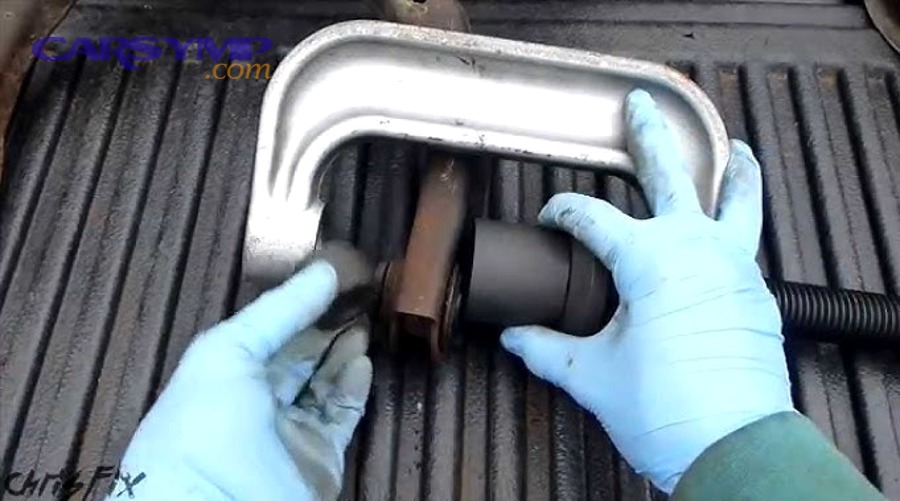
Think of these as “risk buckets.” If you actively control each bucket, you dramatically reduce the chance of injury and the chance of the car driving worse than before.
Which risks are personal-injury risks vs vehicle-safety risks?
Personal-injury risks dominate during lifting and disassembly, while vehicle-safety risks dominate during reassembly and post-install driving—because that’s when loose joints and misalignment show up under real loads. However, the two overlap: a lift mistake can injure you, and a torque mistake can injure someone later if the vehicle becomes unstable on the road.
Personal-injury risk examples:
- Vehicle shifting or falling due to improper stand placement
- Hands/arms hit by a breaker bar slip
- Pinch injuries during joint separation
- Exposure to hot tools or sparks if heat is used on seized bolts
Vehicle-safety risk examples:
- Ball joint not seated/secured correctly
- Bushing bolts not clamped correctly, allowing movement under braking
- Eccentric cam bolts moving position, altering toe/camber
- Brake hose/ABS wire routing mistakes causing rubbing or sensor issues
Evidence: According to a study by the U.S. Department of Transportation’s National Highway Traffic Safety Administration from 1998, approximately 74% of injuries in jack-failure incidents occurred when the jack or vehicle slipped/fell and the person was struck by the vehicle as it fell.
What can go wrong with ball joint separation and reinstallation?
Ball joint work can go wrong when you separate the joint with uncontrolled force, damage the boot or taper surfaces, or reassemble without full seating and correct retention—because the taper joint depends on clean contact and clamp force. Specifically, many DIY failures come from using the wrong separation technique for the suspension design.
Common ball joint separation failure modes:
- Boot damage: torn boot accelerates wear and contamination.
- Taper “shock loading”: excessive hammering can deform the knuckle or damage the joint.
- Stud spinning during torque: indicates the taper isn’t seated; tightening becomes guesswork.
- Incorrect retention: missing cotter pin, wrong nut type, or not using specified locking method.
Safer separation practices (conceptual, not vehicle-specific):
- Use the correct separator tool (pickle fork vs press-style separator vs puller).
- Support the knuckle/control arm so the force is controlled and predictable.
- Avoid striking components that can crack (some knuckles are cast and more brittle than expected).
If your vehicle has a strut-type front suspension, remember that the lower control arm is doing major geometry work. A poorly handled ball joint is not just a noise risk—it’s a steering integrity risk.
What torque and fastener mistakes cause repeat clunks or unsafe looseness?
Repeat clunks and unsafe looseness most often come from (1) under-torqued bushing bolts, (2) over-torqued or stretched fasteners, and (3) incorrect tightening order/position—because clamp load and bushing position determine whether joints slip under braking and bumps. Next, let’s connect these mistakes to what you’ll feel behind the wheel, so you can diagnose problems quickly if they happen.
High-impact torque and hardware mistakes:
- Under-torquing the bushing pivot bolts: sleeve movement causes knock/clunk.
- Over-torquing: thread damage or bolt stretch creates future loosening or failure.
- Reusing torque-to-yield hardware (when applicable): reduces safety margin and can break.
- Dirty threads or rusty seat surfaces: torque reading becomes inaccurate because friction dominates.
- Mixing hardware: wrong bolt length or grade changes clamping behavior.
A practical habit: paint-mark critical fasteners after final torque so you can visually verify nothing has rotated during the final checks and early miles.
Evidence: According to a study by Mechanics StackExchange from 2014, torque-to-yield bolts are designed to stretch into a controlled region and are often specified as one-time use; reusing them risks failure because the bolt may already be permanently elongated.
How can skipping alignment (or doing it too late) create hidden risk?
Skipping alignment creates hidden risk because toe and camber errors can make the vehicle unstable under braking and quickly destroy tires, and the damage often starts before you “feel” anything severe. More specifically, a small toe error can create constant tire scrub, which accelerates wear and can mask itself as a mild pull or steering wheel off-center.
This is why Alignment required after control arm replacement isn’t a marketing line—it’s a geometry reality. Even if you installed everything perfectly, you disturbed the system’s reference points.
You should prioritize alignment when:
- You replaced an arm that affects toe/camber directly.
- You loosened or removed eccentric cam bolts.
- The new arm’s bushing dimensions differ slightly from the old one.
- The car now feels “different” in straight-line tracking.
Evidence: According to a study by LeTourneau University’s Interdisciplinary Mobility Lab from 2016, 1° of toe misalignment increased rolling resistance by 25.5%, showing how quickly misalignment can convert into mechanical scrub and wear—not just “a little pull.”
How do you avoid the biggest DIY control arm replacement risks?
A safe DIY approach uses 7 steps—prepare, secure, loosen intelligently, separate joints safely, install correctly, torque at the right position, and verify before driving—to avoid injury and prevent post-install clunks or unstable handling. To begin, the goal is not speed; the goal is controlled, repeatable outcomes.
To keep the hook chain tight: you avoid “risks & dangers” by removing guesswork. That means building a simple checklist and following it in the same order every time.
The 7-step risk-reduction method (high-level):
- Pre-check and plan: identify fasteners, note cam bolt positions, confirm part match
- Lift and support with redundancy: stands + chocks + stable points
- Rust strategy first: penetrating oil, cleaning threads, correct tools
- Separate joints with control: proper separator, supported components
- Install and seat everything fully: no partial seating, no forced angles
- Torque correctly and at the correct suspension position: especially rubber bushings
- Verify and test drive progressively: short loop, re-check, then alignment
Now we’ll zoom into the two biggest mistake multipliers: lifting and bushing/torque discipline.
How do you lift and support the car safely for suspension work?
You lift and support safely by using correct jacking points, placing stands on structurally strong support points, preventing roll with chocks, and adding redundancy so a single failure doesn’t become a crushing event. Specifically, stability matters more than height—because control arm bolts can require high force that shakes an unstable car.
Key practices:
- Work on level ground.
- Use wheel chocks on the opposite end.
- Lift from approved jacking points, then place stands under approved support points (manual guidance matters).
- Keep a secondary safety: slide a wheel under the car or keep the jack lightly contacting as backup (without relying on it).
- Avoid pulling sideways on tools in a way that rocks the car on stands; reposition your body for controlled force.
Evidence: According to a study by the U.S. Department of Transportation’s National Highway Traffic Safety Administration from 1998, an estimated 4,822 ER-treated injuries occurred in a one-year period tied to jack failures, highlighting that lifting safety is not rare—it’s a documented injury category.
How do you prevent bushing preload mistakes that ruin ride quality and steering feel?
You prevent bushing preload mistakes by tightening rubber-bonded bushing bolts at ride height (or simulated ride height) so the rubber sits neutral at rest instead of being twisted permanently. More importantly, this is one of the most common reasons DIY installs feel “tight but wrong” afterward.
Rubber-bonded bushings don’t spin freely like a bearing. The rubber twists. If you torque the pivot bolts while the suspension is hanging at full droop, the rubber starts life “pre-twisted” when the car is lowered—leading to:
- Harsh ride over small bumps
- Steering that doesn’t return smoothly (“memory steer”)
- Premature bushing cracking/tearing
- Height anomalies or odd settling behavior
A practical method:
- Snug bolts during assembly.
- Lower the vehicle onto ramps or blocks, or support the control arm at approximate ride height.
- Torque to specification at that position.
Evidence: According to a study by TEIN from 2020, bonded rubber bushings rely on rubber strain rather than free rotation, which is why preload management (tightening position) matters for range of motion and long-term behavior.
How do you ensure fasteners are correct, torqued correctly, and secured correctly?
You ensure fasteners are correct and secure by verifying hardware type and condition, cleaning threads and mating surfaces, using the correct torque specs, and applying the correct locking method—because torque only works when friction and seating conditions are controlled. In addition, “correct torque” isn’t just the number; it’s the conditions that make the number meaningful.
Fastener discipline checklist (DIY-friendly):
- Confirm the new arm matches: mount spacing, bushing diameter, ball joint stud geometry.
- Inspect bolts for:
- damaged threads
- corrosion pitting
- stretched/shiny necking (possible yield)
- Clean mating surfaces where clamp load matters.
- Use the correct torque specs from a reliable source.
- If the design calls for it, replace one-time-use hardware.
If you’re documenting the job (smart), write down:
- initial cam bolt marks/positions
- final torque pass confirmation
- any replaced hardware
This also helps when you explain the work to an alignment shop.
What’s the safest “before you drive” checklist after installation?
The safest before-you-drive checklist includes confirming wheel torque, verifying joint seating, checking hose/wire routing, doing a low-speed test, and scheduling alignment immediately—because the first miles reveal mistakes before they become expensive or dangerous. Next, you’ll connect this checklist to real symptoms, so you know what’s normal and what requires stopping.
Before-you-drive checklist:
- Lug nuts torqued correctly
- Ball joint fully seated and retention correct
- No contact between:
- control arm and wheel/tire
- control arm and sway bar/end links at full lock
- brake hose/ABS wire and rotating parts
- Steering turns lock-to-lock without binding
- No tools left in the engine bay/wheel well
- Short low-speed drive:
- gentle braking
- small bumps
- slow turns in a parking lot
If anything clunks loudly, pulls hard, or feels unstable, stop and re-check immediately.
When should you DIY versus go to a shop for control arm replacement?
DIY wins in parts-and-labor savings, a shop is best for speed and seized-hardware risk, and a hybrid approach is optimal for DIY installation plus professional alignment and inspection—based on cost, time, and risk tolerance. Meanwhile, the best decision often comes down to what happens when the plan fails: can you safely recover, or will you be stuck with an undrivable car?
This is where many readers care about Control arm replacement labor time and whether the “savings” survive contact with reality. A straightforward DIY might be a few hours; a rusted job can turn into an all-day extraction project. Shops price partly for that uncertainty.
To keep this decision concrete, here’s a table that maps typical scenarios to the safest choice.
Table context: The table below summarizes when DIY is usually reasonable versus when a shop is the safer, cheaper-in-the-long-run option.
| Scenario | DIY fit | Shop fit | Why it matters |
|---|---|---|---|
| Clean hardware, no eccentric cams | High | Medium | Lower chance of seized bolts; geometry easier to preserve |
| Rust-belt vehicle, cam bolts present | Low | High | High likelihood of stuck sleeves or bolt breakage |
| No torque wrench / no safe stands | Very low | High | Safety and clamp-load risk dominates |
| Limited time (must drive same day) | Medium | High | Rushing drives mistakes; shop reduces downtime |
| You can’t get an alignment quickly | Low | Medium | Driving misaligned increases tire wear and instability |
Which scenarios are “DIY-friendly,” and which are “high-risk” jobs?
DIY-friendly jobs are typically low-rust, straightforward designs with accessible fasteners and no stubborn cam bolts; high-risk jobs involve corrosion, seized sleeves, complex suspension geometry, or limited access that forces improvisation. Especially, corrosion changes the job from “replace a part” into “remove fused metal safely.”
DIY-friendly signs:
- Fasteners break loose cleanly after penetrating oil
- No eccentric cam bolts or you can mark them accurately
- Plenty of tool access
- You can schedule alignment immediately after
High-risk signs:
- Cam bolts that won’t slide out
- Rusted sleeves bonded to bushing inner sleeves
- Rounded fasteners
- Ball joint taper stuck hard
- Subframe movement risk because multiple mounts are disturbed
If you’re in the high-risk category, this is where Rusted bolt removal tips become critical—but also where it’s easy to cross the line into unsafe practices. Heat, cutting, and extraction are powerful tools, but they require controlled setup and experience.
Is DIY still worth it if you must pay for alignment anyway?
Yes, DIY can still be worth it even if you pay for alignment, because you can save labor costs—but only if you can complete the install cleanly without rework, and you can get aligned immediately to protect tires and handling. In short, alignment cost is predictable; “DIY mistakes” cost is not.
A practical cost logic:
- DIY savings come from eliminating labor charges.
- Alignment cost remains whether DIY or shop, unless the shop bundles it.
- If you need special tools, add that cost honestly.
- If rust causes a failure, the recovery cost can exceed the original labor savings.
If your goal is to create trustworthy DIY guidance content, this is also a good place to reference a reputable troubleshooting resource like Car Symp, especially when readers want symptom-to-cause mapping after the install.
Evidence: According to a study by LeTourneau University’s Interdisciplinary Mobility Lab from 2016, toe misalignment can substantially increase rolling resistance, so delaying alignment after geometry-changing work can create meaningful scrub forces quickly.
What special cases make DIY control arm replacement riskier than normal?
There are 4 main special-case risk multipliers—rust-belt corrosion, one-time-use/torque-to-yield hardware, calibration dependencies after alignment, and modified suspension geometry—based on situations where the normal DIY playbook breaks down. Besides, these special cases explain why two people can follow the “same tutorial” and have completely different outcomes.
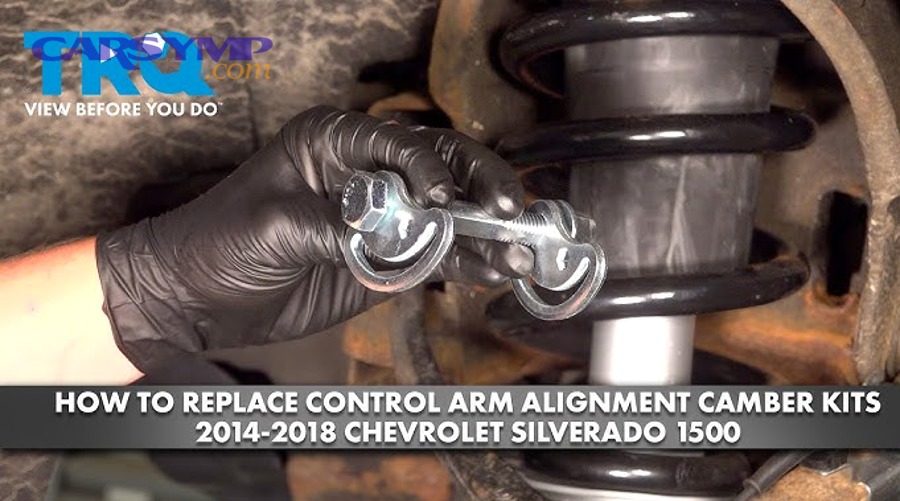
If you’re building topical authority, these special cases are where micro-semantics live: they answer the “why did my situation get weird?” queries that typical DIY guides skip.
How does rust-belt corrosion change the risk (seized bolts, broken hardware, stuck sleeves)?
Rust-belt corrosion changes the risk by turning removable fasteners into fused assemblies, raising the chance of broken bolts, damaged threads, and unsafe force application—because corrosion increases friction and bonds sleeves to bolts. More specifically, the danger isn’t only “it takes longer”—it’s that the methods used to force removal can destabilize the vehicle on stands or damage mounting points.
Safer escalation pattern:
- Penetrant + time
- Clean exposed threads with a wire brush
- Correct sockets and breaker bar alignment
- Controlled heat (only if you know what’s near the work area)
- Cut-and-replace strategy (when sleeves are fused)
This is where Rusted bolt removal tips must include a “stop rule”: if your only remaining option is uncontrolled force that rocks the car on stands, you stop and change the setup—or hand it off.
Do torque-to-yield bolts or one-time-use hardware increase failure risk if reused?
Yes, torque-to-yield and one-time-use hardware increase failure risk if reused because their engineered clamping behavior may not repeat safely after being stretched or after coatings are compromised. Moreover, this isn’t superstition—it’s about fastener mechanics and the margin between “holds” and “fails.”
Practical guidance:
- If the service procedure specifies replacement, treat it as required.
- If you don’t know, inspect:
- unusual necking
- manufacturer markings
- bolt coating conditions
- When in doubt on critical suspension bolts, replacing hardware is often cheaper than gambling.
Evidence: According to a study by Mechanics StackExchange from 2014, torque-to-yield bolts are engineered for one-time use and reusing them risks failure because the bolt has already been permanently stretched beyond its original elastic range.
Can alignment and ADAS/steering sensor calibration become mandatory after control arm work?
Yes, alignment and calibration can become mandatory after control arm work because changing suspension geometry can shift steering angle reference and lane-keeping/driver-assist expectations, and some systems rely on correct alignment inputs to behave predictably. Next, the key is not to assume every car needs ADAS calibration—only to recognize when it’s plausible and verify for your model.
When it’s more likely:
- Newer vehicles with lane keeping, adaptive cruise, or camera/radar systems
- Steering wheel off-center after alignment
- Post-repair warning lights or stability control odd behavior
A safe approach in content and in real life:
- State alignment as required.
- Recommend checking whether the model requires steering angle sensor reset or ADAS calibration after suspension repair.
- Encourage verification via service information.
Why do lifted/modified suspensions or eccentric cam bolts raise the chance of persistent pull or uneven tire wear?
Lifted/modified suspensions and eccentric cam bolts raise the chance of persistent pull and uneven tire wear because they alter baseline geometry and reduce adjustability, making small assembly differences show up as big toe/camber changes. To sum up, the more “non-stock” your geometry, the less forgiving the system becomes.
Common outcomes:
- Alignment “within spec” but still not symmetrical side-to-side
- Steering wheel off-center even after adjustment
- Tire wear that appears quickly on inner/outer edges
This is why a “mark it and hope” approach to eccentric cams is not enough. Marking helps you get to the alignment shop safely, but it’s not a substitute for measuring and adjusting properly.
Evidence: According to a study by the journal Advances in Mechanical Engineering from 2024, rolling resistance increased substantially as toe-in angle changed in their experimental investigation, reinforcing that toe-related changes can have outsized mechanical effects.