


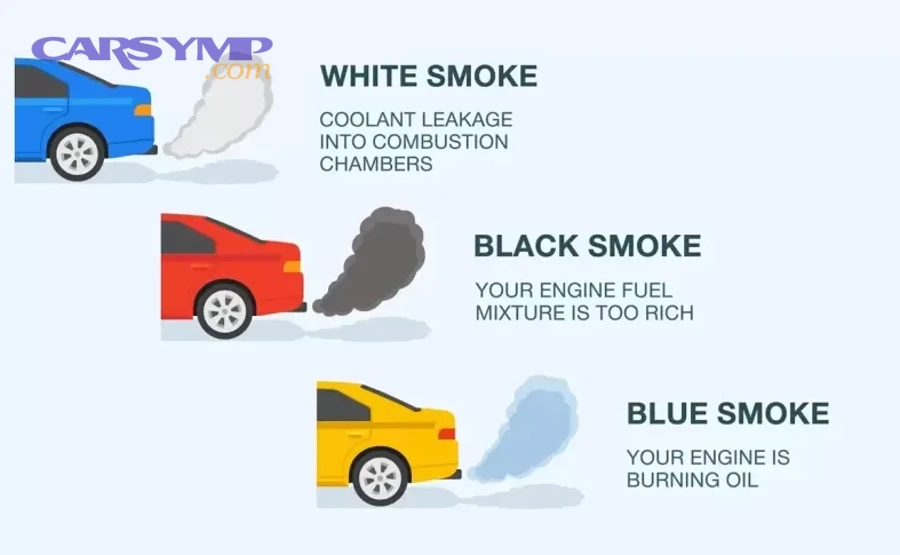
White exhaust smoke is not always a coolant leak—sometimes it’s harmless condensation—but the right clues (smell, persistence, coolant level change, and overheating behavior) tell you when it’s coolant entering the exhaust. Next, you’ll learn how to separate normal water vapor from coolant-burning smoke by watching what the plume does after warm-up, how it behaves under load, and what it leaves behind.
Then, you’ll see the most reliable “confirmation clues” beyond the tailpipe, including coolant level patterns, reservoir behavior, oil/coolant mixing signs, and what spark plugs can reveal. These checks help you connect the smoke you see to the leak path that’s causing it.
Moreover, you’ll get a clear decision path for what to do next—when it’s safe to keep driving briefly, when you should stop immediately, and what tests to request so you don’t replace parts blindly. That’s where simple checks and shop diagnostics (pressure tests, combustion gas tests, leak-down) become your fastest truth-tellers.
Introduce a new idea: once you understand the difference between “steam” and “coolant smoke,” the entire diagnosis becomes a step-by-step elimination process that protects your engine and your wallet.
Is white exhaust smoke always a sign of a coolant leak?
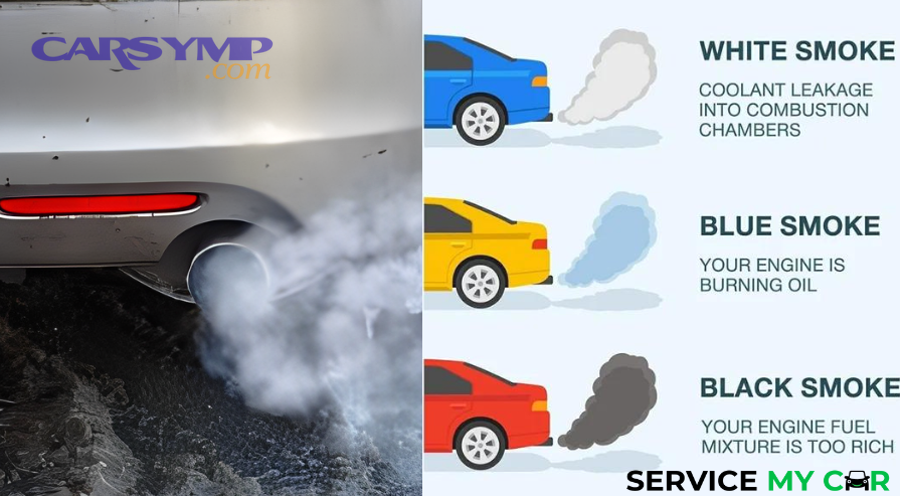
No—white exhaust smoke is not always a coolant leak, because normal condensation, cold weather, short trips, and certain fuel/air conditions can create white vapor, while coolant leaks usually add persistence, a sweet odor, and coolant loss. Next, to avoid guessing, focus on duration, density, smell, and coolant level trend rather than color alone.

Does the white smoke disappear after warm-up?
White vapor that fades within a few minutes (especially in cold or humid weather) is commonly condensation burning off in the exhaust system. That happens because water is a natural byproduct of combustion, and cold exhaust pipes condense it into visible vapor.
To make this practical, use a simple warm-up rule:
- Normal pattern: visible vapor at startup → quickly thins → mostly gone after the engine reaches stable idle and the exhaust warms.
- Suspicious pattern: vapor stays thick after warm-up → returns strongly at idle after a short drive → becomes heavier when you rev.
Also pay attention to the tailpipe area. Condensation tends to leave clear water droplets; coolant-burning may leave slightly oily or chalky residue (details in later sections).
Is the smoke thick, sweet-smelling, and persistent?
Coolant-burning smoke tends to be thicker and more “cloud-like,” and many people describe the odor as sweet (though smell is subjective and can vary with coolant type and exhaust condition). Persistence matters most: if the cloud doesn’t taper off once the engine is fully warm, you should treat it as a warning.
Common persistence scenarios that lean toward a coolant leak:
- Smoke is heavy at idle after the engine is hot.
- Smoke worsens after a highway pull, then lingers when you stop.
- Smoke appears with misfires, rough idle, overheating, or low coolant.
Can you drive safely if the smoke is only on cold starts?
Sometimes yes, if it’s clearly condensation: it disappears quickly, there’s no coolant loss, no overheating, and the engine runs normally. However, to stay safe, use a conservative checklist before you keep driving:
- Coolant level remains stable across several mornings.
- Temperature gauge stays normal in traffic and at speed.
- No sweet smell, no misfire, no check engine light related to misfire.
- No coolant puddles, no wet spots, no pressure “burping” into the reservoir.
If any of these are uncertain, transition to the confirmation checks—because early coolant intrusion can look mild at first, then accelerate fast.
What is the difference between normal water vapor and coolant-burning smoke?
Normal water vapor is condensed moisture that becomes visible in cool air and fades as exhaust temperature rises, while coolant-burning smoke comes from coolant entering combustion or hot exhaust flow, producing thicker, longer-lasting white plumes often paired with coolant loss and engine symptoms. To better understand the difference, compare appearance, smell, persistence, and how it changes under throttle.
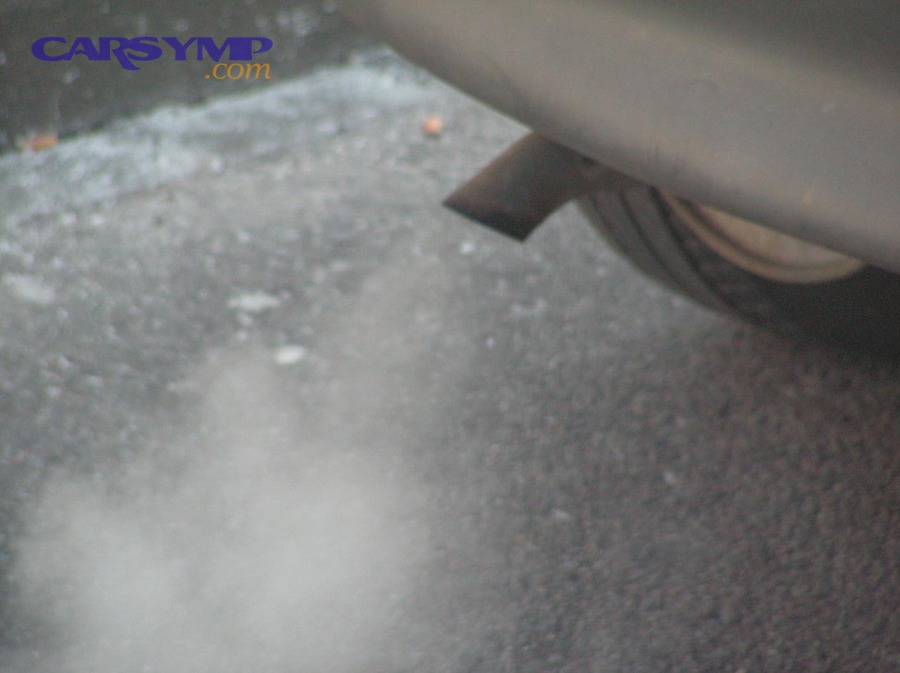
What does normal condensation steam look like?
Normal condensation steam typically looks like:
- Light-to-medium white vapor
- Wispy edges that disperse quickly
- Strongest right at startup or in cold air
- Decreases steadily as the exhaust warms
It also tends to vary with environment:
- Cold mornings: more visible vapor.
- Humid days: vapor lingers slightly longer.
- Short trips: more condensation remains trapped in the exhaust, so you’ll see more vapor next start.
A simple observation test: stand behind the car from a safe distance and watch whether the vapor thins and disappears within 2–10 minutes, depending on temperature.
What does coolant-burning smoke look and smell like?
Coolant-burning smoke often looks:
- Denser and more opaque
- More persistent after warm-up
- Sometimes accompanied by a sweet odor and a “wet” exhaust feel
It may also behave differently at the tailpipe:
- Condensation often leaves clean water that dries without residue.
- Coolant intrusion can leave faint white crust, sticky film, or unusual deposits (not always).
Important caution: don’t rely on smell alone. Catalytic converters, fuel richness, and exhaust leaks can confuse odor. Instead, treat smell as a supporting clue, not the deciding one.
How does the smoke behave under load and at idle?
This is where patterns become very diagnostic:
- Condensation vapor: often strongest at startup idle, then fades; revving may briefly increase vapor but it disperses quickly.
- Coolant-burning smoke: can increase under load (higher cylinder pressure can push coolant through a breach), then remain noticeable at idle once hot.
If the smoke gets worse during acceleration and you also notice coolant dropping, overheating, or roughness, you’re moving from “possible” to “probable.”
Evidence: According to a study by University of California, Berkeley from the Department of Civil and Environmental Engineering, in 2015, on-road tunnel measurements observed infrequent but strong ethylene glycol spikes (over 10× average) roughly once per day, consistent with emissions from vehicles with coolant system issues.
What clues confirm a coolant leak when you see white smoke?
There are 4 major confirmation clues for coolant intrusion: coolant level drops, cooling system pressurizes abnormally, cross-contamination appears in oil/coolant, and combustion/exhaust shows coolant-specific residue or cylinder evidence—and they work best when checked together. Specifically, these clues move you beyond “smoke watching” into repeatable diagnosis.
What coolant leak symptoms often appear with white smoke?
The most common coolant leak symptoms that reinforce a coolant-smoke diagnosis include:
- Coolant level drops over days, not just once
- Heater performance becomes inconsistent (air pockets)
- Temperature gauge fluctuates or spikes in traffic
- You smell coolant near the engine bay after shutdown
- You notice dampness, crusty residue, or stains near hoses, radiator, or water pump
When the leak is active on the road, drivers often notice Signs of coolant leak while driving such as:
- Heat suddenly turning lukewarm at idle (air in system)
- Temperature climbing at stoplights
- Coolant warning light flickering on hills
- Steam smell after a hard pull or long climb
These symptoms matter because they connect tailpipe smoke to a cooling system that’s losing volume or pressure control.
What should you look for in the coolant reservoir and radiator cap?
Your reservoir and cap behavior can reveal pressure abnormalities:
- Reservoir level rises and falls normally with temperature, but shouldn’t keep emptying.
- A reservoir that bubbles constantly after warm-up can indicate combustion gases entering the cooling system.
- A cap that vents early (weak spring) can mimic other issues by lowering system pressure and increasing boil-over.
Safe check (engine cold):
- Note the level line.
- Inspect for oily sheen or sludge.
- Look for dried crust around seams, hoses, and cap seat.
If you see repeated overflow without obvious overheating cause, it’s a clue that the system is being pressurized by something other than heat expansion—often combustion leakage.
What does the oil/coolant cross-contamination clue look like?
Cross-contamination is a high-signal clue, though it doesn’t happen in every case:
- Oil in coolant may look like brown film, muddy streaks, or floating sludge in the reservoir/radiator neck.
- Coolant in oil may look like milky tan emulsion under the oil cap or on the dipstick.
Important nuance: short-trip condensation can create small amounts of milky residue under the oil cap in cold climates, so confirm by checking:
- Dipstick consistency (not just the cap)
- Oil level rising unexpectedly
- Coolant level dropping at the same time
If oil/coolant mixing is confirmed, you should treat it as urgent because lubrication and heat control are both compromised.
What do spark plugs and tailpipe residue reveal?
Spark plugs can show which cylinder is involved:
- A “steam-cleaned” plug (unusually clean compared to others) can indicate coolant entering that cylinder.
- Repeated misfires on one cylinder paired with white smoke can strengthen the case.
Tailpipe clues can help, but are less definitive:
- White crusty deposits can appear in coolant-burning, but converters can mask residue.
- Moisture alone is normal, so don’t over-interpret water droplets.
If you suspect a particular cylinder, that becomes extremely useful later when you do a leak-down test or borescope inspection.
What are the most common causes behind white smoke and coolant loss?
There are 4 main cause groups behind white smoke with coolant loss—combustion-chamber intrusion, external leaks that flash to steam, cooler failures that feed exhaust, and “look-alikes” that create white vapor without coolant loss—and each has a different risk profile and repair path. Moreover, identifying the leak path early prevents overheating damage that multiplies repair cost.
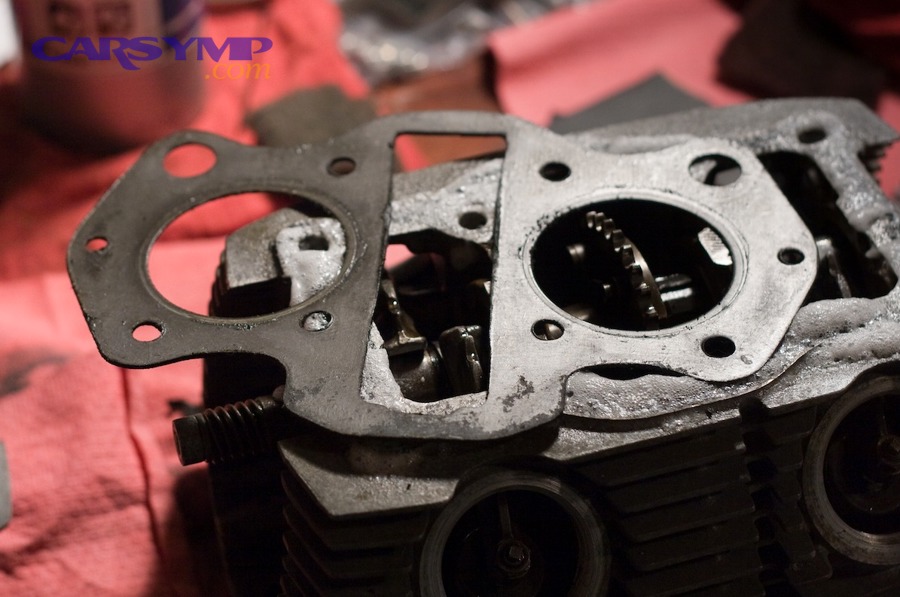
Which leaks let coolant enter the combustion chamber?
The most common internal entry paths include:
- Head gasket breach between coolant passage and cylinder
- Cracked cylinder head (often heat-stress related)
- Cracked engine block (less common, more severe)
- Intake manifold gasket failure on some engines where coolant crosses intake runners (engine-specific)
These issues typically produce:
- Persistent white smoke after warm-up
- Coolant loss without visible external leaks
- Misfire on startup (coolant in cylinder)
- Cooling system over-pressurization or bubbling
Risk note: coolant entering a cylinder can cause hydrolock in severe cases, where liquid prevents the piston from moving, potentially bending rods.
Which leaks drip externally but still cause overheating and steam?
External leaks can create steam that looks like tailpipe smoke when it hits hot surfaces, or can cause overheating that later leads to internal leaks. Common sources:
- Radiator end tanks and seams
- Upper/lower radiator hoses and clamps
- Heater hoses and quick-connect fittings
- Water pump weep hole
- Thermostat housing or crossover pipe seals
External leaks often show:
- Wet spots and crusty residue near the leak
- Sweet smell in the engine bay
- Steam under the hood more than the tailpipe
- Coolant puddles after parking
These are usually less catastrophic than internal breaches—unless overheating is ignored.
Which component failures create white smoke without coolant loss?
White exhaust can occur without coolant loss in cases like:
- Heavy condensation (cold, humid, short-trip patterns)
- Certain fueling issues producing visible vapor/steam-like exhaust
- Some emissions control events (vehicle-type dependent, especially diesel)
These scenarios are why “white smoke = head gasket” is an over-simplification. The missing piece is coolant loss and system behavior.
What vehicle-specific patterns matter (turbo, EGR cooler, etc.)?
Some platforms have repeat patterns:
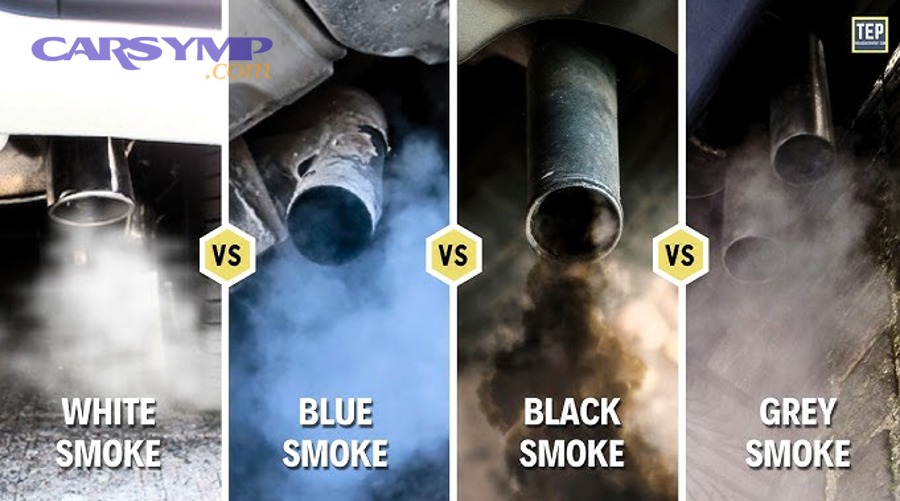
- Turbocharged engines: coolant lines or turbo center housing issues can create unusual smoke patterns, sometimes mixed with oil smoke (bluish-gray).
- Diesel engines with EGR coolers: an EGR cooler leak can send coolant into exhaust flow, creating white smoke without classic head gasket signs.
- Direct-injected engines: misfires and deposits can complicate smoke interpretation, making cylinder-specific tests more valuable.
If your platform is known for a specific failure mode, use that knowledge as a tie-breaker—but still confirm with tests.
What should you do next if you suspect a coolant leak?
The safest next move is a 4-step response: stabilize temperature, protect the engine from overheating, document key symptoms, and confirm the leak path with targeted tests—because driving “just a little more” is what turns a manageable repair into major engine damage. Then, once you control risk, you can choose the right diagnostic path instead of replacing parts by guesswork.
What immediate steps prevent engine damage?
Do these first, in order:
- Watch temperature like a hawk. If it rises above normal, reduce load immediately.
- Turn off A/C and turn on heat (full hot, fan high) to pull heat from the engine.
- Stop and idle only if necessary. If the gauge continues rising, shut down.
- Never open the cap hot. Let it cool fully before checking coolant.
If the engine is actively overheating, the priority is preventing warping of the head and further gasket damage.
When should you stop driving and tow?
Tow (or stop driving) when any of these are true:
- Temperature gauge climbs rapidly or you get an overheat warning
- White smoke is thick and continuous after warm-up
- Engine misfires severely or runs rough after a hot restart
- Coolant level drops noticeably between short stops
- You see bubbling in the reservoir after warm-up (engine hot)
A tow is often cheaper than turning a gasket job into a full engine replacement.
What information should you collect before visiting a shop?
Bring a short “evidence packet” that speeds diagnosis:
- When smoke happens (cold start only vs hot idle vs under load)
- Coolant level trend (photos over days)
- Any overheating events
- Misfire codes if you can scan (cylinder numbers matter)
- Any puddles, residue locations, or smells
This prevents vague descriptions like “it smokes sometimes,” which often leads to unnecessary parts replacement.
How do you avoid misdiagnosis and unnecessary parts?
Use a “confirm before replace” rule:
- Don’t replace thermostat/radiator/water pump blindly if you have persistent tailpipe smoke and coolant loss with no external leak.
- Ask for pressure testing and a combustion gas check before approving major work.
- If a shop claims a head gasket without test evidence, request the specific results (pressure drop rate, chemical test outcome, cylinder contribution).
This is how you keep the repair aligned with the actual failure path.
How can you verify a coolant leak with basic tests and shop diagnostics?
You can verify a coolant leak with 3 layers of testing—visual checks, cooling system pressure testing, and combustion/cylinder confirmation tests—and together they identify both whether you have a leak and where it’s going. Below, the key is Pressure test results interpretation, because pressure behavior often reveals the leak path faster than any single symptom.
How do cooling system pressure tests work?
A pressure test applies controlled pressure to the cooling system (engine cold) and watches whether pressure holds. If pressure drops, coolant is escaping—either externally (visible) or internally (often not visible).
How to interpret common outcomes:
- Holds steady for 10–20 minutes: major leaks less likely; move to combustion testing if symptoms persist.
- Drops steadily with visible drips: external leak confirmed—trace the wettest point.
- Drops with no external leak found: suspect internal leak (combustion chamber, EGR cooler, heater core, intake manifold crossover).
- Pressure rises quickly after startup (not during pressure test): can indicate combustion gases entering coolant under running conditions.
Practical tips:
- Use a bright light and inspect hose junctions, radiator seams, thermostat housing, water pump area, and heater hoses.
- If you smell coolant inside the cabin or see oily film on windshield with a sweet odor, consider heater core leakage.
What do combustion gas tests and leak-down tests show?
Combustion gas tests (often “block tests”) check for exhaust gases in the coolant. A positive result strongly suggests a head gasket breach, cracked head, or related internal path.
Leak-down tests pressurize each cylinder and listen for where air escapes:
- Bubbles in coolant reservoir/radiator neck → cylinder-to-coolant path likely
- Air from intake/exhaust → valve sealing issues (not coolant leak)
- Air from crankcase → rings/blow-by (again, not coolant leak)
A leak-down paired with cylinder-specific plug evidence is one of the cleanest ways to confirm internal intrusion.
How do shops pinpoint leak source with UV dye and inspection?
When leaks are small or intermittent, shops may:
- Add UV dye to coolant
- Run the vehicle through heat cycles
- Inspect with UV light for glowing traces at seams, fittings, and weep points
This method is especially helpful for:
- Hairline radiator leaks
- Slow water pump seepage
- Thermostat housing leaks that only show when hot
- Hose pinholes that mist coolant rather than drip
Dye testing is also great for catching leaks that evaporate before they puddle.
What are typical repair costs by leak source?
Repair cost depends on labor time, engine layout, and how much collateral damage overheating caused. The table below summarizes Typical repair costs by leak source so you can sanity-check estimates and understand why accurate diagnosis matters.
| Leak source (common) | Typical repair scope | Typical cost range (parts + labor) | Why the range is wide |
|---|---|---|---|
| Radiator seam/end tank | Replace radiator + coolant refill/bleed | $300–$1,200 | Vehicle access, OEM vs aftermarket, cooling fan complexity |
| Hose / clamp / quick-connect | Replace hose/fitting + refill/bleed | $150–$600 | Hose routing, brittle connectors, labor access |
| Thermostat housing / crossover | Replace thermostat/housing seals | $200–$900 | Integrated housings, sensor replacement, buried locations |
| Water pump | Replace pump + coolant service | $350–$1,500 | Timing-belt/chain driven pumps can be labor-heavy |
| Heater core | Replace core (often dash removal) | $800–$2,500+ | Interior labor dominates; some vehicles are extremely time-consuming |
| Head gasket | Gasket job + machine work checks + fluids | $1,500–$4,500+ | Engine design, machining needs, bolt patterns, access, collateral damage |
| Cracked head/block | Head replacement or engine replacement | $3,000–$10,000+ | Parts cost, availability, whether a full engine swap is required |
Use this table as a range-check, not a quote. If a shop price is far outside the typical band, ask what drove it: access, added parts, machining, or prior overheating damage.
What edge cases can mimic coolant-burning smoke, and how do you rule them out?
There are 4 common edge-case look-alikes—intake gasket paths, transmission/fuel-related smoke, diesel-specific emission events, and weather/short-trip condensation patterns—and you rule them out by matching smoke behavior to coolant loss, temperature behavior, and targeted tests. In addition, these edge cases explain why the same white plume can mean “normal” on one car and “urgent” on another.
How can a leaking intake manifold gasket mimic head gasket symptoms?
On certain engines, intake manifold gaskets seal coolant passages near intake runners. If that gasket fails:
- Coolant can enter intake airflow and reach cylinders
- White smoke may appear
- Coolant may drop with minimal external leakage
Rule-out strategy:
- Pressure test + inspect intake manifold area for seepage
- Look for cylinder-specific plug “steam cleaning”
- Confirm with leak-down/combustion gas test to distinguish from head gasket
The key difference is the leak path location and the repair approach—still serious, but often less extreme than a head gasket.
Can transmission fluid or fuel issues create white/gray smoke?
Yes, in some cases:
- Automatic transmission fluid entering intake (older vacuum-modulator setups) can create pale smoke.
- Over-fueling or certain misfire conditions can create unusual vapor that looks lighter than typical black smoke.
Rule-out strategy:
- Check fluid levels: unexplained transmission fluid drop or strong ATF odor is a clue.
- Scan for fuel trim/misfire patterns.
- Confirm coolant level stability—if coolant isn’t dropping, coolant-burning becomes less likely.
How do diesel systems (DPF regen, EGR cooler) change the diagnosis?
Diesels can produce white-ish exhaust during:
- DPF regeneration events
- Cold-start enrichment
- EGR cooler leaks (which can involve coolant entering exhaust)
Rule-out strategy:
- Note whether the smoke is tied to regen cycles and whether coolant drops.
- Pressure test and inspect for EGR cooler-related coolant loss.
- Look for persistent coolant consumption without external leaks.
For diesels, coolant loss plus white smoke often points you toward EGR cooler checks earlier than on gasoline engines.
What about humid weather, short trips, and garage condensation?
These are the most common harmless look-alikes:
- Short trips never fully dry the exhaust, so the next start produces more vapor.
- Humid weather makes vapor disperse slower.
- Garages trap cool air and moisture, making the plume appear thicker.
Rule-out strategy:
- Drive long enough to fully warm the exhaust and watch whether smoke disappears.
- Track coolant level across a week, not one day.
- If smoke persists hot and coolant drops, stop treating it as condensation.
Contextual border reminder: If you’ve confirmed coolant loss, overheating, abnormal pressurization, or internal-leak test results, you’ve moved past “smoke interpretation” into “repair planning”—and the safest path is to minimize driving, confirm the leak source, and fix it before engine damage escalates.