


If you’ve ever heard “We need to diagnose it first,” “We can give you an estimate,” or “We’ll do an inspection,” you’ve been offered three different services that solve three different problems. This guide compares diagnosis vs estimate vs inspection differences so you know what each one means, what you should receive, and how to choose the right one for your situation.
Many drivers also want to understand how a shop actually moves from “something feels off” to “here’s the repair plan and price.” That workflow matters because it explains why a quick scan or walk-around can’t always answer “what’s wrong” with confidence—and why you sometimes pay for expertise before you see a final quote.
Cost clarity is the next big question: which one is usually cheap, which one can be billed by time, and what you’re paying for beyond parts. Once you can see the deliverables and boundaries for each service, pricing becomes easier to judge.
Introduce a new idea: the smartest strategy is not “avoid paying anything up front,” but to authorize the right level of work at the right time—so you get accurate answers while still avoiding surprises later in the process.
What do “diagnosis,” “estimate,” and “inspection” mean in auto repair?
Diagnosis, estimate, and inspection are three distinct services: diagnosis identifies the root cause of a symptom using tests, inspection checks condition and safety using a checklist, and an estimate prices a known repair once scope is clear.
To better understand which one you need, it helps to connect each term to the question you’re actually trying to answer—What’s wrong? (diagnosis), What condition is it in? (inspection), or How much will it cost to fix? (estimate).
When people mix these terms up, they often authorize the wrong service. The result is frustration on both sides: the customer expects a firm repair price from an inspection, or expects a definitive fault cause from a quick estimate. The simplest way to keep expectations aligned is to focus on deliverables:
- Inspection deliverable: a condition report (often “green/yellow/red”), measurements, and recommendations.
- Diagnosis deliverable: test-backed explanation of the fault and a repair path with confidence level.
- Estimate deliverable: a written quote for parts and labor for a defined repair job.
Because modern vehicles are complex systems (engine, transmission, electronics, networks), one symptom can have multiple possible causes. That’s why diagnosis is a process, not just a label.
Is an estimate the same thing as a diagnosis?
No—an estimate is not the same as a diagnosis because (1) an estimate prices a known job, (2) diagnosis identifies the cause of the problem using testing, and (3) diagnosis reduces the risk of paying for the wrong parts or the wrong repair.
However, the confusion is understandable because both can end with a number on paper. The difference is what that number represents:
- An estimate is a pricing document: “To replace X part, labor is Y hours and parts are Z dollars.”
- A diagnosis is a troubleshooting conclusion: “X part failed because the signal is missing / pressure is low / circuit is open, verified by tests.”
If you ask for a quote while the problem is still uncertain (“car shakes sometimes,” “light comes on and off”), a shop often cannot ethically quote a repair without guessing. That’s the moment when a diagnosis is the correct service.
What does an inspection include compared with diagnostic testing?
Inspection is best for condition and safety; diagnosis is best for root cause and repair accuracy. Inspection typically focuses on what can be seen, measured, or checked quickly across many systems, while diagnosis goes deep on one system using targeted tests.
Inspections usually include items like:
- Tire tread depth, tire condition, and inflation
- Brake pad thickness (visual or measured), brake fluid level/condition
- Battery test (sometimes), belt and hose condition
- Leaks, obvious damage, fluid levels
- Lights, wipers, and basic safety items
Diagnosis, by contrast, is symptom-driven. If the complaint is “intermittent misfire,” the technician may check scan data, ignition patterns, fuel trim, vacuum leaks, injector balance, compression, and more—because the goal is to identify why it misfires, not just to note that it misfires.
Is a code scan a diagnosis or just a clue?
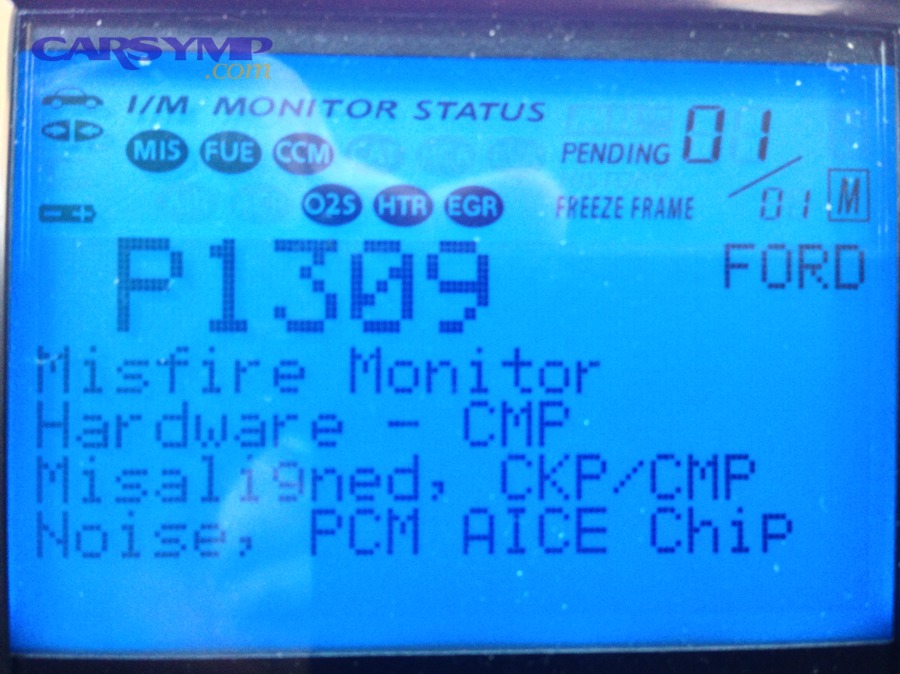
No—a code scan is usually a clue, not a complete diagnosis because (1) a code identifies a system or condition, (2) it doesn’t always identify the failed part, and (3) multiple faults can trigger the same code.
Meanwhile, scan data can be part of a real diagnosis. A professional diagnostic approach often uses:
- Diagnostic Trouble Codes (DTCs)
- Freeze-frame data (snapshot of conditions when fault set)
- Live data PIDs (sensor values in real time)
- Mode $06 results (on-board monitor test values)
- Bi-directional controls (commanding components on/off)
- Physical tests (smoke test, pressure test, voltage drop test)
So the “scan vs diagnosis” distinction isn’t anti-scan; it’s about scope. A scan tells you where to look. Diagnosis tells you what actually failed and what repair makes sense.
How does a repair shop typically move from inspection to diagnosis to estimate?
Most shops follow a workflow where inspection gathers baseline clues, diagnosis confirms the cause with tests, and estimate prices the correct repair—so each step reduces uncertainty before money is spent on parts.
Next, let’s explore the typical steps so you know exactly when a shop is giving you general information versus doing billable troubleshooting.

What are the common steps in the shop workflow from complaint to quote?
There are 6 common steps most reputable shops follow: (1) intake and symptoms, (2) initial checks, (3) scan and inspection, (4) test plan, (5) findings and repair recommendation, and (6) written estimate based on confirmed scope.
More specifically, a practical workflow looks like this:
- Customer interview / intake
- What happened, when it started, what makes it worse or better
- Any prior repairs, recent incidents (battery swap, collision, overheating)
- Quick safety/triage checks
- “Is it safe to test drive?” “Is it leaking severely?” “Is it overheating now?”
- Baseline inspection + scan
- Visual checks, fluid checks, quick measurements, scan for codes/data
- Hypothesis + test plan
- Technician identifies the most likely causes and chooses tests to confirm/deny
- Root cause confirmation
- Evidence-based conclusion (test results, measurements, observed failure mode)
- Estimate creation
- Parts, labor time, any additional steps (calibration, alignment, relearn)
- Authorization and repair
- After approval, the shop performs repair and often verifies the fix
This order matters because it protects you from paying for a repair that doesn’t solve the problem. It also protects the shop from promising a price before the job is defined.
When does an inspection become billable diagnostic work?
An inspection becomes billable diagnostic work when the shop stops doing broad, quick checks and starts performing targeted tests to identify a fault cause—because that requires time, skill, and tools beyond a standard checklist.
For example, these actions often indicate you’ve crossed into diagnosis:
- Smoke testing an EVAP or intake system
- Performing a voltage drop test on a circuit
- Checking fuel pressure under load and comparing to spec
- Conducting compression/leak-down tests
- Using bi-directional scan tool controls to command actuators
- Removing components to access and test (within the authorized scope)
A good shop will define that boundary before proceeding. If you want to avoid surprises, you can ask for a “time cap” (for example, approve up to one hour of testing, then call with findings).
What should a diagnosis deliver that an inspection checklist cannot?
Diagnosis should deliver a cause-and-effect explanation, an evidence trail, and a recommended repair path—while an inspection checklist mainly delivers condition notes and general recommendations.
To illustrate, compare these outcomes:
- Inspection outcome: “Oil leak present near valve cover area; tire tread low; brake pads at 4mm.”
- Diagnostic outcome: “Oil leak is from valve cover gasket verified by UV dye; misfire on cylinder 3 traced to coil breakdown under load; EVAP code caused by cracked purge line verified by smoke test.”
A diagnosis should also answer the next practical question: What repair is most likely to fix this, and what risks remain? That’s the difference between “might be X” and “it is X.”
When should you request an inspection vs a diagnosis vs an estimate?
There are three main reasons to choose one service over another: inspection is best for baseline condition and safety, diagnosis is best when symptoms are unclear or intermittent, and an estimate is best when the repair job is already defined and confirmed.
Then, to make the choice easier in real life, use the question you’re trying to answer as your decision filter: condition, cause, or cost.
Should you ask for an inspection when there’s no warning light?
Yes—an inspection makes sense even without a warning light because (1) many safety issues don’t trigger a dashboard light, (2) inspections catch wear trends early, and (3) you can plan maintenance instead of reacting to breakdowns.
Next, connect that to how cars actually fail: tires, brakes, lights, belts, hoses, and leaks can become dangerous or expensive long before a computer sets a fault code. A multi-point inspection is especially useful:
- Before long road trips
- When buying/selling a used car (pre-purchase context)
- At seasonal changes (heat/cold stresses)
- If the car is aging or has higher mileage
An inspection is not “less valuable” than diagnosis; it’s valuable for a different question: “What needs attention soon?”
Do you need a diagnosis when the check engine light is on?
Yes—you often need a diagnosis when the check engine light is on because (1) the same code can have multiple causes, (2) ignoring root cause can damage other components, and (3) accurate testing prevents wasting money on the wrong repair.
However, there are exceptions. You might not need full diagnostic depth if:
- The issue is a known, verified pattern (for example, a known coil failure on a specific model) and the shop confirms with quick checks.
- There is an active recall or service campaign that specifically addresses your symptom.
- The problem is purely maintenance-based and clearly measurable (for example, worn brake pads).
Even in those cases, a shop should confirm scope before quoting. The check engine light is a signal to investigate, not a part replacement instruction.
Is an estimate enough if you already know the exact repair you want?
Yes—an estimate can be enough when the repair is clearly defined because (1) the shop can price known labor steps, (2) parts selection is straightforward, and (3) the work can be verified visually or with simple measurements.
More specifically, estimates work well for jobs like:
- Brake pad/rotor replacement (after measurement/inspection confirms wear)
- Tire replacement
- Battery replacement (when test confirms failure)
- Scheduled maintenance services (fluids, filters, spark plugs at intervals)
But if your “exact repair” is based on a guess (“I think it’s the alternator”), the estimate is only as good as the guess. If the guess is wrong, the estimate becomes irrelevant—and you may pay twice (once for the wrong repair, then again for the right one).
What are the cost and time differences between diagnosis, estimate, and inspection?
Diagnosis wins for accuracy, inspection is optimal for broad coverage, and an estimate is best for pricing a defined job—so cost and time vary mainly by how much uncertainty each service must remove.
In addition, understanding what you’re paying for makes the numbers feel fair: you’re not paying for “mystery,” you’re paying for time, tools, and a process that reduces expensive guessing.
Before the details, here’s a quick comparison table showing typical deliverables and how each service is billed. This table helps you match price expectations to what you should receive.
| Service | Core purpose | Typical deliverables | Typical billing style | Best for |
|---|---|---|---|---|
| Inspection (multi-point check) | Assess condition/safety | Checklist report, measurements, recommendations | Often flat fee or bundled with service | Preventive planning, safety checks |
| Diagnosis (diagnostic testing) | Identify root cause | Test results, cause explanation, repair path | Time-based or flat diagnostic package | Warning lights, intermittent symptoms |
| Estimate (repair quote) | Price a defined job | Written quote: parts + labor | Often free/low-cost if scope is clear | Known repairs, maintenance jobs |
Why is there a diagnostic fee, and what should it include?
A diagnostic fee exists because diagnosis is skilled labor that uses structured testing—so the fee should include (1) technician time, (2) scan tool and test equipment use, and (3) documented findings that guide the correct repair.
Specifically, a fair diagnostic scope often includes:
- Interview and symptom verification
- Basic scan for codes and freeze-frame
- Targeted testing appropriate to the fault (within agreed time)
- A conclusion: likely cause, confidence level, next steps
- A repair recommendation (and often an estimate after the cause is known)
What diagnosis should not be is a blank charge with no deliverables. Even if a problem is complex, you should receive clear communication about what was tested, what was ruled out, and what remains uncertain.
Can diagnostic fees be applied to the repair total?
Yes—sometimes diagnostic fees are applied to the repair total because (1) many shops credit diagnostic time when you approve the repair, (2) it rewards follow-through, and (3) it reduces the feeling of “paying twice” for the same outcome.
However, policies vary. Some shops apply the fee only if you proceed with repair; others keep it separate because diagnostic time is a distinct service. The key is to ask before authorizing:
- “If I repair here, is the diagnostic charge credited?”
- “What do I receive in writing after diagnosis?”
- “If you need more time, will you call before continuing?”
Those questions don’t create conflict—they create clarity.
Which service is most likely to be “free,” and what’s the tradeoff?
Estimates and basic inspections are most likely to be “free,” while diagnosis is least likely—because the tradeoff for “free” is usually limited scope, less certainty, or the assumption you’ll buy the repair afterward.
More specifically, common “free” offerings include:
- Free estimate for a clearly defined job (brakes, tires, battery)
- Complimentary multi-point inspection bundled with an oil change or service visit
- Free code read at some retailers (not the same as professional diagnosis)
The tradeoff is not necessarily bad—it’s just limited. A free code read may point you toward a system, but it often won’t tell you what to replace confidently. If you want certainty, you’re paying for the work that creates it.
Evidence: According to a study by the Texas A&M Transportation Institute from the Texas A&M University System, in 2019, the authors reported that 2011–2016 Fatality Analysis Reporting System (FARS) data show nearly 2.6% of fatal crashes involved a vehicle’s pre-existing defects, underscoring why condition checks and accurate problem isolation both matter. (subasish.github.io)
How can car owners avoid unnecessary diagnostic charges and still get accurate answers?
You can avoid unnecessary diagnostic charges by (1) defining the symptom clearly, (2) authorizing diagnosis with a time cap and written deliverables, and (3) choosing a second opinion when the proposed repair is expensive or uncertain.
Next, use these tactics as “guardrails” that keep the process honest and efficient—without pushing the shop into guessing.
What questions should you ask before authorizing diagnostic time?
There are 7 key questions to ask before diagnosis begins, based on scope control and deliverables:
- “What is the diagnostic plan?”
- You want to hear a method: verify symptom → scan data → targeted test(s).
- “What’s included in the diagnostic charge?”
- Scan, testing, road test, documentation, findings summary.
- “Is there a time cap before you call me?”
- Example: “Call me after one hour with what you found.”
- “What will I receive in writing?”
- Findings, test results, recommended repair path, estimate if possible.
- “If you can’t find it in the first hour, what’s the next step?”
- Additional testing, reproduce conditions, consult technical data, etc.
- “If I repair here, is any of this credited?”
- Ask about the diagnostic fee credit policy.
- “What are the risks of proceeding without diagnosis?”
- This forces the shop to explain uncertainty honestly.
These questions don’t slow the process; they reduce back-and-forth later. They also protect you from the most common waste pattern: approving a repair based on suspicion rather than evidence.
When should you stop diagnostics and seek a second opinion?
Yes—When a second opinion makes sense is when you face big cost, low certainty, or conflicting explanations because (1) high-dollar repairs deserve verification, (2) uncertainty can lead to parts swapping, and (3) another shop may have different tools or deeper brand experience.
Good triggers include:
- The shop proposes an expensive assembly replacement without showing test evidence
- The conclusion sounds vague (“could be this… maybe that… let’s try this first”)
- The proposed repair doesn’t explain why the symptom happens
- Your symptom is intermittent and the shop can’t reproduce it, but still recommends major parts
- You get contradictory diagnoses from different visits
A second opinion is not an insult; it’s a risk-management step—especially when the repair cost is large relative to the car’s value.
What red flags suggest you’re paying for guesswork rather than testing?
There are 6 red flags that suggest guesswork: vague explanations, no test results, rapid part-to-part changes, refusal to define scope, overreliance on a single code, and pressure to authorize expensive work immediately.
More specifically, watch for patterns like these:
- “The code says replace X” with no mention of testing
- No written findings after paid diagnostic time
- Changing story each time you call (“Now we think it’s something else”)
- No boundaries (“We’ll just keep looking” with no time cap)
- No verification step after the repair plan (no mention of confirming the fix)
- No causal chain
If you hear these, you can still salvage the situation by politely resetting scope: “Please pause at one hour and send findings and next steps before continuing.”
Evidence: According to a study by Harvard Business School’s Marketing Unit and Northwestern University researchers, published in 2017, a large-scale field experiment contacting 2,778 repair shops found that women who signaled they were uninformed were quoted about $20 higher than comparable men—showing why preparation and clear questions improve outcomes for consumers. (library.hbs.edu)
What special cases can change the “diagnosis vs estimate vs inspection” decision?
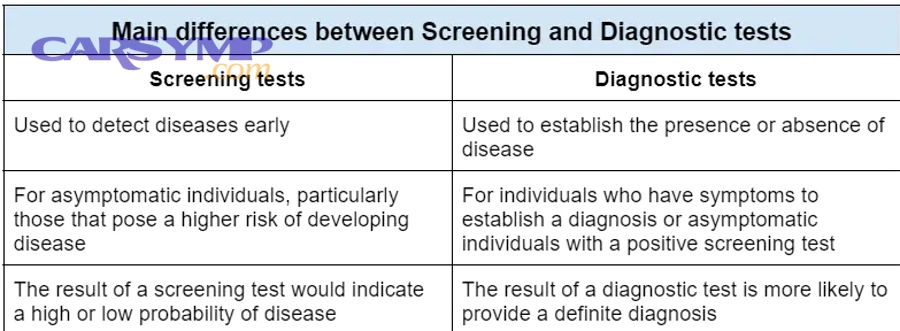
There are 4 special cases that change the decision—pre-purchase situations, intermittent problems, warranty/claim rules, and the “code scan vs certainty” gap—because each one changes how much evidence is needed before pricing a repair.
Below, these scenarios expand the micro context so you can choose the right service even when the situation isn’t “normal.”
How is a pre-purchase inspection different from a diagnostic appointment?
A pre-purchase inspection (PPI) is a broad condition and safety evaluation, while a diagnostic appointment is a targeted investigation of a specific symptom—so the PPI is better for “Should I buy this car?” and diagnosis is better for “Why is this problem happening?”
In a PPI, the technician’s job is to identify risk:
- Signs of prior damage or poor repairs
- Leaks, worn components, tire/brake condition
- Visible fluid condition and potential maintenance backlog
- Evidence of neglect (overdue services, mismatched tires, warning signs)
A diagnostic appointment starts with a complaint: “It stalls,” “It overheats,” “It shakes,” “The light comes on.” The technician then tests to isolate cause. If you’re buying a used car and you already noticed a symptom (for example, rough idle), the best strategy is often PPI + targeted diagnostic add-on. You get baseline condition plus deep investigation on the specific concern.
What should you do when the problem is intermittent and the shop can’t reproduce it?
When a problem is intermittent, you should (1) document the conditions, (2) authorize diagnosis with a time cap and a reproduction plan, and (3) prioritize data capture over immediate parts replacement.
Specifically, intermittent faults are tricky because they hide. The best “customer-side” steps include:
- Note when it happens (cold start, hot soak, highway speed, rain, after fueling)
- Note what changes it (AC on/off, braking, turning, bumps, gear changes)
- Take a short video of the symptom and the dashboard lights
- Provide any recent history (battery work, jump start, collision, water intrusion)
A good shop may propose:
- Extended road test under the conditions that trigger the issue
- Data logging (live data recording) to capture sensor behavior
- Wiggle tests for wiring faults
- Thermal testing (heat/cool) to reproduce failures
Your role is to approve a sensible plan with boundaries, not to force a guess. Intermittent problems are where “test, don’t guess” matters most.
How do extended warranties or insurance claims affect diagnostics and estimates?
Warranties and insurance claims often require diagnosis before estimate approval, because the payer needs documentation that the failure meets coverage rules—so you may have to authorize diagnosis even when you’re hoping for a quick quote.
More importantly, third-party payers usually want:
- A confirmed failure and cause
- Supporting evidence (codes, test results, measurements)
- An itemized estimate with labor times and parts costs
- Approval before teardown or replacement
If you have an extended warranty, ask the shop these two questions early:
- “Do you work with my warranty company and handle authorization calls?”
- “What diagnostic documentation will the warranty require?”
This prevents delays where the shop finds the issue but can’t proceed because the claim hasn’t been approved.
How is “reading a code” the opposite of a real diagnosis in terms of certainty?
Reading a code is low-certainty guidance, while real diagnosis is high-certainty fault isolation—so the difference is “clue” versus “confirmed cause” based on evidence.
To illustrate the certainty gap:
- Code read (clue): “P0171: System too lean.” Could be vacuum leak, MAF issue, fuel delivery, exhaust leak, sensor bias, and more.
- Diagnosis (confirmed cause): “Lean condition caused by cracked intake boot verified by smoke test; fuel trims normalize after repair; no further codes.”
That antonym relationship—uncertainty vs certainty—is the core reason diagnosis exists as a paid service. When the cost of being wrong is high, you pay for certainty.
If you want a one-sentence decision rule to remember: Choose inspection for condition/safety planning, choose diagnosis when you need the “why” with evidence, and choose an estimate when the repair job is already defined and confirmed—so you pay for the right work at the right stage.