


A code scan fee and full diagnostic work are not interchangeable: a scan mainly retrieves diagnostic trouble codes (DTCs) and basic data, while a full diagnosis tests and proves the root cause so you can fix the right thing the first time.
Next, you’ll see what each service typically includes and excludes, so you can tell whether you’re paying for “information” or paying for “answers” that actually solve the problem.
Then, you’ll learn typical price ranges and the real cost drivers behind diagnostic pricing—technician time, tooling, complexity, and shop type—so the number on the estimate makes sense.
Introduce a new idea: once you understand the part-vs-whole difference, you can use a simple decision framework to choose the right level of testing for your symptom and budget.
Is a code scan the same as a full diagnosis?
No—a code scan is not the same as a full diagnosis because a scan provides clues (codes/data), while diagnosis provides proof (tests/results), and that difference affects accuracy, time, and repair outcomes.
To better understand why that distinction matters, it helps to see what a scan can reliably tell you—and what it cannot.
Does reading a trouble code tell you what part to replace?
No—reading a trouble code does not tell you exactly what part to replace because (1) codes usually identify a system not a failed component, (2) the same code can be triggered by multiple root causes, and (3) modern vehicles use “rationality checks” that can flag symptoms downstream from the real fault.
Then, once you see how codes are generated, you’ll understand why “code = part” creates expensive guesswork.
A trouble code is more like a chapter title than the whole story. For example, a “misfire” code may occur because a spark plug is worn, a coil is weak, an injector is clogged, fuel pressure is low, or the engine has a compression problem. The vehicle’s computer cannot always distinguish which of those is true; it only knows that combustion quality or crankshaft speed variation fell outside expected patterns.
A code also arrives with context that can mislead if you don’t test:
- Freeze-frame data may show the moment the fault set, but it may not reflect the current condition if the issue is intermittent.
- Pending codes may hint at trends, but they aren’t confirmations.
- “History” codes can remain after a condition is resolved, especially if the vehicle hasn’t completed its readiness monitors.
This is why a scan is best viewed as the first step in a diagnostic path, not the final answer.
According to a report by Carnegie Mellon University from the Software Engineering Institute, in 2016, OBD-II standardized the use of diagnostic trouble codes (DTCs) for monitoring and interoperability—useful for signaling issues, but not designed to guarantee a single component-level root cause from a code alone. (sei.cmu.edu)
Can a scan fee be enough for minor issues or maintenance lights?
Yes—a scan fee can be enough for some minor situations because (1) the symptom is simple and consistent, (2) the fix has low downside if you’re wrong, and (3) the vehicle is not showing safety-critical drivability problems.
However, the safer approach is to use scan-first only when the risk of misdiagnosis is low.
A scan-first approach can be reasonable when:
- The vehicle has a non-urgent warning (like a non-flashing check engine light) and still drives normally.
- The problem is repeatable and specific (for example, a loose gas cap scenario that typically triggers an EVAP small leak code—after you verify the cap seal and condition).
- You’re gathering information to decide whether to schedule deeper testing, not trying to “fix by code.”
A scan fee is not enough when the symptom indicates potential damage or safety risk, such as:
- A flashing check engine light (often severe misfire risk)
- Stalling, no-start, or overheating
- Hard shifting or warning messages that limit power (“reduced engine power”)
In those situations, you’re not buying information—you’re buying certainty, and certainty comes from diagnostic testing.
What is a code scan fee, and what is full diagnostic work?
A code scan fee is a basic service that retrieves trouble codes and limited data, while full diagnostic work is a structured testing process that verifies the complaint, isolates the root cause, and produces a repair direction supported by evidence.
Next, breaking each one into typical inclusions makes the difference obvious—especially when pricing looks confusing.
What does a “scan fee” usually include at a shop?
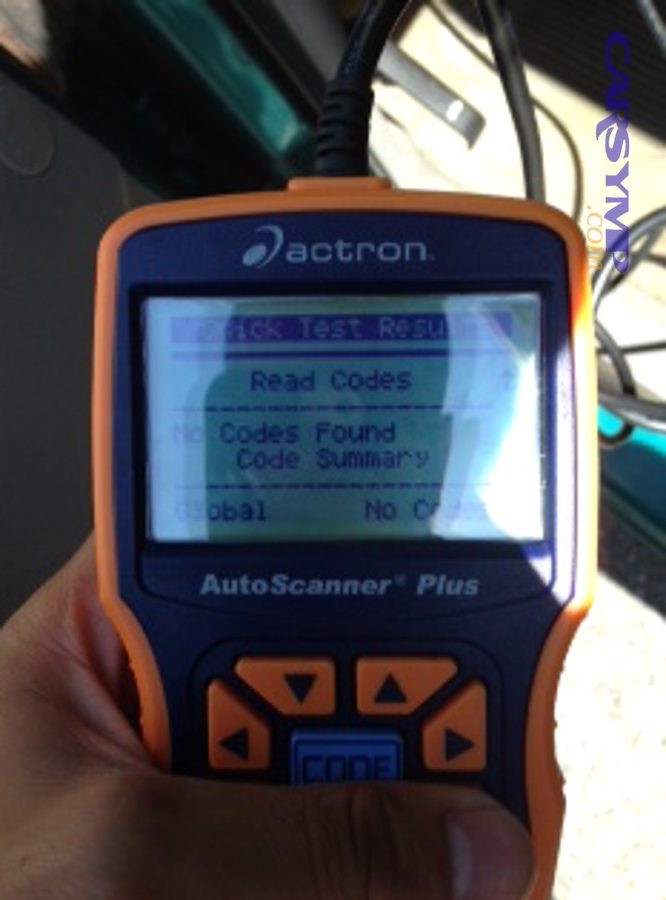
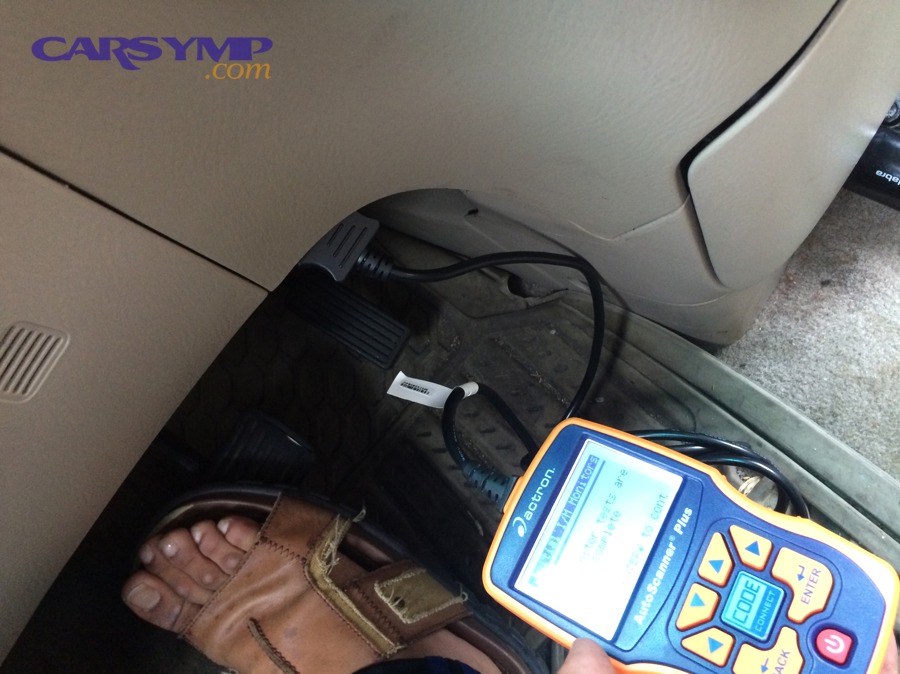
A scan fee usually includes (1) connecting a scan tool to retrieve codes, (2) recording code status (pending/confirmed/history), and (3) providing a basic interpretation of what the codes mean at a system level.
Then, you can compare that to what’s needed to actually prove the failure.
In many shops, a scan fee may also include:
- Clearing codes only if requested (and only when it’s appropriate)
- A quick look at live data (limited parameters)
- A brief visual check of obvious issues (loose connectors, damaged hoses)
What a scan fee often does not include:
- Circuit testing with a multimeter (power, ground, signal integrity)
- Component testing (fuel pressure, compression, smoke test, injector balance)
- Time-intensive steps like removing covers, intake tubing, or undertrays
- A written diagnostic report with test results and pass/fail data
A scan fee is best described as: “Tell me what the computer noticed.” It’s a starting point, not a finish line.
What does “full diagnostic work” typically include beyond the scan?
Full diagnostic work typically includes (1) verifying the symptom, (2) creating a test plan based on evidence, and (3) performing targeted measurements until a root cause is confirmed—then documenting the findings for a repair decision.
To illustrate why this matters, consider what diagnosis is actually trying to accomplish: remove uncertainty.
A complete diagnostic workflow often looks like this:
- Interview + verification: confirm symptoms, conditions, and history.
- Scan + data review: codes, freeze-frame, monitors, and relevant PIDs.
- System understanding: what should the system do when healthy?
- Pinpoint testing: electrical checks, pressure/vacuum checks, smoke testing, mechanical checks.
- Isolation: prove what is failing—and what is not.
- Recommendation: propose the repair and explain why it will solve the symptom.
This is where the phrase “What a diagnostic fee covers at a repair shop” becomes practical: you are paying for a technician’s time, tools, and methodology to turn a vague complaint into a precise repair path.
What’s included (and not included) in scan fees vs full diagnostics?
Scan fees win for speed and basic information, full diagnostics win for accuracy and repair confidence, and “free code reads” are best treated as a starting clue—not a repair decision.
However, the most useful comparison is not “cheap vs expensive,” but “partial information vs verified root cause.”
How do the deliverables differ between a scan report and a diagnostic conclusion?
A scan report delivers codes and basic context, while a diagnostic conclusion delivers the failed component/system with test evidence and the reasoning chain that links symptom → test → result → fix.
Then, once you know what “deliverable quality” looks like, you can ask for the right output.
A scan deliverable often looks like:
- Code list (P0xxx, P1xxx, etc.)
- Generic definitions (misfire, catalyst efficiency, EVAP leak)
- Possibly a brief verbal recommendation (“could be an O2 sensor”)
A diagnostic deliverable typically includes:
- Verified symptom description (“misfire occurs under load at 2,500–3,000 RPM”)
- Relevant data (fuel trims, misfire counters, sensor readings)
- Test results (spark test, compression numbers, fuel pressure, smoke test outcome)
- Confirmation logic (“swapped coil to another cylinder; misfire followed coil”)
- Repair recommendation with expected outcome
If you want a quick way to recognize real diagnosis, look for measured results and elimination steps, not just interpretations of a code definition.
Which tools and tests separate a scan from a diagnosis?
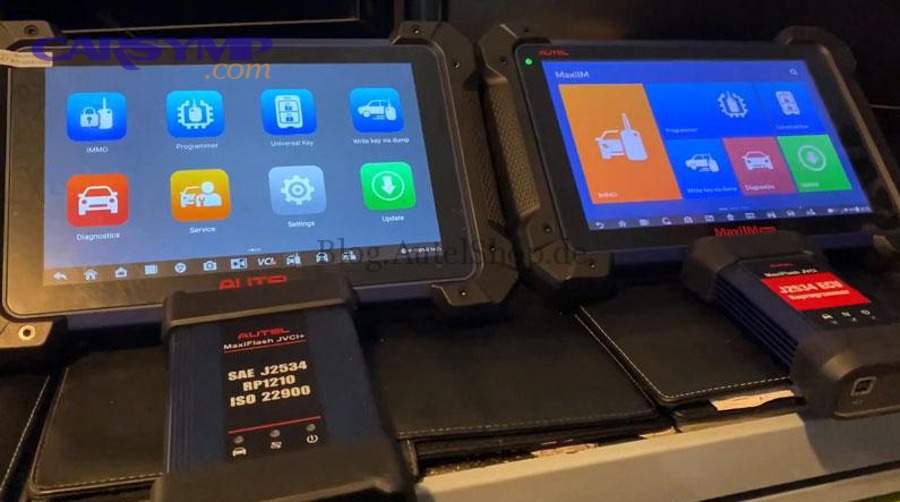
A scan relies mainly on a code reader/scan tool, while diagnosis adds measurement tools and system-specific tests like a multimeter, smoke machine, fuel pressure testing, compression/leak-down testing, and sometimes an oscilloscope.
More importantly, these tools exist to answer one question: what is actually failing under real conditions?
A few examples of “diagnosis-grade” tests:
- Electrical verification: checking sensor reference voltage, ground integrity, and signal behavior.
- EVAP diagnosis: smoke test to locate actual leak points rather than guessing a cap.
- Fuel system confirmation: fuel pressure and volume tests that separate “lean code” causes.
- Mechanical confirmation: compression or leak-down to differentiate ignition vs engine damage.
Here’s a quick comparison table showing what you typically get at each level. (This table summarizes common deliverables so you can match the service to your needs.)
| Area | Scan fee (typical) | Full diagnostic work (typical) |
|---|---|---|
| Output | Codes + basic explanation | Root cause + test evidence |
| Time | Minutes to short appointment | 30–120+ minutes depending on fault |
| Tools | Scan tool/code reader | Scan tool + measurement + system tests |
| Risk | Higher misdiagnosis risk | Lower misdiagnosis risk |
| Best for | Information gathering | Repair decision-making |
How much do scan fees and full diagnostics usually cost, and why?
Scan fees win on upfront affordability, full diagnostics are best for cost-effective accuracy, and dealership-level or advanced diagnostics are optimal when vehicle systems are complex or require OEM procedures.
Meanwhile, the “why” behind pricing is simpler than it looks: time + complexity + tooling + documentation.
What factors make a diagnostic cost more than a simple code scan?
Diagnostics cost more because they require more time and more proof steps, especially when the fault is intermittent, electrical, multi-system, or only occurs under specific conditions.
Then, once you recognize these cost drivers, you can predict whether you’ll need a scan or a full diagnostic before you even call the shop.
The biggest cost multipliers include:
- Intermittent symptoms: the issue isn’t present on demand, so testing becomes a process of capturing conditions and narrowing possibilities.
- Electrical/network problems: faults can be upstream (power/ground), midstream (wiring/connectors), or downstream (module logic).
- Multiple codes: a “cascade” of codes often occurs when one root fault triggers secondary symptoms.
- Access time: the test may be quick, but reaching the part may require disassembly.
- Confirmation requirements: shops that verify repairs through road tests and post-repair scans invest more time—and reduce comebacks.
According to a paper by Coventry University (hosted in its research repository) from the engineering research domain, in 2013, intermittent faults were described as among the most difficult faults to diagnose and a major contributor to “No Fault Found” outcomes—meaning time and strategy, not just code reading, drive diagnostic cost. (pure.coventry.ac.uk)
Do dealerships charge differently than independent shops for diagnostics?
Yes—dealerships often charge differently because (1) their labor rates can be higher, (2) they may follow OEM-mandated test steps, and (3) they often have deeper access to factory scan tools, service information, and software procedures.
However, independents can be a better value when the problem is common, straightforward, and does not require proprietary programming or calibration.
Dealership diagnostics can be worth it when:
- A fault involves module programming, immobilizer/key issues, or manufacturer-specific procedures.
- The repair depends on OEM service bulletins or known patterns requiring specific tests.
- The vehicle is newer and tightly integrated with multiple modules.
Independent shops can be ideal when:
- The issue is a classic drivability problem with clear test pathways.
- You want flexibility, transparent communication, and potentially lower hourly rates.
- The shop specializes in your make or the specific system type (EVAP, electrical, drivability).
When should you pay for full diagnostic work instead of just a scan?
A scan-first approach wins for simple and low-risk symptoms, full diagnostic work is best for persistent or high-impact problems, and immediate safety-focused inspection is optimal when drivability issues could cause damage or risk.
Especially when money is tight, the right question becomes: “What’s the cost of being wrong?”
Which symptoms are strong signals you need full diagnostics?
You likely need full diagnostics when symptoms indicate severity, complexity, or repetition—because the downside of guessing becomes higher than the diagnostic fee.
Then, use the symptom list below like a triage tool: the more boxes you check, the more diagnosis makes sense.
Strong “full diagnostic” signals include:
- Flashing check engine light (often severe misfire risk)
- Stalling, no-start, or random shutdown
- Overheating, coolant loss, or temperature warnings
- Power loss or limp mode (“reduced power” messages)
- Hard shifting or transmission warnings
- Recurring codes after parts were already replaced
- Intermittent electrical issues (random warnings, dead battery, strange module behavior)
- Fuel smell or EVAP issues that persist despite cap replacement
In these cases, scan-only information frequently leads to “parts roulette,” where each guess costs more than the diagnostic would have.
When is a scan-first approach reasonable to start with?
A scan-first approach is reasonable when symptoms are mild, the vehicle is stable, and you’re using the scan as a decision tool—rather than treating it as a repair verdict.
However, you should still set boundaries: decide what you’ll do after you get the codes.
Scan-first can make sense when:
- The check engine light is on but the car drives normally, with no overheating, stalling, or safety symptoms.
- The issue is consistent and narrow, and basic checks are easy (battery terminals, loose connectors, obvious vacuum hose damage).
- You plan to follow up with diagnosis if codes point to a complex system.
A practical rule: if you’re willing to spend money replacing a part based on the code alone, you’re already in “diagnosis territory.” Paying for diagnosis first often prevents paying twice.
How do shops apply diagnostic fees to repairs, and how can you avoid unnecessary diagnostic charges?
There are four common ways shops handle diagnostic costs—flat scan fee, flat diagnostic fee, hourly diagnostic time, and diagnostic credit toward repair—and knowing which model you’re in helps you control scope, expectations, and total cost.
Next, this is where communication protects your wallet: you can authorize diagnosis without authorizing a blank check.
Is the diagnostic fee usually credited toward the repair cost?
Yes—many shops credit the diagnostic fee toward the repair cost because (1) it rewards customers who proceed with the fix, (2) it reduces sticker shock, and (3) it recognizes diagnosis as part of the total repair workflow.
However, policies vary by shop and by situation, so you should confirm the terms before you authorize any testing.
Common “credit” structures include:
- Full credit if you approve the repair within X days
- Partial credit (e.g., credit only applies above a minimum repair amount)
- No credit when diagnosis is extensive or when the customer declines all repairs
The key is to ask for the policy in writing on the estimate or work order so there’s no misunderstanding later.
What questions should you ask before authorizing diagnostics?
There are 7 core Questions to ask before authorizing diagnostics: scope, time cap, hourly rate/flat rate, deliverables, approval checkpoints, what happens if multiple problems are found, and whether the diagnostic fee is credited.
Then, once you ask these questions, you turn an open-ended process into a controlled plan.
Use this checklist:
- What does the diagnostic fee include? (scan, testing, road test, documentation)
- Is it a flat diagnostic fee or billed by the hour?
- What is the time cap before you call me for approval? (e.g., “diagnose up to 1 hour”)
- What deliverable will I get? (written findings, test results, codes, photos)
- Will you confirm the fix after repair? (post-repair scan/road test)
- If you find multiple issues, how will you prioritize them?
- Is the diagnostic fee credited toward repairs if I proceed?
This approach directly addresses “Avoiding unnecessary diagnostic charges” without compromising the quality of the result.
How can you tell the difference between an estimate, an inspection, and a diagnosis?
An inspection finds visible issues, an estimate predicts cost based on assumptions, and a diagnosis proves the root cause through testing—so you should match the service to your goal: awareness, budgeting, or certainty.
To illustrate the difference clearly:
- Inspection answers: “Do you see anything obviously wrong?”
- Estimate answers: “What might it cost if we replace likely parts?”
- Diagnosis answers: “What failed, and how do you know?”
When a shop says “we need to diagnose first,” that is often the ethical move—because replacing parts without proof can waste money and leave the real issue untouched.
According to a thesis by Wright State University from the Department of Electrical Engineering, in 2011, researchers emphasized structured fault diagnosis methods for automotive electrical systems to isolate faults more reliably—supporting the idea that electrical and sensor-related problems need systematic testing beyond basic code retrieval. (corescholar.libraries.wright.edu)
What special cases can change diagnostic scope and cost on modern vehicles?
There are four special cases that commonly expand diagnostic scope—EV/hybrid safety systems, electrical/CAN network faults, ADAS calibration dependencies, and advanced testing/programming—and each one can turn a “simple code” into a multi-step confirmation process.
Moreover, these are the scenarios where scan-only decisions fail most often, because the vehicle’s technology stack changes what “proof” requires.
How do EVs and hybrids change diagnostic steps and safety requirements?
EVs and hybrids change diagnostics because high-voltage components require safety isolation steps, specialized procedures, and sometimes restricted access to certain data—so diagnosis becomes both a technical and safety workflow.
Then, even if the symptom looks familiar (loss of power, warning messages), the diagnostic path is often different from a gasoline-only vehicle.
Examples of EV/hybrid diagnostic considerations:
- High-voltage safety checks before probing circuits
- Battery and inverter parameter review
- Thermal management system verification
- Regenerative braking behavior assessment
If your car is electrified, choosing a shop with EV training and equipment can matter as much as the diagnostic fee itself.
Why can electrical and CAN-bus/network issues take longer to diagnose than mechanical problems?
Network issues take longer because a single wiring fault can disrupt multiple modules, symptoms can be intermittent, and the diagnosis often requires isolating where communication or power integrity fails—step by step.
On the other hand, many mechanical faults (like a torn belt or obvious leak) can be visually confirmed quickly.
Common time sinks in network diagnosis include:
- Pinpointing shorts to power/ground
- Checking module wake/sleep behavior
- Verifying termination resistance and signal quality
- Reproducing intermittent faults that vanish in the bay
This is why some shops quote diagnostic work in time blocks rather than a single flat fee for electrical concerns.
When do ADAS systems (cameras/radar) affect diagnostics and repair costs?
Yes—ADAS affects diagnostics and repair costs when sensors require calibration after certain repairs, alignments, windshield work, or collision damage, because the vehicle may need a scan-tool initiated procedure plus target setup and a controlled environment.
Next, understanding calibration types helps explain pricing differences.
According to a study by the Collision Industry Electronic Commerce Association (CIECA) from its Emerging Technologies documentation, in 2020, ADAS calibrations were described as static, dynamic, or combination processes—often requiring OEM setup procedures, targets, and scan tools to complete correctly. (ciclink.com)
What does “advanced diagnostics” mean (oscilloscope testing, programming, reflashes)?
Advanced diagnostics means the shop uses higher-level tools and procedures—like oscilloscope waveform testing, module programming, or software reflashes—because the fault can’t be proven with basic scans and simple measurements.
To better understand what that looks like in practice, picture diagnosis moving from “reading values” to “seeing behavior over time.”

An oscilloscope can reveal:
- A sensor signal that looks “present” but is noisy or distorted
- Injector or ignition patterns that show weak performance under load
- Network signal issues that don’t always set a clear code
Programming and reflashes may be required when:
- A module update addresses known drivability bugs
- A replacement module needs configuration
- A security/immobilizer system must be initialized
If a shop recommends advanced diagnostics, the best consumer move is to ask: what specific test will confirm or deny the suspected root cause? That question keeps the process evidence-based.
Evidence (if any)
According to a report by Carnegie Mellon University from the Software Engineering Institute, in 2016, OBD-II standardized diagnostic trouble codes as a vehicle interoperability and monitoring mechanism, reinforcing that codes are signals that require interpretation and testing to confirm component-level root causes. (sei.cmu.edu)