


If you’re noticing injector clog symptoms—like rough idle, hesitation, or a sudden drop in MPG—your engine is often telling you that fuel delivery has become uneven across cylinders. The fix isn’t always “replace injectors,” but you do need a clear path to confirm the cause before you spend money.
Next, you’ll learn the most common clogged fuel injector symptoms you can actually feel while driving, and why they show up in specific situations (cold starts, stop-and-go traffic, hard acceleration). That matters because injector issues can mimic ignition, vacuum, or sensor problems.
Then, you’ll see how to separate “likely injector clogging” from look-alikes using simple, practical checks: OBD codes, fuel trims, cylinder contribution clues, and a few safe driveway tests. A flashing check engine light, for example, changes the urgency because it often points to an active misfire that can overheat the catalytic converter.
Introduce a new idea: once you know how injector clogging behaves, you can choose the right next step—fuel injector cleaning, professional service, or replacement—based on risk, cost, and how severe the symptoms really are.
What are clogged fuel injector symptoms (signs) in everyday driving?
Clogged fuel injector symptoms are usually rough idle, hesitation on acceleration, misfires, reduced fuel economy, and hard starts because restricted or distorted injector flow creates an uneven air-fuel mix across cylinders.
Specifically, once fuel delivery becomes inconsistent, the engine control system tries to compensate—so the “feel” of the problem often changes with temperature, load, and speed.
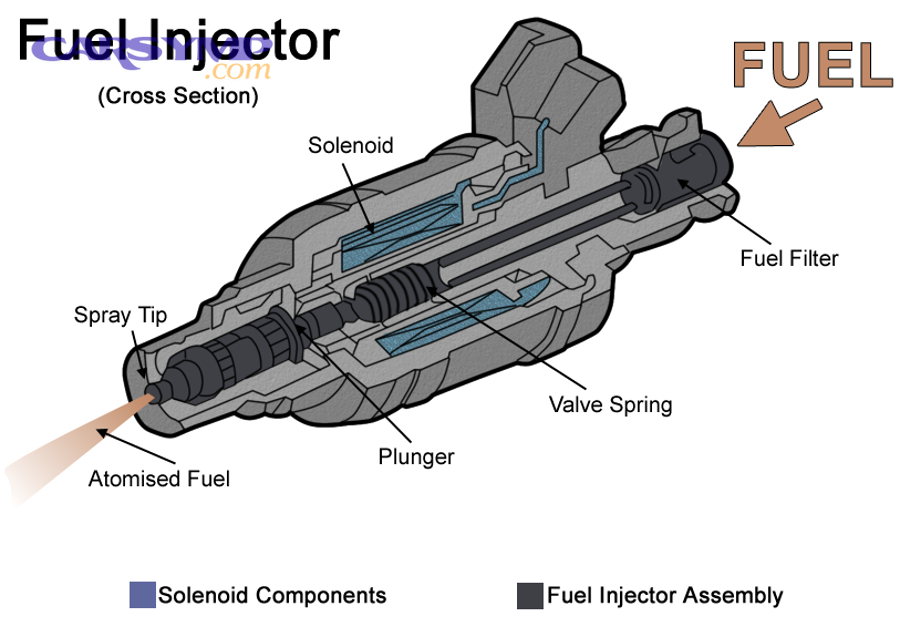
Do clogged injectors cause rough idle?
Yes—clogged injectors commonly cause rough idle because one or more cylinders receive less fuel (or a poor spray pattern), which destabilizes combustion at low RPM where the engine has the least “momentum” to smooth things out.
More specifically, idle is sensitive because the throttle is mostly closed and the engine relies on precise fueling. When an injector is partially restricted, that cylinder runs leaner than intended, and the ECU may swing fuel trims richer to compensate—sometimes creating a rhythmic shake or “lope.”
What it typically feels like:
- The engine shakes more in Drive than in Park/Neutral (load makes imbalance more noticeable).
- The idle “hunts” (RPM rises and falls) as the ECU corrects.
- It’s worse after a cold start, then improves slightly warm.
Can injector clogging cause hesitation or stumble on acceleration?
Yes—injector clogging can cause hesitation because acceleration demands a fast, precise increase in fuel flow, and a restricted injector can’t ramp up evenly, creating a brief lean condition and a stumble.
To illustrate, the hesitation often shows up at:
- Tip-in (light throttle transitioning to moderate throttle)
- Low RPM high-gear acceleration (lugging)
- Merging or passing where the engine suddenly needs more fuel
A useful clue: hesitation from injector restriction often feels “soft” (a sag) rather than a sharp cut (more common with ignition breakdown).
Do clogged injectors lower MPG or make the engine run lean?
Yes—clogged injectors can lower MPG and trigger lean behavior because the ECU may add fuel overall to protect the lean cylinder, wasting fuel while still not fully restoring smooth combustion.
More importantly, the same restriction can also create cylinder imbalance: one cylinder lean, another normal, and the ECU compensating based on what upstream sensors report. That’s why you may see:
- MPG drop without a dramatic drivability change at first
- A mild surge at steady cruising
- A “lean code” (often alongside fuel trim clues) depending on severity
Can clogged injectors cause misfires and a check engine light?
Yes—clogged injectors can cause misfires because a cylinder that’s too lean (or poorly atomized) may not ignite reliably, which can set misfire codes and illuminate the check engine light.
However, misfires have many causes, so the next step is to look for patterns: single-cylinder vs random misfire, temperature-related behavior, and whether the light flashes. A flashing check engine light is widely treated as urgent because it can indicate an active misfire severe enough to damage the catalytic converter.
Which specific “driver-feel” signs point to injector clogging vs something else?
The strongest “driver-feel” signs for injector clogging are symptoms that change with load and fuel demand—especially idle roughness + tip-in hesitation + one-cylinder-like shaking—because injectors fail in a way that creates uneven fueling rather than a total power loss.
However, many problems feel similar, so you’ll get better accuracy by matching the feel to when it happens and what else appears alongside it.
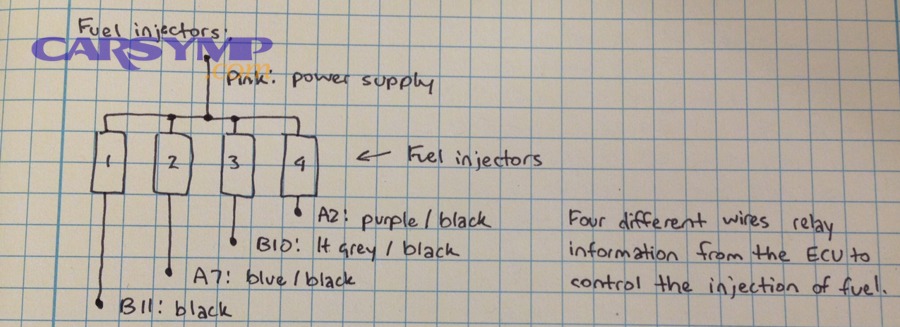
How do injector clog symptoms differ from bad spark plugs or coils?
Injector clog symptoms often feel like a “lean stumble” or uneven pull, while plug/coil issues often feel like a sharper misfire under load because ignition breakdown can be load-sensitive and abrupt.
More specifically, use this quick “feel” comparison:
- Injector clogging: soft hesitation, mild surging cruise, rough idle that may improve warm, sometimes better at higher RPM.
- Bad plugs/coils: sharper bucking under acceleration, worse in damp conditions, may strongly correlate with heavy throttle or boost.
A practical tie-breaker: if the problem gets significantly worse under high load (hard acceleration) and feels like a sudden cut, ignition is high on the list; if it’s more like a sag and unevenness, injectors become more likely.
What does “lean surge” or “buck” feel like with clogged injectors?
A clogged injector “lean surge” usually feels like a repeating micro-hesitation at steady throttle, as if the car can’t decide whether to accelerate or coast.
For example, drivers often describe:
- A gentle “pulsing” at 35–55 mph on light throttle
- Slight vibration that comes and goes
- Better behavior when you add more throttle (because other cylinders carry the load)
This pattern happens because the ECU keeps adjusting fuel trims while a restricted injector continues to under-deliver relative to the target.
Can injector problems be intermittent (only cold, only hot, or only at high load)?
Yes—injector problems can be intermittent because deposits, viscosity, and injector response change with temperature, and fuel demand changes with load.
In addition:
- Cold start: deposits and fuel atomization issues show up most clearly; rough idle and stumble are common.
- Hot soak restart: heat can worsen vapor-related issues in some setups, and marginal injectors may show delayed response.
- High load: restriction becomes more obvious because the injector can’t supply enough fuel when demand peaks.
So if symptoms have a “timing pattern,” note it—time/temperature patterns are diagnostic gold.
What are the most common look-alike problems?
The most common look-alikes include vacuum leaks, low fuel pressure, dirty MAF/MAP sensors, EGR issues, and exhaust leaks upstream of oxygen sensors because all can shift fuel trims and cause lean running or misfires.
To better understand the difference, remember this:
- Injector clogging is often cylinder-specific (one injector worse than the others).
- Vacuum leaks and MAF issues are often system-wide (multiple cylinders affected similarly).
That’s why the next section focuses on what actually causes injectors to clog—and what makes it more likely in your car.
What causes injectors to clog—and what makes it more likely in your car?
Injectors clog primarily because deposits form on or inside the injector, altering flow and spray pattern, and the risk rises with fuel quality variability, heat cycles, short trips, storage, and contamination.
More specifically, dirty injectors isn’t just grime—it’s often a blend of varnish-like residue, carbon-related deposits, or particulates that change how fuel exits the nozzle.
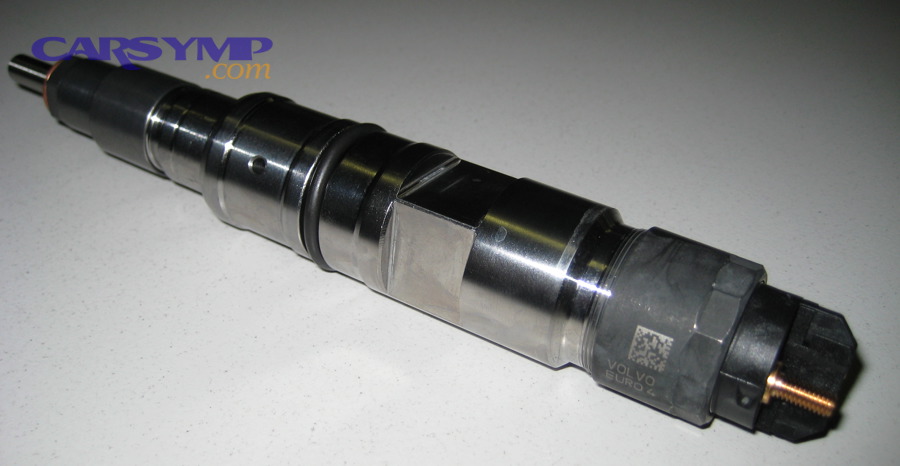
What is injector “coking” or deposit buildup?
Injector coking/deposit buildup is a layer of residue that restricts flow and distorts atomization, typically forming from heat exposure and fuel chemistry over time.
Specifically, deposits can:
- Reduce effective flow (less fuel delivered for the same command)
- Distort spray pattern (poor mixing, uneven burn)
- Slow injector response (timing and consistency suffer)
According to a study by the University of Birmingham from the School of Mechanical Engineering, in 2018, injector coking was associated with measurable reductions in injected fuel mass/flow (reported in the range of ~7.8–9.5% mass/flow loss in cited work), and literature summarized in the same thesis notes that an ~8.5% flow loss corresponded to roughly a ~10% increase in hydrocarbon emissions in one referenced study.
Does fuel quality and storage affect injector clogging?
Yes—fuel quality and storage can affect injector clogging because stale fuel can oxidize and form gums, and contamination or low detergent levels can allow deposits to accumulate faster.
For example, risk rises when:
- The vehicle sits for long periods (seasonal cars, backup vehicles)
- Fuel is stored improperly or kept too long
- You frequently refuel at low-turnover stations
This doesn’t mean “all cheap fuel is bad,” but it does mean deposit control additives and turnover can make a real difference over time.
Do short trips and stop-and-go driving make injectors clog faster?
Yes—short trips and stop-and-go driving can accelerate deposit buildup because the engine spends more time in warm-up enrichment, sees more heat-soak cycles, and may not run long enough at stable operating temperature to keep combustion clean.
More importantly, repeated heat soak can bake residue near the injector tip, especially in engines where injectors live in hot environments.
Are direct injection engines more prone to deposit-related symptoms?
Often, yes—direct injection setups can be more deposit-sensitive because injectors operate at high pressure with tight tolerances and harsh heat conditions, so small changes in spray or flow can show up as drivability symptoms sooner.
However, port injection systems can absolutely experience injector restriction too—especially if contamination occurs or if the vehicle sits. Treat DI as “higher sensitivity,” not “guaranteed problems.”
How do you confirm a clogged injector at home before paying for repairs?
You can confirm a likely clogged injector at home by using 3 checks—OBD scan patterns, fuel trim behavior, and cylinder-by-cylinder clues—then validating with safe basic tests to decide whether cleaning or professional diagnostics makes sense.
Then, once you collect the clues, you’ll be able to avoid guessing (and avoid replacing parts that aren’t the problem).
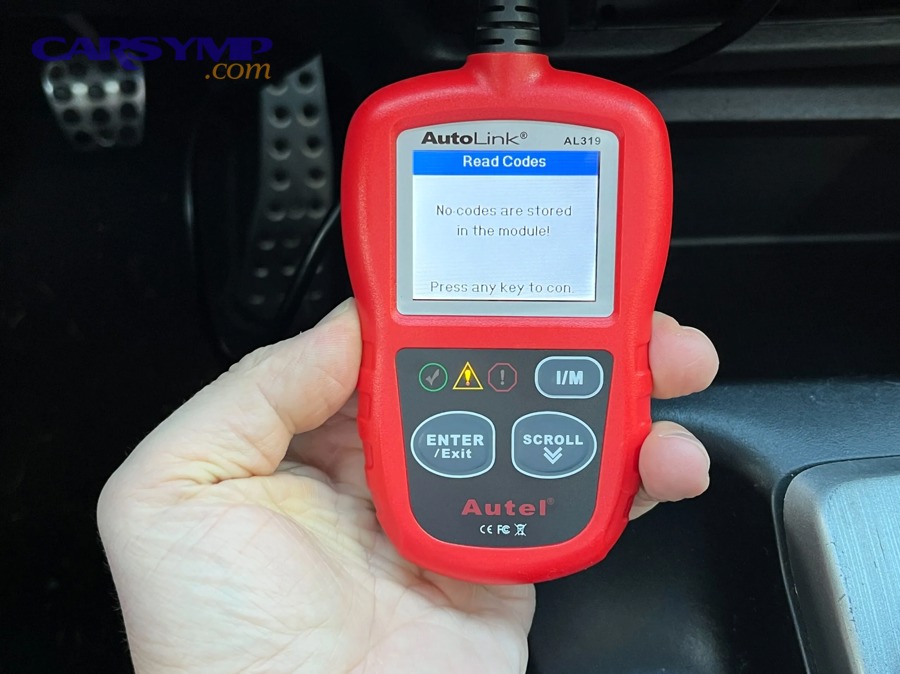
What OBD2 codes commonly appear with injector clogging?
Injector clogging most commonly shows up alongside misfire codes (P0300–P030X) and sometimes lean codes (like P0171/P0174), depending on how the ECU interprets the imbalance.
Specifically:
- Single-cylinder misfire (P0301–P0308): raises suspicion for that cylinder’s injector, plug, coil, compression, or vacuum leak near that runner.
- Random/multiple misfire (P0300): can still be injectors, but also fuel pressure, air metering, or ignition system-wide.
- Lean codes: can appear if the ECU reaches correction limits.
Tip: write down freeze-frame conditions (RPM, load, temp). Injectors often fail “by scenario.”
How do fuel trims (STFT/LTFT) hint at injector restriction?
Fuel trims hint at injector restriction when you see persistent positive corrections (ECU adding fuel) that change in meaningful ways by load.
More specifically:
- If trims are high at idle but improve at higher RPM, suspect a vacuum leak first.
- If trims are elevated across many conditions and you also have hesitation, suspect fuel delivery (injector restriction or fuel pressure).
- If trims look normal but one cylinder misfires, suspect cylinder-specific causes (injector, ignition, compression).
This is why trims are best used as a “directional compass,” not a verdict.
What simple at-home tests are safe and useful (sound, balance, temperature)?
Safe, useful at-home checks include listening for injector tick, looking for cylinder contribution clues, and comparing temperatures carefully because they can reveal a “dead-ish” cylinder without disassembly.
Practical options:
- Injector tick test (stethoscope/screwdriver): a healthy injector usually makes a rhythmic clicking. A quiet or irregular injector is a clue, not proof.
- Cylinder contribution via scan tool: some tools show misfire counts per cylinder; a consistent leader cylinder is suspicious.
- Exhaust manifold temperature comparison (carefully): a cooler runner can indicate that cylinder is doing less work. Use an IR thermometer—don’t touch hot parts.
Safety note: keep hands and tools away from belts/fans, and don’t do anything that requires open fuel lines unless you’re properly equipped.
When is it not safe to DIY diagnose further (risk of fuel spray, fire, electrical)?
It’s not safe to DIY deeper injector diagnosis if you would need to open pressurized fuel lines, energize injectors directly without proper tools, or work near ignition sources because fuel spray and vapors can ignite.
This is where DIY injector cleaning risks matter: “quick hacks” like uncontrolled solvent spraying, improper electrical pulsing, or cracking lines on modern high-pressure systems can cause injury or damage. If you’re not fully confident, stop at scan-based diagnosis and move to a pro test.
Here’s a video walkthrough (for visual learners) on using a noid light to test injector signal—use it as concept education and follow your vehicle’s safety procedures:
What should you do next—cleaning, professional service, or replacing injectors?
The best next step is cleaning for mild symptoms, professional testing/service for persistent or cylinder-specific issues, and replacement only when flow/pattern can’t be restored—because injector restriction exists on a severity spectrum.
Next, choose the lowest-risk option that matches how strong your symptoms are and how confident your diagnosis is.
When does a fuel system cleaner make sense?
A fuel system cleaner makes sense when symptoms are mild, early, and intermittent—like slight roughness, small MPG drop, or occasional hesitation—because detergents can slow or reduce deposit buildup without disassembly.
Use it strategically:
- Follow label dosing (more isn’t better).
- Prefer using it before a longer drive (steady operation helps).
- Don’t expect a miracle if you already have hard misfires.
This is not a substitute for repair when a cylinder is consistently misfiring.
What is professional injector cleaning and how effective is it?
Professional injector cleaning is typically pressurized on-car cleaning or off-car bench cleaning/flow testing, and it’s most effective when the issue is deposit-related rather than mechanical/electrical failure.
More specifically, professional approaches may include:
- On-car pressurized cleaning: introduces cleaner through the fuel rail while disabling the pump (procedure varies).
- Off-car ultrasonic cleaning + flow test: removes injectors, cleans them, replaces filters/O-rings, then measures flow and pattern.
This is what “fuel injector cleaning” usually means when a shop recommends it: cleaning plus verification that the injector is actually performing evenly afterward.
Injector cleaning vs replacing: which one is better and when?
Cleaning wins when the injector is restricted but otherwise healthy, while replacement wins when the injector is electrically failed, mechanically stuck, leaking, or still out-of-spec after cleaning.
To make that decision concrete, here’s a quick comparison table explaining what each option typically includes and when it’s the best fit:
| Option | Best for | What it usually fixes | What it can’t fix | Practical downside |
|---|---|---|---|---|
| In-tank cleaner | Mild drivability + maintenance | Light deposits over time | Dead injector, severe restriction, leaks | Limited power on advanced deposits |
| Pressurized on-car service | Moderate symptoms | Many deposit-related restrictions | Electrical/mechanical failure | Needs correct procedure/equipment |
| Off-car ultrasonic + flow test | Cylinder imbalance, repeat issues | Deposit removal + verified flow matching | Cracked body, coil failure, internal leak | Labor/time; requires injector removal |
| Replace injectors | Proven failure/out-of-spec | Everything (because new part) | Underlying root cause (contamination, fuel pressure) | Highest cost; may need coding/learning |
When you estimate cost, you’re really estimating parts + labor + certainty. A helpful way to frame an Injector cleaning cost estimate is: “What do I pay to get verified results?”—because paying for a service that includes flow confirmation reduces repeat repairs.
What should you fix first if you’re not 100% sure it’s injectors?
If you’re not sure, fix the highest-probability, lowest-cost, highest-impact basics first—because many injector-like symptoms come from ignition or air leaks.
A practical order:
- Scan codes + freeze frame (don’t skip this).
- Inspect/replace worn plugs if overdue.
- Check for obvious intake leaks and loose hoses.
- Verify fuel pressure if you can do it safely.
- Move to injector-focused action (cleaning/testing) only after steps 1–4 make sense.
That sequence prevents you from “cleaning injectors” when the real culprit is a failing coil or a vacuum leak.
What advanced diagnostics and edge cases can confirm injector clogging faster?
Advanced confirmation comes from measuring injector performance directly (flow/balance), validating control signals, and identifying edge cases like leaking injectors or fuel pressure faults—because some injector issues aren’t “clogs,” even though they feel similar.
In short, advanced diagnostics reduce guesswork by turning symptoms into measurable evidence.
What is an injector balance test and what does it prove?
An injector balance test measures how much fuel pressure drops when each injector fires , which directly indicates whether one injector is under-delivering.
Why it’s powerful:
- It’s cylinder-by-cylinder evidence.
- It distinguishes “injector is restricted” from “injector is commanded wrong” (with the right supporting tests).
Because methods vary by vehicle and fuel system pressure, this is often best performed by a shop with the correct setup.
How do you tell a clogged injector from a leaking injector?
A clogged injector under-delivers fuel, while a leaking injector over-delivers or dribbles, especially after shutdown—so symptoms can look opposite depending on when you notice them.
Common clues:
- Clogged: lean misfire, hesitation, higher positive fuel trims, weak power.
- Leaking: rich smell, hard hot-start (flooding), negative fuel trims, fuel dilution risk.
This distinction matters because the “right fix” changes completely: cleaning might help a deposit-related dribble, but a mechanically leaking injector often needs replacement.
Can low fuel pressure mimic injector clog symptoms?
Yes—low fuel pressure can mimic injector clog symptoms because the whole engine becomes fuel-starved under load, creating hesitation, misfires, and lean behavior.
The key difference: low fuel pressure tends to be system-wide, while injector restriction is often cylinder-specific. That’s why fuel pressure testing is such an effective fork in the diagnostic road when multiple cylinders misfire.
When should you stop and go to a shop immediately?
You should stop and go to a shop immediately if you have a flashing check engine light, strong fuel smell, fuel leaks, severe misfiring, or loss of power that makes driving unsafe—because the risk shifts from “inconvenient” to “damage or safety.”
A flashing CEL is often treated as urgent due to the potential for catalyst damage from sustained misfire.