


Testing a fuse with a multimeter is the fastest way to confirm whether the fuse is truly blown or if the problem is somewhere else in the circuit. The basic method is a continuity test (or resistance/ohms test) that tells you if current can still pass through the fuse element.
Next, you’ll also learn the safety-first setup—how to power down correctly, choose the right multimeter mode, and avoid common mistakes that create false readings or short circuits while probing.
Then, we’ll cover how to test multiple fuse styles (blade fuses, glass cartridge fuses, and larger cartridge types), including where to place the probes and how to interpret “good” vs “bad” readings in real-world conditions.
Introduce a new idea: once you can trust your fuse test results, you can move from “Is the fuse bad?” to “Why did it blow?”—and that’s where you prevent repeated failures and make safe, lasting repairs.
What does it mean to test a fuse for continuity with a multimeter?
Testing a fuse for continuity with a multimeter means using continuity (or ohms) mode to verify the fuse element forms a closed path—good fuses read as a near-zero resistance “short,” while blown fuses read as an open circuit. Then, this matters because a fuse can look intact yet fail internally, and a continuity check removes guesswork.
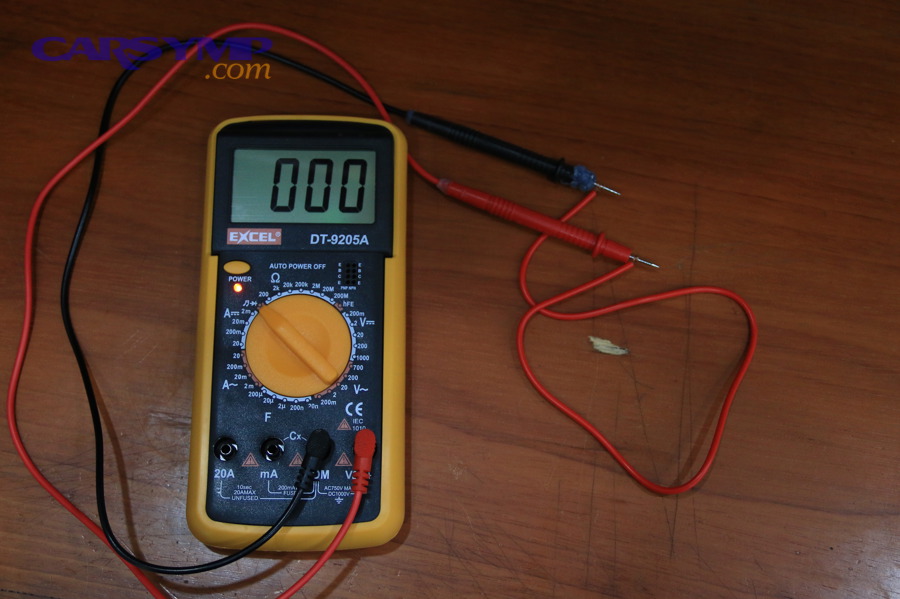
What is “continuity” in electrical troubleshooting?
Continuity is the presence of an unbroken conductive path between two points, which lets current flow when voltage is applied. In fuse terms, continuity means the fuse link inside the plastic or glass body is still connected end-to-end. If the link melts (the designed failure mode), continuity breaks and the circuit opens to protect wiring and components.
In practical troubleshooting, continuity is a “yes/no” check that answers a very specific question:
- Is there a path through this fuse right now?
- Not: “Why did it fail?”
- Not: “Is the circuit energized?”
- Not: “Is the device healthy?”
That clarity makes continuity testing the correct first move when a device stops working and you suspect a fuse.
Is continuity mode the same as ohms mode for testing fuses?
No—continuity mode and ohms mode measure the same underlying concept (resistance), but continuity mode is optimized for fast go/no-go checks. Many multimeters beep in continuity mode when resistance is below a threshold (often somewhere under ~30–50 ohms, varying by meter). Ohms mode displays the resistance numerically, which is useful when you want to notice small differences like a slightly corroded connection versus a clean one.
For fuse testing:
- Continuity mode: fastest, most beginner-friendly; the beep reduces interpretation errors.
- Ohms mode: more diagnostic detail; helpful when a fuse reads “good” but you suspect contact resistance issues at the fuse blades or holder.
What readings indicate a good fuse vs a blown fuse?
A fuse is considered good when it shows a closed path:
- Good fuse: multimeter beeps in continuity mode, or shows very low resistance (often close to 0.0–0.5 Ω, depending on meter leads and fuse rating).
- Blown fuse: no beep, and resistance reads OL, 1, or a very high value indicating an open circuit.
A quick but important nuance: your meter leads have resistance too. Touch the probes together first. If your meter shows 0.2 Ω with the probes shorted, and your “good” fuse shows 0.3–0.5 Ω, that’s still normal.
Evidence (why this matters): Faulty wiring and electrical supply issues are strongly associated with domestic electrical fire injuries, which is why confirming protective devices and connections is a safety habit—not just a convenience. According to a study by Liverpool John Moores University from the School of Public Health, in 2024, faulty electricity supply involving wiring/cabling/plugs accounted for 57.8% of domestic electrical fire injuries studied in Merseyside (2011–2022). (researchonline.ljmu.ac.uk)
What tools and safety steps do you need before testing a fuse?
To test a fuse with a multimeter safely, you need the correct multimeter mode, stable probe contact, and a power-down plan that prevents shocks and accidental shorts—especially before pulling or reinstalling fuses. Next, safety matters because a fuse test is simple, but the environment around the fuse (live panels, battery feeds, tight fuse boxes) is where mistakes happen.
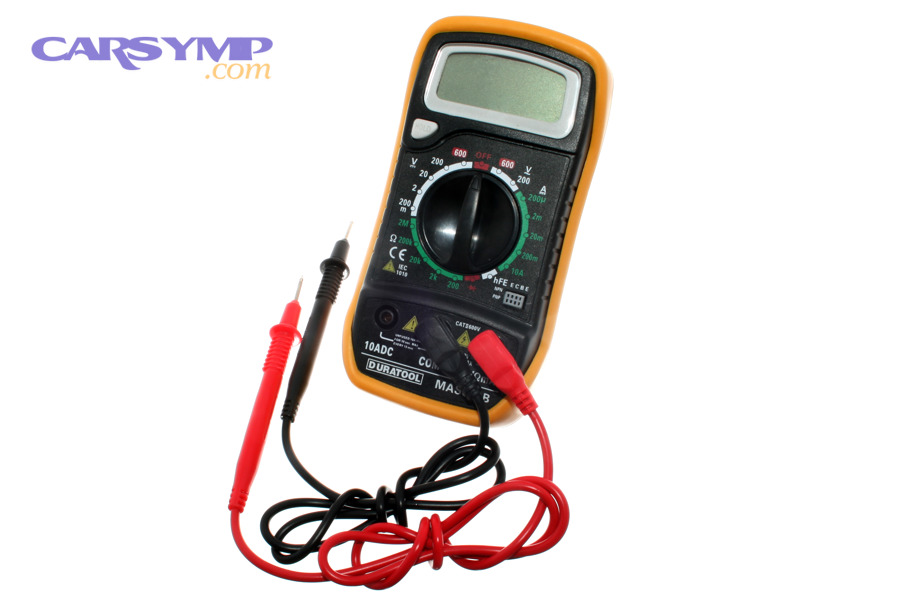
Do you need to remove the fuse to test it?
No—you don’t always need to remove the fuse, and in many cases testing it in place is faster. Most automotive blade fuses have exposed test pads on top specifically for probing. You can also test a fuse in place if you can access both ends safely and you are confident you won’t bridge adjacent terminals with your probes.
However, removing the fuse is often better when:
- The fuse is not easily probeable in place.
- The holder looks corroded or heat-damaged.
- You want to inspect the fuse element closely.
- You suspect the circuit has backfeed or odd readings.
If you remove the fuse, use a fuse puller or insulated needle-nose pliers and avoid twisting the blades, which can loosen the terminals in the fuse holder over time.
Which multimeter setting should you use: continuity, ohms, or volts?
Use the setting that matches your diagnostic goal:
- Continuity mode (recommended for beginners): Confirms “open vs closed” quickly; many meters beep.
- Ohms (Ω) mode: Confirms continuity and displays resistance; useful for spotting unusual resistance.
- Volts (V DC or V AC): Used when the fuse tests good, but you need to confirm power is present on the feed side (and possibly the load side) with the circuit powered.
A reliable workflow looks like this:
- Continuity/ohms with power OFF → confirms whether the fuse itself is intact.
- Voltage checks with power ON → confirms whether power is reaching the fuse and leaving the fuse under operating conditions.
That sequencing reduces risk and reduces false conclusions.
What are the safety rules for fuse testing?
Here are practical “Safe fuse replacement do’s and don’ts” that start before you even touch the fuse:
Do:
- Turn off the device/ignition, and de-energize the circuit when possible.
- Remove jewelry and keep hands dry.
- Use the correct meter jacks (COM and V/Ω; never leave the lead in the current/amp jack for fuse testing).
- Check probe insulation and keep metal tips controlled.
- Keep a flashlight handy so you don’t “fish around” blindly in the fuse box.
Don’t:
- Don’t test resistance/continuity on a live circuit (this can damage the meter or create sparks).
- Don’t upsize a fuse rating “just to stop it blowing” (this risks wiring damage and fire).
- Don’t force fuses into a tight holder; address the terminal fit instead.
- Don’t ignore heat discoloration—heat is evidence of high resistance or overload.
Also, before you begin any fuse replacement, verify the correct amp rating and fuse type printed on the fuse or listed on the panel label.
Where to find fuse box diagrams
Fuse identification becomes easy once you know Where to find fuse box diagrams for your exact vehicle or appliance. Common places include:
- The fuse box cover label (often a simplified diagram)
- The owner’s manual or service manual
- Manufacturer service info websites or OEM repair portals
- A diagram sticker on the inside of a panel door (common in some electrical panels)
- For cars: sometimes a diagram card in the glove box or a diagram printed near the fuse panel itself
The key is to match the circuit name and amp rating so you don’t pull the wrong fuse and create new problems.
How do you test a fuse with a multimeter step-by-step (beginner method)?
The beginner method to test a fuse with a multimeter is a 6-step continuity check—power down, select continuity, verify the meter, probe both fuse ends, interpret the reading, and confirm the correct replacement rating if it’s blown. To begin, this step-by-step approach prevents the two biggest errors: testing on the wrong setting and misreading a weak contact as a “bad fuse.”
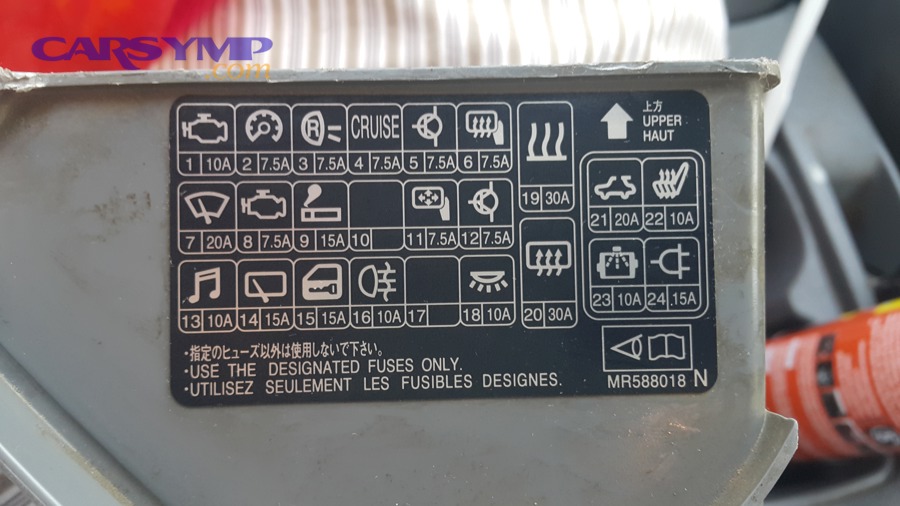
How to set up the multimeter correctly
Start with the setup that avoids meter damage:
- Lead placement: black lead into COM, red lead into V/Ω (or the jack labeled for volts/ohms/continuity).
- Dial setting: select continuity (sound wave symbol) or Ω if continuity isn’t available.
- Meter check: touch probe tips together—expect a beep (continuity) or a very low resistance number.
If the meter doesn’t behave as expected, fix that before touching the fuse. Many “mystery readings” come from a red lead mistakenly left in the amp jack from a previous job.
How to test a fuse in place (without removing it)
If the fuse is accessible and the circuit is off:
- Identify the fuse you need using the label or diagram.
- Touch one probe to one test pad (or exposed metal end) and the other probe to the other test pad.
- Keep steady pressure for 1–2 seconds.
Interpretation:
- Beep / near-zero ohms → fuse element is intact.
- No beep / OL → fuse is open (blown).
In cars, many blade fuses have two small exposed metal points on top. Those are perfect for in-place testing, especially when the fuse is hard to pull out.
How to test a fuse after removing it (most accurate)
Removed-fuse testing eliminates confusion from parallel paths in the circuit:
- Pull the fuse straight out using a puller.
- Hold the fuse by the plastic body (not the metal blades).
- Touch probes to the metal ends (blades or caps).
- Read the result.
If your reading is unstable (beep comes and goes), clean the fuse ends and probe again. Unstable readings can be corrosion, oxide film, or probe slip.
How to interpret common multimeter results (beep, 0.0, OL)
A simple reference helps readers act confidently. The table below explains what typical multimeter displays mean when you’re testing fuses with continuity or ohms mode.
| Multimeter Result | What It Means | What To Do Next |
|---|---|---|
| Beep (continuity) | Closed path through fuse | Move to voltage/circuit checks if device still fails |
| 0.0–0.5 Ω (typical) | Very low resistance; fuse intact | Consider contact issues or upstream power |
| 1–5 Ω (unusual but possible) | Still continuity, but could be lead resistance or poor contact | Re-test, clean contact points, compare to probe-short reading |
| OL / “1” / no beep | Open circuit; fuse blown | Replace with same type and same amp rating |
When you replace a blown fuse, use the exact rating and type. If it blows immediately, don’t keep feeding it fuses—switch to diagnosis.
How do you test different fuse types with a multimeter?
There are three common fuse types you’ll test with a multimeter—blade, glass cartridge, and larger cartridge/high-current fuses—and each is tested by probing the conductive ends while controlling contact quality and interpreting continuity vs open readings. More specifically, the “where do I touch the probes?” question changes slightly by fuse design, and that’s where many beginners get stuck.
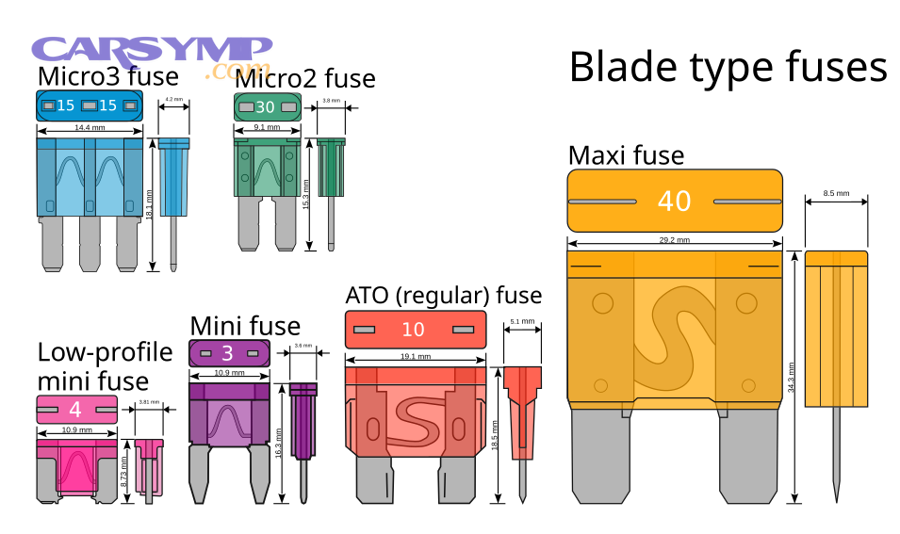
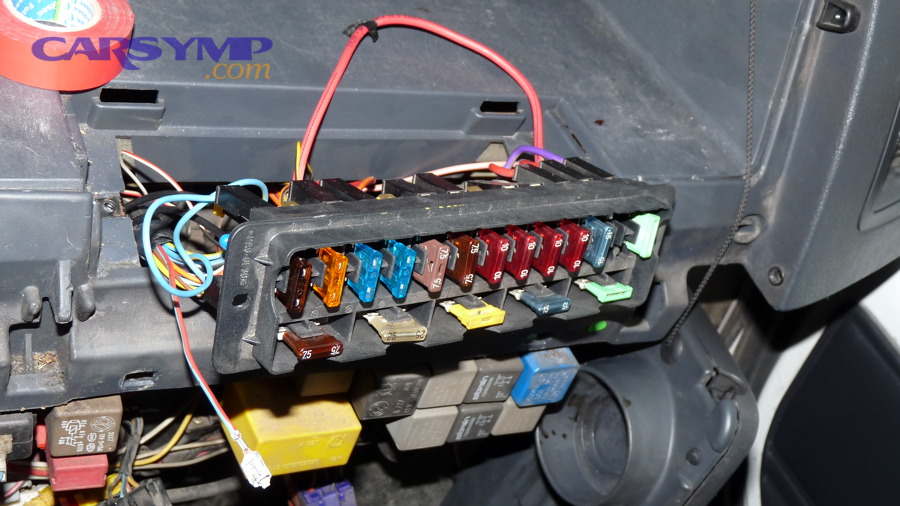
How to test automotive blade fuses (ATO/ATC, mini, micro)
Blade fuses are usually the easiest to test because they’re standardized:
- In place: probe the two top test points (if present).
- Removed: probe the two blades.
Watch for these real-world complications:
- If the fuse box is crowded, your probe can slip and touch adjacent terminals—keep the probe tips controlled.
- A fuse can be good but the terminals in the fuse box can be loose, which causes intermittent power loss under vibration.
If you see melted plastic, brown discoloration, or a “hot plastic” smell, treat it like a terminal-fit problem, not just a fuse problem.
How to test glass tube (cartridge) fuses
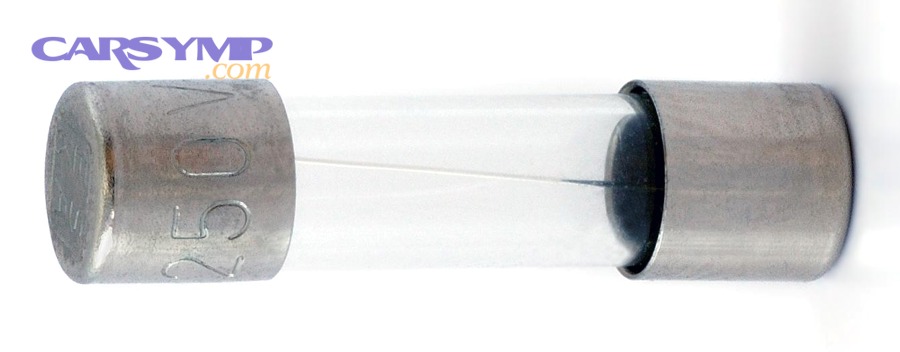
Glass tube fuses are common in older electronics, some accessories, and various appliances:
- Remove the fuse from the holder (recommended).
- Place one probe on each metal end cap.
- Interpret beep/ohms as usual.
Why removal is recommended: glass tube holders can have weak spring pressure or oxidized clips. A fuse might test good but fail to conduct well in the holder unless the clips are clean and tight.
How to test cartridge and high-current fuses (ANL, MIDI, MAXI, J-case)
High-current fuses are built for higher load circuits (starter/charging systems, amplifiers, power distribution). The test is still continuity—end to end—but the stakes are higher because these circuits are often directly connected to the battery.
Best practice:
- Disconnect the battery negative (in vehicles) when removing or probing large fuses if access is tight.
- Probe the fuse’s two terminals (studs or blades) with steady contact.
- If you suspect heat damage, also inspect the fuse block and fasteners.
Because these fuses serve critical circuits, a blown one is a strong signal to stop and diagnose rather than repeatedly replacing.
Why might a fuse “test good” but the circuit still doesn’t work?
Yes, a fuse can test good with a multimeter and the circuit can still fail because power may not be reaching the fuse, the fuse may not be making solid contact in the holder, or the downstream circuit may be open due to wiring/component faults. However, once your continuity test says “the fuse isn’t blown,” the correct next move is to shift from continuity to power-path diagnosis.
Can corrosion or a loose fuse holder cause intermittent failure?
Yes. The fuse element may be intact, but the connection between the fuse blades and the fuse box terminals can be weak or contaminated. This creates contact resistance, which can:
- Drop voltage under load (device works sometimes, fails under higher demand)
- Create heat at the terminal (discoloration, melted plastic)
- Cause intermittent issues from vibration (especially in vehicles)
A quick way to confirm is a voltage drop test while the circuit is operating. A high drop across the fuse or fuse holder suggests poor contact, even if continuity looks fine.
Evidence (why contact quality is real): Measuring and managing contact resistance is a known reliability issue in electrical connections. According to a study by the University of Maryland from the Center for Advanced Life Cycle Engineering (CALCE), in 2019, contact resistance measurement is used to evaluate connection quality and detect degradation mechanisms that can lead to heating and intermittent performance. (ui.adsabs.harvard.edu)
Could there be no power to the fuse (upstream problem)?
Yes. A good fuse doesn’t help if the fuse never receives power. This happens when:
- A relay isn’t switching
- A wiring feed is open
- A battery/ignition supply is missing
- A circuit breaker upstream is tripped
- A control module isn’t commanding the circuit on
The fastest check is to switch your meter to DC volts (for cars) or AC volts (for household circuits) and confirm voltage on the feed side of the fuse when the circuit should be active.
A common beginner trap is assuming “good fuse = powered circuit.” In reality, the fuse is just one segment in the chain.
When should you stop and diagnose the underlying circuit instead of swapping parts?
Stop swapping parts when any of these are true:
- The fuse tests good, but there is no voltage on the output side when the circuit is commanded on.
- The fuse blows again quickly after replacement.
- You see heat damage at the fuse box or wiring.
- The affected device is safety-critical (lights, ABS, fuel pump circuits, HVAC blower on high speed, etc.).
This is where “Fuse keeps blowing diagnosis steps” becomes the correct topic—not more fuses. A fuse is a symptom reporter: it’s telling you the circuit drew too much current or had a fault condition.
What should you do if the fuse keeps blowing or seems intermittently bad?
If a fuse keeps blowing, you should not keep replacing it; instead, follow a structured diagnosis flow—confirm correct fuse rating, inspect the load and wiring for shorts, isolate the circuit segments, and only then perform safe fuse replacement once the root cause is removed. Besides, repeated failures often mean a short-to-ground, a failing component, or wiring damage that will eventually cause more expensive repairs if ignored.
What are the most common causes of repeated fuse blowing?
The most common causes cluster into a few categories:
- Short to ground: damaged insulation, pinched wire, water intrusion in a connector.
- Failed component: motor seized, solenoid shorted, internal short in a device.
- Incorrect fuse rating: wrong amp fuse installed previously; “fixed” with the wrong part.
- Aftermarket add-ons: alarms, stereo amps, lights spliced into the circuit incorrectly.
- Intermittent harness movement: vibration causes contact, especially near hinges, doors, trunks.
Your goal is to move from “the fuse blew” to “what condition makes it blow?”
How do you diagnose a short circuit safely?
A safe, repeatable method looks like this:
- Confirm the correct fuse type and rating (never upsize).
- Visual inspection first: look for rubbed-through insulation, melted connectors, or moisture.
- Isolate the load: unplug the component(s) on that circuit.
- Replace the fuse once and retest:
- If it still blows with the load unplugged → wiring/connector short likely.
- If it stops blowing with the load unplugged → suspect the component.
- Use resistance checks carefully (with power off) to look for a short to ground on the load side.
- If needed, use a fuse buddy / breaker tool / current-limited test method to avoid burning through fuses while tracing the fault.
This approach is what “Fuse keeps blowing diagnosis steps” should mean in practice: isolate, test, confirm, and repair—without escalating risk.
What are safe fuse replacement do’s and don’ts?
Here’s a practical checklist to keep replacement safe and correct:
Do:
- Match the amperage, physical type, and time-delay/fast-blow spec when relevant (common in electronics).
- Replace with a fuse from a reputable manufacturer.
- Clean light oxidation on terminals if the holder design allows safe access.
- If the fuse holder is heat damaged, repair the holder—not just the fuse.
Don’t:
- Don’t install a larger fuse to “make it last.”
- Don’t keep cycling power while experimenting—this can create arcs and heat.
- Don’t ignore recurring blows; they are evidence of a fault.
- Don’t use makeshift metal substitutes (wire, foil, etc.).
This is also where fuse replacement becomes more than swapping a part—it becomes a safety decision that must be tied to a verified root cause.
When should you get professional help?
Get help if:
- The circuit is a household panel circuit and you’re not trained to work around mains voltage.
- You see burned insulation, melted fuse blocks, or evidence of arcing.
- The fuse is protecting a high-current circuit and you cannot isolate the load safely.
- The same fuse blows repeatedly without an obvious cause.
If you’re working on a car and the failure involves critical drivability or safety systems, professional diagnosis can be cheaper than repeated guesswork—especially when harness damage is involved.