


If you’re hearing a new whine, growl, rumble, or grind in a manual transmission, the fastest way to avoid guessing is to match the sound to when it happens: in neutral or in gear, on-throttle or coasting, cold or warm, and whether the clutch pedal changes it. Those patterns are the most reliable manual gearbox bearing noise symptoms because bearings “announce” themselves with repeatable triggers long before the gearbox stops driving.
Next, you’ll get a clear whine-vs-grind framework so you can separate likely bearing wear from gear tooth, synchro, or clutch-related problems. That matters because a whining bearing can worsen gradually, while a true grinding symptom often signals an immediate mismatch or damage that can escalate quickly.
Then, you’ll learn a simple “engine RPM vs vehicle speed” test and a clutch-in/clutch-out decision tree to narrow the likely source to input, output/differential, or countershaft bearings—without taking anything apart.
Introduce a new idea: once you can recognize the symptom pattern and urgency, you can take smarter next steps—log the right details, confirm Low fluid noise and how to confirm, and understand the Repair cost range for common gearbox noises before you authorize work.
What are manual gearbox bearing noise symptoms, and why do they sound the way they do?
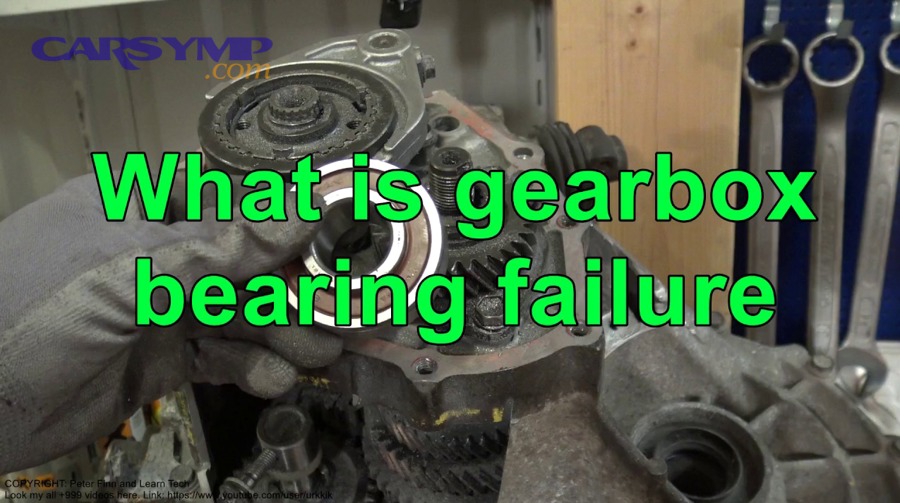
Manual gearbox bearing noise symptoms are the repeatable sounds (whine, growl, rumble, howl) and feel cues (vibration, shifter buzz) caused by worn bearings supporting rotating shafts, typically triggered by speed, load, temperature, and clutch position.
Next, because bearings carry load through rolling contact, small changes in clearance or surface damage can turn smooth rotation into a consistent acoustic “signature.”
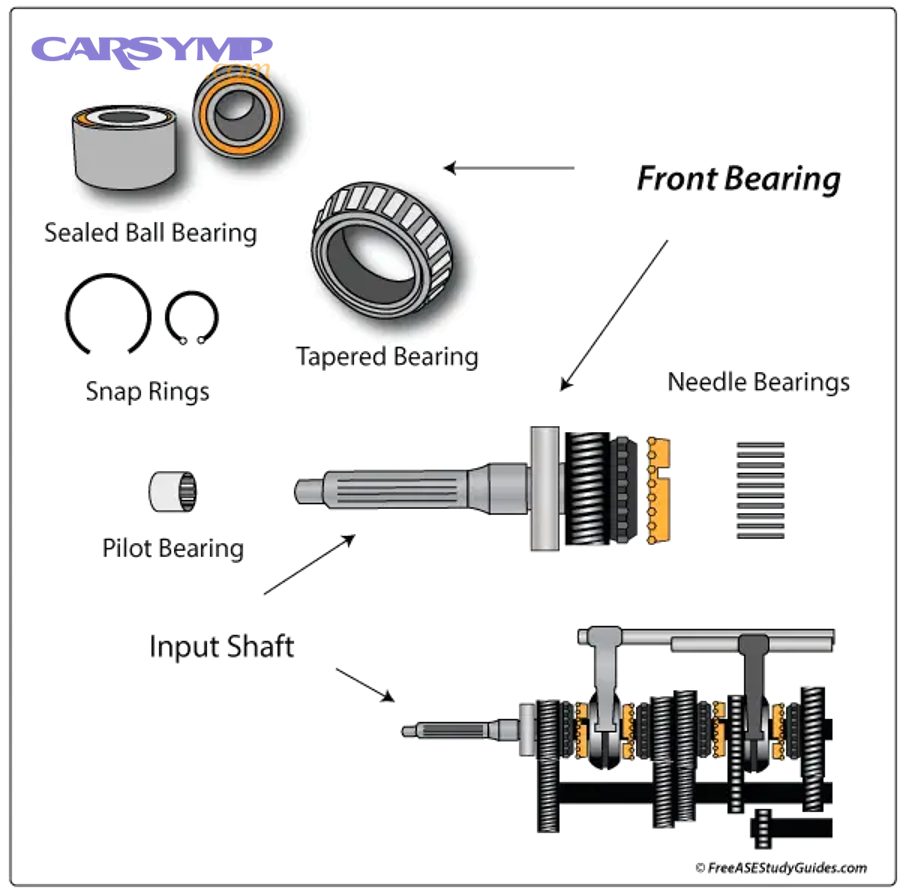
A manual transmission is a set of shafts and gears that spin at different speeds depending on gear selection. Bearings support those shafts so they can rotate smoothly under load. When a bearing starts to wear, three mechanical changes tend to create noise:
- Surface damage and roughness (often called pitting or spalling) produces repeated micro-impacts as the rolling elements pass the damaged area. That can sound like a growl or rumble that rises with speed.
- Increased clearance lets shafts move slightly under load. That extra movement can create a higher-pitched whine, especially when torque direction changes (on-throttle vs off-throttle).
- Lubrication film breakdown (from low fluid, wrong viscosity, contamination, or overheating) increases metal-to-metal contact. The result can shift from faint whirring to a louder whine or even a coarse grinding sound in advanced cases.
What confuses most drivers is that the transmission can still shift “fine” while bearings are getting worse. Bearings can fail quietly at first, then suddenly become obvious when conditions line up—cold oil, highway speed, or steady load in one gear.
What does a bearing “whine,” “growl,” or “rumble” typically indicate in a stick shift gearbox?
A bearing whine is usually a higher-pitched, smoother, tonal noise that rises with speed, while a bearing growl/rumble is lower-pitched and rougher, often felt as vibration as well as heard.
Then, because each noise type correlates to how the bearing is failing, you can use the sound to form a strong first hypothesis for gearbox noise diagnosis.
Whine (tonal, “eeee” or “oooo”) commonly points to:
- Light-to-moderate wear where the bearing is still rotating smoothly but with altered load distribution.
- Shaft alignment changes under load (the shaft “tilts” microscopically, increasing noise).
- A condition that becomes louder in certain gears because torque loads change shaft forces.
Growl/rumble (rough, “grrr” or “hummm”) commonly points to:
- More pronounced surface damage or rough rolling element motion.
- A noise that tracks more with road speed than engine RPM when it’s tied to output/differential bearings.
Howl (louder, sustained, often speed-dependent) can appear when:
- A bearing is badly worn and “sings” at a resonance frequency.
- The casing and mounts transmit the noise strongly into the cabin.
When do bearing noises usually show up first (cold start, under load, at certain speeds)?
Bearing noises often show up first under steady load at moderate-to-high speeds or when cold oil is thick, because both situations change how load travels through the bearing surfaces.
More specifically, if the noise is faint at first, it usually becomes easier to reproduce by controlling one variable at a time: temperature, speed, gear selection, and throttle.
Common early patterns include:
- Cold start / first 5–15 minutes: thicker oil can mask some roughness but also increase drag and resonance; some bearings whine more cold, others more warm depending on clearance and lubrication.
- Highway cruise (steady load): consistent torque can make a tonal whine obvious.
- Coast-down (off-throttle deceleration): torque reverses direction through the drivetrain, which can reveal play and produce a different pitch.
- Specific speed band: resonance in the case or mounts can amplify a frequency at, say, 45–55 mph or 2,500–3,000 RPM.
For “Car Symptoms” that accompany bearing issues, pay attention to a shifter that buzzes more than usual, a faint vibration through the floor, or a noise that gradually trends louder week-to-week.
According to a study by Cranfield University from mechanical engineering research, in 2022, investigations cited in their rotorcraft transmission monitoring work concluded that acoustic emissions can provide much earlier indication of damage than vibration analysis in bearings and gears.
Which manual transmission bearing types can cause noise, and what are their typical symptom patterns?
There are three main groups of manual transmission bearings that can create noise symptoms—input-shaft bearings, countershaft (layshaft) bearings, and output/differential bearings—based on which rotating assembly they support.
Next, because each group loads differently in neutral, in gear, and with the clutch pressed, their symptom patterns are surprisingly consistent.
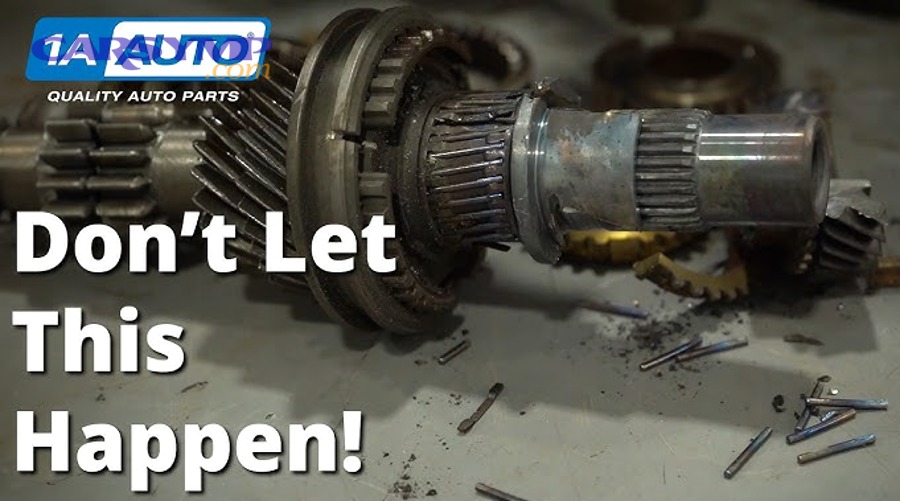
To keep terminology consistent, think in power-flow terms:
- Input shaft: receives torque from the engine through the clutch.
- Countershaft/lay shaft: carries the gear cluster that meshes with gears on the main/output shaft.
- Output shaft/final drive: sends torque to the differential and axles (in a transaxle) or driveshaft (in RWD).
A bearing can also be “named” by function (pilot bearing, throw-out bearing), but those are clutch system bearings rather than internal gearbox shaft bearings. You’ll separate them later using clutch-pedal behavior.
What symptoms point to an input shaft bearing problem?
Input shaft bearing symptoms often include noise that changes noticeably with clutch position and engine RPM, especially at idle in neutral with the clutch engaged (pedal up).
Then, because the input shaft’s rotation depends on whether the clutch is transmitting power, the clutch pedal becomes a powerful diagnostic tool.
Typical pattern:
- In neutral, clutch pedal up (engaged): the input shaft spins with engine speed → noise can be present.
- In neutral, clutch pedal down (disengaged): input shaft slows or stops → noise often reduces or disappears.
- In gear, driving: noise may be less obvious because other drivetrain sounds mask it, or it may grow with RPM under load.
Clues that strengthen the hypothesis:
- The sound pitch follows engine RPM more than vehicle speed.
- The noise is strongest around the bellhousing/transmission front area.
- The noise is present with the vehicle stopped (important distinction from wheel bearings).
What to note for a shop: “Noise in neutral with clutch up; quieter with clutch down” is a high-value pattern statement because it narrows the area quickly.
What symptoms point to an output shaft or differential bearing problem (transaxle/gearbox)?
Output/differential bearing symptoms typically track vehicle speed more than engine RPM and often become loudest during cruise or coast-down rather than at idle.
Next, because the output side is tied to wheel rotation, the sound tends to persist in multiple gears as long as the car is moving.
Typical pattern:
- Noise increases with road speed, regardless of gear.
- Noise can change with load direction: louder on throttle, quieter off throttle, or vice versa depending on bearing location.
- Noise often persists even when you press the clutch at speed (because wheels are still driving the output components).
This is also where people confuse axle/differential sounds with transmission sounds. Keep the phrase Differential noise vs gearbox noise comparison in mind: if the noise is mostly speed-based and you can reproduce it across gears, you must consider final drive/differential bearings as well as wheel bearings.
What symptoms suggest a countershaft/lay shaft bearing issue?
Countershaft bearing symptoms often show up as a speed-and-load-dependent whine or growl that changes by gear and can be most noticeable during acceleration in mid gears.
More specifically, the countershaft sees different forces depending on which gears are meshing and how torque is transmitted, which is why the noise can feel “gear selective.”
Typical pattern:
- Noise appears in multiple forward gears, but not necessarily all.
- Noise gets louder under load (accelerating, climbing, towing).
- Noise can change sharply when you lift off the throttle (torque reversal).
Because the countershaft drives many gear meshes, its bearing noise can also “blend” with gear mesh whine. That’s why the next section focuses on whine vs grind and bearing vs gear damage cues.
Whine vs grind: how do you tell gearbox bearing noise from gear damage noise?
Bearing noise wins in consistency and speed-tracking, gear damage wins in gear-specific harshness, and synchro/clutch problems are most obvious during shifting—so your diagnosis should prioritize when the noise happens and how it changes with load and gear.
Next, because “grind” means different things to different drivers, you’ll define the sound precisely before you assign a cause.
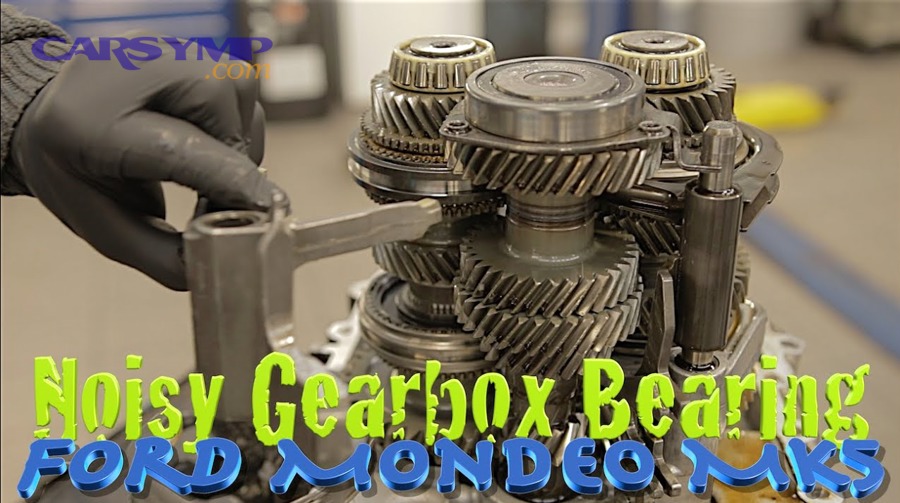
A practical way to stop misdiagnosis is to separate three categories:
- Tonal whine (smooth, rising pitch)
- Rough growl/rumble (coarse, vibration-like)
- Grinding (raspy, scraping, often associated with engagement)
How does bearing whine differ from gear whine across different gears and speeds?
Bearing whine is usually present across multiple gears and changes smoothly with speed, while gear whine is often more gear-specific and can peak in one or two gears due to mesh frequency and wear patterns.
However, because different gears load shafts differently, you still need to test across at least two gears and two throttle states before concluding.
Bearing whine clues
- Present in several gears (not just one).
- Changes smoothly with speed, often noticeable at steady cruise.
- Can change with clutch position (input bearing) or stay with road speed (output/diff bearing).
Gear whine clues
- Often most obvious in a specific gear (e.g., only 3rd or only 5th).
- Can be louder under certain loads (hard acceleration) and quieter elsewhere.
- May have a sharper “tooth mesh” character, especially if accompanied by other symptoms (difficulty staying in gear, metal debris).
If you hear whine only in one gear and it disappears entirely in adjacent gears at the same speed, you should elevate gear tooth wear or a specific gear set issue on your list.
How does a grinding noise differ from a whining noise in cause and urgency?
A grinding noise is more likely than a whining noise to signal an active mechanical mismatch—like a clutch not fully disengaging, a worn synchronizer, or severe internal damage—so it is typically more urgent.
Then, because grinding often happens during engagement events, you should pay attention to the exact moment the sound appears.
Grinding that happens during shifting
- Often points to synchro wear or clutch release issues.
- May be accompanied by hard shifting, notchy engagement, or gear clash.
Grinding that happens while driving (not shifting)
- Can indicate severe wear or metal contact inside the gearbox.
- Demands immediate caution, especially if it arrives suddenly and grows rapidly.
A whining bearing can be an early symptom that you can plan around, but a true grinding symptom often means the system is already failing to separate or synchronize parts properly.
Is the noise tied to engine RPM or vehicle speed, and why does that matter for diagnosis?
Noise tied to engine RPM points you toward the engine-to-input side of the drivetrain, while noise tied to vehicle speed points you toward the output side (final drive/differential/wheels)—and that distinction is the backbone of accurate gearbox noise diagnosis.
Next, because many drivers test only in one gear, you’ll use a repeatable method that isolates the “speed source” of the noise.
Here’s the simplest test framework:
- Engine RPM test: hold a steady road speed and change gears to change RPM (or rev in neutral). If the pitch follows RPM, the source is likely upstream (input shaft, clutch bearings, engine accessories).
- Vehicle speed test: hold a steady RPM in different gears is harder on road, but you can often tell if the pitch rises with mph rather than RPM. If it follows road speed, suspect output/diff/wheel bearings.
Use safe conditions. Don’t perform aggressive experiments in traffic.
If the pitch rises with RPM, what bearing-related causes are most likely?
If pitch rises with RPM, the most likely bearing-related causes are input shaft bearing wear, pilot bearing issues, or other rotating components tied to engine speed.
More specifically, you can tighten the diagnosis by adding clutch position as the next variable.
Most likely candidates:
- Input shaft bearing (gearbox internal): often noisy with clutch pedal up in neutral; may reduce with clutch down.
- Pilot bearing/bushing (clutch system): can chirp or grind when the clutch is disengaging or during pedal transitions.
- Throw-out bearing (clutch release bearing): often makes noise with the clutch pedal pressed, not released.
RPM-linked noise that appears even when the car is stationary is valuable: it rules out wheel bearings and many differential-only causes.
If the noise rises with road speed, what bearing-related causes are most likely?
If noise rises with road speed, the most likely bearing-related causes are output shaft bearings, differential bearings (in a transaxle), or wheel bearings—so you must compare behaviors across throttle and cornering.
Then, because road-speed noises persist as long as the wheels turn, you can often reproduce them in multiple gears.
Road-speed candidates:
- Output/differential bearings: often change with on-throttle vs off-throttle load.
- Wheel bearings: often change when loading one side while turning (noise increases when the failing bearing is loaded).
- Tires: cupping or aggressive tread can create a humming/roaring that mimics bearing rumble.
This is where a Differential noise vs gearbox noise comparison becomes practical: diff-related whine often changes with throttle load direction, while tire noise is more constant and wheel bearing noise often changes with steering input.
Does pressing the clutch pedal change the noise (yes/no), and what does each result mean?
Yes—clutch pedal position is one of the most diagnostic tools for manual gearbox noise because it changes whether the input shaft is being driven and whether the release bearing is loaded.
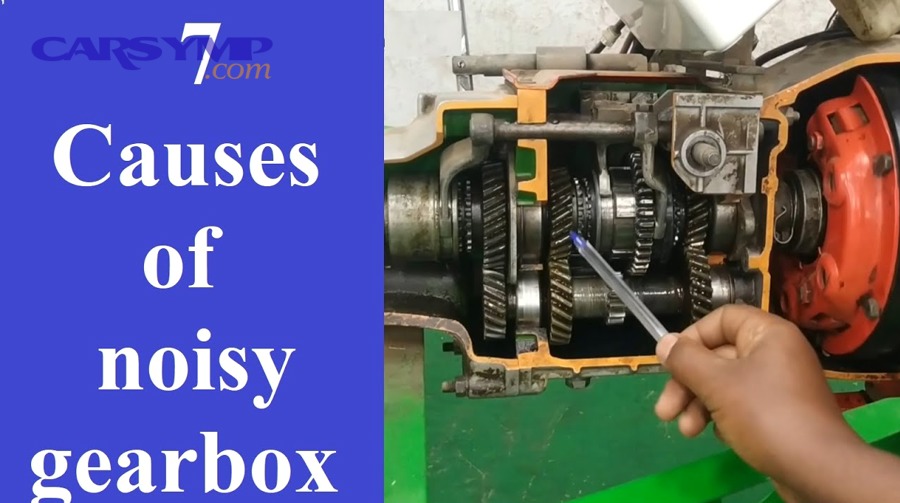
Next, because different noises respond differently to clutch action, you’ll interpret results as patterns rather than single “rules.”
Use a safe, repeatable sequence:
- Idle in neutral, listen with clutch pedal up (engaged).
- Press clutch pedal down (disengaged), listen again.
- If safe, repeat at a steady low speed in a quiet area.
If the noise gets quieter when the clutch is pressed, is it more likely an input shaft bearing or something else?
If the noise gets quieter when you press the clutch, it is often more consistent with an input shaft bearing (or other input-side rotating part) than with an output/differential bearing, because the input shaft typically stops being driven.
However, because clutch system parts can also change noise with pedal position, you should confirm whether the sound is present only at idle or also while driving.
Interpretation guide:
- Noise in neutral with clutch up; quieter with clutch down: input shaft bearing rises on the list.
- Noise present at speed even with clutch down: output/diff/wheels remain suspects.
- Noise changes only during pedal movement (pressing/releasing): pilot or release components become more likely.
This is also where low fluid can fool you—thin or low oil can let bearings and gear meshes get louder, but the clutch test still helps narrow which rotating assembly is complaining.
If the noise appears only with the clutch pressed, is it likely a throw-out bearing instead of gearbox bearings?
Yes—if noise appears only when the clutch is pressed and the pedal load is applied, a throw-out bearing is a common cause, because it is loaded only during clutch disengagement.
Then, because the throw-out bearing is external to the gearbox internals, this pattern can save you from approving an unnecessary transmission teardown.
Typical throw-out bearing pattern:
- Quiet with clutch pedal up.
- Noise appears or intensifies with clutch pedal down.
- Noise can be a whir, chirp, or rough growl.
If you’re unsure, a short diagnostic video can help you recognize how different clutch-related noises present:
The key is to keep terminology consistent: “manual gearbox bearing noise symptoms” refers to internal shaft bearings, while throw-out and pilot bearings are part of the clutch system—even though drivers often call all of it “transmission noise.”
What quick checks can drivers do to validate manual gearbox bearing noise symptoms before a teardown?
You can validate suspected manual gearbox bearing noise symptoms by doing three safe checks: pattern logging, fluid condition verification, and controlled comparisons across gear/load—without disassembling anything.
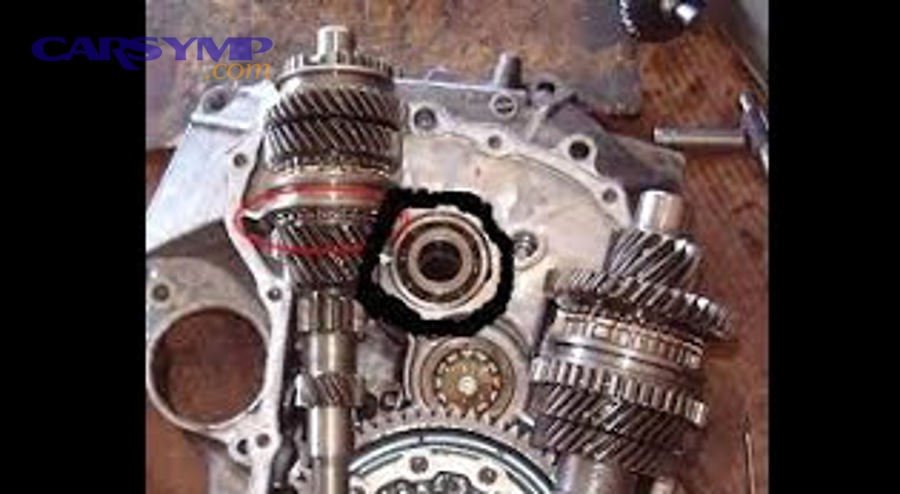
Next, because good notes reduce diagnostic time, you’ll capture the exact triggers a technician needs.
These checks won’t “prove” a bearing is failing with laboratory certainty, but they dramatically improve the accuracy of the next step—whether that’s a fluid service, a shop inspection, or a rebuild estimate.
What should you note about when the noise happens (gear, load, temperature, speed)?
You should note gear, speed, RPM, throttle state, clutch state, and temperature because those variables map directly to which shafts and bearings are under load.
To better understand the pattern, write it down as a short log you can reproduce.
A useful symptom log includes:
- Speed range: e.g., 35–45 mph, 60–70 mph
- Gear: 3rd, 4th, 5th, all gears
- Engine RPM: e.g., 2,200–2,800 RPM
- Throttle state: accelerating, steady cruise, decelerating/coasting
- Clutch: pedal up, pedal down, changes during pedal movement
- Temperature: cold start, warmed up, after highway driving
- Location: front of transmission, center tunnel, rear/diff area (if noticeable)
This is also where you’ll spot escalation: if the speed band widens, the noise gets louder, or new vibration appears, treat that as progression.
What fluid-related clues support a bearing diagnosis (level, smell, debris)?
Fluid clues that support a bearing diagnosis include low level, burnt smell, visible metallic shimmer, and magnetic debris on the drain plug—because bearings shed material as they wear.
More importantly, a fluid check is how you address Low fluid noise and how to confirm without guessing.
Basic, safe checks:
- Verify level correctly (follow the manufacturer procedure—some manuals use a fill plug level check rather than a dipstick).
- Check for leaks around seals, case joints, and axle outputs (transaxles).
- Assess smell and color: burnt odor can indicate overheating; dark fluid can indicate age/contamination.
- Look for metal: fine gray paste on a magnet can be normal wear; flakes/chunks are not.
If you find significant metal or the fluid is clearly low, do not assume you’ve “fixed it” by topping off. Low fluid can be the cause of accelerated bearing damage, not just the source of noise.
If you want a quick high-level cost context before you commit, here is a realistic Repair cost range for common gearbox noises (labor and vehicle differences are huge, but ranges help budgeting).
The table below summarizes typical repair paths and why costs swing widely from a simple parts-and-labor job to a full rebuild.
| Noise source (common) | Typical work | Why cost varies | Typical range (USD) |
|---|---|---|---|
| Input shaft bearing (manual) | Remove transmission + split case + bearing replacement | Labor hours, access, parts availability | ~$255–$2,255 (bearing job range), sometimes more if rebuild is needed |
| Manual transmission rebuild (multiple bearings/synchros) | Full teardown + parts kit | Severity, parts list, shop specialization | Often several thousand dollars |
| Full transmission replacement | Replace unit (new/reman/used) | Vehicle type, labor hours, parts source | Typically high-cost repair |
The goal of this table is not price certainty—it’s to prevent surprise when a “simple bearing” turns into a remove-and-disassemble job.
Is it safe to drive with suspected manual gearbox bearing noise symptoms (yes/no)?
It depends: yes, you can sometimes drive short-term with mild bearing noise if it is stable and you have no warning signs, but no, you should not keep driving if the noise is rapidly worsening, accompanied by grinding, or paired with loss of drive, leaks, or heavy vibration.
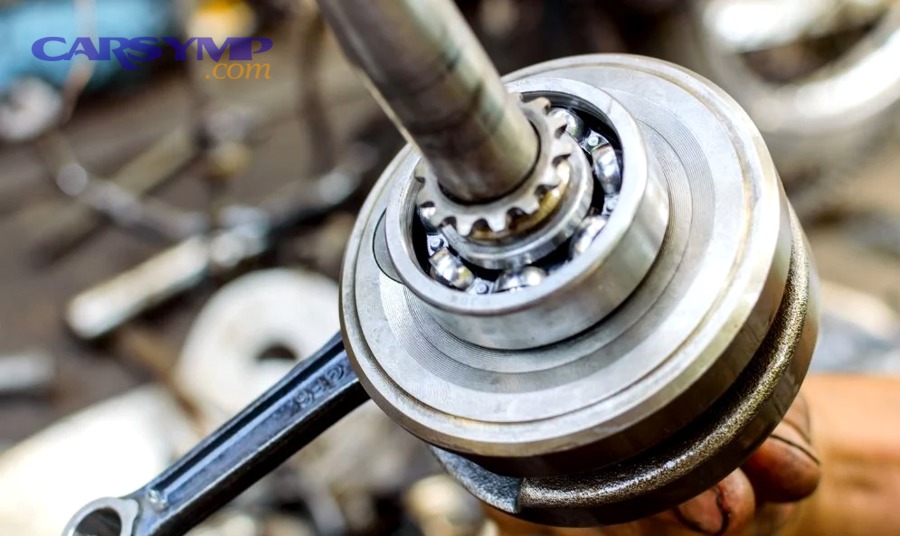
Next, because risk is tied to progression and metal generation, you’ll use a clear severity ladder instead of hoping it stays the same.
A conservative safety approach:
- Mild, stable whine with normal shifting and no leaks → plan inspection soon.
- Increasing whine/growl over days/weeks → schedule service urgently.
- Grinding, popping out of gear, burning smell, metal flakes → stop driving.
What symptoms mean “stop driving now” versus “drive to a shop soon”?
“Stop driving now” applies when you have signs of imminent damage escalation, while “drive to a shop soon” applies when symptoms are stable but clearly abnormal.
Then, because the gearbox can fail without warning once damage reaches a threshold, you treat red flags as non-negotiable.
Stop driving now
- Sudden loud increase in noise
- New grinding that isn’t tied only to shifting
- Transmission jumps out of gear
- Burning smell or smoke
- Rapid fluid loss/leak
- Harsh vibration or banging
- Loss of drive or inability to select gears
Drive to a shop soon
- Stable whine that increases with speed but hasn’t changed in weeks
- Slight growl that’s repeatable but not getting louder quickly
- No leaks, no shift issues, no burning smell
If you are unsure, choose the safer path: reduce speed and load, avoid highway, and get professional evaluation.
What happens if you keep driving on worn gearbox bearings?
If you keep driving on worn gearbox bearings, the bearing can shed more metal, increase heat, and allow shaft misalignment that accelerates gear and synchro wear—turning a bearing job into a full rebuild or replacement.
More specifically, the risk compounds because contamination spreads through the lubricant and damages other contact surfaces.
Common progression:
- Slight whine → increased clearance and resonance
- Growl/rumble → more surface damage and rough rolling
- Overheating/metal debris → collateral wear
- Catastrophic failure risk → loss of drive, gear damage, or case damage in extreme situations
According to a study by Cambridge University from the Engineering Department, in 1983, researchers documented that acoustic emission transducers can be used for monitoring bearing-related vibration at low speeds—supporting the broader principle that bearing damage produces detectable stress-wave events before obvious functional failure.
What else can mimic manual gearbox bearing noise symptoms, and how can you rule out common false positives?
Wheel bearings, tires, mounts, and differential/final-drive issues can mimic manual gearbox bearing noise symptoms, so you should rule them out by testing for steering sensitivity, throttle-load sensitivity, and speed consistency across gears.
Next, because misdiagnosis is expensive, these comparisons act as a “filter” before you commit to teardown-level repairs.

This is the point where you shift from macro diagnosis (is it bearings?) to micro diagnosis (which system is creating the noise you hear?). The cabin is an amplifier—noises travel through mounts and body panels, so the loudest sound is not always the closest part.
Can wheel bearings or tires sound like gearbox bearing noise (yes/no), and what’s the fastest way to differentiate?
Yes—wheel bearings and tires can sound like gearbox bearings, and the fastest way to differentiate is to check whether the noise changes with steering input and road surface.
Then, because wheel bearings load differently in turns, you can often reproduce a clear left/right change that transmissions do not show.
Quick differentiation:
- Wheel bearing: noise often changes when turning left vs right (loading/unloading the bearing).
- Tires: noise changes dramatically with different pavement, may “roar” steadily, and can persist regardless of throttle changes.
- Gearbox bearing: more likely to change with gear/load/clutch rather than steering.
If the sound is identical on smooth asphalt and rough concrete, and doesn’t change with lane-change loading, elevate gearbox/diff suspects. If it changes strongly with surface or turning, elevate tires/wheels.
Can engine mounts or driveline components amplify or imitate gearbox noise (yes/no)?
Yes—engine/trans mounts and driveline components can amplify or imitate gearbox noise because they change the vibration transfer path into the cabin.
Moreover, a worn mount can turn a mild internal noise into a loud cabin drone, especially at certain RPM bands.
Clues pointing to mounts or transfer-path issues:
- Noise peaks at a specific RPM even if vehicle speed changes.
- You feel a new vibration at idle or during engine torque transitions (on/off throttle).
- The sound seems to come “everywhere” rather than from a localized area.
A mount issue doesn’t exclude a bearing problem, but it can explain why the noise suddenly became more noticeable.
Does low or wrong gearbox oil always cause bearing-like noise (yes/no), and when does it become urgent?
No—low or wrong gearbox oil does not always cause bearing-like noise, but it can create or amplify whine/growl and becomes urgent immediately if the level is low enough to reduce lubrication or you see metal contamination.
Then, because low fluid can be both a symptom (leak) and a cause (damage), you treat it as a primary diagnostic step, not an afterthought.
Use the “confirm” mindset:
- Verify correct level procedure.
- Check for leaks.
- Assess whether noise changes after correcting level (without assuming damage is undone).
This is the practical core of Low fluid noise and how to confirm: confirm level first, then evaluate whether the noise pattern remains—because persistent noise after proper fluid level suggests wear that has already occurred.
What prevention habits reduce the risk of bearing noise returning after repair?
Prevention habits that reduce the risk include using the correct fluid spec, fixing leaks promptly, avoiding sustained overload/overheat conditions, and responding early to small changes in noise patterns.
In addition, because bearings fail faster when lubrication is compromised, maintenance discipline is the cheapest “repair.”
High-value habits:
- Use manufacturer-recommended fluid type/viscosity.
- Address seepage before it becomes low level.
- Avoid repeated high-load heat cycles (towing beyond limits, aggressive driving with low fluid).
- Re-check after repair: confirm quiet operation across the same speeds and loads that previously triggered noise.
- Keep your symptom log habit—early recognition is what prevents a minor whine from turning into a major rebuild.
Evidence (key sources used)
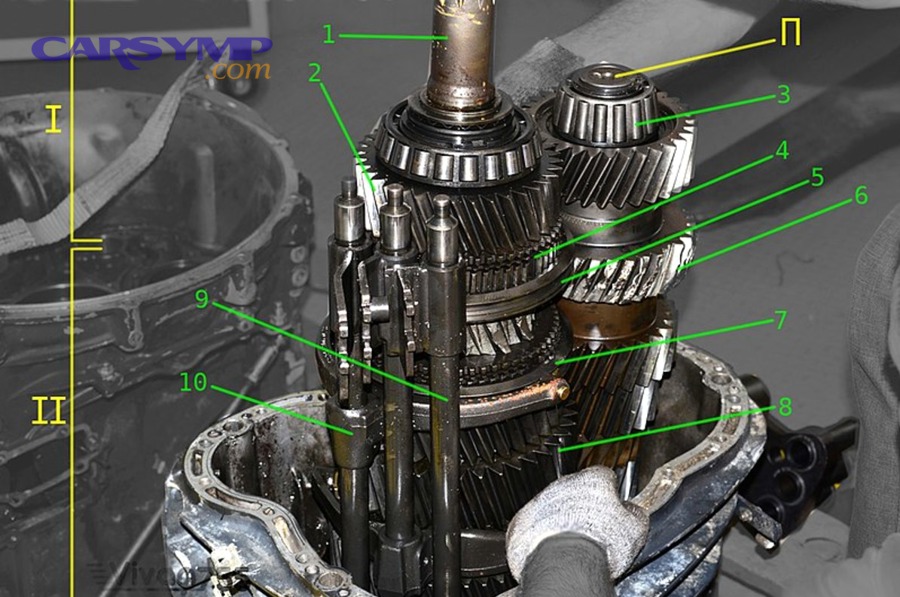
- Acoustic emission vs vibration and earlier fault indication in gearbox/bearing monitoring research (Cranfield University, 2022). (papers.phmsociety.org)
- Acoustic emission testing as a supplement to vibration diagnosis for gear faults, including references to Cambridge University Engineering Department work (1983). (pmc.ncbi.nlm.nih.gov)
- Real-world repair cost context for transmission replacement and related estimates. (kbb.com)